
Reviewed · MYCENAE TOURS FROM ATHENS
From Athens: Mycenae and Epidaurus Private Tour
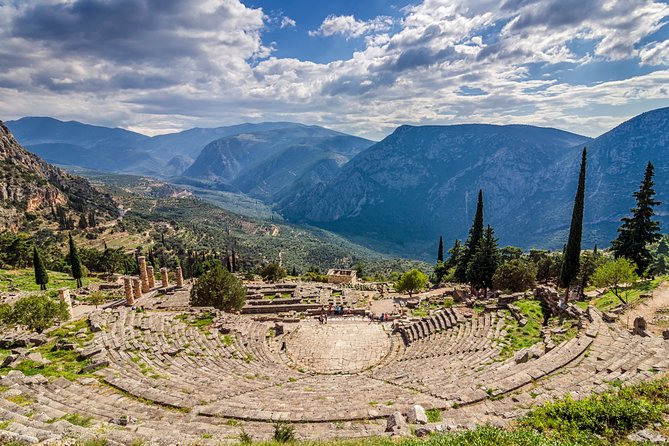
The ancient theater at Epidaurus is the tour’s great surprise: a 14,000-seat auditorium where a quiet sound from the center can reach the highest rows. Before that, you walk through Mycenae, the fortress kingdom linked with Agamemnon, and see its famous Lion Gate.
I like the private format, which lets you travel with your own group of up to four, and I like the generous time at both archaeological sites. The main drawback is simple: this is a long day, with about four hours spent in the van, and entrance tickets, food, and drinks cost extra.
- Two and a half hours at Mycenae: Enough time for the citadel, tombs, walls, and museum.
- Agamemnon’s burial place: Enter the great tholos tomb often called the Treasury of Atreus.
- The Lion Gate and Cyclopean walls: See the massive stonework that helped make Mycenae legendary.
- Epidaurus Theater: Test the famous acoustics in one of Greece’s finest ancient theaters.
- Corinth Canal photo stop: Take a quick look at the dramatic cut linking two seas.
- Private transport for up to four: Pickup and return are available in Athens, Glyfada, and Piraeus.
Mycenae and Epidaurus from Athens: Is This Private Day Trip Worth It?
Mycenae and Epidaurus give you two very different views of ancient Greece. Mycenae feels older, harsher, and more defensive. Epidaurus feels more ordered, calm, and artistic, with its theater set apart from the noise of modern life.
This private tour connects both sites in one day from Athens. It also adds a short stop at the Corinth Canal, so you see a modern engineering project between two major ancient places. The total price is $414 for a private group of up to four, not per person. For four people, that works out to $103.50 each before admission fees, which can be fair for private transportation over a long route.
You should know what you are buying. This is not a slow village tour or a food-focused outing. It is a full archaeological day with a lot of road time. If you want to see Mycenae and Epidaurus without changing hotels or arranging separate buses, the plan makes good sense.
The Corinth Canal: A Short Stop with a Big View
The drive from Athens to the canal takes about an hour. You then have roughly 15 minutes to look, take photographs, and stretch your legs before getting back in the van.
The canal connects the Aegean Sea with the Ionian Sea. Its steep sides make the waterway easy to appreciate even during a brief stop. You will not have time for a long walk or a full visit around the canal, so think of this as a useful photo break rather than a major sightseeing stop.
That short pause also breaks up the first part of the drive. Bring your camera and sunglasses. If you are hoping for a detailed explanation of the canal or time near the water, you should keep your expectations modest.
More Mycenae trips from Athens:
- From Athens: Mycenae, Epidaurus & Nafplio Full Day Trip
★ 4.8 · 2,438 reviews - From Athens: Mycenae, Epidaurus & Nafplio Full-Day Tour
★ 4.5 · 1,580 reviews - 4-Day Classical Greece Tour: Epidaurus, Mycenae, Olympia, Delphi, Meteora
★ 4.5 · 732 reviews
Reaching Mycenae, the Fortress of Agamemnon
After another 45 minutes on the road, you arrive at the archaeological site of Mycenae. The visit lasts about two and a half hours, which is the right kind of time for seeing the main remains without racing through them.
Mycenae was the center of a powerful kingdom from about 1600 to 1200 BC. In Greek myth, it was the home of Agamemnon, the king who led the Greek forces at Troy. The place feels more substantial when you understand that the stories grew from a real Bronze Age center with walls, gates, tombs, and a high citadel.
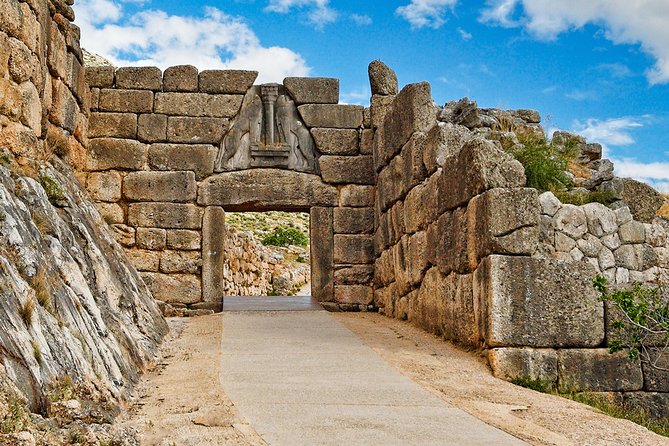
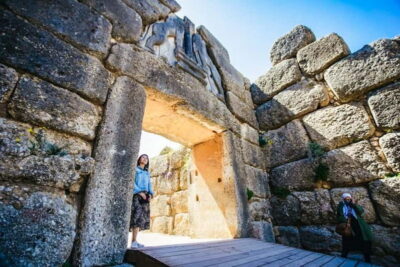
Begin at the Lion Gate, the famous entrance formed by enormous blocks of stone. The relief above the gate is the site’s best-known image. From there, the route takes you into the fortified area, where the Cyclopean walls show the scale of the construction.
The name Cyclopean comes from the later Greek belief that only the one-eyed Cyclopes could have moved such huge stones. You do not need to accept the myth to see why it took hold. The walls are imposing, and they give Mycenae a rugged, almost severe character.
The citadel is not a polished ruin with every building intact. You will see foundations, wall lines, and remnants that need some imagination. Comfortable shoes matter because the site involves uneven ground and outdoor walking. A hat, sunglasses, and water are sensible choices, especially on a bright day.
The Tomb of Agamemnon and the Burial Chambers
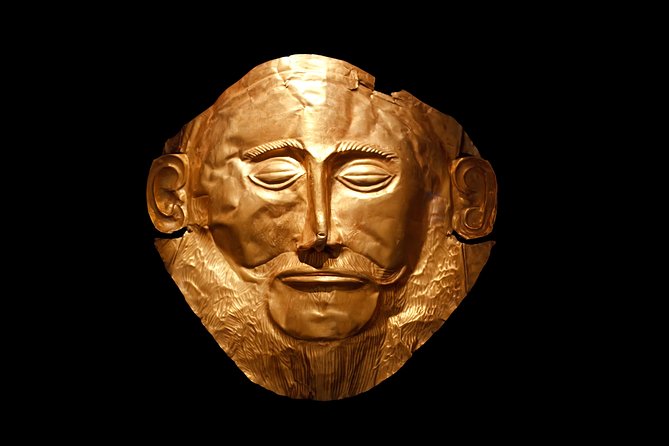
The tomb linked with Agamemnon is one of Mycenae’s most memorable stops. It is a tholos tomb, built with a circular stone chamber and a tall, beehive-shaped roof. The structure is often called the Treasury of Atreus, though the connection to Agamemnon comes from tradition rather than confirmed identification.
The tomb of Clytemnestra is also included among the places you can see. Clytemnestra was Agamemnon’s wife in Greek mythology, and her name brings the site’s legends into the same dramatic world as the citadel above.
These tombs are valuable because they show a different side of Mycenaean power. The Lion Gate and walls display strength in public. The tombs reveal the importance given to elite burial and ceremony. The result is a fuller picture of the kingdom than the citadel alone could provide.
Do not expect inscriptions that neatly identify every person connected with the myths. The names make the site memorable, but the archaeology and the legends are not the same thing. That distinction is worth keeping in mind as you walk.
Mycenae’s Archaeological Museum
The Archaeological Museum of Mycenae adds useful context to the outdoor ruins. Inside, you can see objects from the excavations and get a closer look at the material culture of the Mycenaean world.
The museum is especially helpful after seeing the walls and tombs. Outside, you are looking at stone and empty spaces. Inside, artifacts help explain how people used the site and what archaeologists found beneath the ruins.
The two and a half hour stop includes the chance to visit the museum, but the exact balance between the outdoor site and indoor displays depends on how quickly you move and how much time you spend at the tombs. If museum collections are a priority for you, tell the driver early in the visit so you can plan your time.
One useful point from the experience is that Mycenaean finds can also be seen at the Archaeological Museum in Athens. If you have already visited that museum, the site at Mycenae gives those objects a physical setting. If you have not, the two visits work well together, but this day trip does not include Athens museum admission.
More Epidaurus trips from Athens:
- 3-Day Classical Greece Tour: Epidaurus, Mycenae, Nafplion, Olympia, Delphi
★ 4.5 · 342 reviews - Mycenae, Epidaurus, Nafplio Full Day Private Tour from Athens
★ 5.0 · 270 reviews - Mycenae, Epidaurus & Nafplio Full-Day V.R audio guided Tour
★ 4.5 · 248 reviews - Ancient Corinth, Epidaurus, Nafplio full day private tour from Athens
★ 5.0 · 206 reviews
The Road to Epidaurus
From Mycenae, the drive to Epidaurus takes about 45 minutes. This is another stretch in the vehicle, but it is shorter than the return to Athens and gives you time to rest after walking around the citadel.
The tour uses a private air-conditioned car or van, with fuel, tolls, and taxes included. That matters on a day with several road sections. You are not dealing with public transport connections, and pickup can take place at a hotel, accommodation, or central point in Athens or Piraeus. Glyfada is also listed as a pickup and drop-off area.
The private group size is capped at four people. That works well for a family or a small circle of friends. It also means you are paying for the vehicle and driver as a group, so the value improves as the group fills the available seats.
Epidaurus Theater and Its Remarkable Acoustics
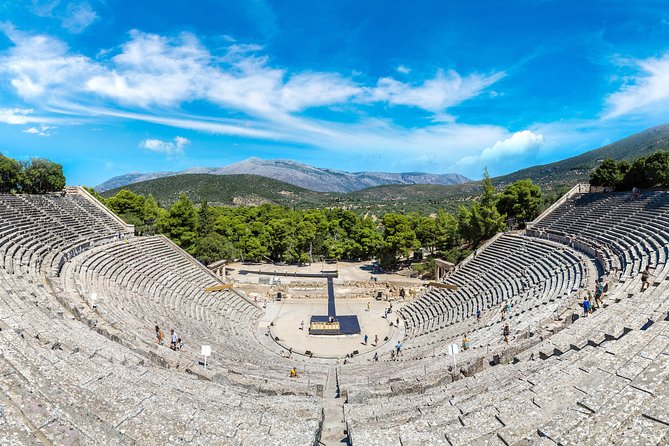
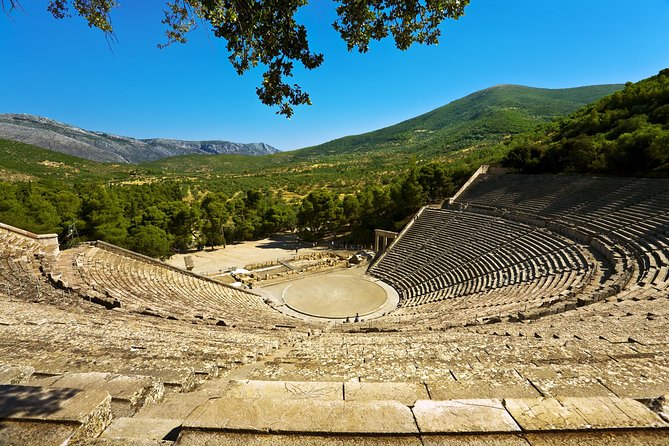
Epidaurus is the final major stop, with about two and a half hours at the site. The theater is from the 4th century BC and is one of the best-preserved Classical Greek structures in the area.
The first thing you notice is the shape. The rows curve around the circular performance space in a precise, balanced design. The theater can seat up to 14,000 people, yet the scale does not make it feel crude or heavy. Its limestone construction gives the seating area a clean, unified appearance.
The famous acoustics are not just a slogan to repeat and move on from. You can test them yourself by standing near the center and making a small sound. A coin dropped at the center is said to be heard from the highest seat, and the design makes the claim understandable. The theater carries small sounds unusually well.
The entrance is flanked by restored Corinthian pilasters, and you can see the foundations of the ancient stage beyond the circular performance area. The theater is still used for Ancient Greek drama during the annual Hellenic Festival, which gives the building a link to performance rather than leaving it as a silent ruin.
Epidaurus is also a more relaxed stop than Mycenae. Mycenae asks you to think about fortifications, royal power, and Bronze Age legends. Epidaurus asks you to sit, listen, and notice how carefully an ancient public space was designed.
The site visit is long enough to appreciate the theater without reducing it to a quick photograph. Still, it is worth remembering that the tour’s focus is the theater. The provided details do not promise a full guided visit of every feature in the wider sanctuary, so plan on the theater being the main event.
What the English-Speaking Driver Adds
The experience includes an English-speaking driver rather than a separately described specialist guide. The driver handles the route, transport, and practical flow of the day. An audio guide is also available in English, German, French, Spanish, Russian, Polish, Chinese, Japanese, Italian, and Portuguese.
One driver named in the trip feedback is Akis. He was described as friendly and informative, with attention to passenger comfort. That fits the type of help this tour needs: clear timing, a smooth pickup, and useful information during the long drives.
You should not assume that the driver provides a full archaeological lecture at every monument. If you want detailed interpretation in person, confirm exactly what guiding is offered when you book. The audio guide languages are useful if someone in your group is more comfortable listening in a language other than English.
Timing, Comfort, and What to Pack
The advertised duration is eight hours. The schedule adds up to a one-hour drive to the canal, 15 minutes there, 45 minutes to Mycenae, two and a half hours at Mycenae, 45 minutes to Epidaurus, two and a half hours at Epidaurus, and about two hours back to Athens.
That is a full day. The vehicle is air-conditioned, which is important during warm weather, but you still spend about four hours on the road. The private setup gives you a calmer ride than a large group coach, but it does not shorten the distance.
Wear comfortable shoes. Add sunglasses, a sun hat, and bring your passport or ID card, as those are specifically listed for the activity. A camera is worthwhile, particularly at the Corinth Canal, Lion Gate, and Epidaurus Theater.
Food and drinks are not included. The supplied details do not specify meal stops, so carry what you need or ask about the day’s practical arrangements before departure. Entrance fees at the monuments are also separate from the tour price.
Price, Group Size, and Overall Value
At $414 per group of up to four, the cost is easiest to judge by group size. Four people pay the equivalent of $103.50 each, before admissions. Two people would pay $207 each, and a solo booking would carry the full group price unless the provider offers another rate.
The price includes private transport, an English-speaking driver, air conditioning, fuel, tolls, and taxes. It does not include admission fees, food, or drinks. You are paying for convenience and privacy, not an all-inclusive package.
I think the value is strongest for a group that wants both major sites in one day and does not want to rent a car. The pickup and return options in Athens, Glyfada, and Piraeus are also useful if your accommodation is outside central Athens.
The value is weaker if you are happy using public transport, joining a larger group, or spending several days in the Peloponnese. This tour is designed for efficiency. You cover a lot of ground, but you do not get much free time for unplanned stops.
Who Should Book This Day Trip?
I would choose this for a first visit to Athens when Mycenae and Epidaurus are high on your list. It suits couples, families, and small groups who want a private vehicle and a firm eight-hour plan.
It is also a good match for people staying in Piraeus who want pickup without arranging their own route. The same applies to groups based in Glyfada.
I would hesitate if you dislike long drives, prefer slow archaeological visits, or want meals and entrance tickets bundled into one price. The day is active and site-focused. Mycenae involves outdoor walking on uneven ground, while Epidaurus rewards patience and attention to the theater’s design.
The overall rating is 4.8 from three recorded bookings, including a perfect score for one visit in September 2025 and another in April 2023. That is a small sample, so I would treat it as a positive signal, not a guarantee. The strongest praise centers on the interest of Mycenae, the care of the driver, and the usefulness of the information provided.
Should You Book the Mycenae and Epidaurus Tour?
Book it if you want a private, efficient way to see two major Peloponnese sites from Athens, especially if you can fill the vehicle with four people. The time at Mycenae and Epidaurus is generous, and the Corinth Canal makes a sensible short break.
Skip it if you want a relaxed day with long meals, small villages, or extensive time at each archaeological complex. For the right group, this is a practical history day with two very different rewards: the stern walls and royal tombs of Mycenae, followed by the graceful acoustics of Epidaurus.
FAQ
How long does the tour last?
The tour lasts eight hours, including transportation from Athens or the listed pickup areas to the Corinth Canal, Mycenae, Epidaurus, and back.
Where can pickup and drop-off take place?
Pickup and drop-off are available in Athens, Glyfada, and Piraeus. Pickup can take place at any hotel, accommodation, or central point in Athens or Piraeus.
Is the tour private?
Yes. It is a private group experience for up to four people, using a private VIP van or car with air conditioning.
Are entrance fees included?
No. Entrance fees for the monuments are not included in the tour price.
Is food or drink included?
No. Food and drinks are not included.
What languages are available for the guide?
The driver speaks English. An audio guide is available in German, English, French, Spanish, Russian, Polish, Chinese, Japanese, Italian, and Portuguese.
Newly reviewed around Athens
- Athens: workshop for painting landscape with local artist★ 4.6 · 3 reviews
- Athens: Greek Wine & Olive Oil Tasting at Brettos Plaka★ 4.5 · 3 reviews
- Outdoor Yoga and Pilates with Akropolis view★ 4.0 · 5 reviews
- Acropolis of Athens: 60′ Tour in a Vintage Motorcycle★ 5.0 · 4 reviews
- Ultimate Tasting of the Volcanic Wines of Greece★ 5.0 · 3 reviews
- workshop for painting acropolis/landscape with local artist★ 5.0 · 3 reviews
- Athens at Twilight Night Tour with Drinks and Meze Dishes★ 4.8 · 4 reviews
- Breakfast in the markets with olive oil and honey tasting★ 4.8 · 8 reviews
Mycenae Tours from Athens, compared.

4-Day Classical Greece Tour: Epidaurus, Mycenae, Olympia, Delphi, Meteora
Read our review →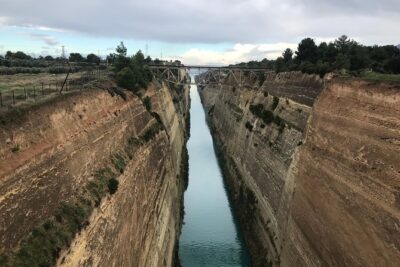
Mycenae and Nafplion Day Trip from Athens with Official guide
Read our review →
3-Day Classical Greece Tour: Epidaurus, Mycenae, Nafplion, Olympia, Delphi
Read our review →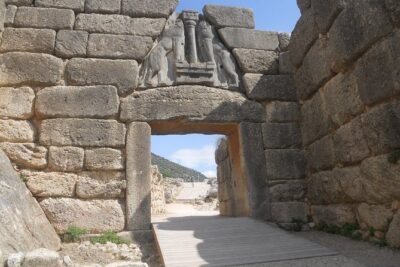
Mycenae, Epidaurus, Nafplio Full Day Private Tour from Athens
Read our review →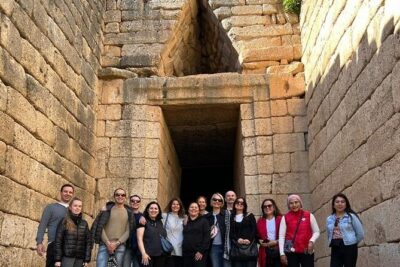
Mycenae, Epidaurus & Nafplio Full-Day V.R audio guided Tour
Read our review →Browse the lists this tour appears in