
Reviewed · MYCENAE TOURS FROM ATHENS
Blue Lake, Sanctuary of Hera, Mycenae, Ancient Corinth, Canal
Mycenae and Ancient Corinth give this private day trip its real weight, but the swim at Blue Lake provides the welcome change of pace. You move from Bronze Age tombs and Homeric legends to Roman ruins, a mountain fortress, and a peaceful shore near the Sanctuary of Hera.
I like the door-to-door transport, especially because these sites spread across the northeastern Peloponnese. I also like the flexibility: drivers such as Yannis and Panos can adjust the schedule, suggest a local lunch, and even replace Blue Lake with another stop in winter. The catch is simple: nine hours is a lot of ground to cover, and some site visits will feel brisk.
Key points at a glance
- Private Athens pickup: Your driver collects you at your hotel or apartment and returns you there in a luxury vehicle.
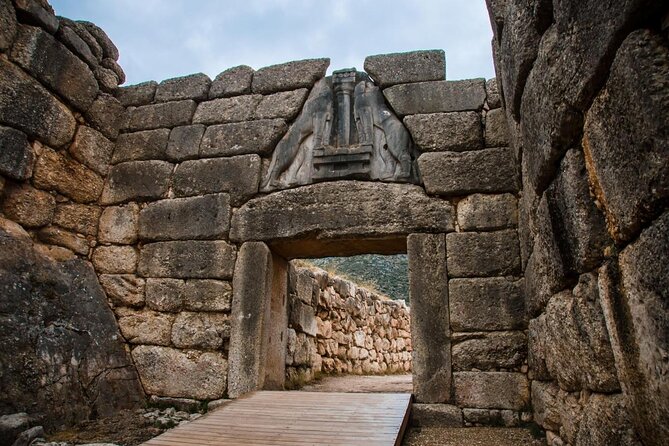
- Mycenae in one focused visit: See the Lion Gate, Cyclopean Walls, royal tombs, palace remains, and museum.
- Corinth with several layers: The day includes the canal, Ancient Diolkos, Acrocorinth, Ancient Corinth, and the Temple of Apollo.
- A refreshing final stop: Blue Lake and the Sanctuary of Hera offer a calmer finish, with swimming when weather and timing permit.
- Driver-led, not fully guided: Your driver explains the background between stops, but a licensed site guide costs extra.
- Best for flexible private groups: Families and couples who value convenience will get more from this than visitors wanting long, detailed walks at every ruin.
A long Peloponnese day made easy
This is a private excursion from Athens priced at $337.15 per person, with the final cost depending on the size of your group. That price is not a bargain-basement bus tour rate. You are paying for a private vehicle, hotel pickup and return, bottled water, WiFi, handmade Greek biscuits, and the ability to shape the day around your group.
The convenience matters. You do not need to rent a car, read road signs, or work out how to connect several widely separated archaeological sites. Your driver handles the long stretches while you rest, watch the countryside, and hear background about the places ahead.
The vehicle is also more than a minor comfort. This is a full day with substantial driving, and one review specifically praised the clean car, water, and stress-free pace. You should still expect a tiring outing. Mycenae, Corinth, Acrocorinth, and Perachora are not a tidy cluster.
Pickup is available from an Athens hotel lobby. If you stay in an Airbnb, the driver contacts you when arriving at the building. Airport and port pickup cost extra, and the driver meets you in the arrivals area with a sign bearing your name.
More Ancient Corinth and canal trips:
- From Athens: Ancient Corinth Day Trip with Canal & VR Guide
★ 4.6 · 1,073 reviews - Private Biblical Tour Ancient Corinth & Isthmus Canal from Athens
★ 5.0 · 762 reviews - Athens: Ancient Corinth & Nafplio Full Day Trip with Swim
★ 4.8 · 523 reviews
Crossing the Corinth Canal
The first major stop is the Corinth Canal, cut through the Isthmus of Corinth. Its narrow waterway links the Corinthian Gulf with the Saronic Gulf and helped shorten sea travel around the Peloponnese.
You get about 45 minutes here, enough for views, photographs, and a look at the scale of the engineering. The channel is the sort of place that makes more sense when you see it in person. The steep sides and narrow cut show why this strip of land mattered for trade and military movement.
The visit also includes Ancient Diolkos, an old paved trackway used to move boats overland across the isthmus. It is an unusual detail in the day because it shows an earlier solution to the same transport problem. Before the modern canal, boats and cargo could be hauled across land rather than sent around the entire peninsula.
This is a good opening stop, but do not expect a long museum visit or a guided engineering lecture. It is a short, visual introduction to the region.
Mycenae, from royal graves to the Lion Gate
Mycenae is the emotional center of the day. This was the major center of the late Bronze Age, linked in legend with King Agamemnon and the Trojan War. Homeric stories give the site its drama, but the stonework and tombs provide the hard evidence.
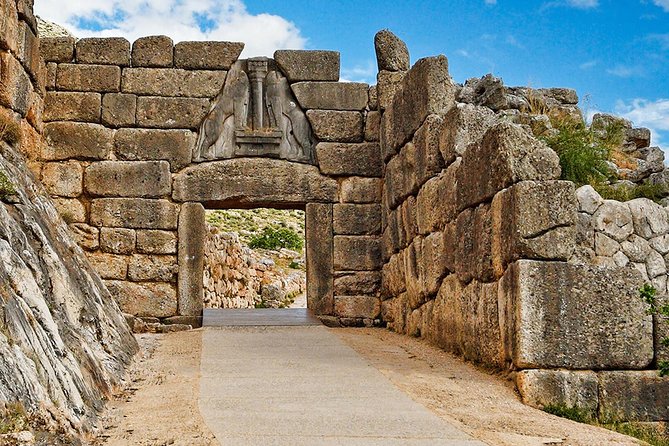
The approach to the citadel leads you toward the Cyclopean Walls, built from enormous limestone blocks. Later Greeks could not imagine ordinary people moving such stones, so they credited the mythical Cyclopes. You do not need to accept the legend to appreciate the practical challenge of the construction.
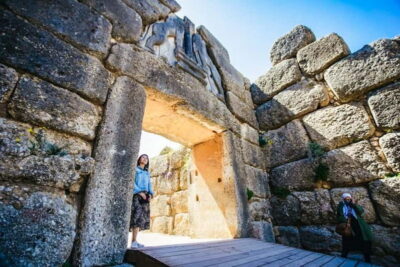
The Lion Gate is the famous entrance, built in the 13th century BC. Above the doorway, two stone lions face a central column. It is one of the clearest surviving symbols of Mycenaean power, and you should allow yourself a few quiet minutes here before moving farther into the citadel.
The royal areas include domestic rooms, a throne room suite, a grand staircase, administrative rooms, and a forecourt. Much of the site is open and exposed, so comfortable shoes, water, and sun protection matter. The ground is uneven in places, and the visit involves walking and some uphill movement.
The schedule allows about 90 minutes for Mycenae, with additional short stops around the Lion Gate, the tombs, and the museum. That sounds generous until you account for photographs, walking between sections, and reading signs. If you want to examine every stone and inscription, you may feel hurried.
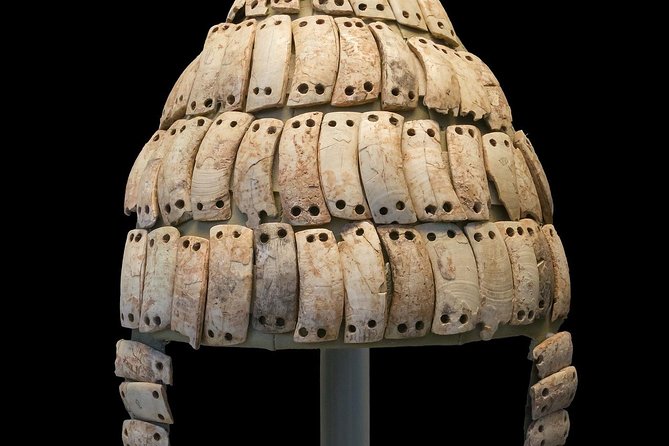
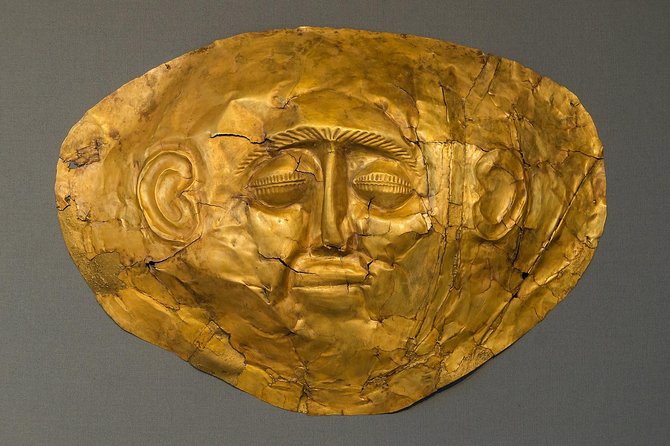
The Grave Circles A and B contain royal burials from the Bronze Age. The gold objects found in these graves changed how archaeologists understood Mycenaean wealth and craftsmanship. At the Treasury of Atreus, you enter a large beehive-shaped tholos tomb built around 1250 BC. The Tomb of Clytemnestra is another Mycenaean tholos tomb, traditionally linked with Agamemnon’s wife.
These tombs are powerful because they are architectural spaces rather than just scattered ruins. The Treasury of Atreus, with its tall corbelled interior, gives you a real sense of the builders’ skill.
The small archaeological museum holds gold burial objects, masks, jewelry, weapons, religious figures, and frescoes. It helps fill in the gaps left by the citadel. I would make room for this museum even if you need to shorten your time at one of the outdoor sections.
Entrance fees to Mycenae and its museum are not included. The driver can provide historical context on the road, but drivers do not accompany you into the archaeological sites as licensed guides. If you want a detailed interpretation inside the ruins and museum, you can request a separate guide at an additional cost.
Acrocorinth and the upper spring
After Mycenae, the day shifts from Bronze Age royal power to a fortified mountain stronghold. Acrocorinth rises above Ancient Corinth on a massive rock. Its position explains its importance at once: anyone controlling this height could watch the roads and the approaches to the city.
The site has three circuit walls, towers, gates, a keep, and remains from several periods. You can see traces connected with Greek, Roman, Frankish, Byzantine, and Ottoman use, including churches, mosques, houses, fountains, and cisterns.
At the highest point are traces of the Temple of Aphrodite. The Frankish Tower sits at the southwest edge of the rock and formed part of the fortress’s inner defenses. These layers make Acrocorinth different from Mycenae. Mycenae feels tied to one ancient age, while Acrocorinth shows repeated use over many centuries.
The planned visit lasts about an hour, followed by around 15 minutes at the Upper Peirene Fountain. The spring is linked to the story of Asopus and Sisyphus and lies within the fortress walls.
This stop deserves a practical warning. Acrocorinth is not a flat site, and the rock can make the walk feel demanding, especially after several hours of sightseeing. If you have limited mobility, ask your driver what sections are realistic before committing to the full visit.
More Mycenae trips from Athens:
- From Athens: Mycenae, Epidaurus & Nafplio Full Day Trip
★ 4.8 · 2,438 reviews - From Athens: Mycenae, Epidaurus & Nafplio Full-Day Tour
★ 4.5 · 1,580 reviews - 4-Day Classical Greece Tour: Epidaurus, Mycenae, Olympia, Delphi, Meteora
★ 4.5 · 732 reviews - Mycenae and Nafplion Day Trip from Athens with Official guide
★ 4.5 · 501 reviews
Ancient Corinth and the Apostle Paul connection
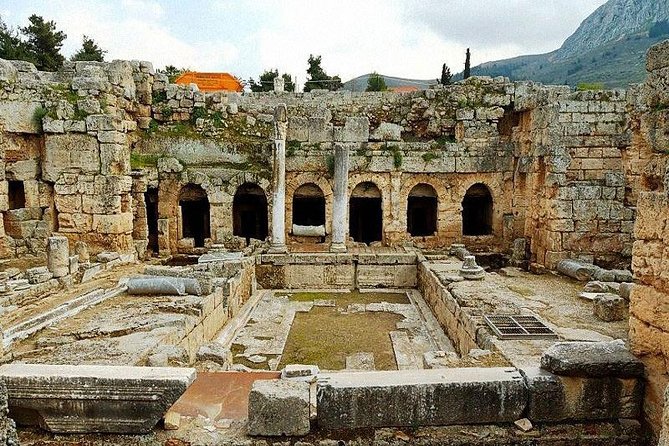
Ancient Corinth is given the longest block of time, about three hours including lunch and village browsing. That is sensible. The site covers a broad area and combines Greek, Roman, early Christian, and Ottoman remains.
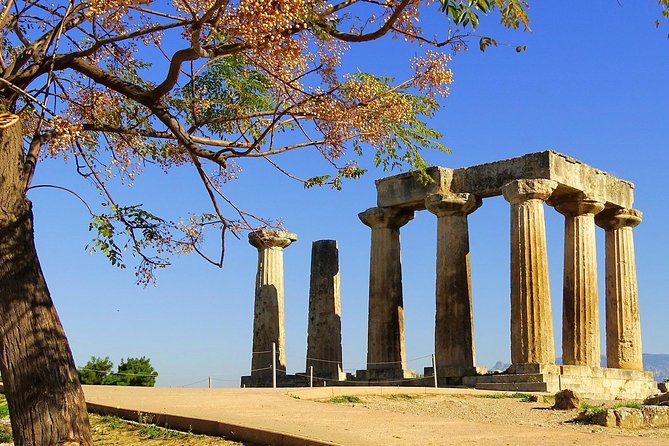
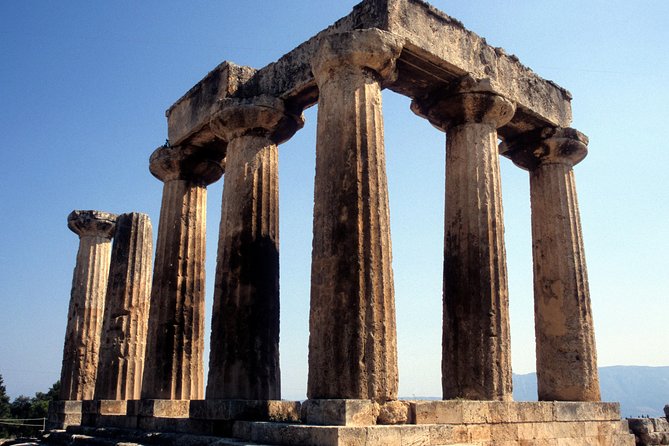
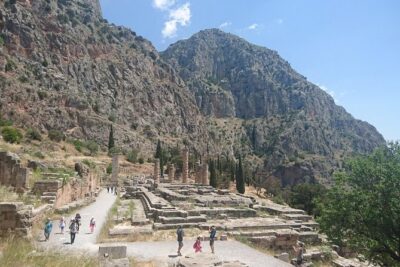
The Temple of Apollo is the visual anchor. Built around 560 BC, it is among the earliest Doric temples in the Peloponnese and mainland Greece. Its monolithic columns are especially striking because each column was made from a single piece of stone.
The ancient agora stretches roughly 160 meters by 70 meters. It once held shops, smaller temples, an altar, and the Bema, the platform associated with public speaking and legal proceedings. The Bema also connects the site with Saint Paul, who addressed the Corinthians here in AD 52.
You can also see the Lechaion Road leading toward the ancient port, Roman buildings, the theater, the Odeon, and the Asklepieion. The Ancient Corinth Archaeological Museum houses finds from the city and nearby sites. At St. Paul’s Church, a mosaic shows Saul’s vision of Christ during his journey to persecute Christians.
The Hadgimoustafa Spring, built during the Ottoman period, adds yet another layer to the visit. Corinth is not only a collection of classical columns. It is a place where ancient Greek, Roman, Christian, and Ottoman periods sit close together.
Lunch is arranged at a local restaurant on a terrace overlooking the archaeological area and Temple of Apollo. The food is not included, so plan for an additional expense. The setting is a strong reason to eat here, especially if you want a village-style meal with a view rather than a quick stop in the car.
You also have time to browse village shops for handmade souvenirs. Keep an eye on the clock. A long lunch and leisurely shopping can reduce time at the ruins, and the route still has one scenic stop to come.
Blue Lake and the Sanctuary of Hera
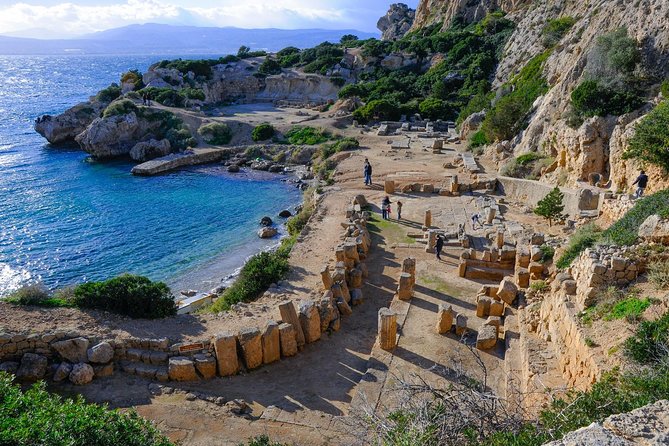
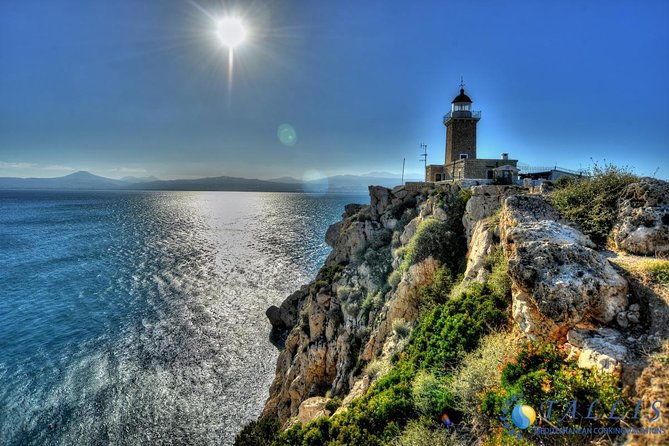
The final major stop is the Sanctuary of Hera at Perachora, near Blue Lake and the Malagavi Lighthouse. After a day of stone walls, tombs, and museums, this is where the outing changes mood.
The sanctuary sits in a coastal setting, and the planned visit lasts about an hour. When weather and timing cooperate, you can swim in the clear water at Blue Lake. Bring a swimsuit and a small towel if swimming matters to you, but remember that the visit is still part of a packed day, not a full beach afternoon.
This ending works because it gives you room to slow down. One family particularly valued the swim after the archaeological stops, while another group visited the Sanctuary of Hera at sunset. A winter outing may not suit swimming conditions, and a driver can suggest another stop instead. One group replaced Blue Lake with an 18th-century castle when the season made the beach less appealing.
The location also provides views toward the Corinthian Gulf and Geraneia Mountain. There is a separate short viewpoint stop for the mountain and the southwestern Peloponnese, allowing you to take in the scenery before heading back to Athens.
What the driver adds, and what the driver does not
The strongest part of this arrangement is the driver’s role between sites. Yannis is singled out for his warm manner, historical explanations, careful timing, and thoughtful touches, including a book that helped children follow the day. Panos is also praised for useful site advice and restaurant suggestions.
That is valuable, but you should understand the distinction. This is not automatically a fully guided archaeological tour. Your driver explains the places while you travel and helps organize the day, but does not normally enter the ruins and museums with you.
That setup suits me if I want freedom to walk at my own speed. If you want every monument explained on site, request the licensed guide option. It will cost extra, but it changes the experience from private transport with commentary to a more formal guided visit.
The flexible timing is another plus. One group stayed longer at some stops and shortened others, while still arriving on time for an extra guide. Another group received a substitute stop during winter. This flexibility is useful, but it has limits. If you linger at Mycenae, take a long lunch, and explore every corner of Acrocorinth, something later in the day must shrink.
Is $337.15 per person good value?
For one person, the price is high. For a private group sharing the vehicle, it becomes easier to justify. You are paying for a full day of transport from Athens, hotel pickup and return, a private group-only setting, a comfortable vehicle, water, WiFi, biscuits, and a driver who can adjust the route.
Entrance fees, lunch, drinks, gratuities, and any licensed guide are extra. Airport transfers also cost more. Add those expenses before comparing the price with a group excursion.
The value is highest if you dislike driving, have limited time in Athens, or want several major sites in one day without piecing together transport. It is lower if your main goal is slow archaeological study. A public or self-drive plan could give you more time at fewer sites, but it would require more planning and road confidence.
This experience is booked an average of 107 days ahead, so advance planning makes sense if your Athens dates are fixed. Free cancellation is available up to 24 hours before the start time. Changes or cancellations inside that window are not refunded.
Who should book this private day trip?
You should consider it if you want:
- A private outing rather than a large group coach
- Hotel pickup and no driving duties
- A mix of archaeology, mountain views, coastal scenery, and swimming
- A flexible schedule for children or mixed-age groups
- A driver who can suggest lunch and adjust the route
- A broad first look at Mycenae and Corinth
You may want another plan if you prefer a slow visit with long time inside each museum. You should also think twice if walking on uneven ground or climbing at Acrocorinth is difficult.
Should you book it?
Book this tour if you want to cover a lot of the northeastern Peloponnese in one private day and value comfort more than a leisurely pace. The best parts are the Lion Gate and tombs at Mycenae, the Temple of Apollo and Bema at Ancient Corinth, and the calm finish at Hera’s sanctuary and Blue Lake.
Go in with realistic expectations. This is a well-organized private driving day, not a fully guided archaeological seminar. Request a licensed guide if detailed site interpretation matters, and discuss priorities with your driver at pickup. If you do that, the route can give you a memorable mix of ancient Greece, dramatic fortifications, local food, and a refreshing change from Athens.
FAQ
Is hotel pickup included from Athens?
Yes. Your driver meets you in the lobby of your Athens hotel and returns you there after the tour. For an Airbnb, the driver contacts you on arrival so you can meet at the building entrance.
Is airport or port pickup included?
Airport and port pickup are available at an additional cost. At the airport or port, the driver meets you in the arrivals area with a sign showing your name.
Are entrance fees included?
No. Entrance fees to the archaeological sites and museums are not included. Skip-the-line ticket service can be requested.
Does a licensed guide enter the sites with the group?
Not as part of the standard service. The professional driver provides information during the journey, but a licensed guide to accompany you inside the sites and museums costs extra.
Is swimming at Blue Lake guaranteed?
No. Swimming depends on the season, weather, and available time. In winter, the route may be adjusted with another stop instead.
What is included in the vehicle service?
The private tour includes transport in a luxury vehicle, hotel or port pickup and drop-off, WiFi, bottled water, refreshing wipes, and fresh handmade Greek biscuits. Food, drinks, tips, entrance fees, and airport transfers are not included.
Newly reviewed around Athens
- Athens: workshop for painting landscape with local artist★ 4.6 · 3 reviews
- Athens: Greek Wine & Olive Oil Tasting at Brettos Plaka★ 4.5 · 3 reviews
- Outdoor Yoga and Pilates with Akropolis view★ 4.0 · 5 reviews
- Acropolis of Athens: 60′ Tour in a Vintage Motorcycle★ 5.0 · 4 reviews
- Ultimate Tasting of the Volcanic Wines of Greece★ 5.0 · 3 reviews
- Breakfast in the markets with olive oil and honey tasting★ 4.8 · 8 reviews
- workshop for painting acropolis/landscape with local artist★ 5.0 · 3 reviews
- Athens at Twilight Night Tour with Drinks and Meze Dishes★ 4.8 · 4 reviews
Mycenae Tours from Athens, compared.
4-Day Classical Greece Tour: Epidaurus, Mycenae, Olympia, Delphi, Meteora
Read our review →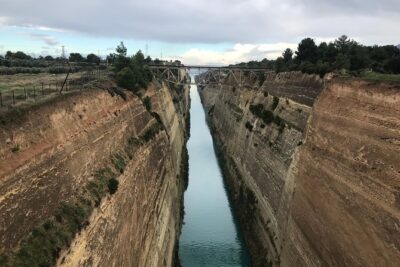
Mycenae and Nafplion Day Trip from Athens with Official guide
Read our review →
3-Day Classical Greece Tour: Epidaurus, Mycenae, Nafplion, Olympia, Delphi
Read our review →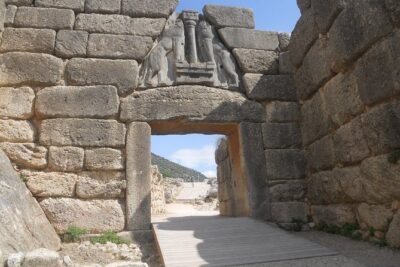
Mycenae, Epidaurus, Nafplio Full Day Private Tour from Athens
Read our review →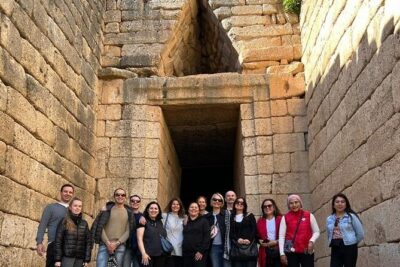
Mycenae, Epidaurus & Nafplio Full-Day V.R audio guided Tour
Read our review →Browse the lists this tour appears in