
Reviewed · ATHENS WALKING TOURS
Athens: Women in Ancient Greece Guided Walking Tour
Ancient Athens is usually told through philosophers, generals, and male citizens. This two-hour walk asks a sharper question: what did the city look like to the women who lived there? You’ll connect familiar places such as the Agora and Pnyx with stories of daily work, marriage, myth, exclusion, and women who pushed past the rules.
I like the fresh point of view and the way the route links famous monuments with less familiar figures such as Sappho, Aspasia, and Agnodice. I also like the conversational style, especially when Maelle leads the walk, asking questions and welcoming discussion rather than delivering a string of dates. The main drawback is physical: expect steps, uneven walking, sun, and a finish near Filopappou Hill, so it is not suitable for wheelchair users or people with serious mobility or heart problems.
Key points to know
- Women’s daily lives take center stage: Learn about duties, rights, social limits, and the different experiences of women across ancient Greek society.
- The route uses major Athens sights well: Monastiraki, Hadrian’s Library, the Ancient Agora, Pnyx, and Filopappou Hill all gain a new angle.
- Mythology is part of the history: Athena, Penelope, Demeter, and Pandora help explain how Greek ideas about women were shaped.
- The stories include rule-breakers: Sappho, Aspasia, and Agnodice offer portraits of women who became poets, thinkers, leaders, or doctors.
- Maelle is a particularly strong guide: Her lively, questioning approach has made the walk feel more like a thoughtful conversation than a lecture.
- Bring water and sun protection: The route is outdoors, includes steps, and can be demanding in hot weather.
Why this Athens walk feels different
This is not a standard greatest-hits tour of Athens. You will still see major ancient sites, but the focus shifts from the buildings themselves to the people who were often left out of the usual story.
That change matters. The Agora is commonly presented as the birthplace of democracy, yet ancient Athenian democracy excluded women from voting and public political life. At the Pnyx, where democratic votes were cast, the guide can help you think about who had a voice and who did not. The contrast gives the monument more weight than a simple explanation of stones and dates.
The tour also avoids treating women as one single group. You hear about mythological figures, wealthy women, ordinary women, enslaved women, foreign women, and exceptional figures who gained influence despite social rules. That broader range is one of the walk’s best features.
The guide’s personality matters here. Maelle is praised for making the subject interactive, answering wider questions about ancient Greece, and connecting old customs with issues that still feel familiar. The tone is serious, but not stiff. Expect humor, questions, and room to follow your curiosity.
More walking tours in Athens:
- Athens: Acropolis and Parthenon Guided Walking Tour
★ 4.6 · 5,882 reviews - Greek Food Walking Tour in Athens
★ 5.0 · 4,740 reviews - Acropolis: Acropolis and Parthenon Guided Walking Tour
★ 4.7 · 3,442 reviews
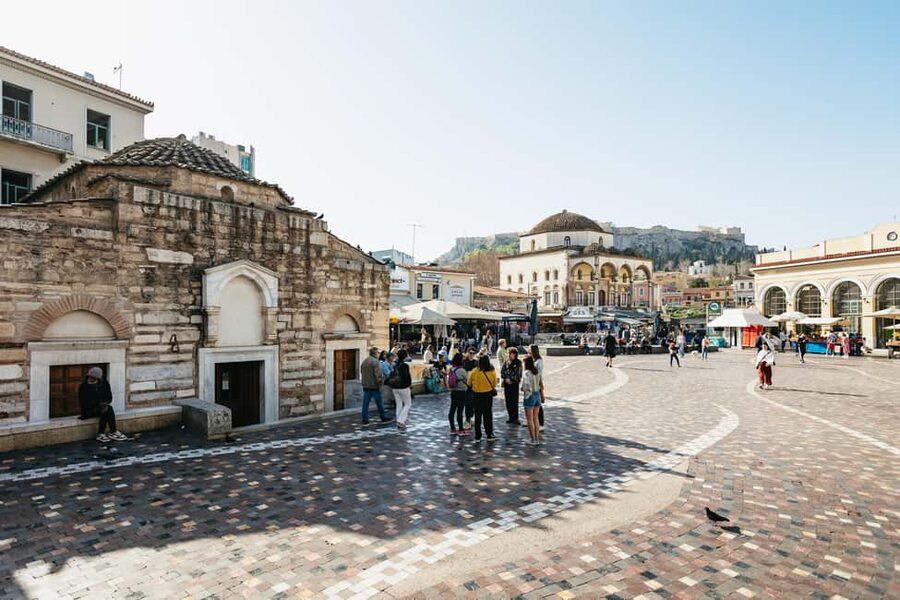
Starting at Monastiraki with Pantanassa Church
Meet your guide on Monastiraki Square, in front of the Holy Church of the Virgin Mary Pantanassa. Look for the sign reading Women in Ancient Greece.
Monastiraki is a useful starting point because it places you in the middle of modern Athens before the tour turns toward the ancient city. You begin with streets full of shops, cafés, and local movement, then gradually shift your attention toward the older layers underfoot.
The first stop is a short look around Monastiraki. This is more of a meeting and orientation point than a full historical visit, so do not expect a long church tour or museum-style presentation. Its value is practical: it is central, easy to reach, and gives the guide a chance to explain how the walk will connect Athens today with Athens in antiquity.
Hadrian’s Library and the Plaka streets
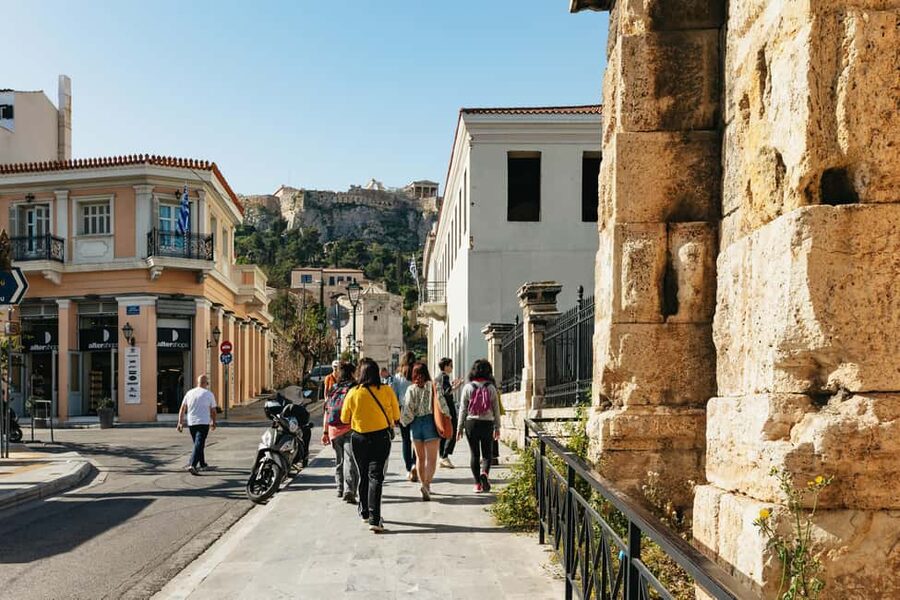
Hadrian’s Library is one of the first ancient landmarks on the route. You view the site from the outside, since archaeological admission is not included. That is worth knowing before you book. This is a walking interpretation of the city, not a ticketed ruins tour.
The stop works well for the theme because the guide can place women within the intellectual and civic world of Athens, even when the surviving monuments mostly reflect male power and public institutions. The contrast between what ancient Athens built and whose voices survived is part of the discussion.
From there, the walk continues through Plaka. The neighborhood gives you a more relaxed setting for stories about daily life, family roles, customs, and social expectations. The tour is not only about famous women. It asks what ordinary women were expected to do and how their lives differed according to status and circumstance.
You will spend roughly ten minutes with the Plaka portion, so think of it as a storytelling stretch rather than a long neighborhood visit. Wear shoes that are comfortable on old paving and steps. Athens is easy to explore on foot, but its surfaces can be less forgiving than the short distances suggest.
Gate of Athena Archegetis and the story behind the city
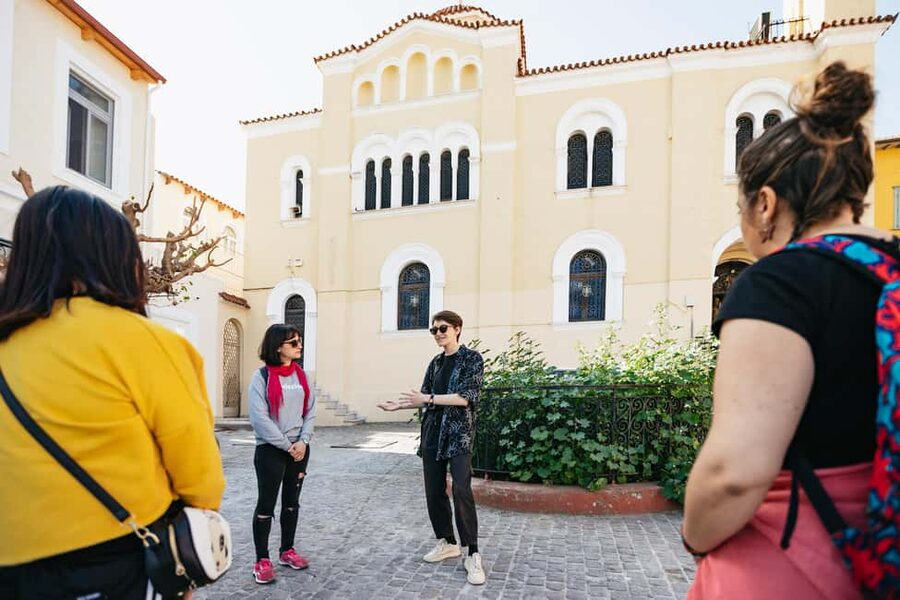
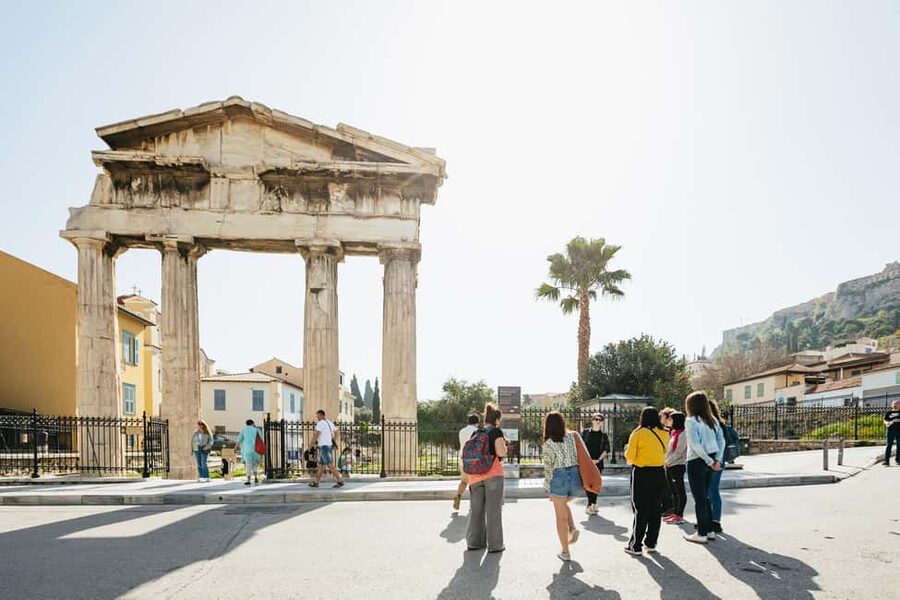
The Gate of Athena Archegetis is one of the more fitting places for this tour. Athena was central to Athens as a goddess, protector, and symbol of wisdom, yet the women of the city had limited political rights. That tension between a powerful female deity and restricted real women gives the guide plenty to unpack.
Greek mythology is not treated as a collection of pretty tales detached from real life. Stories of Athena, Penelope, Demeter, and Pandora are used to show how ancient ideas about women were framed. Some figures represent wisdom, loyalty, motherhood, or divine power. Others reveal fears about female independence, sexuality, or disorder.
This is where the tour’s approach becomes more thoughtful than a simple list of famous names. Mythology helped shape social ideals, but it could also preserve complicated and contradictory views of women. You are encouraged to consider how those stories affected the way people understood family, work, marriage, and public authority.
A different kind of day out from Athens:
- Athens: Acropolis & up to 5 Archaeological Sites Combo Pass
★ 4.4 · 12,619 reviews - Athens: Acropolis Ticket with Optional Audio or Live Guide
★ 4.2 · 11,055 reviews - Athens: Acropolis, Parthenon & Acropolis Museum Guided Tour
★ 4.8 · 9,316 reviews - Athens: Cape Sounion & Poseidon Temple Sunset Half-Day Trip
★ 4.8 · 8,241 reviews
The secret stop and stories that rarely make the guidebook
A short secret stop is included along the route. Its exact details are not given in advance, which is part of the point. You should expect another guided sight or storytelling pause rather than a major ticketed attraction.
The tour also includes unusual episodes, such as the story of kidnapped Spartan girls and the mysterious women’s festival in Athens. These subjects add texture to the better-known story of classical Greece. They move the discussion away from marble temples and famous battles and toward customs, violence, ritual, and the private lives of women.
This material may be especially rewarding if you have already seen the Acropolis and want something that adds context instead of repeating the standard explanation. It is also a good choice if you are curious about how historians piece together women’s lives from myths, literature, public records, and later accounts.
The Ancient Agora from a woman’s point of view
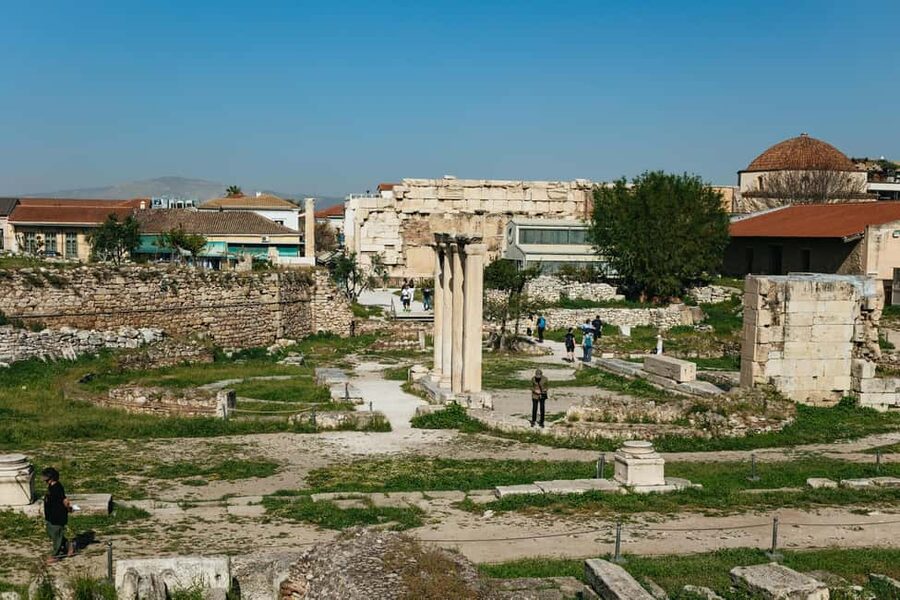
The Ancient Agora is one of the strongest stops on the walk. It was a center of public life, trade, law, and politics, but women did not take part in Athenian civic life in the same way as male citizens.
The guide uses the setting to explore the gap between the city’s celebrated democracy and the restrictions placed on women. You can look at a space associated with public speech and ask who was allowed to speak, vote, own property, move freely, or make decisions for a household.
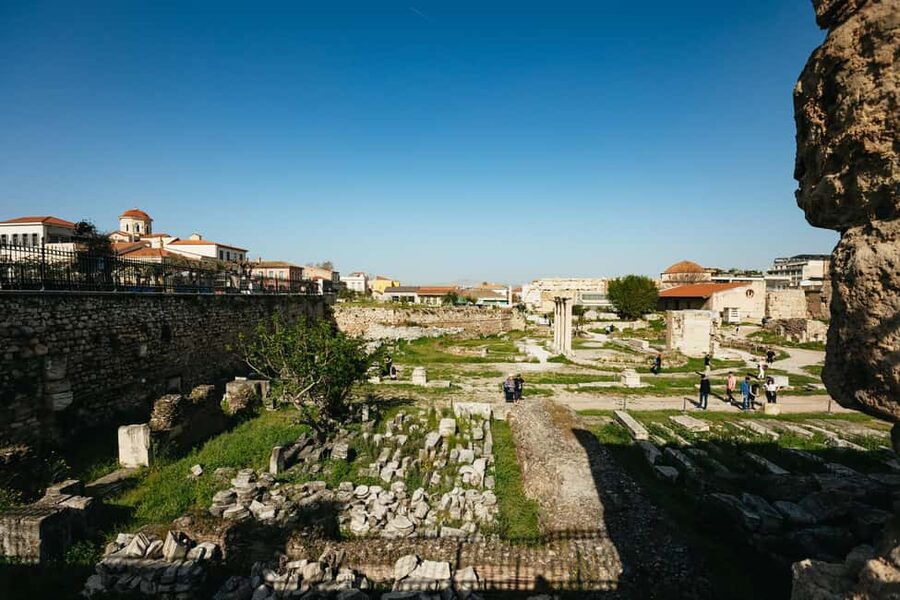
The stop is an exterior visit, so your ticket to the archaeological site is not included. If you want to explore the Agora ruins in detail, plan a separate visit. That is not a flaw in the walking tour, but it affects the value calculation. The $44.04 price pays for the guide’s interpretation, route, and conversation rather than entrance to the monuments.
I think this is where the tour earns its keep. A standard site visit can show you where ancient Athenians gathered. This walk helps you notice who was missing from that public picture.
Pnyx and the limits of ancient democracy
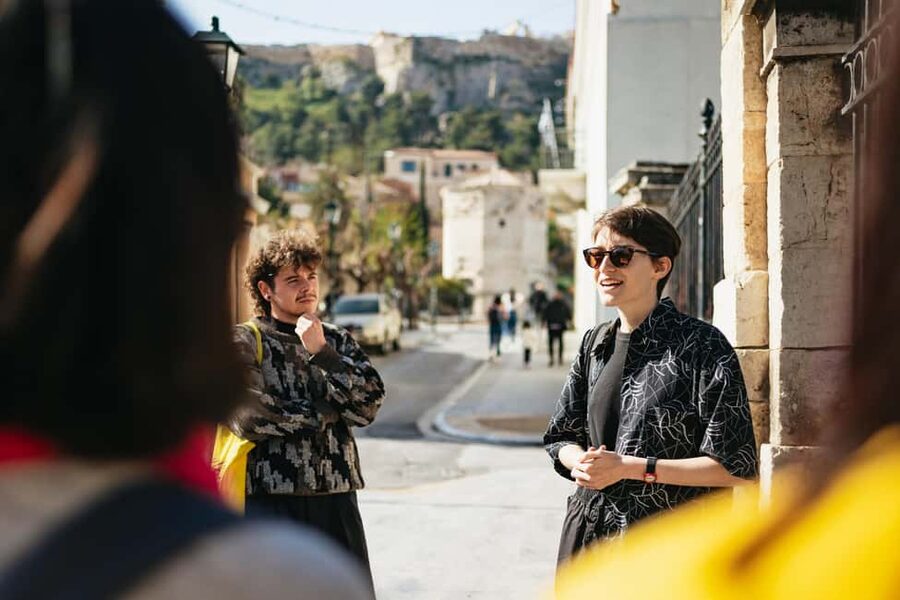
At the Pnyx, you reach the place connected with the first democratic votes. It is a powerful setting for a tour about women because the word democracy can sound more inclusive than the ancient system really was.
The guide places women’s exclusion beside Athens’s political achievements. That does not erase the importance of democracy, but it makes the story more honest. You will think about citizenship, gender, class, and the difference between an ideal and the people who were actually allowed to benefit from it.
The Pnyx stop lasts about fifteen minutes, one of the longer pauses on the route. That gives the guide room to explain the setting and invite questions. Several people have found the tour most rewarding when it becomes a discussion, and this is the kind of stop that encourages it.
The route involves steps and walking uphill. Take the warning seriously if you have mobility limits, heart problems, or difficulty walking in heat. There is no need to rush, but this is not a flat, fully accessible stroll.
Sappho, Aspasia, and Agnodice
The women at the heart of the tour are not presented as a token list. Sappho, Aspasia, and Agnodice represent different ways women could gain influence in a society built around male authority.
Sappho is remembered as a poet from the ancient Greek world. Aspasia is linked with intellectual and political circles in Athens. Agnodice is associated with medicine and the challenge of entering a profession closed to women. Their stories help you see that ancient women were not simply passive figures waiting at home.
At the same time, the guide does not suggest that exceptional women prove life was easy for everyone else. Their fame often came because they were unusual. That distinction is important. The tour uses famous names to open the door, then brings you back to the wider question of what most women could and could not do.
This section is likely to suit readers who want more than mythology. It gives you personalities, choices, and conflicts to remember after the walk ends.
Filopappou Hill and the final view

The route continues toward a viewpoint and then Filopappou Hill. The scenery becomes part of the experience here, with views toward the Acropolis along the way.
Ending with a view is a smart choice. After hearing about women who were left out of public history, you look back at the monuments with a different set of questions. The Acropolis is no longer only a symbol of architecture and democracy. It becomes a reminder of whose labor, stories, and lives were preserved, and whose were not.
The final guided stop lasts about ten minutes. The walk is described as ending back at the meeting point, while a listed drop-off point is the kiosk at Rovertou Galli 69. Confirm the exact end point when you book, especially if you have a timed reservation afterward.
Price, guide style, and what you receive
At $44.04 per person, this is a fair price if you want an ideas-focused walk with a live guide. You are paying for a focused subject, a planned route, and the chance to ask questions. You are not paying for archaeological entrance tickets, food, or transport.
A small gift is included. The more important inclusion is the guide. Maelle receives especially strong praise for her command of Greek history and mythology, her warmth, and her ability to make the group part of the conversation. Guides can vary, but her style gives you a useful idea of the tour’s intended mood.
The experience lasts two hours and is available in English or French. A private group option is available if you want more control over the pace or prefer a more personal discussion. A shared tour may offer a livelier exchange of questions, while a private booking makes sense for families or friends with a very specific interest.
Book with water, a sun hat, and sunscreen. A hot day can make the uphill sections feel longer, and one participant noted that Maelle took care to find shade when needed. Still, shade is not guaranteed at every stop, so plan sensibly.
Who should book this walk
I would choose this tour if you have already seen the basic Athens sights or want a different way into them. It suits history fans, readers interested in gender and society, and anyone who prefers stories about ordinary life to another roll call of famous buildings.
It is also a strong option for friends traveling together, since the questions and discussion can make the walk feel personal. The subject is accessible to people who know little about ancient Greece, but the guide can also handle broader questions for those who already understand the basics.
I would skip it if you want long interior visits, archaeological tickets, or a flat route. It is not suitable for wheelchair users, people with mobility impairments, or people with heart problems. The walk is short, but short does not mean effortless in central Athens.
Should you book Women in Ancient Greece?
Book it if you want Athens to feel less like a parade of male heroes and more like a complicated society made up of many kinds of people. The Agora, Pnyx, and Acropolis will not be new sights, but the questions you ask about them may be.
The best reason to go is the combination of place and perspective. You hear about myths, domestic life, women’s restrictions, and exceptional figures while standing in the city where those ideas took shape. At $44.04, it offers good value for a focused two-hour walk, especially if Maelle is leading.
Just bring water, expect steps, and remember that the monuments are viewed from outside. If those limits suit your plans, this is one of the more thoughtful ways to add depth to an Athens visit.
FAQ
How long does the tour last?
The walking tour lasts two hours.
Where does the tour start?
Meet your guide on Monastiraki Square in front of the Church of the Virgin Mary Pantanassa.
How will I recognize the guide?
The guide will be holding a sign that says Women in Ancient Greece.
Which languages are available?
The tour is offered in English and French.
Is the tour private?
A private group option is available. The booking choice determines whether you take a private tour.
Are archaeological entrance tickets included?
No. The tour views the archaeological sites from the exterior, and entrance tickets are not included.
Which major sites are included on the route?
The route includes Monastiraki, Hadrian’s Library, Plaka, the Gate of Athena Archegetis, the Ancient Agora, Pnyx, a viewpoint, and Filopappou Hill.
What should I bring?
Bring water, a sun hat, and sunscreen.
Is the tour suitable for wheelchair users?
No. The route includes steps and is not suitable for wheelchair users or people with mobility impairments.
Can I cancel for a refund?
You can cancel up to 24 hours in advance for a full refund.
Newly reviewed around Athens
- Feel Ancient thermal Spa Visit Delphi, Leonidas ℨoo Spaʀtan★ 5.0 · 4 reviews
- Food Tour★ 5.0 · 3 reviews
- Explore the Hidden Food Gems of Athens★ 5.0 · 57 reviews
- Food Experience in Athens including Unlimited Lunch★ 5.0 · 3 reviews
- Eat Your Way Through Athens: A Local Food Walk★ 4.9 · 97 reviews
- From Athens: Delphi Private Tour with Lunch Time★ 4.0 · 3 reviews
- Delphi: Spanish guided one day tour★ 4.6 · 55 reviews
- Early Entry Acropolis & Museum. Beat the Crowds & the heat★ 5.0 · 3 reviews
Athens Walking Tours, compared.

Acropolis monuments & Parthenon Walking Tour with Optional Acropolis Museum
Read our review →

Athens Authentic Greek Food Walking Tour (Small Group)
Read our review →
Early Morning Acropolis & Old Athens Guided Walking Tour
Read our review →
Browse the lists this tour appears in