
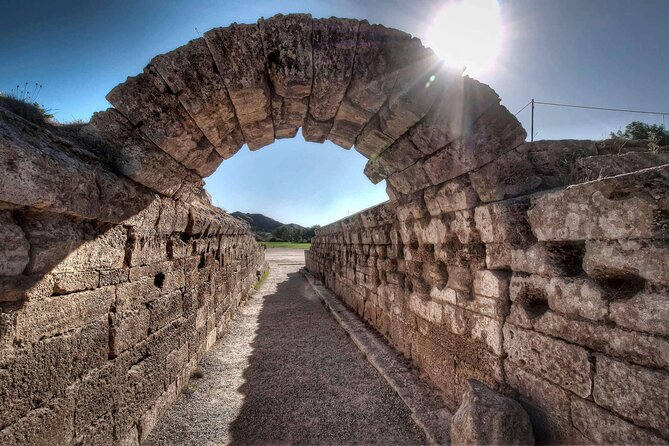
Reviewed · ATHENS
Athens to the birthplace of Olympic games & medieval Monastery
The best reason to book this long day from Athens is simple: you get to walk through ancient Olympia, the site where the Olympic Games were held from 776 BC to AD 393. Add the Corinth Canal, then choose between a cliffside Byzantine monastery and a Peloponnese beach.
I like the private minivan and the freedom it gives your group. I also like the choice at the end of the day: quiet religious art and mountain views, or a swim and lunch by the sea. The drawback is the distance. Fourteen hours is a serious day, and Olympia is not a quick side trip from Athens.
Key points to know before booking
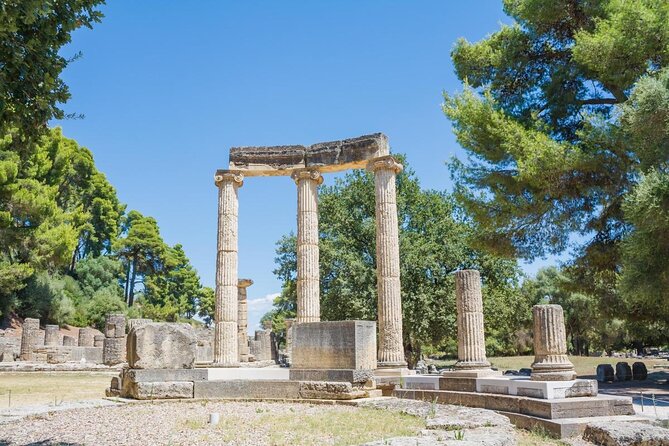
- Olympia is the main event: You get about two hours at the archaeological site, including the ancient stadium, temples, council house, and nearby museum highlights.
- The tour is private: Your group alone takes part, with space for up to seven people and more room for questions and flexible timing.
- You choose one final stop: Visit the Holy Monastery of Saint John the Forerunner, or swim and eat lunch at Kakovatos Beach during summer.
- The Corinth Canal is brief but worthwhile: The stop lasts about 10 minutes, enough for a striking view and a useful break from the road.
- The price works best for a group: At $842.88 per group, the cost is easier to justify when shared by several people, though Olympia tickets and lunch cost extra.
- Plan for an early start: Pickup begins at 7:30 am, and the exact meeting details arrive by email the day before.
Why Olympia makes the long drive worthwhile
Olympia was not simply a stadium with a few broken stones. It was a major religious and sporting center, where athletic contests honored Zeus and drew competitors from across the Greek world.
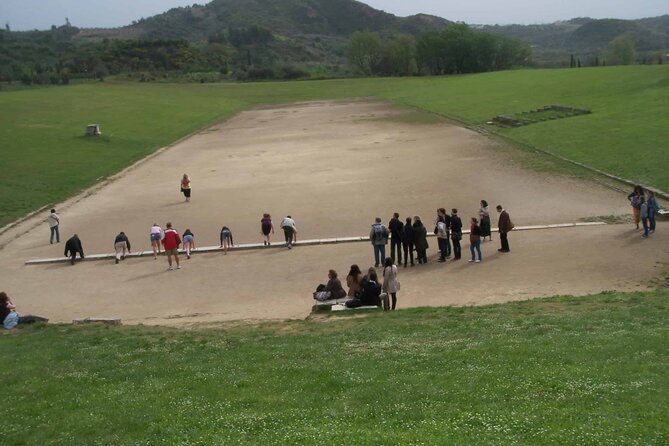
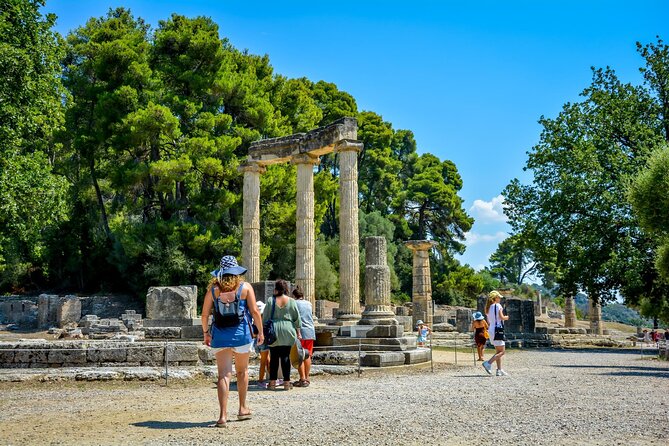
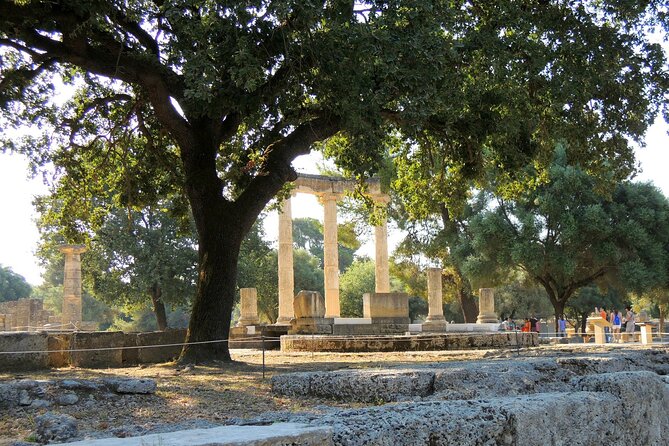
You can see the remains of the Temple of Zeus, the Temple of Hera, the council house, the Philippeion, and the ancient stadium. The stadium once held about 45,000 people. Even with the seating mostly gone, its size helps you picture the scale of the games.
The Games ran for twelve centuries, from 776 BC until AD 393. That span is hard to grasp in a museum case. Walking from the sacred buildings toward the stadium gives you a clearer sense of how religion, politics, and sport shared one place.
The nearby museum adds another layer. It includes the famous Hermes of Praxiteles and the helmet associated with General Miltiades, who defeated the Persians at Marathon in 490 BC. The exact flow between the outdoor site and museum can depend on timing, but the two-hour Olympia visit gives you enough time to see the major pieces without turning the stop into an all-day museum session.
I would bring comfortable shoes and water, even though bottled water and soda are supplied. Two hours goes quickly, especially if you want both the archaeological grounds and museum. If Olympia is your chief reason for booking, resist the urge to rush every monument for photographs. The setting makes more sense when you pause and connect the buildings to the contests once held here.
Other Athens days people book alongside this one:
- Athens: Acropolis & up to 5 Archaeological Sites Combo Pass
★ 4.4 · 12,619 reviews - Athens: Acropolis Ticket with Optional Audio or Live Guide
★ 4.2 · 11,055 reviews - Athens: Acropolis, Parthenon & Acropolis Museum Guided Tour
★ 4.8 · 9,316 reviews
The Corinth Canal is a sharp opening stop
The first stop is the Corinth Canal, about 10 minutes from the main tour schedule. That is not long enough for a full visit, but it works well as a first break after leaving Athens.
The canal was completed in 1890, though the idea of cutting through the isthmus goes back to 602 BC. From the viewpoint, you see the narrow waterway slicing through steep rock walls. It is a striking piece of engineering, and the short stop lets you stretch your legs before the longer drive west.
Do not expect a guided canal visit or a long walk along the water. This is a photo and viewpoint stop. Its value comes from the dramatic sight and the historical contrast: an ancient ambition finally completed in the modern era.
A private minivan changes the feel of the day
The tour starts at 7:30 am with pickup in a minivan. A day before departure, the operator sends an email with directions, the pickup point, and timing details. Read that message carefully, especially if your Athens accommodation is not in an obvious pickup area.
A private vehicle matters here because the day includes a great deal of road time. You are not moving with a large group or following a rigid coach schedule. Your party can ask questions, discuss the next stop, and choose the monastery or beach option without having to fit into a standard group program.
The group limit is seven people. That makes the $842.88 price easier to assess. For seven people, the base cost works out to about $120 per person before entrance fees and lunch. For two people, it is a much higher price for the same vehicle and guide time.
I would consider this tour most seriously for a family, group of friends, or several couples sharing the cost. A small party also makes the guide interaction more personal. Past guests specifically appreciated that smaller setting, including the chance to talk more easily with the guide and build a friendly connection during the day.
The guide names associated with the experience include Pan and Thasos. One account also praised Pan for choosing a seaside restaurant with an excellent meal. Another described Thasos and his companion as warm, flexible, and generous with historical and cultural stories. Guide assignment may vary, so do not assume you will have a particular person.
Choosing the monastery or the beach
The biggest decision comes after Olympia. You do not visit both the Holy Monastery of Saint John the Forerunner and Kakovatos Beach. You choose one.
This choice affects the entire tone of your afternoon. The monastery offers architecture, frescoes, Orthodox tradition, and views into the Lousios Gorge. The beach option trades stone and silence for swimming and lunch by the sea.
I like that the tour does not force every group into the same ending. A history-focused group can choose the monastery. A summer group that needs a break after the archaeological site can choose the beach.
A different kind of day out from Athens:
- Athens: Cape Sounion & Poseidon Temple Sunset Half-Day Trip
★ 4.8 · 8,241 reviews - Athens: Acropolis and Parthenon Guided Walking Tour
★ 4.6 · 5,882 reviews - All Day Cruise -3 Islands to Agistri,Moni, Aegina with lunch and drinks included
★ 5.0 · 4,958 reviews - Athens, Piraeus, and Coastline: Blue Hop-On Hop-Off Bus
★ 3.9 · 4,849 reviews
The Holy Monastery of Saint John the Forerunner
The monastery, also known as the Great Cave of Gortynia, is built into a rock face above the Lousios Gorge. Tradition dates its foundation to the 12th century, when monks lived in nearby hermitages.
The approach and setting are part of the appeal. The monastery is not presented as a polished attraction designed for quick sightseeing. It is a working religious place, with a small courtyard, a stone fountain from 1748, and a heavy door still marked by bullet holes from the Turks in 1779.
Inside, you can see 16th-century frescoes, including paintings that extend across parts of the surrounding rock. The monastery also has a substantial library. The monks practice icon painting and sew ecclesiastical vestments, giving you a glimpse of religious work that continues beyond the walls and artwork.
The monks offer worshippers coffee, water, and olives while they take in the gorge. That small welcome is one of the more human details of the day. It gives the visit a slower, more personal character than a standard monument stop.
Allow about one hour here. This is the right choice if you enjoy religious art, mountain scenery, and places with a strong sense of continuity. It may be less satisfying if you want free time, a large meal, or an active afternoon after several hours in the vehicle.
Dress and behave respectfully at the monastery. The supplied information does not specify a formal dress code, so I would still choose modest clothing and avoid treating the site like a casual photo stop.
Kakovatos Beach gives the day a welcome change of pace
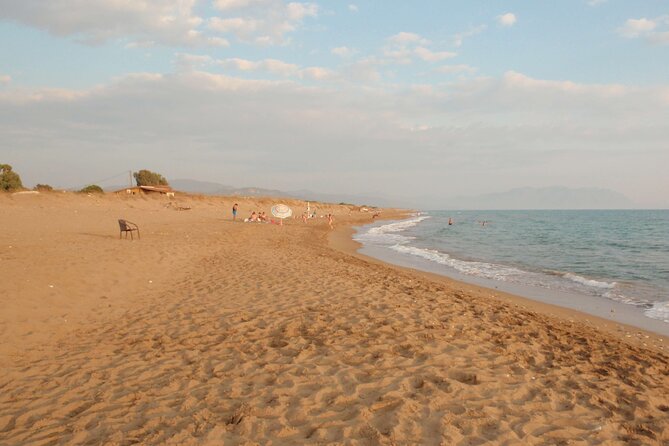
The beach option lasts about two hours and includes time for swimming during the summer months. Kakovatos is described as one of the prettiest beaches near ancient Olympia, and its position near the sea makes it a practical place to pause before the return to Athens.
The tour provides beach towels, bottled water, and soda. Lunch is not included, so you pay for your own meal. A seaside restaurant may be part of the guide’s recommendation, and Pan was praised for taking one group to a particularly good restaurant, but the exact restaurant should not be treated as guaranteed.
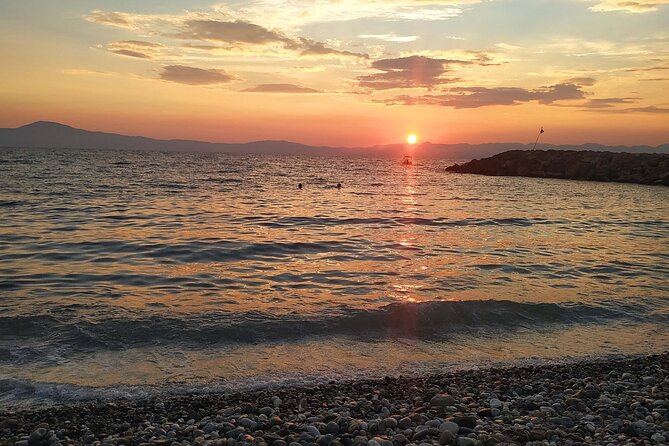
This is a smart choice if you are visiting Greece in warm weather and would rather move your body than visit another historic building. After the heat and walking at Olympia, a swim can reset your energy before the long ride home.
There are limits. Swimming is only part of the summer option, and the two-hour stop is not a full beach day. You also need to keep track of your belongings and plan for lunch costs. Choose the beach for a refreshing break, not for a resort-style afternoon.
The food decision and what the price includes
At $842.88 per group of up to seven, the tour includes an air-conditioned vehicle, pickup, bottled water, soda, and beach towels. The private format is the main value, not a long list of extras.
Olympia admission is separate and costs €20 per person. Lunch is also extra. If you choose Kakovatos Beach, build that meal into your budget. If you choose the monastery, you avoid a restaurant cost during that stop, though you may still want food during the long day.
For a larger group, the shared price can compare well with arranging separate transport and a private guide. You also avoid the work of planning the route from Athens to Corinth, Olympia, and the final stop. For a couple, the cost demands more thought. You are paying for a full private vehicle, a long working day, and direct service rather than a low-cost group excursion.
The tour’s value is strongest when you care about reaching Olympia comfortably and want control over the day. It is weaker if you only want a quick look at the stadium or dislike spending much of a holiday day on the road.
How the 14-hour schedule feels
Start time is 7:30 am, and the full experience lasts about 14 hours. The schedule includes the Corinth Canal, the long transfer to Olympia, two hours at the archaeological site, and one hour at the monastery or two hours at the beach.
That leaves a lot of time in the minivan. The attraction is not an easy hop from central Athens, so there is no honest way to call this a light excursion. Bring headphones, a phone charger if needed, and something to read, though the guide’s stories may fill some of the ride.
The early departure helps you use the daylight and fit Olympia into one day. Still, you should be in good shape for a long outing. The information says most people can participate, but it does not promise special accessibility arrangements. If you have mobility concerns, ask the operator before booking for details about the vehicle, archaeological grounds, monastery access, and beach facilities.
The private format also gives the day a more relaxed social feel. You do not have to introduce yourself to a bus full of strangers, and the guide can spend more time answering your questions. Several highly praised elements point to this personal service: useful historical stories, small touches such as coffee, and flexibility with timing.
Who should book this Olympia day trip?
I would recommend it to you if Olympia is high on your Greek wish list and you are staying in Athens without enough time for an overnight visit. It is especially appealing for a small group that wants a private vehicle and a guide who can explain the places along the way.
History fans should choose the monastery if they want to continue with cultural sights after Olympia. Summer visitors who need variety should choose Kakovatos Beach instead. Families may appreciate the choice, since not everyone wants another hour of ruins after the stadium.
I would hesitate if you have only a few days in Athens and prefer to keep each day local. I would also hesitate if long road journeys leave you worn out, or if the €20 Olympia ticket per person and lunch cost push the total beyond your budget.
Free cancellation is available when you cancel at least 24 hours before the start time. Changes or cancellations made less than 24 hours ahead are not accepted for a refund, and the cut-off follows local time.
Should you book this private Olympia tour?
Book it if you want the birthplace of the Olympic Games without arranging a complicated private trip yourself. The Corinth Canal adds a useful opening stop, Olympia supplies the major historical reason to go, and your choice of monastery or beach keeps the ending suited to your group.
The decision comes down to time and price. A 14-hour day is long, and the $842.88 group rate makes the most sense when several people share it. If that fits your plans, this is a thoughtful way to reach Olympia from Athens, with a personal guide, an air-conditioned minivan, and enough flexibility to make the final stop your own.
FAQ
How long does the tour last?
The tour lasts approximately 14 hours.
What time does pickup begin?
Pickup begins at 7:30 am. The operator sends directions about the pickup point and timing by email the day before.
Is the tour private?
Yes. Only your group participates, with space for up to seven people.
What language is offered?
The tour is offered in English.
Is admission to Olympia included?
No. Admission to the archaeological site costs €20 per person.
What are the two final-stop options?
You can visit the Holy Monastery of Saint John the Forerunner, also called the Great Cave of Gortynia, or choose swimming and lunch at Kakovatos Beach during the summer months.
Is lunch included?
No. Lunch is not included in the tour price.
What is included in the tour?
The tour includes bottled water, soda, an air-conditioned vehicle, and beach towels.
Can I cancel for a full refund?
Yes, if you cancel at least 24 hours before the experience start time. Cancellations or changes made less than 24 hours ahead are not accepted for a refund.
Newly reviewed around Athens
- Athens: workshop for painting landscape with local artist★ 4.6 · 3 reviews
- Athens: Greek Wine & Olive Oil Tasting at Brettos Plaka★ 4.5 · 3 reviews
- Outdoor Yoga and Pilates with Akropolis view★ 4.0 · 5 reviews
- Acropolis of Athens: 60′ Tour in a Vintage Motorcycle★ 5.0 · 4 reviews
- Ultimate Tasting of the Volcanic Wines of Greece★ 5.0 · 3 reviews
- workshop for painting acropolis/landscape with local artist★ 5.0 · 3 reviews
- Athens at Twilight Night Tour with Drinks and Meze Dishes★ 4.8 · 4 reviews
- Breakfast in the markets with olive oil and honey tasting★ 4.8 · 8 reviews