
Reviewed · ATHENS ACROPOLIS TOURS
Athens: The Acropolis and Acropolis Museum Tour in Dutch
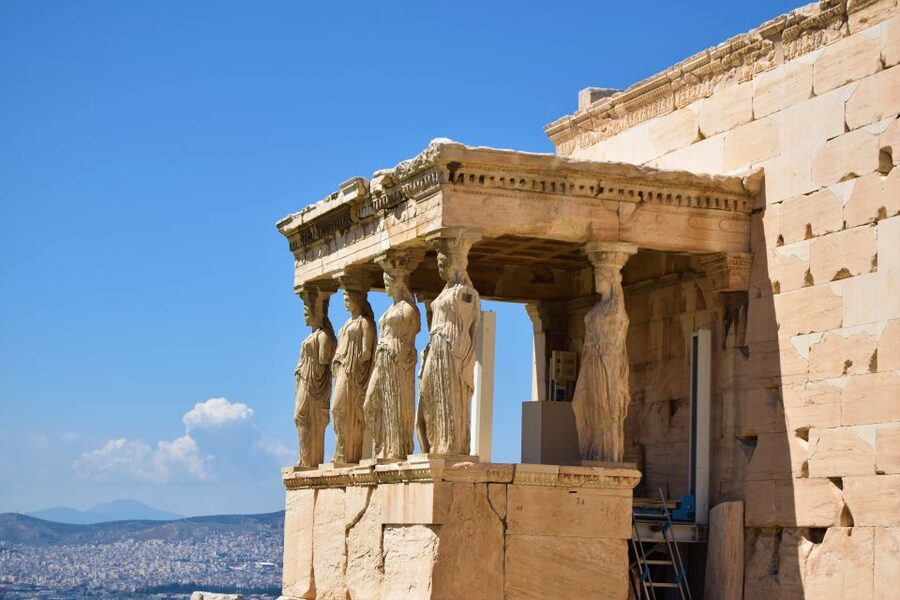
The best part of this three-hour tour is the way it links the Acropolis monuments with the original sculptures now kept in the museum. You first climb past the Theatre of Dionysus, Herodion, Propylaea, Parthenon, and Erechtheion, then go downhill to see what the ancient buildings once looked like in full color and detail. I like the story-led Dutch guiding, especially the myths behind Athens’ founding, and the chance to see the real Caryatids rather than only their copies. The main drawback is the uphill walk on uneven stone, with no elevator, so this is not a good fit if you have limited mobility.
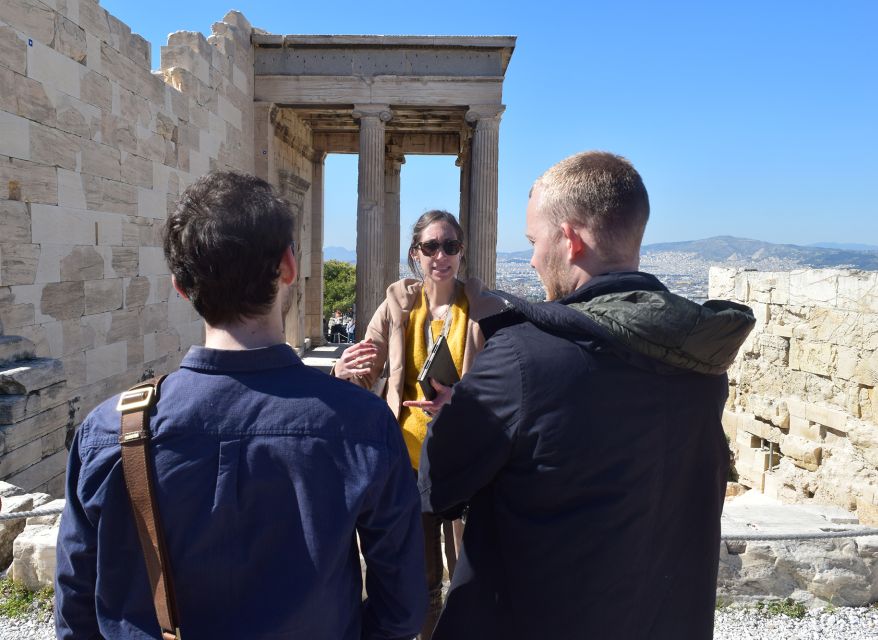
I also like that the tour gives you 20 minutes of free time near the Parthenon for photographs instead of keeping every moment scripted. Guide Jessica has been praised for explaining details clearly and answering questions well, which matters at a site where small clues are easy to miss. At $152 per person, the tour costs more than entering alone, so its value rests on wanting a Dutch-speaking guide, pre-arranged admission, and both major sites in one focused visit.
Key points at a glance
- Dutch storytelling instead of a dry lecture: Hear myths, political tales, and stories about Athens’ first theatre as you walk.
- The route begins at the south entrance: You start with the Theatre of Dionysus before climbing toward the Acropolis temples.
- Six major Acropolis sights in one climb: See the Herodion, Temple of Athena Nike, Propylaea, Erechtheion, and Parthenon.
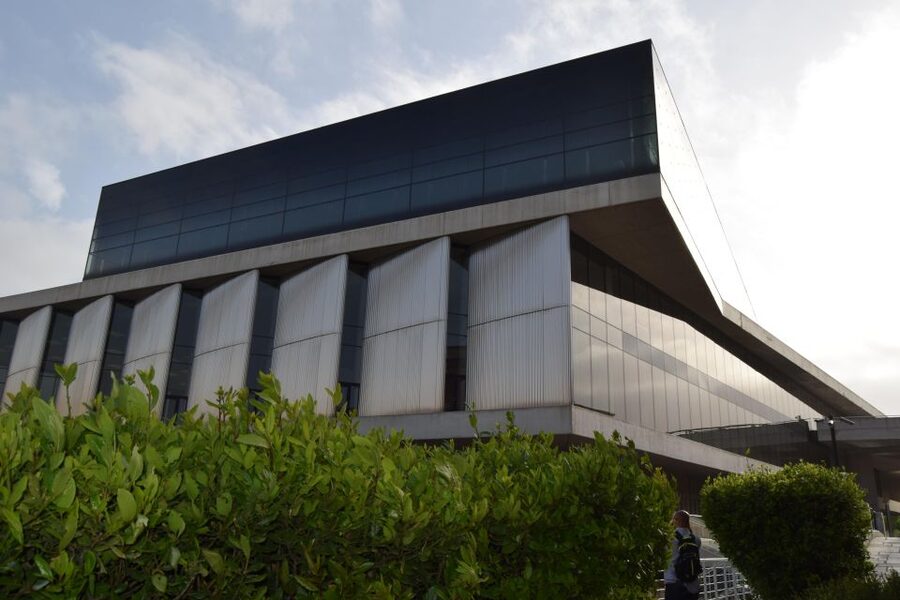
- Original sculpture follows the outdoor ruins: The Acropolis Museum adds the missing faces, figures, and Caryatids.
- Twenty minutes for your own photographs: The guided portion ends on the hill, leaving time to take pictures.
- A demanding walk: Expect sun, uphill paths, uneven surfaces, and occasional slippery ground.
Why this pairing makes sense
The Acropolis and the Acropolis Museum are best understood together. On the hill, you see the temples in their setting, surrounded by views and open sky. In the museum, you can look closely at the sculptures that once gave those buildings their human presence.
That order is useful. You first meet the buildings as ruins, then go down to examine the original works. The Parthenon can seem like a grand shell when seen from a distance. The museum helps you notice carved clothing, body positions, faces, and architectural details that are hard to make out from below.
The tour is conducted in Dutch, which is its central selling point. A guide who can explain the myths and historical events in your own language may make the difference between simply seeing old stones and understanding why each place mattered. You will hear about the mythological struggle for control of Athens, the city’s democratic era, the creation of Greek theatre, and the building methods used for the temples.
At $152, the price is not a bargain entrance ticket. It includes admission to both the Acropolis and museum, a licensed guide, ticket pre-booking administration, and the guided connection between the two sites. If you would otherwise buy admission and arrange your own visit, the extra cost pays for the Dutch narration and a tightly planned morning or afternoon. If you only want to walk around and take photographs, visiting independently may be better value.
More ways to see the Acropolis:
- Athens: Acropolis & up to 5 Archaeological Sites Combo Pass
★ 4.4 · 12,619 reviews - Athens: Acropolis Ticket with Optional Audio or Live Guide
★ 4.2 · 11,055 reviews - Athens: Acropolis, Parthenon & Acropolis Museum Guided Tour
★ 4.8 · 9,316 reviews
Meeting at Acropoli Metro station
You meet outside Acropoli Metro station, using the Makriyianni and Dionysiou Areopagitou exit. This is a practical starting point because the station is close to the south side of the Acropolis and the first stop, the Theatre of Dionysus, is about a two-minute walk away.
Arrive ready to walk. The Acropolis is not a flat museum visit, and the first part of the route climbs the southern slope. Wear shoes with a firm grip, bring a sun hat, and carry water for the uphill stretch. Athens can feel very exposed on the rock, with little shade across the main approach.
Your guide leads the group from the meeting point to the Acropolis entrance. Entry tickets are included, and the tour offers skip-the-ticket-line access. That does not mean you walk straight through every entrance without any pause, since security and site control still apply, but pre-arranged tickets remove one major bit of trip planning.
The Theatre of Dionysus and the birth of drama
The first major stop is the Theatre of Dionysus, set on the southern slope of the Acropolis. This is where the tour begins to build its story. Rather than opening with a list of dates, the guide explains the place as the setting for the creation of ancient Greek theatre.
That approach suits the site. The theatre is not just another pile of stone below the temples. It connects the Acropolis to performance, civic life, and the stories Athenians told in public. You can picture why this location mattered before you reach the more famous monuments above.
The route also passes the ruins of Athens’ first clinic. The supplied tour information does not give more detail about the clinic, so expect the guide to point out the remains and place them within the walk rather than treat them as a long separate stop. This is one advantage of a live guide: you can ask when a small ruin catches your eye.
Climbing past the Herodion
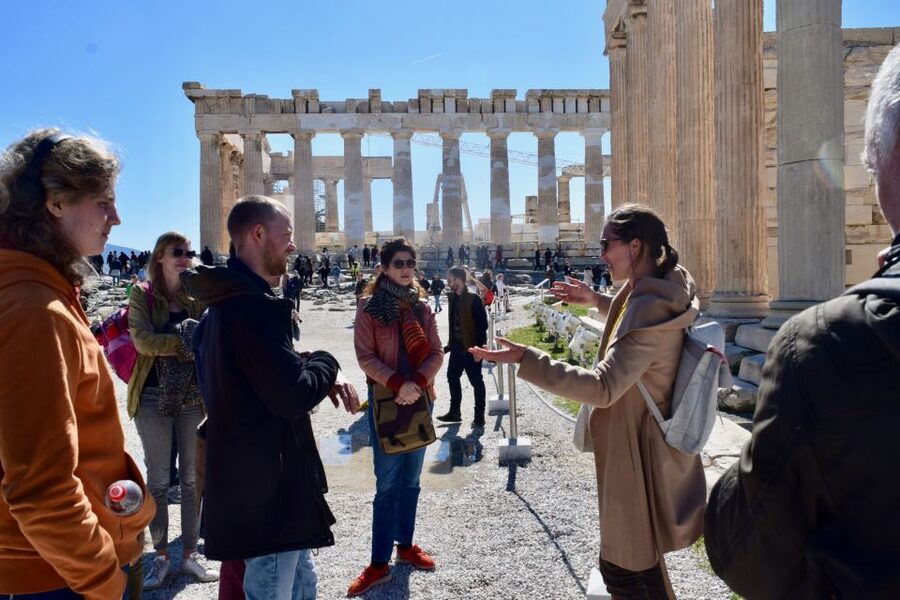
As you continue up the sunny southern slope, you pass the Odeon of Herodes Atticus, often called the Herodion. The tour includes a guided look at this impressive structure before moving toward the entrance of the Acropolis.
This section is physically straightforward but can be hot. The slope is exposed, and the path is uneven. You should not choose this tour expecting a gentle stroll. The activity information specifically warns that the ground can sometimes be slippery, and there is no elevator.
The climb is part of the experience, but it is also the main practical limitation. The tour is not suitable for wheelchair users, people with mobility impairments, or pregnant women, and it is not recommended for anyone who finds uphill walking difficult. Comfortable shoes are not a minor suggestion here. They are the sensible choice.
More museums and ancient sites in Athens:
- Athens: Acropolis, Parthenon & Acropolis Museum Guided Tour
★ 4.8 · 3,579 reviews - Acropolis monuments & Parthenon Walking Tour with Optional Acropolis Museum
★ 5.0 · 2,678 reviews - Athens: Acropolis Museum Ticket with optional Audio Guide
★ 4.4 · 2,652 reviews - Parthenon & Acropolis Museum with Audio or Live Tour Option
★ 4.1 · 2,446 reviews
Passing through the Propylaea
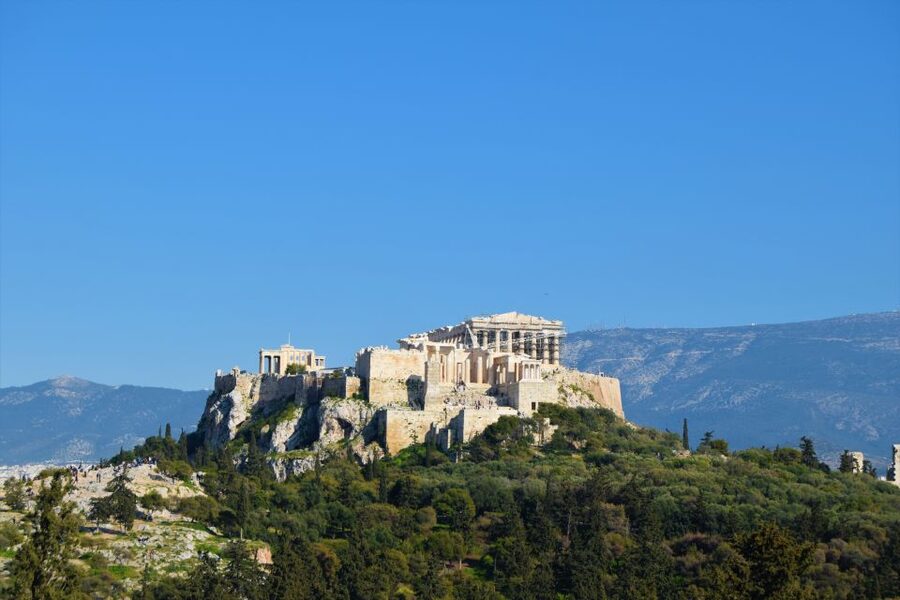
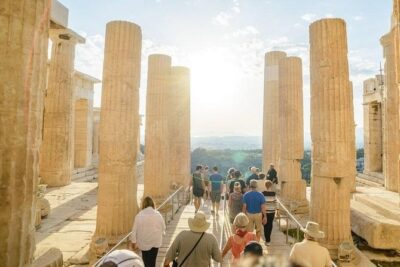
Before you reach the main temples, you pass through the Propylaea, the imposing entrance gate to the Acropolis. This is where the approach becomes more ceremonial. The gateway frames the monuments ahead and gives the guide a natural point to explain how the complex was planned.
From here, you can see the Parthenon, Erechtheion, and Temple of Athena Nike. The guide discusses why these monuments were built and the methods used by their architects. The value is not only in knowing names. You begin to see the Acropolis as an arranged group of buildings, each with its own purpose and position.
The Propylaea also gives you a strong sense of transition. You are leaving the slope and entering the central sacred area. Have your camera ready, but keep listening. The guide’s explanation of the approach can make the later monuments easier to read.
Athena Nike, the Erechtheion, and the Parthenon
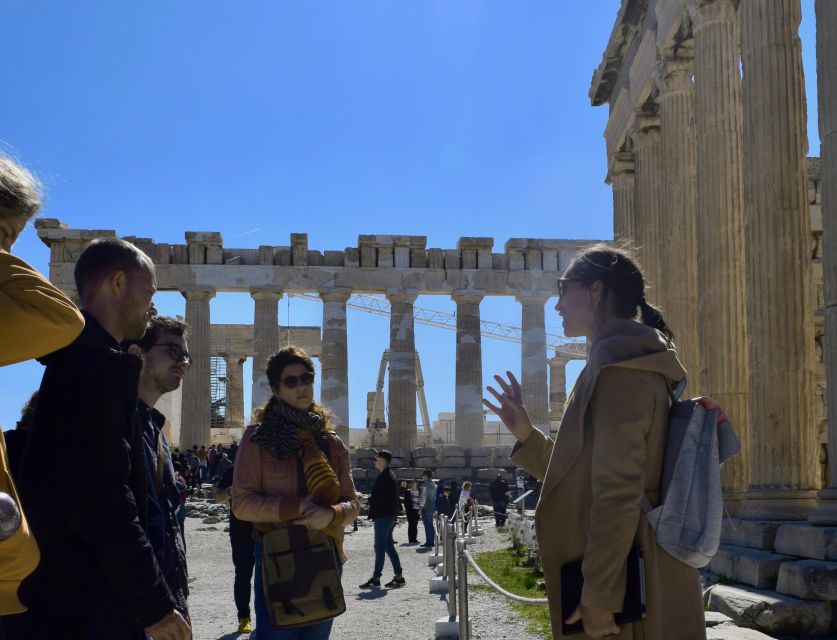
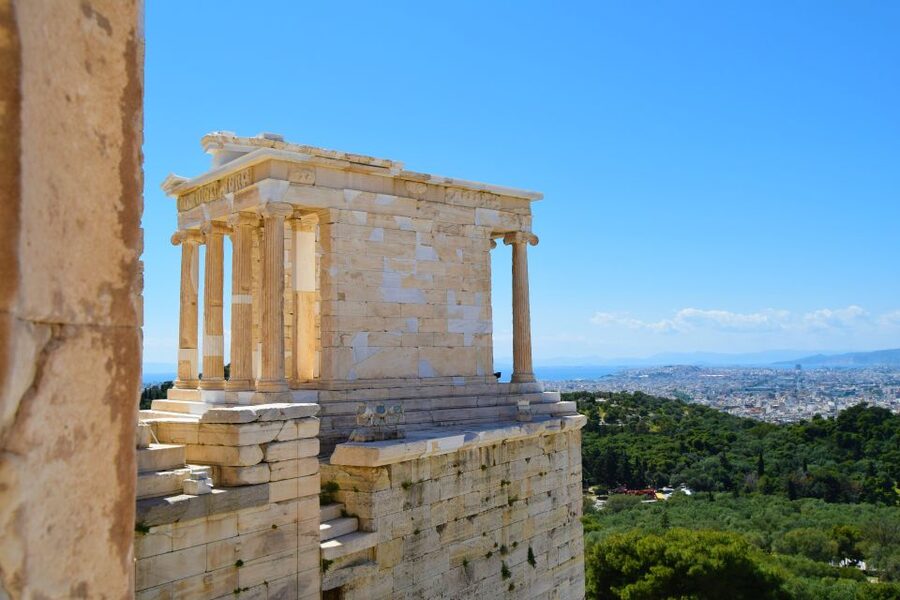
The Temple of Athena Nike is one of the stops along the upper route. Its name links it to Athena in her role as a bringer of victory. The tour uses the monument to continue the story of Athens’ gods, rivalries, and civic identity.
Next comes the Erechtheion, one of the most distinctive buildings on the Acropolis. Its unusual design and the famous Caryatids make it an essential stop. The original Caryatids are in the Acropolis Museum, while the hill lets you see the architectural setting and the copies in place. This is a useful moment to remember that the outdoor site is not a complete display of every original object.
Then you reach the Parthenon, the monument most people picture when they think of Athens. The guide explains why it was built and how its architects handled the difficult task of constructing such a large temple on the hill. The tour promises myths and historical tales rather than a bare recitation of facts, so expect the Parthenon to be tied to Athens’ identity, gods, power, and classic democratic era.
The Parthenon is also the busiest visual moment of the visit. You will want photographs from more than one angle, but the building is best appreciated slowly. Look at the scale of the columns, the missing sculpture, and the relationship between the temple and the city below.
Twenty minutes to take photographs
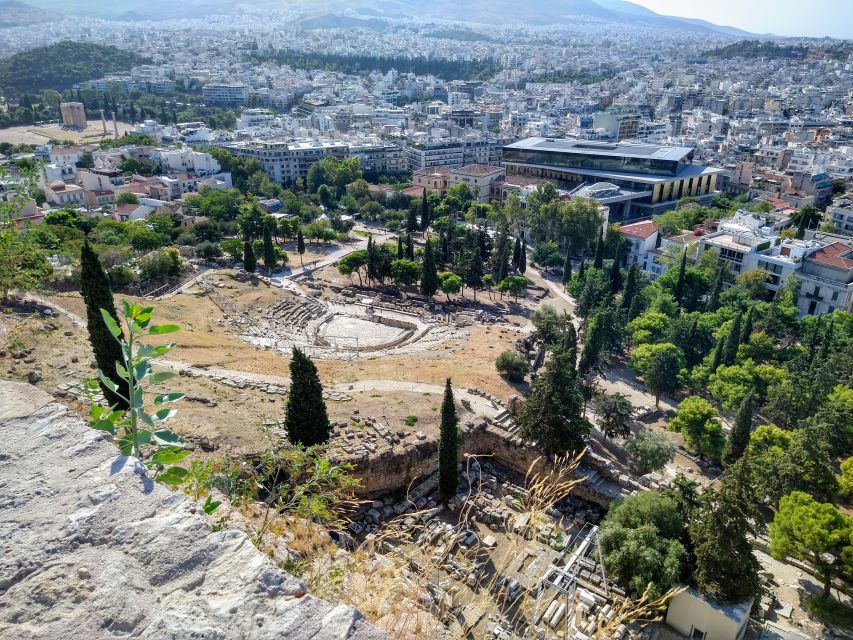
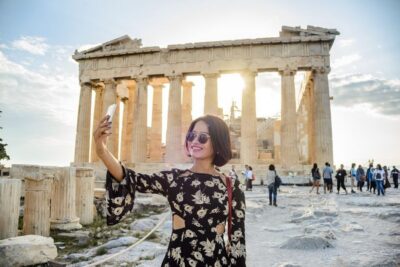
The guided Acropolis portion ends on the hill, with about 20 minutes of free time near the Parthenon. I consider this a useful feature. Some guided visits move so quickly that you leave with plenty of information but no time to take the photograph you wanted.
Use this pause for pictures and a final look across the site. You can also let the main explanation settle before heading to the museum. The tour does not describe this as a long independent exploration, so do not expect unlimited time at the top. The museum visit follows after about a two-minute walk connection from the Acropolis area.
Sun protection matters during this pause. Bring a hat, and plan for the possibility that the stone underfoot may be uneven or slippery. Food, drinks, smoking, weapons, sharp objects, and drones are not allowed according to the activity rules. Water is listed among the useful things to bring, so carry what you need for the walk while following site instructions.
Seeing the original sculptures at the Acropolis Museum
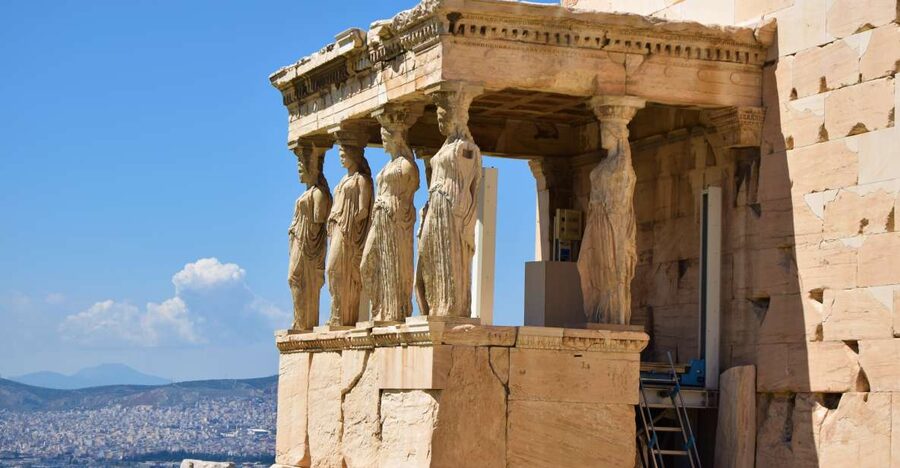
After the Acropolis, the guide takes you to the Acropolis Museum. This second half is not an optional add-on. It supplies the original sculptures and architectural pieces that help you understand what the hill once looked like.
The museum displays original statues, Parthenon sculptures, and the real Caryatids. Seeing the Caryatids here is especially valuable after standing beside the Erechtheion above. The outdoor monument gives you scale and setting. The museum lets you inspect the carving at close range.
This is where the tour’s two-part design pays off most clearly. On the hill, you deal with distance, bright sun, and the sheer size of the buildings. Inside the museum, you can focus on individual works and details your eyes cannot catch from the Acropolis. The guide can point out features you might miss on your own, a benefit that guide Jessica’s feedback emphasizes: clear explanations, good answers to questions, and attention to details that are easy to overlook.
The activity ends at the Acropolis Museum. That is convenient if you want to continue at your own pace afterward, though the tour does not include food, drinks, hotel pickup, or hotel drop-off.
How the Dutch guide shapes the visit
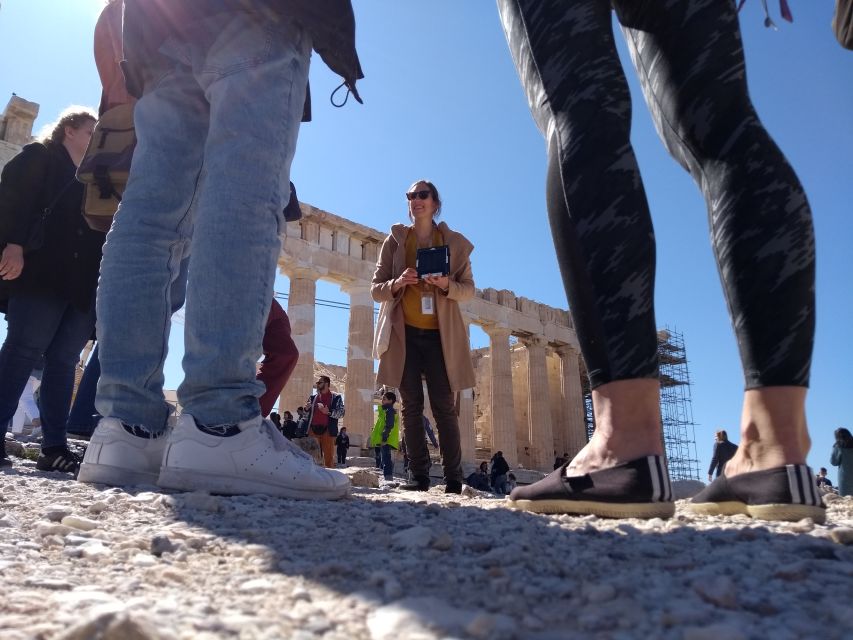
A site this famous can become a parade of familiar names. Parthenon, Erechtheion, Propylaea, next stop. The Dutch guide helps slow that down by giving the places a narrative thread.
You hear about the mythological contest for control of Athens, the city’s democratic high point, and the first theatre. Those stories help you connect religious buildings with the city’s public life. The guide also explains construction strategies, which gives you something concrete to watch for rather than asking you to admire the ruins in a general way.
The available feedback points to guide Jessica as especially clear and engaging. That does not guarantee she will lead your departure, but it gives you a useful picture of the guiding style to expect: accessible explanations, answers to questions, and attention to details a self-guided visit might pass by.
The rating is five out of five from three recorded reviews, all from Dutch customers. That is encouraging, but it is also a small sample. I would place more weight on the repeated praise for the guide’s clarity and kindness than on the perfect score alone.
Who should book this three-hour visit?
This tour suits you if you want the Acropolis explained in Dutch and prefer to handle Athens’ two major ancient sites in one compact visit. It is also a good choice if mythology helps you remember places better than a string of dates.
Families with older children may find the story-led format useful, especially if a school project or interest in Greek myths is part of the trip. One Dutch family specifically connected the visit with a grandson’s school presentation. The guide’s explanations of small details can give children more to take home than a quick photograph of the Parthenon.
You should think twice if you want long, quiet time at each monument. The entire experience lasts three hours and includes two sites, a guided climb, and only 20 minutes of free time on the Acropolis. It is focused rather than leisurely.
You should also skip it if uneven ground, sun, or uphill walking will make the visit uncomfortable. There is no elevator, and the route can be slippery at times. Pregnancy, mobility impairments, and wheelchair use are specifically listed as reasons this activity is not suitable.
Is $152 a fair price?
At $152 per person, this is a premium guided visit. The cost includes both entry tickets, a licensed Dutch-speaking guide, ticket pre-booking administration, and the planned route between the Acropolis and museum.
The price makes the most sense if you value language access and clear interpretation. You are not just paying to enter the Parthenon. You are paying to connect the Theatre of Dionysus, Herodion, Propylaea, temples, and museum into one story, with someone available to answer questions.
The value is weaker if you already know the history, speak another available tour language comfortably, or prefer to set your own pace. In that case, an independent visit may offer more time for less money. The tour’s strongest advantage is not extra time. It is the quality and convenience of a Dutch-speaking explanation across both sites.
Free cancellation up to 24 hours before the start and reserve-now, pay-later booking add flexibility. Starting times vary, so check availability before booking and choose a time that leaves you comfortable with the heat and the climb.
Should you book the Acropolis and Museum Tour in Dutch?
Book it if you want the Acropolis told as a sequence of myths, civic stories, theatre, architecture, and sculpture, all in Dutch. The route is well chosen, the museum completes what the hill begins, and the 20-minute photograph stop keeps the visit from feeling like a nonstop march.
Skip it if the $152 price is too high for a three-hour outing or if you need a flat, accessible route. For everyone else, especially Dutch-speaking visitors who want context without sorting out two separate admissions and guides, this is a focused way to meet the essential ancient sights of Athens.
FAQ
Where does the tour meet?
Meet outside Acropoli Metro station, using the Makriyianni and Dionysiou Areopagitou exit.
How long does the tour last?
The tour lasts three hours.
What language is the tour conducted in?
The live tour guide speaks Dutch.
Are admission tickets included?
Yes. Entry tickets to the Acropolis and Acropolis Museum are included, along with ticket pre-booking administration fees.
Does the tour include free time for photographs?
Yes. After the guided stops on the Acropolis, you have about 20 minutes of free time near the Parthenon for photographs.
Is the tour suitable for wheelchair users?
No. The tour is not suitable for wheelchair users or people with mobility impairments. There is no elevator, and the route includes uphill walking on uneven ground.
What should I bring?
Bring comfortable shoes, a sun hat, and water.
Can I cancel the booking?
Yes. You can cancel up to 24 hours in advance for a full refund. You can also reserve now and pay later.
Newly reviewed around Athens
- Feel Ancient thermal Spa Visit Delphi, Leonidas ℨoo Spaʀtan★ 5.0 · 4 reviews
- Food Tour★ 5.0 · 3 reviews
- Eat Your Way Through Athens: A Local Food Walk★ 4.9 · 97 reviews
- Explore the Hidden Food Gems of Athens★ 5.0 · 57 reviews
- Food Experience in Athens including Unlimited Lunch★ 5.0 · 3 reviews
- From Athens: Delphi Private Tour with Lunch Time★ 4.0 · 3 reviews
- Delphi: Spanish guided one day tour★ 4.6 · 55 reviews
- Early Entry Acropolis & Museum. Beat the Crowds & the heat★ 5.0 · 3 reviews
Athens Acropolis Tours, compared.
Acropolis & up to 5 Archaeological Sites Combo Pass
Read our review →
Acropolis, Parthenon & Acropolis Museum Guided Tour
Read our review →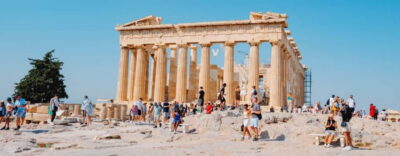
Acropolis, Parthenon & Acropolis Museum Guided Tour
Read our review →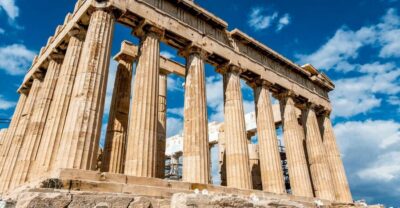
Acropolis monuments & Parthenon Walking Tour with Optional Acropolis Museum
Read our review →Browse the lists this tour appears in