
Reviewed · WALKING TOURS
Athens Social and Political Walk
Athens can show you ancient democracy in the morning and modern political tension by lunch. This 2.5-hour walk follows that contrast through government buildings, memorials, universities, and streets tied to Greece’s recent past. The guide uses street scenes as evidence, not just decoration, and explains how the modern state grew from independence in 1821 to today.
I like the clear political focus and the way Isaac, a political scientist, connects large events with everyday Greek life. I also like the slideshow of photos and extra information, which gives you something useful to review after the walk. The main drawback is that this is not a classic sightseeing tour. If you want monuments, archaeological facts, or lots of free time for photographs, the discussion-heavy format may feel demanding.
Key points to know before you book
- A political scientist leads the discussion: Isaac has guided many of the tours, while one recent booking names Bianca, so confirm your guide when arranging a private date.
- The route explains modern Greece: Expect topics from the 1821 independence movement and religion to WWII, party politics, the financial crisis, immigration, and gentrification.
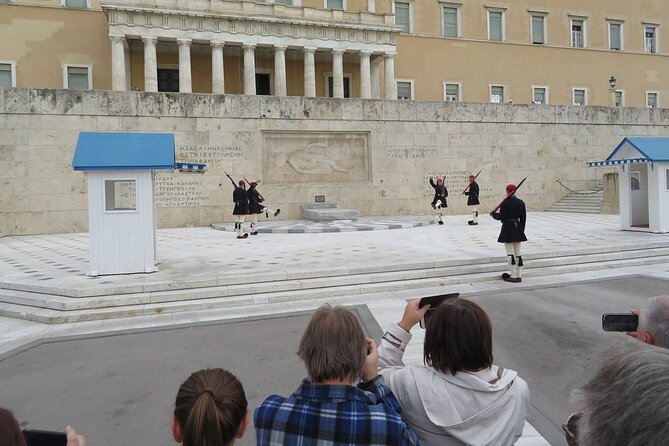
- Government buildings become teaching tools: Maximos Mansion, the Presidential Palace, Parliament, and the National Historical Museum help connect political ideas with physical places.
- The walk keeps moving: You cover central Athens on foot, ending near the National Technical University of Athens at 28is Oktovriou 42.
- The tone is serious but approachable: Isaac is known for using humor, simple explanations, and comparisons with other countries.
- The price reflects the guide’s expertise: At $47 per person, the value is strongest if you want context and conversation rather than a checklist of sights.
Why this walk gives Athens a different frame
Many Athens tours begin with the Acropolis and move backward into classical history. This one begins with a harder question: how did the birthplace of democracy become associated with debt, austerity, and political crisis?
The point is not to force one tidy answer on you. Instead, the walk traces how Greece changed from an Ottoman province into a modern European state, then asks how religion, language, foreign influence, party politics, and economic policy shaped that journey.
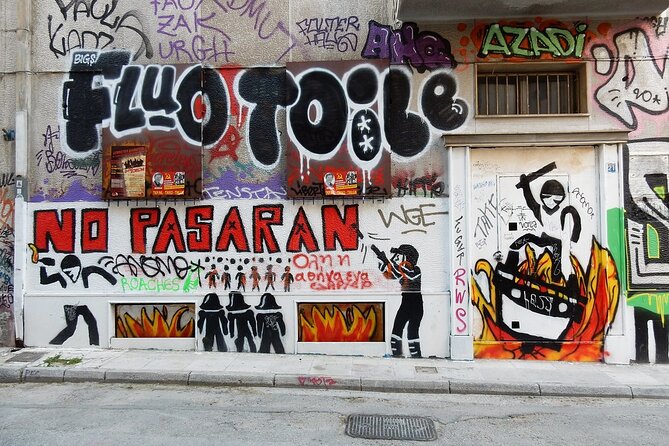
That approach matters because modern Greek life can be hard to read from the outside. A government building may look formal and distant, while a university wall or memorial can carry memories of protest, violence, or national struggle. Your guide helps you see why these places matter now.
I especially like that the tour aims to let you form your own opinion. The guide presents competing pressures rather than treating Greece as either a victim or a villain in the financial crisis. You should expect explanation and debate, not a single political message.
The tone also seems to be one of the experience’s strongest features. Isaac brings humor into difficult subjects and makes complex ideas easier to follow. That is useful when the discussion moves from the Byzantine and Ottoman periods to neoliberal economics, immigration, and urban change.
More walking tours in Athens:
- Athens: Acropolis and Parthenon Guided Walking Tour
★ 4.6 · 5,882 reviews - Greek Food Walking Tour in Athens
★ 5.0 · 4,740 reviews - Acropolis: Acropolis and Parthenon Guided Walking Tour
★ 4.7 · 3,442 reviews
Starting near Planetwonk and meeting the city on foot
The walk begins at the Planetwonk meeting point in central Athens. Exact meeting instructions and starting times should be confirmed when you book, especially because the provider invites you to arrange a date and hour that suits you.
This is a walking experience from start to finish. There is no coach ride to break up the route, so comfortable shoes matter. You will be moving between public buildings, gardens, streets, memorial sites, and university areas, with the guide stopping to explain the political meaning of each setting.
The route is listed as wheelchair accessible. Still, the practical ease of the walk can depend on the exact pace and conditions of the streets, so raise any mobility needs when arranging your time.
A small group can make this kind of tour much better. One participant described a group of seven, which is a useful size for questions and conversation. The supplied information does not promise a fixed maximum group size, so ask if group size is important to you.
Maximos Mansion and the working face of power
The first major stop is Maximos Mansion, the official residence and office of Greece’s prime minister. This is where the tour moves from broad history to the mechanics of modern government.
You can expect a discussion of how political power is organized in Greece and how national decisions affect society. The building gives the conversation a clear anchor: instead of hearing about party politics in the abstract, you are looking at one of the country’s most important political addresses.
This stop is more about interpretation than entry. The information provided describes an exterior walking route, not a visit inside the buildings. If you expect palace rooms or formal interiors, adjust your expectations.
The Presidential Palace and the National Garden
From Maximos Mansion, the route continues to the Presidential Palace. Together, these two state buildings let the guide explain the difference between executive roles and the wider political system.
The palace also provides a useful pause from the city’s hard surfaces. The walk then passes through the National Garden, where the setting changes from official buildings to public space. That contrast helps bring the conversation back to ordinary life. Political institutions may be formal, but their decisions reach families, workers, students, and communities across Greece.
This part should suit you if you like learning through place. You are not simply told when a government office was built. You are encouraged to think about what power looks like, where it is displayed, and how citizens relate to it.
A different kind of day out from Athens:
- Athens: Acropolis & up to 5 Archaeological Sites Combo Pass
★ 4.4 · 12,619 reviews - Athens: Acropolis Ticket with Optional Audio or Live Guide
★ 4.2 · 11,055 reviews - Athens: Acropolis, Parthenon & Acropolis Museum Guided Tour
★ 4.8 · 9,316 reviews - Athens: Cape Sounion & Poseidon Temple Sunset Half-Day Trip
★ 4.8 · 8,241 reviews
Parliament and the symbols of the modern state
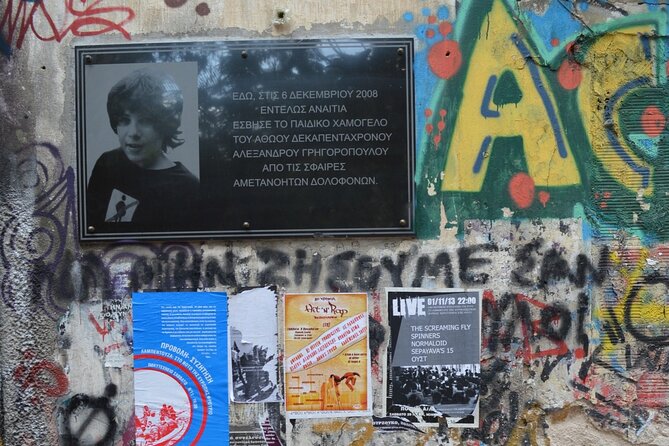
The Hellenic Parliament is one of the route’s most obvious political landmarks. Here the guide can place modern Greece’s institutions against the longer story of independence, nation-building, monarchy, military rule, and parliamentary politics.
The discussion may be especially useful for visitors who know the ancient idea of democracy but have little sense of Greece after 1821. The walk links the famous classical past to the difficult work of building a modern country.
At Parliament, you should listen for the relationship between national identity and political change. Themes named for the tour include language, religion, Europe, and the economy. These subjects are not side notes. They help explain why arguments about Greece can become so closely tied to identity and belonging.
There may not be much time for an extended photo stop. The experience is built around walking and conversation, so keep your camera ready but give your attention to the guide.
The National Historical Museum and Greece after independence
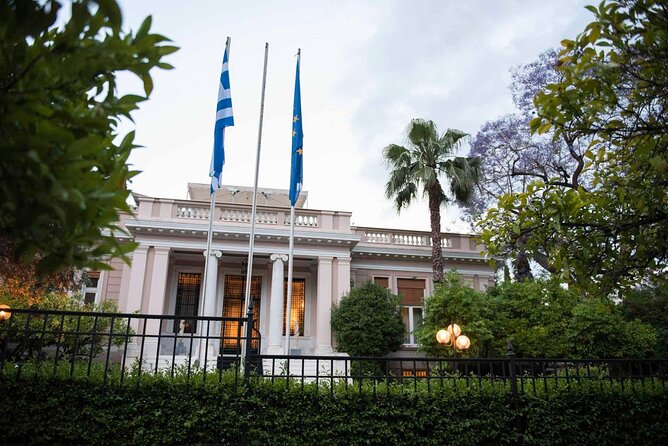
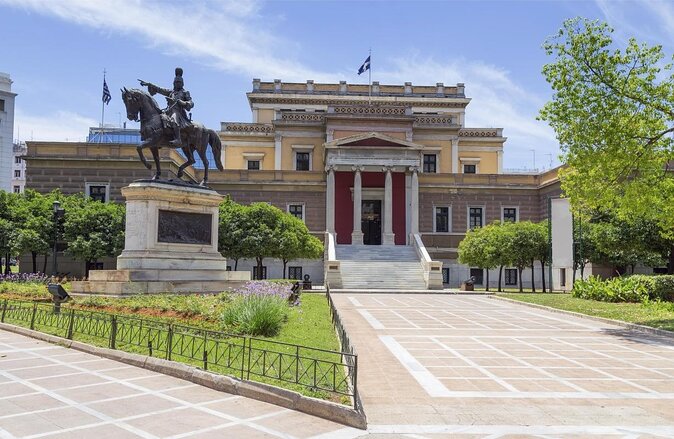
The National Historical Museum gives the route another strong reference point. Its subject matter supports the walk’s focus on modern Greece rather than the ancient world.
The guide uses the country’s path from independence to the present as the main thread. Discussions can include the Byzantine and Ottoman eras, the 1821 independence struggle, WWII, the postwar years, and the development of political parties.
This is where the tour’s value becomes clear for anyone who has visited Greece before but still finds its recent history confusing. You do not need a background in political science. The guide’s role is to sort complex events into a story you can follow.
One useful feature is the use of comparisons with other countries. Isaac has drawn on international examples to explain Greece’s political climate, giving you reference points beyond the usual tourist version of the country.
Memorial sites, university streets, and the memory of protest
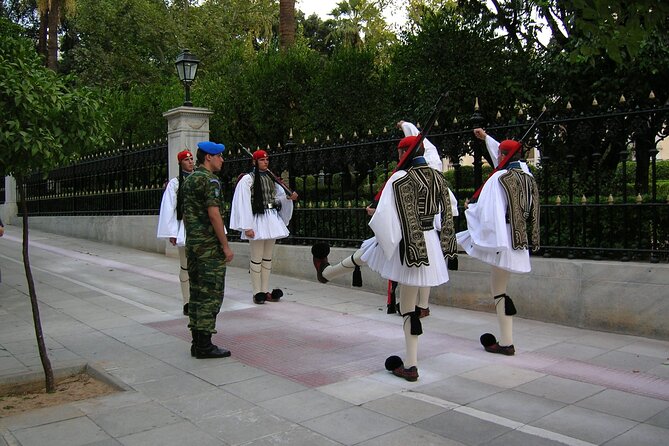
The walk then reaches less familiar stops, including Korai 4, a memorial site connected with 1941 to 1944. This part of the route brings WWII and occupation into the conversation.
A memorial can make national history feel less remote. It also helps explain why memory remains important in political life. The guide can connect wartime experiences with later debates about authority, resistance, and national responsibility.
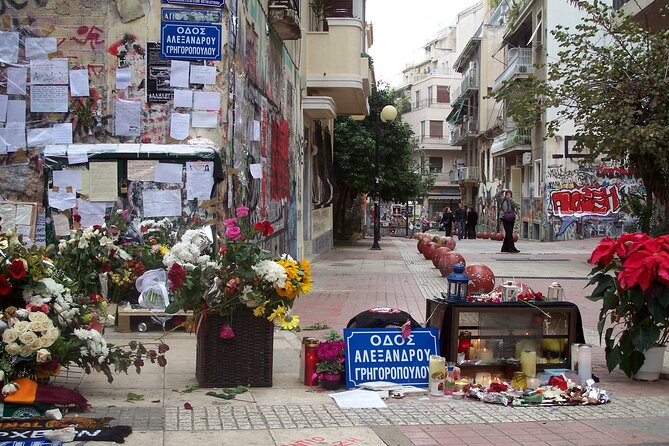
From there, the route continues along Panepistimiou and toward the National Technical University of Athens. These university areas are important for understanding protest and the role of students in modern Greek politics.
The National Technical University is closely associated with the student uprising and massacre remembered in Greece. The experience uses this setting to discuss political repression, postwar society, and the tensions that shaped later generations.
This may be one of the most emotionally serious parts of the walk. It is also one of the most useful because it shows that politics in Greece is not only about elections or government offices. It is also about public memory, student movements, police power, and the right to challenge authority.
The route includes several stops described simply as lesser-known places. Their exact details are not specified, so you should expect the guide to use them as local reference points rather than formal attractions with set admission times.
From the financial crisis to everyday Athens
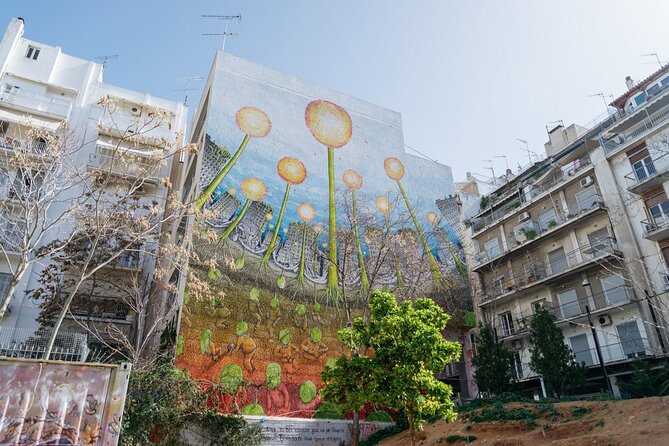
The walk’s central question comes back into focus when the discussion reaches the 2008 financial crisis and its aftermath. Greece’s debt problems, austerity measures, unemployment, and relationship with European institutions changed how the country was discussed around the world.
A useful guide should avoid reducing the crisis to a simple story about national habits or outside punishment. This experience is designed to examine the political and social forces behind the crisis and help you decide how to understand them.
The conversation also reaches immigration and gentrification. These topics connect national policy with the streets around you. Athens is not only a capital shaped by ministries and elections. It is also a city where neighborhoods change, new arrivals settle, rents shift, and residents debate who the city is for.
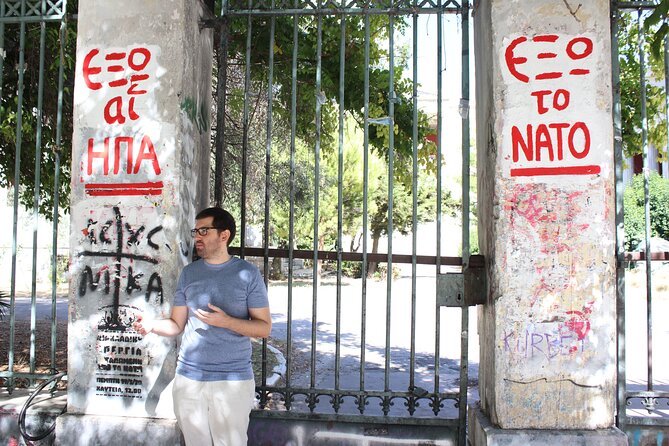
This is where the tour may be most valuable to you as a visitor. A short walk cannot explain every economic or social issue, but it can give you a sharper set of questions. Afterward, you may notice political posters, public memorials, student spaces, and neighborhood changes in a different way.
How much value do you get for $47?
At $47 per person, this is not the cheapest way to spend 2.5 hours in Athens. You can walk past most central landmarks for free. The price makes sense if you want a specialist guide who can explain connections that are easy to miss on your own.
You are paying for a structured story, live questions, political context, and the guide’s ability to make difficult material understandable. The slideshow with photos and extra information adds value because it gives you a way to revisit the issues afterward.
The price is less attractive if your main goal is seeing interiors, taking posed photographs, or covering ancient sites. You will not get the Acropolis, the Parthenon, or a museum-heavy sightseeing program here.
I would place this experience in the best-value category for curious visitors who already have their basic Athens sightseeing planned. It can also work early in your stay, since the social and political context may help you understand later encounters with the city.
Who should book this Athens walk?
You should consider it if you enjoy asking why a place works as it does. It suits politics enthusiasts, history students, journalists, teachers, and visitors who want more than a postcard view of Greece.
It is also a good choice if you have lived in Greece or spent several months there but still feel unsure about modern politics. One participant who had been living in Greece for six months still found the discussion eye opening, which tells you that the tour goes beyond basic orientation.
The experience may not suit young children or anyone who needs constant visual attractions. Political history, economics, religion, and social policy require attention. The humor helps, but this remains an analytical walk.
English and Spanish are offered. The tour is wheelchair accessible, and free cancellation is available up to 24 hours before the start time. You can also reserve now and pay later, which is handy if your schedule is still shifting.
My practical verdict on Planetwonk’s approach
I like the honesty of the format. The tour does not pretend that Greece can be understood through ancient ruins alone, and it does not turn the financial crisis into a quick morality tale.
The strongest element is the guide’s ability to make complicated subjects plain. Isaac receives repeated praise for his explanations, humor, openness to questions, and ability to connect Greece with other countries. Those qualities matter more here than a polished route or a long list of monuments.
The main caution is simple: know what you are booking. This is a discussion-led walk through central Athens, not a standard city tour. Some stops are exterior viewpoints, and the route includes difficult subjects such as political violence, occupation, economic hardship, immigration, and protest.
Should you book it?
Book this tour if you want to understand modern Greece through its institutions, memories, conflicts, and public spaces. At $47, it offers good value when you care more about context than sightseeing quantity.
Skip it if you want ancient history, museum interiors, or a relaxed stroll with only light commentary. For everyone else, this is a strong choice for the first half of an Athens visit, especially if you can arrange a small group and come ready with questions.
FAQ
How long does the Athens Social and Political Walk last?
The walk lasts 2.5 hours.
How much does the experience cost?
The listed price is $47 per person.
Which languages are available?
The walk is offered in English and Spanish.
Who leads the experience?
The experience is led by a political scientist. Isaac is named as the guide in several bookings, while one booking names Bianca, so you should confirm the guide when arranging your date.
Is the walk wheelchair accessible?
Yes, the activity is listed as wheelchair accessible.
Can I cancel for a full refund?
Yes. You can cancel up to 24 hours in advance for a full refund. You can also reserve now and pay later.
Newly reviewed around Athens
- Feel Ancient thermal Spa Visit Delphi, Leonidas ℨoo Spaʀtan★ 5.0 · 4 reviews
- Food Tour★ 5.0 · 3 reviews
- Explore the Hidden Food Gems of Athens★ 5.0 · 57 reviews
- Food Experience in Athens including Unlimited Lunch★ 5.0 · 3 reviews
- Eat Your Way Through Athens: A Local Food Walk★ 4.9 · 97 reviews
- Early Entry Acropolis & Museum. Beat the Crowds & the heat★ 5.0 · 3 reviews
- From Athens: Delphi Private Tour with Lunch Time★ 4.0 · 3 reviews
- Delphi: Spanish guided one day tour★ 4.6 · 55 reviews
Walking Tours, compared.

Acropolis monuments & Parthenon Walking Tour with Optional Acropolis Museum
Read our review →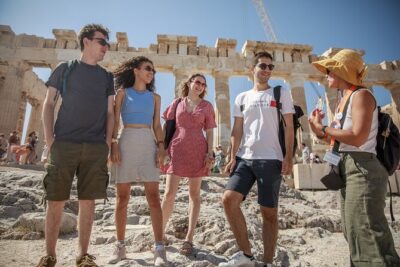

Athens Authentic Greek Food Walking Tour (Small Group)
Read our review →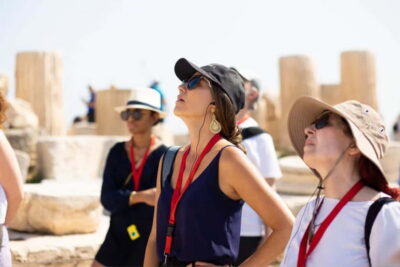
Early Morning Acropolis & Old Athens Guided Walking Tour
Read our review →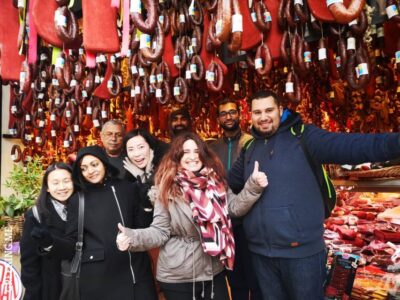
Browse the lists this tour appears in