
Reviewed · ATHENS ACROPOLIS TOURS
Athens Private Tours: Acropolis and Acropolis Museum
The Acropolis is best understood with someone who can connect the weathered marble to the city, politics, and daily life of ancient Athens. This five-hour outing pairs the hilltop monuments with the Acropolis Museum, then adds a useful drive through modern Athens, including the Panathenaic Stadium and Greek Parliament.
I like the small group size, limited to eight, and the fact that entrance fees, transport, and a guide are included. I also like the museum pairing: after seeing the Acropolis in the open air, you can study its sculpture and architecture in a clear, modern setting. The main consideration is the $438-per-person price, which is a serious splurge, especially for solo visitors or larger families.
Key points at a glance
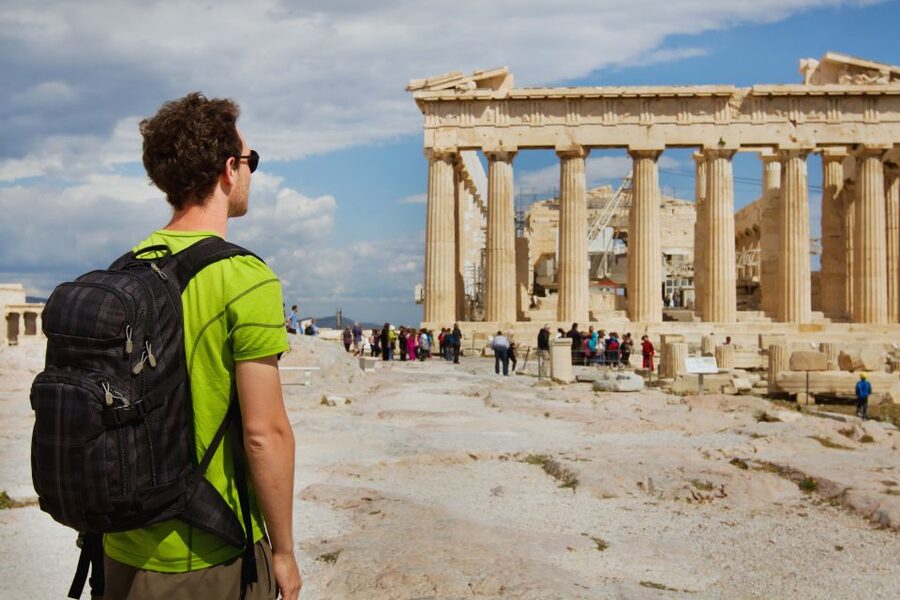
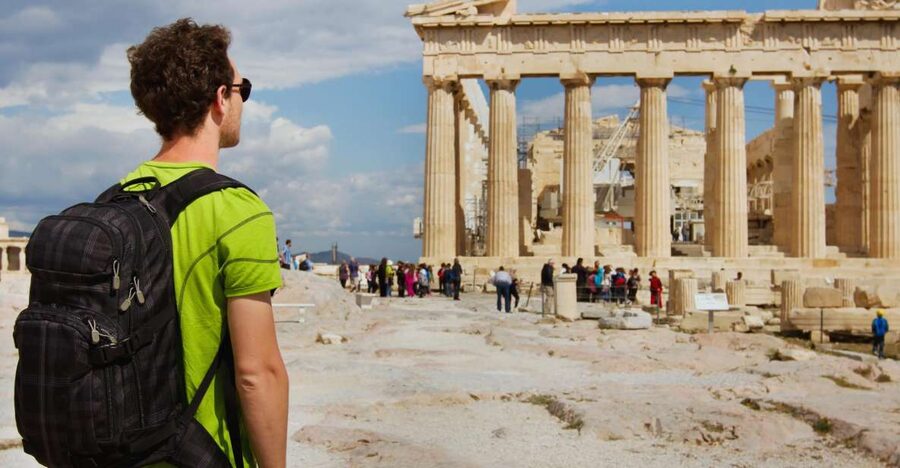
- Acropolis highlights: Visit the Propylaea, Temple of Athena Nike, Parthenon, and Erechtheion.
- Museum pairing: See Caryatids, archaic statues, votive objects, daily-life artifacts, and Parthenon sculptures.
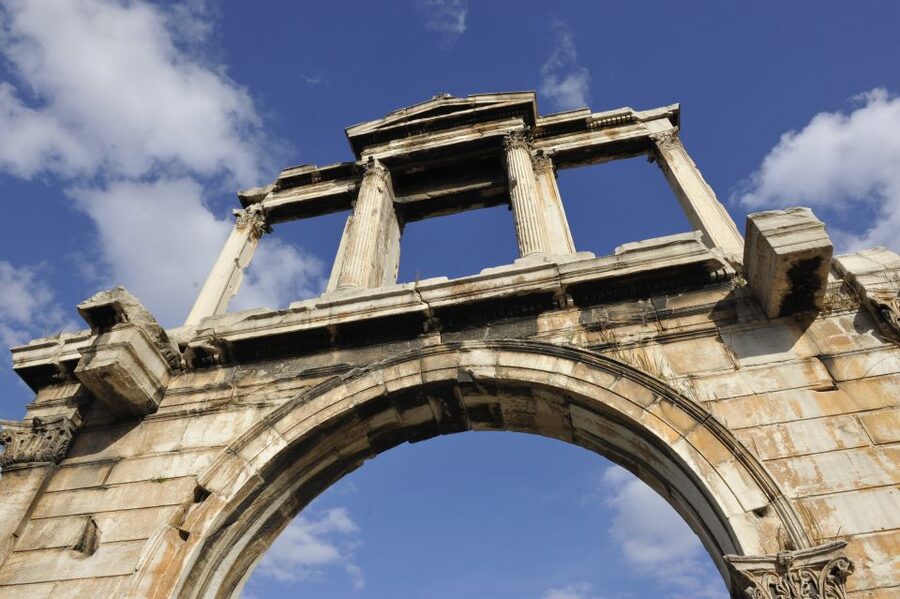
- Athens overview: Pass the Panathenaic Stadium, Syntagma Square, Parliament, National Gardens, Hadrian’s Arch, and Omonia Square.
- Small-group format: Travel with no more than eight participants in an air-conditioned bus, minivan, or taxi.
- Personal guiding: Guides such as ViVi and Matina have been praised for clear commentary and for adjusting the pace to families.
- Flexible planning: Hotel pickup is included from most centrally located Athens hotels, and the tour ends at the museum or can include a return to your hotel.
Why this five-hour Athens tour works
This is not just an Acropolis entrance with a quick explanation at the gate. The outing gives you a first look at Athens from several angles: the ancient religious center on the Acropolis, the birthplace of the modern Olympic Games, the seat of the Greek government, and a museum built to display finds from the hill above.
That broader route matters. If you arrive in Athens without a plan, the city can feel like a jumble of ruins, traffic, squares, and modern buildings. A guide helps you place the major sights on a mental map. The route through Syntagma Square, the National Gardens, Hadrian’s Arch, and Omonia Square gives you useful orientation for the rest of your stay.
The tour is described as private, but the operating format is limited to eight people rather than necessarily being exclusive to one booking party. Ask when reserving if you want a vehicle and guide reserved only for your group. For many people, a maximum of eight is still a good compromise between personal attention and the cost of a fully private tour.
More ways to see the Acropolis:
- Athens: Acropolis & up to 5 Archaeological Sites Combo Pass
★ 4.4 · 12,619 reviews - Athens: Acropolis Ticket with Optional Audio or Live Guide
★ 4.2 · 11,055 reviews - Athens: Acropolis, Parthenon & Acropolis Museum Guided Tour
★ 4.8 · 9,316 reviews
Starting at the Panathenaic Stadium
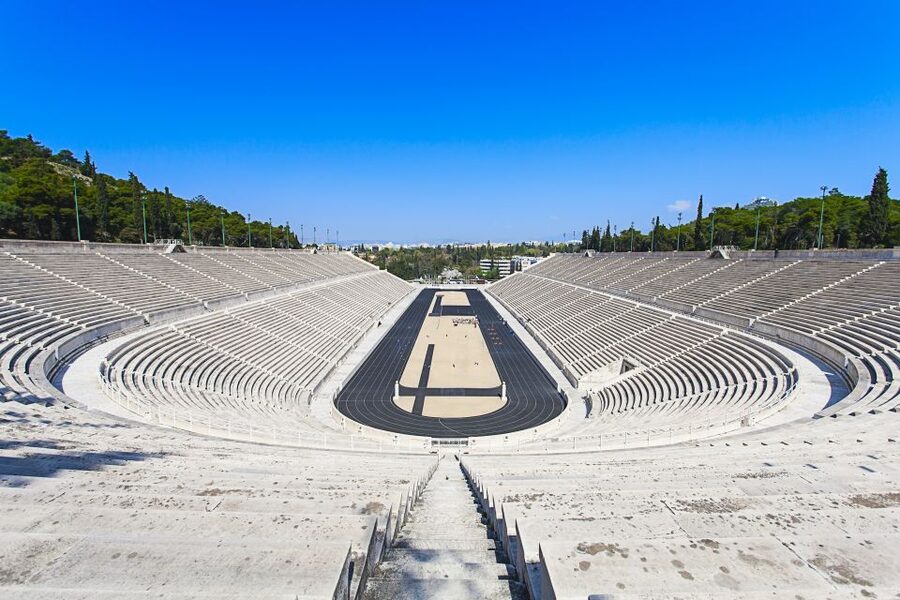
The first major stop is the Panathenaic Stadium, the long, white-marble stadium associated with the first modern Olympic Games in 1896. It was built on the site of an ancient stadium and gives you a direct link between classical Greek ideals and the modern international sporting event.
This stop is especially useful before the Acropolis because it shows how later generations reused ancient Greek symbols. You are not only looking at old stones. You are seeing how modern Greece presented itself to the world.
The stadium is a photo-friendly stop, but the exact amount of time here is not specified. Since the whole experience lasts five hours, your guide will need to balance stops like this with the Acropolis and museum, the two main visits. If you want a long stadium visit, ask about the planned timing before the day begins.
Syntagma Square, Parliament, and the Evzones
The vehicle continues toward Syntagma Square and the former Royal Palace, now the Greek Parliament. Outside, the Evzone Guards wear their distinctive uniforms and perform ceremonial duties at the Tomb of the Unknown Soldier.
The uniforms are colorful and highly stylized, with amber tones and traditional details. The guards are not simply decorative figures for photographs. Their presence links the modern Greek state with national military and cultural traditions.
The route also passes Constitution Square, the Numismatic Museum in Heinrich Schliemann’s house, and the Catholic Cathedral of Agios Dionysios Aeropagitis. These sights are viewed during the city drive rather than presented as full interior visits. That distinction matters. You get a broad introduction, but you should not expect a detailed museum visit at every stop.
The National Gardens and ancient monuments
Near Syntagma, the tour passes the Zappion Conference Center in the National Gardens of Greece. This part of the route adds a quieter counterpoint to the traffic and formal buildings around the square.
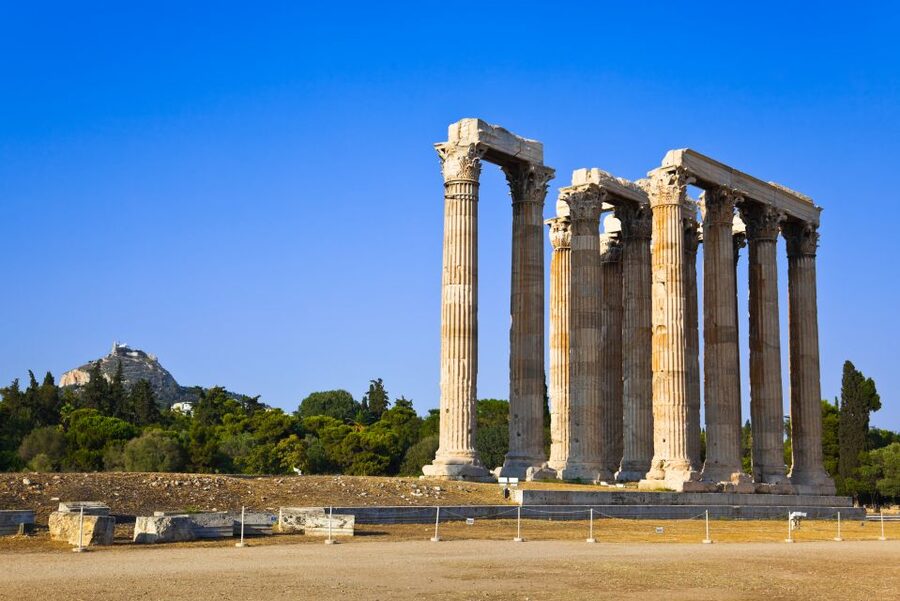
You also pass the Roman Temple of Olympian Zeus and Hadrian’s Arch. The temple once formed part of a huge sanctuary dedicated to Zeus, while the arch marked a symbolic division between the old Greek city and the later Roman expansion. Even from the vehicle, these monuments help explain how Athens changed long after the classical period.
The tour also includes the Tomb of the Unknown Soldier and additional views of the Evzones. Since several of these sights are pass-by stops, I would treat them as orientation points rather than replacements for a dedicated walking tour of central Athens.
More museums and ancient sites in Athens:
- Athens: Acropolis, Parthenon & Acropolis Museum Guided Tour
★ 4.8 · 3,579 reviews - Acropolis monuments & Parthenon Walking Tour with Optional Acropolis Museum
★ 5.0 · 2,678 reviews - Athens: Acropolis Museum Ticket with optional Audio Guide
★ 4.4 · 2,652 reviews - Parthenon & Acropolis Museum with Audio or Live Tour Option
★ 4.1 · 2,446 reviews
Entering the Acropolis through the Propylaea
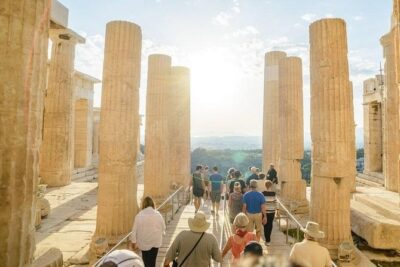
The Acropolis is the heart of the outing. You enter through the Propylaea, the monumental gateway that frames the approach to the sacred hill. It is easy to hurry toward the Parthenon, but the gateway deserves attention. Its scale and position make the climb feel ceremonial.
The Acropolis is perched above the city, so expect uneven marble surfaces, steps, and exposed areas. The experience is not suitable for wheelchair users. Comfortable footwear is important, and you should be ready for a physically active portion of the day, even though the tour uses a vehicle between sites.
Your guide can help you read the Acropolis as more than a single temple. The site includes several monuments with different purposes and dates, and the remains can be difficult to interpret without context. Having one person explain the layout saves you from trying to reconstruct the hill from scattered signs.
The Parthenon, Athena Nike, and Erechtheion
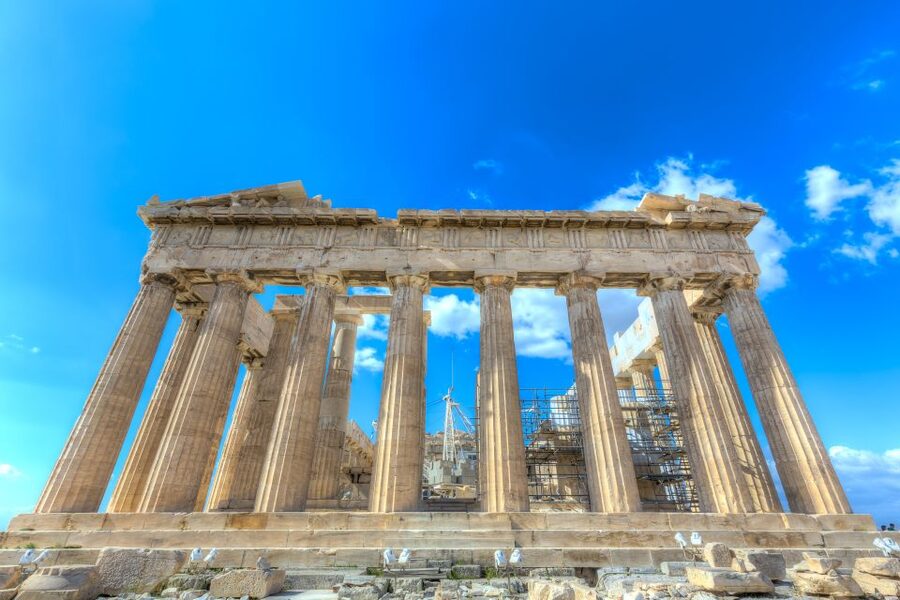
The Parthenon is the headline sight, and rightly so. Its columns, sculptural decoration, and commanding position make it one of the most recognizable monuments in the world. Yet the best Acropolis visit does not stop at the famous temple.
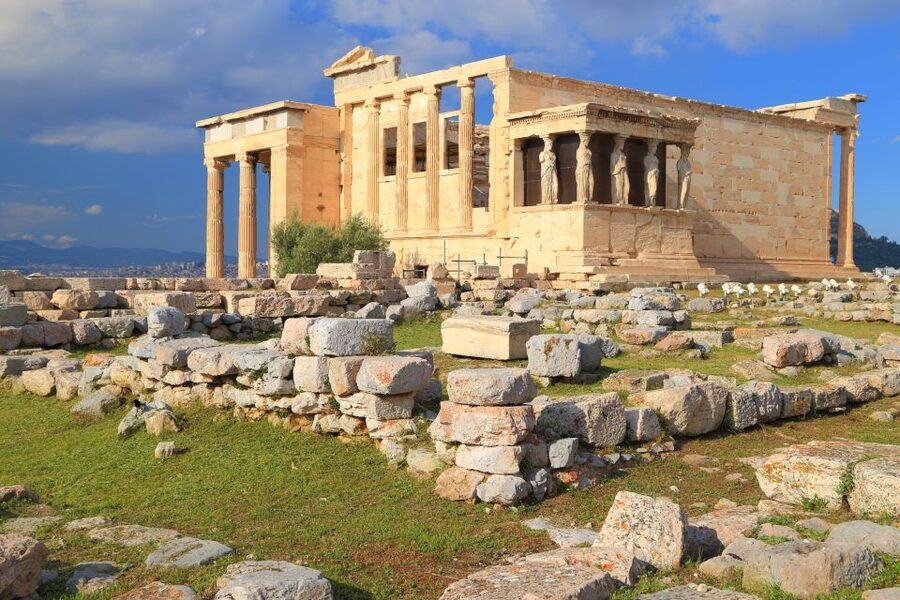
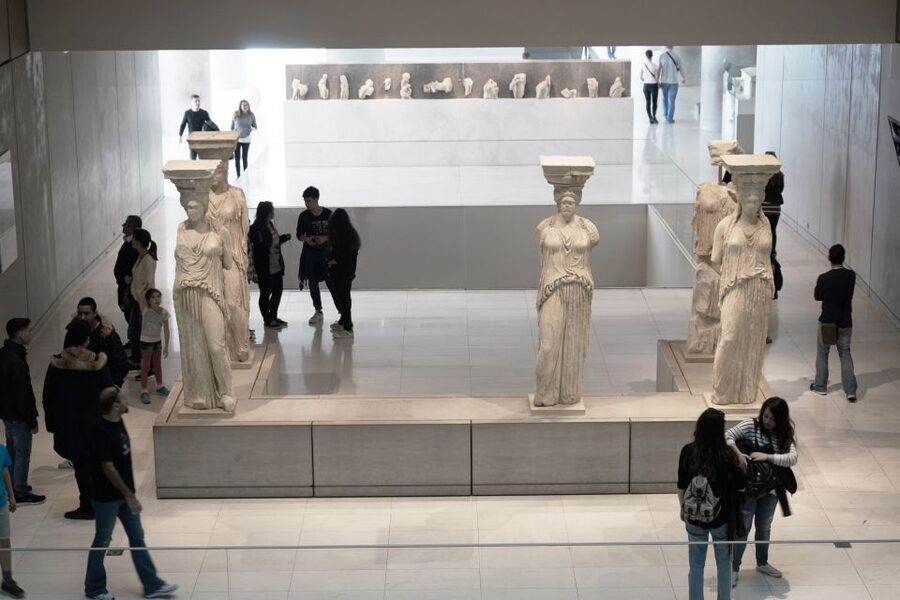
The Temple of Athena Nike sits near the entrance and is associated with victory. Its smaller scale makes a sharp contrast with the Parthenon. The Erechtheion is known for the Porch of the Maidens, where sculpted female figures serve as architectural supports. The original Caryatids are now protected in the Acropolis Museum, while copies remain on the hill.
This is where a private or small-group guide earns much of the fee. The monuments are visually powerful, but the details are easy to miss: the relationship between buildings, the role of sculpture, and the way the hill functioned as a religious center. Good commentary also keeps the visit from becoming a string of names and dates.
The exact order of the Acropolis visit can change. Starting times are approximate, and you can request an earlier or later start after booking. That flexibility may help you fit the tour around a flight, hotel check-in, or another Athens plan, but confirm the final time directly.
Walking past Herodion and the Theater of Dionysus
After the main Acropolis monuments, the route continues past the Herodion and the Theater of Dionysus. These spaces show that the Acropolis was connected to performance and civic life, not only temples and religious ceremonies.
The Theater of Dionysus is tied to the development of Greek drama. The Herodion, also called the Odeon of Herodes Atticus, is a Roman-era theater built into the southern slope. You may see these sites as part of the walk toward the museum rather than as a separate, extended theater visit.
This short walk is a useful transition. You leave the exposed hilltop and move toward a museum where many of the fragile objects from the Acropolis can be seen at close range.
The Acropolis Museum puts the stones in context
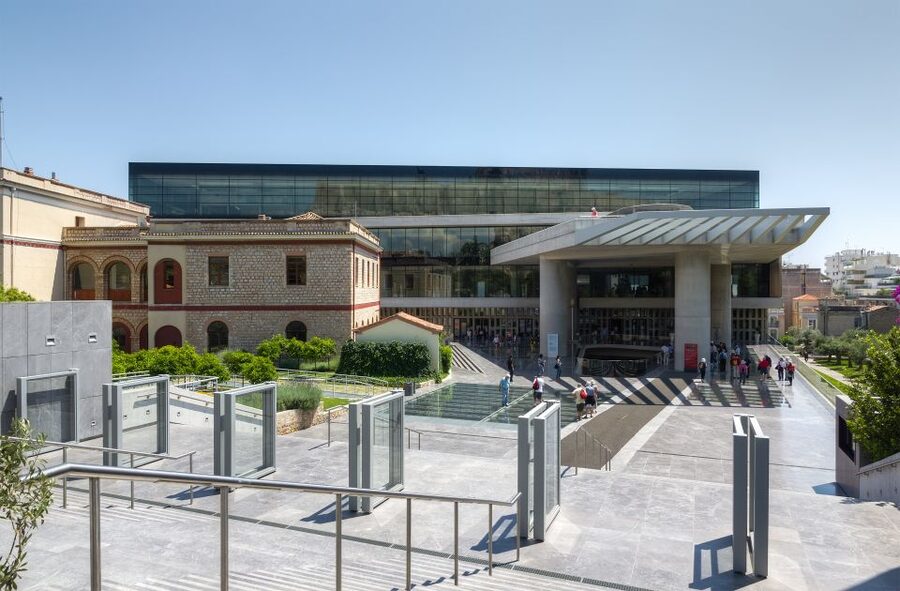
The new Acropolis Museum is the other major reason to choose this tour. Its galleries hold votive offerings, objects from ordinary life, archaic statues, the Caryatids, and pieces connected with the Parthenon’s pediments, metopes, and frieze.
The museum changes how you see the Acropolis. On the hill, you experience scale, height, and open sky. Inside, you can study sculpture, surface detail, and the remains that cannot safely stay outdoors. The museum also gives you a clearer sense of what the monuments looked like before centuries of damage and loss.
I particularly like the pairing of the Erechtheion with the Caryatids in the museum. Seeing the copies outside and the protected originals inside helps you understand why the museum visit is not an optional add-on. It completes the site.
The museum is spacious and arranged for easy viewing, according to the practical experience described for the tour. That makes it a good fit for families and for anyone who finds large archaeological sites tiring. You can slow down here, ask questions, and focus on the objects that interest you most.
The official tour ends at the Acropolis Museum. You can continue exploring independently, or request a return to your hotel. If you want extra museum time, ask how long the guide plans to stay with you before the tour begins.
A guide can make the difference

The strongest part of this experience is likely to be the guide. Past guide names associated with the tour include ViVi and Matina, with drivers such as Chris and Mr. Takiz also receiving specific praise. Guides can change, so these names should not be treated as a guarantee for your booking.
The useful detail is not simply that the guides provide commentary. Matina was able to adjust the pace for a family with young children without skipping the main sights. ViVi was described as well connected in Athens, and her familiarity with the city added a local feel to the route. The practical lesson is to tell your guide what your group needs at the start.
Families should ask for a pace that allows children to pause and look without turning the visit into a race. Adults who want detailed archaeology should say so as well. A good guide can spend less time on sights you already understand and more time on the Acropolis buildings or museum objects that are new to you.
The driver matters, too. City traffic and narrow streets can make the vehicle portion tiring if the arrangements are poor. Included transport in a deluxe air-conditioned bus, minivan, or taxi keeps you from having to organize several separate rides.
Is $438 per person good value?
At $438 per person, this is not a budget Athens sightseeing option. The price is easiest to justify if you value private attention, hotel pickup, included admission, and a carefully managed route through the city.
You are paying for:
- Five hours with a professional guide
- Acropolis admission
- Acropolis Museum admission
- Air-conditioned transportation
- Pickup from most centrally located Athens hotels
- A group limited to eight participants
Admission fees alone do not explain the full cost. The main value comes from saving planning time and having someone connect the Acropolis to the rest of Athens. If you have only one day in the city, that can be worth a lot.
The price is harder to justify if you are comfortable using public transport, reading site information on your own, and visiting the Acropolis and museum independently. It is also a major expense for a family of four or more. In that case, compare the total group price with an exclusive private booking and with self-guided admission.
The strongest case for booking is a first visit, a short stay, older family members who appreciate vehicle transport, or anyone who wants a guide to handle the sequence of sights. The weaker case is a repeat visit focused on spending long, quiet hours inside the museum or walking Athens at your own pace.
Timing, pickup, and group size
The tour lasts five hours, but the starting time is approximate. You can request an earlier or later start after booking. That is useful, but do not assume a preferred time is automatic. Confirm it with the operator.
Pickup is included from most centrally located Athens hotels. If your accommodation is outside the central area, ask before relying on hotel pickup. The transport may be a bus, minivan, or taxi depending on group size.
The group limit is eight. That is small enough for questions and reasonable movement through the sites, but it is not the same as a one-couple private tour. If you want total control over stops, pace, and return time, confirm whether your reservation is exclusive.
The tour is offered in English. Other languages may be possible by request, so ask before booking rather than assuming a different-language guide is available.
Free cancellation is available up to 24 hours before the tour for a full refund, and you can reserve now and pay later. Those terms are helpful when your Athens schedule is still changing, but check the final conditions at booking.
Who should book this experience?
I would put this near the top of the list for a first-time visitor who wants the Acropolis explained properly and also wants a quick introduction to the city around it. The route covers enough ground to give you bearings without requiring you to plan several separate visits.
Families are another good match. The vehicle reduces some of the city logistics, the group is limited to eight, and the guide can adjust the pace. Still, young children may find the five-hour combination of driving, uphill walking, ancient stones, and museum time demanding.
It also suits visitors who prefer a clear schedule and personal commentary over independent wandering. You see the main classical monuments, several modern Athens landmarks, and the museum in one block.
I would think twice if you need wheelchair access, want a long unhurried museum visit, or are mainly looking for the lowest possible price. The Acropolis portion includes uneven surfaces and the tour is specifically not suitable for wheelchair users.
Should you book the Athens Acropolis and Museum tour?
Book it if you want the Acropolis and museum handled in one well-organized half-day, with transport and a guide taking care of the route. The Panathenaic Stadium, Parliament, Evzones, National Gardens, Hadrian’s Arch, and central Athens drive add useful context, while the museum gives the ancient monuments a second, closer look.
Skip it if $438 per person feels too high for a five-hour outing or if you prefer to set your own pace. Before paying, confirm whether your booking is fully private or part of the eight-person small group, ask about the start time and language, and tell the guide if your party includes young children.
For the right visitor, the value is not in simply seeing more sights. It is in seeing the Acropolis with a clear explanation, then leaving with a workable map of Athens in your head.
FAQ
How long does the tour last?
The tour lasts five hours.
What sights are included?
The experience includes the Acropolis, Acropolis Museum, Panathenaic Stadium, Greek Parliament, Syntagma Square, National Gardens, Zappion Conference Center, Roman Temple of Olympian Zeus, Hadrian’s Arch, Tomb of the Unknown Soldier, Numismatic Museum exterior area, Catholic Cathedral of Agios Dionysios Aeropagitis, Omonia Square, Herodion, and Theater of Dionysus.
Are entrance fees included?
Yes. Admission to both the Acropolis and Acropolis Museum is included.
Is transportation included?
Yes. Transportation is provided in a deluxe, air-conditioned bus, minivan, or taxi, depending on the group size.
Is hotel pickup available?
Pickup is included from the majority of centrally located hotels in Athens.
How large is the group?
The group is limited to eight participants. Confirm whether your booking is exclusive if you require a fully private vehicle and guide.
What language is the tour offered in?
The tour is offered in English. Other languages may be available by request.
Is the tour suitable for wheelchair users?
No. The tour is not suitable for wheelchair users.
Newly reviewed around Athens
- Feel Ancient thermal Spa Visit Delphi, Leonidas ℨoo Spaʀtan★ 5.0 · 4 reviews
- Food Tour★ 5.0 · 3 reviews
- Explore the Hidden Food Gems of Athens★ 5.0 · 57 reviews
- Food Experience in Athens including Unlimited Lunch★ 5.0 · 3 reviews
- Eat Your Way Through Athens: A Local Food Walk★ 4.9 · 97 reviews
- From Athens: Delphi Private Tour with Lunch Time★ 4.0 · 3 reviews
- Delphi: Spanish guided one day tour★ 4.6 · 55 reviews
- Early Entry Acropolis & Museum. Beat the Crowds & the heat★ 5.0 · 3 reviews
Athens Acropolis Tours, compared.
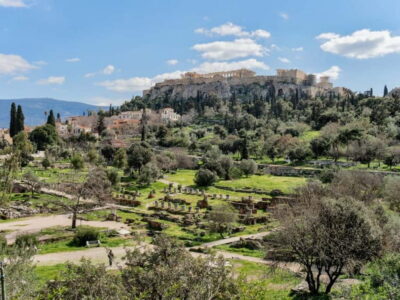
Acropolis & up to 5 Archaeological Sites Combo Pass
Read our review →
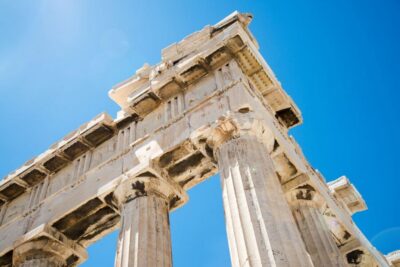
Acropolis, Parthenon & Acropolis Museum Guided Tour
Read our review →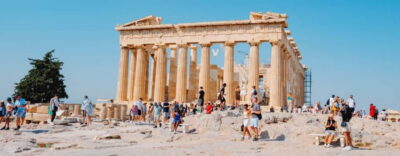
Acropolis, Parthenon & Acropolis Museum Guided Tour
Read our review →

Acropolis monuments & Parthenon Walking Tour with Optional Acropolis Museum
Read our review →Browse the lists this tour appears in