
Reviewed · ATHENS ACROPOLIS TOURS
Athens: Private Acropolis Tour with focus on Kids & Families
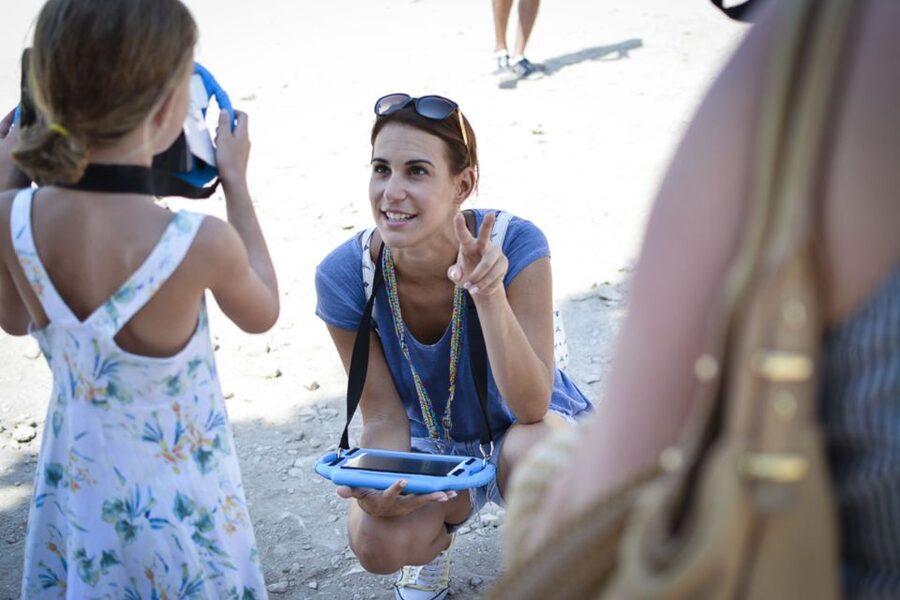
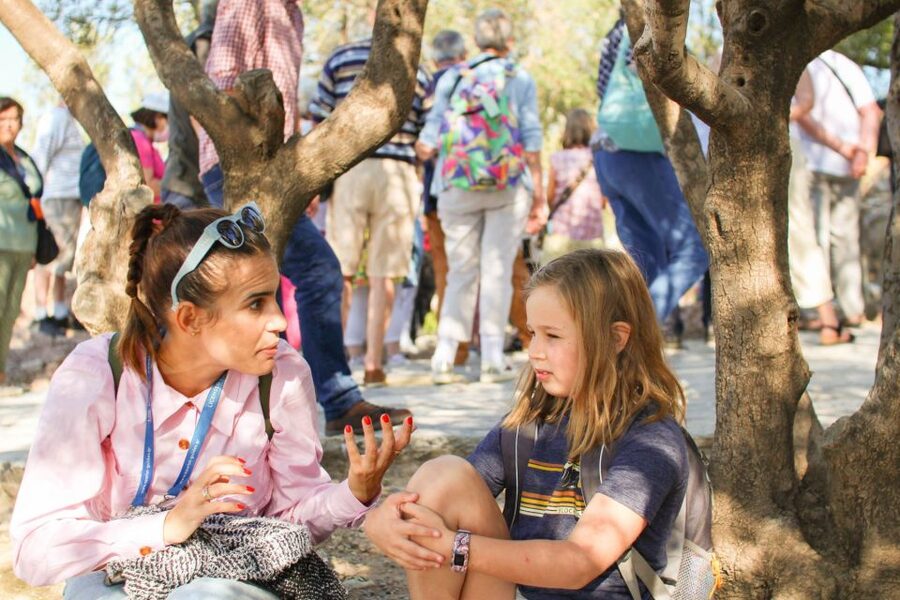
The best thing about this private Acropolis tour is its family focus. Instead of expecting children to listen to a long lecture about columns and dates, your guide uses Greek myths, questions, pictures, and even Lego-style building comparisons to make the ancient site click. Guides such as Tina, Anastasia, Ioanna, and Niko have shown a real knack for adjusting their pace to children from age four through the teen years.
I like the two-hour length, which gives you enough time to see the key monuments without asking a child to last through a half-day slog. I also like the private format: your family can ask questions, pause for a breather, and move at a pace that suits everyone. The main drawback is that Acropolis admission is extra, and you need to arrange those tickets yourself unless you use the optional pre-purchase service.
Key points at a glance
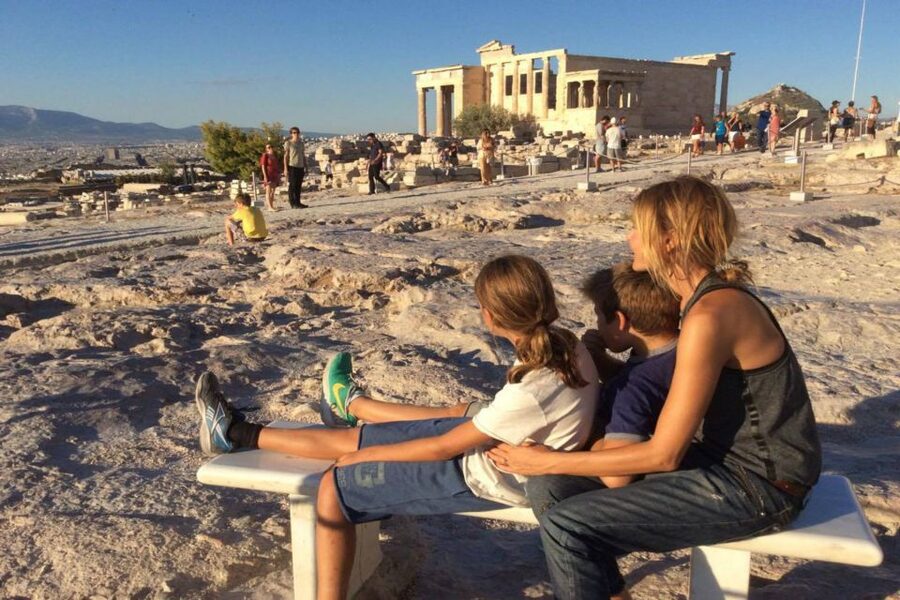
- Greek myths make the ruins easier for children to understand, especially when your guide links stories to the buildings around you.
- The private group is limited to your party, with a price of $406 for up to four people.
- The route includes the Propylaea, Temple of Athena Nike, Asclepion, Erechtheion, and Caryatids, not just the Parthenon.
- Guides adjust the experience by age, using visuals and questions for younger children and extra facts for older kids and adults.
- An early start helps in summer, when the rock can be hot and crowded.
- Comfortable shoes and water are essential, since you will spend two hours on an exposed archaeological site.
Why this Acropolis visit works for families
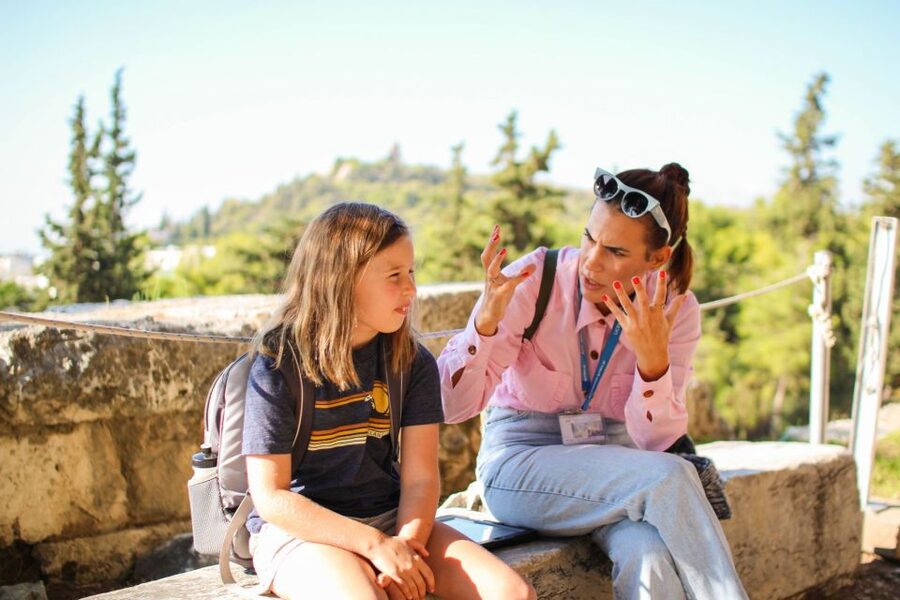
The Acropolis is one of those places adults may happily study for hours while children begin counting steps after ten minutes. This tour tackles that problem directly. Your guide is not simply there to recite dates. The goal is to turn the Acropolis into a place of stories, puzzles, gods, heroes, and clever engineering.
That approach matters because the site can feel abstract to a child. A temple is easier to grasp when your guide explains who worshipped there, why it was built, and how the builders handled huge blocks of marble. Greek mythology gives younger children a way into the subject, while the actual structures give older children and adults plenty to examine.
The private setup helps, too. You are not trying to keep up with a large group or worrying that your child’s question will interrupt the guide. If your four-year-old needs a pause, or your twelve-year-old wants to ask how the columns were made, the conversation can follow your family’s interests.
The tour is conducted in English and lasts two hours. That is a sensible length for a family visit. You see the major highlights, hear the important stories, and leave before the heat and concentration demands become too much.
More ways to see the Acropolis:
- Athens: Acropolis & up to 5 Archaeological Sites Combo Pass
★ 4.4 · 12,619 reviews - Athens: Acropolis Ticket with Optional Audio or Live Guide
★ 4.2 · 11,055 reviews - Athens: Acropolis, Parthenon & Acropolis Museum Guided Tour
★ 4.8 · 9,316 reviews
Meeting at Acropoli Metro Station
The meeting point is the entrance to Acropoli Metro Station on Makrygianni Street. This is convenient for a visit to the Acropolis, since the station is close to the archaeological site and easy to identify in central Athens.
You meet your guide there and walk toward the Acropolis. The tour begins and ends in the Acropoli area, and hotel transfer is not included. Plan your own route to the meeting point and allow enough time to arrive without rushing your family.
The exact starting time depends on availability. If you are visiting in summer, I would look first for an early morning slot. One family started at 8:00, when the Parthenon first opened, and found the cooler conditions and lighter crowds helpful. Another family specifically recommended beginning early because the sun was less harsh and the wind made the upper site more comfortable.
That advice is practical, not just pleasant. The Acropolis offers little shade, and the pale stone reflects the sun. Children can lose patience quickly when they are hot, thirsty, and waiting for adults to finish taking photographs.
The Propylaea: your first lesson in ancient engineering
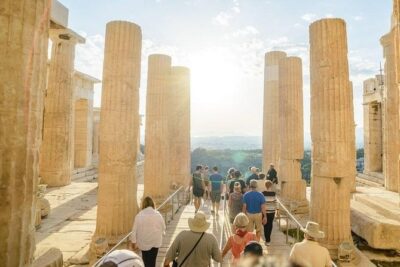
The Propylaea is the marble gateway to the Acropolis. It is your first major introduction to the scale and ambition of the site.
Your guide can use this stop to explain how visitors entered the sacred hill and how the ancient builders worked with large blocks of stone. For children, this is a good place to begin thinking about construction. The comparison to Lego used by one guide was especially effective for a ten-year-old who found building techniques easier to understand through something familiar.
This opening section also helps your family get oriented. The Acropolis is not one single building. It is a group of monuments spread across a rocky hill, each with its own purpose and story. A family-friendly guide can explain that difference before you reach the most famous temples.
The approach involves uneven archaeological ground and some uphill walking. Good shoes are important, and water should be in your day bag. The route is manageable in two hours, but this is not a smooth museum floor.
Temple of Athena Nike and the stories of the sacred rock
The Temple of Athena Nike is one of the stops included on the route. It is a smaller temple than the Parthenon, but its position and name open the door to Greek ideas about Athena, victory, and the sacred role of the Acropolis.
This is where storytelling can help. Rather than leaving you with a name to memorize, your guide can connect the temple to the myths and beliefs that shaped ancient Athens. Children who already enjoy Greek mythology may find this especially rewarding. One ten-year-old with a strong interest in the subject learned far more because the guide linked the stories to the exact place where the family was standing.
The value for adults is that the stories are not treated as empty entertainment. They help explain why the Acropolis mattered and why particular gods were honored there. You get a clearer sense of the site as a religious center, not simply a group of photogenic ruins.
The Temple of Athena Nike is also a useful reminder that the Acropolis is full of smaller details. If your family focuses only on the Parthenon, you miss much of the site’s character.
A few more Athens tours worth putting side by side
- Best of Athens Half Day Private Tour
★ 5.0 · 3,714 reviews - Athens Full Day Private Tour
★ 5.0 · 2,903 reviews - Athens Airport Private Arrival Transfer with Meet & Greet
★ 4.5 · 1,495 reviews - Athens Airport to Athens Hotels Private Arrival Transfer
★ 5.0 · 947 reviews
The Parthenon and the art of making stone look light
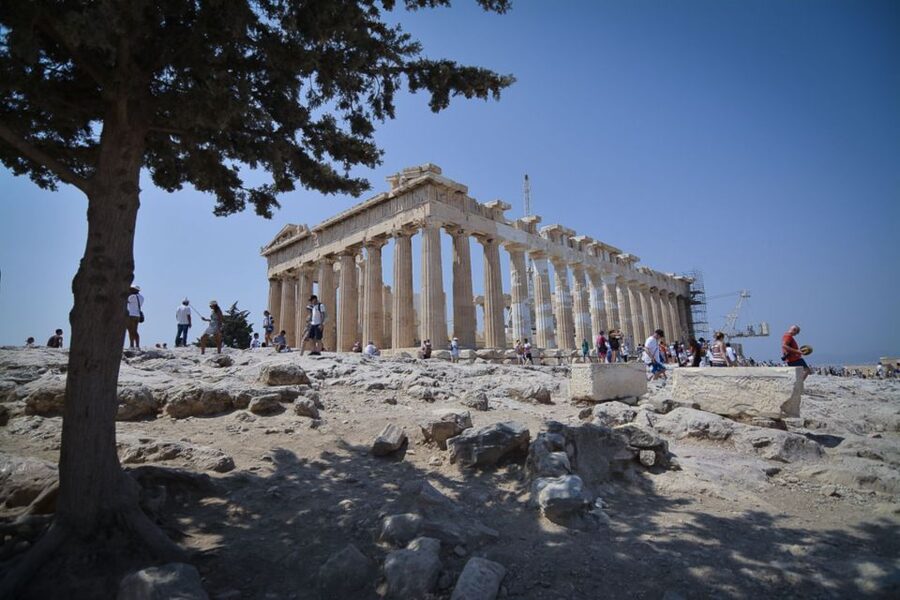
The Parthenon is the centerpiece of any Acropolis visit, but a good guide gives you more than a quick photo stop. You can expect an explanation of its purpose, design, and the engineering choices that made the building so influential.
The tour emphasizes the architectural skill of ancient Greece. That focus works well for children because it turns a distant historical subject into a practical question: how did people build this? Your guide may use simple comparisons and questions to get children thinking about weight, balance, alignment, and the effort required to shape and move marble.
Parents also benefit from this approach. You are not left trying to remember a list of dates while your children wander off mentally. The guide can explain the building in plain language, then add more detail when an older child or adult wants it.
The Parthenon area can be crowded, especially later in the day. A private guide cannot remove the crowds, but can help your group move efficiently and focus on the best points. One family found the small-group format useful even during heavy heat and large crowds because it was easier to maneuver than a big tour.
Keep your expectations realistic. The Parthenon is an active archaeological site, not a perfectly preserved ancient building. Repairs, scaffolding, and restricted areas may affect what you see on the day. The attraction is partly in understanding how the surviving pieces fit into the original design.
Erechtheion and the Caryatids
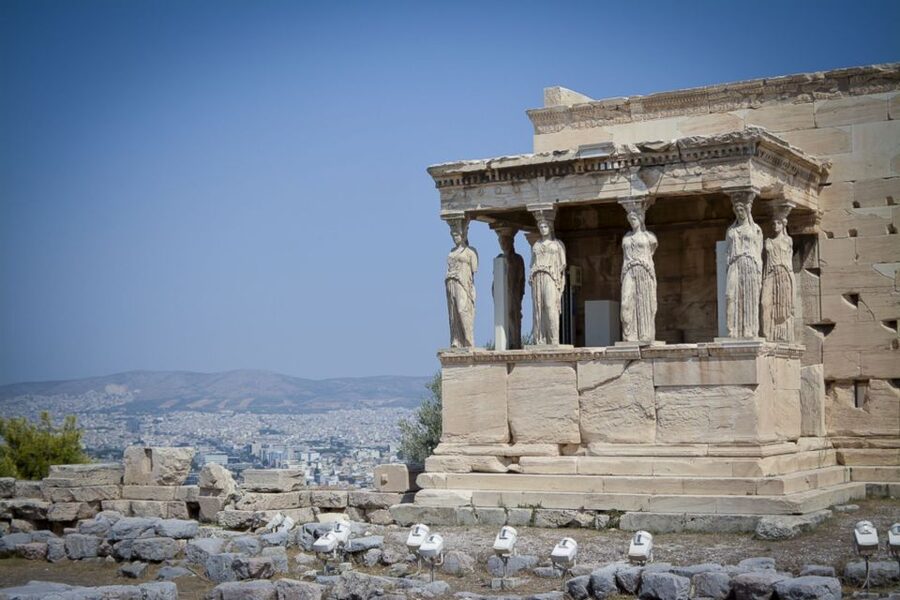
The Erechtheion is another essential stop, especially for children who enjoy unusual details. Its porch is supported by the famous Caryatids, sculpted female figures that appear to carry the roof.
These figures are memorable because they look like people rather than ordinary columns. Your guide can use them to explain how sculpture and architecture work together. Children often respond quickly to the idea of a building supported by statues, while adults can appreciate the care in the carving and the clever visual effect.
This is also a good moment to slow the pace. The Caryatids invite questions, and a private group gives your children room to ask them. Guides have been praised for listening carefully and answering with enthusiasm, rather than brushing aside questions as interruptions.
The Erechtheion helps balance the visit. The Parthenon is grand and familiar, while the Caryatids offer a more personal and surprising detail. For many families, these are the figures children remember afterward.
The Asclepion and ancient ideas about healing
The route includes the Asclepion, the healing temple of Asclepius. This gives your guide another way to connect the ruins to ordinary human concerns.
The Asclepion was linked to healing, so the conversation can move beyond gods, war, and political power. Children can begin to see that ancient people visited sacred places for practical reasons too. They wanted help with illness, just as people do now, even though their beliefs and methods were very different.
This stop adds variety to the tour. You are not hearing the same explanation of temples again and again. Instead, each monument opens a different topic: entry, victory, worship, building, sculpture, and healing.
The site itself is open and exposed, so the same practical advice applies. Water, sturdy shoes, and an early time slot will help your family stay comfortable.
A guide who can hold the attention of different ages
The guide is the heart of this experience. The listed guides include Tina, Anastasia, Ioanna, Niko, Georgina, Anna, Antigone, Vera, and Cristina, though the guide assigned to your family depends on availability.
The strongest feature across the experience is the ability to speak to several age groups at once. Tina has held the attention of children under ten with myths and pictures, while also giving adults useful context. Anastasia adjusted her pace, asked questions, and used visual material for a family with children aged four and nine. Ioanna kept a group ranging from a fifteen-year-old to a seventy-four-year-old involved without overloading anyone with facts.
That balance is harder than it sounds. A tour that is perfect for a six-year-old can feel too simple for a teenager. A lecture aimed at adults can lose a younger child in minutes. The best guides here appear to shift between story, fact, question, and observation.
I would still tell you to share your children’s ages and interests when booking if there is a place to do so. A child who loves mythology may want more stories about the gods. A child who prefers building, art, or history may respond better to the engineering and sculpture details.
What the $406 price means for your family
The price is $406 per private group of up to four people. That is a substantial outlay, especially because Acropolis entrance tickets are not included.
The value depends on how much your family needs a guide who can keep the visit moving. For four people, the cost is effectively a private family experience rather than four separate tickets to a large group tour. You get two hours with a licensed guide, a route built around the Acropolis highlights, and attention directed toward both children and adults.
The private format is most useful if your children are young, easily distracted, or at different learning levels. It is also useful if you want to ask questions freely or adjust the pace. If your children are older and happy to read signs and explore independently, you may prefer to spend less and tour on your own.
Remember to add admission costs to your budget. The tour price covers the guiding service, not entry to the archaeological site. Pre-purchasing tickets is available as an additional service, which may save you from waiting in line.
Educational material for children is sent by email after the tour. That is a nice extra because it can extend the visit beyond the two hours. It is not a substitute for preparation, though. A quick family conversation about Athena, the Acropolis, or Greek mythology before you arrive may help your children recognize the stories when they hear them.
Practical advice for a smoother two hours
Wear comfortable shoes. The Acropolis is an ancient archaeological site with uneven surfaces, uphill sections, and exposed stone.
Bring water for every member of your group. Athens can be hot, and there is not always shade where you would like it.
Choose an early start if you can, particularly from late spring through summer. The 8:00 start received especially strong practical support from families who wanted to avoid the worst heat and crowds.
Give the guide permission to talk to your children directly. Young visitors often pay closer attention when they are asked a question or shown a picture than when parents try to summarize the information themselves.
Do not expect every minute to be fast-moving. Two hours is a compact visit, but your group will still stop to look, listen, and move between monuments. The point is not to race through the Acropolis. It is to help your children leave with a few clear memories and ideas.
Cancellation is free up to 24 hours before the tour for a full refund. You can also reserve now and pay later, which is useful if your Athens plans are still shifting.
Who should book this Acropolis tour?
I would choose this tour for families with children roughly from preschool age through the teen years, especially when the children have different interests or attention spans.
It is a strong match if you want Greek mythology woven into the visit, rather than a strictly academic explanation. It is also a good choice if your family prefers a private setting and wants to ask questions without keeping pace with strangers.
Families with very young children should think about the heat and walking conditions. The guide can make the content engaging, but cannot change the exposed nature of the Acropolis. An early start, water, and realistic expectations will make a large difference.
If you are traveling with four people, the group price is easier to justify. For a larger family, check the exact booking terms before committing, since the stated rate covers up to four people.
Should you book it?
Book this tour if you want your children to remember the Acropolis as a place of stories and discoveries, not just a hot hill covered in old stones. The guides’ strongest skill is making the subject work for different ages, with Tina, Anastasia, Ioanna, and others using questions, pictures, myths, and practical building examples.
Skip it if you prefer independent sightseeing, already know the ancient Greek world well, or are trying to keep costs as low as possible. You will need to pay entrance fees separately, and the private price is not small.
For most families of up to four, I think the value lies in the attention and pacing. Start early, bring water, buy your Acropolis tickets ahead of time, and let the guide turn the monuments into a conversation your children can follow.
FAQ
How long is the Acropolis family tour?
The guided tour lasts two hours.
Where do I meet the guide?
Meet at the entrance to Acropoli Metro Station on Makrygianni Street.
Is the tour private?
Yes. It is designed for a private group.
What language is the tour conducted in?
The live tour guide speaks English.
Are Acropolis entrance tickets included?
No. Entrance fees are not included. Pre-purchasing tickets is available as an additional service.
Is hotel transfer included?
No. Hotel transfer is not included.
What should I bring?
Bring comfortable shoes and water.
Can I cancel for a refund?
Yes. You can cancel up to 24 hours in advance for a full refund.
Newly reviewed around Athens
- Athens: workshop for painting landscape with local artist★ 4.6 · 3 reviews
- Athens: Greek Wine & Olive Oil Tasting at Brettos Plaka★ 4.5 · 3 reviews
- Outdoor Yoga and Pilates with Akropolis view★ 4.0 · 5 reviews
- Acropolis of Athens: 60′ Tour in a Vintage Motorcycle★ 5.0 · 4 reviews
- Ultimate Tasting of the Volcanic Wines of Greece★ 5.0 · 3 reviews
- workshop for painting acropolis/landscape with local artist★ 5.0 · 3 reviews
- Athens at Twilight Night Tour with Drinks and Meze Dishes★ 4.8 · 4 reviews
- Breakfast in the markets with olive oil and honey tasting★ 4.8 · 8 reviews
Athens Acropolis Tours, compared.
Acropolis & up to 5 Archaeological Sites Combo Pass
Read our review →
Acropolis, Parthenon & Acropolis Museum Guided Tour
Read our review →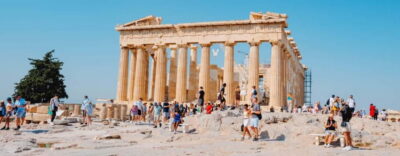
Acropolis, Parthenon & Acropolis Museum Guided Tour
Read our review →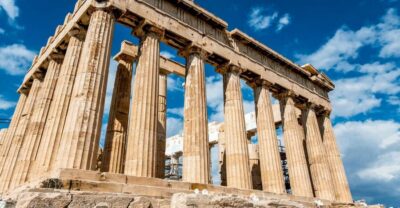
Acropolis monuments & Parthenon Walking Tour with Optional Acropolis Museum
Read our review →Browse the lists this tour appears in