
Reviewed · NATIONAL ARCHAEOLOGICAL MUSEUM TOURS
Athens: National Archaeological Museum Private Guided Tour
The Antikythera mechanism is the star here: a corroded bronze device that helped ancient Greeks track the heavens and is often called the world’s oldest analogue computer. But the real strength of this private tour is the guide’s ability to connect that remarkable object with thousands of years of Greek art, science, religion, and daily life. I especially like the two-hour focus and the chance to ask questions in a private group rather than follow a large crowd.
I also like that guides such as Christos Theodoropoulos can adjust the visit to your interests. One guest with a professional interest in ancient jewelry was given access to a normally locked jewelry room. The main limitation is time: the museum is enormous, and two hours gives you a sharp introduction, not a complete visit. The €400 price is also easier to justify for a group of several people than for one or two.
Key points to know
- The Antikythera mechanism: See the ancient astronomical device that reveals the scientific skill of the Greek world.
- A private licensed guide: Ask questions, set a sensible pace, and focus on the periods or objects that interest you most.
- Two hours inside a huge museum: Expect major highlights rather than every gallery.
- Five major collections: Prehistoric objects, sculpture, pottery, bronze, and Egyptian and Near Eastern antiquities all form part of the museum’s range.
- €400 per group up to six: Museum admission is separate at €10 per person, so the value improves as your group grows.
- Several guide languages: Tours are offered in English, Greek, German, and Turkish.
Why this museum deserves a guided first visit
Athens has famous ancient sites outdoors, but the National Archaeological Museum gives you the objects themselves. Here you can look closely at sculpture, pottery, jewelry, bronze figures, scientific instruments, and burial finds from across Greece. The museum traces Greek culture from the Neolithic period through late antiquity, with Egyptian and Near Eastern material added to the picture.
I find that scale both exciting and slightly intimidating. More than 11,000 exhibits are displayed across about 8,000 square meters, so walking in without a plan can leave you admiring beautiful objects without understanding their place in time. A good guide gives you a framework, points out the pieces that matter most, and helps you avoid spending half your visit on one room.
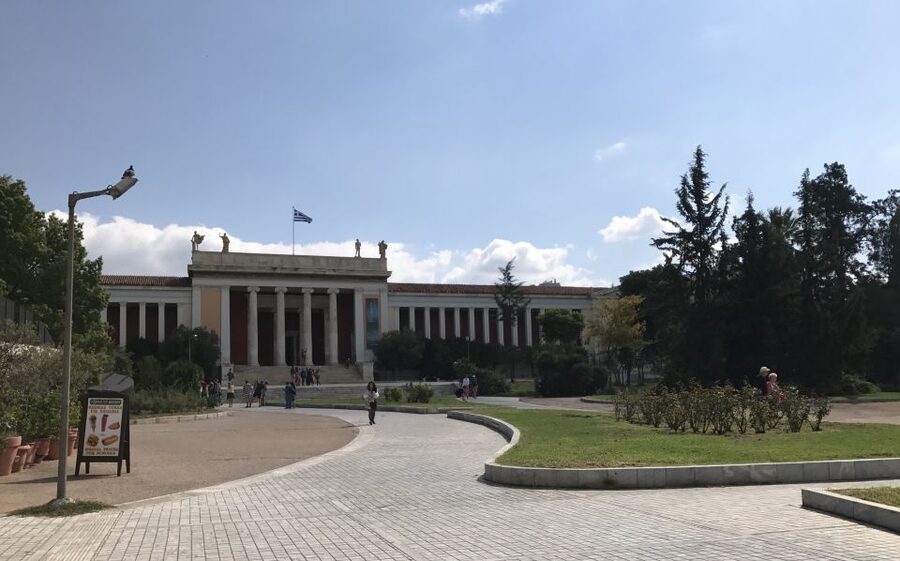
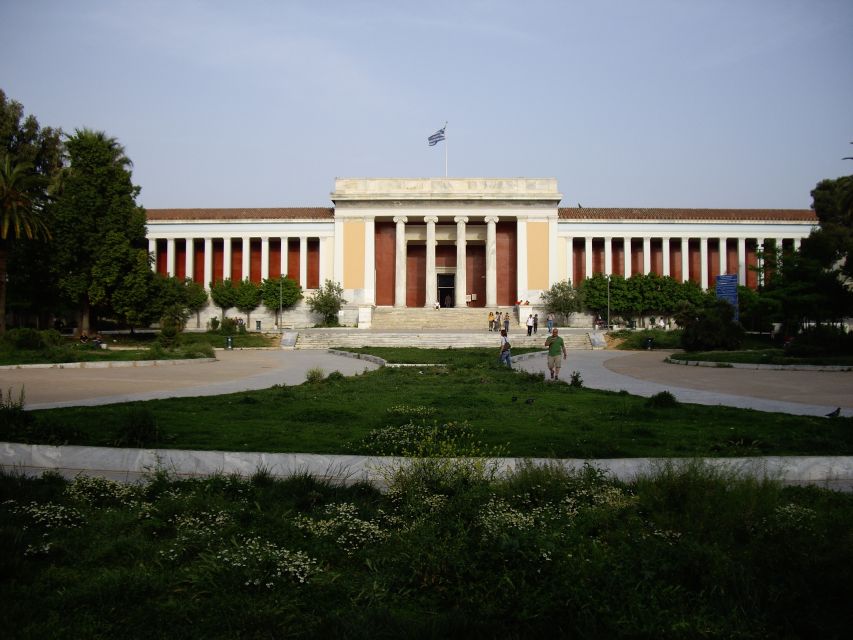
The building itself sets the tone. It is an imposing neoclassical structure from the late 19th century, designed by L. Lange and later remodeled by Ernst Ziller. The broad galleries and formal architecture suit a national collection, though the size means you should not expect a quick, casual museum stop.
More museums and ancient sites in Athens:
- Athens: National Archaeological Museum Ticket w/ Opt. Audio
★ 4.4 · 713 reviews - Athens National Archaeological Museum E-Ticket with Audio Guide
★ 3.0 · 57 reviews - National Archaeological Museum Private Tour with Licensed Expert Guide
★ 5.0 · 53 reviews
Meeting at 44 Patission Street

The meeting point is at the steps in front of the museum’s main entrance, at 44 Patission Street, also known as 28is Oktovriou 42 in the starting-location details. That distinction is useful when checking directions, since both street names may appear in Athens information.
There is no hotel transfer included, so you make your own way to the museum. Once there, you meet the licensed archaeologist guide and enter for the scheduled two-hour visit. Museum admission is not included, and the listed cost is €10 per person.
This arrangement keeps the tour simple. You are not paying for a driver or a city transfer you may not need. On the other hand, you should allow enough time to reach the museum and find the correct entrance, especially if you are coming from another part of central Athens.
What two hours can realistically cover
Two hours is a sensible introduction to the museum, but it is not enough to see everything. The collection spans from the 6th millennium BC to the Roman period and late antiquity, with material from mainland Greece, the Aegean islands, Egypt, and the Near East.
I would expect the guide to build a route around the museum’s best-known works and the interests of your group. You may spend time with early Aegean objects, major Greek sculpture, painted pottery, bronze statues, and the Antikythera mechanism. The exact order can change, and a private guide can spend longer on a subject that catches your attention.
The pace can be brisk. One family found that the guide moved quickly because there was too much to cover in less than two hours, then stayed longer to see more of the museum afterward. That is a fair warning. If you prefer to examine every display label, sketch sculptures, or move slowly through each room, you will probably want to remain after the guided portion.
The best plan is to treat the tour as your orientation. Let the guide show you the major works and explain how the collection fits together. Then return to the rooms you liked most, if time and museum rules allow.
Prehistoric Greece, Cycladic art, and Mycenae
The Collection of Prehistoric Antiquities begins with the early civilizations of the Aegean. It covers Neolithic, Cycladic, and Mycenaean material, along with finds from the prehistoric settlement at Thera.
This section matters because it shifts your picture of Greece away from the familiar image of classical temples and marble gods. The story begins much earlier. You can see how communities in the Aegean developed art, trade, burial customs, tools, and symbols long before the classical period.
A guide is especially useful here because objects from different islands and centuries can look deceptively similar to an untrained eye. The right explanation helps you notice changes in form, technique, and purpose. You may also get a clearer sense of how the Bronze Age Aegean set the stage for later Greek culture.
For families, this part can be a good way to make the museum less abstract. Rather than presenting ancient Greece as one single era, the guide can show children and teenagers that it was a long sequence of societies with different customs and artistic styles.
A different kind of day out from Athens:
- Athens: Acropolis & up to 5 Archaeological Sites Combo Pass
★ 4.4 · 12,619 reviews - Athens: Acropolis Ticket with Optional Audio or Live Guide
★ 4.2 · 11,055 reviews - Athens: Acropolis, Parthenon & Acropolis Museum Guided Tour
★ 4.8 · 9,316 reviews - Athens: Cape Sounion & Poseidon Temple Sunset Half-Day Trip
★ 4.8 · 8,241 reviews
Greek sculpture from the seventh to fifth centuries BC
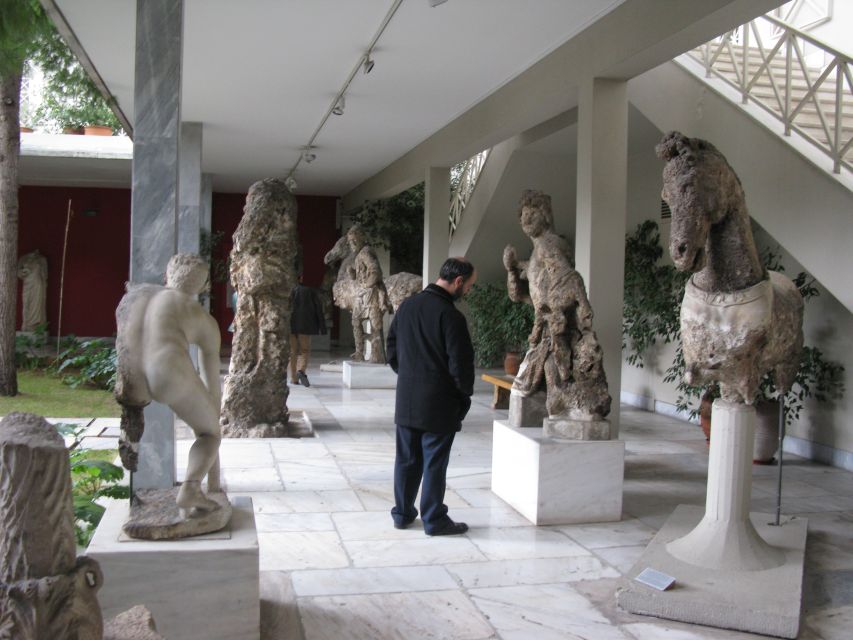
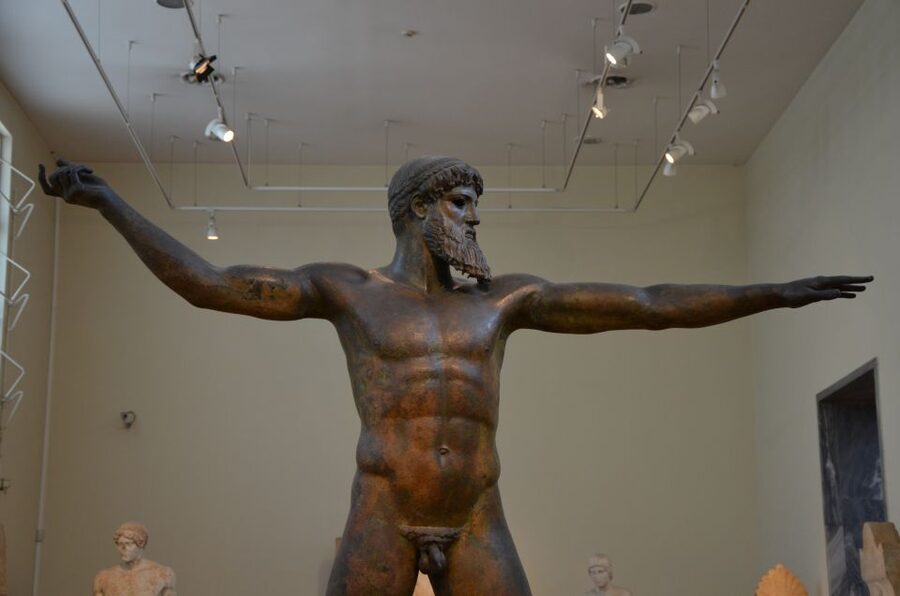
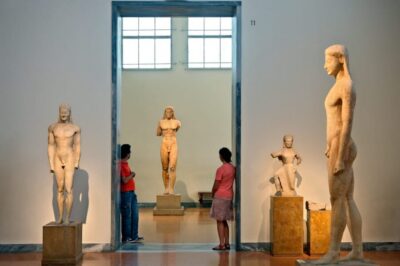
The Sculpture Collection is likely to form the visual heart of the visit. It follows the development of Greek sculpture from the seventh to the fifth centuries BC and includes major works.
This is where a guide’s interpretation can make a real difference. Marble figures are impressive on their own, but the details become more interesting when you understand how Greek artists handled posture, clothing, anatomy, movement, and the human face. A guide can also explain how sculpture changed over time, rather than treating every statue as simply another beautiful object.
You will want to look closely, not just take a quick photograph and move on. The museum’s famous works reward attention to small details, yet the large number of galleries can encourage hurried viewing. A private tour lets you ask why a particular sculpture matters and how it fits into the wider story.
I also like this section for visitors who have already seen Athens’ ancient monuments. The Acropolis shows architecture in place. The museum shows the portable art, funerary pieces, religious images, and everyday objects that help explain the people who made and used those monuments.
Pottery, small objects, and the clues in daily life
The Vase and Minor Objects Collection covers Greek pottery from the 11th century BC through the Roman period. It also includes the Stathatos Collection, with smaller objects from many periods.
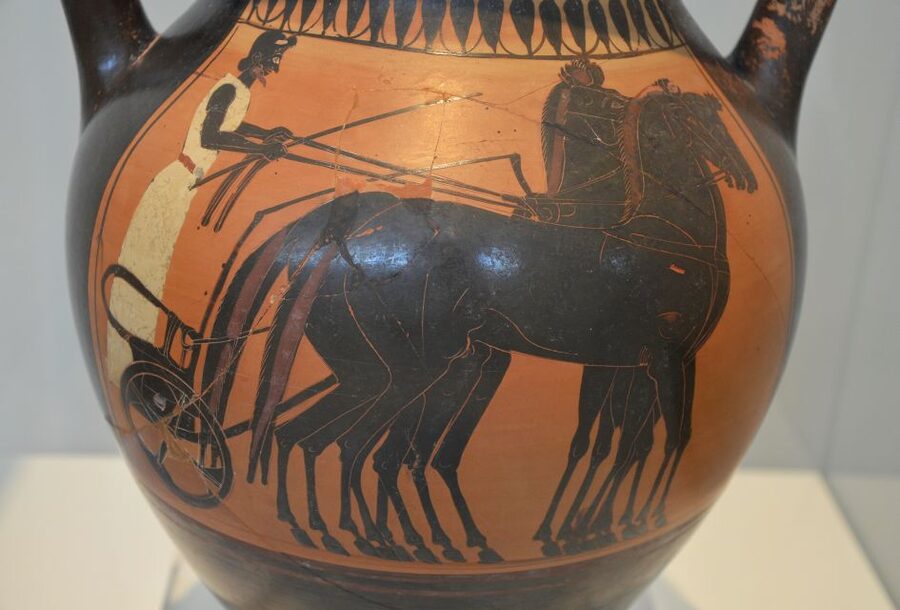
Pottery can be easy to overlook when a dramatic marble statue is nearby. I think that is a mistake. Painted vases reveal stories, clothing, weapons, ceremonies, work, trade, and ideas about gods and heroes. Their shapes also tell you how ancient people used them, from storage to serving to ritual purposes.
The smaller objects can be just as revealing. Jewelry, tools, ornaments, and personal items bring ancient life down to human scale. One particularly useful detail from this tour is the possibility of tailoring the visit. A guest interested in ancient jewelry received a private showing of a jewelry room that was normally locked at that time of year. That was a special arrangement, not something you should assume is guaranteed, but it shows why it is worth telling the guide your interests before the tour.
If jewelry, pottery, coins, or household objects matter more to you than famous statues, say so early. A private format gives you a better chance of getting a visit shaped around those priorities.
Bronze masterpieces and the Antikythera mechanism
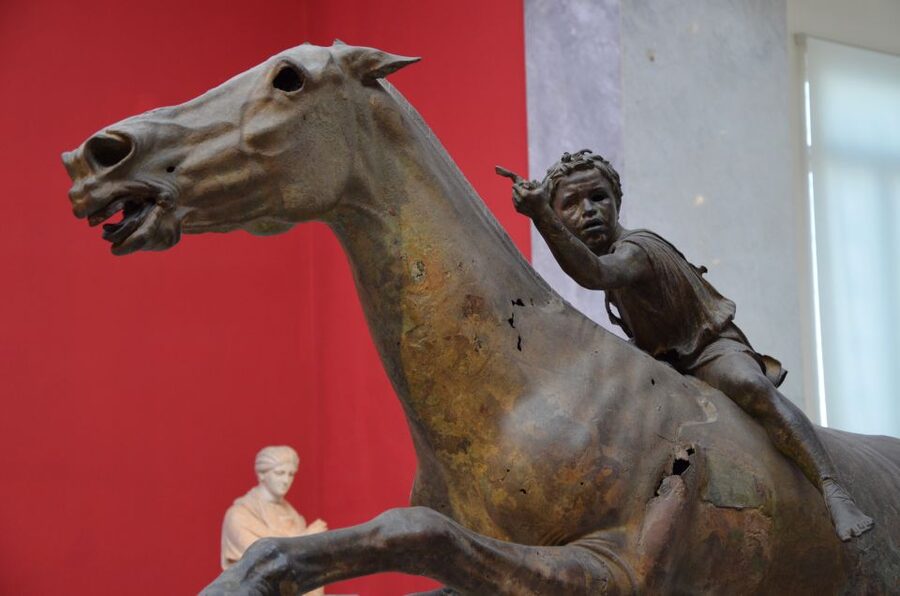
The Bronze Collection contains statues, figurines, and smaller bronze objects. Bronze allows artists to create poses and gestures that are difficult in stone, and the displays offer a useful counterpoint to the marble galleries.
The Antikythera mechanism deserves special attention. Found in a shipwreck, this complex ancient device is associated with astronomical calculations and is widely described as the world’s oldest analogue computer. Its surviving fragments are not large or flashy, so a guide’s explanation is particularly helpful. Without context, you might walk past a dark, damaged object. With context, you can appreciate the precision and ambition behind it.
I consider this one of the strongest reasons to book a guide. The mechanism links archaeology with mathematics, astronomy, navigation, and technology. It also challenges the simple idea that ancient Greek achievement was limited to philosophy and sculpture.
Do not expect a hands-on demonstration or a long technical presentation. The tour is only two hours and covers a great deal. Still, even a concise explanation can turn the object into one of the most memorable stops in the museum.
Egypt and the Near East inside a Greek national museum
The museum’s Egyptian and Near Eastern Antiquities Collection is the only collection of its kind in Greece. It includes material from the predynastic period, around 5000 BC, through the Roman conquest.
This section broadens the visit beyond a single national story. Greek culture developed within a wider eastern Mediterranean world, and the Egyptian and Near Eastern objects help place the Aegean in that setting. You can compare artistic traditions, religious ideas, objects, and techniques rather than viewing ancient Greece in isolation.
The collection may not be the main reason you book this particular tour, but it is an important part of the museum’s identity. If your group has only visited classical Greek sites, this section gives the day more range. Tell the guide if Egypt interests you, since a private route may allow for more time here than a standard highlights visit.
The guide’s role and the value of a private group
The strongest praise for this experience centers on Christos Theodoropoulos, who has led many of the tours described in the supplied information. He is repeatedly described as friendly, engaging, humorous, and deeply familiar with Greek history. Guests also appreciated his ability to explain complex subjects in clear language.
Those qualities matter more than a simple list of facts. A museum guide should help you see relationships between objects, answer questions without making you feel rushed, and adjust the level of detail for adults, teenagers, and children. Families with children as young as seven found the visit engaging, while larger family groups appreciated his ability to move everyone through the museum.
The tour is listed for a private group of up to six at $400. That works out to about $67 per person before the €10 museum ticket if six people attend. For two people, the guide cost is $200 each, so the price becomes much harder to justify unless personal attention is a high priority.
The supplied information includes one account of a group of seven, but the stated capacity is up to six. I would plan around the official limit and confirm the size of your party before booking.
Languages, timing, and practical planning
Live guiding is available in English, Greek, German, and Turkish. You should choose the language that lets your group ask questions easily, since the value of this tour comes from explanation rather than simply walking behind a guide.
The duration is two hours, and start times depend on availability. Afternoon scheduling may be possible, as one guest arranged a flexible afternoon visit, but you should check the specific time offered for your date.
The cancellation policy allows a full refund if you cancel at least 24 hours in advance. You can also reserve and pay later, which may help if your Athens schedule is still changing.
Bring your main interests with you. If you care about ancient jewelry, Bronze Age Greece, sculpture, Egyptian objects, or science, tell the guide at the start. That small conversation can make a private tour feel genuinely personal rather than like a standard route delivered to every group.
Is $400 good value for this museum?
The answer depends on group size and your museum habits. If six people share the guide cost, the private format is fairly reasonable for a two-hour introduction to one of Greece’s most important collections. Add the €10 entry fee per person, and you still receive a focused explanation without joining a large group.
For one or two people, the calculation changes. The museum is well laid out and clearly labeled, so an independent visit is possible. One guest specifically felt that a guide was helpful but not essential. If you enjoy reading labels, planning your own route, and spending several hours at your own pace, you may prefer to pay only the admission fee.
I would choose the private tour if you have limited time, want a strong first orientation, are visiting with children, or feel unsure about ancient Greek chronology. I would skip it if your main goal is quiet, slow looking or if the $400 fee would make the rest of your Athens budget uncomfortable.
Who should book this tour?
This suits first-time visitors who want the museum to make sense quickly. It also works well for families, since a guide can keep younger visitors engaged and explain difficult subjects in plain terms.
History students, art lovers, and people with a special interest in jewelry, Bronze Age culture, or ancient technology may get extra value from the private format. The guide can respond to focused questions instead of delivering only a fixed script.
If you have already spent hours in the museum or prefer independent study, you may not need the service. The collection is accessible without a guide, and two hours can feel rushed if you want to see every room.
Should you book it?
Book this tour if you want a sharp, human introduction to a vast museum and can share the $400 cost with several people. The Antikythera mechanism, prehistoric Aegean objects, major sculpture, pottery, bronze, and Egyptian material give the visit plenty of range. Christos Theodoropoulos appears to be a particularly strong choice when available, especially for families and groups that want clear explanations with some humor.
Skip it if you are a patient independent museumgoer or watching every euro. The National Archaeological Museum can be visited on your own for the €10 admission fee. For everyone else, the guide’s main service is not access to secret treasures. It is knowing what to see, why it matters, and how to fit thousands of years into two useful hours.
FAQ
Where does the tour meet?
You meet at the steps in front of the main entrance of the National Archaeological Museum of Athens, at 44 Patission Street, 10682. The starting-location information also gives 28is Oktovriou 42.
How long does the guided tour last?
The guided visit lasts two hours.
What is included in the tour?
An experienced licensed archaeologist guide is included.
Is museum admission included?
No. The museum entry ticket costs €10 and is paid separately.
Is hotel transfer included?
No. Hotel transfer is not included, so you must make your own way to the museum.
How many people can join the private group?
The stated capacity is up to six people per group.
Which languages are available?
Guiding is available in Turkish, English, German, and Greek.
Can I cancel for a refund?
Yes. You can cancel up to 24 hours in advance for a full refund.
Can I reserve now and pay later?
Yes. The activity allows you to reserve your place and pay later.
Newly reviewed around Athens
- Feel Ancient thermal Spa Visit Delphi, Leonidas ℨoo Spaʀtan★ 5.0 · 4 reviews
- Food Tour★ 5.0 · 3 reviews
- Explore the Hidden Food Gems of Athens★ 5.0 · 57 reviews
- Food Experience in Athens including Unlimited Lunch★ 5.0 · 3 reviews
- Eat Your Way Through Athens: A Local Food Walk★ 4.9 · 97 reviews
- From Athens: Delphi Private Tour with Lunch Time★ 4.0 · 3 reviews
- Delphi: Spanish guided one day tour★ 4.6 · 55 reviews
- Early Entry Acropolis & Museum. Beat the Crowds & the heat★ 5.0 · 3 reviews
National Archaeological Museum Tours, compared.
National Archaeological Museum Ticket w/ Opt. Audio
Read our review →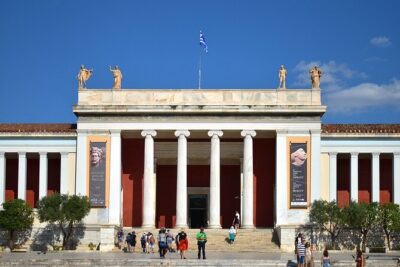
Athens National Archaeological Museum E-Ticket with Audio Guide
Read our review →
National Archaeological Museum Private Tour with Licensed Expert Guide
Read our review →
Acropolis Museum & National Archaeological Museum Ticket
Read our review →Browse the lists this tour appears in