
Reviewed · MUSEUMS
Athens: Kotsanas Ancient Greek Technology Museum Guided Tour
The most surprising thing here is how familiar ancient Greek technology can feel. At the Kotsanas Museum, working models show machines that used gears, hydraulics, automation, sound, and projection in ways that recall much later inventions. You may come expecting pottery and marble, then find yourself studying an early analog computer.
I like the private guide, since a specialist can explain what each mechanism does instead of leaving you to decode diagrams alone. I also like the hands-on displays, which turn abstract engineering into something you can watch and sometimes operate. The main limitation is the short one-hour format. There is plenty to see, so you will need to stay focused if you want both the guided explanation and extra time afterward.
Key points at a glance
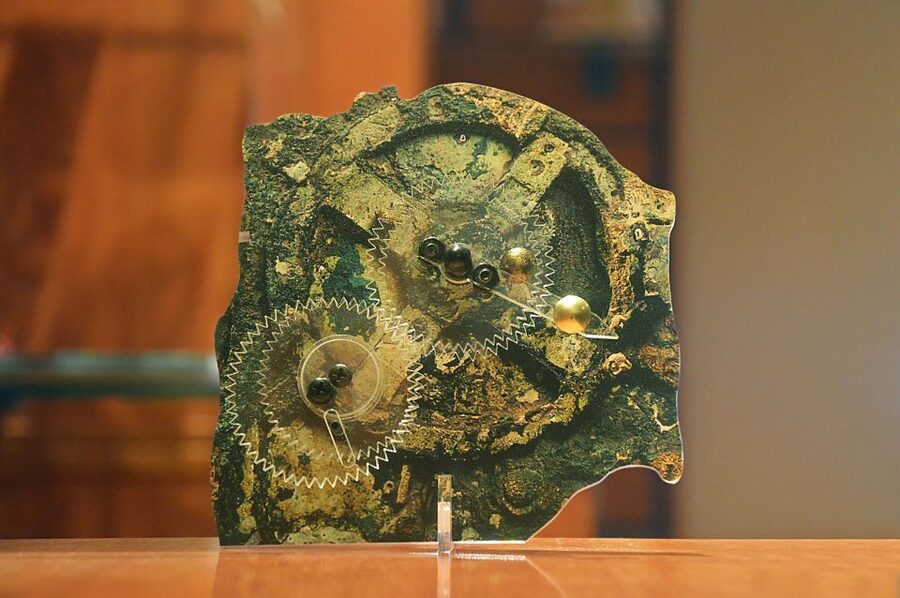
- Antikythera mechanism: See an operating model of the ancient calculating device often described as the world’s oldest analog computer.
- Private English-speaking tour: Your guide may be an engineer, archaeologist, historian, or museologist, with guides such as Vasilis, Irina, and Maria having led tours.
- About 300 museum artifacts: The wider museum presents a large collection, while the main exhibition includes about 100 selected inventions.
- Interactive demonstrations: Learn through working models, diagrams, videos, animations, and explanatory stations.
- Easy central location: The museum is at Pindarou 6, about a five-minute walk from Syntagma Metro Station.
- Good value for a small group: The listed price is $54 for up to four people, including admission and a private one-hour tour.
Why ancient Greek technology feels unexpectedly modern
The Kotsanas Museum focuses on a side of Greek culture that many visitors never meet. Athens is full of temples, sculptures, and classical monuments, but this museum asks a different question: how did ancient engineers solve practical problems?
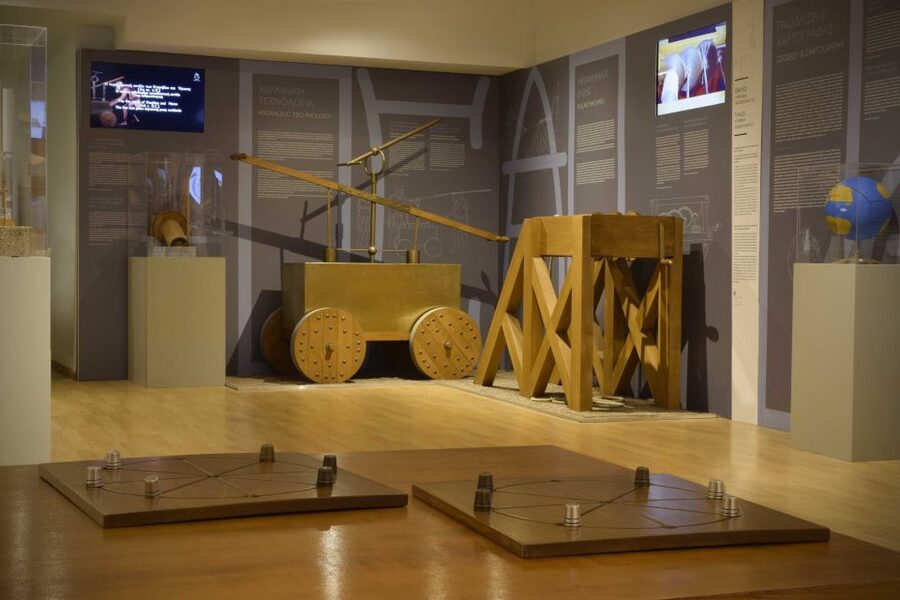
The answer is shown through models rather than long walls of text. You can see how gears, water pressure, pulleys, weights, and carefully timed movements produced results that seem far ahead of their age. The point is not that ancient Greeks built modern machines in the modern sense. It is that they understood mechanical principles with remarkable precision.
That makes the visit useful even if you are not an engineer. The displays are designed to show cause and effect. A guide can point out which part moves first, what powers the mechanism, and how the movement produces an image, sound, calculation, or automated action.
I especially like this approach for families and curious adults. Children can watch something move, while adults can think about the mathematics and design behind it. One guide, Vasilis, has received particular praise for making the visit engaging, and the staff members Irina and Maria have also been singled out for explaining the inventions clearly and letting visitors try the mechanisms.
More museums and ancient sites in Athens:
- Athens: Acropolis, Parthenon & Acropolis Museum Guided Tour
★ 4.8 · 9,316 reviews - Athens: Mythology of Delphi, Museum and Arachova Guided Tour
★ 4.6 · 4,008 reviews - Athens: Acropolis, Parthenon & Acropolis Museum Guided Tour
★ 4.8 · 3,579 reviews
Meeting near Syntagma and entering the museum
You meet at Pindarou 6, Athens 106 71, in a historic Art Nouveau building about five minutes on foot from Syntagma Metro Station. That central position makes the museum easy to add between major Athens sights, especially if you are already visiting the city center.
The museum occupies about 700 square meters. It is not a vast institution that requires half a day. That is part of its appeal. You can fit it into a busy Athens schedule without giving up an entire afternoon, though the one-hour guided portion can feel quick if you want to examine every display closely.
The experience ends back at the meeting point. There is no hotel transfer, and food and drinks are not included or allowed inside. Plan to arrive ready to begin, since a private tour has a set time and the guide will be working through a planned selection of inventions.
The museum is listed as unsuitable for people with mobility impairments. If accessibility is important for your group, check the physical arrangements before booking rather than assuming the central location guarantees easy access.
The one-hour private tour with a specialist guide
The tour is private, which means your group can ask questions without competing with a large crowd. The available guide is English-speaking and may be an engineer, archaeologist, historian, or museologist. That mix matters because the visit combines technical explanation with cultural context.
A good guide will help you see more than a collection of clever objects. You will learn why a mechanism was made, what problem it addressed, and how its parts worked together. The display labels and diagrams add detail, but a person can adjust the explanation to your interests.
If you are comfortable with technical ideas, you can ask about the gears, water systems, or calculations. If you are less comfortable with engineering, you can focus on the story of invention and the practical result. The tour is not limited to specialists.
The private format also suits families. Children may have short attention spans for static museum cases, but moving models give them something to follow. The guide can spend more time on the devices that catch their interest, rather than forcing everyone through the same pace as a large group.
The tradeoff is that the experience depends partly on your guide and your own questions. A private tour is not automatically better if you prefer to wander in silence. Here, though, the mechanisms are unusual enough that the explanation adds real value. Several of the machines are difficult to understand from a label alone.
The Hi-Tech Inventions of Ancient Greeks exhibition
The main exhibition, titled The Hi-Tech Inventions of Ancient Greeks, includes about 100 selected exhibits. The wider museum collection contains about 300 artifacts and models, so the guided route gives you a carefully chosen introduction rather than every object in equal detail.
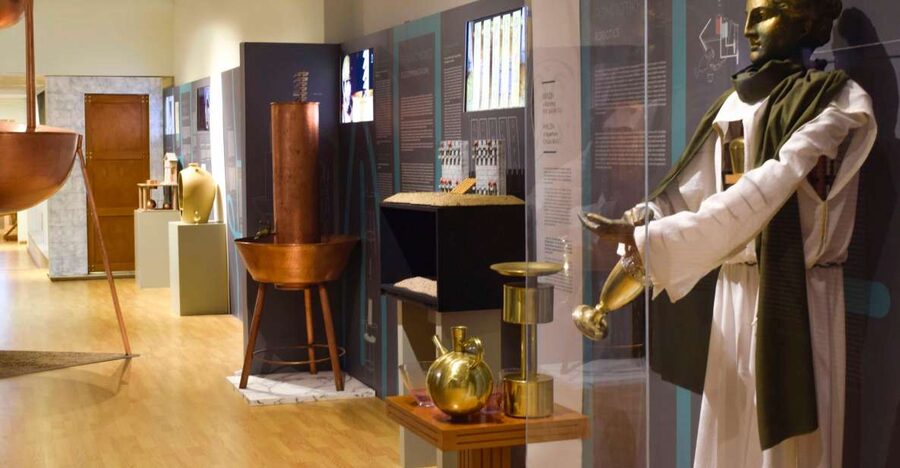
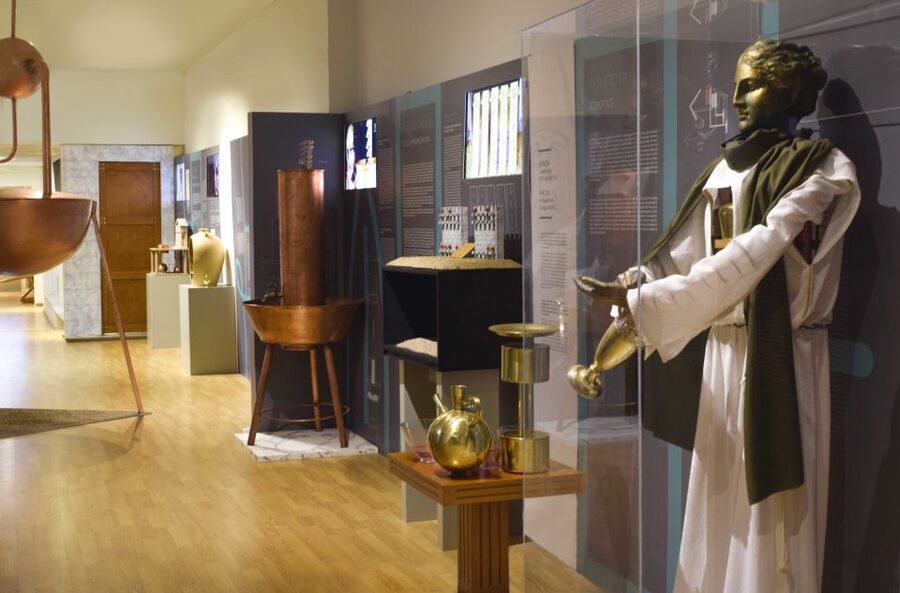
The range is impressive. You might move from mechanical figures to clocks, from water-powered systems to calculating devices. The exhibition includes the robot-servant associated with Philon, the cinema of Philon, Heron’s automotive-puppet show, the hydraulic clock of Ktesibios, and the Antikythera calculating mechanism.
These names can sound dry on a page. In person, the models give them purpose. A robotic servant suggests early automation. A mechanical theater shows how movement and storytelling could be combined. A hydraulic clock reveals how water could regulate time. The Antikythera model shows that ancient calculation was not limited to simple counting.
I appreciate the museum’s decision to present operating models. You are not only looking at an object and being told it once worked. You can watch a reconstruction demonstrate the idea. That does not remove the need for interpretation, but it gives you a physical sense of how the mechanism might have functioned.
The displays are reconstructions and operating models, so this is not the same as viewing original ancient artifacts in an archaeological museum. That distinction is important. The reward here is understanding technology through motion and explanation, not seeing rare original material.
A few more Athens tours worth putting side by side
- Athens: Acropolis Ticket with Optional Audio or Live Guide
★ 4.2 · 11,055 reviews - Athens: Acropolis and Parthenon Guided Walking Tour
★ 4.6 · 5,882 reviews - Athens: Cape Sounio & Poseidon Temple Trip with Audio Guide
★ 4.4 · 4,521 reviews - Athens: Acropolis Ticket with Audio Guide
★ 4.0 · 3,575 reviews
The Antikythera mechanism and other mechanical surprises
The Antikythera mechanism is likely to be one of the tour’s main attractions. It is presented as the oldest analog computer in the world, and the working model helps you understand why it is so important. Rather than confronting a complex object with no moving parts, you can see how gears could represent calculations and cycles.
The museum also connects the mechanism to a wider tradition of Greek engineering. The hydraulic clock of Ktesibios shows another way ancient inventors used controlled movement. Philon’s devices and Heron’s automated figures show that machines could be designed not only for practical tasks but also for display, amusement, and wonder.
That combination is one of the museum’s strengths. Ancient technology was not only about lifting stones or measuring time. It could also create theater, sound, motion, and surprise. You get a better sense of Greek inventiveness when the exhibits include entertainment as well as calculation.
I would pay close attention to the guide’s demonstrations here. The important question is not simply what the object is called. Ask what powers it, what keeps the movement regular, and what the original designer was trying to achieve. Those details are what turn a memorable model into a useful lesson.
Videos, diagrams, and displays you can operate
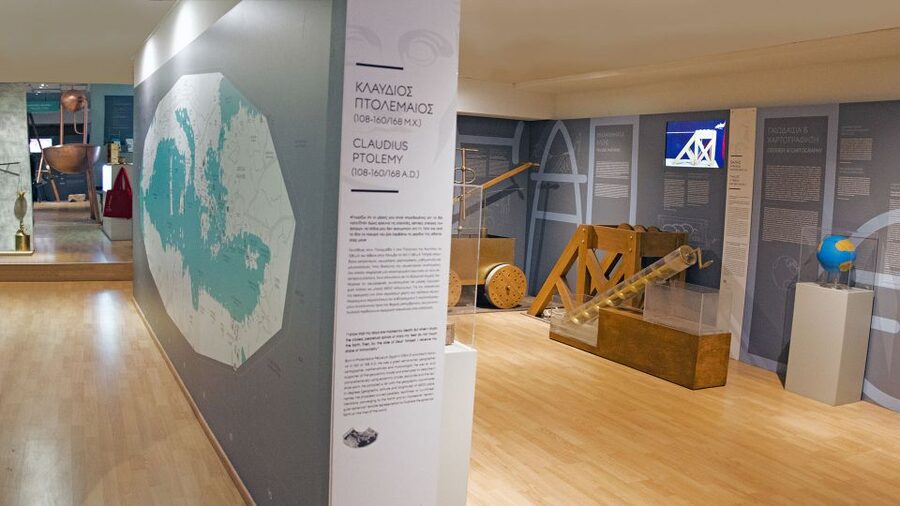
The museum supports its models with a large amount of visual material in Greek and English. You will find explanatory labels, large posters, technical diagrams, photographs, and full bibliographical references. Projecting stations use video and animation, while documentaries show the exhibitors explaining how the mechanisms functioned.
This is helpful because ancient machinery can be hard to follow in a single demonstration. A diagram lets you see the internal layout. An animation can simplify a sequence of movements. A documentary can repeat the explanation after the guide has moved on.
Many displays are interactive. The exact amount of hands-on use can vary by exhibit, but the experience is designed around seeing mechanisms operate rather than simply viewing them behind glass. This is a major reason I would choose the guided visit over a quick self-guided stop.
You also receive free time to explore after the one-hour tour. Use it to return to the exhibits that moved too quickly or to read the English labels more carefully. If your group includes both adults and children, this extra period lets everyone follow separate interests before leaving.
Because the museum contains so much material, do not assume you will fully absorb every poster in one visit. The best plan is to listen closely during the guide’s route, then use the free time for the models that made the strongest impression.
How much value does the $54 group price offer?
The listed cost is $54 per group of up to four people. That price includes museum entry, the one-hour private guided tour, and time to explore further. It does not include transport, food, or drinks.
For a full group of four, the cost works out to about $13.50 per person. That is a strong value if you want a specialist explanation and a focused visit. Even for two people, the private format can make sense if you value questions and personal attention more than a basic museum admission.
The value is less obvious if you only want to glance at the displays for a few minutes. The museum’s unusual subject is best understood through the models and the guide’s interpretation. If you plan to stay only long enough for a quick look, you may not get the full benefit of the booking.
I would consider this a particularly sensible choice for families, small groups of friends, and anyone interested in engineering, inventions, science, or ancient culture. It also works well for repeat visitors to Athens who want something beyond the usual ancient sites.
You can reserve now and pay later, which helps if your Athens schedule is still shifting. Free cancellation is available up to 24 hours before the activity for a full refund. Those terms give you some flexibility, but you still need to check the available starting times before building the museum into your day.
Who will get the most from this Athens museum visit?
You do not need an engineering background. The displays are intended to explain how the mechanisms work, and the guide can adapt the conversation to your group. A history enthusiast may care about the cultural setting, while a technically minded visitor may want to study the design.
I think children can get a lot from the operating models, especially when an adult or guide helps connect the movement to a simple problem. The museum has been called a must-see for children by one particularly enthusiastic guide assessment, but the visit is not only for young visitors. Adults who enjoy clocks, machines, theater, or early science should find plenty to hold their attention.
The experience is less suitable if your priority is original sculpture, famous archaeological objects, or a broad survey of Greek history. This is a specialist museum with a clear focus on technology. It also may not suit people with mobility impairments, according to the activity information.
The one-hour duration makes it easy to combine with other central Athens plans. Just remember that the tour itself is compact. If you enjoy reading every panel, allow time after the guided portion rather than rushing straight to your next sight.
Should you book the Kotsanas Museum tour?
I would book this tour if you want to understand how ancient Greek inventions worked, rather than simply hear another list of famous names. The private guide, operating models, and interactive displays give the museum a clear purpose, and the central location makes it practical.
Book it especially if your group includes children, an engineer, a science fan, or anyone who has already seen Athens’s major archaeological sites. The $54 group rate is strongest with four people, but the guided explanation can justify the price for a smaller group too.
Skip it if you only want original artifacts or if your schedule allows no time beyond a rushed hour. Also check accessibility needs in advance. For everyone else, this is a focused, unusual stop that shows ancient Greek culture through gears, water, automation, and calculation, a useful change of pace from the city’s stone monuments.
FAQ
Where is the Kotsanas Ancient Greek Technology Museum?
The museum is at Pindarou 6, Athina 106 71, Greece. It is about a five-minute walk from Syntagma Metro Station.
How long does the guided tour last?
The private guided tour lasts one hour. Afterward, you have free time to explore the museum further.
What is included in the price?
The price includes entry to the museum, a one-hour private guided tour, and free time to continue exploring. Hotel transfer, food, and drinks are not included.
What language is the tour offered in?
The live guided tour is offered in English. The museum also has audio-visual material and explanatory information in Greek and English.
Who leads the private tour?
The guide may be an experienced engineer, archaeologist, historian, or museologist. Guides who have led tours include Vasilis, Irina, and Maria, though the specific guide for your booking can vary.
How many people can join the private group?
The listed price covers a private group of up to four people.
Can I cancel the booking?
You can cancel up to 24 hours in advance for a full refund. The reserve-now-and-pay-later option lets you hold a place without paying immediately.
Newly reviewed around Athens
- Feel Ancient thermal Spa Visit Delphi, Leonidas ℨoo Spaʀtan★ 5.0 · 4 reviews
- Food Tour★ 5.0 · 3 reviews
- Food Experience in Athens including Unlimited Lunch★ 5.0 · 3 reviews
- Eat Your Way Through Athens: A Local Food Walk★ 4.9 · 97 reviews
- Explore the Hidden Food Gems of Athens★ 5.0 · 57 reviews
- From Athens: Delphi Private Tour with Lunch Time★ 4.0 · 3 reviews
- Delphi: Spanish guided one day tour★ 4.6 · 55 reviews
- Early Entry Acropolis & Museum. Beat the Crowds & the heat★ 5.0 · 3 reviews
Museums, compared.

Acropolis, Parthenon & Acropolis Museum Guided Tour
Read our review →
Mythology of Delphi, Museum and Arachova Guided Tour
Read our review →Acropolis, Parthenon & Acropolis Museum Guided Tour
Read our review →
Acropolis monuments & Parthenon Walking Tour with Optional Acropolis Museum
Read our review →
Athens All Included: Acropolis and Museum Guided Tour with Ticket
Read our review →
Acropolis Museum Ticket with optional Audio Guide
Read our review →
Small-Group Delphi, Museum & Arachova Day Trip
Read our review →
Parthenon & Acropolis Museum with Audio or Live Tour Option
Read our review →Browse the lists this tour appears in