
Reviewed · ATHENS ACROPOLIS TOURS
Athens: Guided Tour of Acropolis & Parthenon with Tickets
The best reason to take this tour is simple: the Acropolis makes far more sense when someone explains what you are seeing. A licensed guide links the Parthenon to Greek gods, civic life, later Roman, Byzantine, and Ottoman chapters, and the modern rebuilding of Athens. The climb is part of the experience, but it is not an easy stroll.
I like the pre-reserved entry and the compact two-hour route. I also like the headsets, which let you hear guides such as Lisa, Vicki, Eva, and Maria even when the hill is busy. The main drawback is the physical effort: steep paths, stone surfaces, heat, and no wheelchair, walker, or elevator access.
Key points at a glance
- Meet by the Acropolis Metro Station: Use the Makryianni or Dionysiou Areopagitou exit and find the guide holding a sign with your names.
- Reserved entry saves time: You use the pre-reserved ticket queue, though busy summer slots can still involve a wait.
- The Parthenon is the centerpiece: Your guide explains its design, religious purpose, damage, and place in Athenian history.
- Four major monuments fit into two hours: The Propylaea, Erechtheion, Temple of Athena Nike, and Parthenon all receive attention.
- Headsets make a difference: You can hear clearly without standing shoulder to shoulder with the guide.
- Book an early start if you can: Morning tours are cooler and usually easier before the Acropolis fills up.
Why a guide changes the Acropolis
The Acropolis is not short on impressive stones. It is short on signs that explain why those stones mattered. Without help, you can look at a column, take a photo, and move on. With a good guide, the hill becomes a story about religion, power, art, war, and daily life.
This tour gives you that story in a tight two-hour walk. Your guide explains the sacred hill as more than a collection of ruins. The temples were tied to the gods of Athens, ancient ceremonies, and the great festivals that once brought crowds up these paths.
The guides receive the strongest praise for their clear explanations and easy manner. Lisa is noted for keeping groups together and watching out for people in the heat. Vicki is often singled out for careful organization and strong storytelling. Eva, Maria, Elena, Ria, and Frosso are also named as engaging guides who combine facts with mythology, humor, and time for questions.
That personal touch matters here. The Acropolis can feel crowded and confusing, especially when several groups stop at the same viewpoint. Headsets allow you to step aside for a photo or catch up after a slow patch without losing the explanation.
More ways to see the Acropolis:
- Athens: Acropolis & up to 5 Archaeological Sites Combo Pass
★ 4.4 · 12,619 reviews - Athens: Acropolis Ticket with Optional Audio or Live Guide
★ 4.2 · 11,055 reviews - Athens: Acropolis, Parthenon & Acropolis Museum Guided Tour
★ 4.8 · 9,316 reviews
Meeting at Makrigianni 7
The meeting point is outside the Acropolis Metro Station, near Makrigianni 7. If you arrive by metro, take the Makryianni or Dionysiou Areopagitou exit, go up to street level, and look for the sign marked Akropoli. Your guide waits with a sign showing the names on the booking.
This is a useful meeting point because the metro puts you close to the entrance area. Still, arrive five to ten minutes early. The Acropolis uses timed admission, and the tickets can expire within five to ten minutes of the reserved entry time. A late arrival may mean missing the group entirely.
The tour is advertised as small group, and a private group option is available. The exact shared-group size can vary, so do not assume you will have a nearly private visit. The headsets help keep the experience workable when the group is larger than expected.
Transport to the meeting point is not included. You need to make your own way there, but the central location is straightforward for anyone already staying in central Athens.
The climb to the Acropolis
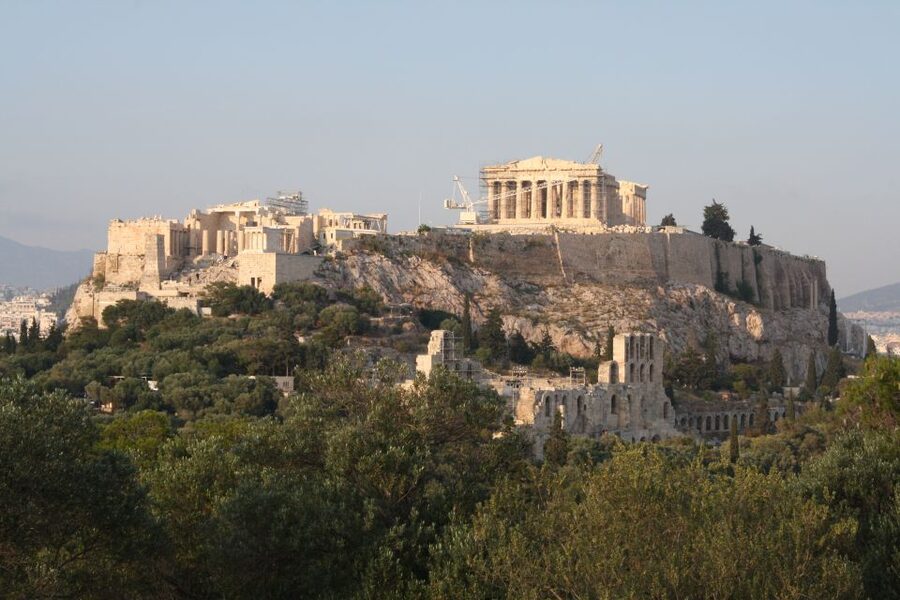
The Acropolis is a hill, and the tour takes you upward on foot. That sounds obvious, yet it is easy to underestimate until you are on hot stone with the Parthenon still above you.
Wear firm, comfortable shoes. Sandals and flip-flops are not allowed, and loose footwear is a poor match for uneven surfaces anyway. Bring water, sunscreen, and a sun hat. Guides often pause in shade when possible, but there is no promise of shade at every stop.
Summer heat is the chief practical concern. The 8 a.m. departure is frequently recommended because it is cooler and tends to be less crowded by the time you descend. Some visitors find 10 a.m. a reasonable compromise, while an 11 a.m. start can feel harsh on a very hot day.
You need enough balance and stamina for the ascent and the ancient surfaces. This tour is not suitable for wheelchair users, people using walkers, or people with mobility impairments. There is no elevator access during the route. Baby strollers are not permitted inside the Acropolis, so families with very young children are advised to use a baby pouch instead.
Children under six are not accepted, and the activity is also not suited to pregnant people, those with heart problems, or people with pre-existing medical conditions. Take those limits seriously. The views are wonderful, but the site does not offer an easy, level route.
The Propylaea, the grand entrance
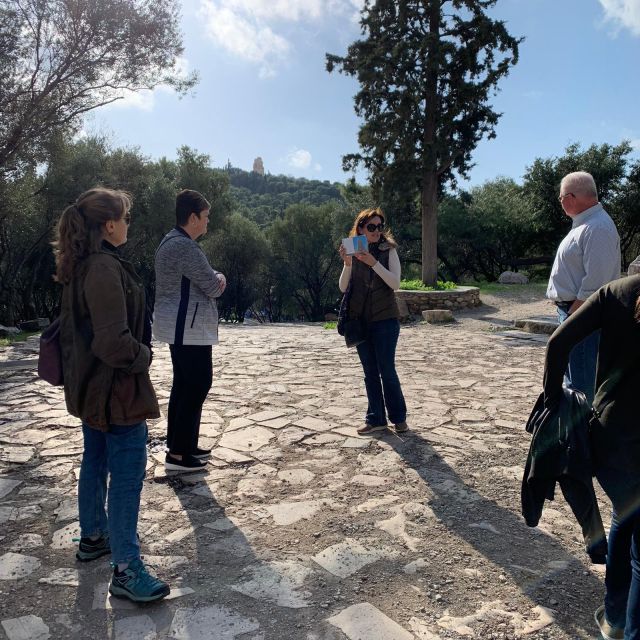
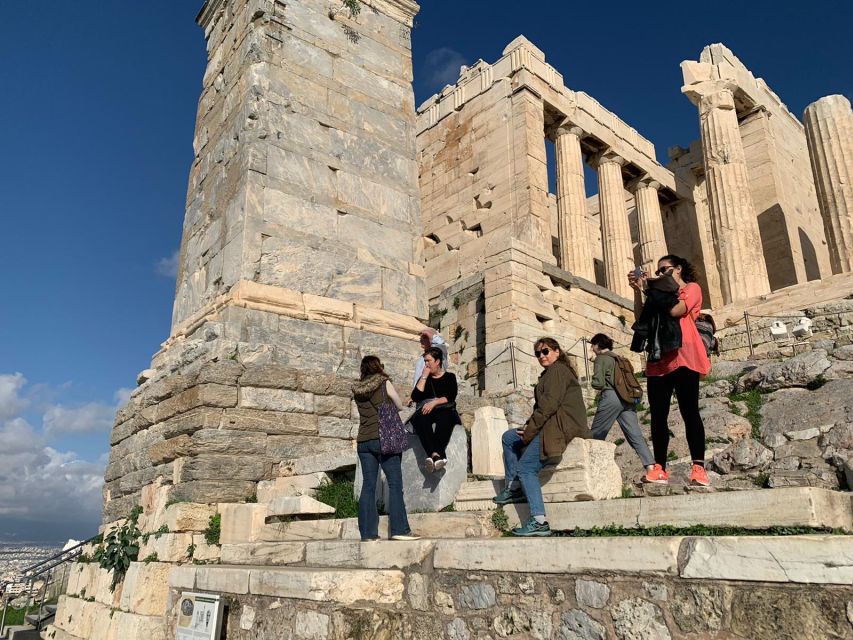
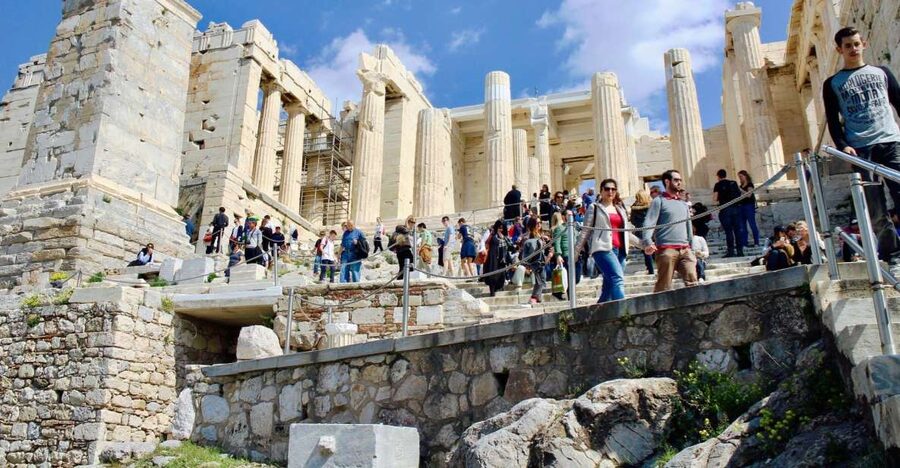
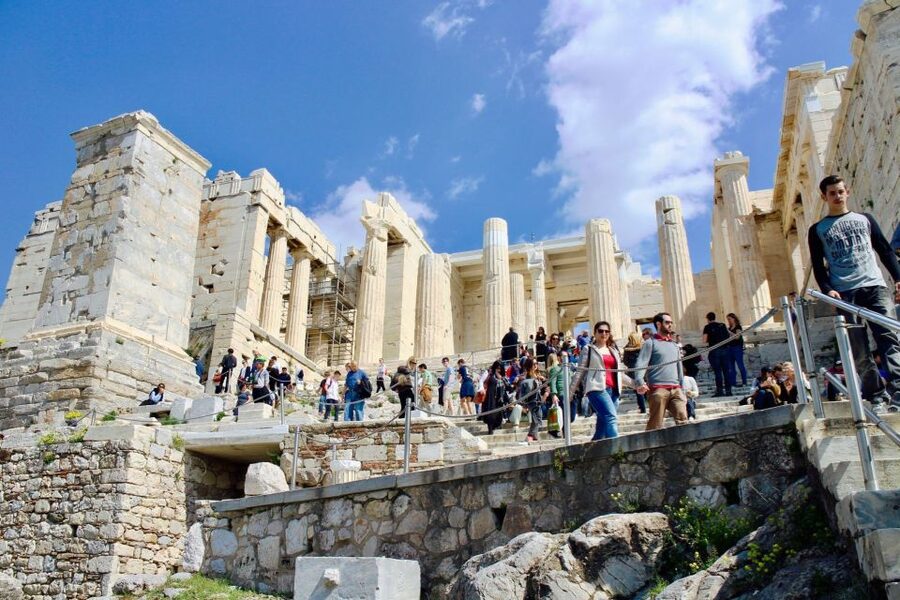
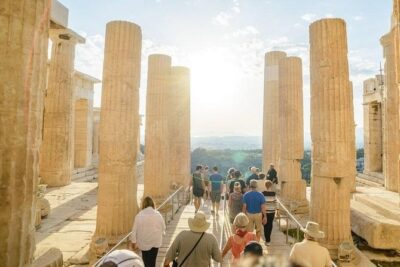
The Propylaea is your formal gateway to the Acropolis. It was designed to make arrival feel important, and it still does. The monumental entrance frames the climb and gives your guide a natural place to explain how ancient visitors approached the sacred hill.
This is also where the practical challenge becomes clear. The steps and stone can be crowded, and people move at different speeds. The headsets mean you can listen while keeping a safe pace rather than pressing close to the guide.
Your guide may use the entrance to set up the wider story of classical Athens. The tour also connects the Acropolis to later periods, including its Roman, Byzantine, and Ottoman use, before discussing its place in modern Greece. That broader timeline keeps the visit from becoming a narrow lesson about one fifth-century building.
More Athens tickets worth pre-booking:
- Athens: Acropolis Ticket with Audio Guide
★ 4.0 · 3,575 reviews - Athens All Included: Acropolis and Museum Guided Tour with Ticket
★ 4.5 · 2,673 reviews - Athens: Acropolis Museum Ticket with optional Audio Guide
★ 4.4 · 2,652 reviews - Athens: Acropolis Ticket & Optional Self-Guided Audio Tours
★ 4.1 · 2,542 reviews
The Parthenon and the power of the main view
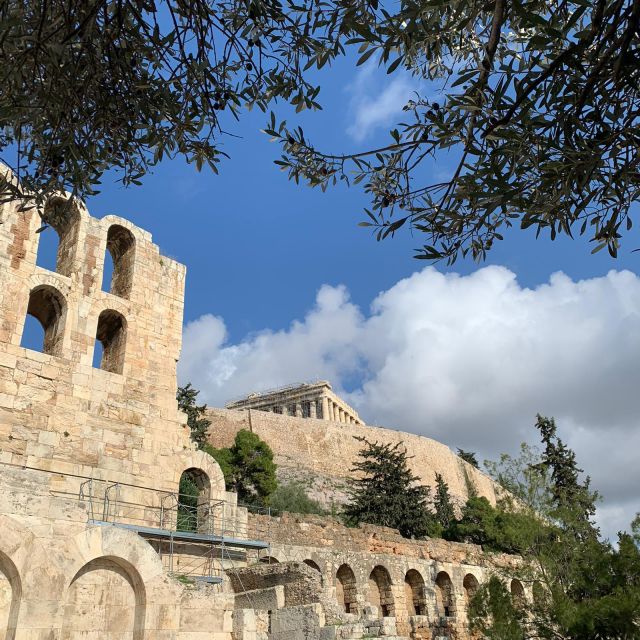
The Parthenon is the moment most people picture before arriving. It remains the visual heart of the Acropolis, even though time, war, pollution, looting, and restoration have changed its appearance.
A guide helps you look past the familiar postcard. You learn about the temple’s connection to Athena, the city’s patron goddess, and the architectural choices that made the building appear balanced and alive. You also gain a clearer sense of what the Parthenon meant to ancient Athenians, rather than treating it as an isolated ruin.
The route does not take you inside the Parthenon. The experience is a guided visit around the Acropolis monuments, with explanations and viewpoints from the site. That distinction matters if you expect an interior tour.
Allow time to stop and look. The best guides do not rush every photo opportunity, and the tour includes pauses for views. The city spreads below you, with nearly 3,000 years of human activity visible from the hill. You will want your camera ready, but listen first. The architectural details are much easier to appreciate once you know what to look for.
The Erechtheion and its complicated stories
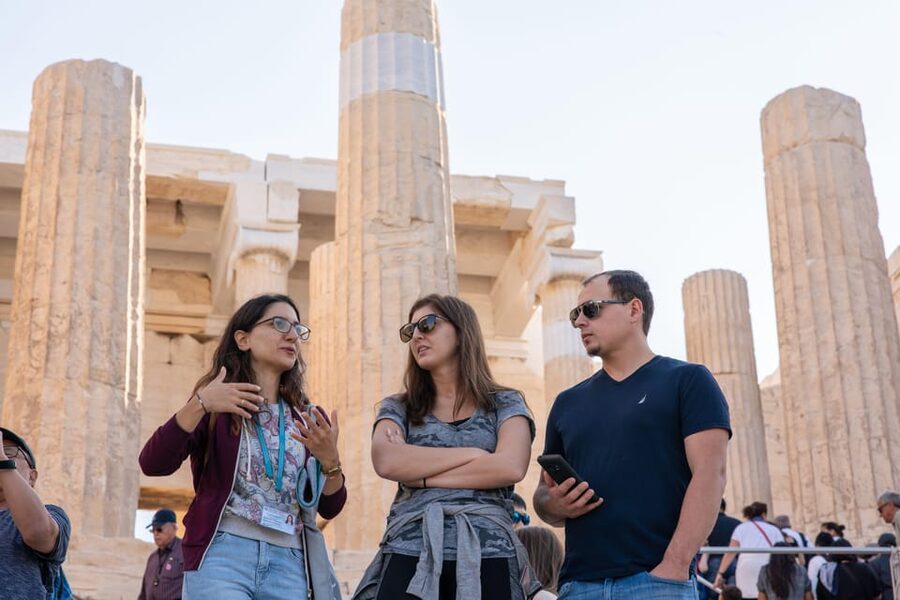
The Erechtheion is more intricate than the Parthenon and often more mysterious. Its uneven design reflects the several sacred traditions connected with this part of the hill.
This is where mythology can make the ancient site feel personal. Your guide may explain the stories tied to Athena and other early cults, as well as the rituals that shaped life on the Acropolis. The building’s unusual form gives the guide plenty to discuss, and it offers a welcome change from the Parthenon’s strict symmetry.
The famous female-shaped columns are one of the most recognizable sights here. Do not judge the stop only by the photo. The guide’s explanation helps you understand how sculpture, architecture, religion, and civic identity worked together.
Crowds can gather tightly around the Erechtheion, especially in the middle of the day. Follow the guide’s instructions about where to stand, and do not expect a long period of quiet contemplation during the busiest departures.
The Temple of Athena Nike
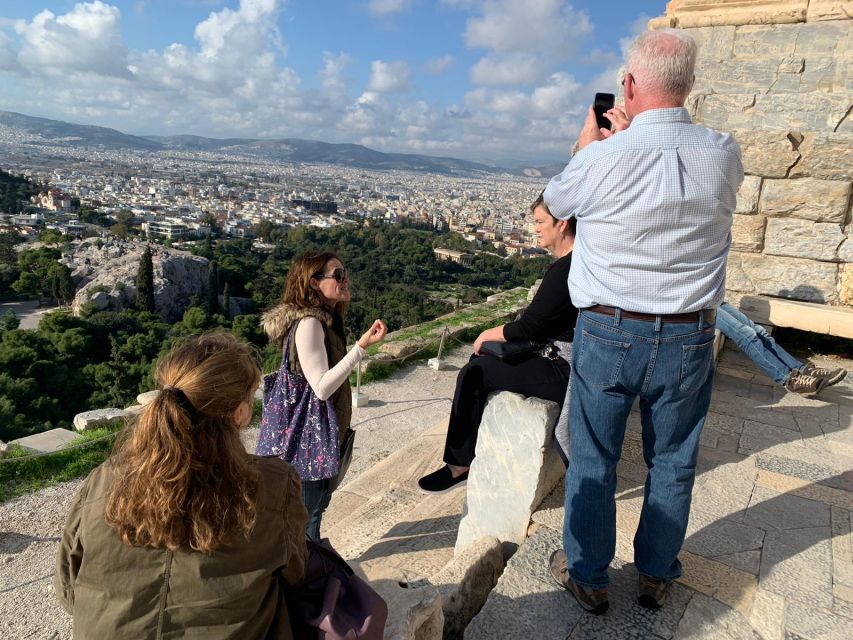
The small Temple of Athena Nike sits near the entrance area, but its position gives it outsized importance. It is tied to Athena in her role as a bringer of victory, an appropriate message for a city that linked religion and public power so closely.
The temple is easy to overlook if you are eager to reach the Parthenon. A guided route makes sure it receives attention. Your guide can point out how its size and placement differ from the larger monuments, while explaining why a small shrine could still carry major meaning.
This stop also helps break up the climb. You are still walking and standing, but the shorter explanation offers a chance to slow down before moving farther across the hill.
The southern slope and the Theater of Dionysus
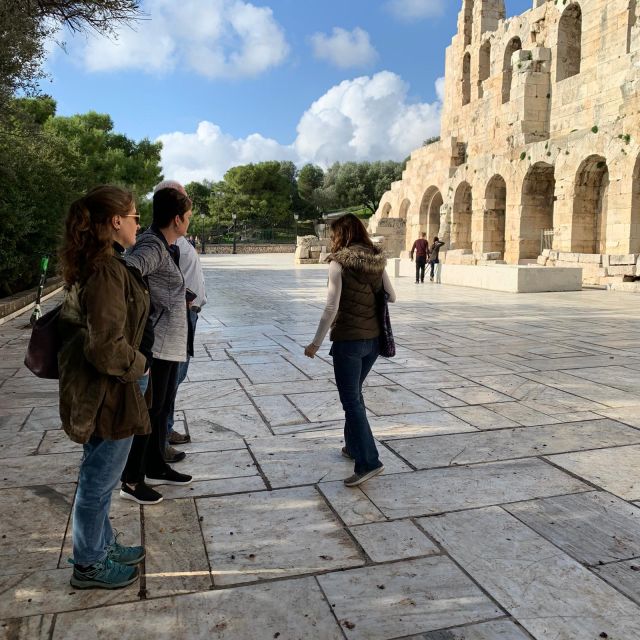
At the end of the main Acropolis walk, you may be able to remain on the hill independently or continue with your guide toward the southern slope. The route passes the Sanctuary of Asclepius and the Theater of Dionysus, described as the birthplace of drama.
This part of the experience is especially useful if you want more than the standard Parthenon photo. The theater connects the ancient site to performance, public life, and the stories that still shape modern theater. It also shows that the Acropolis was not only a hilltop of temples. Its surrounding slopes held important places for healing, worship, and communal events.
Check how your particular departure handles the final section. The central guided visit lasts two hours, and some people choose to stay afterward for more photos or independent viewing. That flexibility is valuable because you can finish the formal explanations, then move at your own pace instead of being rushed out.
What two hours really gives you
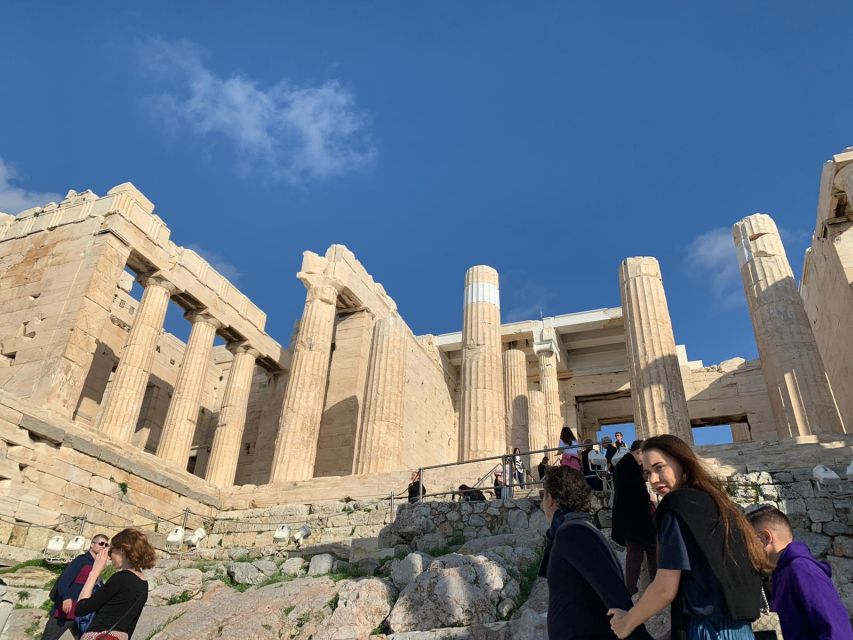
Two hours is enough for a strong introduction, not a complete study of every stone. The route covers the major monuments efficiently, with time for mythology, architecture, historical context, and photographs. It is a good fit for a first visit or for a short Athens stay.
The pace is generally organized rather than frantic. Guides have been praised for keeping groups moving without skipping the important stops, and for allowing slower members to catch up. Still, you will be walking and standing for most of the visit.
If you want a long, quiet look at every carved detail, book the tour early and stay afterward. If you prefer to wander alone from the start, the guided structure may feel restrictive. I would choose this option when the Acropolis is unfamiliar to me, since the interpretation adds real value to a site that can otherwise seem visually overwhelming.
The headset system is one of the most useful features. You do not have to strain to hear in wind, near other tour groups, or while standing a few steps away for a photo. One minor improvement would be a take-home map, since a simple printed plan could help you remember the route afterward.
Is $35 a fair price?
At $35 per person, the tour sits in a sensible range for a guided visit, especially when the ticket option is included. You are paying not only for entry, but also for a licensed guide, a planned route, headsets, and help navigating a timed admission system.
The value depends on your priorities. If you are comfortable reading signs and researching ancient Athens on your own, a self-guided visit may cost less. If you want the monuments explained in real time, the price is easier to justify.
Remember that ticket arrangements can differ. If you choose the option without tickets, you must bring the exact cash amount for the Acropolis entry fee. Other tickets or passes are not accepted for that payment. In high season, even pre-reserved entry can involve a wait in the reserved-ticket queue, so skip-the-line does not mean walking past every person immediately.
The cancellation policy is useful for changing plans: you can cancel up to 24 hours ahead for a full refund, and reserve now while paying later. Tips for the guide are appreciated but not required.
Who should book this Acropolis tour?
I would recommend it to first-time visitors who want the main story without spending half a day on the hill. It also suits anyone who enjoys mythology, architecture, or ancient history but does not want to prepare a full reading list before arriving.
It is a particularly good choice for people who worry about missing the important monuments. The guide keeps the route focused on the Parthenon, Propylaea, Erechtheion, Temple of Athena Nike, and, when included, the southern slope and Theater of Dionysus.
You should think twice if you have trouble with hills, heat, uneven ground, or prolonged standing. The Acropolis is demanding even when the guide is patient. Book an early time, bring water, and do not carry luggage or large bags. Strollers are not allowed.
Should you book it?
Book this tour if you want the Acropolis to make sense, not simply appear in your photos. The combination of a licensed guide, reserved admission, clear headsets, and a focused two-hour route gives you strong value at $35.
Choose an early departure if possible, especially in summer. Skip it if the climb is beyond your ability or if you want a completely independent visit with no fixed pace. For most first-time visitors who can manage the hill, a good guide turns a famous ruin into a memorable place.
FAQ
Where does the Acropolis tour meet?
The meeting point is outside the Acropolis Metro Station at Makrigianni 7. If you arrive by metro, use the Makryianni or Dionysiou Areopagitou exit, go to street level, and find the guide holding a sign with your names.
How long does the tour last?
The guided visit lasts two hours. Afterward, you may be able to remain on the Acropolis independently or follow the guide toward the southern slope.
Are Acropolis tickets included?
Pre-reserved Acropolis entry tickets are included if you select the ticketed option. If you book the option without tickets, bring the exact cash amount for the Acropolis entry fee.
Does reserved entry mean there is no waiting?
No. In the high season, the reserved-ticket queue can still be busy. Your ticket is timed, and it can expire within five to ten minutes, so arrive five to ten minutes before the scheduled start.
What languages are available?
The live tour is available in English and German.
Are headsets provided?
Yes. Headsets are included so you can hear the guide clearly while walking or standing in crowded areas.
Is the tour suitable for wheelchair users or people with limited mobility?
No. The tour has no wheelchair, walker, or elevator access and includes a climb over uneven surfaces. It is not suitable for wheelchair users or people with mobility impairments.
What should I bring?
Bring comfortable shoes, a sun hat, sunscreen, and water. Sandals and flip-flops are not allowed, and luggage, large bags, and baby strollers cannot enter the Acropolis.
Newly reviewed around Athens
- Food Tour★ 5.0 · 3 reviews
- Feel Ancient thermal Spa Visit Delphi, Leonidas ℨoo Spaʀtan★ 5.0 · 4 reviews
- Explore the Hidden Food Gems of Athens★ 5.0 · 57 reviews
- Food Experience in Athens including Unlimited Lunch★ 5.0 · 3 reviews
- Eat Your Way Through Athens: A Local Food Walk★ 4.9 · 97 reviews
- From Athens: Delphi Private Tour with Lunch Time★ 4.0 · 3 reviews
- Delphi: Spanish guided one day tour★ 4.6 · 55 reviews
- Early Entry Acropolis & Museum. Beat the Crowds & the heat★ 5.0 · 3 reviews
Athens Acropolis Tours, compared.

Acropolis & up to 5 Archaeological Sites Combo Pass
Read our review →
Acropolis, Parthenon & Acropolis Museum Guided Tour
Read our review →
Acropolis, Parthenon & Acropolis Museum Guided Tour
Read our review →

Acropolis monuments & Parthenon Walking Tour with Optional Acropolis Museum
Read our review →Browse the lists this tour appears in