

Reviewed · ATHENS ACROPOLIS TOURS
Athens: Acropolis Museum Private Guided Tour
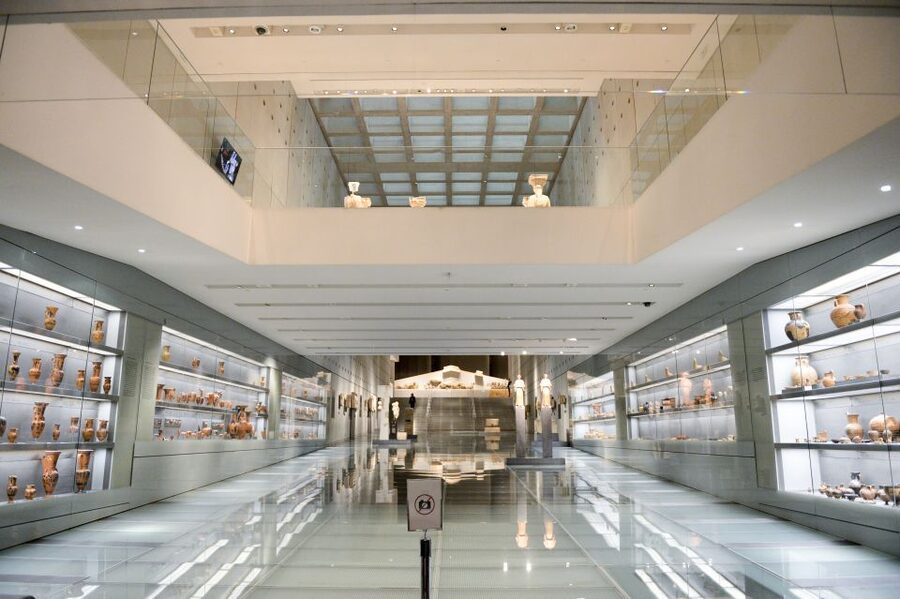
The Acropolis Museum is where the stones of ancient Athens begin to speak. Instead of simply walking past statues and fragments, you’ll hear how Athenian art, myth, politics, and philosophy shaped the wider Western world. The tour focuses on the museum’s most important works, including Parthenon sculptures, pediments, and the statues of Koures and Kores.
I like the private format, which gives you a guide focused on your group rather than a crowd. I also like that your museum ticket is included, with skip-the-ticket-line access saving useful time in central Athens.
The main drawback is the short 1.5-hour schedule. It is long enough for a strong introduction, but not long enough to study every gallery at an unhurried pace. At $352 for up to two people, it also makes more financial sense for a pair than for a solo visitor.
Key points at a glance
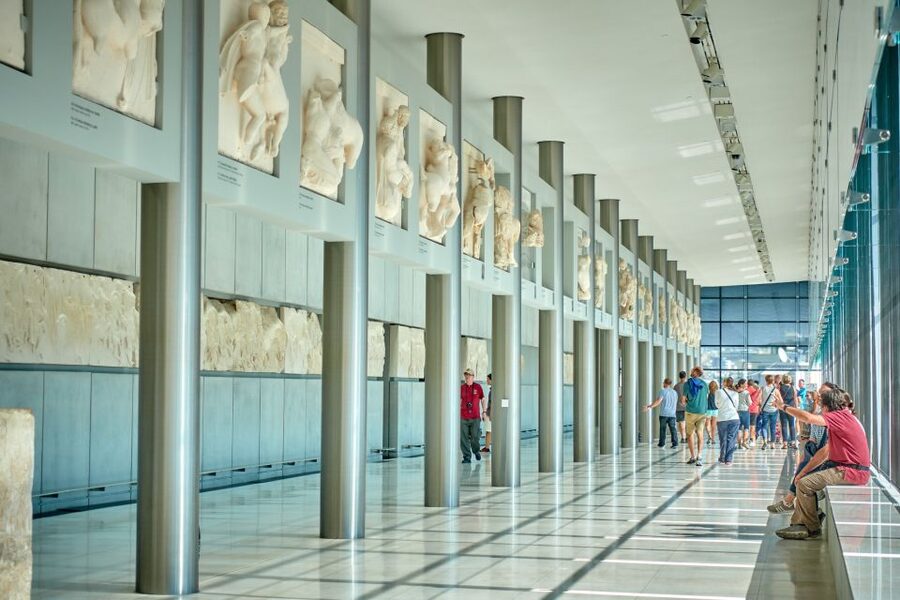
- A 90-minute private tour: Your guide can shape the pace and explain objects in a way that suits your group.
- Parthenon sculpture in context: Learn why the temple mattered to Athenian democracy, religion, and high art.
- Koures and Kores: See some of the museum’s early human figures and hear how they fit into Greek art.
- Tickets included: You enter with an Acropolis Museum ticket and skip the ticket line.
- English-speaking guidance: The tour is conducted in English by a live professional guide.
- Easy central meeting point: Meet at the entrance and finish back at the museum, with no transport required.
Why the Acropolis Museum deserves a guided visit
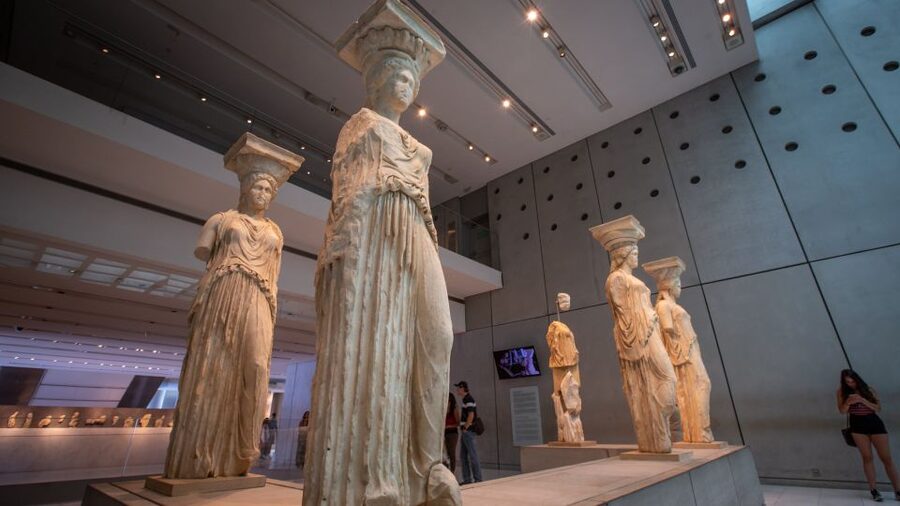
The Acropolis Museum is not just a storage place for old statues. It is the clearest setting in Athens for understanding how ancient artists worked, what their images meant, and how the Acropolis changed over time.
On your own, it is easy to admire a marble figure, read a short label, and move on. A private guide helps join the pieces together. You can ask why a statue was made, what a myth says about Athenian values, or how a sculpture relates to the Parthenon.
That added context matters most with works that are damaged or incomplete. A headless figure or broken pediment can seem abstract until you learn where it once appeared, what story it showed, and why ancient Athenians thought it mattered.
I also appreciate that the tour connects art with civic life. Athens was not only a place of temples and myths. It was a city developing new ideas about public life, debate, citizenship, and artistic skill. The museum lets you see those ideas in physical form.
More ways to see the Acropolis:
- Athens: Acropolis & up to 5 Archaeological Sites Combo Pass
★ 4.4 · 12,619 reviews - Athens: Acropolis Ticket with Optional Audio or Live Guide
★ 4.2 · 11,055 reviews - Athens: Acropolis, Parthenon & Acropolis Museum Guided Tour
★ 4.8 · 9,316 reviews
Meeting your guide at the museum entrance
The tour begins at the entrance of the Acropolis Museum. That is a practical meeting point, especially if you are already spending the day around the Acropolis. You do not need to arrange a separate pickup or find a distant office.
You should arrive with your passport or ID card. Food and drinks are not allowed, so finish snacks before entering and follow the museum’s rules once inside. A complimentary bottle of water is included with the tour, but meals and other drinks are not.
The included ticket is one of the tour’s useful features. You do not need to buy the museum admission separately, and skip-the-ticket-line access reduces one common bit of friction in a busy Athens sightseeing day. It does not turn the museum into a private building, of course, but it gets the paid entry side of the visit organized for you.
Since the tour is private, you are not joining a large shared group. That can make the opening minutes easier. Your guide can explain the plan, answer questions, and judge how much background your group needs.
The first 30 minutes: getting the ancient city into focus

Your guide will set up the basic story of ancient Athens before moving through the objects in detail. This opening matters because the museum’s displays make more sense once you understand the Acropolis as both a sacred site and a public symbol.
Expect discussion of ancient Greek myths, legendary figures, and the role of art in communicating power and belief. The aim is not simply to memorize names. It is to see why certain stories were placed on temples and why particular human forms became so important in Greek sculpture.
The guide also brings in Athens’ influence on Western civilization. That phrase can sound grand, but here it has a practical meaning. You will look at the ways Greek artists represented the human body, how myths were used in public art, and how Athenian ideas about civic life continue to shape later art and political thought.
This is where a private guide can be especially helpful for families or first-time museum visitors. You can stop the flow with a question instead of waiting for a scheduled pause. If you already know Greek mythology, you can spend more time on artistic technique and historical setting.
Koures and Kores: early figures with a clear visual language
The Koures and Kores are among the museum’s important groups of statues. Their names refer to young male and female figures, and they offer a useful way to see how Greek sculptors developed a more formal approach to the human body.
Your guide will help you look past the first impression of stillness. These figures are not casual portraits in the modern sense. Their posture, clothing, hair, and proportions carry meaning. They also help show how Greek artists moved toward greater attention to anatomy, expression, and the presence of the human form.
The value of seeing these statues with a guide is comparison. A quick solo visit can leave you with a blur of pale marble figures. Commentary gives you a way to separate one style from another and notice the choices that an ancient sculptor made.
Do not expect every statue to tell a complete story in isolation. Some objects are fragments or survive without all their original surroundings. That is part of the museum experience, and your guide’s explanation helps fill in the missing setting without pretending that every detail is known.
More museums and ancient sites in Athens:
- Athens: Acropolis, Parthenon & Acropolis Museum Guided Tour
★ 4.8 · 3,579 reviews - Acropolis monuments & Parthenon Walking Tour with Optional Acropolis Museum
★ 5.0 · 2,678 reviews - Athens: Acropolis Museum Ticket with optional Audio Guide
★ 4.4 · 2,652 reviews - Parthenon & Acropolis Museum with Audio or Live Tour Option
★ 4.1 · 2,446 reviews
The Parthenon sculptures and pediments
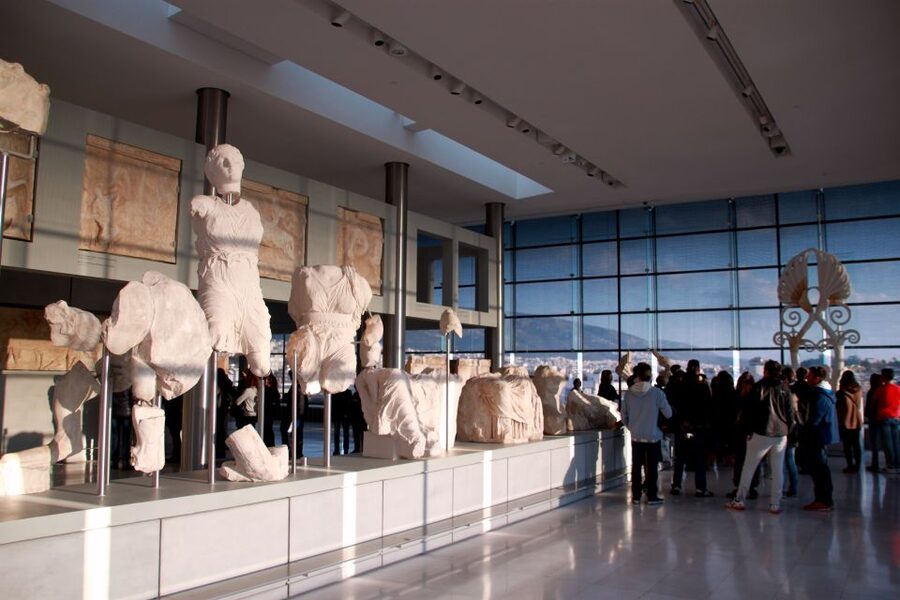
The Parthenon is the heart of the tour. You will examine sculptures and pediments connected with the temple, while your guide explains its construction, purpose, and long afterlife as a work of art.
The Parthenon was not merely a pretty building on a hill. It was a major statement about Athens. Its design and decoration expressed religious devotion, civic identity, and the city’s confidence in its own place in the Greek world.
The tour also links the temple to Athenian democracy. That does not mean the Parthenon represented modern democracy in a simple way. Ancient Athens had a limited system of citizenship, and many people living in the city could not take part in political life. A good explanation should help you appreciate both the boldness of Athenian civic ideas and their limits.
The sculptures deserve time because they combine myth with human movement. Figures are arranged in scenes that once formed part of a larger architectural program. A guide can help you understand how the pieces worked together rather than treating each marble as an isolated object.
The pediments are especially useful for this. Their triangular setting forced artists to arrange figures in a difficult space, with larger forms toward the center and smaller ones toward the edges. Even without technical training, you can see how the sculptors adjusted bodies, poses, and scale to fit the building.
Stories behind the objects
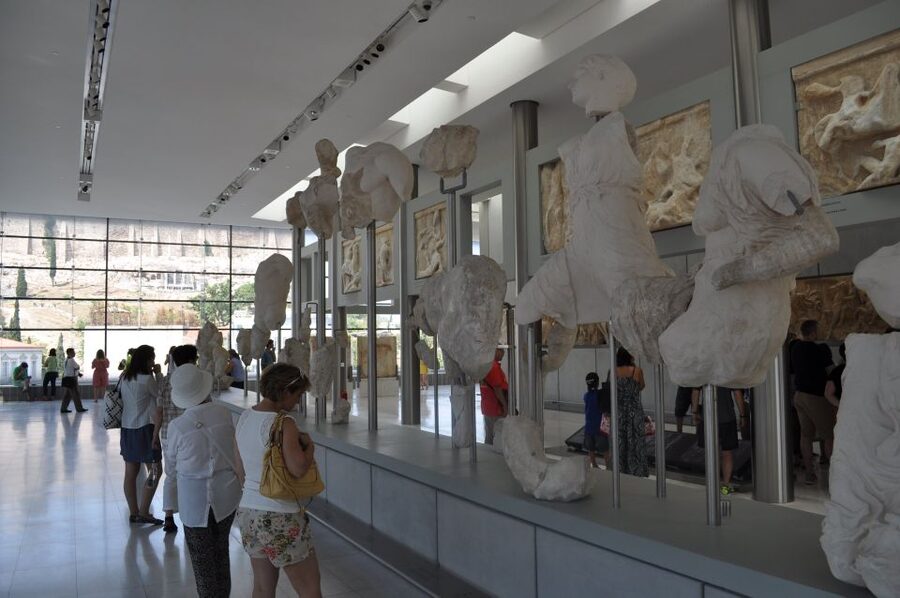
The best part of a museum tour is often the bridge between an object and the story around it. Here, your guide will connect artifacts with myths, legendary characters, and historical events.
I like this approach because Greek mythology can otherwise become a list of names. Knowing that a scene involves a god or hero is less useful than understanding why the story appeared on a temple and what it may have meant to the people who saw it.
The commentary also gives you a sense of daily life in ancient Athens. The museum’s objects are connected to a society that used art in religious ceremonies, public spaces, and civic settings. You will get more from the displays when you see them as parts of a living culture rather than as detached masterpieces.
The guide’s role is central here. One particularly strong point of the experience is the amount of cultural and historical material packed into 90 minutes. That is a credit to the guide’s preparation, but it also means the pace may feel brisk if you want long periods of quiet looking.
Is 1.5 hours enough?
For a first look, yes. For a complete museum visit, no.
The 90-minute format works well if you are fitting the Acropolis Museum between other Athens sights. It gives you a clear route through major themes and helps you identify the objects worth revisiting after the tour.
It is also a sensible choice if you have limited time in Athens. One booking comment praised the guide for filling the full hour and a half with substantial history and culture, which matches the tour’s main strength: concentrated explanation without a half-day commitment.
You should not expect to examine every room at length. If you are an art student, ancient history specialist, or repeat visitor who wants close study of individual pieces, you may prefer more time in the museum after the guided portion.
A smart plan is to treat the tour as an orientation. Listen closely, note the works that interest you, and then stay on independently if your schedule allows. The tour itself finishes back at the Acropolis Museum, so you are already in the right place for a second look.
What the private format changes
Private does not necessarily mean luxurious. Here, it means your group is limited to the people in your booking, with a guide assigned to you rather than to a larger public group.
That difference can be worth paying for. You can ask questions about specific myths, slow down at the Koures and Kores, or move more quickly through material that does not interest you. Families may find this easier than asking children to match the pace of strangers.
A private tour also suits couples who want a focused cultural activity. The cost is $352 for a group of up to two, so the effective price is $176 per person when two people share it. That is a serious expense for 90 minutes, but it includes the museum ticket, a professional English-speaking guide, skip-the-ticket-line access, and a private experience.
For one person, the same group price is harder to justify. For two people who value explanation and want a compact museum visit, the price is more reasonable. You are paying for attention and structure, not just admission.
Accessibility, language, and practical limits
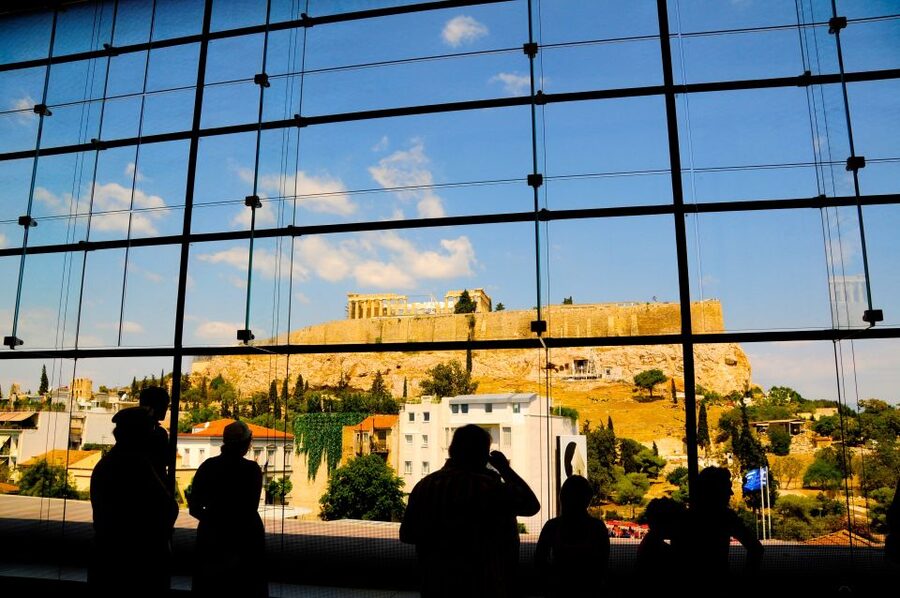
The activity is wheelchair accessible, an important point for visitors who need step-free access or a more considered route. The available tour language is English, and the guide is live rather than audio recorded.
The museum entrance is both the starting and ending point. There is no transport included, which is not a serious issue for this activity because the entire visit takes place inside the museum.
Meals and drinks are not included. Personal expenses are also your responsibility. The included bottled water is a small convenience, not a substitute for planning food around the museum visit.
You can reserve now and pay later, and cancellation is free up to 24 hours before the tour for a full refund. Those terms are useful if your Athens schedule is still shifting, though you should check the available starting times before booking.
Who will get the most from this tour?
I would choose this experience for a first visit to Athens, especially if you want the museum to explain itself rather than simply display objects.
It fits well for:
- Couples sharing the private group price
- Families who need a guide to keep the visit moving
- First-time museum visitors who want the main ideas in plain English
- People with limited time in Athens
- Visitors interested in the link between myth, art, politics, and the Parthenon
- Anyone who prefers asking questions instead of following a large group
I would be more cautious if you want a slow, self-directed museum session. Ninety minutes passes quickly, and the private price may not suit a solo visitor on a tight budget.
Final verdict: book it for focused context
Book this tour if you want the Acropolis Museum to make sense quickly. The strongest reasons are the private guide, the included ticket, the focused explanation of the Parthenon, and the attention given to myths, Athenian art, Koures, Kores, and ancient civic life.
Skip it if you are happy reading labels on your own or plan to spend several unhurried hours in the museum. At $352 for up to two people, this is not the cheapest way inside.
For a pair with limited time, though, the value is easier to see. You get a 90-minute English-language introduction, direct access to major works, and a guide who can turn marble fragments and temple sculpture into a connected story. That is a useful way to begin understanding Athens before you return to the Acropolis itself.
FAQ
Where does the Acropolis Museum tour begin?
The tour begins at the entrance of the Acropolis Museum.
Where does the tour finish?
The guided visit finishes back at the Acropolis Museum.
How long does the private tour last?
The tour lasts 1.5 hours.
Are Acropolis Museum entrance tickets included?
Yes. Acropolis Museum tickets are included, with skip-the-ticket-line access.
What language is the tour conducted in?
The live tour guide provides the experience in English.
Is the tour wheelchair accessible?
Yes. The activity is listed as wheelchair accessible.
Newly reviewed around Athens
- Feel Ancient thermal Spa Visit Delphi, Leonidas ℨoo Spaʀtan★ 5.0 · 4 reviews
- Food Tour★ 5.0 · 3 reviews
- Explore the Hidden Food Gems of Athens★ 5.0 · 57 reviews
- Food Experience in Athens including Unlimited Lunch★ 5.0 · 3 reviews
- Eat Your Way Through Athens: A Local Food Walk★ 4.9 · 97 reviews
- From Athens: Delphi Private Tour with Lunch Time★ 4.0 · 3 reviews
- Delphi: Spanish guided one day tour★ 4.6 · 55 reviews
- Early Entry Acropolis & Museum. Beat the Crowds & the heat★ 5.0 · 3 reviews
Athens Acropolis Tours, compared.
Acropolis & up to 5 Archaeological Sites Combo Pass
Read our review →
Acropolis, Parthenon & Acropolis Museum Guided Tour
Read our review →
Acropolis, Parthenon & Acropolis Museum Guided Tour
Read our review →
Acropolis monuments & Parthenon Walking Tour with Optional Acropolis Museum
Read our review →Browse the lists this tour appears in