
Reviewed · ATHENS ACROPOLIS TOURS
Athens: Acropolis and Parthenon Guided Walking Tour
The best part of this tour is the climb through the South Slopes entrance, which brings you past ancient theaters and temples before you reach the Acropolis summit. You see the Theater of Dionysus, the Odeon of Herodes Atticus, the Asklepieion, and the main citadel in one well-planned walk.
I like the way the tour connects architecture with stories of Greek mythology, democracy, theater, and daily life. I also like the guides’ practical approach. Guides such as Simon, Kostas, Iris, Alexia, Angel, and Christos have been praised for clear explanations, humor, shade breaks, and keeping groups together in heavy crowds. The main drawback is the terrain: steep, uneven ground, strong sun, and no group-tour use of the Acropolis elevator.
Key points to know before booking
- South Slopes entry: A convenient route past the Theater of Dionysus and Odeon of Herodes Atticus.
- Two hours on ancient ground: The pace is focused, with major monuments covered but little time to linger alone.
- Strong guide-led storytelling: Greek history, mythology, architecture, and modern connections shape the visit.
- Best in the morning during summer: Heat and bare stone make early starting times easier.
- Skip-the-line access: Entrance tickets are included, though crowded days can still feel busy inside.
- Not for every body: Strollers, wheelchairs, large bags, and visitors with mobility or heart problems are not suited to this tour.
The South Slopes are the right opening act
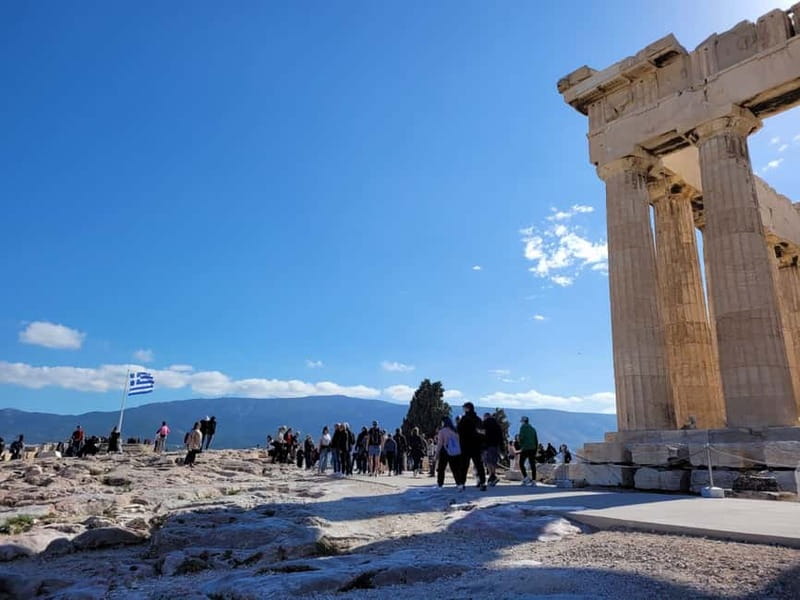
Meet your English-speaking guide at the Athenian Tours office at Mitsaion 2, near the Acropolis. From there, the walk begins toward the South Slopes, a useful starting point because you approach the hill through some of Athens’ finest ancient remains rather than heading straight to the Parthenon.
The route is designed to use skip-the-line entry, so you avoid buying a ticket at the entrance. That saves valuable time, especially when the Acropolis is crowded. It does not mean the site will feel empty. Several groups may be moving through the same gates, and the quality of any audio equipment can suffer when other tour groups are nearby.
Your guide leads the group upward, stopping often to explain what you are seeing. On a good tour, these pauses matter as much as the monuments themselves. The Acropolis can look like a collection of worn stones if you visit without context. A guide helps you understand why the buildings were placed where they are and how Athens used this hill as a religious and civic center.
The climb is manageable for many people, but it is still a climb. Wear shoes with a firm grip, bring water, and use sunscreen and a hat. The site has little shade, so a morning appointment is a smart choice in August or during other hot periods.
More ways to see the Acropolis:
- Athens: Acropolis & up to 5 Archaeological Sites Combo Pass
★ 4.4 · 12,619 reviews - Athens: Acropolis Ticket with Optional Audio or Live Guide
★ 4.2 · 11,055 reviews - Athens: Acropolis, Parthenon & Acropolis Museum Guided Tour
★ 4.8 · 9,316 reviews
Theater of Dionysus: where Greek drama began
The first major stop is the Theater of Dionysus, set into the southern slope of the Acropolis. This is where famous ancient comedies and tragedies were performed, making it one of the most meaningful stops for anyone interested in drama, literature, or politics.
You will not simply walk past a theater and hear its name. The guide explains how the space worked and why public performances mattered in ancient Athens. Greek drama was entertainment, but it also dealt with war, power, justice, family, and the behavior of the gods. That makes this early stop a useful introduction to the city’s public life.
The theater is an open-air site, so the guide’s position matters. On crowded days, you may need to stand close to hear clearly. Disposable earphones are supplied for groups larger than five, although sound can still be affected by other groups using their own devices.
This stop also sets the pace for the rest of the tour. You are walking, listening, taking photographs, and moving on. If you want a long, quiet study of every structure, a self-guided visit with extra time may suit you better. If you want the key facts without doing all the research yourself, the format works well.
Roman Athens at the Odeon of Herodes Atticus
The route continues to the Odeon of Herodes Atticus, a Roman theater built in memory of the wife of Herodes Atticus. Its curved stone seating and dramatic setting make it one of the most memorable views on the lower part of the hill.
The theater is still used for performances, which gives the monument a link to living Athens rather than leaving it frozen in the ancient past. You see the building from the outside during this walk, and the guide places it within the longer story of the Acropolis, from classical Greece through the Roman period.
I like this part of the route because it shows that the Acropolis is not one single moment in time. The famous Parthenon belongs to fifth-century BCE Athens, but later Romans also shaped the hill and its surroundings. A short guided explanation helps you separate the classical monuments from the Roman additions.
The stop is brief, so plan to take your main photographs as the group moves. Your guide may point out useful angles and gather the group before the next ascent.
Asklepieion and the ancient idea of healing
Near the theater are the remains of the Asklepieion of Athens, a healing sanctuary dedicated to Asclepius and Hygeia. This is a quieter and less famous stop than the Parthenon, but it adds an important human detail to the visit.
Ancient visitors came to such sanctuaries seeking help with illness. The site reminds you that the Acropolis was not only a place for grand temples and public ceremony. It was also connected to ordinary concerns such as health, prayer, and hope.
This is where a good guide earns the tour price. The stones themselves are limited, but their meaning is not. Guides including Iris and Alexia have been praised for finding calmer places and shade when explaining the site. That kind of crowd management is useful on hot days, when you may appreciate a clear explanation more than another hurried photograph.
More walking tours in Athens:
- Athens: Acropolis and Parthenon Guided Walking Tour
★ 4.6 · 5,882 reviews - Greek Food Walking Tour in Athens
★ 5.0 · 4,740 reviews - Acropolis: Acropolis and Parthenon Guided Walking Tour
★ 4.7 · 3,442 reviews - Acropolis monuments & Parthenon Walking Tour with Optional Acropolis Museum
★ 5.0 · 2,678 reviews
Through the Propylaea to the summit
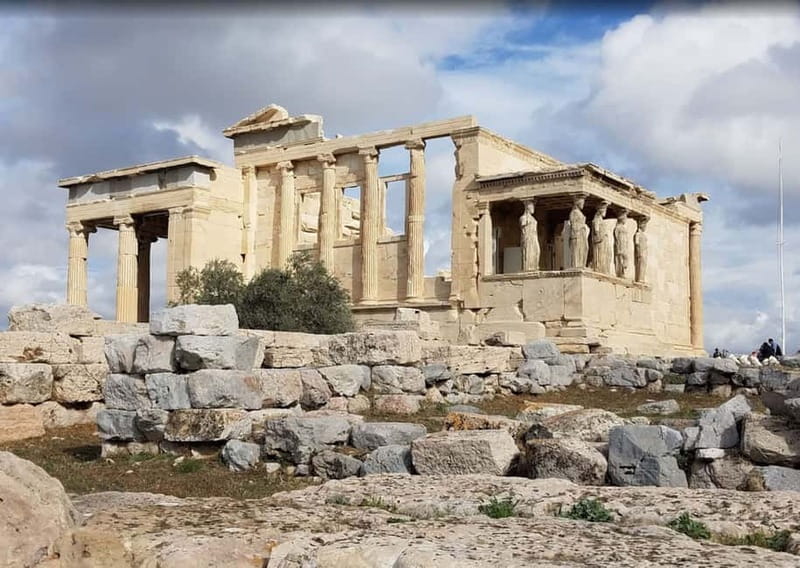
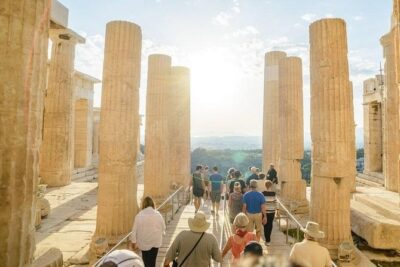
The Propylaea is the monumental gateway to the Acropolis. Reaching it gives the climb a sense of arrival. You pass through the entrance and begin to see the hilltop monuments in their proper setting, with Athens spreading out below.
The gateway is more than a practical doorway. Its scale was meant to impress people approaching the sacred precinct. Your guide explains how the entrance prepared visitors for the temples beyond and points out the Temple of Athena Nike nearby.
The ascent involves uneven paving and exposed stone. There is no use of the elevator on this group tour, and the activity is not suitable for wheelchair users, people with mobility impairments, or people with heart problems. Children under six are also not accepted. These are important limits, not minor footnotes.
Once inside, you should expect other groups, narrow areas, and moments when everyone stops at once. Guides who keep a clear meeting point and maintain a steady pace make the experience less stressful. Several guides associated with this tour have been praised for getting groups through crowded areas without losing people.
Temple of Athena Nike and the view over Athens
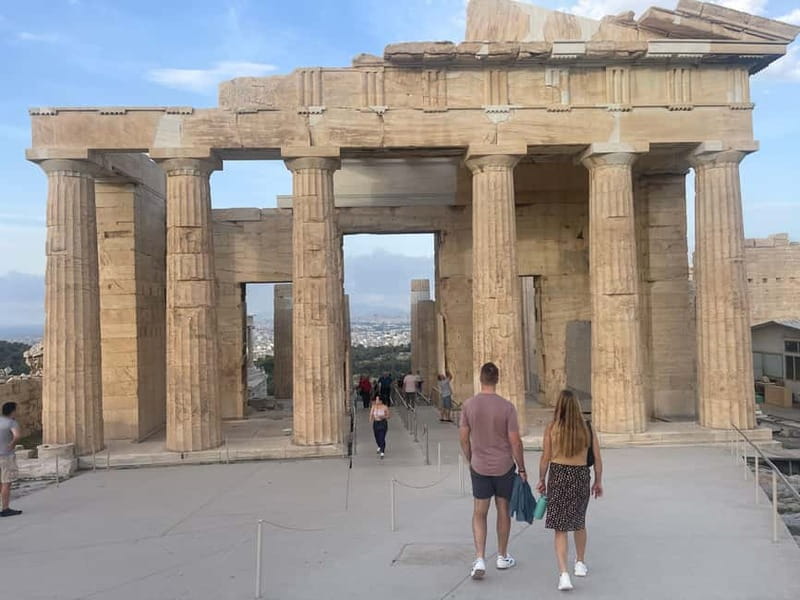
The small Temple of Athena Nike sits beside the Propylaea. It was dedicated to Athena in her role as bringer of victory, and its position gives it both religious and strategic importance.
Because the temple is much smaller than the Parthenon, it is easy to overlook when you are eager to reach the summit. Listen here. The guide can help you notice the building’s placement and explain why even a compact temple mattered within the Acropolis complex.
This is also a good point to look outward. The tour offers views across Athens, and the changing perspective is one of the rewards of walking upward. The city spreads around the rocky hill, making it easier to understand why the Acropolis has remained the defining sight of Athens.
Photography is allowed throughout the tour. Video recording of the guide is not allowed, so keep your phone ready for photographs rather than trying to film the whole explanation.
The Parthenon, seen with the right context
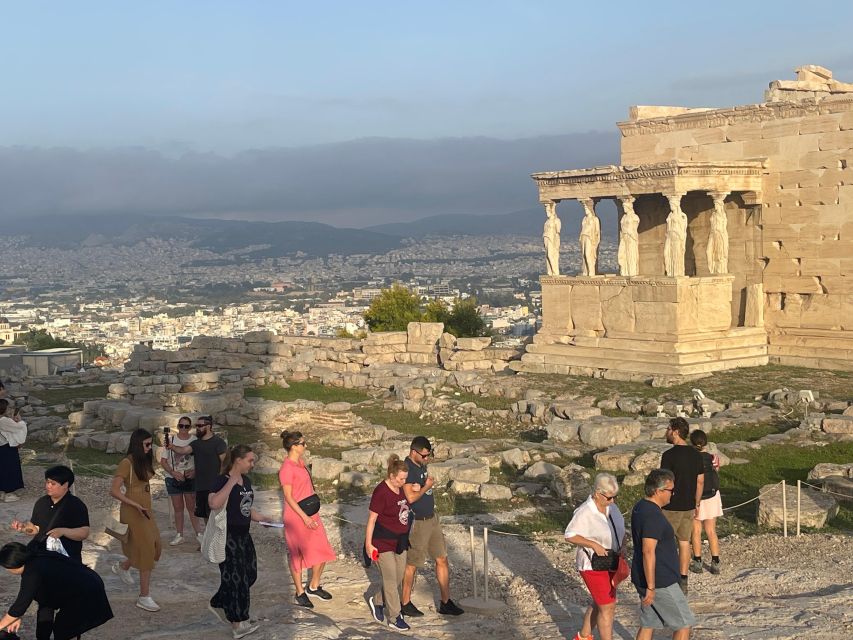
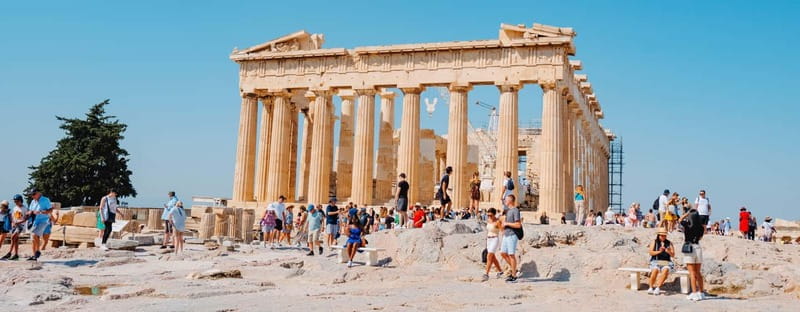
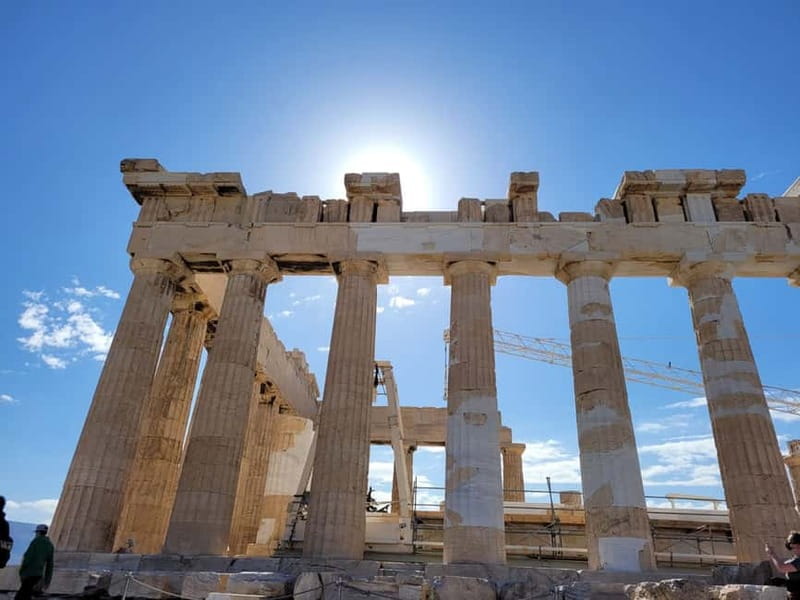
The Parthenon is the central prize for most people, and it is easy to understand why. Dedicated to Athena, patron goddess of Athens, it represents the fifth-century BCE high point of Doric architecture.
The building is not intact, but the surviving columns, sculptural fragments, and sheer scale still make a strong impression. Your guide explains the temple’s purpose and its place in the political and religious life of Athens. The Parthenon was not simply a beautiful building. It projected the power and confidence of the city.
I especially value a guide here because the Parthenon can be difficult to read at first glance. Scaffolding, missing sculptures, restoration work, and crowds can distract from the original design. A clear explanation helps you picture the painted and decorated temple that ancient Athenians would have seen.
Do not expect to walk inside the Parthenon. The experience is about viewing it from the surrounding Acropolis grounds, listening to the interpretation, and taking in the city views. The stop can feel short if you want time for careful architectural study, but the two-hour format keeps the visit moving.
The Erechtheion and its famous female figures
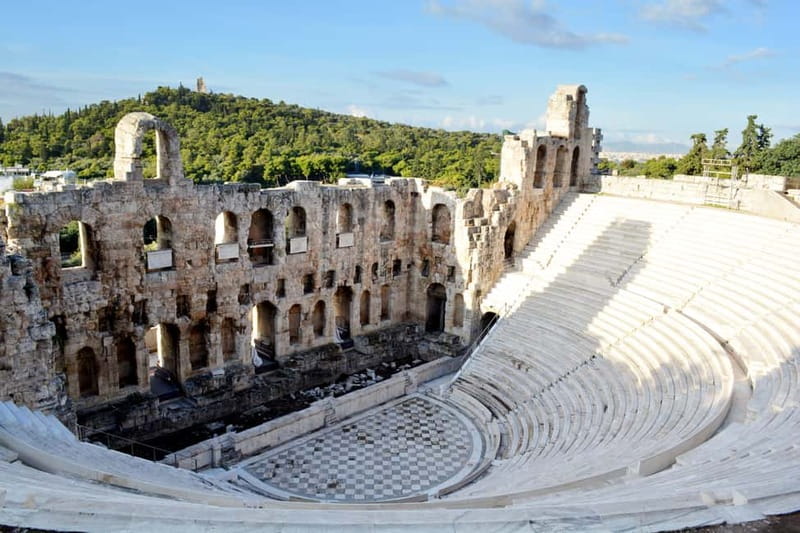
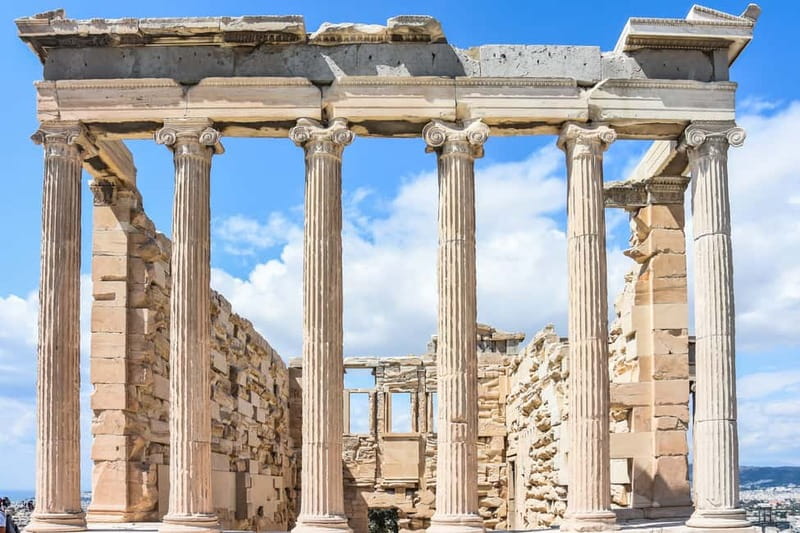
The Erechtheion provides a striking contrast to the orderly symmetry of the Parthenon. Its unusual, asymmetrical design reflects the uneven ground and the different sacred traditions associated with the site.
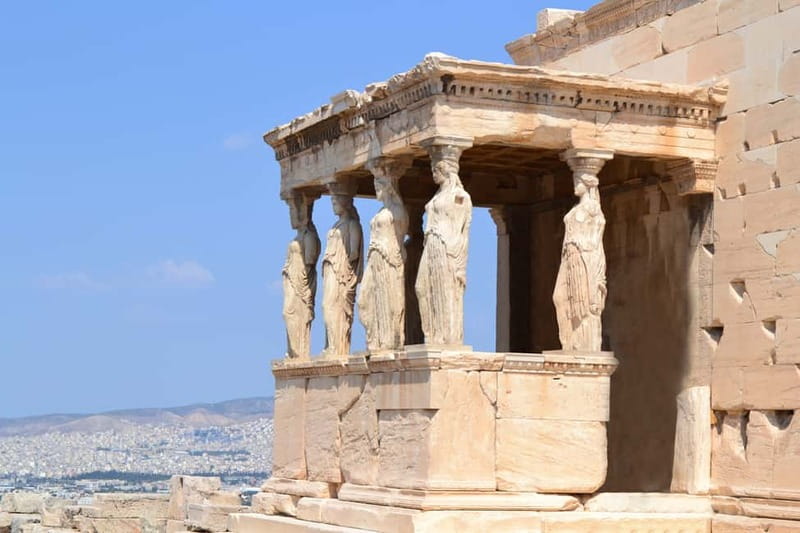
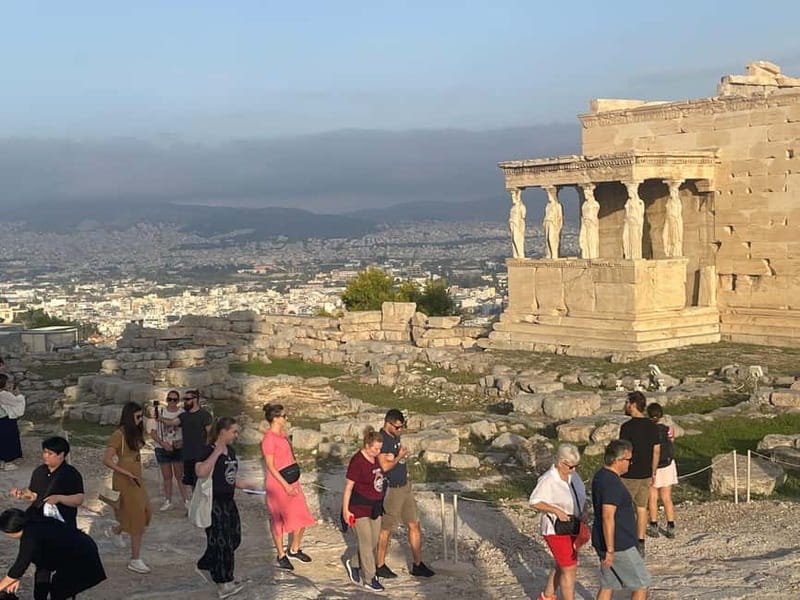
The most famous feature is the porch supported by six sculpted female figures, commonly called the Caryatids. They appear to carry the structure above them, making this one of the most recognizable details on the Acropolis.
Your guide explains why the Erechtheion is architecturally unusual and how its layout differs from the Parthenon. This is one of the places where a short explanation adds real value. Without context, you may see a beautiful porch. With context, you begin to understand why the building could not follow a simple rectangular plan.
Crowding can be tight around the Erechtheion, especially when several groups arrive together. Stay close enough to hear, but leave room for others to pass. Your guide may pause in a less crowded spot before bringing the group closer to the monument.
Is two hours enough for the Acropolis?
Two hours is enough for a strong first visit, but it is not enough for everything the hill and nearby museum can offer. This tour gives you a guided route through the main monuments, with the Theater of Dionysus, Asklepieion, Odeon, Propylaea, Temple of Athena Nike, Erechtheion, and Parthenon all included.
The benefit is focus. You do not spend your morning working out which path to take or trying to identify every ruin. The guide keeps the group moving and gives you a clear story from the lower slope to the summit.
The tradeoff is limited free time. You may want to return later for photographs, a slower look at the architecture, or a separate visit to the Acropolis Museum. This activity ends back at the meeting point, so you can make your own plans afterward, but museum entry is not part of this tour.
Guides, group comfort, and crowd control
The strongest part of the experience is the guiding. Simon has been praised for explaining architecture, Greek history, and mythology in a clear way. Kostas combines humor with useful information and is a good example of why an engaging guide can make a hot climb feel shorter.
Iris is noted for seeking out quiet, shaded places to talk and for reminding the group about safety. Alexia is described as attentive and helpful, including with photographs and suggestions for what to do after the tour. Christos brings training in archaeology and art history, while Angel has been praised for making the ascent itself informative.
You are not guaranteed a particular guide, but these examples show the style to expect: strong subject knowledge, approachable explanations, and attention to the group. The best guides do not simply recite dates. They connect buildings to mythology, language, modern customs, and the daily life of Athens.
Group size is not specified, so you should be ready for a shared experience rather than a private walk. Earphones are supplied for groups over five. On busy days, nearby groups can make hearing harder, so stay near the guide and keep questions for the pauses.
Price, timing, and practical value
At $35.57 per person, the tour sits at a reasonable price for an Acropolis visit that includes an English-speaking guide, entrance tickets, and skip-the-line access. You are paying for organization and interpretation, not just admission.
The value is strongest if this is your first visit or if you want the major monuments explained without preparing in advance. The tour can also save you the effort of working out the entrance route and the order of the sites.
It is less attractive if you already know the Acropolis well or prefer to move at your own speed. You may spend part of the two hours waiting for the group to gather or listening to explanations about places you have studied before.
Starting time matters. Choose the earliest practical slot during hot weather, especially in August. Bring water, comfortable shoes, a sun hat, and sunscreen. Do not bring a stroller, luggage, pets, or large bags. Hotel pickup and drop-off, food, drinks, and use of the elevator are not included.
You must bring a passport or ID card. The tour offers free cancellation up to 24 hours before the start, and the reserve-now, pay-later option can help if your Athens plans are still changing.
Who should book this Acropolis walk?
Book it if you want a short, organized introduction to the Acropolis, especially on your first day in Athens. It suits adults and older children who can manage a steep, uneven walk and who prefer stories and explanation over wandering alone.
It is also a good fit if you want to see more than the Parthenon. The Theater of Dionysus, Asklepieion, Odeon, Temple of Athena Nike, and Erechtheion give the visit greater depth, while the guide helps connect the monuments.
Choose another option if you need step-free access, plan to bring a stroller or large bag, have serious mobility or heart concerns, or want a slow photography session. For everyone else, the tour offers a sensible balance of access, context, and price. I would book an early morning time and treat the two hours as a focused introduction, not a complete study of the Acropolis.
FAQ
Where does the Acropolis tour begin?
Meet your guide at the Athenian Tours office at Mitsaion 2, 11742, in central Athens.
How long does the tour last?
The walking tour lasts about two hours. Check the available start times when booking.
Does the price include Acropolis admission?
Yes. Entrance tickets to the Acropolis and skip-the-line access are included.
Is the tour conducted in English?
Yes. The activity includes a live English-speaking guide.
Can I use the Acropolis elevator during the tour?
No. The elevator cannot be used on group tours.
What should I bring?
Bring your passport or ID card, comfortable shoes, a sun hat, sunscreen, and water.
Can I cancel for a refund?
Yes. You can cancel up to 24 hours in advance for a full refund.
Newly reviewed around Athens
- Food Tour★ 5.0 · 3 reviews
- Feel Ancient thermal Spa Visit Delphi, Leonidas ℨoo Spaʀtan★ 5.0 · 4 reviews
- Explore the Hidden Food Gems of Athens★ 5.0 · 57 reviews
- Food Experience in Athens including Unlimited Lunch★ 5.0 · 3 reviews
- Eat Your Way Through Athens: A Local Food Walk★ 4.9 · 97 reviews
- From Athens: Delphi Private Tour with Lunch Time★ 4.0 · 3 reviews
- Delphi: Spanish guided one day tour★ 4.6 · 55 reviews
- Early Entry Acropolis & Museum. Beat the Crowds & the heat★ 5.0 · 3 reviews
Athens Acropolis Tours, compared.
Acropolis & up to 5 Archaeological Sites Combo Pass
Read our review →
Acropolis, Parthenon & Acropolis Museum Guided Tour
Read our review →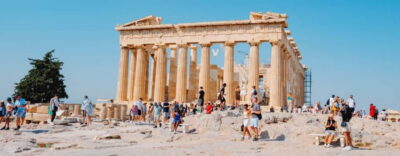
Acropolis, Parthenon & Acropolis Museum Guided Tour
Read our review →
Acropolis monuments & Parthenon Walking Tour with Optional Acropolis Museum
Read our review →Browse the lists this tour appears in