
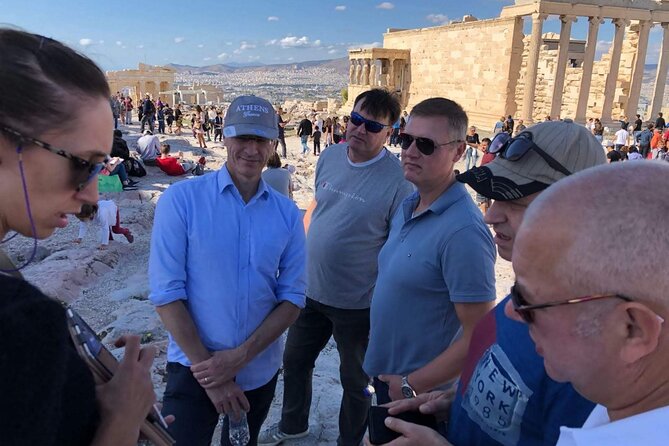
Reviewed · ATHENS ACROPOLIS TOURS
Acropolis Group Tour in German or Dutch
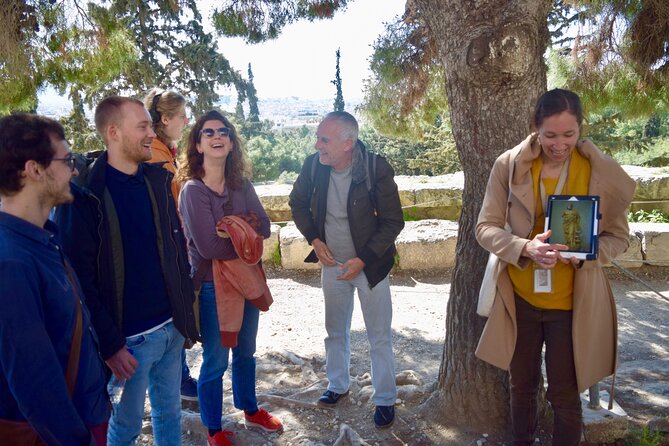
The best part of this Acropolis tour is its story-led approach. Instead of simply pointing at broken marble, your licensed German- or Dutch-speaking guide connects the Parthenon, Athena, Poseidon, theater, and victory goddess Nike into one clear tale of ancient Athens. The group is limited to 20 people, which helps keep the explanations personal.
I like the short 90-minute format, especially if you want a first look before exploring more on your own. I also like the family-friendly style: Jessica, one of the named guides, is praised for patience with children and for making the stories interesting. The main thing to weigh is the extra €30 adult admission fee, which is arranged for you but is not included in the tour price.
Key points at a glance
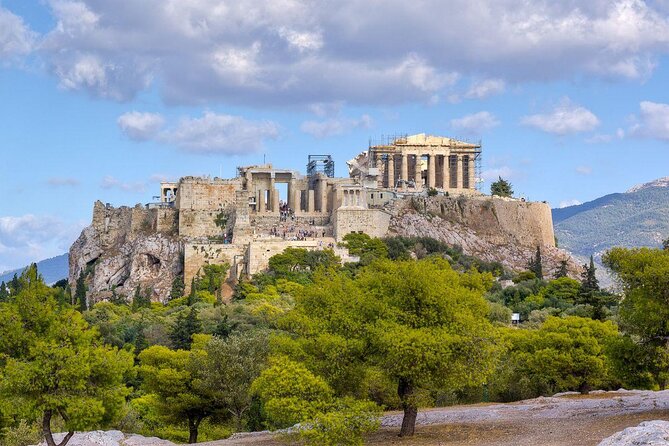
- German or Dutch storytelling: Hear the monuments explained through Greek myths, politics, religion, and daily life.
- A maximum of 20 people: Small enough to keep up with the guide without joining a huge crowd.
- A 90-minute route: Covers the Acropolis hill, Parthenon, Erechtheion, Propylaea, Temple of Athena Nike, theater, and Odeon.
- €46.26 tour price plus €30 admission: The headline price covers the guide, while the entrance fee is separate.
- Family-friendly guiding: Jessica is specifically noted for her kindness and patience with children.
- Ends on top of the hill: You finish at the Acropolis rather than returning to the metro meeting point.
Why this Acropolis tour works best for a first visit
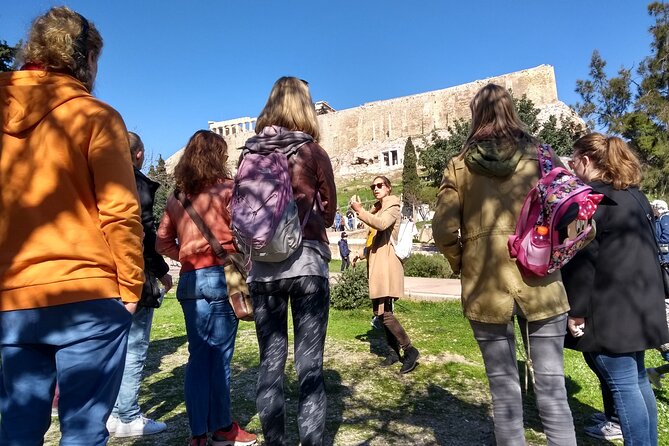
The Acropolis can feel like a pile of famous names until someone explains how the pieces fit together. This tour gives you that basic map in a compact period. You begin near the Acropoli metro station, enter the site with your guide, and move past the main monuments before reaching the high point of the hill.
The storytelling matters here. The Acropolis is not only a collection of temples. It was a religious center devoted chiefly to Athena, a place shaped by Athenian power, and a site layered with Greek and Roman history. A guide who explains the myths alongside the architecture helps you understand why each building was placed where it was.
The German or Dutch language option is the main reason to choose this experience over an English tour. You can concentrate on the details without translating in your head. That is especially helpful when the guide explains ideas such as the rivalry between Athena and Poseidon, the cult of Dionysus, or the unusual curves built into the Parthenon.
The 90-minute length is both a benefit and a limit. It gives you a focused introduction without taking half your day. At the same time, this is not a slow archaeological study. You will see the major points, hear the key stories, and finish with a useful understanding of the hill, but you should not expect long free time at every monument.
More ways to see the Acropolis:
- Athens: Acropolis & up to 5 Archaeological Sites Combo Pass
★ 4.4 · 12,619 reviews - Athens: Acropolis Ticket with Optional Audio or Live Guide
★ 4.2 · 11,055 reviews - Athens: Acropolis, Parthenon & Acropolis Museum Guided Tour
★ 4.8 · 9,316 reviews
Meeting at the Acropoli metro station
The guide meets you at the exit marked Makriyianni and Dionysiou Areopagitou at the Acropoli metro station. This is a practical meeting point because it places you close to the archaeological site and helps avoid confusion among the busy streets around the Acropolis.
Look for the correct exit name rather than simply walking toward the hill and hoping to find the group. Athens has several roads, entrances, and viewpoints around the Acropolis, so the exact meeting instructions matter. Confirmation is provided when you book.
From the meeting point, the guide takes the group toward the entrance. Hotel pickup and drop-off are not included, so you need to make your own way to the station. The location is near public transportation, making this a better fit for anyone already staying in central Athens.
Bring water. Food and drinks are not included, and a bottle is specifically recommended. The Acropolis is an exposed hill, so water is a sensible part of even a short visit.
Theatre of Dionysus and the beginnings of drama
The Theatre of Dionysus is the first major stop described on the route. It is tied to the birth of ancient Greek theater and to the worship of Dionysus, the god of wine.
This is a useful opening lesson because theater in ancient Athens was not just evening entertainment. It grew from religious ceremonies, and the guide explains how performances developed from the cult of Dionysus. You also get a close look at the old marble seats, including names cut into the stone.
The stop lasts about 15 minutes. That is enough time for a clear explanation and a look at the surviving structure, but not enough for a long architectural study. If theater is one of your main interests, you may want to return to the subject after the tour.
Temple of Athena Nike and the small shrine with a big name
The Temple of Athena Nike is easy to overlook beside the larger buildings. Your guide points out that it is the smallest temple on the top of the Acropolis and explains its connection with Nike, the goddess of victory.
The name will be familiar because it inspired a famous sports brand. That simple link gives children and younger members of the group an easy way into the ancient world. The temple itself also shows how much meaning the Athenians could pack into a small building.
This stop is planned for about five minutes. Think of it as a focused explanation rather than a long pause. You will learn what the temple honored and why Nike mattered, then continue toward the main gateway.
A different kind of day out from Athens:
- Athens: Cape Sounion & Poseidon Temple Sunset Half-Day Trip
★ 4.8 · 8,241 reviews - Athens: Acropolis and Parthenon Guided Walking Tour
★ 4.6 · 5,882 reviews - All Day Cruise -3 Islands to Agistri,Moni, Aegina with lunch and drinks included
★ 5.0 · 4,958 reviews - Athens, Piraeus, and Coastline: Blue Hop-On Hop-Off Bus
★ 3.9 · 4,849 reviews
Passing through the Propylaea
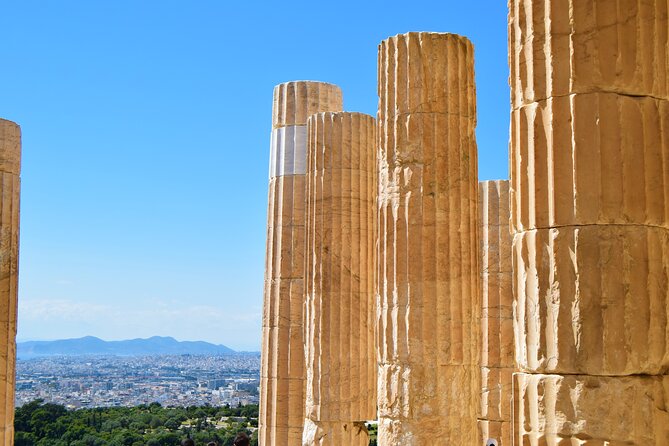
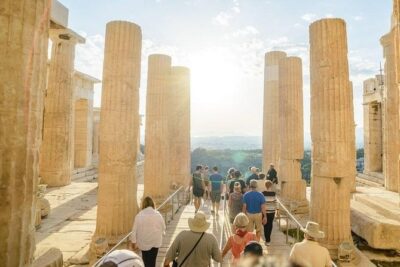
The Propylaea was the monumental entrance to the Acropolis. It is not a temple, but it sets the tone for the whole visit. The massive marble blocks make the approach feel deliberate and grand before you reach the summit.
The route takes you past the huge stones at close range. Your guide can help you notice the scale and engineering rather than rushing straight toward the Parthenon. The stop is brief, about five minutes, so listen closely as the group moves through the gate.
The Propylaea is also a practical point to understand the shape of the site. Once you pass through it, the main buildings open out above you. The experience changes from approaching a hilltop sanctuary to walking among its central monuments.
The Parthenon and its clever curved lines
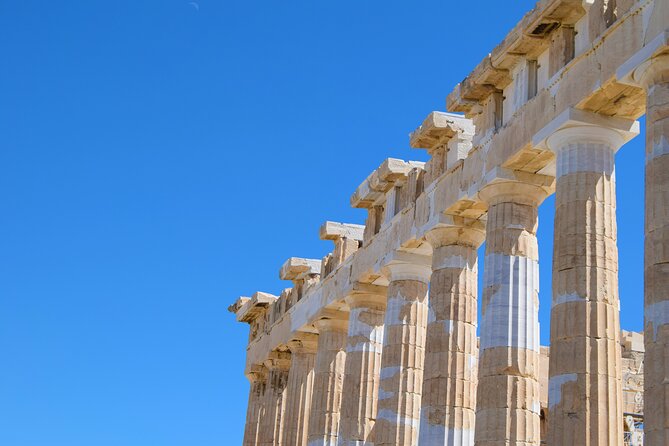
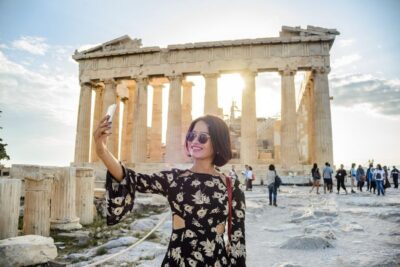
The Parthenon receives about 20 minutes, the longest stop on the upper Acropolis. It was the largest temple on the hill and was dedicated to Athena, the city’s patron goddess.
Most people arrive knowing the Parthenon as a symbol of ancient Greece. The guide adds a more useful detail: the building does not rely on perfectly straight lines. Its design uses subtle curves and optical corrections, which helped create the balanced appearance people admire from a distance.
That point changes how you look at the structure. Instead of seeing only columns and missing walls, you start watching the shapes and proportions. The guide also connects the Parthenon to later architecture around the world, showing why its design was copied so widely.
Twenty minutes is a reasonable amount of time for a first explanation. You can hear the main points, take in the building, and continue without getting stuck in a long lecture. Still, the Parthenon is the place where you may wish for extra time after the tour ends.
The price also deserves a clear explanation here. The tour itself costs $46.26 per person, but admission is an additional €30 per adult. The provider arranges the entrance fee, which saves you from handling that part on your own, but the total cost is higher than the advertised tour price alone. For a licensed guide in a small group, the value depends on how much you want historical context in your own language.
The Erechtheion and the famous Caryatids
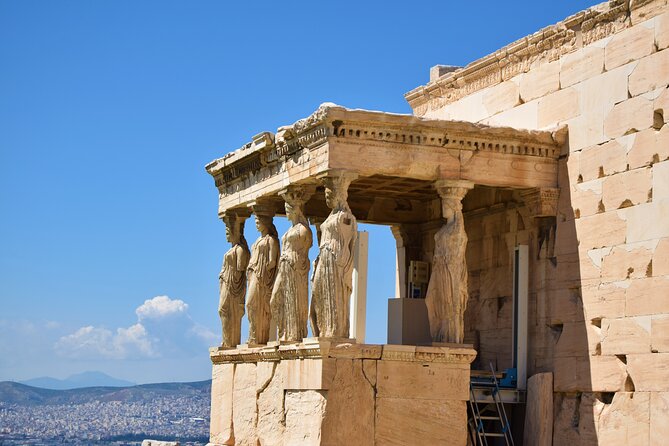
The Erechtheion is one of the most visually memorable stops because of its Caryatids, the female figures used as columns. The guide explains what happened to one of the six columns and where it is now.
The building also carries one of the most important myths connected with the Acropolis. Athena and Poseidon competed for the city’s favor, and the guide uses that story to explain why both figures mattered to Athens.
The stop lasts about 10 minutes. That gives you time to study the Caryatids and hear the central story, though the area can reward a second look. The female columns are not merely decorative figures. They combine structural purpose with sculpture, making the Erechtheion a useful counterpoint to the more orderly appearance of the Parthenon.
This is also a good stop for families. A story about gods competing for a city is easier for children to follow than a long account of dates and construction phases. The tour’s family-friendly reputation fits this kind of explanation, and Jessica is noted for being especially patient with children.
The Herod Atticus Odeon and the modern link
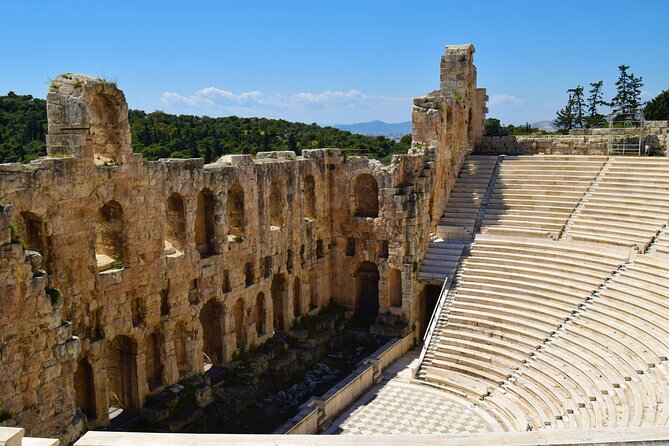
The final listed stop is the Herod Atticus Odeon, a restored Roman concert hall built in AD 161 by the wealthy Roman Herodes Atticus in memory of his wife, Regilla.
Its presence adds another layer to the hill. The Acropolis is strongly associated with classical Athens, but the Odeon reminds you that later Roman-era buildings also shaped the site. Its curved seating and performance purpose make it easy to imagine the hill as a place where music and public events continued long after the great Greek temples were built.
The theater is still used for performances during the summer, including appearances by artists such as Sting and Patti Smith. That modern connection gives the ancient structure a sense of continued use rather than leaving it frozen in the past.
The visit here lasts about 10 minutes. You can admire the restored hall and hear its story, but the experience does not include a performance. If you want to attend a summer event, that would be a separate plan.
The 360-degree view from the Acropolis
The route ends on top of the Acropolis Hill, where you get a 360-degree view over Athens. This is one of the strongest reasons to choose a tour that finishes at the summit rather than returning you to the starting point.
The view gives you a better sense of Athens as a whole. After hearing about the city’s gods, temples, theater, and political power, you can look outward and see the setting that made the Acropolis such a commanding center.
Because the tour ends up high, plan your next stop from there. You are not returned to the Acropoli metro station as part of the experience. That is convenient if you want to continue exploring from the hill, but less convenient if you have left belongings near the meeting point or need a guided walk back.
Group size, timing, and family fit
The maximum group size is 20 people. That is not a private tour, but it is far more manageable than a large group moving through a crowded archaeological site. You should be able to hear the guide more easily and ask a question without waiting behind dozens of people.
The tour lasts approximately one hour and 30 minutes. The listed stops add up to about 85 minutes, leaving a little time for walking between monuments and gathering the group. Keep your expectations realistic: this is a structured overview, not an all-day visit.
The tour is suitable for most people, and service animals are allowed. The information provided does not promise special accessibility arrangements, so if you have specific mobility needs, confirm the details before booking. The route is on an ancient hill with major monuments spread across the site, so practical comfort matters.
German and Dutch speakers will get the most from the tour. Families can also benefit from the myth-based explanations, especially if children lose interest during long technical talks. Independent archaeology enthusiasts may find the pace too short, but they can use the tour as an introduction before spending more time alone.
Price, admission, and cancellation terms
At $46.26 per person, the tour fee pays for the licensed guide and the small-group format. The separate €30 adult entrance fee brings the real cost higher, so compare the full amount rather than judging the advertised price alone.
The added fee is arranged for you, which is convenient. Bottled water, food, drinks, and hotel transportation are not included. You need to reach the Acropoli metro station yourself and carry what you need for the visit.
Free cancellation is available if you cancel at least 24 hours before the local start time. Changes or cancellations inside that window are not refunded. The experience also depends on good weather and a minimum number of participants. If weather or low enrollment causes cancellation, you are offered another date or experience, or a full refund.
Should you book this Acropolis tour?
Book it if you want the Acropolis explained in German or Dutch, prefer a compact visit, and value myths and clear stories over a long technical lecture. The small group, licensed guide, family-friendly tone, and final city view make it a sensible first introduction.
Think twice if you want several hours inside the site, a private guide, or a price that includes admission. The extra €30 adult entrance fee is significant, and the 90-minute schedule leaves limited time for lingering.
For German- or Dutch-speaking families, couples, and first-time visitors who want the essential monuments put in context, this is a strong choice. Arrive at the correct metro exit, bring water, and remember that the tour ends on the hill. Those small details will help the experience feel straightforward from start to finish.
FAQ
What language is the Acropolis tour offered in?
The tour is offered in German or Dutch with a licensed guide.
How long does the tour last?
The experience lasts approximately one hour and 30 minutes.
How many people can join the group?
The group has a maximum of 20 participants.
Is the Acropolis entrance fee included?
No. The tour price is $46.26 per person, and entrance costs an additional €30 per adult. The entrance fees are arranged for you.
Where does the tour begin?
The guide meets you at the Acropoli metro station in Athens, at the exit marked Makriyianni and Dionysiou Areopagitou.
Where does the tour end?
The tour ends on top of the Acropolis Hill.
Can I cancel for a full refund?
Yes. You can cancel at least 24 hours before the local start time for a full refund. Cancellations or changes made less than 24 hours before the start are not refunded.
Newly reviewed around Athens
- Athens: workshop for painting landscape with local artist★ 4.6 · 3 reviews
- Athens: Greek Wine & Olive Oil Tasting at Brettos Plaka★ 4.5 · 3 reviews
- Outdoor Yoga and Pilates with Akropolis view★ 4.0 · 5 reviews
- Acropolis of Athens: 60′ Tour in a Vintage Motorcycle★ 5.0 · 4 reviews
- Ultimate Tasting of the Volcanic Wines of Greece★ 5.0 · 3 reviews
- workshop for painting acropolis/landscape with local artist★ 5.0 · 3 reviews
- Athens at Twilight Night Tour with Drinks and Meze Dishes★ 4.8 · 4 reviews
- Breakfast in the markets with olive oil and honey tasting★ 4.8 · 8 reviews
Athens Acropolis Tours, compared.
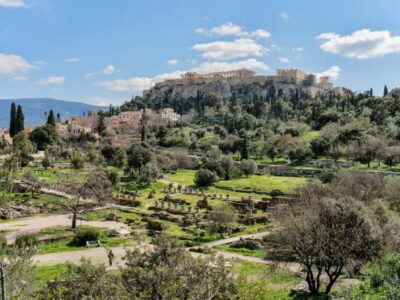
Acropolis & up to 5 Archaeological Sites Combo Pass
Read our review →
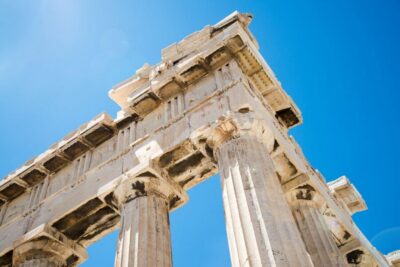
Acropolis, Parthenon & Acropolis Museum Guided Tour
Read our review →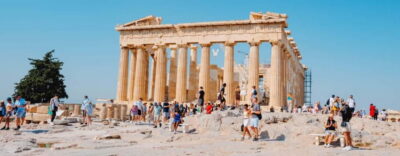
Acropolis, Parthenon & Acropolis Museum Guided Tour
Read our review →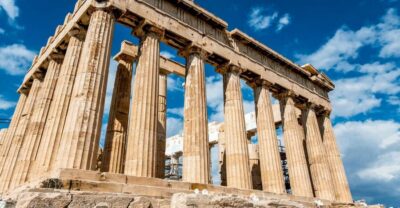
Acropolis monuments & Parthenon Walking Tour with Optional Acropolis Museum
Read our review →Browse the lists this tour appears in