
Reviewed · ATHENS ACROPOLIS TOURS
Acropolis & Acropolis Museum (Small Group Morning Walking Tour)
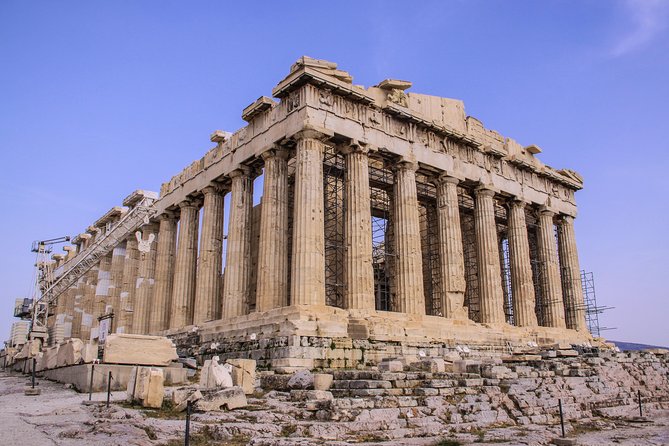
The best part of this 3.5-hour tour is the way it links the Acropolis hill with the museum below. You see the ruins first, then examine the statues and carvings indoors, where the guide can explain what you just saw. That pairing gives the ancient site much more meaning than a quick photo stop.
I like the small group limit of 10, and I like the early 9:30 start, especially in Athens heat. Guides such as Nicholas, Nikos, and Nicos receive repeated praise for clear stories, friendly pacing, family care, and helping with photos. The main drawback is cost: the tour is $65.07 per person, but you also pay €50 in cash for entrance tickets.
Key points to know before booking
- South-slope route: Walk past the Theater of Dionysus, Sanctuary of Asklepios, Odeon of Herodes, Propylaea, Mars Hill, and Temple of Athena Nike.
- Two-part experience: Spend about 1 hour 45 minutes at the Acropolis, followed by about 1 hour 45 minutes in the museum.
- Small group format: The group can include up to 10 people, with the possibility of a much smaller or even private-feeling visit.
- Cash ticket cost: Entrance fees are separate, €30 for the Acropolis and €20 for the museum, purchased from the guide.
- Heat-aware pacing: Water and shade breaks are built into the walk, with time for photos.
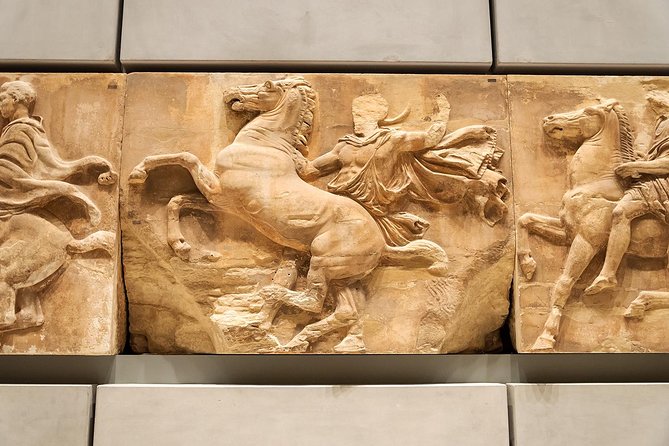
- Museum highlights: See the Caryatids, archaic statues, traces of painted color, and the Parthenon Gallery.
Why this pairing works so well
A visit to the Acropolis can feel like a great deal of stone, columns, and names unless someone helps you connect the pieces. This tour begins on the south side of the hill and builds the story as you walk upward. By the time you reach the Parthenon and Erechtheion, you have already seen theaters, sanctuaries, gateways, and old routes into the sacred area.
Then the tour changes pace indoors. At the Acropolis Museum, you see original sculptures and architectural pieces in a modern setting. The museum lets you study details that are hard to notice on the hill, including traces of color on ancient marble and the arrangement of the Parthenon sculptures.
I especially like the order. The museum is not treated as an unrelated second attraction. It acts as the second half of the Acropolis visit, helping you understand what the ruined buildings once looked like and how Greek sculpture changed over time.
The tour is offered in English and begins at 9:30 a.m. at Makrigianni 4. It ends at the Acropolis Museum on Dionysiou Areopagitou Street, so you finish in a useful part of Athens rather than returning to the starting point.
More ways to see the Acropolis:
- Athens: Acropolis & up to 5 Archaeological Sites Combo Pass
★ 4.4 · 12,619 reviews - Athens: Acropolis Ticket with Optional Audio or Live Guide
★ 4.2 · 11,055 reviews - Athens: Acropolis, Parthenon & Acropolis Museum Guided Tour
★ 4.8 · 9,316 reviews
Walking up the Acropolis south slope
The first section lasts about 1 hour 45 minutes. You meet the guide and start along the south slope, where several important monuments appear before the famous temples at the summit.
The Theater of Dionysus is an early highlight. It helps explain how drama fit into ancient Athenian religious life. Nearby, the Sanctuary of Asklepios adds another layer, showing that the Acropolis was not only a political or ceremonial center. It also had places connected with healing and worship.
You then pass the Odeon of Herodes, a large Roman-era theater built into the hillside. The contrast is useful: Athens continued to use and reshape this area long after the classical buildings were created.
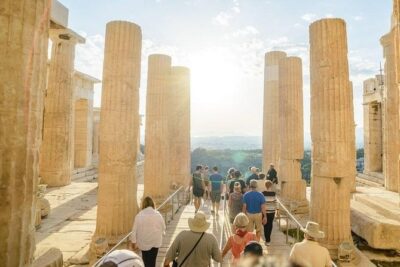
As you climb, the route leads toward the Propylaea, the monumental entrance to the Acropolis. You also see Mars Hill and the Temple of Athena Nike. These are not just points to photograph. Their position helps you understand how the Acropolis was approached and why the entrance route was designed to create such a strong sense of arrival.
The walk is uphill and takes place on an ancient site with uneven surfaces. You need moderate physical fitness. The itinerary allows time for water, shade, and photos, but this is still a walking tour, not a sit-down history lesson. Wear practical shoes and bring water, even though breaks are planned.
The Parthenon, Erechtheion, and city views
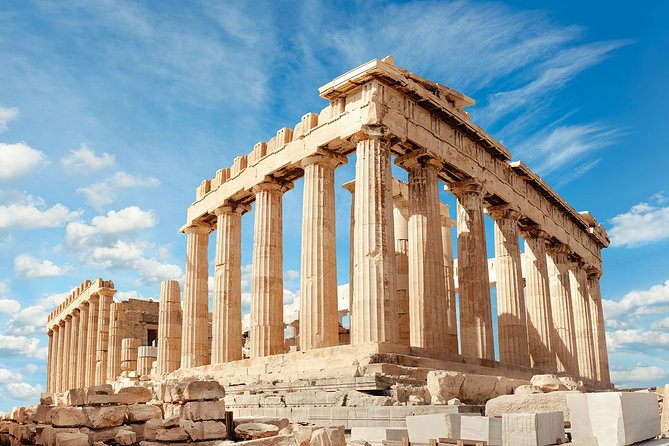
At the top, the guide focuses on the Parthenon and Erechtheion. The Parthenon is the visual centerpiece, but the Erechtheion has its own unusual character and importance. A good guide can help you notice why these buildings are not interchangeable and how their purposes differed.
The tour description promises detailed explanations of both. That matters because the hilltop is often crowded and visually overwhelming. You may find yourself looking at several monuments at once, with little sense of where to begin. A guide gives you a useful order: look here first, notice this feature, then connect it to the larger religious and civic story.
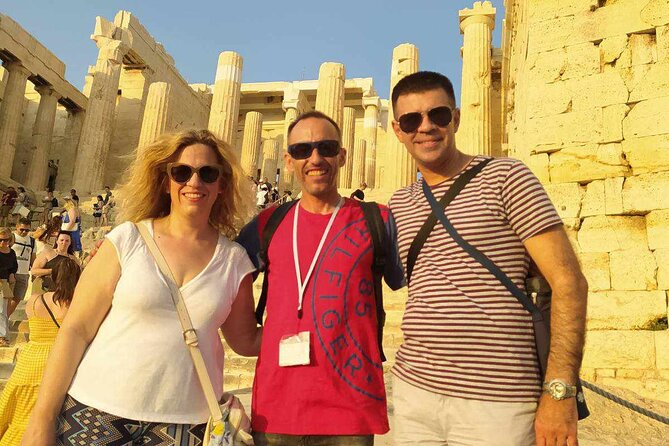
The hilltop also gives you broad views across Athens. The city spreads below in every direction, and the height makes the Acropolis feel tied to modern Athens rather than sealed away from it. Your guide can also help with photos. Several people specifically valued having photos taken at less crowded viewpoints, which is a practical bonus if you are traveling without a third person to hold the camera.
The skip-the-line service can save time, but it does not mean you will have the site to yourself. The Acropolis remains one of Athens’ busiest sights. Its value is in avoiding the regular ticket queue and having someone manage the entry process, not in removing every crowd from the hill.
The Acropolis Museum, from models to original sculpture
After the hilltop visit, you walk with the guide to the Acropolis Museum. The museum portion also lasts about 1 hour 45 minutes, giving it enough time to be more than a quick look around.
Before entering, you see remains of an ancient Athenian neighborhood beneath the museum. This is a fine transition from the monumental Acropolis above to ordinary city life below. The ancient site was not isolated from homes, streets, and daily activity.
Inside, the tour begins with models of the Acropolis and ancient Athens. These models can be especially helpful after the climb because they let you see the hill as a complete complex rather than as separate ruins. You then move to important discoveries from the Acropolis slopes.
The first-floor displays include sculptures connected with the first Parthenon, built in the sixth century B.C. One detail worth looking for is the remaining trace of painted color. Ancient Greek sculpture is often imagined as plain white marble, but these surviving traces show a more colorful original appearance.
The archaic statues include the Calf Bearer and the Kritios Boy. They help you follow the development of Greek sculpture before and during the fifth century B.C. Instead of seeing each statue as an isolated masterpiece, you can watch the body become more natural and expressive over time.
The Caryatids are another major stop. These sculpted maidens once supported the porch of the Erechtheion. Seeing them indoors lets you study their drapery, posture, and carved details without trying to peer at copies or distant figures on the hill.
Finally, the guide takes you to the third-floor Parthenon Gallery. Here, the design of the room echoes the temple and places the sculptures in a setting that makes their original arrangement easier to understand. The guide explains the myths shown in the sculptures and the main idea behind the gallery’s layout.
This is where the tour’s two-part structure pays off. You first saw the Parthenon in its present condition. Now you examine sculpture made for that temple and learn how the scenes were arranged. I find that connection far more useful than visiting the museum on a separate day without the Acropolis fresh in mind.
More museums and ancient sites in Athens:
- Athens: Acropolis, Parthenon & Acropolis Museum Guided Tour
★ 4.8 · 3,579 reviews - Acropolis monuments & Parthenon Walking Tour with Optional Acropolis Museum
★ 5.0 · 2,678 reviews - Athens: Acropolis Museum Ticket with optional Audio Guide
★ 4.4 · 2,652 reviews - Parthenon & Acropolis Museum with Audio or Live Tour Option
★ 4.1 · 2,446 reviews
What the guides add to the morning

The guide is the main reason to choose this experience instead of simply buying entry tickets. Names appearing in the feedback include Nicholas, Nikos, and Nicos, though your assigned guide may be different.
The strongest pattern is personal attention. Guides are described as adjusting the pace for families, allowing time for photos, answering questions after the formal explanation, and making the myths easier to follow. One family with children aged 9 and 12 found the stories and historical setting especially helpful. Another person who was not fully bilingual found the English easy to understand.
The guide may also offer local advice. One person received help finding a neighborhood for good souvlaki, though you should treat that as a possible extra rather than a promised part of the tour.
The small group format helps. With a maximum of 10 people, the guide can usually hear questions and keep the group together more easily than on a large coach tour. Some bookings have ended up feeling private when few people reserved them. That cannot be guaranteed, but the cap keeps the experience more personal.
There is one important balance to keep in mind. One participant felt the guide offered too little information and compared the experience unfavorably with other groups nearby. That complaint is a reminder that guide quality can vary from one departure to another. The tour is a good choice if you want help interpreting the site, but no guided visit can guarantee the same style or depth every day.
Price, tickets, and the real value
The advertised price is $65.07 per person. Entrance fees are not included. You pay the guide €30 for the Acropolis and €20 for the Acropolis Museum, making the additional admission cost €50 per person.
That detail changes the total cost considerably, so include it when comparing tours. The cash requirement is also important. The guide purchases or handles the entrance tickets, and the instructions say you should have the full €50 ready in cash. People under 18 qualify for free entrance if they present identification, though the tour price itself is not stated as free.
What are you paying for beyond admission? You are paying for a licensed guide, skip-the-line service, a planned route, interpretation at both sites, and a group capped at 10. The value is strongest if you want context and do not want to work out the Acropolis and museum on your own.
If you prefer to read signs at your own pace, already know Greek archaeology well, or want to spend several hours at one monument, a self-guided visit may give you more freedom. The tour’s fixed structure is an advantage for many people, but a limitation for those who like to linger without a schedule.
Who should book this experience
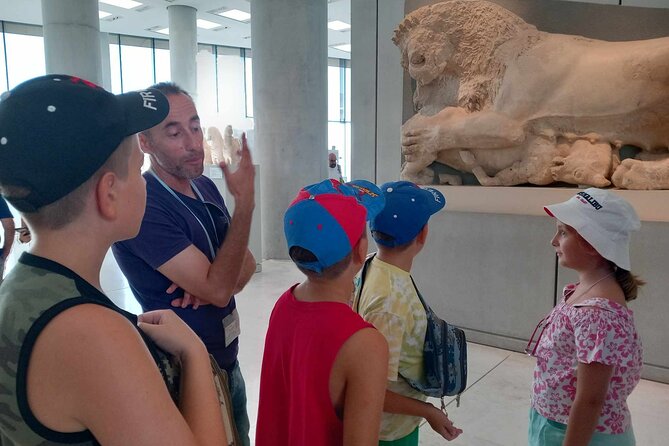
I would recommend this tour to first-time visitors to Athens who want the major Acropolis sights explained in one morning. It also fits families well, especially when children benefit from myths, stories, and a guide who can keep the pace comfortable.
It works for people who value efficient sightseeing. You visit two major attractions in one continuous experience, avoid the standard ticket line, and finish at the museum. The English-speaking format is useful for anyone who wants detailed explanations without dealing with a language barrier.
The tour is less suitable if you have difficulty walking uphill or on uneven ground. The route takes place outdoors, and Athens can be hot. The shade and water breaks help, but they do not remove the physical demands of the site.
Book early if your dates are fixed. This experience is often reserved well ahead of time, around 116 days in advance on average. Free cancellation is available up to 24 hours before the start time. If the minimum group size is not reached and the tour is canceled, you are offered another date or experience, or a full refund.
My verdict on the Acropolis morning walk
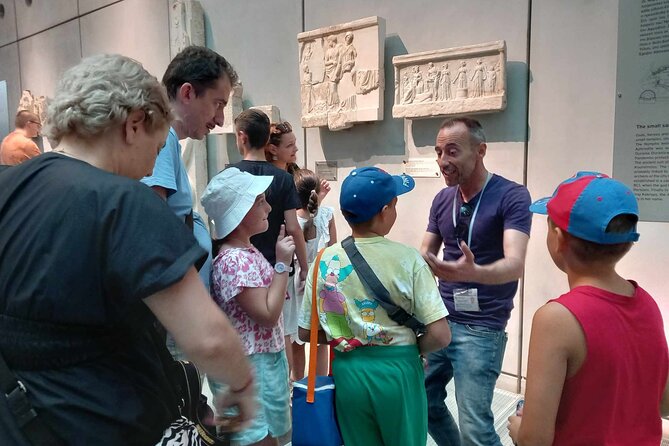
I like this tour because it treats the Acropolis and museum as one connected lesson rather than two separate attractions. The route covers the major monuments, the guide adds mythology and architectural context, and the museum brings you face to face with the sculpture that once belonged to the buildings above.
The strongest reasons to book are the small group size, early start, licensed guide, photo help, and the careful pairing of outdoor ruins with indoor exhibits. The main cautions are the extra €50 entrance fee, the cash payment, and the fact that guide quality may not feel identical on every departure.
If this is your first Acropolis visit and you want the ancient site to make sense, I would book it. If you already have strong archaeology background or want complete control over your time, buy the tickets yourself and explore independently.
FAQ
What time does the tour start?
The tour starts at 9:30 a.m.
Where does the tour begin?
The meeting point is Makrigianni 4, Athens, Greece.
Where does the tour end?
The tour ends at the Acropolis Museum at Dionysiou Areopagitou 15, Athens.
How long does the experience last?
The tour lasts approximately 3 hours and 30 minutes. The Acropolis visit takes about 1 hour and 45 minutes, followed by about 1 hour and 45 minutes at the museum.
Are entrance tickets included in the tour price?
No. The Acropolis ticket costs €30 and the Acropolis Museum ticket costs €20. These fees are paid in cash to the guide.
Do children pay the entrance fee?
People under 18 are entitled to a free entrance ticket when they present identification at the entrance.
How many people can join the group?
The maximum group size is 10 people.
Is the tour physically demanding?
You should have a moderate level of physical fitness. The visit includes walking uphill to the Acropolis and moving around ancient surfaces. Water and shade breaks are included to help with the heat.
Is the tour offered in English?
Yes. The experience is offered in English and includes a licensed tour guide.
Can I cancel for a full refund?
Yes, if you cancel at least 24 hours before the experience start time. Changes or cancellations made less than 24 hours before the start time are not accepted for a refund.
More early starts in Athens
- Athens: Early Morning Guided Tour to Acropolis and Museum
★ 4.6 · 821 reviews - Early Morning Acropolis & Old Athens Guided Walking Tour
★ 4.4 · 748 reviews - Best Seller: Semi-Private Athens Morning Food Tour (15+ tastings)
★ 5.0 · 548 reviews - Athens: Half-Day Morning Catamaran Cruise with Meal & Drinks
★ 4.9 · 221 reviews
More walking tours in Athens
- Athens: Acropolis and Parthenon Guided Walking Tour
★ 4.6 · 5,882 reviews - Greek Food Walking Tour in Athens
★ 5.0 · 4,740 reviews - Acropolis: Acropolis and Parthenon Guided Walking Tour
★ 4.7 · 3,442 reviews - Athens Acropolis and Parthenon Walking Tour
★ 4.5 · 1,355 reviews
Newly reviewed around Athens
- Athens: workshop for painting landscape with local artist★ 4.6 · 3 reviews
- Athens: Greek Wine & Olive Oil Tasting at Brettos Plaka★ 4.5 · 3 reviews
- Outdoor Yoga and Pilates with Akropolis view★ 4.0 · 5 reviews
- Acropolis of Athens: 60′ Tour in a Vintage Motorcycle★ 5.0 · 4 reviews
- Ultimate Tasting of the Volcanic Wines of Greece★ 5.0 · 3 reviews
- workshop for painting acropolis/landscape with local artist★ 5.0 · 3 reviews
- Athens at Twilight Night Tour with Drinks and Meze Dishes★ 4.8 · 4 reviews
- Breakfast in the markets with olive oil and honey tasting★ 4.8 · 8 reviews
Athens Acropolis Tours, compared.
Acropolis & up to 5 Archaeological Sites Combo Pass
Read our review →
Acropolis, Parthenon & Acropolis Museum Guided Tour
Read our review →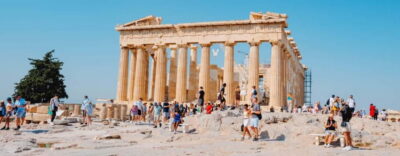
Acropolis, Parthenon & Acropolis Museum Guided Tour
Read our review →

Acropolis monuments & Parthenon Walking Tour with Optional Acropolis Museum
Read our review →Browse the lists this tour appears in