
Reviewed · ATHENS SEGWAY AND E-SCOOTER TOURS
Athens: 3-Hour Grand Tour by Segway
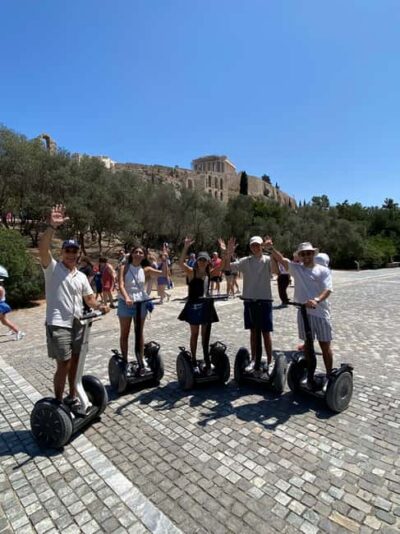
Athens is spread across hills, ruins, gardens, shopping streets, and busy modern roads. This three-hour Segway tour gives you a fast, entertaining way to connect those pieces, from the Acropolis area and Plaka to the Panathenaic Stadium, Pnyx, and Monastiraki.
I like the wide range of stops, especially the chance to see democracy’s birthplace at Pnyx and the ancient cemetery at Kerameikos, places many first-time visitors miss. I also like the small-group limit of 10 and the careful route planning praised for keeping riders away from the heaviest traffic.
The main drawback is that entrance fees are not included, so this is primarily an outdoor sightseeing tour rather than a ticketed visit inside the Acropolis or other monuments. You also need to feel comfortable standing and steering a Segway for three hours.
Key points about this Athens Segway tour
- A broad Athens overview: See the Acropolis area, Plaka, Monastiraki, the National Garden, the Panathenaic Stadium, and ancient sites in one outing.
- History beyond the headline sights: The route includes Pnyx, Areopagus, Filopappou, Kerameikos, the Greek Agora area, and the Roman Agora area.
- Small groups only: The experience is limited to 10 participants, which gives the guide room to explain sights and help with the riding lesson.
- Several guides earn strong praise: Akivi, Costas, Stylianos, and Margarita are singled out for clear explanations, humor, patience, and flexible help.
- Useful in hot weather: The Segway cuts down on long walks, though you will still be outside for three hours.
- Simple central meeting point: Begin and end at Eschinou 9 in Plaka, close to the Acropolis.
Why a Segway works well in central Athens
The best thing about this outing is its range. In a short afternoon, you move from Roman ruins to royal buildings, from the old cemetery at Kerameikos to the shopping lanes of Monastiraki, then up toward the hills where ancient Athenians debated public life.
On foot, this route would involve a fair amount of walking, hills, heat, and repeated backtracking. A Segway does not remove all effort, but it makes the distance easier and gives you a quicker way to cover central Athens. One party chose it partly because a member could not walk for long periods. Another found it especially useful during extreme heat, with temperatures reported at 43 to 45 degrees Celsius.
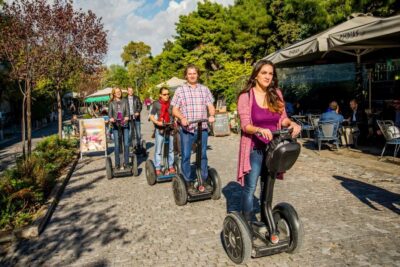
That said, a Segway is not a passive ride. You stand, lean, stop, and steer. The experience begins with an introduction and training session, followed by a helmet fitting. The guide can show you how the machine responds before the group enters the city streets.
The small-group format matters here. With no more than 10 people, the guide can keep an eye on riders and pause for explanations without managing a large crowd. Guides named in the feedback include Akivi, Costas, Stylianos, and Margarita. Stylianos is praised for animated storytelling and humor, while Margarita is noted for explaining complicated subjects simply. Those qualities matter more than a long list of stops.
More segway and e-scooter tours in Athens:
- Athens: Award-Winning Acropolis Guided e-Scooter Tour
★ 5.0 · 637 reviews - Athens Acropolis Official E-Scooter Guided Tour Fat E-Bike
★ 5.0 · 504 reviews - Athens: City Highlights Guided E-Scooter Tour
★ 5.0 · 277 reviews
Starting in Plaka near the Acropolis
The meeting point is Eschinou 9 in Plaka, and the tour returns there at the end. That makes the outing easy to fit into a day centered on the Acropolis, though you should allow time to find the office and complete the training before the ride begins.
Plaka is one of the most atmospheric parts of central Athens, with narrow lanes, shops, cafés, and views toward the Acropolis. Starting here puts you close to the city’s main archaeological zone from the first minute.
The route then moves toward Hadrian’s Arch, a Roman gateway built to mark the boundary between older Athens and the expansion associated with Emperor Hadrian. You get a photo stop and guided explanation, with time to look around rather than simply pass by.
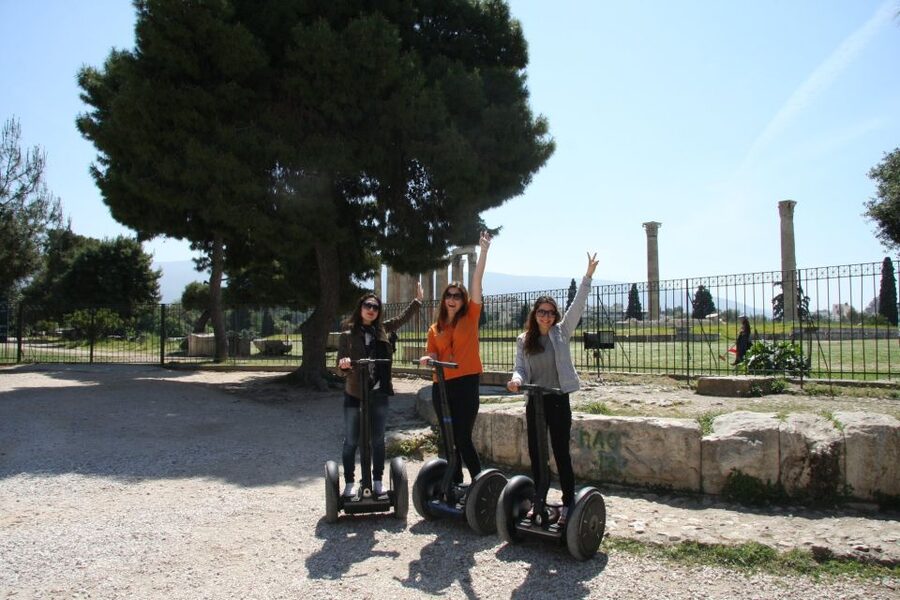
Nearby, the Temple of Olympian Zeus gives you a sense of Roman-era ambition. The surviving columns are enormous, and the open setting makes the scale easy to appreciate. The stop is listed at about 10 minutes, so expect an introduction and photographs rather than a long archaeological visit.
Entrance fees are not included. That point is important: you can see and discuss the monuments, but this tour does not function as an admission ticket to every site along the way.
From the Panathenaic Stadium to the royal quarter
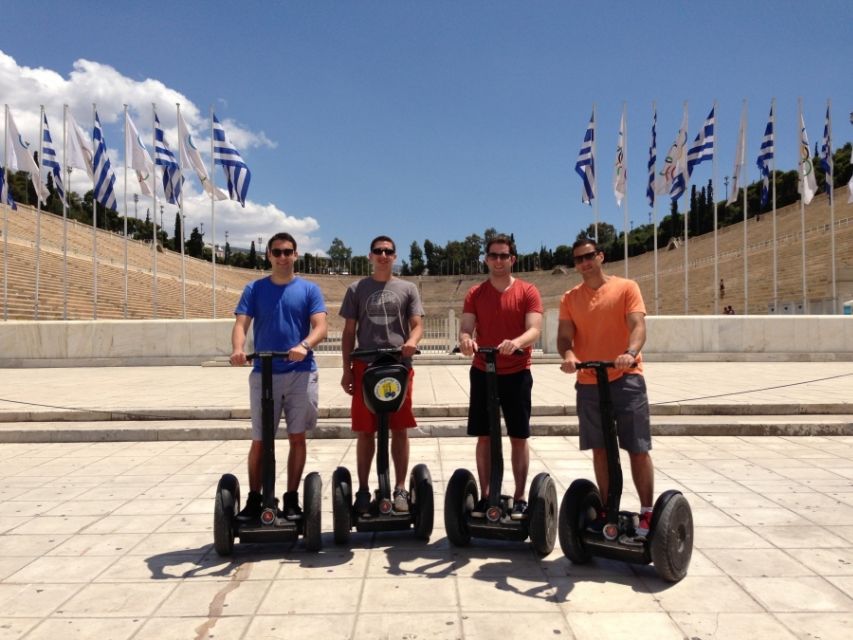
The Panathenaic Stadium is one of the route’s most memorable stops. Built almost entirely of marble, it hosted the first modern Olympic Games in 1896. The tour allows about 20 minutes here, enough for photographs, a guided explanation, and a closer look at the stadium’s long, curved seating bowl.
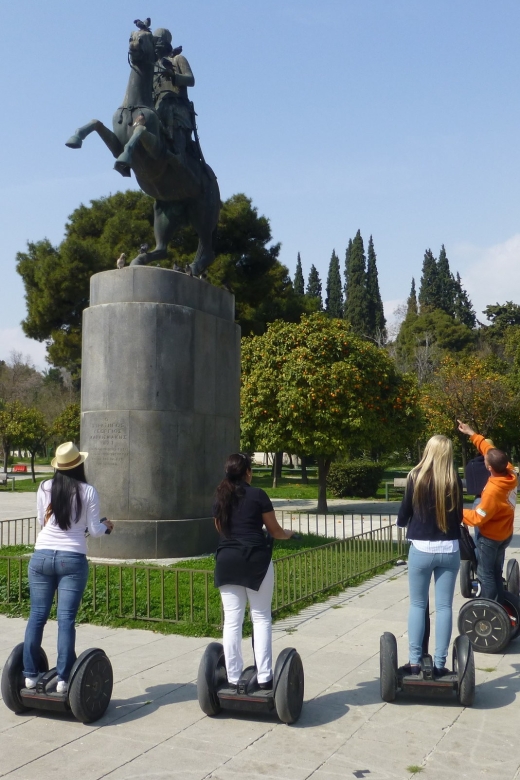
You then pass the Presidential Palace, where the guide explains the modern Greek state and the ceremonial importance of the building. The stop lasts about 15 minutes, with time for sightseeing and photographs.
The route continues through the National Garden, a welcome change after the stone and traffic of the central districts. The garden surrounds the Zappeion building, a grand neoclassical structure connected with public events and modern Greek civic life. You will glide through or beside the garden rather than spend the whole stop on foot, so this part works best as a peaceful transition between major sights.
You also see Parliament House during the broader route. Together, Parliament, the Presidential Palace, the National Garden, and the stadium show how Athens moved from ancient city-state to modern national capital.
Monastiraki, the Agora area, and Kerameikos
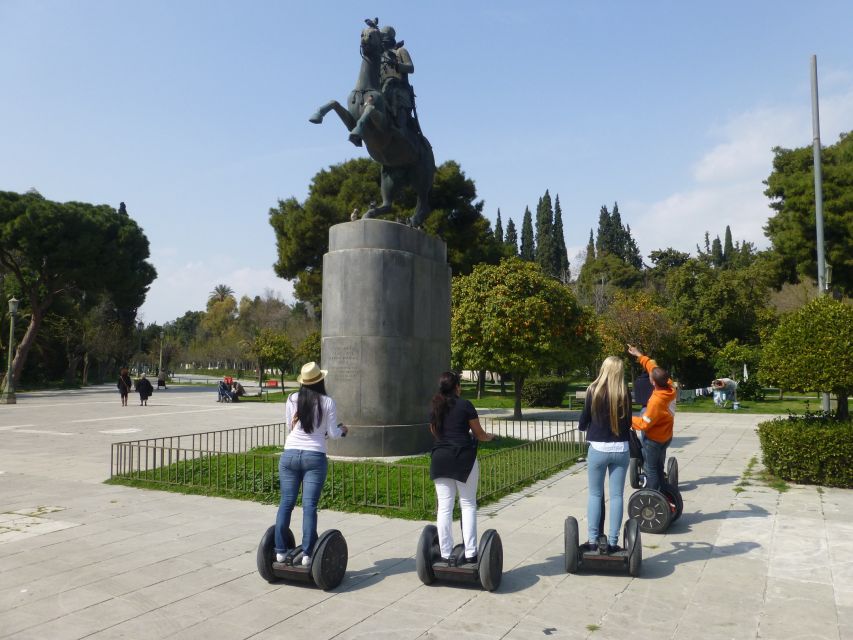
Monastiraki brings a different mood. Its square sits at the meeting point of archaeological remains, cafés, shops, and busy pedestrian streets. The guide helps connect the modern activity with the ancient city beneath and around it.
The tour also covers the sites of the Roman Agora and Greek Agora. These were once practical centers of public life, commerce, politics, and gathering. Seeing them in relation to Monastiraki helps you understand that ancient Athens was not just a hilltop temple. It was a working city with markets, meeting places, religious buildings, and streets.
At Kerameikos, the focus shifts to the ancient cemetery and city boundary. It is one of the more useful stops for understanding how Athens was organized. The route allows about 10 minutes here, so expect a compact visit with an explanation of what made the area important.
This part of the tour is especially good for you if you want context rather than only postcard views. The guide can point out how ordinary movement through the city, burial practices, trade, and politics all fit together.
More half-morning tours in Athens:
- Tuk Tuk Athens Complete City Center Tour – 100% Electric (3 hour)
★ 5.0 · 252 reviews - Athens: Private 3-Hour City Tour on Eco-Friendly Tuk Tuk
★ 4.8 · 248 reviews - Athens: 3-Hour Sunset Cruise with Swim Stop, Snacks & Drinks
★ 4.8 · 82 reviews - Athens: Create Your Own Mosaic 3h Private Art Class
★ 5.0 · 62 reviews
Thiseio, Filopappou, and the hill of Pnyx
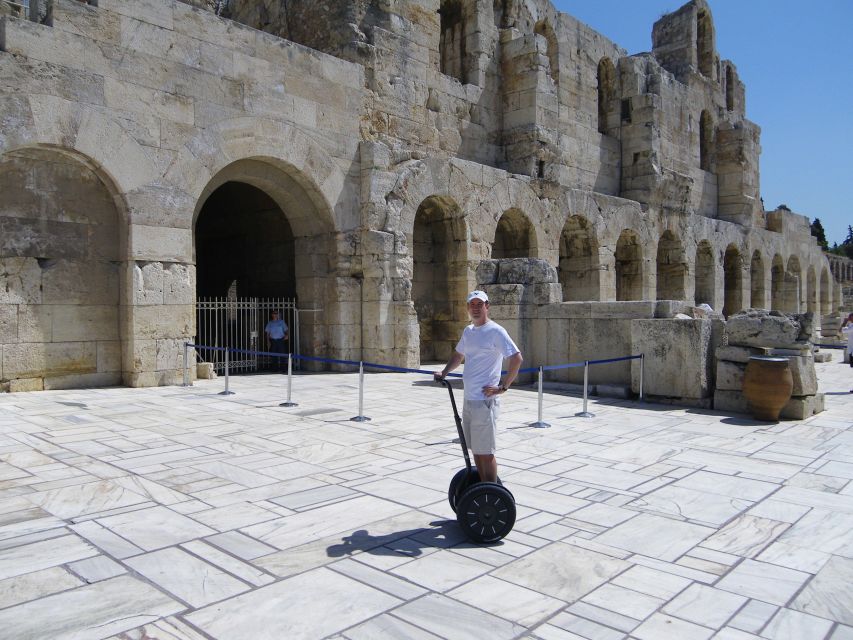
Thiseio is a pleasant area near the Acropolis, with open views and a mix of archaeological remains, cafés, and city streets. The stop itself is brief, about five minutes, but it links Monastiraki and the western side of the Acropolis area.
The ride then reaches Filopappou Hill and the Pnyx. These stops add some of the most meaningful history on the route. Pnyx was the meeting place of the Athenian assembly, where citizens gathered to debate public matters. This is the place to pay attention if you are interested in how democracy developed as a practical activity, not just an idea in a textbook.
The group spends about 10 minutes at Pnyx and another 10 minutes around Filopappou. You get scenic views toward the Acropolis and central Athens, along with an explanation of the hills’ place in the ancient city.
Because the route includes hills, this is not a completely flat ride. The guide chooses the route, and one strong point in the feedback is that guides selected quieter streets rather than forcing the group through the heaviest traffic. Still, you should expect changes in grade and surfaces.
Areopagus and the Acropolis monuments
Areopagus, a rocky hill beside the Acropolis, is another important history stop. It served as a court and meeting place in ancient Athens and is tied to law, public judgment, and civic life. The tour allows about 15 minutes here, giving the guide time to explain the site and point out views.
The ride continues toward the Odeon of Herodes Atticus, the ancient theater built on the southern slope of the Acropolis. Its restored stone seating and dramatic setting make it one of the most striking monuments you can see from outside.
The Acropolis itself is part of the tour’s central setting, and the experience is advertised as visiting the UNESCO World Heritage Site. But you should read that carefully in practical terms. The schedule includes the Acropolis area, the Odeon, Areopagus, and nearby viewpoints, while entrance fees are excluded. If you want to enter the Parthenon or spend serious time inside the Acropolis archaeological site, you will need a separate ticket and a separate block of time.
That is not a flaw if you see this as an orientation tour. In fact, the Segway route can help you understand where the Acropolis sits in relation to Plaka, the Agora, the hills, and the modern center before you return for a longer visit on foot.
Plaka and the final ride back
The route returns through Plaka, where the narrow lanes and older buildings create a more intimate finish than the wide avenues near Parliament. The stop is short, about five minutes, but you will have already seen the neighborhood at the start and can use the final pass to get your bearings for later meals or shopping.
The last section passes through Makrygianni before returning to Eschinou 9. Makrygianni sits close to the Acropolis Museum and the southern Acropolis entrance, so the final location is useful if you plan to continue sightseeing nearby.
The entire experience lasts three hours. That includes the riding lesson, photo stops, explanations, and movement between sites. You should not expect long museum-style visits or extended time at every monument. The value comes from the connections between places.
What the $112 price gets you
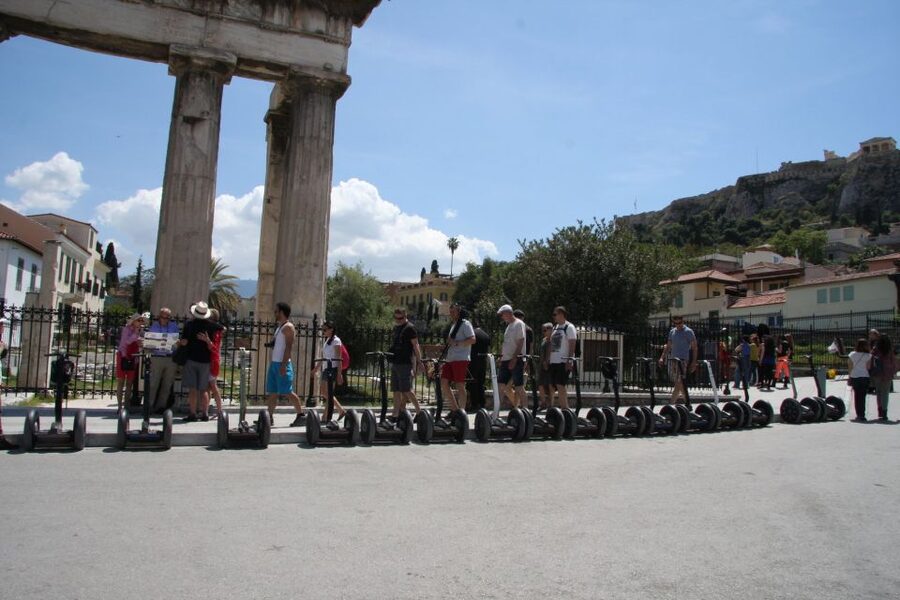
At $112 per person, this is not the cheapest way to see Athens. You are paying for the Segway, helmet, instruction, guide, and a tightly packed route through a large part of central Athens. Food, drinks, hotel pickup, and admission fees are extra.
The price makes the most sense in three situations. First, you have only a short time in Athens and want a strong first look at the center. Second, you want to reduce the amount of walking in hot weather. Third, you prefer a guide who can explain the sites while moving you efficiently from one district to another.
The price is harder to justify if you already plan to spend several days walking slowly through Athens, or if your main goal is entering the Acropolis and examining monuments in detail. In that case, a walking tour plus separate entry tickets may give you more time inside the sites.
I see this as a city orientation tour with transport, not a substitute for archaeological admission. The guide’s historical explanations add value, especially at Pnyx, Kerameikos, Areopagus, and the Agora areas, which can be easy to overlook when you focus only on the Parthenon.
Who should book this experience?
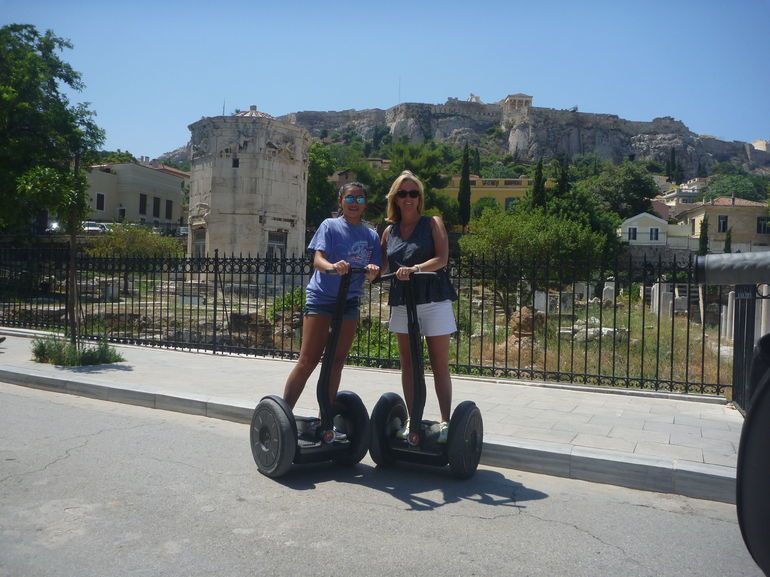
You are a good match if you want to see many central sights in one morning or afternoon, enjoy guided history, and are comfortable learning a new vehicle. It also suits families or mixed-age groups who want to stay together without committing to a long walking route.
The tour can help if someone in your group cannot walk for long periods, but the provided information does not describe it as an accessible activity. A Segway still requires balance, standing, and active steering, so think honestly about your comfort before booking.
You should also choose your timing with the weather in mind. The route is outdoors, and summer Athens can be extremely hot. The Segway reduces walking, but it does not remove sun exposure or the need for water and suitable clothing.
Guiding quality is a major part of the experience. Akivi is praised for informative commentary, Costas for flexibility and care when transport strikes affected plans, Stylianos for passion and humor, and Margarita for clear explanations. Guides may lead in English, Hebrew, Spanish, or Russian.
Cancellation is flexible up to 24 hours before the tour for a full refund, and you can reserve now and pay later. Check the available starting times when booking, since the best choice depends on your other Acropolis plans and the day’s heat.
Final decision: a smart first look at Athens
I would book this tour if I wanted a lively introduction to Athens without spending the whole day on foot. The route covers an unusually broad mix of ancient, Roman, royal, Olympic, and modern sights, and the small group keeps the experience personal.
I would not book it as my only Acropolis visit. You will see the Acropolis area and learn how it fits into the city, but admission is not included and the schedule moves on quickly.
For a first day in Athens, a hot-weather visit, or a group with mixed walking ability, the $112 cost can be worthwhile. You get the city’s main landmarks plus the less obvious civic sites that explain why Athens mattered. Just treat it as a fast, guided overview, then return on foot to the places that deserve more time.
FAQ
Where does the Athens Segway tour start and finish?
The tour starts at Eschinou 9 in Plaka, Athens 10558, and returns to the same meeting point at the end.
How long is the Segway tour?
The experience lasts three hours. Starting times vary, so check availability when booking.
Is Segway training included?
Yes. The tour includes an introduction and training session on how to use the Segway, along with a helmet.
Are entrance fees included?
No. Entrance fees are not included in the tour price.
What languages are available?
The tour may be led in English, Hebrew, Spanish, or Russian.
How large is the group?
The tour is limited to 10 participants, making it a small-group experience.
Newly reviewed around Athens
- Food Tour★ 5.0 · 3 reviews
- Feel Ancient thermal Spa Visit Delphi, Leonidas ℨoo Spaʀtan★ 5.0 · 4 reviews
- Explore the Hidden Food Gems of Athens★ 5.0 · 57 reviews
- Food Experience in Athens including Unlimited Lunch★ 5.0 · 3 reviews
- Eat Your Way Through Athens: A Local Food Walk★ 4.9 · 97 reviews
- From Athens: Delphi Private Tour with Lunch Time★ 4.0 · 3 reviews
- Delphi: Spanish guided one day tour★ 4.6 · 55 reviews
- Early Entry Acropolis & Museum. Beat the Crowds & the heat★ 5.0 · 3 reviews
Athens Segway and E-Scooter Tours, compared.
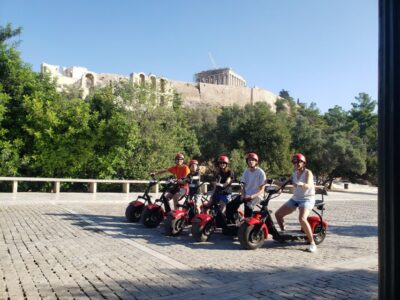

Athens Acropolis Official E-Scooter Guided Tour Fat E-Bike
Read our review →
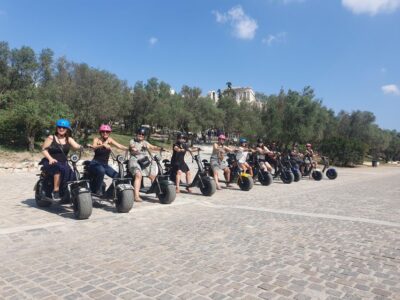
Premium Guided E-Scooter Tour in Acropolis Area
Read our review →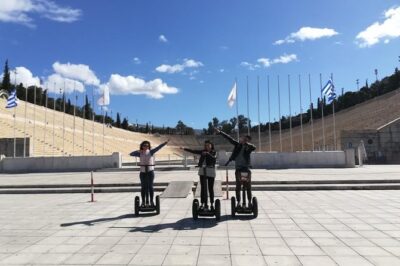
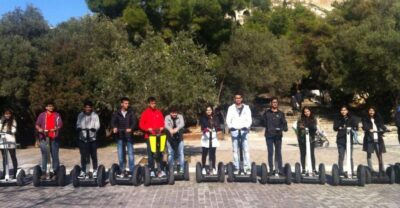
Ancient Athens, Agora, and Keramikos Segway Tour
Read our review →Browse the lists this tour appears in