

Reviewed · ATHENS HOP-ON HOP-OFF BUS TOURS
Athens, Piraeus, and Coastline: Blue Hop-On Hop-Off Bus
The smartest feature here is the direct link from Piraeus cruise terminals to Athens. You can step off your ship, board near the terminal, and ride toward the Acropolis instead of facing a long walk or arranging a taxi. I like the easy connection between the blue Piraeus route and the orange Athens route, and I like that the ticket remains valid for two days after you first use it.
I also like the generous reach of the four lines. One day can cover the ancient center, while the next can take you down the coast to Glyfada and Vouliagmeni. The catch is traffic and uneven bus timing. A return trip from Athens to Piraeus can take longer than expected, and some stops may have a long wait between buses, so leave a generous margin before your ship sails.
Key points to know before you board

- Cruise-port pickup: Board near Piraeus Terminals A, B, or C, depending on your ship.
- Four routes: Use the orange Athens, blue Piraeus, yellow Glyfada, and green Vouliagmeni lines.
- Two-day validity: The ticket is valid for two days from first activation, giving you time to split city and coast.
- Acropolis access: The Acropolis stop puts you close to the Acropolis and Acropolis Museum.
- Beach time included: Agios Kosmas and Kavouri Oceanis offer a break from ruins and city streets.
- Helpful extras: Recorded commentary comes in 16 languages, with free earphones and onboard Wi-Fi.
Why this bus works so well for cruise passengers
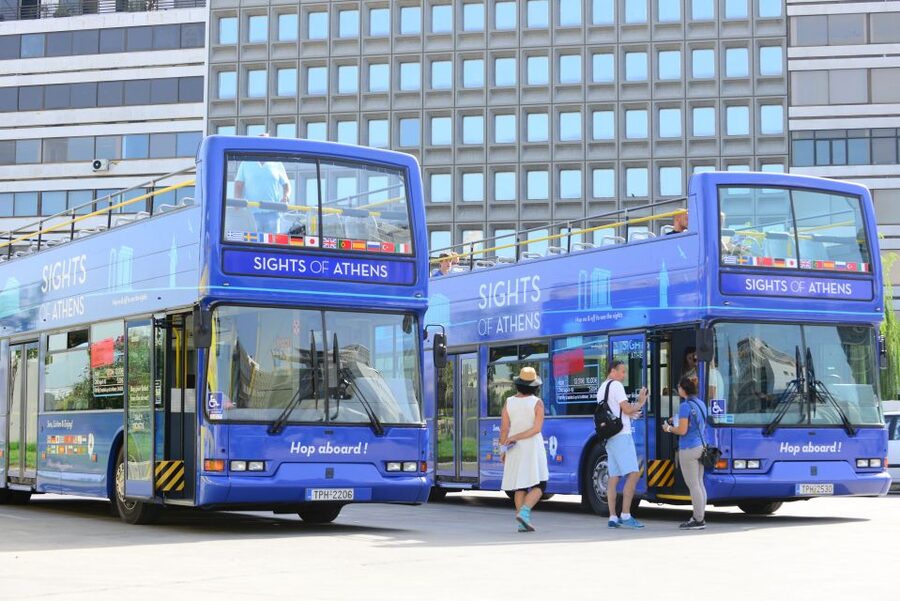
Piraeus is not next door to central Athens. The port and city are connected, but walking from a ship to a sightseeing area can take a great deal of time, especially in summer heat. This bus removes that first problem by collecting passengers at the cruise terminals and carrying them toward the Acropolis area.
The blue line is especially useful if you are visiting Athens during a port call. You can board at Terminal A, B, or C, depending on where your ship docks. Check your exact terminal before returning, since the wrong stop can leave you with a long walk around the port.
The ride into Athens is not a guided walking tour. You remain on the bus, listening to recorded information and watching the city pass by. That makes it a good first step for getting your bearings before choosing which places deserve your limited time.
Several passengers have reached the Acropolis in roughly 20 to 30 minutes when traffic is light. In normal conditions, the return can take longer. Athens traffic thickens as the day warms up, so do not plan to board the final bus back to your ship at the last possible moment.
More hop-on hop-off bus routes in Athens:
- Athens: City Sightseeing Hop-On Hop-Off Bus Tour
★ 4.3 · 4,520 reviews - City Sightseeing Athens, Piraeus & Beach Riviera Hop-On Hop-Off Bus Tours
★ 4.0 · 1,887 reviews - Hop on Hop Off Classic tour of Athens, Piraeus & Beaches
★ 3.5 · 1,266 reviews
The blue Piraeus line, harbors and the ride to Athens
The blue route links the port with the main Athens sights. Along the way, you may see Pasalimani, a yacht harbor surrounded by restaurants and city life, and Mikrolimano, an older harbor with a more intimate waterfront feel.
These stops give you a useful look at Piraeus beyond the cruise terminals. If you have time before returning to your ship, the marina area can make a pleasant place for a meal or a short walk. Keep an eye on the clock, since the port line is also your practical connection back to the ship.
The blue bus takes you toward the Acropolis stop, where you can walk to the Acropolis and the Acropolis Museum. The bus does not include admission to either attraction, and you need separate tickets if you plan to go inside.
The Acropolis stop is a strong place to get off because it puts you near Athens main ancient sight and lets you change to the orange city line. If your main goal is the Parthenon, use the bus to save energy for the uphill walk and the site itself.
The return route can be less simple than the outward journey. Buses may fill with passengers heading back to the cruise ships, and at busy times you could wait longer than expected. Ask staff about the next Piraeus departure and confirm your terminal before boarding.
The orange Athens line and the historic center
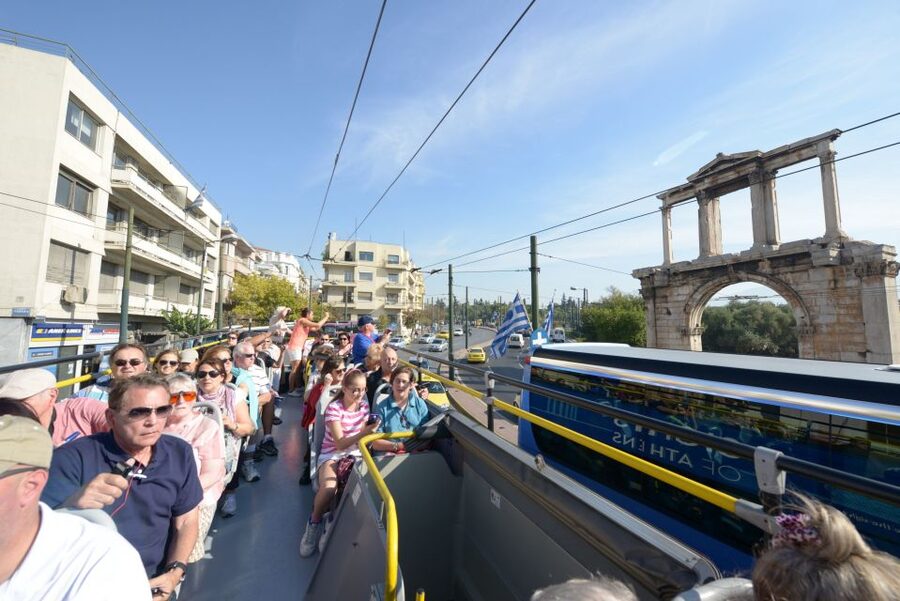
The orange line covers the central sights most people associate with Athens. It is useful for a first circuit, but you should not expect to see each attraction properly from the bus. The value is in linking far-apart areas and helping you decide where to get off.
At Plaka, you can wander narrow streets beneath the Acropolis and find traditional shops, cafes, and old lanes. The Melina Merkouri monument is listed as a stop in the old city area. Plaka is a good place for a short walk after sitting on the bus.
The route also passes Hadrian’s Gate and the Temple of Olympian Zeus. Hadrian’s Gate is easy to view from outside, while the temple area offers a sense of the scale of ancient and Roman Athens. If you stop here, wear comfortable shoes because the main sights are best reached on foot.
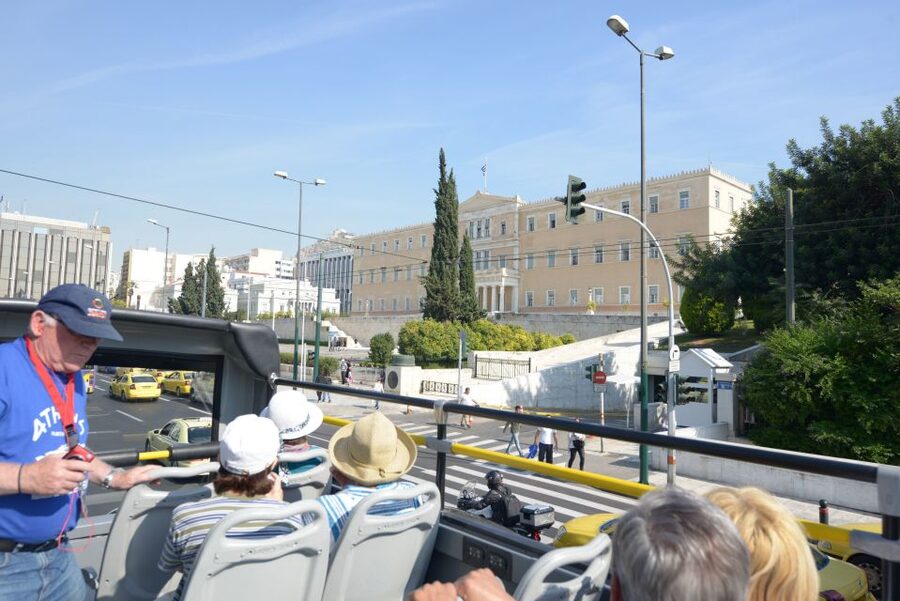
Syntagma Square brings you to the Hellenic Parliament and its ceremonial guards. From here, you can walk along Ermou, Athens busiest shopping street, or continue toward other central stops. The square is a useful transfer and orientation point, though it can feel crowded and exposed on a hot afternoon.
The Panathenaic Stadium is one of the more distinctive stops. Built in white marble, it hosted the first modern Olympic Games in 1896. Even if you do not pay to enter, the structure is easy to appreciate from outside.
The line also serves the National Library, the National Archaeological Museum, Monastiraki, its flea market, and the Thission area. Monastiraki works well for food, shopping, and a short stroll. The National Archaeological Museum deserves much more time than a quick hop off, so consider using the bus to reach it and planning a separate visit.
Thission is a pleasant choice when you want a quieter walk near the ancient center. It is also a reminder that Athens is not only a collection of famous monuments. The neighborhoods between the major stops are part of the experience.
The Acropolis stop and planning your ancient Athens visit
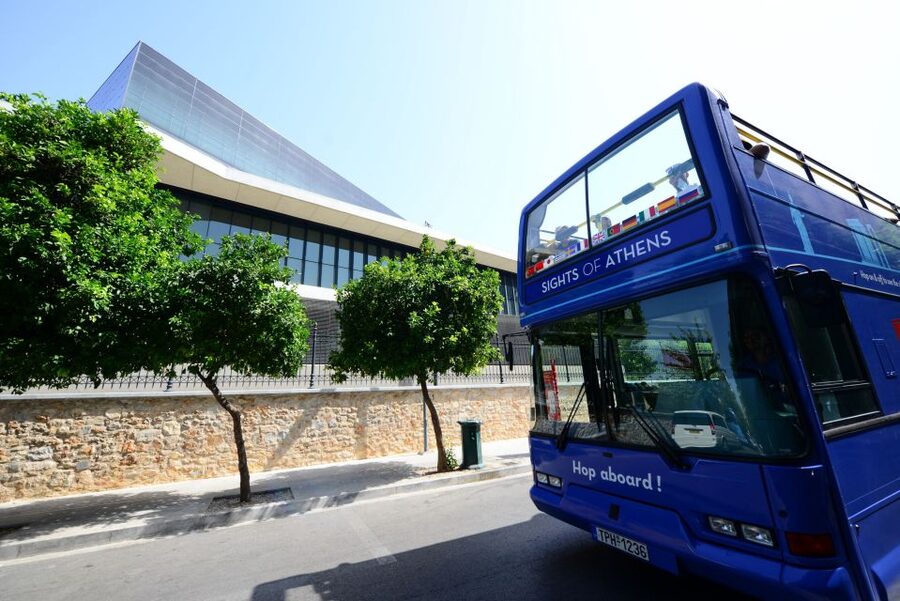
The bus gets you close, but it does not replace planning for the Acropolis. You will still walk uphill, spend time outdoors, and need a separate admission ticket. Start early if possible, particularly in the warmer months.
A practical plan is to use the bus from Piraeus, get off at the Acropolis, visit the site if you have tickets, then return to the nearby stop and continue on the orange route. You can also visit the museum, then walk through Plaka or Monastiraki.
Do not assume every bus has the same roof arrangement. Some buses have open upper decks, while others provide a roof, and air conditioning is available on some buses. The open top offers better views, but a covered or lower-deck seat is more comfortable during intense sun or rain.
Free earphones are handed out when you board. The recorded commentary is available in English, Greek, Spanish, Turkish, Chinese, Dutch, Finnish, French, German, Hebrew, Italian, Japanese, Arabic, Portuguese, and Russian. The audio adds useful historical, cultural, and social context, although the sound quality and headphone sockets may vary from bus to bus.
A different kind of day out from Athens:
- Athens: Acropolis & up to 5 Archaeological Sites Combo Pass
★ 4.4 · 12,619 reviews - Athens: Acropolis Ticket with Optional Audio or Live Guide
★ 4.2 · 11,055 reviews - Athens: Acropolis, Parthenon & Acropolis Museum Guided Tour
★ 4.8 · 9,316 reviews - Athens: Cape Sounion & Poseidon Temple Sunset Half-Day Trip
★ 4.8 · 8,241 reviews
The yellow line to Glyfada and Agios Kosmas
The yellow route begins at the Planetarium stop on the blue line and heads along the Athenian Riviera. This is the route to choose when you want a change of pace from temples and museums.
The ride links the Stavros Niarchos Foundation area with Marina Alimou and Marina Flisvou. You get a look at the modern waterfront, marinas, and seaside suburbs as Athens stretches toward the coast.
Agios Kosmas is the practical beach stop. You can get off for swimming or sunbathing, though you should bring your own beach essentials and allow time for the next bus. A hat, sunglasses, water, and comfortable shoes are sensible choices throughout the tour.
At the Glyfada terminal, you can walk through one of the city’s more fashionable suburbs. The area has upscale department stores, cafes, beach bars, and restaurants. It is a better match for shopping and a relaxed drink than for ancient monuments.
The coastal line is particularly enjoyable on a clear afternoon. It gives you a wider view of Athens beyond the historic center and lets you pair major ruins with a little seaside time. Traffic can slow the return into Athens, so do not attempt this route immediately before a fixed airport, ferry, or cruise departure.
The green line to Vouliagmeni Lake and Kavouri
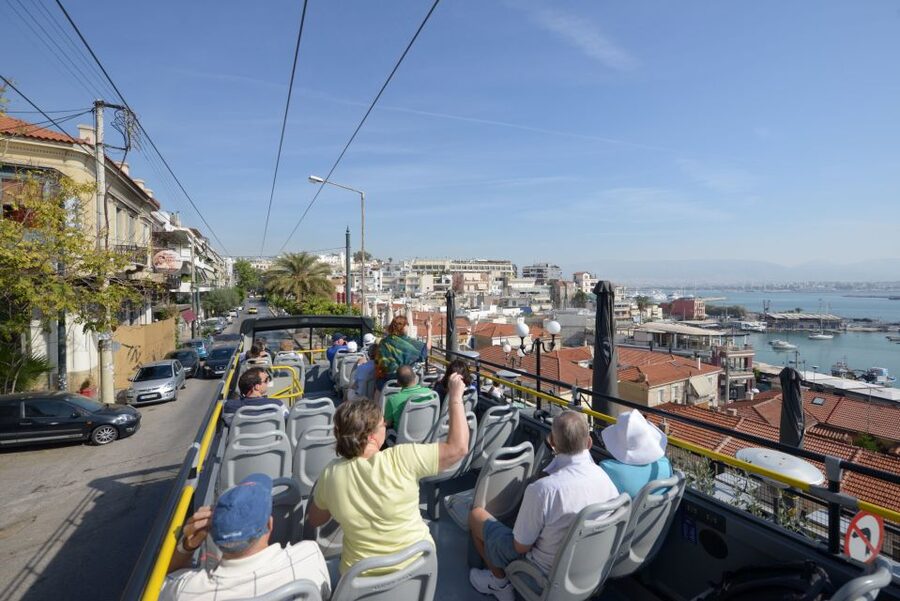
The green Vouliagmeni route continues farther along the coast. It is the best choice if your idea of Athens includes beaches, waterfront cafes, and a slower afternoon.
Kavouri Oceanis is one of the main beach stops. You can pause here for swimming and sunbathing, then continue toward Vouliagmeni. The area feels more like a coastal resort district than central Athens.
Vouliagmeni Lake is another main attraction. The lake is known for thermal baths and a dramatic setting, making it different from the open beaches along the coast. Admission to attractions is not part of the bus ticket, so check the cost before committing to a swim or bath.
The route also includes the Allied Forces Cemetery and the Byzantine Museum. These stops add historical interest, but the schedule may not allow you to visit every site in one day. If you want both the coast and central Athens, the two-day validity is a real advantage.
A good plan is to use the orange line for the historic center on day one and reserve the yellow and green lines for day two. You can also reverse that order if your weather forecast favors the beach first.
Timing, traffic, and the practical limits

The bus is easy to use, but hop-on hop-off does not mean instant service. Departures are described as frequent on the Athens route, and some passengers have found buses arriving about every 15 minutes. Other route connections can involve longer gaps, sometimes close to an hour.
Departure information may not always be clearly displayed at every stop. Ask a staff member for the next bus, route color, and final service of the day. This small check can save you from standing in the sun or missing the connection back to Piraeus.
Traffic is the biggest variable. A full loop can take much longer than a direct walk between nearby stops. If you see that your destination is just a few blocks away, walking across the area and catching the bus in the opposite direction may be faster.
The tour is most comfortable when you treat it as a transport and orientation tool, not as a rigid sightseeing timetable. Use it for long connections, scenic stretches, and places that are awkward to reach on foot. Walk between nearby central sights when that saves time.
Buses have low-floor access and a designated wheelchair space. Children aged four and under ride free. The onboard Wi-Fi is useful for checking maps or sending photos, but connectivity may not work on every bus, so do not rely on it as your only source of directions.
Is the two-day price good value?

At about $14 per person, the price is low for a ticket covering Athens, Piraeus, and the coast. The ticket is described as a one-day pass with a complimentary second day, and it remains valid for two days from first activation.
That second day changes the calculation. A single day spent riding between Piraeus, the Acropolis, and the central sights already makes the ticket useful for a cruise stop. Two days let you separate the city from the coast instead of squeezing everything into one long circuit.
The ticket does not include admission to the Acropolis, museums, beaches, or thermal baths. You are paying for transportation, route coverage, commentary, Wi-Fi, and the ability to get on and off. For someone who wants a guided tour inside every monument, this is not enough by itself.
For a short visit, I think the value is strongest when you use the bus at least twice: once to reach the Acropolis or central Athens, and once for the coastline or return to Piraeus. If you only stay seated for one short ride, a regular public transport option might cost less, though it would not offer the same sightseeing route or recorded commentary.
Who should book this Athens bus?

I would choose this experience if you are arriving by cruise, have limited time, want a broad view of Athens, or prefer not to manage several local transport changes. It also suits families and anyone who wants to rest their feet between major stops.
It is a good fit for first-time visitors who want to see the city before selecting a few places for a closer visit. The audio guide helps fill the ride with context, and the four routes cover far more than the Acropolis alone.
I would be more cautious if you need exact departure times, dislike waiting in traffic, or have a tight schedule. Athens traffic can stretch the return journey, and the coastal lines need more time than a simple city loop. For a cruise passenger, keep a large buffer before all-aboard time.
Reserve with the bus if you want a cheap, flexible way to connect the port, ancient center, and Athenian coast. Skip it if your plan is limited to one tightly scheduled museum visit and a short walk, since traffic and route changes may add time you do not have.
FAQ
How long is the ticket valid?
The ticket is valid for two days from the time you first activate it.
Which bus routes are included?
You can use four routes: the orange Athens line, blue Piraeus line, yellow Glyfada line, and green Vouliagmeni line.
Can I board at the Piraeus cruise port?
Yes. Bus stops are available at Cruise Terminals A, B, and C in Piraeus Port.
Does the ticket include entry to the Acropolis?
No. Admission to the Acropolis and other attractions is not included.
Is the audio guide included?
Yes. Recorded commentary is included in 16 languages, and disposable earphones are provided when you board.
Is Wi-Fi available on the buses?
Yes. Unlimited Wi-Fi is included onboard, although connectivity may not work on every bus.
Are the buses wheelchair accessible?
Yes. The buses have low-floor access and a designated wheelchair space.
Do children ride free?
Children aged four and under receive free admission.
Can I visit the beaches with this ticket?
Yes. The yellow and green routes reach coastal areas including Agios Kosmas and Kavouri Oceanis, where you can swim or sunbathe.
Newly reviewed around Athens
- Feel Ancient thermal Spa Visit Delphi, Leonidas ℨoo Spaʀtan★ 5.0 · 4 reviews
- Food Tour★ 5.0 · 3 reviews
- Explore the Hidden Food Gems of Athens★ 5.0 · 57 reviews
- Food Experience in Athens including Unlimited Lunch★ 5.0 · 3 reviews
- Eat Your Way Through Athens: A Local Food Walk★ 4.9 · 97 reviews
- From Athens: Delphi Private Tour with Lunch Time★ 4.0 · 3 reviews
- Delphi: Spanish guided one day tour★ 4.6 · 55 reviews
- Early Entry Acropolis & Museum. Beat the Crowds & the heat★ 5.0 · 3 reviews
Athens Hop-On Hop-Off Bus Tours, compared.

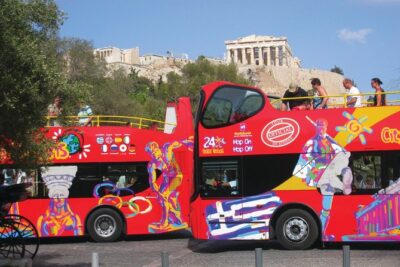
City Sightseeing Athens, Piraeus & Beach Riviera Hop-On Hop-Off Bus Tours
Read our review →
Hop on Hop Off Classic tour of Athens, Piraeus & Beaches
Read our review →

Big Bus Athens Hop-On Hop-Off with optional Piraeus & Riviera
Read our review →
Athens Shore Excursion: Athens and Piraeus Hop-On Hop-Off Bus Tour
Read our review →
City Pass with Acropolis, Museums, Hop-On Hop-Off Bus
Read our review →
Hop-on-Hop-off Bus and Cape Sounion Sunset Tour
Read our review →Browse the lists this tour appears in