
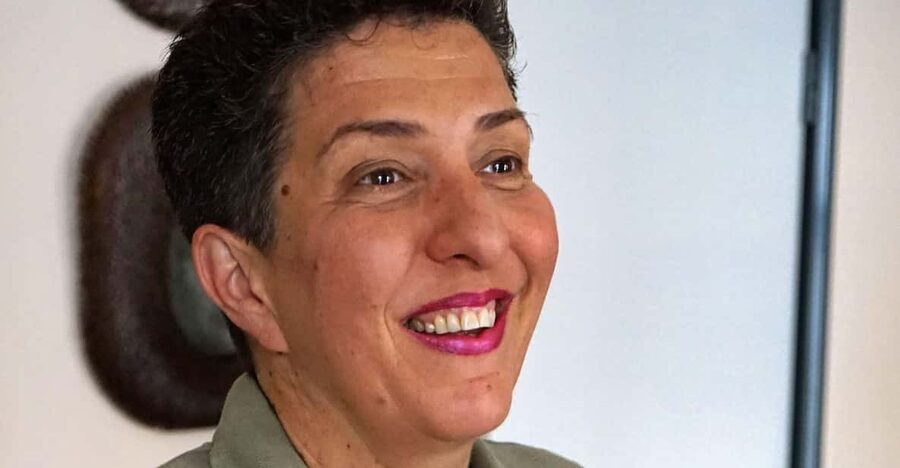
Reviewed · WORKSHOPS
Athens: Traditional Greek Pastry Workshop
Greek portokalopita is a clever Greek dessert: dried or crumpled phyllo pastry, orange, eggs, oil, sugar, and syrup come together in a soft cake with crisp edges and a bright citrus taste. In this small-group workshop, Chef Maria shows you how the mixture works, while Oral helps with questions, conversation, and practical details.
I like two things right away. First, you make the dessert yourself rather than simply watching a demonstration. Second, the recipe is useful beyond Athens: you leave with a take-home tray and a dish you can prepare for friends and family. The main consideration is the price, $106 per person, which is a serious spend for 2.5 hours, especially since transportation and extras are not included.
Key points at a glance
- A hands-on portokalopita lesson: Mix the eggs, oil, and sugar, prepare the orange syrup, and arrange the phyllo under Maria’s direction.
- A very small class: With no more than six participants, you get room to ask questions and work directly with the pastry team.
- A personal welcome: Maria leads the baking, while Oral helps with conversation, directions, and local context.
- A taste of Athens in Psyri: The meeting point at Psyri Square puts the class in a colorful central neighborhood rather than a hotel kitchen.
- A practical souvenir: You taste the finished cake with Greek coffee and take the remaining portion with you.
- Family-friendly in spirit: A nine-year-old participant enjoyed working alongside the baker, and one visitor with mobility issues received helpful accommodation.
Why portokalopita makes a good Athens cooking class
If you already know baklava, portokalopita gives you a different look at Greek pastry. It uses phyllo, but not in the neat layered form you may expect. The pastry is handled so it can absorb the orange syrup, creating a moist cake rather than a stack of crisp sheets.
The orange flavor is central. You prepare a syrup that the baked cake absorbs, and the recipe also uses fresh, aromatic ingredients. The result is sweet, citrusy, and soft, with the phyllo providing texture. It is the sort of home-style Greek dessert that tells you more about everyday food than a quick stop at a famous monument.
I also like the fact that the class teaches process, not just ingredients. You learn why the phyllo needs to be aerated, how the eggs, oil, and sugar should be whipped, and how the syrup changes the finished cake. Those details matter if you plan to repeat the recipe at home.
The lesson takes place in a traditional pastry shop in a colorful part of Athens. You are not being sent to a large cooking school far from the center. Meeting at Psyri Square makes it easy to combine the workshop with time in central Athens, though you should allow time to find the exact meeting spot and arrive ready to cook.
More hands-on workshops in Athens:
- Athens: Classic Cooking Class with Market Visit and Wine
★ 5.0 · 1,101 reviews - Athens: Food Market Visit and Cooking Class with Wine
★ 4.9 · 1,087 reviews - Greek Cooking Class in Athens Including Rooftop Dinner with Acropolis View
★ 5.0 · 826 reviews
Meeting Maria and Oral near Psyri Square
The class begins at Psyri Square, in central Athens. From there, you gather at the pastry shop and settle into the workshop with Maria, the professional pastry chef. Oral also helps host the session, and Sarisoy has served as a guide for some groups.
That mix of roles is useful. Maria handles the baking instruction, while the assistant can help explain the steps, answer questions, and point you in the right direction around the neighborhood. One participant particularly appreciated receiving clear directions to the meeting place, so pay attention to the arrival instructions before setting out.
The setting matters here. A pastry shop gives the class a working feel. You are learning in the kind of place where Greek sweets are made and served, not in a polished classroom designed only for tourists. You can look around, ask about the pastries, and connect the recipe to the shop itself.
The group limit is six people. That is small enough to avoid the common cooking-class problem where one person does all the work while everyone else watches. You should have a real chance to handle the ingredients, ask Maria to repeat a step, and compare your technique with the rest of the group.
The first taste: Greek sweets before the recipe
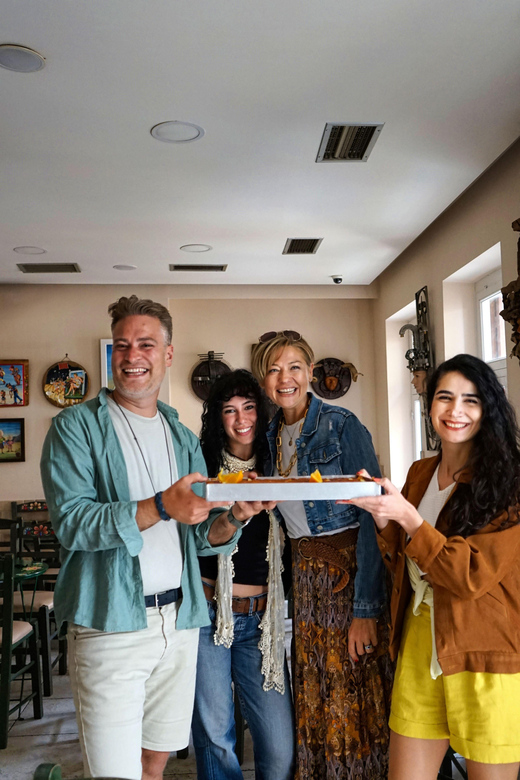
Before you start mixing, the workshop includes an exploration of local sweets. This gives you a useful point of reference. You are not making portokalopita in isolation. You begin with an idea of how Greek pastry looks, smells, and tastes in a traditional shop.
The pace is relaxed rather than rushed. You can ask about the sweets and learn more about the place while Maria prepares you for the recipe. The atmosphere also leaves room for ordinary conversation. One session included plenty of travel stories between the hosts and participants, which is part of the charm of a small, local class.
Do not expect a full Athens food tour. The supplied details focus on the pastry workshop and the shop’s sweets, not on a long series of tastings around the city. That is good to know when comparing this with a market tour or a multi-stop food walk.
The opening portion is best for people who enjoy context. You learn what kind of dessert you are about to make, how it fits into Greek pastry, and what to look for when you taste the finished cake. If you mainly want a fast recipe demonstration, the opening may feel slower. If you like to talk and ask questions, it adds value.
Mixing eggs, oil, sugar, and phyllo
The most hands-on part comes when you begin making the cake. Maria takes you through the recipe from start to finish, including the mixture of oil, eggs, and sugar. One important technique is whipping the mixture until it becomes foamy, which helps introduce air before the phyllo is added.
You also learn how to handle the phyllo so it can absorb the syrup properly. The sheets are not treated like delicate layers for a formal baklava. You work with them in a way that helps form the cake’s texture and lets the orange syrup reach the pastry.
This is where the limited group size pays off. Maria can supervise without taking over. You get guidance, but you still do the work. That balance is important. A pastry class is less satisfying if the chef quietly fixes every mistake while you stand back.
The recipe is approachable, but it is not completely passive. You will be measuring, mixing, handling phyllo, and paying attention to consistency. Wear comfortable clothes that can get dirty. This is not the time for your best sightseeing outfit, especially if you are traveling with children.
A different kind of day out from Athens:
- Athens: Acropolis & up to 5 Archaeological Sites Combo Pass
★ 4.4 · 12,619 reviews - Athens: Acropolis Ticket with Optional Audio or Live Guide
★ 4.2 · 11,055 reviews - Athens: Acropolis, Parthenon & Acropolis Museum Guided Tour
★ 4.8 · 9,316 reviews - Athens: Cape Sounion & Poseidon Temple Sunset Half-Day Trip
★ 4.8 · 8,241 reviews
Preparing the orange syrup and baking the cake
Portokalopita depends on the syrup as much as the cake itself. You learn how to prepare the orange syrup and how it will soak into the baked pastry. This is one of the more useful parts of the class because syrup can make or break a dessert. Too little, and the cake may seem dry. Too much or poorly absorbed, and the texture changes.
The workshop also explains how the phyllo should be prepared so it takes in the liquid well. That is a small technical detail, but it is exactly the sort of thing that can be hard to understand from a recipe alone. At home, you may have the ingredient list but not the visual clues. Here, Maria can show you what the mixture should look like at each stage.
Once your cake goes into the oven, you have a waiting period. The group can taste prepared orange cake and enjoy Greek coffee while the new batch cooks. One participant described having tea while waiting, but the listed inclusion is Greek coffee, so coffee is the reliable expectation.
The waiting time makes the class feel social rather than strictly instructional. You can talk with Maria and Oral, ask follow-up questions, and take photographs. It also gives you a chance to compare the prepared cake with the one you have just made.
Eating the finished portokalopita
At the end, you taste the dessert with Greek coffee. This is more than a final snack. It lets you judge the texture and sweetness after hearing how each part was made. You can notice how the orange syrup has softened the phyllo and how the citrus cuts through the sugar.
The finished cake is also your best check on the lesson. You have seen the ingredients before baking, handled the pastry, and watched the syrup go in. Tasting the result helps connect all those steps.
A takeaway tray is included, so you can bring the rest of your creation with you. This is a useful benefit for anyone who wants a food souvenir rather than another small object in a suitcase. Be aware of one practical point: the experience description could be clearer about the take-home arrangement. The tray is included, but you may want to confirm how much of your dessert goes home and how it will be packed.
The recipe itself is the longer-lasting souvenir. You can recreate it after returning home, and it gives you a story to share when you serve it. That practical value helps justify the cost more than the coffee or tasting alone.
How much value do you get for $106?
At $106 per person, this is not a budget snack stop. You are paying for a 2.5-hour, small-group lesson, the ingredients, professional instruction, coffee, and a takeaway tray. The group size of six or fewer is important because it gives you more personal attention than a large demonstration.
The price makes the most sense if you care about participation. If you only want to eat Greek sweets, a pastry shop visit will cost far less. If you want to learn a recipe, work beside a pastry chef, and leave with something you made, the comparison changes.
I would also count the local setting as part of the value. You meet in Psyri, work in a traditional pastry shop, and spend time speaking with Maria and Oral. That kind of contact is different from a large commercial food activity. You are paying for time, instruction, and access to a working pastry setting.
Still, the price may be hard to defend for a solo visitor on a tight budget. Transportation is not included, and anything extra is your responsibility. Families should also calculate the total carefully, since the per-person price applies to each participant.
Who will enjoy this workshop most?
This class suits people who like to cook, eat, and talk. You do not need to be an experienced baker. Maria guides you through the process step by step, and the atmosphere is supportive rather than formal.
It works especially well for:
- Couples looking for a food-focused activity between sightseeing days
- Families who want children to take part in an activity rather than only watch
- Visitors who enjoy learning recipes they can use at home
- People who prefer small groups and personal instruction
- Anyone curious about Greek sweets beyond the usual restaurant dessert
The activity can work with children, based on a nine-year-old participant’s successful session. Still, children should be comfortable following kitchen instructions and handling ingredients. The supplied information does not give a minimum age, so confirm that point if you are booking for very young children.
The workshop can also suit someone with mobility concerns. One participant with mobility issues found Maria and Oral accommodating. That is encouraging, but it is not a guarantee of every arrangement, so contact the provider before booking if you need specific assistance.
What to wear and how to plan your time
Wear comfortable clothing that can get dirty. This is simple advice, but it matters when working with oil, eggs, syrup, and phyllo. You may also want to avoid carrying delicate bags or wearing loose clothing that gets in the way at the work surface.
The activity lasts 2.5 hours. That is long enough for the recipe, baking time, tasting, and conversation, but you should not schedule a major appointment immediately afterward. Start times vary, so check availability when choosing your booking.
Plan your route to Psyri Square before the day of the class. The experience does not include a transfer. The meeting point is central, but the pastry shop itself may require a short walk from the square, and the clearest directions are useful when you are trying to arrive on time.
You can cancel up to 24 hours before the activity for a full refund, and you can reserve now and pay later. Those policies help if your Athens schedule is still shifting, though they do not change the need to confirm the meeting details.
My verdict: book it for the recipe, not just the coffee
I recommend this workshop if you want an active food experience and like the idea of learning one Greek dessert properly. The strongest features are the small group, Maria’s patient instruction, the chance to handle every stage, and the practical takeaway recipe.
I would skip it if you are looking for a cheap tasting, a broad city food tour, or a quick activity with no kitchen work. At $106, the value depends on your interest in making portokalopita and spending time with the hosts.
For families, couples, and curious cooks, this offers a pleasant change from monuments and restaurant meals. You leave with orange cake, a new technique, and a better understanding of how Greek pastry is made. Just arrive in clothes you can dirty, allow time to find Psyri Square, and confirm the take-home details if that matters to your plans.
FAQ
Where does the Greek pastry workshop meet?
The meeting point is Psyri Square in central Athens.
How long does the activity last?
The workshop lasts 2.5 hours.
What dessert will I make?
You will make portokalopita, a traditional Greek orange cake made with orange, syrup, and phyllo pastry.
Who teaches the workshop?
Chef Maria leads the pastry instruction. Oral also helps host the session, and Sarisoy has served as a guide for some groups.
Is the workshop conducted in English?
Yes. The listed instruction language is English.
What is included in the price?
The price includes the recipe ingredients, supervision from a professional pastry chef, the cooking workshop, Greek coffee, and a takeaway tray.
What should I wear?
Wear comfortable clothes that can get dirty. Transportation and anything extra are not included.
Newly reviewed around Athens
- Feel Ancient thermal Spa Visit Delphi, Leonidas ℨoo Spaʀtan★ 5.0 · 4 reviews
- Food Tour★ 5.0 · 3 reviews
- Explore the Hidden Food Gems of Athens★ 5.0 · 57 reviews
- Food Experience in Athens including Unlimited Lunch★ 5.0 · 3 reviews
- Eat Your Way Through Athens: A Local Food Walk★ 4.9 · 97 reviews
- From Athens: Delphi Private Tour with Lunch Time★ 4.0 · 3 reviews
- Delphi: Spanish guided one day tour★ 4.6 · 55 reviews
- Early Entry Acropolis & Museum. Beat the Crowds & the heat★ 5.0 · 3 reviews
Workshops, compared.
Classic Cooking Class with Market Visit and Wine
Read our review →
Food Market Visit and Cooking Class with Wine
Read our review →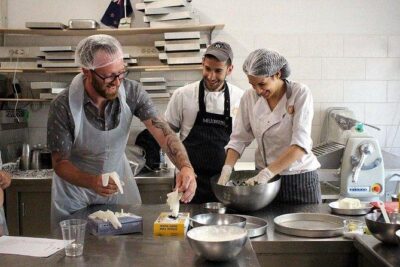
Greek Cooking Class in Athens Including Rooftop Dinner with Acropolis View
Read our review →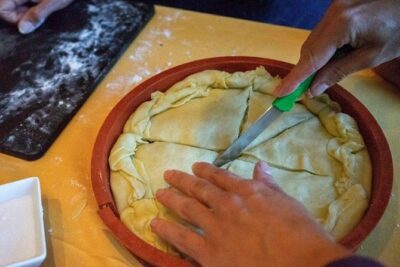
Greek Small-Group Athens Cooking Class & Dinner
Read our review →
Greek Cuisine Cooking Class and 3-Course Dinner
Read our review →
Traditional Greek cooking class and lunch or dinner with an Acropolis view
Read our review →
Athens Airport Private Transfer by Mercedes-Benz E Class Wagon to City Center
Read our review →Browse the lists this tour appears in