
Reviewed · ATHENS ACROPOLIS TOURS
Athens: Acropolis and Parthenon Guided Walking Tour
The best part of this Athens walking tour is the route: you approach the Acropolis from the Theatre of Dionysus, then climb through the ancient monuments instead of simply arriving at the Parthenon and ticking it off. Along the way, your licensed local guide connects Greek myths, political power, theater, religion, and daily life to the stones around you.
I like the personal earsets, which matter when wind, crowds, and hard stone surfaces swallow a guide’s voice. I also like the mix of famous sights and wider views toward the Ancient Agora, Pnyx, Mars Hill, and Filopappos Hill. The main catch is the heat and uneven uphill walking, with little shade at some stops and strict entry times that leave no room for lateness.
Key points to know before you book
- A story-led approach to the Acropolis: You visit the Theatre of Dionysus, Asklepieion, Odeon of Herodes Atticus, Propylaea, Temple of Athena Nike, Erechtheion, and Parthenon in one connected walk.
- Licensed local guides only: Guides such as Eva, Dory, Maria, Victor, Kalli, Antonis, and Giota have been praised for clear explanations, strong storytelling, and keeping groups together.
- Earsets make a real difference: You can hear the guide while standing back from a monument or moving with the group.
- Ticket choice matters: You can select an option with Acropolis entry, or arrange your own ticket through the official website if you choose the without-tickets option.
- The climb is exposed: Bring water, sunscreen, sunglasses, a hat, and sturdy comfortable shoes.
- A good first-day activity: The guide can help you understand the temples, symbols, and smaller monuments you will encounter elsewhere in Athens.
Starting at Dionysus, where ancient theater began
Meet at 3 Dionysiou Areopagitou Street, near the start of the pedestrian route from Hadrian’s Arch and Syngrou Avenue. Look for the orange Athens Walking Tours sign, and arrive 20 minutes early. This is not a casual suggestion. Acropolis entry slots are strict, and the group cannot wait for late arrivals.
The tour begins on the southern slope of the Acropolis. This is a smart starting point because the climb unfolds gradually, giving you time to adjust to the heat and stone underfoot before reaching the hilltop monuments.
Your first major stop is the Sanctuary of Dionysus, followed by the Theatre of Dionysus. This theater is closely tied to the religious festivals of Dionysus and to the development of Greek drama. Your guide can give the stones a human purpose here, explaining why theater was not simply entertainment but part of public and religious life.
The theater stop also sets up one of the tour’s strengths: it does not treat the Parthenon as an isolated postcard. You begin with the institutions and rituals that shaped Athens, then move toward the buildings most people recognize.
The route includes short walks between stops, generally around five to 20 minutes. Wear shoes with a firm sole. Smooth marble, worn steps, and slopes can make the Acropolis more tiring than the distance suggests.
More ways to see the Acropolis:
- Athens: Acropolis & up to 5 Archaeological Sites Combo Pass
★ 4.4 · 12,619 reviews - Athens: Acropolis Ticket with Optional Audio or Live Guide
★ 4.2 · 11,055 reviews - Athens: Acropolis, Parthenon & Acropolis Museum Guided Tour
★ 4.8 · 9,316 reviews
Asklepieion and the practical side of ancient Athens
Near the theater, you visit the Asklepieion of Athens. This sanctuary was associated with healing, and it adds a different note to the tour. The Acropolis is often presented through temples and military power, but a healing sanctuary points toward ordinary hopes and fears: illness, recovery, prayer, and the search for help.
This is one place where a guide earns the fee. Ruins can look like scattered foundations when you walk alone. A good explanation helps you understand why the site mattered and how it fitted into the wider religious center.
The tour guides are licensed local professionals, and that local connection comes through in the range of material they use. Some guides bring photographs or visual aids to show how a building may have looked before centuries of damage and rebuilding. Guides named in the feedback include Eva, Dory, Maria, Victor, Kalli, Antonis, Marianna, Andrea, Giota, and Alice. The quality of a group tour always depends partly on the individual guide, but the repeated praise focuses on clear English, lively myths, patience, and a comfortable pace.
The Odeon of Herodes Atticus and the first big views
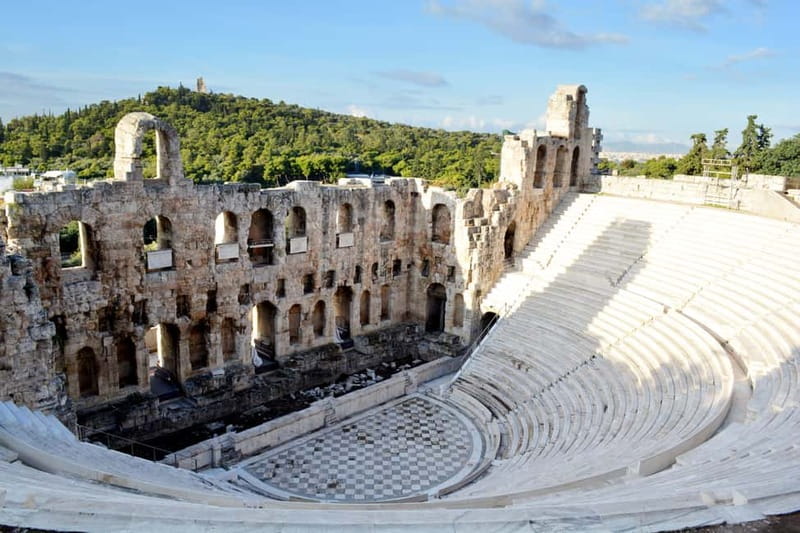
The route then reaches the Odeon of Herodes Atticus, the large Roman-era theater built into the southern side of the Acropolis. Its curved seating and dramatic setting make it one of the most photogenic stops before the summit.
You will not simply be looking at old masonry. The guide explains how the Odeon fits into the later story of the Acropolis, showing that the hill continued to matter long after the height of classical Athens.
From this part of the route, views open toward central Athens. You may see the Ancient Agora, the National Observatory, and the surrounding hills. The guide also points out Filopappos Hill, Mars Hill, and the Pnyx. These places are not decorative background. Together, they help you picture Athens as a working city of assemblies, courts, sanctuaries, neighborhoods, and public debate.
Bring your camera, but do not let the photo stops turn into a race. One useful feature of the tour is the use of earsets. You can stand a little away from the guide to frame a picture and still follow the explanation.
Passing through the Propylaea
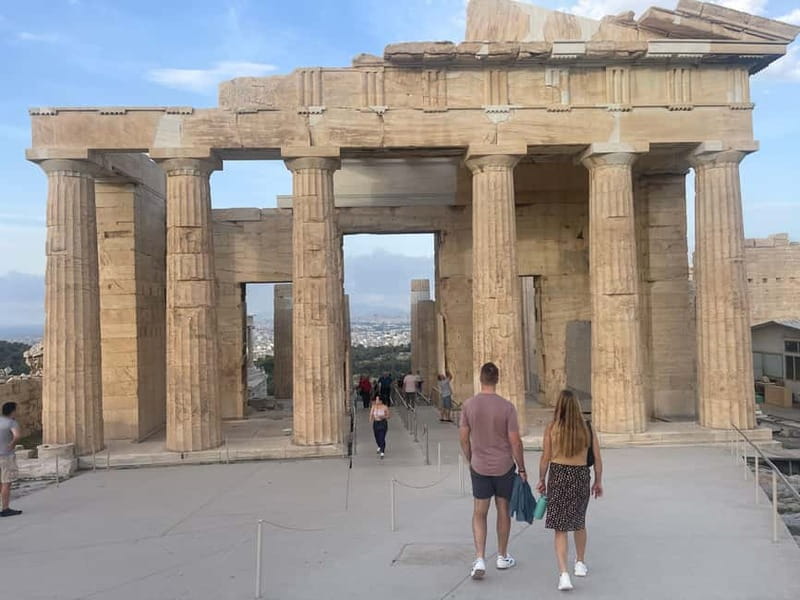
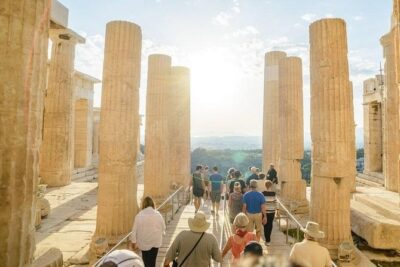
The Propylaea is the monumental gateway to the Acropolis. It is a natural turning point in the walk because you pass from the approach to the sacred summit.
The scale is important. The gateway was designed to impress, and its columns and broad arrangement make the entrance feel ceremonial. Your guide can explain how visitors moved through this space and how the gateway related to the temples beyond it.
This is also where the crowd can become more noticeable. Security checks at the Acropolis can take 30 minutes or more during peak periods, and busy conditions may affect the pace. The tour includes skip-the-line entry when the selected ticket option applies, but skip-the-line does not mean you avoid every security check or crowd.
Expect the group to pause often. The stop-and-listen format is useful for understanding the architecture, but it means you should not expect a quick, uninterrupted climb. The walk is designed for explanation, not speed.
More walking tours in Athens:
- Greek Food Walking Tour in Athens
★ 5.0 · 4,740 reviews - Acropolis: Acropolis and Parthenon Guided Walking Tour
★ 4.7 · 3,442 reviews - Acropolis monuments & Parthenon Walking Tour with Optional Acropolis Museum
★ 5.0 · 2,678 reviews - Athens Acropolis and Parthenon Walking Tour
★ 4.5 · 1,355 reviews
The Temple of Athena Nike, small in size and big in meaning
The Temple of Athena Nike is a compact temple near the entrance. Compared with the Parthenon, it can be easy to overlook, especially when the larger monument draws every eye.
I would pay attention here. The temple is associated with Athena as a goddess of victory, and its position near the gateway gave it a strong symbolic role. This is exactly the sort of monument that can disappear into the background without a guide.
The stop is relatively short, with about five minutes of walking listed from the previous point. That makes it a good moment to listen closely and ask a question. The tour is conducted in English, so you should be comfortable following spoken explanations for several hours.
The Erechtheion and the myths of Athens
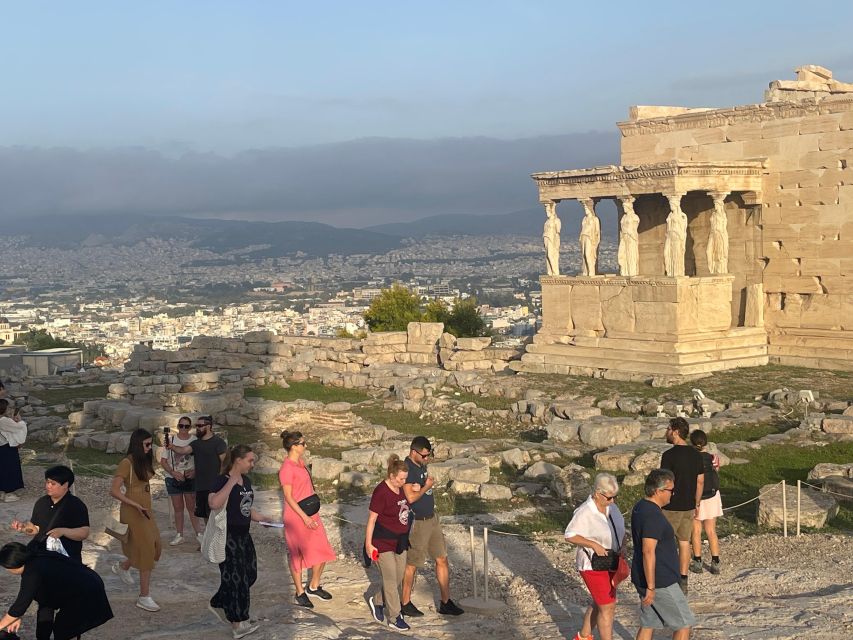
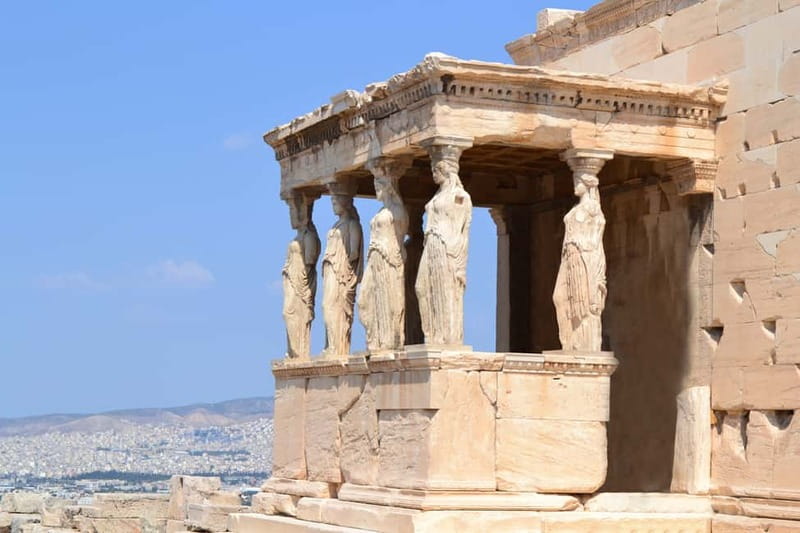
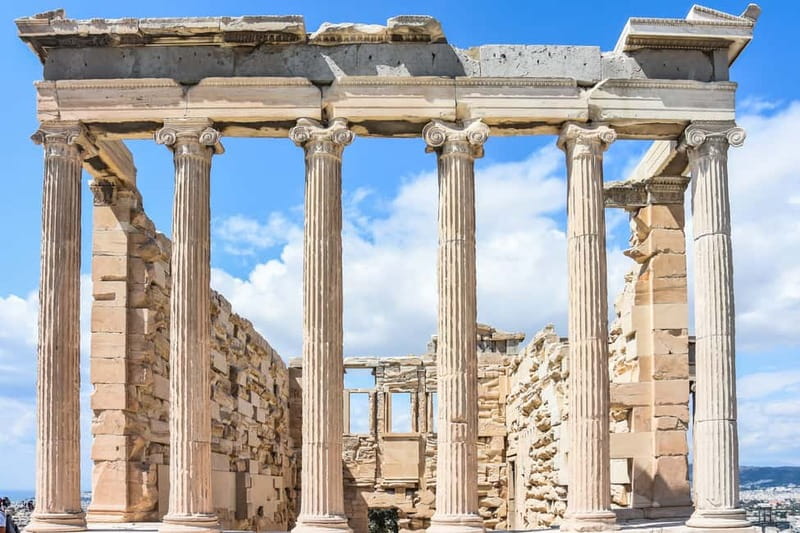
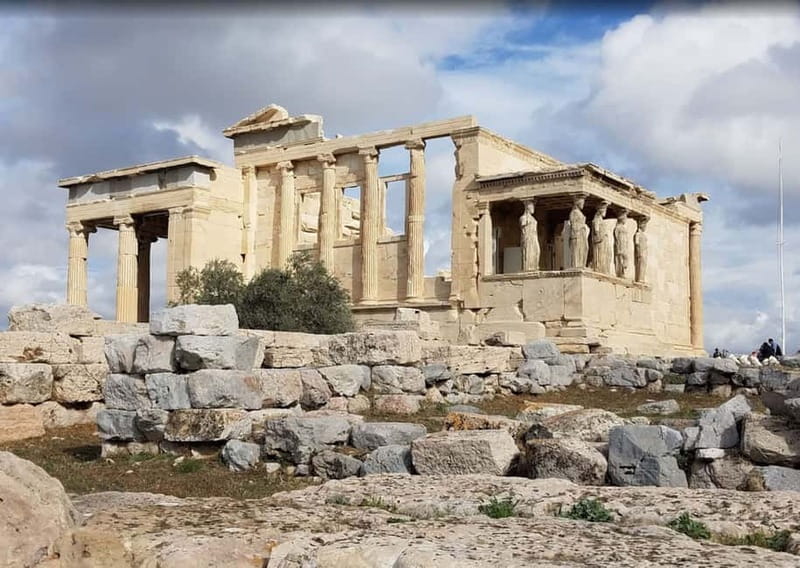
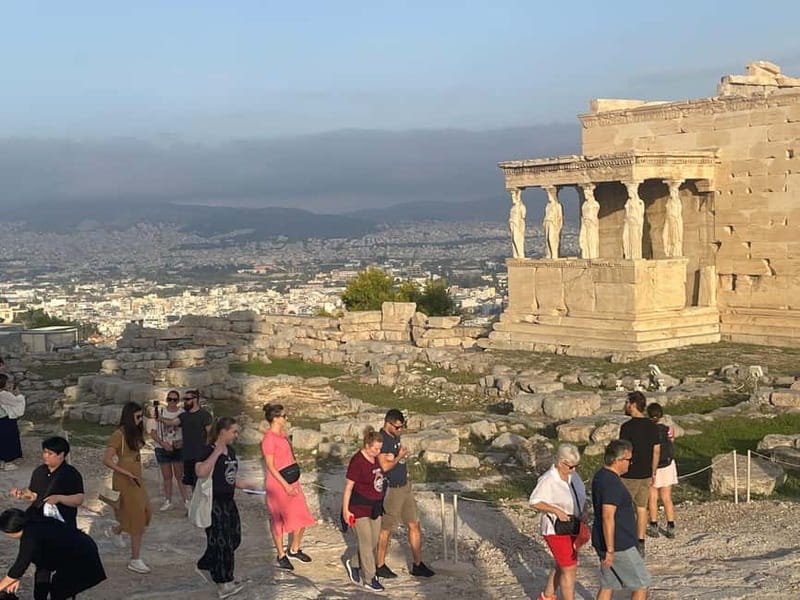
The Erechtheion is one of the most distinctive buildings on the Acropolis. Its uneven design reflects the complicated sacred ground and the different cults connected with the site. The famous Caryatids, the sculpted female figures serving as architectural supports, are a major focus.
This is also where the mythic side of Athens comes alive. Guides use stories connected with Athena, Poseidon, and the city’s identity to explain why the Acropolis was more than a collection of elegant buildings. Several guides, including Kalli and Phillipia, have been singled out for bringing myths into the explanation without losing the historical detail.
That balance is valuable. Myths help you remember places, while dates, political context, and architectural facts keep the story grounded. If you enjoy ancient religion, symbolism, and competing legends, you may find this stop more rewarding than the larger Parthenon.
Crowds can make it hard to linger directly in front of the building. Listen through the earset, then take your pictures when the group moves to a better angle. The guide’s job is to keep everyone together, and the tour does not offer unlimited time at every monument.
The Parthenon, the grand finish
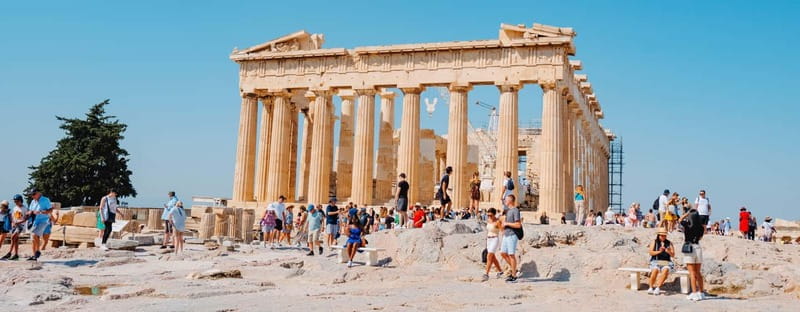
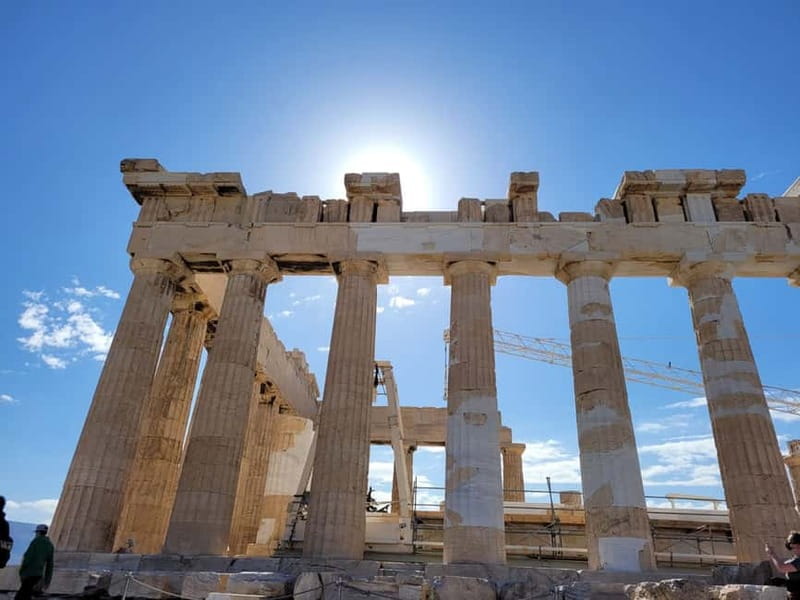
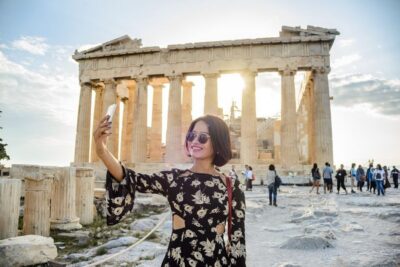
The Parthenon is the final major stop. Built for Athena, it was both a religious building and a public statement about Athenian power and identity. Its surviving columns, sculptural decoration, and careful proportions are impressive even when scaffolding or restoration equipment is present.
The guide explains the building’s purpose, the myths tied to Athena, and the changes the monument has endured. You also learn how to read what remains: column placement, architectural lines, temple orientation, and the relationship between the Parthenon and the other buildings on the hill.
This is where a self-guided visit can feel incomplete. You can admire the view and take excellent pictures alone, but it is harder to understand why the buildings were placed as they were or how the sacred hill functioned as a whole.
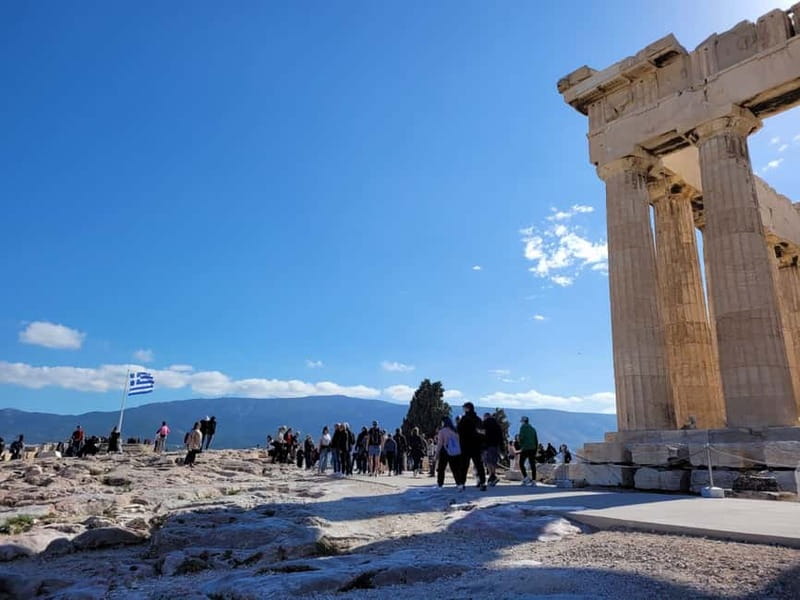
You should also expect other groups, school parties, and visitors moving through the same space. One guide described as particularly effective was Victor, who used photographs and had a friendly, personal approach. Other praised guides, including Andrea and Antonis, were noted for keeping the group together while still allowing time at the important points.
The tour ends with the Acropolis and its city views. The information describes the activity as ending on the Acropolis, while the meeting details say it ends back at the original meeting point. Confirm the final arrangement when you book, especially if you have a museum reservation, restaurant booking, or timed transport afterward.
Is the $38.39 price good value?
At $38.39 per person, the tour is reasonably priced for a guided Acropolis visit, but the real value depends on the ticket option you choose. Acropolis admission is included only when you select the option with tickets. The Acropolis Museum ticket and museum tour are also optional additions, not automatic parts of the basic experience.
If you choose without tickets, you must buy your own Acropolis admission from the official website. The ticket must match the exact tour date and time, and you are told to purchase it immediately after booking. If you arrive without a valid ticket, the tour fee is not refundable.
The ticket option removes an important source of stress. It also protects you from choosing the wrong category, such as adult or student. On the other hand, compare the total cost before paying, since the advertised tour price may change with the entry option.
The Athens map and Athens Guide magazine are modest extras, but useful if you are building a short stay in the city. The bigger value is the licensed guide, the route design, and the audio equipment. If you already know ancient Greek architecture well and prefer to wander silently, you may not need those benefits. For a first visit, they can make the hill far easier to understand.
Heat, crowds, and the physical effort
This is not a good fit for wheelchair users or people with mobility impairments. You walk uphill over uneven surfaces, stand for explanations, and deal with exposed sun. Baby strollers and large bags are not allowed.
Bring:
- Water
- Comfortable shoes
- Sunglasses
- A sun hat
- Sunscreen
- Comfortable clothing
- Passport or ID card
The tour runs in rain or shine. In hot weather, a morning start can reduce the worst of the heat. A late afternoon option may offer softer light and more comfortable temperatures, though crowds can still be heavy. One useful tip from the tour experience is to choose an early start, such as 8:30 a.m., or consider a later time around golden hour for photographs.
There is not always shade when the guide stops. One piece of practical criticism is worth taking seriously: guides should seek shade when possible during longer explanations. You can help yourself by applying sunscreen before arrival and carrying water from the start.
The duration can range from two to three and a half hours. That variation likely reflects the selected option, group pace, museum component, and conditions at the entrance. Check the exact duration and start time before you finalize your day.
Who will get the most from this Athens tour?
I would choose this tour for a first visit to Athens, especially if you have only one day in the city. The guide gives you a framework for the Acropolis, and you can use that knowledge later when you pass the Agora, Pnyx, National Observatory, or Filopappos Hill.
Families can also benefit. A strong storyteller can keep children focused longer than a wall of dates and architectural terms. Maria was praised for holding the attention of three children, and another guide used a Lego reconstruction of the Acropolis to re-engage tired children near the end.
The tour suits you if you want clear English, structured movement, and a human explanation of the monuments. It is less suited to you if you want to spend ten minutes alone at each building, avoid all stairs, or dislike fixed entry times.
Free cancellation is available up to 24 hours before departure, and reserve-now-pay-later booking keeps your plans flexible. Those policies are useful, but they do not protect you from missing the timed entry. Build in extra time for transport and finding the meeting point.
Should you book the Acropolis and Parthenon walking tour?
Book it if you want the Acropolis to make sense, not just look impressive. The route covers the main monuments, begins with the Theatre of Dionysus, uses earsets, and gives you views across the wider city. The strongest part is the guide-led interpretation, especially when the guide combines myths with solid architectural and historical context.
Choose the ticket-included option if you want the simplest plan. If you arrange your own ticket, use the official website, match the exact tour time, and buy it immediately. Arrive 20 minutes early, dress for sun and uneven stone, and confirm where the tour ends.
I would skip it only if you are comfortable researching the Acropolis in advance and prefer complete freedom to set your own pace. For most first-time visitors, the price is fair for a licensed local guide and a well-planned walk through Athens’ most important ancient site.
FAQ
How long does the Acropolis and Parthenon tour last?
The tour lasts between two and three and a half hours. Check the available start times and the exact duration for your selected option.
What language is the tour conducted in?
The live guided tour is conducted in English.
Where does the tour meet?
Meet at 3 Dionysiou Areopagitou Street, near the start of the pedestrian walkway leading to the Acropolis from Hadrian’s Arch and Syngrou Avenue. Look for the orange Athens Walking Tours sign.
How early should I arrive?
Arrive 20 minutes before the scheduled departure. Acropolis entry times are strict, and the group cannot wait for late arrivals.
Is Acropolis admission included?
Acropolis admission is included only if you select the option with tickets. If you choose without tickets, you must buy your own ticket from the official website and match it to the tour date and time.
Is the Acropolis Museum included?
The Acropolis Museum ticket and museum tour are included only with the selected museum option.
What should I bring?
Bring your passport or ID card, comfortable shoes, sunglasses, a sun hat, sunscreen, and comfortable clothing. Water is also a practical choice for the uphill walk and exposed summit.
Is the tour suitable for wheelchair users or people with mobility impairments?
No. The activity is not suitable for wheelchair users or people with mobility impairments. Baby strollers and luggage or large bags are also not allowed.
Newly reviewed around Athens
- Feel Ancient thermal Spa Visit Delphi, Leonidas ℨoo Spaʀtan★ 5.0 · 4 reviews
- Food Tour★ 5.0 · 3 reviews
- Explore the Hidden Food Gems of Athens★ 5.0 · 57 reviews
- Food Experience in Athens including Unlimited Lunch★ 5.0 · 3 reviews
- Eat Your Way Through Athens: A Local Food Walk★ 4.9 · 97 reviews
- From Athens: Delphi Private Tour with Lunch Time★ 4.0 · 3 reviews
- Delphi: Spanish guided one day tour★ 4.6 · 55 reviews
- Early Entry Acropolis & Museum. Beat the Crowds & the heat★ 5.0 · 3 reviews
Athens Acropolis Tours, compared.
Acropolis & up to 5 Archaeological Sites Combo Pass
Read our review →
Acropolis, Parthenon & Acropolis Museum Guided Tour
Read our review →Acropolis, Parthenon & Acropolis Museum Guided Tour
Read our review →
Acropolis monuments & Parthenon Walking Tour with Optional Acropolis Museum
Read our review →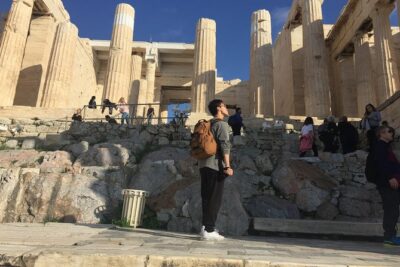
Athens All Included: Acropolis and Museum Guided Tour with Ticket
Read our review →Browse the lists this tour appears in