
Reviewed · ATHENS WALKING TOURS
Athens: Local Markets with Artisanal Crafts Walking Tour
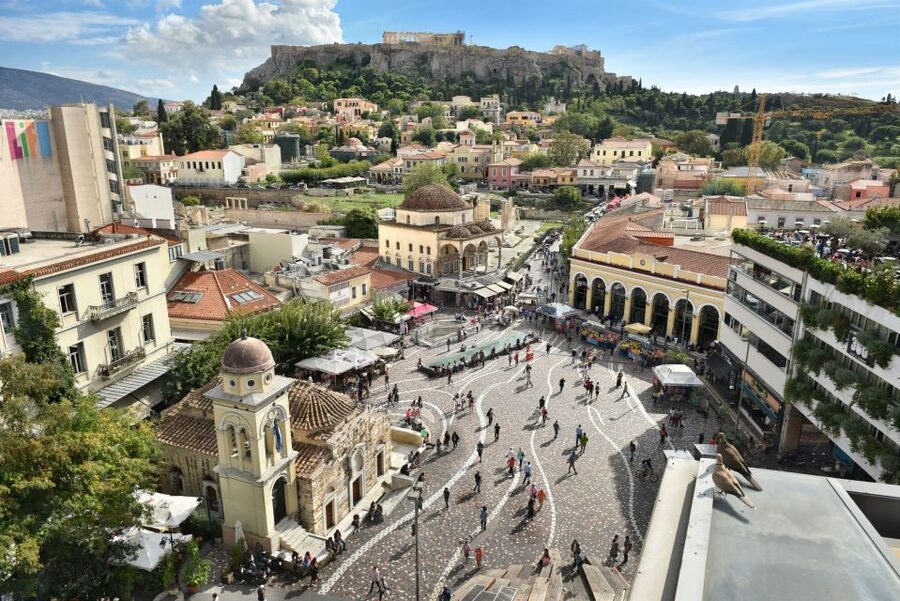
Athens opens up best when you walk from its ancient hilltops into its working neighborhoods. This three-hour route starts in Koukaki, climbs Areopagus Hill for a broad city view, then winds through Plaka, Monastiraki, Psyri, Varvakios Market, and Omonia.
I like the mix of family-run craft shops and real food markets, rather than a tour that sticks only to postcard sights. I also like the small group, limited to 10 people, which gives you a better chance to ask questions and speak with your guide. The main drawback is the price: at $141 per person, it is costly for a three-hour walking tour, especially since shopping and most food purchases are extra.
Key points
- Areopagus Hill begins the walk: Enjoy one of Athens’ best city views before entering the old neighborhoods.
- Varvakios Market is the centerpiece: See the city’s famous meat market and its working commercial side.
- Artisans are part of the route: Visit multi-generational shops and learn about traditional crafts from the people who make and sell them.
- The walk crosses several Athens districts: Koukaki, Plaka, Monastiraki, Psyri, Geraniou Street, and Omonia each give the tour a different feel.
- Coffee and a snack are included: There is a scheduled break from 11:30 a.m. to noon.
- The small group matters: With no more than 10 participants, the guide can respond to individual questions and interests.
From Koukaki to the view from Areopagus Hill
You meet at 10 a.m. at the Trekking Hellas Athens base at Parthenonos 12 in Koukaki. This is a practical starting point because the walk begins close to the Acropolis area, but you should plan your route to the meeting point in advance. The tour ends at Omonia metro station, so you finish in a different part of central Athens.
The first major stop is Areopagus Hill. The climb is short but involves uneven stone, so comfortable shoes matter more here than stylish ones. The walk is described as easy, but Athens is not flat, and the hill gives you an early reminder to bring water, a hat, and sunglasses.
From the top, you get a wide view across the city. This is not simply a photo stop. It gives you a useful sense of how Athens’ old center fits together, with the Acropolis area behind you and the central districts spreading out below.
I like starting here because it puts the rest of the walk into context. Instead of being taken straight into a maze of streets, you first see the city from above, then move through it on foot.
More walking tours in Athens:
- Athens: Acropolis and Parthenon Guided Walking Tour
★ 4.6 · 5,882 reviews - Greek Food Walking Tour in Athens
★ 5.0 · 4,740 reviews - Acropolis: Acropolis and Parthenon Guided Walking Tour
★ 4.7 · 3,442 reviews
Plaka brings the old center down to street level
From Areopagus Hill, the route heads south through Plaka. This district is one of the most recognizable parts of central Athens, with narrow lanes, old buildings, shops, and a steady stream of people moving between the Acropolis and the central market areas.
The appeal here is the transition. You are leaving the hill and its ancient associations, but you are not yet in the market district. Plaka acts as a bridge between the historic center and the working neighborhoods farther north.
A guide can add value at this point by explaining how the streets connect and how the commercial life of Athens has shifted over time. The tour is not designed as a formal ancient-sites tour, so do not book it expecting a detailed lecture on every monument. Its focus is local commerce, crafts, food, and the way different parts of the city meet.
If you have only visited Athens’ major archaeological sights, this part of the route begins to show you a less polished side of the center. That change is one of the tour’s strengths.
Monastiraki and Psyri: shops, lanes, and local trade
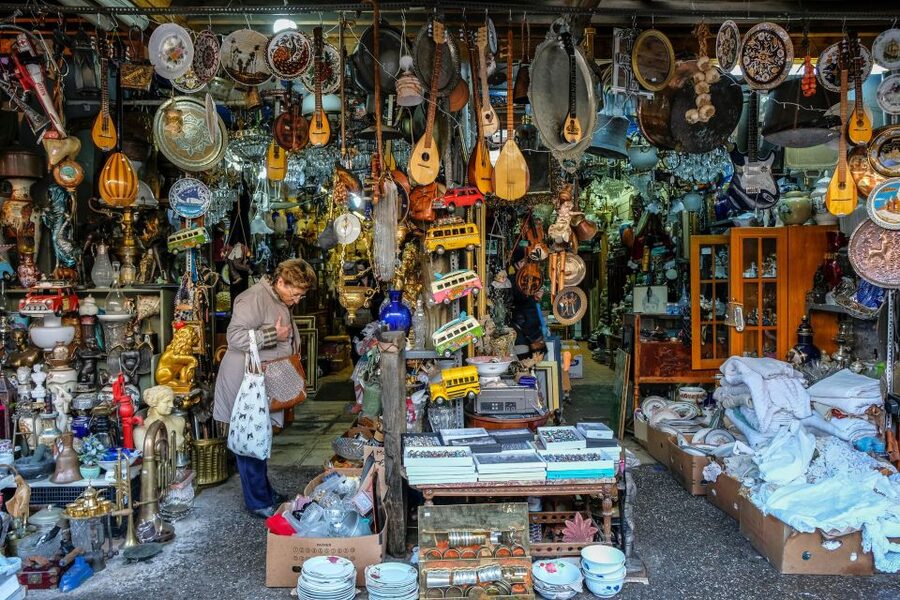
The route continues into Monastiraki and Psyri, two central districts known for their shops, narrow streets, and active street life. Here, you move closer to the tour’s main subject: buying, making, and selling things in Athens.
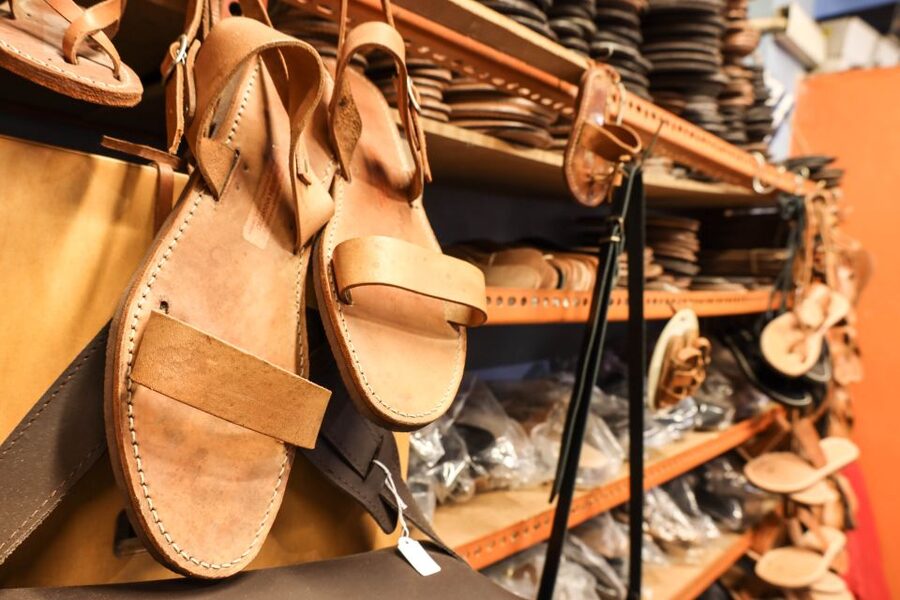
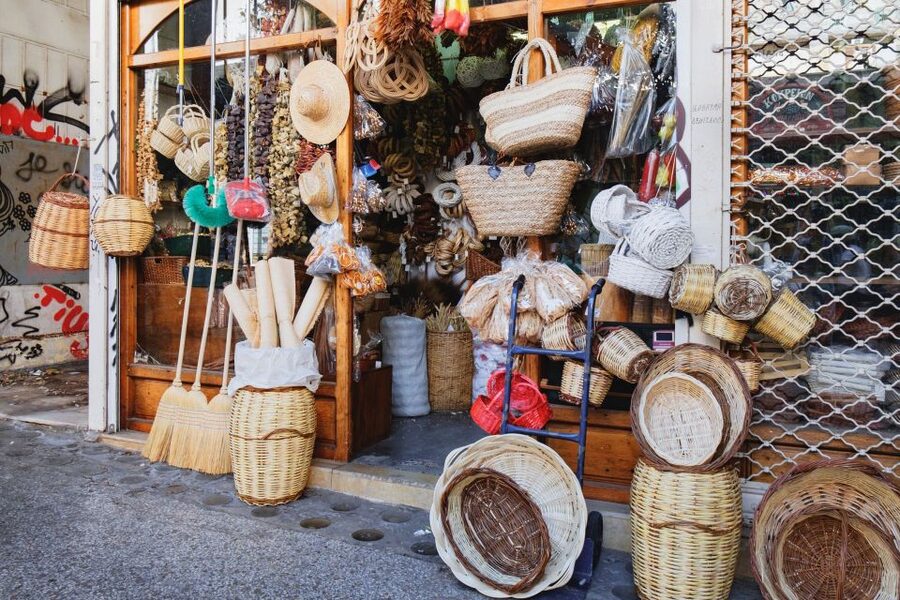
The tour includes time to browse. You can expect the guide to point out local crafts and artisan businesses, with the chance to see multi-generational shops and speak with their proprietors. That detail makes the experience more personal than simply passing rows of souvenir stores.
The craft element is especially useful if you want to take home something made in Greece but are unsure how to separate local work from mass-produced merchandise. The information provided does not promise a set number of shops or specific products, so the exact stops may vary. Still, the focus is clearly on artisans and the stories behind their work.
Theo is one of the guides who has led this experience, and his approach included discussion of both the markets and the future of the city. Yiannis has also been praised for being flexible and helpful beyond the planned route, including giving practical suggestions after a difficult luggage problem and during the Orthodox Easter holiday. Those details suggest that the guide’s role can extend beyond pointing out sights. You can ask about shopping, food, neighborhoods, and Athens life as you walk.
Varvakios Market shows working Athens
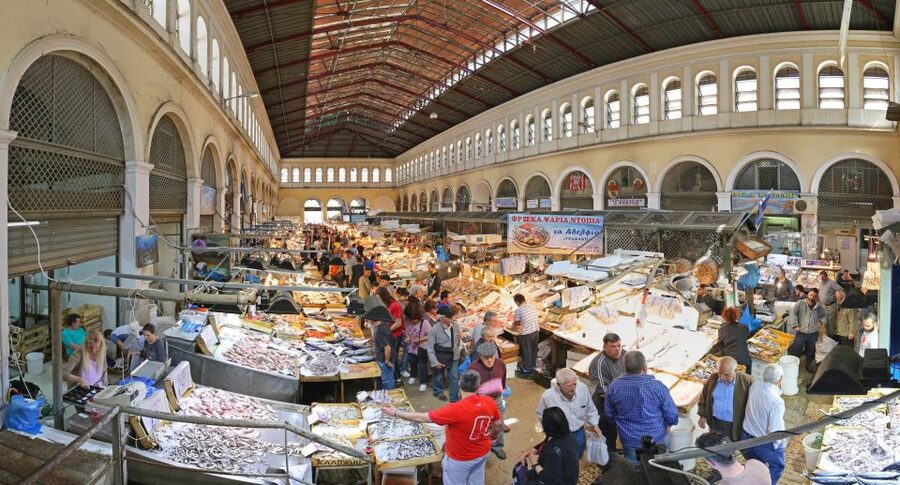
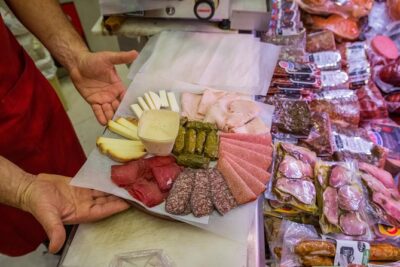
The route then reaches Varvakios Market, the well-known meat market near the center of Athens. This is the most distinctive stop on the itinerary and the point where the tour moves furthest from the usual sightseeing path.
Varvakios is a working market, not a staged attraction. That means you should expect a direct look at everyday food commerce. It may not suit anyone who dislikes meat markets or prefers quiet, polished surroundings. For many people, though, this is exactly the kind of place that gives a city tour substance.
The market also helps explain Athens as a living city. Restaurants, households, and food businesses rely on places like this, and the market’s importance comes from its daily trade rather than from decoration. Your guide can explain how the area functions and how it fits into the city’s older commercial center.
Around the corner, the route passes the old Stock Exchange and Athens City Hall. These stops add a civic and commercial layer to the walk. You are not only looking at shops and food stalls. You are seeing the institutions and public buildings that sit alongside them.
A different kind of day out from Athens:
- Athens: Acropolis & up to 5 Archaeological Sites Combo Pass
★ 4.4 · 12,619 reviews - Athens: Acropolis Ticket with Optional Audio or Live Guide
★ 4.2 · 11,055 reviews - Athens: Acropolis, Parthenon & Acropolis Museum Guided Tour
★ 4.8 · 9,316 reviews - Athens: Cape Sounion & Poseidon Temple Sunset Half-Day Trip
★ 4.8 · 8,241 reviews
Geraniou Street and the city’s multicultural side
After the market, the walk enters Geraniou Street and a more diverse part of Athens. This is described as a multicultural neighborhood, and it gives the tour a different tone from Plaka’s historic lanes and Monastiraki’s shopping streets.
This section is valuable because it avoids presenting Athens as a single, uniform place. Central Athens contains old institutions, tourist streets, food markets, artisan businesses, and neighborhoods shaped by many communities. Walking through them in one route helps you notice those changes instead of treating the city center as one large sightseeing zone.
The area may feel less tidy or tailored for tourism than Plaka. That is part of the point, but it also means you should keep your expectations realistic. This is a street-level city walk, not a polished shopping excursion.
If you enjoy seeing how a capital city works beyond its monuments, Geraniou Street may be one of the most rewarding parts. If you want only ancient sites and scenic lanes, it may feel less immediately attractive.
Omonia Square and the final street-food stop
The last section takes you around Omonia Square, one of central Athens’ busiest transport and meeting points. The route ends at Omonia metro station, which is convenient if you plan to continue sightseeing or return to your accommodation by metro.
Omonia gives you another sharp change of scenery. It is an active urban square rather than a quiet historic setting, and it shows the modern, practical side of central Athens. The square has a long-standing role in the city, but the experience here is about present-day movement and daily life rather than a formal monument visit.
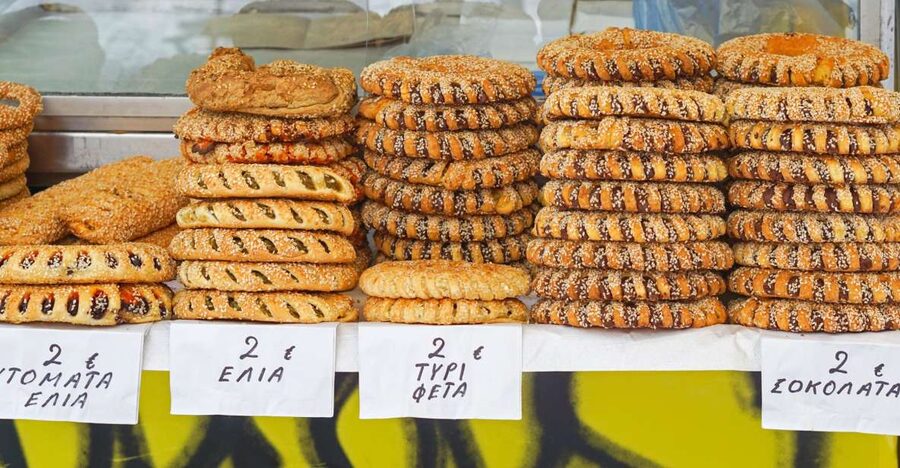
Before the tour ends, you taste street food in the area. The exact food is not specified, so you should not book this expecting a fixed menu or a full meal. Think of it as a small tasting during the walk. You may still want lunch afterward, especially if you have skipped breakfast.
The itinerary includes a coffee and snack break from 11:30 a.m. to noon. Coffee and a snack are included, while anything else is not. This pause matters on a three-hour walk because it gives you time to sit, refresh, and ask your guide broader questions about Athens.
What the small group changes
The group is limited to 10 people, which is a good fit for streets where a large tour party would be awkward. Small groups make it easier to hear the guide in crowded areas and easier to stop at a shop without blocking a pavement.
You also have a better chance to shape the conversation. Theo’s tour included questions about Athens’ past and present during the coffee stop, and that kind of informal discussion is often where a local walk becomes most useful.
The guide speaks English or Greek. Past guides have included Theo and Yiannis, but you should not assume one particular guide will lead your departure unless the operator confirms it. The important point is that the tour is live and guide-led, not an audio route you follow from a phone.
Is $141 a fair price?
At $141 per person, this is expensive for a three-hour walking tour. The fee covers an experienced Trekking Hellas Athens guide, coffee and a snack, and VAT. It does not cover additional purchases, meals, or anything else not specifically listed.
The price becomes easier to justify if you value conversation and local access more than a long list of sights. A private tour would normally cost more, and this small-group format gives you a more personal setting without being entirely one-on-one.
Still, you should compare it with a standard Athens city walk before booking. If you mainly want ancient landmarks, a less expensive history-focused tour may serve you better. If you want someone to help you understand markets, crafts, shopping areas, and everyday neighborhoods, this experience offers a more unusual route.
I would especially consider it early in your stay. The guide can help you understand where to shop, what kinds of local goods to look for, and which central districts are worth returning to. The tour’s value is partly in the orientation it provides.
Practical details before you go
Wear comfortable shoes and clothing. The tour is classified as easy, but it includes the climb to Areopagus Hill and several hours on city streets. Bring a windbreaker, sunglasses, a hat, and a reusable water bottle.
Plan to arrive at Parthenonos 12 in Koukaki for the 10 a.m. meeting. The scheduled route runs from 10 to 11:30 a.m., followed by the coffee and snack break, then continues from noon until 1 p.m.
The tour finishes at Omonia metro station, not back at the starting point. That is useful for onward travel, but you should account for it when planning your day.
You can cancel up to 24 hours before the start for a full refund. You can also reserve now and pay later, which helps if your Athens plans are still changing.
Who should book this Athens walk?
I would recommend it to you if you want to see Athens through markets, small shops, food, and local streets rather than through monuments alone. It suits curious shoppers, returning visitors, and anyone who likes asking questions while walking.
It is also a good choice if you want a compact introduction to several central districts. In three hours, you move from Koukaki and Areopagus Hill to Plaka, Monastiraki, Psyri, Varvakios Market, Geraniou Street, and Omonia.
I would hesitate if your budget is tight or if you want a full meal, a long shopping stop, or a detailed archaeological tour. The route covers a lot of ground, so individual stops are likely to be brief. You may also find Varvakios Market too direct if you are sensitive to working meat markets.
The strongest part of the experience is the combination of places: a hilltop view, artisan shops, a real food market, a multicultural street, and street food near Omonia. That range gives you a more grounded look at Athens than a route built only around famous sights.
Should you book it?
Book this tour if you are willing to pay for a small group, a local guide, and access to parts of central Athens that are easy to miss on your own. The guide-led conversations, artisan visits, market route, and coffee break make it more than a basic walking orientation.
Skip it if $141 feels too high for three hours or if your priority is ancient history. For everyone else, especially those who want to shop with more confidence and see how Athens works away from the Acropolis, this is a worthwhile but premium choice.
FAQ
Where does the Athens markets walking tour begin?
The meeting point is the Trekking Hellas Athens base at Parthenonos 12 in the Koukaki area.
Where does the tour end?
The walk ends at Omonia metro station.
How long does the tour last?
The experience lasts three hours, from 10 a.m. to 1 p.m.
What places does the walking tour visit?
The route includes Areopagus Hill, Plaka, Monastiraki, Psyri, Varvakios Market, the old Stock Exchange, Athens City Hall, Geraniou Street, and Omonia Square.
Is coffee included?
Yes. Coffee and a snack are included during the scheduled break from 11:30 a.m. to noon.
Is street food included?
The itinerary includes a street-food tasting near Omonia. Additional food or purchases are not included.
What languages does the guide speak?
The live guide speaks English or Greek.
How large is the group?
The tour is limited to 10 participants.
Newly reviewed around Athens
- Feel Ancient thermal Spa Visit Delphi, Leonidas ℨoo Spaʀtan★ 5.0 · 4 reviews
- Food Tour★ 5.0 · 3 reviews
- Explore the Hidden Food Gems of Athens★ 5.0 · 57 reviews
- Food Experience in Athens including Unlimited Lunch★ 5.0 · 3 reviews
- Eat Your Way Through Athens: A Local Food Walk★ 4.9 · 97 reviews
- From Athens: Delphi Private Tour with Lunch Time★ 4.0 · 3 reviews
- Delphi: Spanish guided one day tour★ 4.6 · 55 reviews
- Early Entry Acropolis & Museum. Beat the Crowds & the heat★ 5.0 · 3 reviews
Athens Walking Tours, compared.
Acropolis monuments & Parthenon Walking Tour with Optional Acropolis Museum
Read our review →

Athens Authentic Greek Food Walking Tour (Small Group)
Read our review →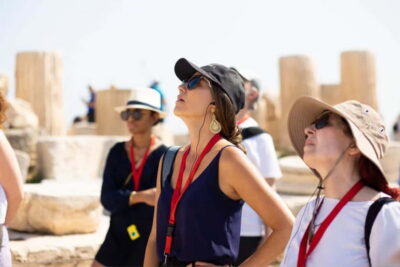
Early Morning Acropolis & Old Athens Guided Walking Tour
Read our review →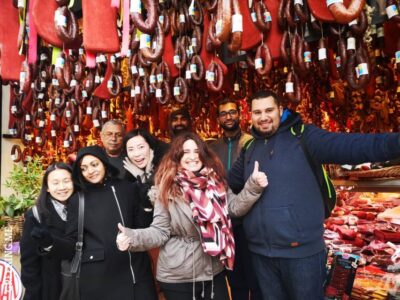
Browse the lists this tour appears in