
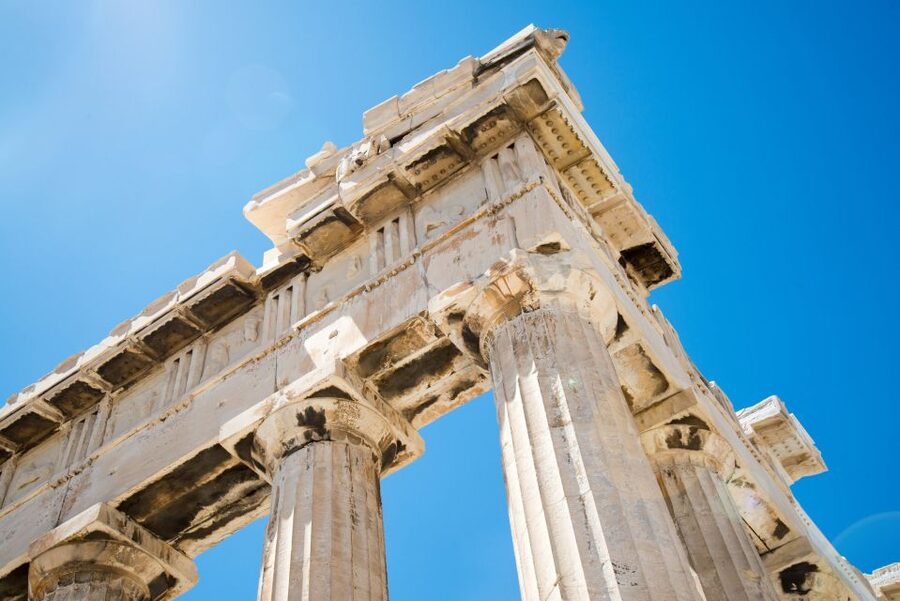
Reviewed · ATHENS ACROPOLIS TOURS
Athens: Acropolis, Parthenon & Acropolis Museum Guided Tour
The best part of this Athens tour is the way it connects the Acropolis hill with the objects now housed in the Acropolis Museum. You first see the temples, theaters, and sanctuaries in their setting, then inspect the surviving sculpture and frieze pieces in a cool, modern building nearby. I like the clear storytelling and the chance to visit both sites in one outing. I also like that guides such as Sotos, Jason, Chrysa, Giota, Ioannis, and Julia bring different energy to the same ancient stones.
The main catch is physical. Expect three to four hours of walking on uneven ground, steps, and sloping paths. The tour is not suitable for wheelchair users or people with mobility or heart problems, and there is no separate skip-the-line entrance at the Acropolis itself. In hot weather or a crowded time slot, the pace and audio experience may be less comfortable.
Key points to know before booking

- The Acropolis and museum belong together: Seeing the ruins first makes the Caryatids, sculptures, and Parthenon frieze easier to understand later.
- Licensed English-speaking guides lead the walk: Guides including Jason, Sotos, Chrysa, Giota, Ioannis, and Julia have been praised for clear explanations, good humor, and strong storytelling.
- You cover the main Acropolis sights: The route includes the Theater of Dionysus, Odeon of Herodes Atticus, Asclepius sanctuary, Propylaea, Temple of Nike, Erechtheion, and Parthenon.
- Ticket choices affect the experience: Skip-the-line options apply at the ticket offices, while the Acropolis itself has no separate skip-the-line entrance.
- The walk is demanding: Wear firm, comfortable shoes, carry water and a hat, and leave large bags and strollers behind.
- A private option is available: Choose a private group if you want a more personal pace and more room for questions.
Why this Acropolis tour works well
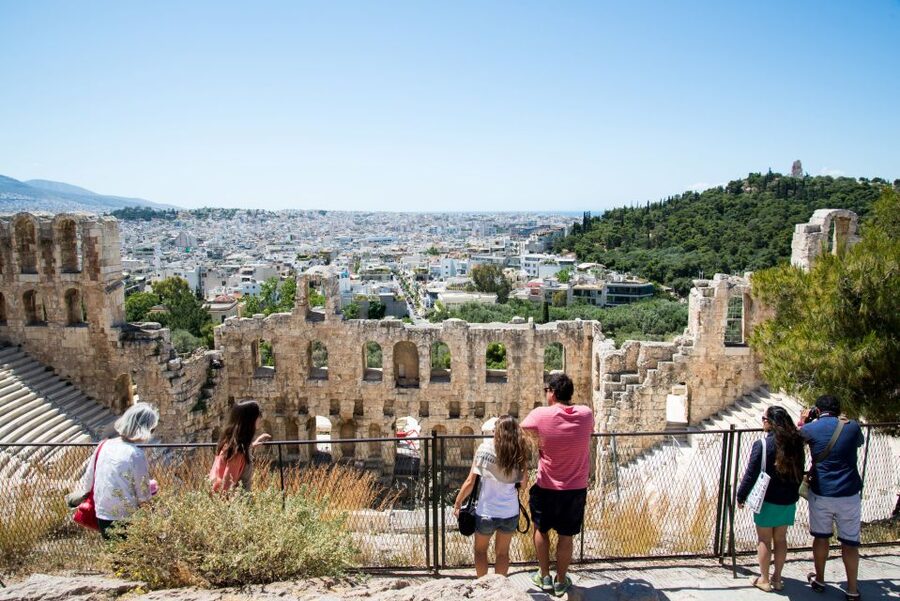
The Acropolis is easy to admire and surprisingly hard to understand on your own. From a distance, the Parthenon looks like one famous building. On the hill, you find a whole sacred complex, built and rebuilt over many centuries, with monuments serving different purposes.
A good guide gives those stones a place in time. Giota, for example, uses an Athens timeline to help you follow the city’s long story without burying you under dates. Jason is praised for keeping the group engaged, while Chrysa is described as friendly, well organized, and entertaining. Sotos is noted for his strong English and broad command of Greek culture.
That matters here. The Acropolis is often crowded, and it is easy to miss smaller details while trying to get a clear photo. Your guide points out what deserves your attention, explains why it matters, then leaves room for you to look around.
The tour takes about three to four hours, depending on weather and the group’s pace. The shorter two-hour estimate may apply to some versions or conditions, but you should plan your day around a longer visit. You get a short pause between the hill and museum, with time for a bathroom break, coffee, or a few quiet minutes.
More ways to see the Acropolis:
- Athens: Acropolis & up to 5 Archaeological Sites Combo Pass
★ 4.4 · 12,619 reviews - Athens: Acropolis Ticket with Optional Audio or Live Guide
★ 4.2 · 11,055 reviews - Athens: Acropolis and Parthenon Guided Walking Tour
★ 4.6 · 5,882 reviews
Starting at the Theater of Dionysus
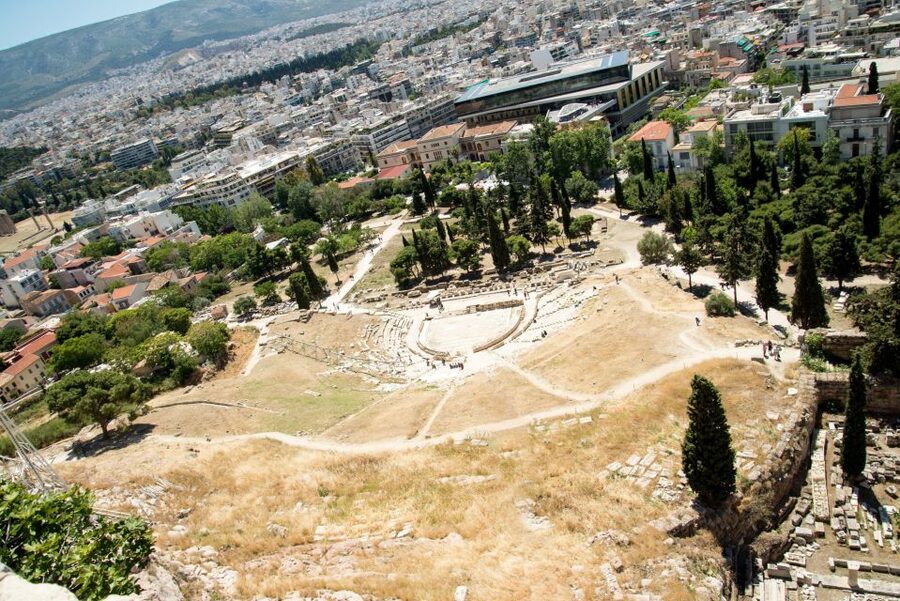
The Theater of Dionysus is one of the most memorable early stops. This is where ancient dramas and tragedies were first performed, making it more than a pile of old seats. It is a place where Greek theater took shape in front of an audience.
Your guide can help you picture the setting before moving uphill. The theater also gives you a gentler introduction to the Acropolis than starting immediately at the Parthenon. You begin with performance, religion, and civic life, then see how those ideas connect to the monuments above.
The route includes uneven surfaces and inclines from the start. Take your time with steps, especially if the stone is wet or polished by years of use. Good shoes matter more here than stylish shoes.
The Odeon and the sanctuary of Asclepius
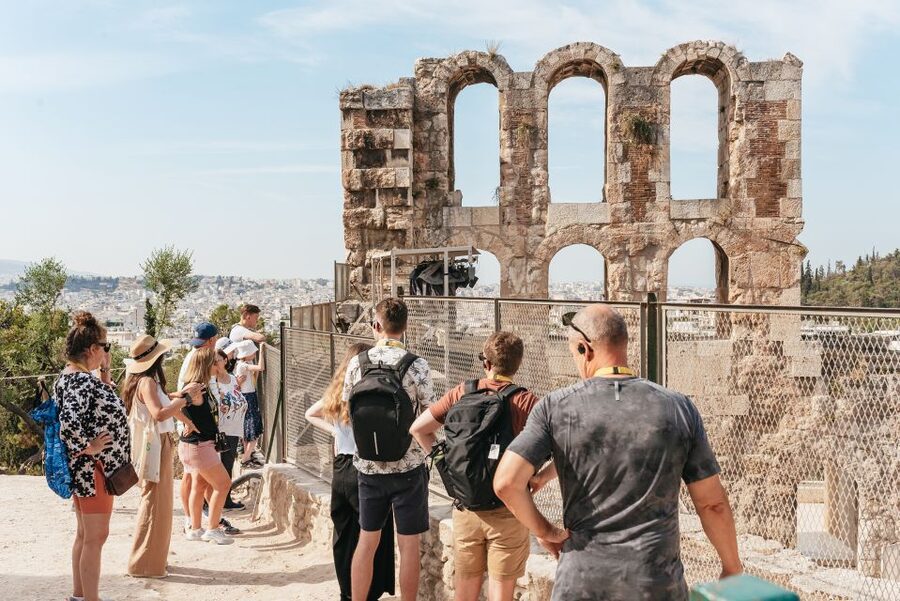
As you continue upward, you pass the Odeon of Herodes Atticus. Its large curved auditorium remains an impressive sight, even when you cannot enter or linger for a long time. Your guide explains its role in the ancient complex and points out how its scale differs from the open-air Theater of Dionysus.
The route also reaches the sanctuary of Asclepius, linked to the ancient healing god. This is one of those stops that can disappear when you focus only on the Parthenon. I value its inclusion because it shows that the Acropolis was not only about grand temples. Worship, healing, theater, ceremony, and public identity all shared this hill.
The exact order can change. Guides may rearrange the route because of crowds, weather, or conditions at the site. That flexibility can help avoid the worst congestion, though it means your visit may not follow the sequence described in advance.
Propylaea, Temple of Nike, and the first great views
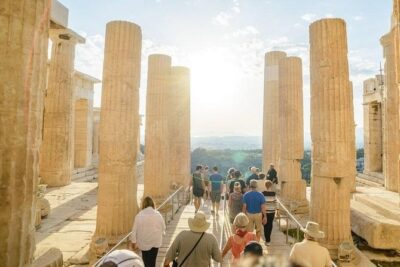
The Propylaea forms the monumental gateway to the upper Acropolis. Even before you reach the Parthenon, its columns and broad approach make a clear point: this was meant to feel important. Moving through the entrance gives you a strong sense of arrival.
Nearby, the Temple of Nike honors the winged goddess of victory. It is smaller than the Parthenon, but its position and clean design make it easy to appreciate. A guide can explain how each building had its own role rather than treating the hill as one single monument.
At this point, you also get the views that make the climb worthwhile. The city spreads out below, while the hilltop buildings frame the experience. Bring a hat and water, since shade can be limited and the exposed stone holds heat.
More museums and ancient sites in Athens:
- Athens: Acropolis, Parthenon & Acropolis Museum Guided Tour
★ 4.8 · 3,579 reviews - Acropolis monuments & Parthenon Walking Tour with Optional Acropolis Museum
★ 5.0 · 2,678 reviews - Athens: Acropolis Museum Ticket with optional Audio Guide
★ 4.4 · 2,652 reviews - Parthenon & Acropolis Museum with Audio or Live Tour Option
★ 4.1 · 2,446 reviews
The Erechtheion and its famous Caryatids
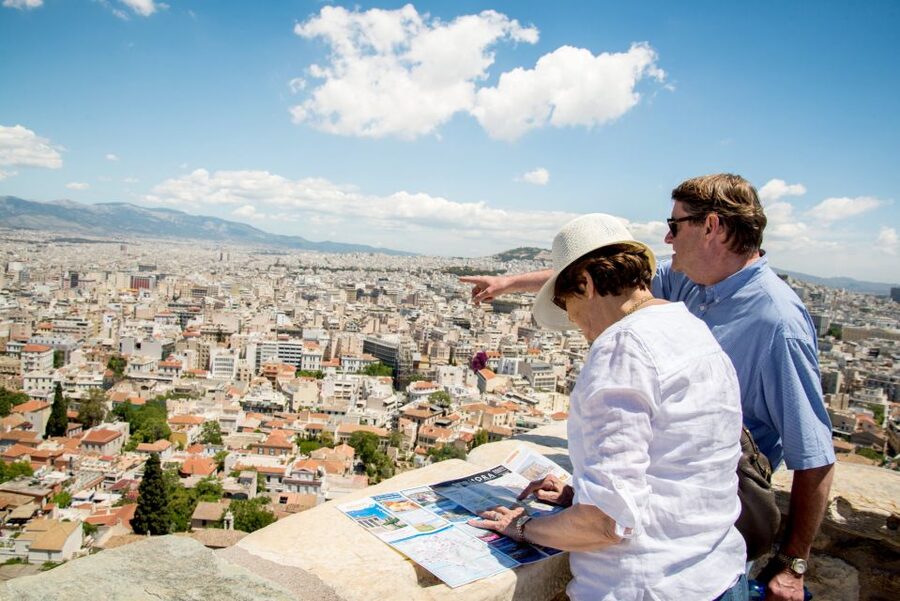
The Erechtheion is one of the most visually distinctive buildings on the Acropolis. Its irregular layout reflects the sacred importance of the ground and the different traditions associated with the site.
The Caryatids are the feature most people remember. These sculpted female figures support the porch roof in place of ordinary columns. You will see five original Caryatids in the Acropolis Museum, while the sixth is in the British Museum. The museum display gives you a much closer look than you can get at the hilltop porch.
This is a good moment to listen carefully, but also to pause. The tour allows time for photographs and independent viewing at several points. You are not expected to spend every minute looking only at the guide.
The Parthenon and the Golden Age of Athens
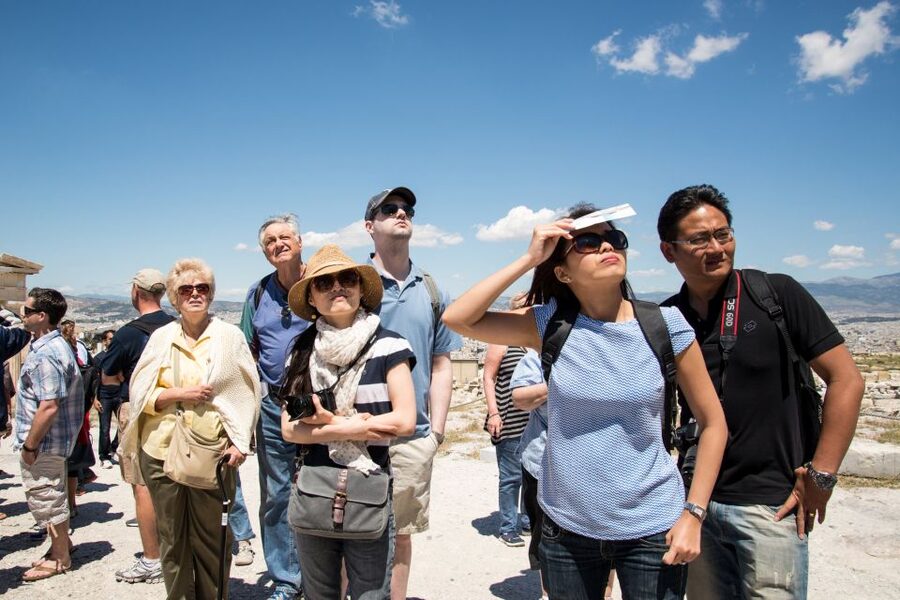
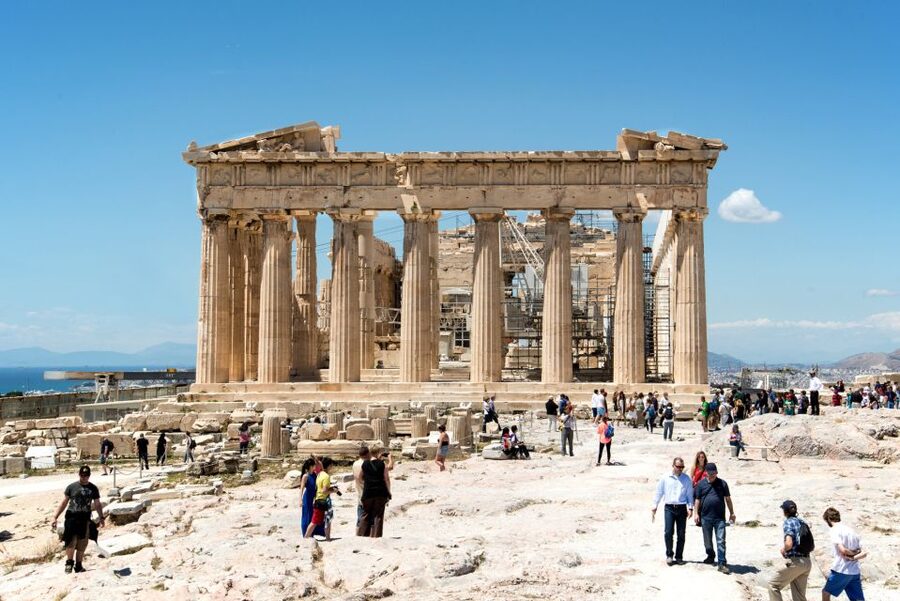
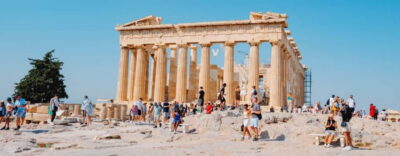
The Parthenon is the emotional center of the hill. Built in the fifth century BCE during the time of Pericles, it has come to symbolize democracy and Western civilization. Its current condition reflects centuries of change, damage, and loss, so the guide’s explanation is especially useful.
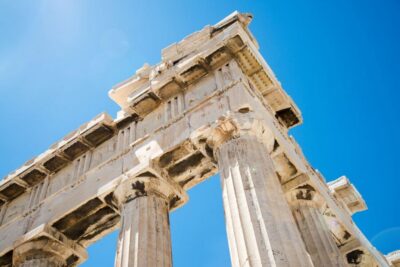
Do not expect a complete temple with its original decoration in place. What you see is a powerful ruin, with columns and architectural detail that still show the building’s precision. The missing pieces are part of the story, too, and the museum helps fill in what the hill cannot show.
Your guide may use a timeline or a simple sequence of stories to put the building in context. This is useful for first-time visitors who want more than dates, but it should not feel like a university lecture. The strongest part of the tour is the balance between explanation and time to take in the view.
The hill can become very crowded. Disposable earphones are provided for groups larger than eight, but sound quality can suffer when nearby groups use similar equipment. Staying close to your guide helps, especially around the busiest monuments.
A short break before the museum
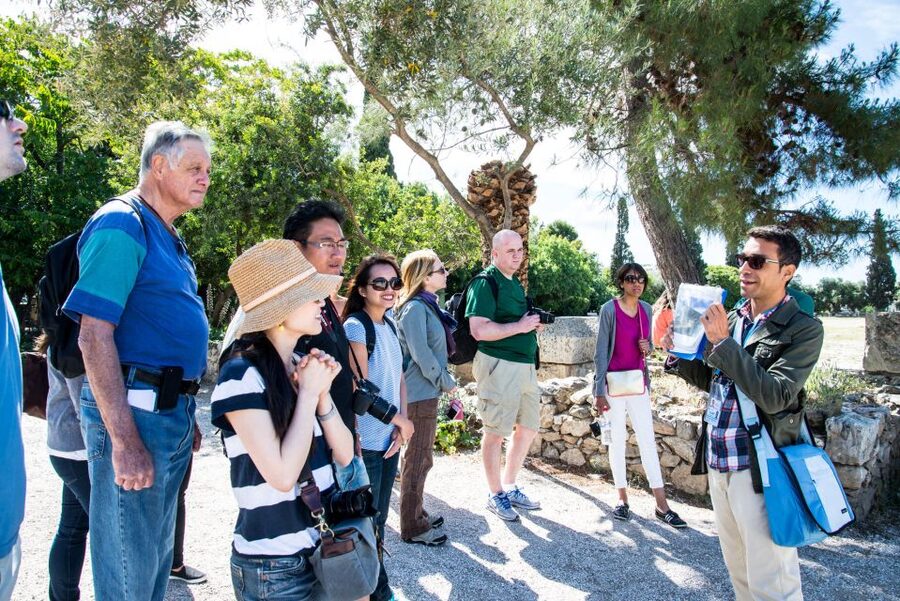
After the Acropolis, you get a brief pause before walking a few minutes to the museum. This break is practical rather than decorative. Use the bathroom, refill your water, get coffee if available, and let your legs recover.
The change in setting is welcome. The Acropolis is open, sunny, and physically demanding. The museum is controlled, spacious, and easier on the feet. Visiting both on the same tour gives you a useful contrast, though some people may find the total amount of information tiring.
If you prefer a slower visit, a private option gives you more control over questions and pacing. On a shared tour, the guide must keep the group together, so the experience may feel brisk at popular displays.
Inside the Acropolis Museum
The New Acropolis Museum is only a short walk from the archaeological site, but it feels entirely different. Its contemporary design uses glass and natural light to display original works from the temples above. Excavations beneath glass floors and walkways let you look into earlier layers of Athens while moving through the building.
The ground floor introduces aspects of everyday life. That helps balance the grand monuments with ordinary human activity. You are not only looking at temples and famous sculpture. You are also seeing clues about the people who lived, worshiped, worked, and gathered in ancient Athens.
On the first floor, the original Caryatids are a major stop. Their close placement allows you to study the faces, clothing, and carved details. Seeing five together in the museum also makes the missing sixth figure easier to understand.
The top floor is the museum’s showpiece. Here you find the Parthenon frieze and a recreation of the Parthenon arranged with a view back toward the actual hill. That pairing is one of the tour’s strongest ideas. You can look at the modern reconstruction, then turn toward the real building and connect the fragments to the structure they once decorated.
The museum is not a quick add-on. It contains enough material to fill a separate visit, and a single combined tour can feel full. John, who enjoyed the experience, felt the Acropolis and museum could be better handled as separate tours if you have extra time. I agree that dedicated museum visitors may want more hours, but the combined route is a smart introduction for a first visit.
What the $40 price means
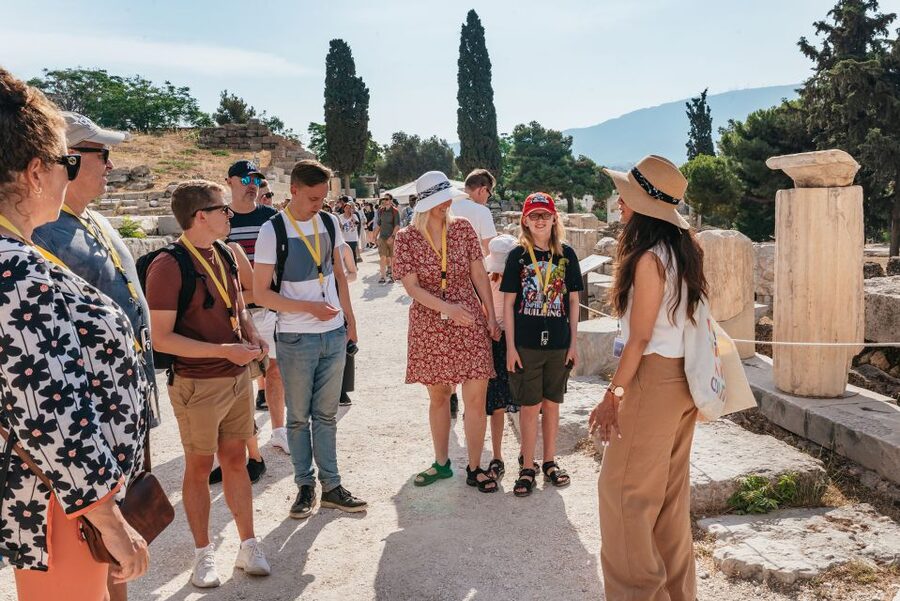
At about $40 per person, this is a reasonable price for a guided visit to two of Athens’ main cultural sites, especially if your selected option includes both entry tickets. You are paying for an English-speaking guide, organized access, historical explanation, and the convenience of moving from the Acropolis to the museum without planning the connection yourself.
Check the exact option before paying. Some choices include skip-the-line tickets for the Acropolis and museum ticket offices, while others do not include tickets. If you choose the option without tickets, buy Acropolis and museum entry in advance and confirm the correct time slots. If you arrive without advance tickets, full-price adult tickets may be available at the meeting point for cash, but that is a less convenient plan.
The phrase skip the line needs careful reading. There is no separate skip-the-line entrance to the Acropolis itself. The benefit applies to the ticket offices, and the museum option includes a separate entrance to the museum. You may still encounter security checks, site controls, or crowds.
For a private group, the value depends on your priorities. You pay more for privacy and a pace shaped around your group, but the standard shared option is likely the better bargain if you mainly want solid explanations and a clear route.
Practical preparation for the climb
Wear shoes with a firm grip. The site includes ancient stone, uneven surfaces, steps, and slopes. Bring water, a hat, and comfortable clothing. Large bags, luggage, baby strollers, and pets are not allowed.
The activity is not suitable for children under six, wheelchair users, or people with mobility impairments or heart problems. The elevator at Acropolis Hill is not included. Even an active older visitor may manage the route, but you should judge your own comfort with a sustained walk on uneven ground rather than relying only on age.
Weather can alter the feel of the tour. Heat makes the exposed hill harder, while rain can make stone slippery. Guides may change the order of stops to reduce discomfort or handle crowding. Leave some flexibility in your Athens schedule so you are not rushing to a meal, ferry, or other timed booking afterward.
If a child uses a reduced or child ticket, carry a passport or ID. Identification may be checked to confirm eligibility for a reduced or free ticket.
Who should book this experience
I would choose this tour if you want the major Acropolis sights explained in plain English and you also want to see the museum without arranging two separate visits. It suits first-time visitors, history lovers who prefer stories to guidebooks, and anyone with only part of a day in central Athens.
You should consider a private tour if your group asks many questions, includes mixed walking speeds, or wants more control over pauses. Choose the shared option if price matters most and you are comfortable keeping to a group schedule.
This is less suitable if you dislike guided visits, want several hours for careful museum study, or have difficulty with stairs and uneven ground. In those cases, a shorter or separately planned museum visit may be easier, but the Acropolis itself remains physically demanding.
Should you book the Acropolis and museum tour?
Book it if you want an efficient first look at Athens’ most important ancient site, with the Parthenon and its surviving art explained together. The guides are the heart of the experience, and the strongest feedback centers on clear English, engaging stories, useful pacing, and genuine enthusiasm for Athens.
I would leave extra time before or after the tour if you want to study every museum display. Wear practical shoes, confirm whether your ticket option includes admission, and do not assume skip-the-line access bypasses the Acropolis entrance itself. With those details understood, the $40 price offers good value for a well-organized introduction to the Acropolis and the museum beside it.
FAQ
How long does the tour last?
The activity is listed as lasting two to four hours, but you should plan for about three to four hours. The final length depends on the group’s pace and weather conditions.
Is the tour offered in English?
Yes. The live tour guide language is English.
Does the tour include both the Acropolis and Acropolis Museum?
Yes. The route visits the Acropolis hill and then continues to the Acropolis Museum, with a short break between the two sites.
Is there a skip-the-line entrance to the Acropolis?
No. There is no separate skip-the-line entrance to the Acropolis itself. Skip-the-line access applies to the ticket offices when included in the option you select.
Does the museum have a separate entrance for the tour?
Yes. The tour includes entry through a separate entrance to the Acropolis Museum when the relevant ticket option is selected.
Are entry tickets included in the price?
That depends on the option booked. Some options include Acropolis and Acropolis Museum tickets, while the without-tickets option requires you to arrange admission yourself.
What should I bring?
Bring comfortable shoes, a hat, water, and comfortable clothes. Large bags, luggage, strollers, and pets are not allowed.
Is the tour suitable for people with mobility problems?
No. The activity is not suitable for wheelchair users or people with mobility impairments or heart problems. Use of the elevator at Acropolis Hill is not included.
Can I cancel the tour?
Yes. You can cancel up to 24 hours in advance for a full refund. A reserve-now-and-pay-later option is also available.
Newly reviewed around Athens
- Feel Ancient thermal Spa Visit Delphi, Leonidas ℨoo Spaʀtan★ 5.0 · 4 reviews
- Food Tour★ 5.0 · 3 reviews
- Explore the Hidden Food Gems of Athens★ 5.0 · 57 reviews
- Food Experience in Athens including Unlimited Lunch★ 5.0 · 3 reviews
- Eat Your Way Through Athens: A Local Food Walk★ 4.9 · 97 reviews
- From Athens: Delphi Private Tour with Lunch Time★ 4.0 · 3 reviews
- Delphi: Spanish guided one day tour★ 4.6 · 55 reviews
- Early Entry Acropolis & Museum. Beat the Crowds & the heat★ 5.0 · 3 reviews
Athens Acropolis Tours, compared.
Acropolis & up to 5 Archaeological Sites Combo Pass
Read our review →
Acropolis, Parthenon & Acropolis Museum Guided Tour
Read our review →

Acropolis monuments & Parthenon Walking Tour with Optional Acropolis Museum
Read our review →
Athens All Included: Acropolis and Museum Guided Tour with Ticket
Read our review →Browse the lists this tour appears in