
Reviewed · ATHENS WALKING TOURS
Athens: Guided Mythological Walking Tour & Creation Stories
Athens has a second map beneath its modern streets, drawn by gods, heroes, rivalries, and strange family trees. This two-hour mythological walk uses that map to explain why Athena became tied to the city, how Poseidon entered the story, and why Theseus still belongs to Athens.
I like the clear focus and the small-group format. You get more than a list of gods: the guide connects mythology with ancient commerce, love, religion, street names, and building decoration. The main consideration is language. This is a Spanish-language tour, so it is not the right pick if you need English commentary.
- Athena and Poseidon: Follow the famous contest that shaped the city’s identity.
- Theseus in Athens: See how the legendary hero became linked to the capital.
- Myth in daily life: Learn how religion touched trade, romance, language, and public life.
- Ancient places and modern clues: Look for mythological references in buildings and street names.
- Small-group setting: A more personal format suits questions and conversation.
- Spanish-speaking guides: Juan Pablo and Pablo are among the guides praised for warmth, humor, and clear explanations.
Why Myth Gives Athens a Different Face
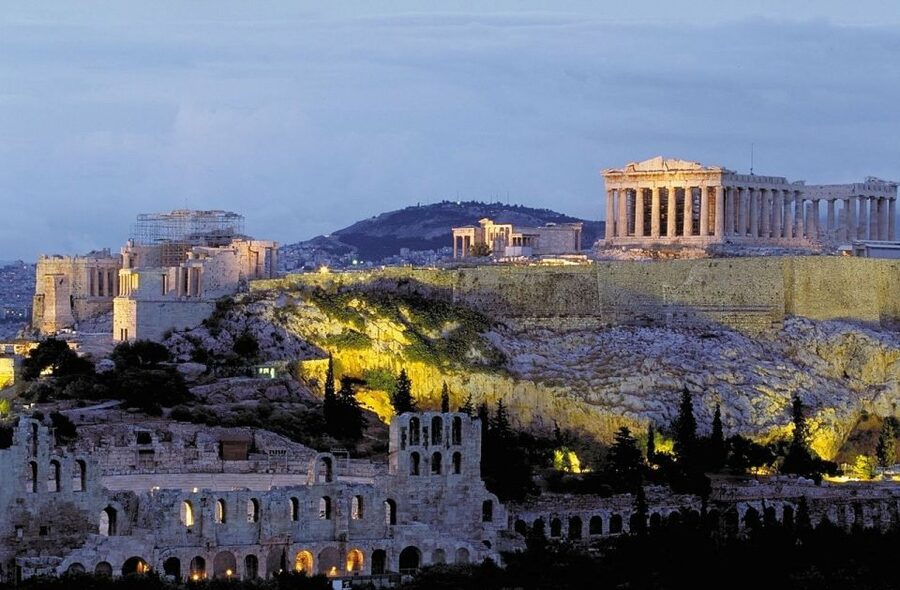
Many visitors first meet Athens through monuments, museums, and broad views of the Acropolis. Those are essential, but mythology gives you another way to read the city. Instead of seeing a building as only old stone, you start asking what story it carries and why a god or hero still appears in the city’s names and decoration.
I like this approach because it keeps the ancient world human. The stories are full of arguments, ambition, romance, jealousy, and family trouble. They may sound wild, but they also show how people in Ancient Greece tried to explain the forces around them and organize everyday life.
The focus is not only on the best-known Olympians. You hear how religion shaped commerce and love affairs, along with ideas and expressions that still reach the modern world. That wider view gives the walk more substance than a simple retelling of childhood myths.
The tour begins at the stairs in front of the Academy. This is a useful central meeting point because the group can start with a major cultural setting rather than a random corner of the city. The exact route and individual stops are not specified, so you should think of this as a guided story walk through central Athens, not a fixed monument-by-monument admission tour.
Starting at the Academy Stairs
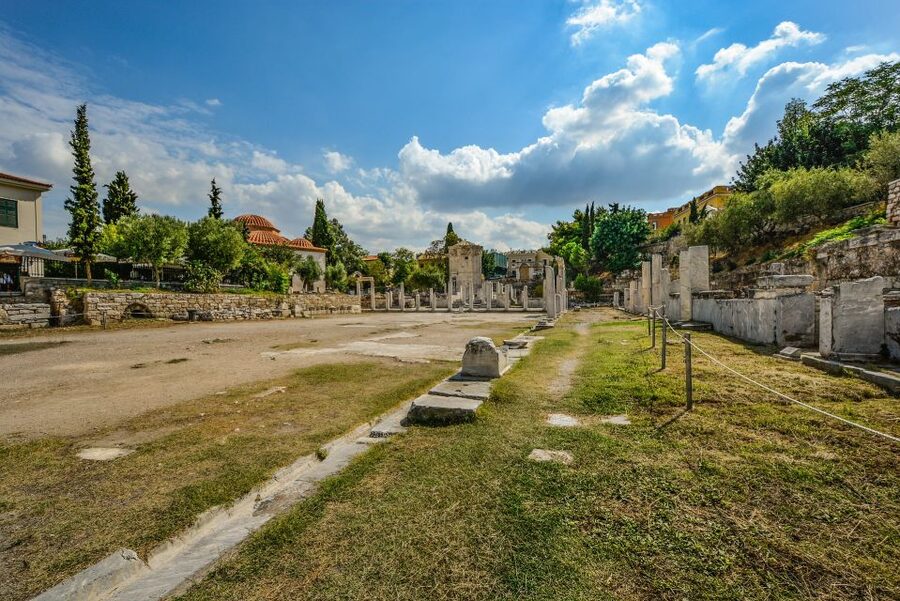
Arrive at the stairs in front of the Academy with a little time to spare. The meeting place is specific, but Athens can be confusing if you are watching traffic, reading signs, or looking for the wrong entrance. The instruction refers to the stairs, so check the precise meeting details on your booking before setting out.
The Academy provides a fitting opening point. Its architecture and public role help set the mood for a tour about Greek thought, culture, and the ancient world. The activity description does not promise entry inside the building, so plan to view the setting as part of the walk rather than expect an indoor visit.
This is also where the guide can establish the basic idea of the tour: mythology is not a separate fantasy world placed beside Athens. It is woven into the city’s names, images, customs, and sense of identity.
A heritage interpreter leads the experience. That wording matters. You are not simply getting directions between monuments. You are getting context, interpretation, and a story that links what you see around you with the beliefs behind it.
More walking tours in Athens:
- Athens: Acropolis and Parthenon Guided Walking Tour
★ 4.6 · 5,882 reviews - Greek Food Walking Tour in Athens
★ 5.0 · 4,740 reviews - Acropolis: Acropolis and Parthenon Guided Walking Tour
★ 4.7 · 3,442 reviews
Athena and Poseidon Shape the City
The central story is the connection between Athena and Poseidon. Their rivalry gives the city a memorable origin tale and helps explain why Athens is so closely tied to the goddess Athena.
The guide brings you closer to the legend rather than treating it as a dry genealogy. You can expect the story to be used as a key for understanding the city’s character, symbols, and ancient identity. The exact details of the contest are not laid out in the tour information, so the guide’s telling will shape how much background and interpretation you receive.
I like this part of the walk because it turns a famous name into a city-wide theme. Athena is not just a figure in a textbook or a statue. Her presence helps explain why the city carries her name and why she remains central to Athens’ cultural image.
Poseidon adds a useful counterpoint. Greek mythology often works through competing powers, and this story lets you see how a city could explain its own special protection through divine conflict. You are not just memorizing who is related to whom. You are considering how myth gave Athens a reason for being Athens.
Theseus and the Heroic Side of Athens
The walk also follows the link between Theseus and Athens. Theseus is one of the great heroes of Greek mythology, and his connection to the city gives the tour a different tone from the stories of the gods.
Athena and Poseidon represent divine power. Theseus brings in the human hero, with all the courage, danger, and complications that come with that role. The guide uses his place in the city’s story to show how Athens remembered its heroes and tied them to civic identity.
You should not expect a full treatment of every Theseus legend in two hours. The tour has a broad theme, and the information provided does not name a particular monument or episode as a stop. Still, this part gives useful balance. The city is not explained only through gods on Mount Olympus. It is also explained through the people and heroes who became part of its public memory.
That combination suits first-time visitors who know the famous names but want help connecting them. If your knowledge of Theseus begins and ends with a maze and a minotaur, you will get a wider sense of why the hero mattered to Athens.
Gods in Street Names and Building Details
One of the most appealing promises of this experience is the search for mythology in ordinary city details. The gods of Olympus have left marks on building decoration and street names, and the guide points out those references as you walk.
This is where a walking tour earns its place. A guide can direct your eyes to details you might pass without noticing. You may look at a façade, a name, or a symbol and understand it as part of a much older conversation between modern Athens and Ancient Greece.
The tour information does not list each building or street in advance. That is worth noting if you want a tightly itemized sightseeing plan. You will not be able to use the description as a checklist of guaranteed monuments. Instead, the value comes from the guide’s selection and explanation on the day.
I prefer that kind of flexible interpretation for a mythology walk. The goal is not to rush from one famous sight to the next. It is to notice how stories survive in public spaces. The city becomes easier to read once you know what a figure, name, or decoration may refer to.
A different kind of day out from Athens:
- Athens: Acropolis & up to 5 Archaeological Sites Combo Pass
★ 4.4 · 12,619 reviews - Athens: Acropolis Ticket with Optional Audio or Live Guide
★ 4.2 · 11,055 reviews - Athens: Acropolis, Parthenon & Acropolis Museum Guided Tour
★ 4.8 · 9,316 reviews - Athens: Cape Sounion & Poseidon Temple Sunset Half-Day Trip
★ 4.8 · 8,241 reviews
Religion in Trade, Romance, and Daily Life
The strongest part of the concept may be its broad look at religion. In Ancient Greece, religious ideas touched far more than temples and sacrifices. They shaped how people understood commerce, love affairs, social behavior, and the world around them.
That context keeps the tour from becoming a parade of amusing myths. You hear how religious belief reached into daily decisions and public life. You also learn how ancient concepts and expressions have continued into modern language and culture.
This is useful for you if mythology has always felt like a set of disconnected stories. The guide’s job is to show the system behind them: gods with particular roles, heroes with civic meaning, and stories that helped people explain both nature and human behavior.
A two-hour tour cannot cover every part of Ancient Greek religion. It can, however, give you a frame for the rest of your time in Athens. Afterward, a statue or temple reference may make more sense because you know the basic relationships and themes.
What the Spanish-Language Format Adds
This experience is conducted in Spanish, with a live guide and a heritage interpreter. If Spanish is your comfortable language for complex stories, that can make a real difference. Mythology includes names, family links, symbols, and wordplay that are easy to lose when you are working through a second language.
The tone also seems designed for conversation. Juan Pablo was praised for being prepared, friendly, funny, and genuinely enthusiastic about mythology and Athens. Pablo was also praised for giving a highly informative visit and making his interest in the work clear. Those details suggest a guide-led experience with personality rather than a recorded script.
The high overall rating, 4.8 from 46 reviews, supports the idea that the guide quality is a major strength. I would still keep expectations sensible. Guide assignments can vary, and the available information does not guarantee Juan Pablo or Pablo for every departure.
Small groups are another plus. The exact group limit is not provided, but the tour is specifically presented as a small-group activity. That usually matters most on a story-based walk, where you want to hear the guide clearly and have room to ask about a confusing myth or unfamiliar name.
Is Two Hours Enough?
Two hours is a good length for an introduction. You get a focused experience without giving up most of a morning or afternoon. It can fit well near the start of an Athens visit, when you want a cultural framework before exploring on your own.
The short format also keeps the stories from becoming too much to hold in your head. Greek mythology has a large cast and plenty of overlapping family lines. A guide can give you the key stories, connect them to the city, and leave you with enough curiosity to explore further.
The trade-off is depth. You will not receive a full course in Greek religion or a complete survey of every Athenian myth. If you want detailed archaeological analysis, long museum time, or access to a specific ancient site, this is not that kind of activity.
Think of it as a city walk with a strong theme. It works best when you want interpretation on the streets, not an admission ticket to a single monument.
What You Pay for at $28
At $28 per person, the price is reasonable for a two-hour guided experience, especially if you value a live Spanish-speaking interpreter and a small-group setting. The real value lies in the guide’s ability to connect scattered clues across the city. Without that explanation, a street name or decorative figure may mean very little.
You are not paying for entry to a major archaeological site, transportation, or a meal. The listed inclusion is the accompanying heritage interpreter, so judge the price as payment for guided interpretation rather than a package of extras.
I would book it if you enjoy stories, cultural context, and walking through a city with a theme in mind. I would compare other options if your priority is seeing as many monuments as possible or receiving commentary in English.
The reserve-now, pay-later option makes it easier to hold a place while your plans settle. Free cancellation is available up to 24 hours before the activity for a full refund. Those terms are practical when you are building an Athens schedule around weather, arrival times, or other tours.
Who Will Enjoy This Walk Most
I recommend this tour to you if you already like mythology, want a clear introduction to Athens, or prefer cultural stories to a list of dates. It should also suit families with older children who know some of the gods from books or films and want to see how those figures connect with a real city.
Spanish-speaking couples, friends, and solo visitors are the natural audience. The social tone described by the guide feedback also makes it appealing if you like asking questions and chatting during a walk.
You may want something else if you need English, dislike walking tours, or want a precise list of stops before booking. The route details are limited, and the experience is built around the guide’s storytelling rather than a published monument checklist.
Wear comfortable shoes and bring your curiosity. The tour lasts two hours, and its value depends on paying attention to the city around you. You do not need to be a mythology expert. In fact, the tour makes the most sense when you know the famous names but want help putting them together.
Should You Book the Athens Mythology Walk?
Book it if you want Athens explained through Athena, Poseidon, Theseus, and the gods whose names still appear around the capital. The mix of mythology, ancient culture, street details, and daily life gives the walk more range than a simple retelling of legends.
The strongest reasons to choose it are the Spanish-language guide, the small-group format, and the chance to connect modern Athens with its ancient stories. The guide personality matters here, and Juan Pablo and Pablo have been praised for warmth, humor, preparation, and clear information.
Skip it if you need an English tour, a guaranteed named guide, or a detailed archaeological itinerary with fixed stops. For the right audience, though, $28 buys a lively way to get your bearings in Athens and see the city as the home of a goddess, a rival god, and a very memorable hero.
FAQ
Where does the tour meet?
The group meets at the stairs in front of the Academy in Athens.
How long does the tour last?
The walking tour lasts two hours.
What language is the tour in?
The live tour is conducted in Spanish.
How much does the experience cost?
The listed price is $28 per person.
Is the tour led by a live guide?
Yes. A live Spanish-speaking guide and accompanying heritage interpreter lead the walk.
Is this a small-group tour?
Yes. The experience is described as taking place in small groups, though an exact group size is not provided.
Which mythological figures are covered?
The walk focuses on Athena, Poseidon, and Theseus, along with other gods and stories connected with Athens.
Does the tour discuss everyday Ancient Greek life?
Yes. The guide discusses how religion shaped areas such as commerce, love affairs, concepts, and expressions that have continued into the modern world.
Can I cancel for a full refund?
Yes. You can cancel up to 24 hours in advance for a full refund.
Can I reserve now and pay later?
Yes. The activity allows you to reserve your place and pay later.
Newly reviewed around Athens
- Feel Ancient thermal Spa Visit Delphi, Leonidas ℨoo Spaʀtan★ 5.0 · 4 reviews
- Food Tour★ 5.0 · 3 reviews
- Explore the Hidden Food Gems of Athens★ 5.0 · 57 reviews
- Food Experience in Athens including Unlimited Lunch★ 5.0 · 3 reviews
- Eat Your Way Through Athens: A Local Food Walk★ 4.9 · 97 reviews
- From Athens: Delphi Private Tour with Lunch Time★ 4.0 · 3 reviews
- Delphi: Spanish guided one day tour★ 4.6 · 55 reviews
- Early Entry Acropolis & Museum. Beat the Crowds & the heat★ 5.0 · 3 reviews
Athens Walking Tours, compared.

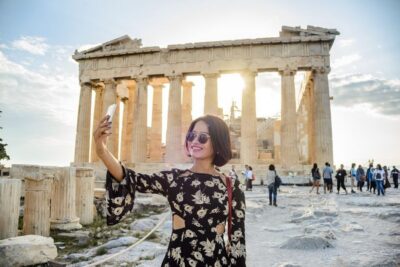
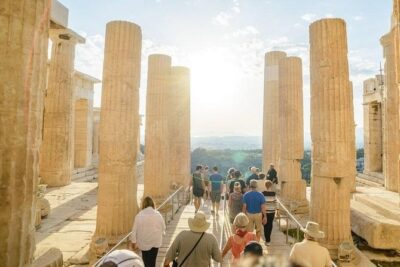
Acropolis monuments & Parthenon Walking Tour with Optional Acropolis Museum
Read our review →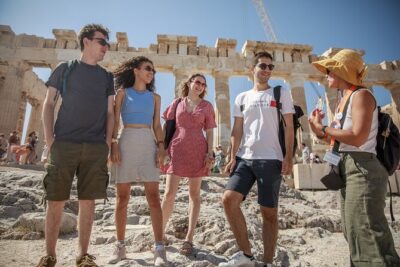

Athens Authentic Greek Food Walking Tour (Small Group)
Read our review →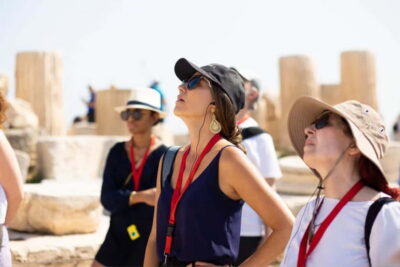
Early Morning Acropolis & Old Athens Guided Walking Tour
Read our review →
Browse the lists this tour appears in