
Reviewed · ATHENS WALKING TOURS
Athens: Guided Mythological Walking Tour
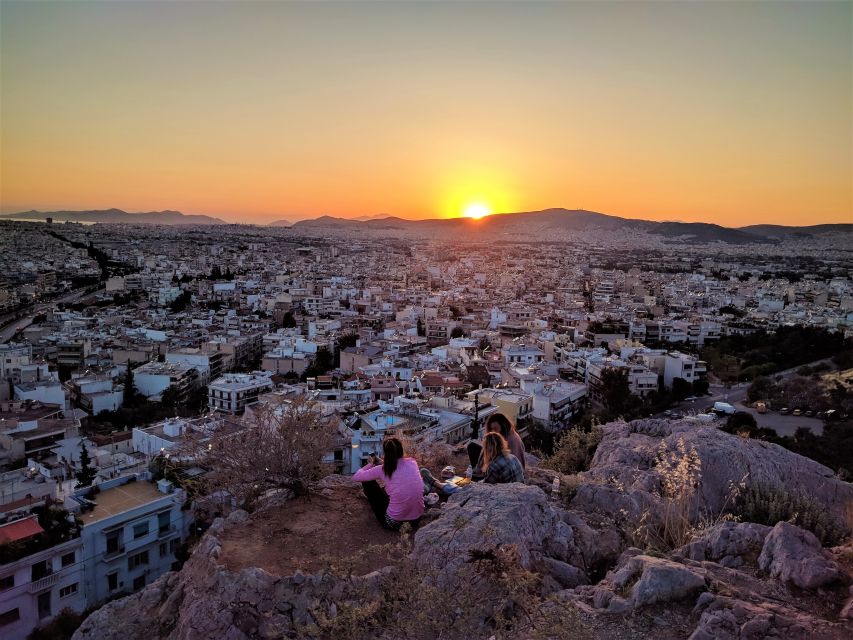
Athens reveals its wildest side when you look past the marble and hear the stories of jealousy, seduction, revenge, and divine punishment behind it. This two-hour mythology walk links gods, heroes, satyrs, and nymphs with the streets and monuments you might otherwise pass without a second glance.
I like the route for two reasons: it gives you a useful walk from central Athens to Monastiraki, and it explains how myths connect with daily Greek life, customs, philosophy, and art. The possible catch is that the guide can pack in a lot of names and stories, so this suits curious listeners better than anyone seeking a light, short stroll.
Key points to know before you book
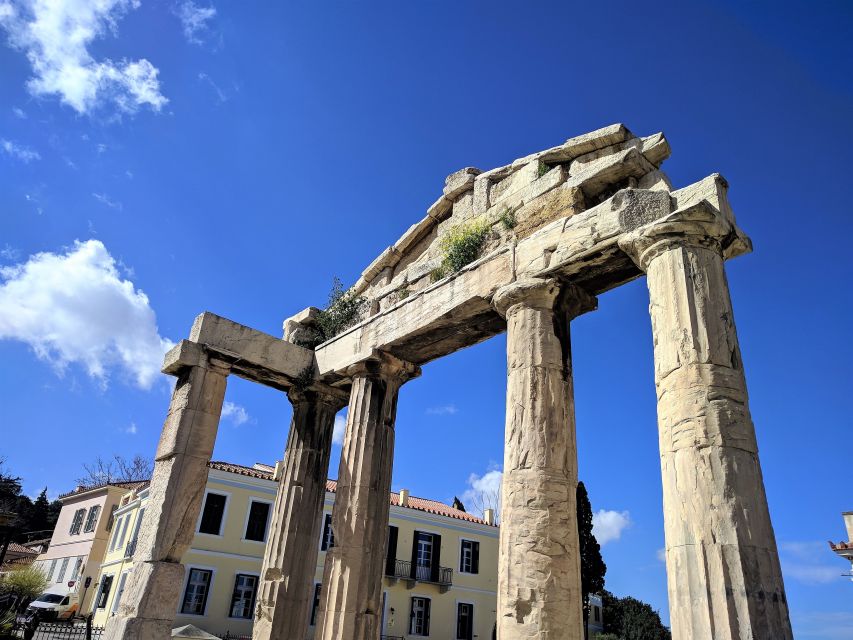
- A story-led route across central Athens: Walk from Korai 4 to Monastiraki through the Academy area, Syntagma, Mitropoleos, and Plaka.
- Myth meets city life: Learn how gods and legends relate to statues, architecture, social customs, and ancient Athenian routines.
- Penelope is a frequent guide: She is praised for clear English, humor, strong storytelling, and keeping children involved. Christina has also led the tour.
- A good family option: Children around 8 to 11 and teenagers have enjoyed the stories, though the material can be fairly detailed.
- No archaeological admissions are included: You see monuments and sites along the walk, but entry tickets, meals, and hotel transfers are not part of the price.
- Bring sensible walking gear: Comfortable shoes, water, and a hat matter, especially in Athens heat.
Athens mythology walking tour at a glance

This is not an archaeological-site tour with long explanations beside one major ruin. It is a moving conversation about Athens, with mythology as the thread tying the city together.
You meet your English-speaking guide in front of the Starbucks cafe at Korai 4. From there, the route heads toward the Academy of Athens, the Numismatic Museum area, Akadimias, Syntagma Square, Mitropoleos, Plaka, and finally Monastiraki.
The advertised price is $47 per person. I consider that fair if you want a personal guide to explain the city rather than simply point out buildings. You are paying for two hours of live storytelling and interpretation, not for admission to an attraction. If you already know Greek mythology well and prefer to explore alone, the value may be less clear.
The walk is conducted in English and has a reported rating of 4.9 from 125 reviews. Guides have included Penelope and Christina, with Penelope receiving especially warm praise for her ability to connect myths, history, buildings, and questions from the group.
More walking tours in Athens:
- Athens: Acropolis and Parthenon Guided Walking Tour
★ 4.6 · 5,882 reviews - Greek Food Walking Tour in Athens
★ 5.0 · 4,740 reviews - Acropolis: Acropolis and Parthenon Guided Walking Tour
★ 4.7 · 3,442 reviews
Starting at Korai 4 and finding the group
The meeting point is in front of Starbucks cafe at Korai 4. That is a practical central location, but give yourself enough time to identify the exact cafe and guide before the start. The supplied details do not mention hotel pickup, so you need to reach the meeting point yourself.
This is a walking tour from the first minute. Wear shoes you can use comfortably for two hours on city streets. Take water, and in warm months bring a hat. Several participants appreciated guides who looked for shade and allowed short pauses during hot weather, but you should still plan for Athens sun.
Group size can vary. Some departures have been intimate, even with only two people, while others have included families and young people. A smaller group gives you more room to ask questions and may make the experience feel almost private. A larger group can bring more conversation, but you will need to stay close enough to hear the guide.
The Academy of Athens: myths in the city’s public face
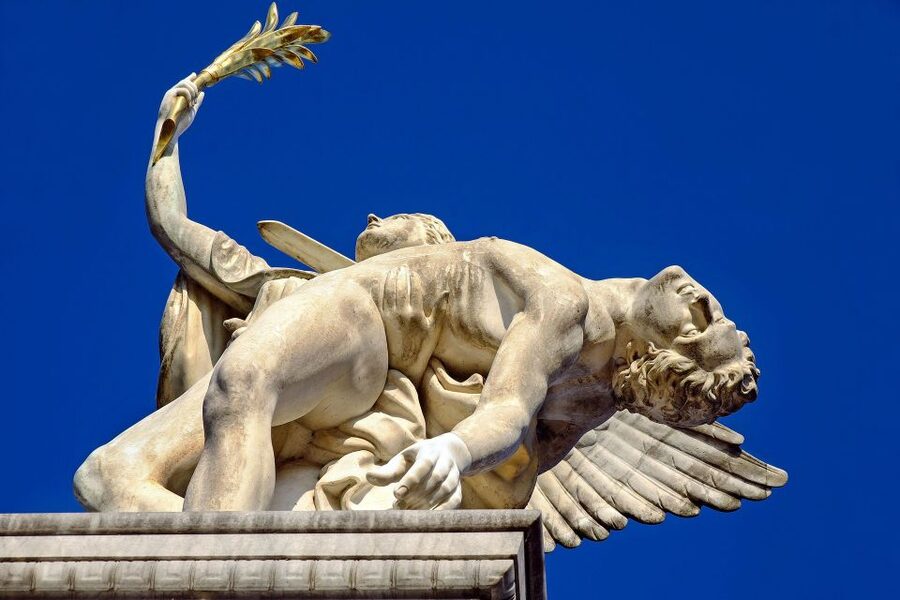
The first major stop is the Academy of Athens, reached after about a 20-minute walk. This part of the route helps shift your attention from modern central Athens to the symbolic world of the city.
Expect the guide to use architecture, statues, and public spaces as prompts for stories about the gods. The point is not only to repeat familiar tales about Zeus or Athena. You learn how ancient ideas about divine power, human behavior, pride, love, and punishment appear in the visual language around you.
This is one of the tour’s most useful features. A mythology lesson in a book can feel remote. A story connected to a statue or building is easier to remember because you have a physical place in front of you. Guides also explain details that are easy to overlook, which can change how you read the rest of Athens after the tour.
Do not expect entry into the Academy or a formal museum visit. The focus is the city outside, and archaeological-site entrance is not included.
The Numismatic Museum area and the value of small details
The walk continues toward the Numismatic Museum, with about 15 minutes of walking listed for this section. Even if you are not interested in coins, this stop matters because it broadens the tour beyond famous gods and dramatic myths.
Greek mythology is tied to power, kingship, trade, symbols, and public identity. Looking at a city through those ideas helps you understand why certain figures appear on buildings, monuments, and objects. Your guide may also point out details that have little sign or explanation for a passerby.
This is where the tour can feel more like a lesson in cultural history than a simple collection of entertaining tales. One participant described the experience as connecting mythology with philosophy and imagery. That gives you an idea of the level: the guide may explain not just what happened in a myth, but what the story says about human behavior and the society that preserved it.
If you want a quick walk with only the most famous stories, this section may feel dense. If you enjoy literature, anthropology, or the way old ideas shape modern culture, it is likely to be one of the stronger parts.
A different kind of day out from Athens:
- Athens: Acropolis & up to 5 Archaeological Sites Combo Pass
★ 4.4 · 12,619 reviews - Athens: Acropolis Ticket with Optional Audio or Live Guide
★ 4.2 · 11,055 reviews - Athens: Acropolis, Parthenon & Acropolis Museum Guided Tour
★ 4.8 · 9,316 reviews - Athens: Cape Sounion & Poseidon Temple Sunset Half-Day Trip
★ 4.8 · 8,241 reviews
Akadimias and the walk toward Syntagma Square
The itinerary then passes along Akadimias, with roughly 20 minutes of walking before Syntagma Square. This is a useful transition because you are not confined to a single monument. You see how Athens changes as the route moves through central streets and public spaces.
The guide’s role here is to keep the stories connected to what you see. Gods and heroes are not treated as isolated characters. Their relationships, rivalries, affairs, and punishments become a way to discuss Greek ideas about family, authority, desire, justice, and fate.
The tour can also help you get your bearings. One family who took it early in their stay found that the route gave them a useful overview of Athens. That is a good reason to book it near the beginning of your visit, particularly if you want context before exploring the Acropolis area and other major sights on your own.
You should not mistake this for a complete orientation tour. It is built around mythology, not public transport, restaurants, or a full guide to every neighborhood. Still, you finish with a clearer sense of how several central areas fit together.
Syntagma Square: from gods to the modern city
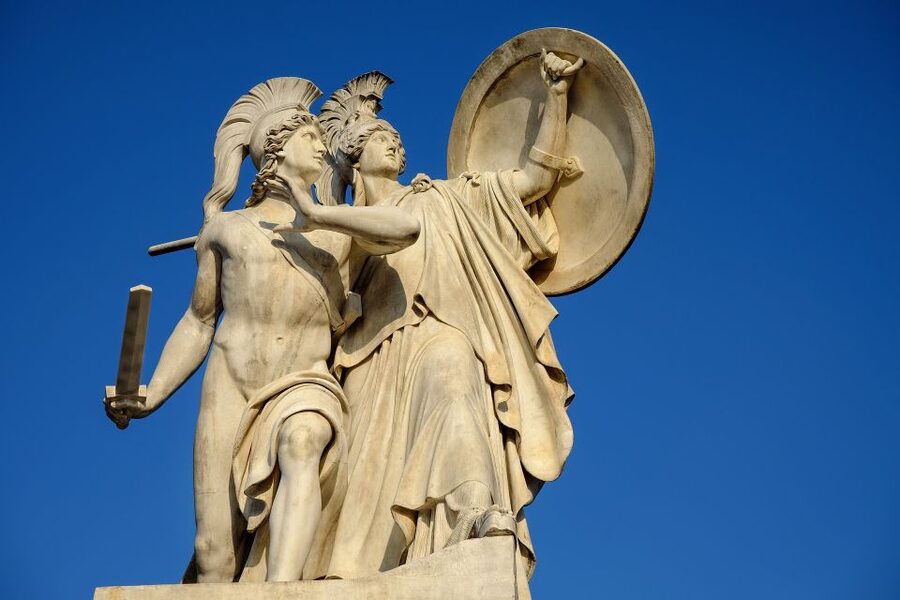
Syntagma Square is the next major stop, after about 20 minutes of walking. It gives the tour a broad urban setting and a chance to connect ancient ideas with the modern capital.
The best guides make this connection without pretending ancient Athens and present-day Athens are the same. Instead, you see how old stories continue to appear in names, symbols, art, and public memory. The guide may also explain how human beings were viewed in relation to the gods, a theme that runs through the tour.
This part may be especially helpful if you have already walked through central Athens but felt you were seeing separate buildings without a larger story. The tour offers a lens for linking monuments, statues, and streets.
The open square can be exposed to sun, so time of day matters. Your guide may find shade where possible, but bring water and do not rely on the walk itself to provide cool conditions.
Mitropoleos and the shift into older Athens
From Syntagma, the route continues through Mitropoleos, with about 15 minutes of walking. Here, the city begins to feel more layered, and the tour moves toward the older neighborhoods that many people associate most strongly with central Athens.
This is a good place to pay attention to the guide’s style. Penelope is often praised for explaining complicated family trees and myths in clear English, while keeping a sense of humor. That matters because Greek mythology can quickly become a maze of repeated names, marriages, transformations, and rivalries.
You may hear stories involving Zeus and other Olympian gods, along with satyrs and nymphs. The emphasis is not simply on heroic victories. The tales include deception, desire, jealousy, and divine punishment, which makes them surprisingly human despite their supernatural setting.
The guide also discusses social customs and ordinary life. That balance keeps the walk from becoming a parade of gods. You are encouraged to think about how ancient Athenians lived, what they valued, and how their stories reflected the rules and tensions of their society.
Plaka: the most atmospheric part of the walk
The route spends about 30 minutes walking through Plaka before finishing at Monastiraki. This is the longest section and likely the most atmospheric part of the experience.
Plaka’s smaller streets make a natural setting for stories about gods, lovers, heroes, and strange transformations. Your guide can point out monuments, statues, and architectural details that you might otherwise miss. Several people who had already spent days in Athens still found places they had walked past without noticing.
I like this section because it turns Plaka into more than a pleasant place for a wander. You begin to see the neighborhood as a collection of visual clues. A figure in stone, a decoration on a building, or a familiar name can lead back to a story about the gods and the ancient city.
Families should pay attention here. Children and teenagers have responded well when the guide tells the stories with energy and humor rather than presenting a list of dates. Penelope has been praised for making young participants feel included and for adjusting the pace in hot weather.
Still, the storytelling can be substantial. You may hear several versions, connections, and side details in a short time. Ask questions if you need the thread repeated. A small group makes this easier, and the guide’s willingness to follow up on questions has been an appreciated part of the experience.
Finishing at Monastiraki

The walk ends at Monastiraki after about 30 minutes through Plaka. This is a convenient finish for continuing your day on foot, although the tour does not include onward transport or hotel drop-off.
Ending here gives you a natural place to keep exploring central Athens, but the tour itself does not provide a meal. Food and drinks are not included, so plan your next stop separately.
The route is also useful because it does not simply return you to the starting point. You travel across several central districts and finish in a different part of the city. That makes the tour feel like both a mythology lesson and a practical walk through Athens.
How much mythology do you really get?
You get more than a few famous stories about Zeus, Athena, and Hercules. The guide may take you through the origins of the gods, the arrival of humans, divine relationships, and the behavior of satyrs and nymphs.
The central appeal is the way the stories are connected. You hear about gods and lovers, then see how those themes appear in art and architecture. You learn about deception and punishment, then consider what those ideas meant in ancient society. The result is not a simple list of myths. It is a guided way to read Athens.
That also explains the main drawback. This is not always a breezy story walk. Some people found the material quite in-depth, with links to philosophy, literature, and cultural change. If you want only an entertaining introduction, the amount of information may feel like work. If you enjoy asking why a myth survived and what it reveals about people, you will probably appreciate the detail.
Is the $47 price good value?
At $47 per person, the tour offers a reasonable value for an English-speaking, two-hour guided walk if you want interpretation rather than admission tickets.
You are not paying for entry to archaeological sites, meals, or transportation. The value comes from having a guide connect scattered details across the city and answer questions as you walk. That can save you from seeing Athens as a string of disconnected monuments.
I would book it if you are interested in Greek mythology, ancient society, literature, or symbolism. I would also consider it for a family because the stories give children a reason to look closely at statues and buildings. For a mythology enthusiast, the tour may still offer new connections, even if you already know the main characters.
I would skip it if you dislike long explanations, want an inside visit to major monuments, or prefer to set your own pace. Two hours is not long, but a story-heavy walk can feel full.
Best time to take this Athens mythology tour
Taking the tour early in your stay makes sense. It can give you a framework for later visits to Athens sights, and you may start noticing mythological references that would otherwise pass unnoticed.
Warm weather deserves planning. Bring water, a hat, and comfortable shoes. Guides have made efforts to use shade and take pauses, but Athens can be hot, and much of the experience takes place outdoors.
The route is also worth considering in low season. Smaller groups can make the walk more personal and give you more time to ask questions. That is not guaranteed, but the tour has sometimes operated with only two people.
Who should book it?
You should book this tour if you want:
- Greek myths tied to real streets, statues, and buildings
- A guide who can explain history and social customs alongside legends
- A family-friendly activity with material that can engage older children and teenagers
- A central Athens walk that finishes at Monastiraki
- Time for questions and conversation, especially if your group is small
- A different angle on places you may already have visited
You may want another activity if you need wheelchair or mobility details that are not provided, want archaeological-site admissions included, or prefer a short introduction with very little background.
Should you book the Athens Mythological Walking Tour?
Book it if you want Athens to make more sense as a living story rather than a collection of ruins and photo stops. The strongest part is the guide’s connection between mythology, art, architecture, and daily life. Penelope, in particular, has been praised for her clarity, humor, enthusiasm, and ability to involve children, while Christina has also led engaging versions of the walk.
The main question is your appetite for detail. You will hear plenty of names, relationships, and ideas in two hours. Bring water, wear good shoes, and ask questions when the family tree gets tangled. For curious families, mythology fans, and anyone who wants to notice more on the streets of Athens, $47 is a sensible price for this story-rich introduction.
FAQ
Where does the Athens Mythological Walking Tour start?
The tour starts at Korai 4, in front of the Starbucks cafe.
Where does the tour finish?
The walk finishes in Monastiraki after passing through central Athens and Plaka.
How long does the tour last?
The tour lasts two hours.
What language is the tour conducted in?
The live tour guide speaks English.
Are archaeological-site entrance tickets included?
No. Entrance to archaeological sites is not included in the tour price.
What should I bring?
Wear comfortable clothes and shoes. Water and a hat are also sensible, especially during hot weather.
Newly reviewed around Athens
- Feel Ancient thermal Spa Visit Delphi, Leonidas ℨoo Spaʀtan★ 5.0 · 4 reviews
- Food Tour★ 5.0 · 3 reviews
- Explore the Hidden Food Gems of Athens★ 5.0 · 57 reviews
- Food Experience in Athens including Unlimited Lunch★ 5.0 · 3 reviews
- Eat Your Way Through Athens: A Local Food Walk★ 4.9 · 97 reviews
- From Athens: Delphi Private Tour with Lunch Time★ 4.0 · 3 reviews
- Delphi: Spanish guided one day tour★ 4.6 · 55 reviews
- Early Entry Acropolis & Museum. Beat the Crowds & the heat★ 5.0 · 3 reviews
Athens Walking Tours, compared.

Acropolis monuments & Parthenon Walking Tour with Optional Acropolis Museum
Read our review →

Athens Authentic Greek Food Walking Tour (Small Group)
Read our review →
Early Morning Acropolis & Old Athens Guided Walking Tour
Read our review →
Browse the lists this tour appears in