
Reviewed · ATHENS ACROPOLIS TOURS
Ancient Athens tour: Acropolis, Parthenon and Acropolis Museum
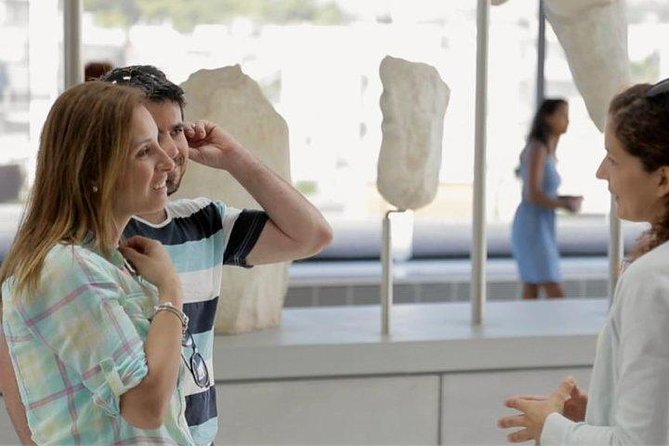
The best part of this four-hour Athens tour is the link between the Acropolis itself and the Acropolis Museum. You first see the Parthenon, Caryatids, theaters, and ancient gateways in place, then examine the sculptures and objects indoors, where the details are easier to understand. Guides such as Giannas, Selena, Alexia, Lydia, and John the archaeologist have been singled out for clear explanations, humor, and good group care.
I like the licensed guide and the group size, which is capped at 20 people. I also like the early 9 a.m. start, bottled water, and the chance to hear the guide through provided earpieces in noisy areas. The main catch is the walking surface and heat: the climb is moderate, some stone is slippery, and entrance tickets may cost extra unless you choose the ticket option.
Key points to know before booking
- Two essential Athens sights in one morning: See the Acropolis monuments, then spend about an hour in the Acropolis Museum.
- A small group with a licensed guide: Groups can include up to 20 people, with guides assigned by the operator.
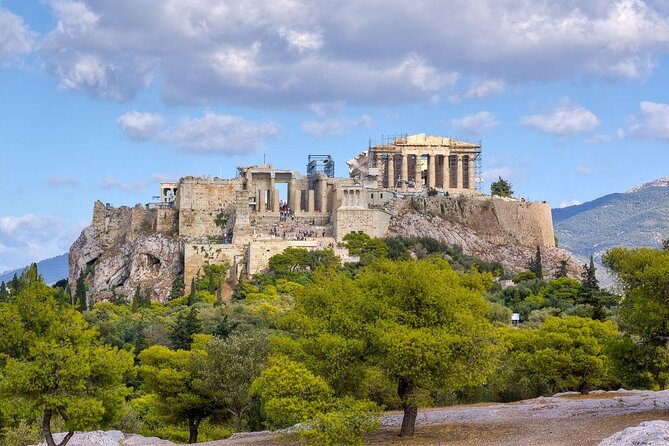
- The Parthenon is only part of the visit: You also see the Theater of Dionysus, Herod Atticus Odeon, Propylaea, and Erechtheion.
- The climb needs sensible planning: Wear shoes with a firm grip, bring sunscreen, and use the supplied water.
- Ticket choice matters: The listed price is $72.59 per person, but Acropolis and museum admission may be separate.
- Early timing helps: Starting at 9 a.m. can mean less heat and fewer people than later in the day, though the site can still be busy.
Why the Acropolis and museum belong together
You can visit the Acropolis on your own and see the famous outline of the Parthenon. What you may miss is how the site worked as a religious center, theater district, civic symbol, and long-running building project. A good guide turns scattered columns and worn marble into a connected story.
That connection continues at the Acropolis Museum. The museum holds objects found on the Acropolis and its slopes, from the Greek Bronze Age through Roman and Byzantine periods. Its displays give you a closer look at sculpture, architectural decoration, and smaller objects that are easy to overlook outside.
I especially like the order of this experience. You stand among the monuments first, then see related pieces under controlled indoor conditions. The museum visit is guided for about an hour, and you may then remain on your own to look longer if your schedule allows.
The timing is compact. Four hours is enough for a strong first visit, but not enough for a slow, scholarly examination of every gallery or a long period alone on the rock. If you want to photograph every angle of the Acropolis at leisure, you may find the guided pace a little tight.
More ways to see the Acropolis:
- Athens: Acropolis & up to 5 Archaeological Sites Combo Pass
★ 4.4 · 12,619 reviews - Athens: Acropolis Ticket with Optional Audio or Live Guide
★ 4.2 · 11,055 reviews - Athens: Acropolis, Parthenon & Acropolis Museum Guided Tour
★ 4.8 · 9,316 reviews
Meeting in Makryianni at 9 a.m.
The meeting point is Porinou 5, Athens 117 42, near public transportation. The tour begins at 9 a.m. and returns to the same meeting point at the end. That makes it fairly easy to pair with time in the Plaka area afterward, and one guide has recommended nearby Plaka for lunch and shops.
I would arrive early. You need time to find Porinou Street, meet the guide, sort out tickets, and get ready for an uphill walk. Confirmation is provided when you book, so keep the meeting details available on your phone.
This is a walking tour, not a sightseeing ride. You move between the Acropolis entrance areas, the monuments on the rock, and the museum. The route is close to public transportation, but no hotel pickup is included in the information provided.
The 9 a.m. start is one of the tour’s practical strengths. Athens can be hot, and the exposed Acropolis offers limited shade. An early start does not guarantee a quiet site, but it gives you a better chance of dealing with the climb before the strongest heat.
Climbing the Acropolis and seeing Athens from above
The first major portion lasts about two hours at the Acropolis. The guide leads you through the monuments, pauses to explain what you are seeing, and helps the group find places to gather without blocking the flow of people.
Expect a moderate physical effort. The route includes uphill walking and uneven stone. Some sections can be slippery, especially when polished by years of foot traffic, so shoes with a dependable sole matter more than fashionable footwear. You should also bring sunscreen, wear a hat if useful, and drink water before you feel thirsty.
The supplied bottled water is a small but welcome feature. Several guides have also been careful about shade, rest pauses, and comfort. Still, water provided by the tour should not be your only plan for a hot day. Carrying an extra bottle is sensible if you tolerate the weight.
The group may use earpieces or microphone equipment. This is useful when you are standing near a crowded monument or moving through a noisy area. It lets you look at the site while still hearing the guide, though you should bring your own wired headphones if instructed or if you prefer a better fit. One person found hearing difficult in some spots, so it is worth checking your equipment early.
The Parthenon, the tour’s main event
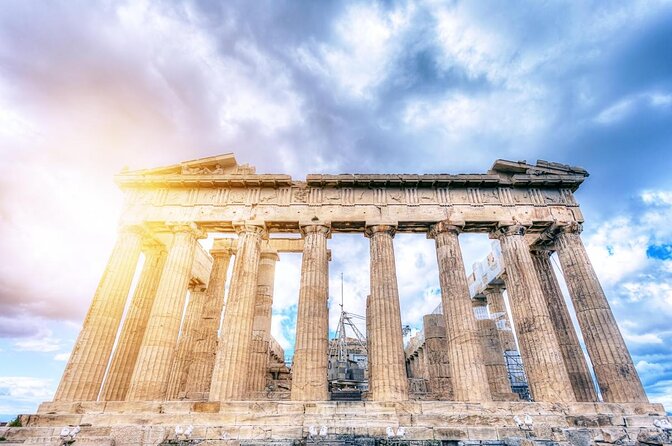
At the summit, the Parthenon takes center stage. It was built as a temple to Athena, and its scale and setting explain why it remains Athens’ defining sight. The visit gives you time to see it from several positions while the guide explains its purpose, design, and place in Athenian history.
The listed itinerary allows about 10 minutes specifically for the Parthenon, but the wider Acropolis visit lasts about two hours. That means the timetable should not be read as a strict stopwatch for every monument. The guide moves the group through the rock, stopping at useful viewpoints and gathering points.
A guide is especially helpful here because the Parthenon is partly a ruin and partly a reconstruction puzzle. Without context, you see columns and carved stone. With explanation, you begin to notice proportions, decoration, damage, and the long sequence of changes the building has experienced.
Photography is part of the experience, and the guides make room for it. You will not have unlimited free time, though. If your priority is taking dozens of careful architectural photos, plan to return later on your own if possible.
More museums and ancient sites in Athens:
- Athens: Acropolis, Parthenon & Acropolis Museum Guided Tour
★ 4.8 · 3,579 reviews - Acropolis monuments & Parthenon Walking Tour with Optional Acropolis Museum
★ 5.0 · 2,678 reviews - Athens: Acropolis Museum Ticket with optional Audio Guide
★ 4.4 · 2,652 reviews - Parthenon & Acropolis Museum with Audio or Live Tour Option
★ 4.1 · 2,446 reviews
Theater of Dionysus and the ancient performance world
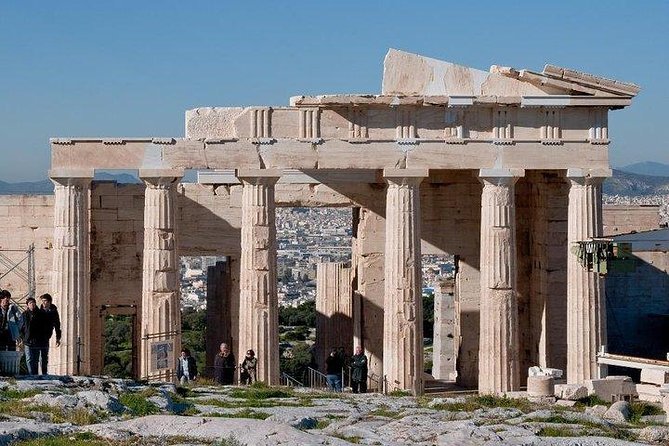
The Theater of Dionysus sits on the southern slope of the Acropolis. It is tied to the development of ancient Greek drama and gives you a different view of Athens than the temples above.
Here, I like the way a guide can connect stone seating with daily life, festivals, performance, and public culture. The theater is not merely another ancient structure on a checklist. It helps explain how religion, civic life, and drama overlapped in Athens.
The itinerary assigns about 10 minutes to this stop. That is enough for orientation and explanation, but not for an extended study of every visible feature. The route also lists the Theater of Dionysus twice, which appears to reflect a duplicate itinerary entry rather than two separate visits.
Herod Atticus Odeon and the living side of the ruins
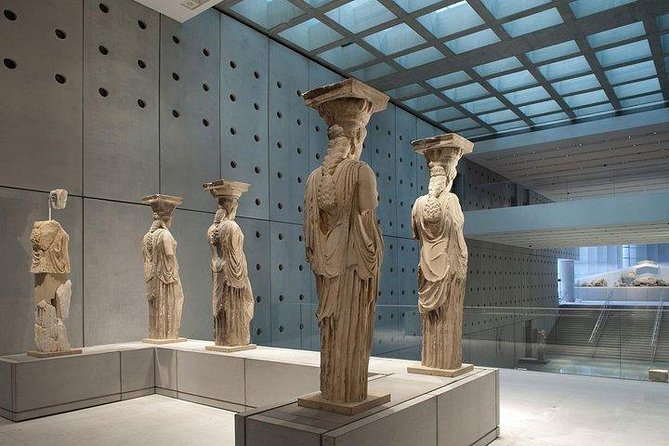
The Herod Atticus Odeon is a Roman-era theater on the Acropolis slope. Unlike many ancient structures, it is still used for performances, which gives the ruins an unusually direct connection to present-day Athens.
You may spend around 10 minutes here. The guide’s role is to explain the building and point out details that can disappear when you view it quickly from the route. You should not expect a performance as part of this tour, but the fact that the venue still operates makes the stop memorable.
This is one reason I prefer a guided visit to simply walking past the monument. The site’s history is layered, and a short explanation helps you understand why a Roman theater sits beside monuments most people associate with classical Athens.
Propylaea and the entrance to the sacred hill
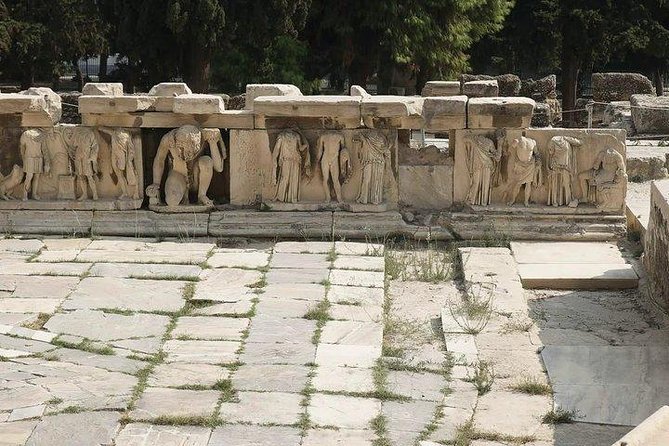
The Propylaea were the monumental gates of the Acropolis. They mark the transition from the city below to the sacred area above, and their setting makes them one of the first places where the scale of the complex becomes clear.
A short stop here gives you a chance to study the entrance architecture and watch the flow of people arriving and leaving. It is also a useful place to understand that the Acropolis was not simply a single temple. It was a carefully planned precinct with ceremonial approaches and several important buildings.
The stone underfoot can be uneven, and the approach is part of the physical work of the visit. If you have knee, balance, or mobility concerns, the moderate fitness requirement should be taken seriously. The supplied information does not describe a special accessible route.
Erechtheion and the famous Caryatids
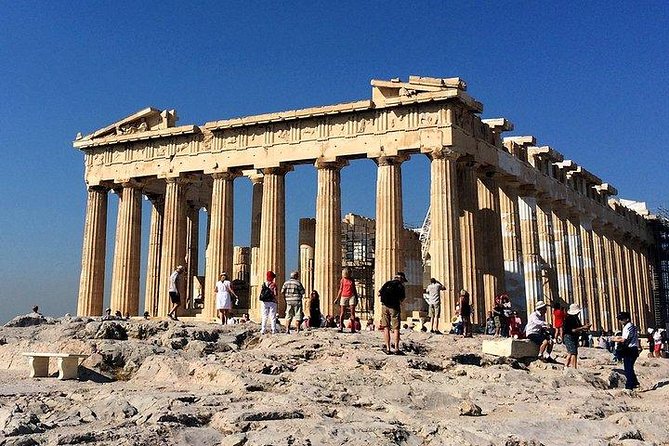
The Erechtheion is best known for its Caryatids, the sculpted female figures used as architectural supports. They are among the most recognizable details on the Acropolis, and the guide can explain both their visual role and the building’s importance.
You have about 10 minutes listed for this stop, though the guide may discuss the building as part of the larger Acropolis route. Look closely at the figures and the surrounding structure. This is a place where an expert eye can help you separate original elements, copies, and museum-preserved pieces.
The museum visit later makes this stop more meaningful. Seeing architectural sculpture in the open air gives you a sense of place. Seeing related objects indoors lets you examine them at closer range and consider what has been protected or moved over time.
The Acropolis Museum makes the morning complete
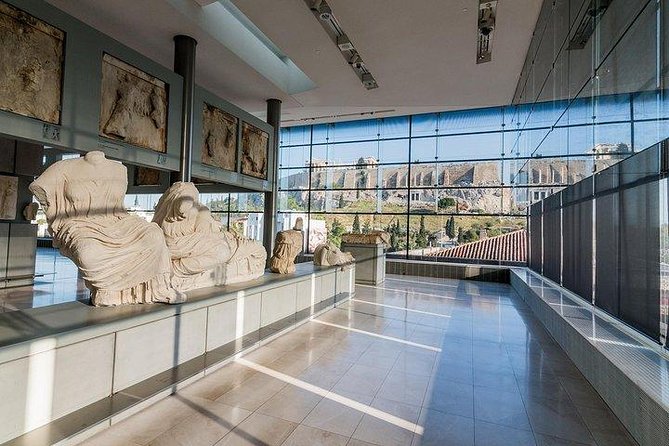
The final major stop lasts about an hour at the Acropolis Museum. The museum focuses on finds from the Acropolis and nearby slopes, with material ranging from the Bronze Age to Roman and Byzantine Athens. It also sits above remains of Roman and early Byzantine buildings, adding another layer beneath the modern museum.
This is not a token museum stop. It is the part that helps you read the Acropolis with sharper eyes. A guide can point out carved fragments, decorative details, and objects that would be difficult to interpret without a site visit first.
The museum’s design and layout are part of the appeal, but the main value is the evidence inside. Ancient decoration that is hard to see on a sunlit temple can be viewed at close range. You can connect what you saw on the hill with objects that explain how the monuments were made and used.
The guided portion lasts about an hour. Afterward, you may be encouraged to stay and continue independently. This arrangement works well if you want an introduction but also need freedom to linger. It is less ideal if you expect a long, slow museum study during the scheduled four hours.
Guide quality and group size
The operator provides a licensed tour guide, and the guide can make or break a site like this. The assigned guide varies. Names associated with highly praised tours include Giannas, Selena, Alexia Kolia, Lydia, Demos, Zeta, George, Efie, Aphrodite, Bernardos, Simon, Michael G, and John, an archaeologist. You should not assume a particular person will lead your departure.
The strongest guide style here is clear, lively, and practical. Several guides have been described as archaeologists or teachers, and the most effective ones mix mythology, architecture, humor, and everyday Athenian life. That keeps a large amount of information from feeling like a lecture.
The maximum group size is 20. That is not private touring, but it is small enough for the guide to gather people at viewing points and check on water, shade, and bathroom timing. Earpieces can make the group easier to follow, especially near the Parthenon and museum entrances.
A group tour always brings limits. You may need to wait for people who walk more slowly, and you will not control every stop. If your ideal visit means setting your own route and lingering for half an hour at one column, book independent admission instead.
What the $72.59 price really covers
The advertised price is $72.59 per person. It includes a licensed guide, the organized walking experience, and the guided museum component when the appropriate ticket option is selected. The important detail is that admission is not automatically included in every booking.
The listed entrance costs are €30 for the Acropolis and €20 for the Acropolis Museum. The booking choices determine whether those fees are included. If you arrive without tickets and did not select the ticket option, you may buy them in cash from the guide at the meeting point, according to the booking information.
That can make the final cost notably higher than the headline price. I would check the exact option before paying, rather than treating $72.59 as the complete total. Also note that people under 25 need a physical passport or ID to confirm eligibility for a reduced price. The exact reduced amount is not specified, so bring the document and ask before entry.
For the right person, the price is fair because you are paying for more than admission. You get a planned route, an English-speaking licensed guide, group coordination, water, and a clear connection between the Acropolis and museum. The value is weaker if you already know the history, dislike group pacing, or intend to spend most of the day exploring alone.
Who should book this Athens experience
I would choose this tour for a first visit to Athens, a short stay, or a port day when you need the city’s most important ancient sites organized into one morning. It also suits anyone who wants historical context but does not want to spend hours preparing a self-guided route.
It is a good fit for people who appreciate an active walking tour, can manage uneven stone, and want the museum included in the same visit. Families with older children may like the mix of stories, ruins, views, and indoor exhibits, though the heat and climb require attention.
I would think twice if you need a fully relaxed pace, have difficulty on slopes or slippery surfaces, or want extensive free time at each monument. The tour is efficient rather than leisurely. It gives you the essentials with explanation, then leaves you near the same meeting point for more Athens on your own.
Free cancellation is available if you cancel at least 24 hours before the local start time. Changes or cancellations inside that window are not accepted for a refund.
Should you book it?
Book this tour if you want the Acropolis and museum to make sense as one story, not two disconnected sightseeing stops. The licensed guide, early start, bottled water, manageable group size, and strong guide roster all add practical value.
Before booking, confirm whether both admission tickets are included and budget for the €30 Acropolis fee and €20 museum fee if they are not. Wear grippy shoes, carry sunscreen, and leave room in your morning for a moderate climb.
I would skip it only if you prefer complete independence or need a slow, private visit. For most first-time visitors with four hours to spare, this is a sensible way to meet ancient Athens on its own ground and then see the surviving art up close.
FAQ
How long does the Ancient Athens tour last?
The tour lasts approximately four hours, including the Acropolis visit and the Acropolis Museum.
What time does the tour start?
The tour starts at 9 a.m.
Where does the tour meet?
The meeting point is Porinou 5, Athina 117 42, Greece.
Where does the tour end?
The activity ends back at the meeting point.
Is the Acropolis entrance ticket included?
The Acropolis entrance ticket is included only if you choose the booking option with entrance tickets. Otherwise, the listed fee is €30 per person.
Is the Acropolis Museum ticket included?
The museum ticket is included only with the relevant ticket option. The listed museum entrance fee is €20 per person if it is not included.
Is the tour offered in English?
Yes. The tour is offered in English.
How large is the group?
The tour has a maximum of 20 people.
What physical ability is needed?
A moderate fitness level is recommended. The tour involves walking uphill over uneven and sometimes slippery stone at the Acropolis.
Newly reviewed around Athens
- Feel Ancient thermal Spa Visit Delphi, Leonidas ℨoo Spaʀtan★ 5.0 · 4 reviews
- Food Tour★ 5.0 · 3 reviews
- Eat Your Way Through Athens: A Local Food Walk★ 4.9 · 97 reviews
- Explore the Hidden Food Gems of Athens★ 5.0 · 57 reviews
- Food Experience in Athens including Unlimited Lunch★ 5.0 · 3 reviews
- From Athens: Delphi Private Tour with Lunch Time★ 4.0 · 3 reviews
- Delphi: Spanish guided one day tour★ 4.6 · 55 reviews
- Early Entry Acropolis & Museum. Beat the Crowds & the heat★ 5.0 · 3 reviews
Athens Acropolis Tours, compared.
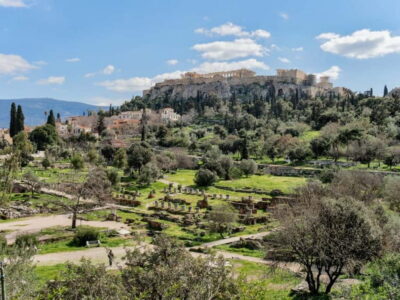
Acropolis & up to 5 Archaeological Sites Combo Pass
Read our review →
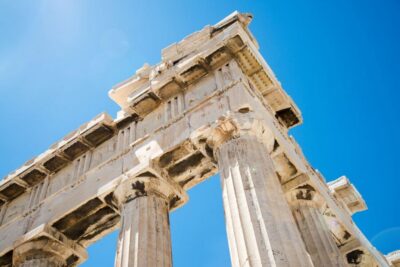
Acropolis, Parthenon & Acropolis Museum Guided Tour
Read our review →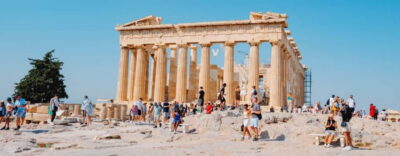
Acropolis, Parthenon & Acropolis Museum Guided Tour
Read our review →

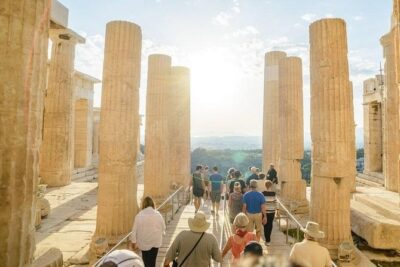
Acropolis monuments & Parthenon Walking Tour with Optional Acropolis Museum
Read our review →Browse the lists this tour appears in