
Reviewed · ATHENS ACROPOLIS TOURS
The Acropolis Walking Tour with a French Guide
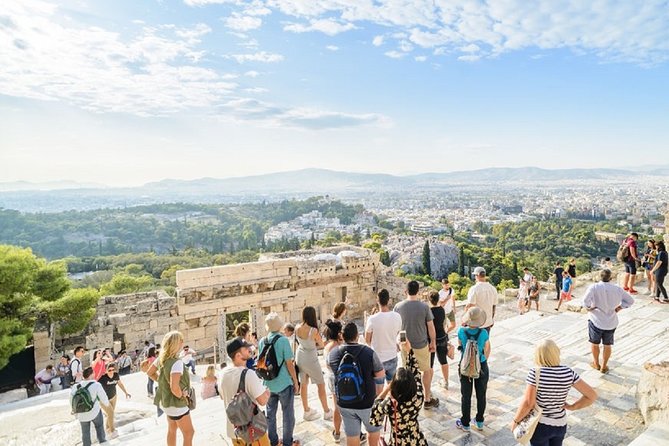
The best thing about this tour is its focus: the Acropolis itself, not a long city walk padded with unrelated stops. In two hours, a licensed French-speaking guide helps you read the ruins, connect the buildings, and understand why the Parthenon is much more than a famous photo backdrop. The missing marbles, the birth of theater, and the political power of ancient Athens all enter the story.
I like the skip-the-line entrance and the fact that admission is bundled into the $80.64 price. I also like the French-language format, especially for visitors who want more than a quick translation of the standard facts. The main caution is the pace and exposure: much of the Acropolis is open to the sun, the ground is uneven, and one French-language guide received criticism for a memorized presentation and too few chances for questions.
Key points at a glance
- French archaeological guidance: The tour is led by a licensed French-speaking guide, with guides such as Anna praised for clear, detailed explanations and a lively presentation.
- Skip-the-line entry included: You avoid buying a separate ticket and waiting in the normal entrance line.
- A full Acropolis circuit: The visit covers the citadel, Parthenon, Propylaea, Theatre of Dionysus, Erechtheion, and Temple of Athena Nike.
- Two hours of serious context: This suits history lovers who want the buildings explained, not just photographed.
- Headsets may be provided: One group of about 14 people received microphones, which helped everyone follow the guide.
- Plan for heat and walking: Bring water, wear good shoes, and consider an evening time slot for cooler conditions and fewer people.
Why a French guide changes the Acropolis visit
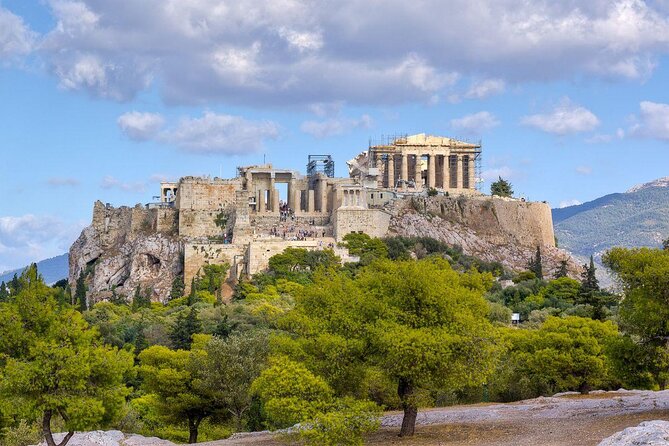
You can walk onto the Acropolis alone and see the Parthenon. You can also spend much of your visit wondering which broken column belongs to which building, why the hill mattered, and what happened to the sculptures once displayed here.
A good guide gives the site a clear order. You learn how the different parts of the citadel fit together, then hear why each building was placed where it was. That matters at the Acropolis because the monuments are impressive but not always easy to read. Many are partial, rebuilt, or separated from the objects that once completed them.
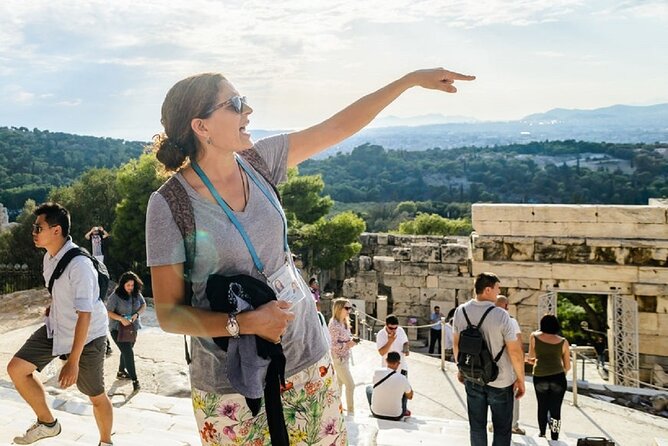
This French-language tour is a strong choice if you want the background explained in your first language. Several guides appear to bring different styles to the work. Anna, named in the feedback, was praised for linking ancient Greek history to modern references familiar to French visitors, while another guide was described as funny, thorough, and willing to stop often so the group could keep up.
The experience is not designed as a light, child-focused introduction. One French-speaking guide was criticized for sounding as if she had memorized a script and for leaving little room for questions. That is worth considering if you prefer an informal conversation over a structured lecture. For adults who enjoy detail, the same level of information may be the main reason to book.
More ways to see the Acropolis:
- Athens: Acropolis & up to 5 Archaeological Sites Combo Pass
★ 4.4 · 12,619 reviews - Athens: Acropolis Ticket with Optional Audio or Live Guide
★ 4.2 · 11,055 reviews - Athens: Acropolis, Parthenon & Acropolis Museum Guided Tour
★ 4.8 · 9,316 reviews
Meeting near the South Entrance
The meeting point is at Porinou 5, in central Athens. The agency office is described as about three minutes on foot from the Acropolis South Entrance, which makes the start practical if you are already near the Acropolis Museum or the pedestrian streets around Dionysiou Areopagitou.
You should allow enough time to find the office and gather before the group leaves. Confirmation is provided when you book, so keep those details available on your phone.
The tour ends at Areopagus, the rocky hill beside the Acropolis. That is a useful finish because you remain close to the historic center rather than being taken to a distant drop-off point. From there, you can continue around the Acropolis area or make your own way through Athens.
The group can include up to 20 people. One reported group had about 14, a size that is large enough to keep the price reasonable but small enough for a guide to remain audible. Microphones were provided for that group, which can make a real difference when you are standing among stone walls, wind, and other tour groups.
Entering the Acropolis with less waiting
The included skip-the-line ticket is one of the clearest practical benefits. The Acropolis is one of Athens’ busiest sights, and time spent in an entrance queue is time lost in the heat before you even reach the monuments.
Skip-the-line access does not mean the site will feel empty. Once inside, you can still encounter crowds around the Parthenon and the main viewpoints. It does mean the tour starts with less friction, and the guide can move the group into the archaeological area without asking everyone to stop and purchase admission separately.
The ticket is included in the advertised price, along with the licensed guide. At $80.64 per person, this is not a budget walk, but the price is easier to assess when you count the admission ticket and the French-language service together. If you would otherwise buy entry and pay for a separate guide, the package offers a straightforward arrangement.
EU citizens under 25 can enter free by showing a passport. If that applies to you, compare the value carefully. You would still be paying for the guide, skip-the-line arrangements, and organized entry, but the bundled ticket has less financial weight in your calculation.
The Acropolis: one hill, several different stories
The first major portion is devoted to the Acropolis itself, with about an hour listed for the citadel. The word means upper city, and the rocky hill served as a fortified and sacred center above Athens. You are not simply visiting one temple. You are moving through a group of buildings connected by religion, civic pride, art, and power.
A guide helps you sort those layers. The Acropolis contains the Parthenon, Propylaea, Erechtheion, Temple of Athena Nike, and other remains. Without an explanation, the site can become a sequence of famous names. With one, the spaces begin to relate to one another.
The tour also calls attention to the Theatre of Dionysus, where you can consider the origins of theater in the setting where dramatic performance became a major part of Greek public life. That stop adds variety to the visit. You are not only looking upward at temples and columns. You are also hearing about performance, audiences, and the public culture of ancient Athens.
The site is exposed and involves uphill walking over ancient surfaces. You need a moderate level of fitness, and good shoes are not optional advice here. Wear footwear that feels secure on uneven ground, and bring water. One visitor specifically warned that repeated stops in full sun were hard on children. That is a useful warning for families, particularly in hot weather.
More walking tours in Athens:
- Athens: Acropolis and Parthenon Guided Walking Tour
★ 4.6 · 5,882 reviews - Greek Food Walking Tour in Athens
★ 5.0 · 4,740 reviews - Acropolis: Acropolis and Parthenon Guided Walking Tour
★ 4.7 · 3,442 reviews - Acropolis monuments & Parthenon Walking Tour with Optional Acropolis Museum
★ 5.0 · 2,678 reviews
The Parthenon and the question of the missing marbles
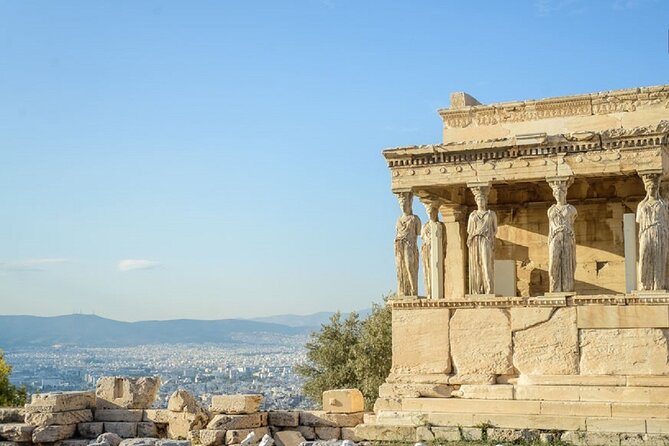
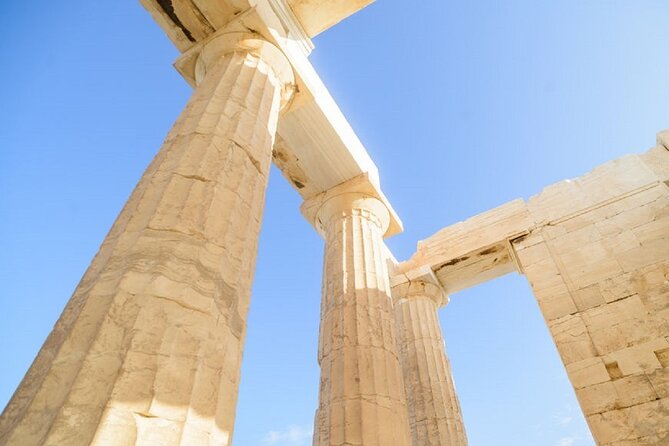
The Parthenon receives about 45 minutes, so it is the center of the visit rather than a quick stop for photographs. Built beginning in 447 BC, it was dedicated to Athena, the patron goddess of Athens, at a time when the Athenian Empire was at the height of its power.
The guide’s role here is to make the structure readable. You can look at the columns, surviving sculpture, and broad shape of the temple, but the building originally carried far more decoration and meaning than you see today. The tour addresses the missing marbles, giving you a chance to understand the long-running dispute over sculptures now associated with collections outside Greece.
That subject adds modern relevance without taking the focus away from the ancient monument. You are looking at a building shaped by religion and political confidence while also considering how it was damaged, altered, and dispersed over time.
The Parthenon is the busiest part of the Acropolis, so patience helps. Your guide may need to pause at a spot where the whole group can hear, then move aside for other visitors. This is where a headset or microphone is especially helpful.
You should also manage expectations about the view. The Parthenon is magnificent, but it is an active archaeological site, not a perfectly preserved temple. Cranes, restoration work, missing sculptures, and restricted areas can form part of what you see. The guide’s explanation helps turn those absences into part of the story rather than a disappointment.
Propylaea: the monumental gateway
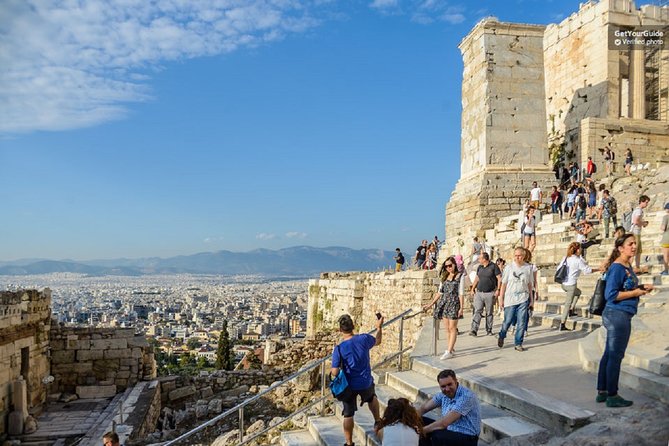
The Propylaea is allotted about 15 minutes. It is the monumental entrance to the Acropolis, and it gives you an immediate lesson in how arrival was meant to feel.
This was not an ordinary gate. Its scale and design marked the transition from the city below to the sacred precinct above. As you pass through or view the gateway, the guide can show how the entrance framed the approach to the temples.
The short time allocation makes sense. The Propylaea is a passage and architectural statement rather than a building with a long interior route. Still, this stop matters because it sets the sequence of the whole visit. You understand that the Acropolis was planned as a ceremonial ascent, not a random cluster of ruins.
If you like architecture, pay close attention here. The Parthenon usually takes the spotlight, but the gateway explains how ancient visitors were introduced to the hill. It also gives you a chance to look back toward Athens before moving farther into the complex.
Temple of Athena Nike and the smaller details
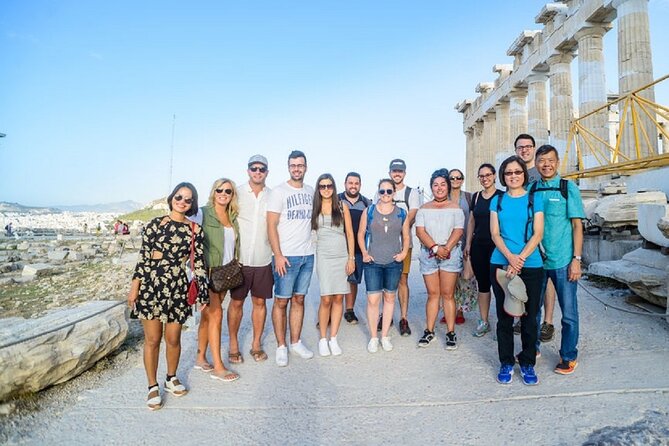
The Temple of Athena Nike is another essential stop, even though it can be overshadowed by its larger neighbor. Built around 420 BC, it is described as the earliest fully Ionic temple on the Acropolis and was dedicated to Athena Nike, the goddess associated with victory.
Its position near the entrance makes it part of the first impression of the hill. The guide can help you see why a relatively small temple carried such importance. This is one of the moments when a French archaeological guide can add real value: the building’s size does not tell you its significance.
The tour also includes the Erechtheion, known for its unusual design and the famous Caryatid figures. The supplied route places it among the major Acropolis monuments, although the exact timing for that stop is not listed. You should expect the guide to connect it to the wider story of Athena and the competing sacred traditions of the hill.
The point of this portion is not to memorize every temple name. It is to understand that the Acropolis was not built as one single monument at one single moment. Different buildings expressed different religious and civic purposes, and the guide helps you follow those changes.
A two-hour format with real strengths and limits
Two hours is a sensible length for a first visit. You get a focused route through the most important monuments without committing half a day to one archaeological site. If your Athens schedule is tight, this format leaves time for the Acropolis Museum, the Ancient Agora, or other parts of the city.
The trade-off is that two hours can feel dense. One guide was praised for giving very detailed explanations, while another was criticized for providing so much information that it was difficult to concentrate. Your enjoyment will depend partly on how much historical detail you want in one sitting.
I would choose an evening time slot if one is available. The timing cannot guarantee empty paths, but one visitor found the later period a little cooler and less crowded. That is especially useful in summer, when standing still in direct sun can become harder than the walking itself.
Families should think carefully before booking. Children who already enjoy ancient history may appreciate the stories, and frequent stops can help. Younger children who need movement, shade, or short explanations may find the lecture-heavy format tiring. The tour is better suited to adults and older children who can listen for long stretches.
Is $80.64 a fair price?
The price includes the Acropolis entrance ticket, a licensed French-speaking guide, and skip-the-line access. Those inclusions make it more useful than a bare ticket, particularly if you want the site explained in French and do not want to arrange a guide separately.
The strongest value comes from the subject matter. The Acropolis is one of those places where you can easily see the headline monument while missing the meaning of the surrounding buildings. A guide who explains the Theatre of Dionysus, Propylaea, Temple of Athena Nike, Erechtheion, Parthenon, and missing marbles gives you a more complete visit.
The value is lower if you already know the Acropolis well, speak another language comfortably, or qualify for free EU admission and prefer to explore alone. It is also less appealing if you dislike long explanations or want plenty of time for photography.
At 91 percent recommended and a 4.8 rating from 22 ratings, the overall response is strong, but not flawless. The high marks repeatedly center on detailed explanations, strong French, friendly guides, useful stops, and the sense that the guide makes the Acropolis easier to understand. The weaker experiences focus on delivery, heat, and limited interaction. Those are not small points, so consider your own touring style before paying.
What to bring and how to prepare
Keep your preparation simple:
- Bring water. The site can be hot, and shaded places may not be available when the guide stops.
- Wear solid walking shoes. The tour involves a rocky archaeological site and moderate physical activity.
- Use sun protection, especially for a midday departure.
- Arrive with your booking confirmation available.
- Bring a passport if you are an EU citizen under 25 and want to claim free admission.
- Ask questions when there is an opening. Some guides encourage discussion, while one reported format left little room for it.
- Consider an evening departure if your schedule allows.
The tour requires good weather. If poor weather forces cancellation, you can receive a different date or a full refund. You can also cancel for a full refund up to 24 hours before the start time. Changes or cancellations inside that window are not accepted, and a minimum group size is required for the activity to operate.
Who should book this French Acropolis tour?
I would book it if you want the Parthenon explained in French, prefer a planned route, and want admission handled with the guide. It is especially suitable for adults who enjoy archaeology, architecture, and historical detail.
I would think twice if you are traveling with small children, dislike standing in the sun, or prefer to wander at your own speed. The maximum group size is 20, so this is not a private tour, even though some departures may be smaller.
For many French-speaking visitors, the main benefit is not simply hearing French. It is having someone organize a confusing site into a story you can follow. If that matters to you, the included ticket and two-hour format make $80.64 a reasonable price. If you only want a quick look at the Parthenon, buy entry and explore on your own.
FAQ
How long does the Acropolis walking tour last?
The tour lasts approximately two hours.
Is the Acropolis admission ticket included?
Yes. Skip-the-line Acropolis entrance tickets are included in the tour price.
Is the tour conducted in French?
Yes. The experience includes a licensed French-speaking tour guide.
Where does the tour start?
The meeting point is Porinou 5, Athina 117 42, Greece.
Where does the tour finish?
The tour ends at Areopagus, Athens 105 55, Greece.
Can I cancel for a full refund?
Yes. You can cancel at least 24 hours before the scheduled start time for a full refund. Cancellations or changes made less than 24 hours before the start are not accepted, and no refund is provided.
Newly reviewed around Athens
- Athens: workshop for painting landscape with local artist★ 4.6 · 3 reviews
- Athens: Greek Wine & Olive Oil Tasting at Brettos Plaka★ 4.5 · 3 reviews
- Outdoor Yoga and Pilates with Akropolis view★ 4.0 · 5 reviews
- Acropolis of Athens: 60′ Tour in a Vintage Motorcycle★ 5.0 · 4 reviews
- Ultimate Tasting of the Volcanic Wines of Greece★ 5.0 · 3 reviews
- workshop for painting acropolis/landscape with local artist★ 5.0 · 3 reviews
- Athens at Twilight Night Tour with Drinks and Meze Dishes★ 4.8 · 4 reviews
- Breakfast in the markets with olive oil and honey tasting★ 4.8 · 8 reviews
Athens Acropolis Tours, compared.
Acropolis & up to 5 Archaeological Sites Combo Pass
Read our review →
Acropolis, Parthenon & Acropolis Museum Guided Tour
Read our review →
Acropolis, Parthenon & Acropolis Museum Guided Tour
Read our review →

Acropolis monuments & Parthenon Walking Tour with Optional Acropolis Museum
Read our review →Browse the lists this tour appears in