
Reviewed · ATHENS GREEK DANCE SHOWS
Steps to tradition: Greek Traditional Dances in Athens
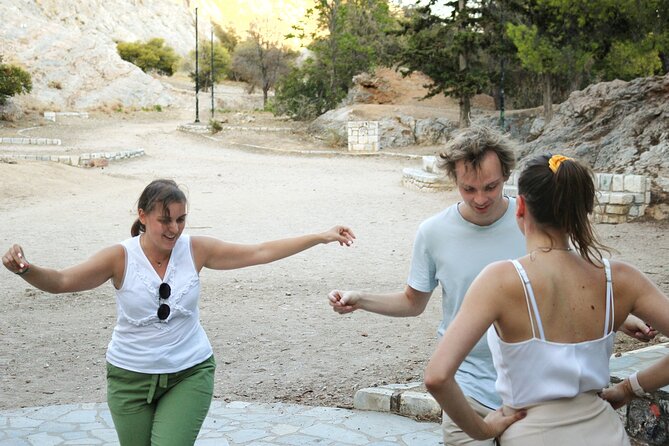
Greek dancing with the Acropolis in view is the main event here, but the real value is what happens around the steps. Tania leads you through dances from different parts of Greece, explaining how they connect to villages, islands, celebrations, and family life. You are not just copying footwork. You are learning how a community moves together.
I especially like the small maximum group of 12 and the short walk through Philopappou Hill before class. The route gives you a little Athens history and a fine view before the music begins. The main consideration is the outdoor setting: the activity needs good weather, and the listed start time is 6:00 am, so check the departure details carefully before booking.
Key points at a glance
- Dance beside ancient Athens: The lesson takes place on Philopappou Hill, with views toward the Acropolis and nearby ancient sites.
- Learn six or seven dances: The class can cover dances from several Greek regions, including faster Cretan steps and dances from the islands.
- Tania teaches with stories: Instructions include the background of each dance, its music, and the region where it is commonly performed.
- A social class, not a stage show: You join hands in a circle and learn by repeating the steps with the group.
- Small-group value: The maximum is 12 people, and some sessions may be much smaller or even private.
- Useful trip timing: The 2-hour-30-minute activity can help you feel more at ease if you plan to visit a Greek tavern or festival later.
Why dancing on Philopappou Hill changes the experience
Athens has no shortage of monuments, museums, and guided walks. This class gives you a different way into the city. Instead of only looking at ancient Greece, you take part in a living custom that has continued through families, villages, and regions.
The meeting point is at the entrance to Philopappou Hill, where Dionysiou Areopagitou meets Apostolou Pavlou. Once the group gathers, Tania leads you on a walk of about 10 minutes to the dance spot. The route is short, but it matters. You get views of the Acropolis and a chance to notice the hill’s ancient setting before settling into the lesson.
The hill is linked to several familiar Athens sights, including Socrates’ Prison. The dance class itself may take place near a quiet church and park area, rather than in the middle of a busy tourist street. That gives the lesson a relaxed feel and lets the setting do some of the teaching.
I like this beginning because it avoids the feeling of being dropped into a generic studio. The walk connects the class to Athens. You are still in the city, but the trees, ruins, open views, and stone paths create a clear change of pace.
More Greek dance and dinner shows in Athens:
- Athens Night Sightseeing Tour with Greek Dinner Show
★ 3.5 · 268 reviews - Traditional Greek Show in Plaka with Dinner
★ 3.6 · 178 reviews - Athens: Dora Stratou Greek Dancing Show Experience
★ 4.6 · 68 reviews
From Minoan circles to modern Greek celebrations
Greek circle dances have very old roots. The experience places their beginnings around 2000 BC in the Minoan civilization of Crete. The exact details of ancient dance are difficult to reconstruct, but the larger point is clear: dancing in a circle has long been tied to shared celebration and group identity in Greece.
The circle matters. You are not watching one star performer at the front. You hold hands or join the line and move as part of a group. Someone with more experience may guide the pattern, but the dance belongs to everyone.
Tania explains how dances changed as they passed from one region to another. Greek islands, mainland villages, and Crete each have their own steps, rhythms, and style. Some dances are steady and easy to follow. Others add quick footwork, kicks, or more demanding changes in pace.
That regional variety gives the class a useful shape. You begin with simple movements and build confidence before trying dances that require faster reactions. The aim is not polished performance. It is to understand the rhythm and stay connected to the people beside you.
This is also why the activity works for families and mixed ability levels. One family with children aged 11 and 13 enjoyed learning several dances together, and another couple received a lesson adjusted to their level and travel plans. You should still expect a physical activity, not a passive cultural talk. One of the dances may leave you warm and breathing harder.
What the 2.5-hour class actually includes
The full activity lasts about two and a half hours. The first part is meeting Tania and walking to the class site. That short route may include information about the hill, nearby sights, and Greek dance festivals.
Once the group reaches the outdoor spot, Tania begins with instruction. Her teaching style is based on clear repetition. She shows the steps, lets you try them, corrects the movement as needed, and repeats the pattern until the group can manage it together.
You can expect to learn roughly five to seven dances, depending on the group and the pace of the class. The number is not the most important part. A smaller group may spend more time on each dance, while a larger group may move through a wider sample of Greek styles.
The lesson can include dances from different islands and mainland regions. Cretan dances may bring quicker steps and kicks. Other dances are slower and more measured, making it easier to feel the basic pattern before the pace increases.
Tania and Kostas also explain the music and the setting behind each dance. This turns the lesson into more than a physical exercise. You learn why a particular rhythm or formation matters, and you begin to notice how dance reflects local identity.
The instruction is aimed at beginners. You do not need to arrive with dance experience. Tania’s method gives you a way to succeed quickly, even if your feet do not always agree with the music at first.
Tania and Kostas keep the class friendly
The teachers are a major part of the experience. Tania is the main instructor, and Kostas may assist her. Their approach is warm and encouraging, with plenty of patience for people who have never tried Greek dance.
That matters because circle dancing can feel awkward for the first few minutes. You are learning while standing close to other people, and mistakes are visible. A good teacher keeps the mood light and makes repetition feel normal.
The class also develops a small sense of community. You start as separate couples, families, or solo participants, then gradually move as one line or circle. By the end, the group may feel like a temporary village gathering rather than a collection of strangers.
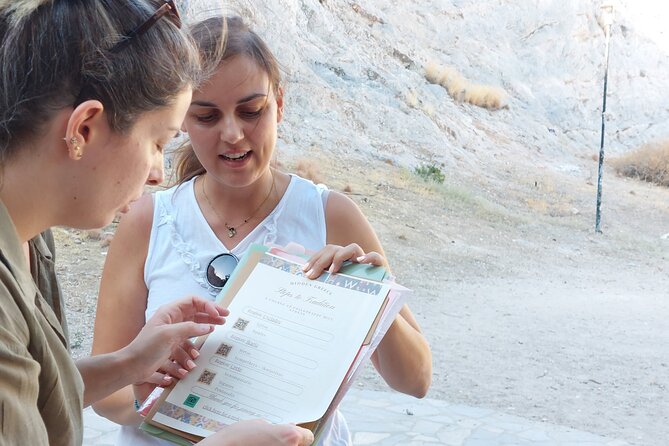
Several details add to that welcoming atmosphere. Water is provided, which is useful during a warm outdoor class. Some sessions have included photos and videos, and one detailed account also mentions a participation certificate with a QR code for a Greek traditional playlist and a list of the dances learned.
Those extras may vary, so I would not book solely for them. The dependable feature is the teaching itself: step-by-step instruction, cultural background, and time to practice.
A different kind of day out from Athens:
- Athens: Acropolis & up to 5 Archaeological Sites Combo Pass
★ 4.4 · 12,619 reviews - Athens: Acropolis Ticket with Optional Audio or Live Guide
★ 4.2 · 11,055 reviews - Athens: Acropolis, Parthenon & Acropolis Museum Guided Tour
★ 4.8 · 9,316 reviews - Athens: Cape Sounion & Poseidon Temple Sunset Half-Day Trip
★ 4.8 · 8,241 reviews
The setting is beautiful, but plan for the outdoors
Philopappou Hill gives the class its strongest visual appeal. You may look toward the Acropolis while learning a traditional dance, then see the city and ancient monuments again on the walk back to the meeting point.
The setting also has practical limits. Outdoor ground can be uneven, and the activity includes a walk up the hill. Wear shoes that stay secure and allow easy movement. Avoid clothing that restricts your legs, since even the simpler dances require repeated side steps and changes of direction.
Sun, heat, and weather can affect the experience. The activity requires good weather, and poor conditions may lead to a different date or a full refund. Bring water-friendly clothing choices and prepare for an outdoor lesson rather than an air-conditioned room.
The listed start time is 6:00 am. That is unusually early for a dance class and may be ideal for people who like cool temperatures and quiet paths. It may be less appealing if you are recovering from a late evening in Plaka or a night of Greek food and music. Confirm the exact time when you book, especially if you are comparing dates.
What you get for $41.52
At $41.52 per person, this is reasonably priced for a 2-hour-30-minute guided activity, particularly if the class includes several dances and a small group. You are paying for personal instruction, cultural explanation, a walk through a historic area, and a setting that would be difficult to reproduce indoors.
The value increases if you intend to visit a taverna with live music or attend a Greek celebration during your trip. After learning the basic patterns, you may recognize the dances and feel less like an observer when people begin forming a circle.
It is not the cheapest way to spend two hours in Athens. You could walk Philopappou Hill for free, and you could watch traditional dancing without taking a lesson. The difference is participation. Here, you spend time learning how the steps fit together and why they belong to different Greek regions.
A group of 12 is the stated maximum, which is another reason the price makes sense. A small class allows Tania to see where people are struggling and adjust the pace. If demand is low, the class may be even more personal. One couple received what was effectively a private lesson, though you should treat that as a possibility, not a promise.
The activity is free to cancel up to 24 hours before the start time. Cancellations inside that window are not refunded, and late changes are not accepted. Since the class depends on good weather and a minimum number of participants, the provider may offer another date or a full refund if the activity is canceled.
Who will enjoy this most
I would choose this class if you want to do something cultural rather than only look at monuments. It suits first-time visitors who want an introduction to Greece beyond food and ruins, as well as repeat visitors looking for a more personal activity.
Families can enjoy it because the instruction is gentle and the focus is on participation. The children in one family group were included alongside the adults, learning several dances during the session.
It also works well for solo visitors. The circle format gives you an easy way to meet people without needing to arrive with a partner. Couples can enjoy it together, too, especially if they plan to visit several Greek islands and want to recognize local dance styles along the way.
You should be comfortable with a short walk and moderate physical activity. The class is not presented as an advanced dance workshop, but it is still a workout. If you have limited mobility, ask the provider for current details before booking, since the route and outdoor terrain are part of the experience.
A few practical ways to prepare
Meet at the exact entrance named in your booking: Dionysiou Areopagitou and Apostolou Pavlou in Athens. Arriving early is wise because the group walks together to the class location, and you do not want to miss the departure from the meeting point.
Wear comfortable shoes with good grip. You will need to walk uphill and then repeat dance steps on outdoor ground. Light clothing and a bottle of water are sensible, especially in warm weather.
Do not worry about memorizing Greek dance names in advance. Tania teaches by demonstration and repetition. Listen for the rhythm, watch the person guiding the line, and accept that a few wrong steps are part of the process.
If you are planning a longer Greek itinerary, tell the teachers which islands or regions you will visit. A past session adapted some of the dances to the couple’s later route, including dances they were likely to encounter elsewhere in Greece. That kind of adjustment can make the lesson more useful than a fixed demonstration.
Is this Greek dance class worth booking?
Yes, if you want an active cultural experience with strong scenery and friendly teaching. The combination of Philopappou Hill, Acropolis views, regional dance styles, and a small group gives the class more character than a standard indoor lesson.
Book it especially if you like music, social activities, or the idea of joining a Greek circle at a taverna later in your trip. Families and beginners should feel at home, and confident dancers can still enjoy the cultural stories and faster regional steps.
Think twice if you dislike outdoor activities, early starts, or learning physical patterns in a group. The class is weather-dependent, and the hill walk is part of the package.
For most visitors, $41.52 buys a memorable way to connect ancient Athens with living Greek culture. You leave with more than photographs of the Acropolis. You may also leave knowing how to step into the circle.
FAQ
Where does the Greek traditional dance experience begin?
It begins at the main entrance to Philopappou Hill, at Dionysiou Areopagitou and Apostolou Pavlou in Athens.
What time does the activity start?
The listed start time is 6:00 am. Confirm the exact departure details when booking.
How long does the experience last?
The activity lasts approximately 2 hours and 30 minutes, including the walk to the outdoor class location and the return to the meeting point.
How many people can join the class?
The maximum group size is 12 people.
Do I need previous dance experience?
No specific experience is required. The class teaches the steps gradually, and most participants can take part.
What happens if the weather is poor?
The activity requires good weather. If it is canceled because of poor conditions, you will be offered a different date or a full refund.
Newly reviewed around Athens
- Athens: workshop for painting landscape with local artist★ 4.6 · 3 reviews
- Athens: Greek Wine & Olive Oil Tasting at Brettos Plaka★ 4.5 · 3 reviews
- Outdoor Yoga and Pilates with Akropolis view★ 4.0 · 5 reviews
- Acropolis of Athens: 60′ Tour in a Vintage Motorcycle★ 5.0 · 4 reviews
- Ultimate Tasting of the Volcanic Wines of Greece★ 5.0 · 3 reviews
- workshop for painting acropolis/landscape with local artist★ 5.0 · 3 reviews
- Athens at Twilight Night Tour with Drinks and Meze Dishes★ 4.8 · 4 reviews
- Breakfast in the markets with olive oil and honey tasting★ 4.8 · 8 reviews
Athens Greek Dance Shows, compared.
Athens Night Sightseeing Tour with Greek Dinner Show
Read our review →
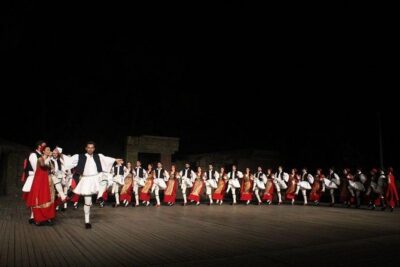
Dora Stratou Greek Dancing Show Skip-the-Line Ticket
Read our review →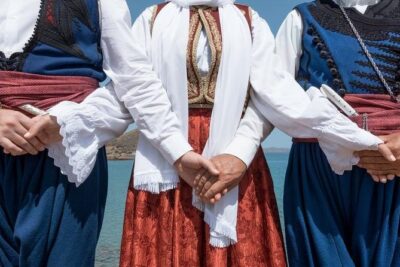
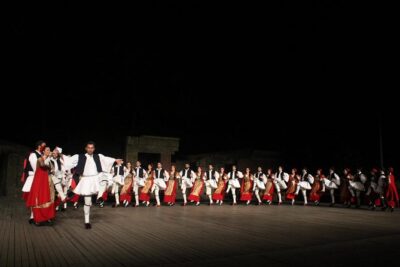
Skip the Line: Dora Stratou Greek Dancing Show Ticket
Read our review →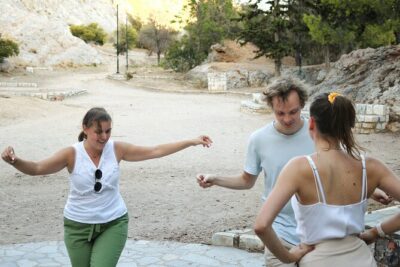
Steps to tradition: Greek traditional dances in Athens
Read our review →Browse the lists this tour appears in