
Reviewed · WALKING TOURS
Athens Social and Political Walk
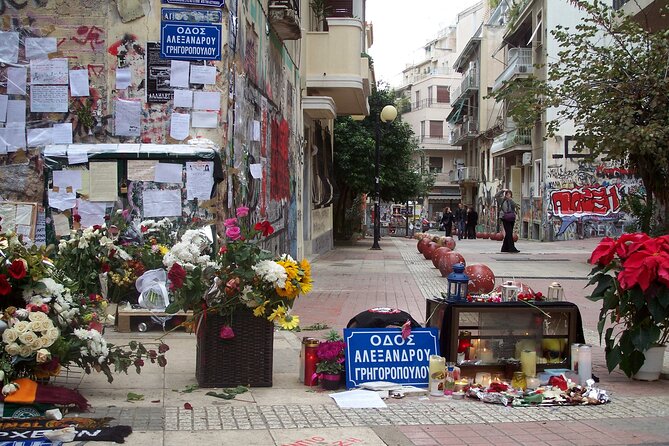
Athens makes more sense when you look beyond temples and ancient stones. This 2.5-hour walk follows the city’s modern political story, from the Prime Minister’s office and Presidential residence to Parliament, the Old Parliament House, and the Athens Polytechnic. Isaac, a political scientist, leads the discussion and welcomes questions about both history and today’s Greece.
I like the small group of no more than 15 people, which gives you room to ask questions rather than simply follow a speech. I also like the route’s clear arc, connecting Greek independence, the military junta, democratic reform, social tensions, and the recent economic crisis. The main drawback is that this is a niche experience: if you want archaeological sights or a relaxed sightseeing stroll, another Athens tour may suit you better.
Key points to know before booking
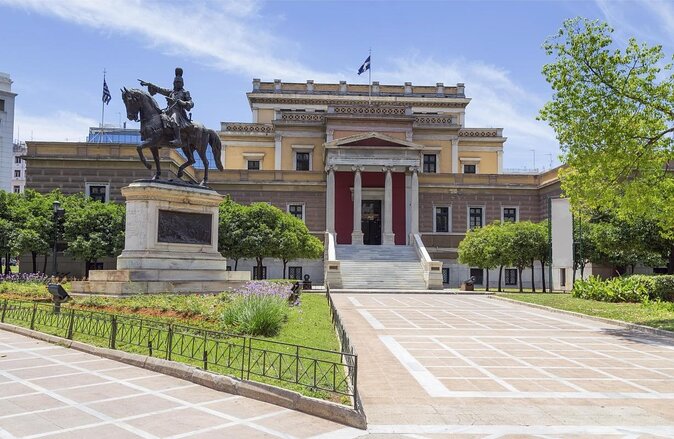
- A modern Athens route: Visit the Prime Minister’s seat, Presidential residence, Parliament, Old Parliament House, and Athens Polytechnic.
- Guide Isaac’s political focus: Expect explanations of Greek institutions, parties, social divisions, and current events.
- A useful bridge between past and present: The walk links independence, the junta, democratic reform, and the financial crisis.
- Small-group format: The maximum group size is 15, making questions and discussion practical.
- A walk with a serious subject: You need a moderate level of fitness and should be ready for sustained conversation.
- Central ending point: The tour finishes at the main entrance of the National Technical University of Athens on Patision Avenue.
Why this Athens walk feels different

Most first visits to Athens center on the Acropolis, the Agora, and the city’s ancient identity. Those sights matter, but modern Greece has its own story, and this walk puts that story in front of you. You move through streets shaped by government, protest, public memory, and political power.
The route is especially useful if you have already seen the major ancient sights and want to understand the country you are walking through. Isaac frames events across several periods rather than treating Greek politics as a list of disconnected facts. He covers the Greek independence war, the development of the modern state, the military junta, the return to democracy, and the political and social pressures surrounding the recent crisis.
I like that the tour is designed around questions. You can ask about a building, an event in the news, or a political idea that is unfamiliar to you. Isaac also draws comparisons with other countries, which can help you grasp Greek political structures without needing a background in political science.
The tone is intended to be balanced and informed. That matters on a subject where national identity, party politics, economics, and social division can quickly become heated. You will hear a clear point of view, but the tour is built to explain rather than simply persuade.
More walking tours in Athens:
- Athens: Acropolis and Parthenon Guided Walking Tour
★ 4.6 · 5,882 reviews - Greek Food Walking Tour in Athens
★ 5.0 · 4,740 reviews - Acropolis: Acropolis and Parthenon Guided Walking Tour
★ 4.7 · 3,442 reviews
Starting at the Prime Minister’s seat
The meeting point is at Leoforos Vasilissis Sofias 2-4, near the central government district. The first stop is the official seat of the Prime Minister of Greece, a fitting place to begin because it introduces the workings of the modern Greek state.
This is not a visit inside the building. Its value comes from using the location as a starting point for political explanation. Isaac can place the Prime Minister’s office within the wider structure of Greek government and show how the country’s political story is tied to the institutions around you.
For you, this opening gives the walk a clear purpose from the start. You are not simply passing impressive buildings. You are asking who makes decisions, how power has changed over time, and why public confidence in political institutions can rise and fall.
Bring your questions early. The group is small enough that the opening discussion can shape what follows, particularly if you are curious about current events or have been following Greek politics from abroad.
The Presidential residence and the role of the state
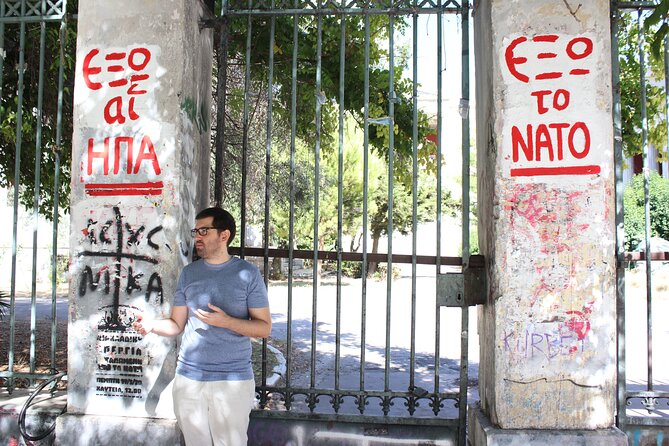
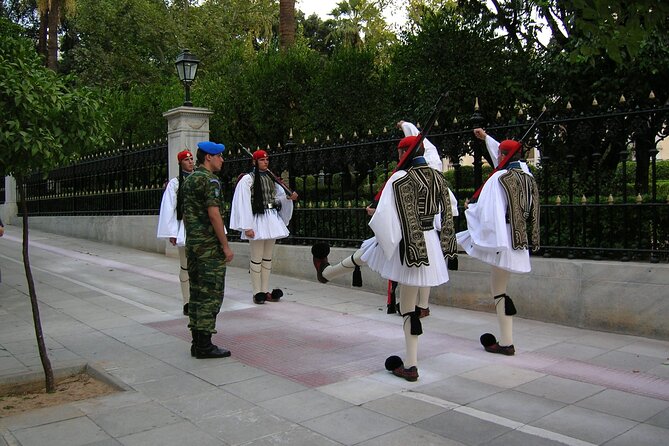
The official residence of the President of the Hellenic Republic is the next major point. This stop helps separate the roles of Greece’s political offices and gives Isaac another setting for explaining how the country is governed.
A building connected with the presidency can also open a wider discussion about symbolism. Greece’s political identity includes its ancient past, its struggle for independence, its twentieth-century upheavals, and its modern democratic institutions. The walk uses visible places to connect those subjects.
I find this approach more helpful than receiving a lecture in a room. You can see the setting in which national authority is represented, then ask how that authority relates to elected government and public life. The stop also gives the route a useful contrast with the Prime Minister’s seat.
The experience remains discussion-based rather than ceremonial. If you are looking for access inside official buildings, this is not the right product. If you want context for what these buildings represent, it offers a practical way to get it.
Parliament and the story of modern Greece
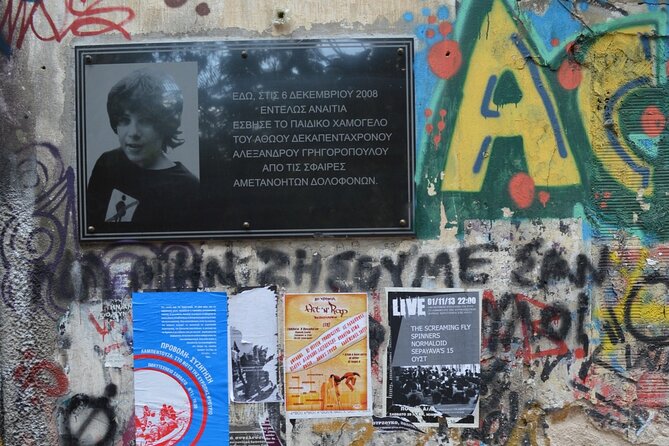
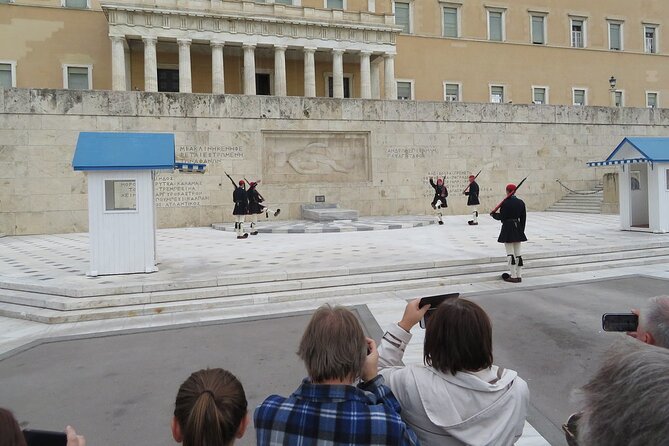
The Parliament of Greece is one of the route’s essential stops. Here the tour can connect the physical center of national government with the political development of the country.
Isaac’s broader narrative reaches from the independence war to modern Greece, with attention to the military junta and the move toward democratic reform. That long view is one of the best reasons to take the walk. Political arguments make more sense when you know what came before them.
You may hear about the way Greek society became polarized, how economic pressures shaped public debate, and why recent political events cannot be separated from earlier periods. The tour is not limited to parliamentary procedure. It looks at politics as something that affects culture, identity, economics, and everyday life.
I would especially recommend this part to anyone who has read about the Greek financial crisis but still feels that the causes and consequences are hard to sort out. The walk does not require you to arrive with detailed knowledge. Isaac’s explanations are intended to build a usable framework, not test you on dates.
Still, this is a serious conversation. The tour may feel fast if you want time to stop for photographs at every building. Its priority is explanation, and the route has a lot of ground to cover within about two and a half hours.
A different kind of day out from Athens:
- Athens: Acropolis & up to 5 Archaeological Sites Combo Pass
★ 4.4 · 12,619 reviews - Athens: Acropolis Ticket with Optional Audio or Live Guide
★ 4.2 · 11,055 reviews - Athens: Acropolis, Parthenon & Acropolis Museum Guided Tour
★ 4.8 · 9,316 reviews - Athens: Cape Sounion & Poseidon Temple Sunset Half-Day Trip
★ 4.8 · 8,241 reviews
Old Parliament House and the earlier political era

Old Parliament House adds another layer to the route. The building gives Isaac a way to discuss an earlier stage of Greek political life and the formation of the modern state.
This stop matters because Athens is often presented as an ancient city first and a modern capital second. Old Parliament House shifts your attention toward the period when the new Greek state was creating its political institutions and public identity.
The route’s strength is the way each official site becomes part of a larger timeline. The Prime Minister’s seat, the Presidential residence, Parliament, and Old Parliament House are not treated as isolated photo stops. Together, they show how political power is represented in the city and how institutions change across generations.
You might find the historical links especially useful if you have already visited museums or archaeological sites but want a clearer connection to present-day Greece. The walk supplies that bridge without pretending that one afternoon can explain every part of the country.
The Athens Polytechnic and November 17, 1973
The walk ends at the main entrance of the National Technical University of Athens, commonly known as Athens Polytechnic, on Patision Avenue. This is the most emotionally charged stop on the route because of the school’s role in the Athens Polytechnic uprising of November 17, 1973.
The uprising is central to modern Greek political memory. The tour uses this place to explain the event and its importance in the country’s move toward democratic reform. Even if you know the basic outline, standing at the university entrance gives the subject a concrete setting.
This final stop also brings the walk’s timeline into sharper focus. You have moved from the foundations of the modern Greek state through political institutions and twentieth-century upheaval, arriving at one of the events associated with resistance to the junta.
The ending is well chosen for another reason: it leaves you with a modern political site rather than returning you to an ancient monument. You finish thinking about civic life, protest, democracy, and public memory. The end point is on Patision Avenue, so check your onward plans before booking. The tour does not return to the starting point.
Isaac’s approach and the value of questions
Isaac is repeatedly described as passionate, pleasant, engaging, and well informed about his subject. Those qualities matter here because political history can become dry when it is presented as a string of governments and dates.
His approach includes anecdotes tied to recent news stories, comparisons with other countries, and explanations of Greek society and the economy. These details help translate broad themes into situations you can understand. You do not need to agree with every interpretation to gain useful context.
I particularly like that the tour allows room for nuance. One account of Greece’s political development is never the whole story, especially when discussing polarization or the economic crisis. A guide who explains competing pressures is more helpful than one who presents a simple national stereotype.
The small-group limit of 15 supports this format. You can ask what a term means, request more background, or connect the discussion to politics in your own country. A larger group would make that exchange harder.
Because the experience is offered in English, it is accessible to English-speaking visitors. The subject also makes it a good early-in-your-stay activity if you want context for conversations and news you encounter during the rest of your time in Greece.
Is $47.92 a fair price?
At $47.92 per person, this is not the cheapest way to spend two and a half hours in Athens. You can walk past government buildings on your own for little or no cost. The value here lies in the interpretation, structure, and access to a specialist guide rather than in entrance tickets.
I think the price is fair if you are genuinely interested in Greek politics, modern history, or the reasons behind current social tensions. The guide turns a route through central Athens into a connected lesson, and the small group gives you a better chance to participate.
The value is weaker if you mainly want famous monuments, interior visits, or dramatic views. This experience does not replace an Acropolis tour, a museum visit, or a general introduction to Athens. It fills a different need.
You should also consider the timing. The walk lasts about 2 hours and 30 minutes, and it requires a moderate level of fitness. Choose comfortable footwear and allow enough energy for both walking and sustained listening. Since the tour depends on good weather, poor conditions can lead to a new date or a full refund.
Who should book this experience?
I would choose this walk for:
- First-time visitors who want a better grasp of modern Greece.
- Repeat visitors who have already seen the main ancient sights.
- Readers of Greek history or current affairs who want the pieces connected.
- People who enjoy asking questions and discussing political ideas.
- Students, teachers, and anyone interested in democratic change.
- Visitors who prefer a small group to a large sightseeing crowd.
I would be more cautious if your main goal is relaxation. The route deals with serious subjects, including political conflict, social division, economic pressure, and the legacy of the junta. It is engaging, but it is not a light stroll with occasional facts.
The experience also suits independent-minded visitors. You are not simply being led from one famous viewpoint to another. You are encouraged to think about how buildings, events, and institutions fit together.
Practical details for your day
The walk starts at Leoforos Vasilissis Sofias 2-4 in Athens and ends at the National Technical University of Athens on Patision Avenue. Since the two points are different, plan your next stop from the ending location rather than assuming you will finish where you began.
Confirmation is provided at booking. A mobile ticket is available, and service animals are allowed. The route is near public transportation, which makes the start and finish easier to reach, although the supplied details do not specify a particular transit line or station.
The group can include up to 15 people. That is small enough for conversation but not necessarily private, so expect to share the guide’s attention with other participants.
Free cancellation is available if you cancel at least 24 hours before the start time. Cancellations made later are not refunded, and changes made within that period are not accepted. The local cut-off time applies. If bad weather or insufficient bookings cause the tour to be canceled, you are offered another date, another experience, or a full refund.
Should you book the Athens Social and Political Walk?
Book it if you want to understand Athens as a living capital rather than only as the setting for ancient ruins. The route, Isaac’s political focus, and the final stop at Athens Polytechnic give you a thoughtful way to connect Greece’s past with its present.
Skip it if you want interior access, archaeology, or a gentle photo walk. For everyone else, especially visitors curious about the military junta, democratic reform, political polarization, and the recent crisis, this is a strong use of an afternoon. The best reason to book is simple: you leave with a clearer idea of why modern Greece looks and feels the way it does.
FAQ
Where does the Athens Social and Political Walk start?
The walk starts at Leoforos Vasilissis Sofias 2-4, Athens 106 74, Greece.
Where does the walk end?
It ends at the main entrance of the National Technical University of Athens, also known as Athens Polytechnic, on Patision Avenue.
How long does the experience last?
The walk lasts approximately 2 hours and 30 minutes.
What language is the tour offered in?
The experience is offered in English.
Who leads the walk?
The guide is Isaac, a political scientist who discusses Greek politics, history, current events, economics, and society.
What places are included on the route?
The route includes the official seat of the Prime Minister of Greece, the official residence of the President of the Hellenic Republic, the Parliament of Greece, Old Parliament House, and Athens Polytechnic.
How large is the group?
The experience has a maximum of 15 participants.
Can I cancel for a full refund?
Yes. You must cancel at least 24 hours before the experience start time for a full refund. If the tour is canceled because of poor weather or insufficient bookings, you are offered a different date, another experience, or a full refund.
Newly reviewed around Athens
- Athens: workshop for painting landscape with local artist★ 4.6 · 3 reviews
- Athens: Greek Wine & Olive Oil Tasting at Brettos Plaka★ 4.5 · 3 reviews
- Outdoor Yoga and Pilates with Akropolis view★ 4.0 · 5 reviews
- Acropolis of Athens: 60′ Tour in a Vintage Motorcycle★ 5.0 · 4 reviews
- Ultimate Tasting of the Volcanic Wines of Greece★ 5.0 · 3 reviews
- workshop for painting acropolis/landscape with local artist★ 5.0 · 3 reviews
- Athens at Twilight Night Tour with Drinks and Meze Dishes★ 4.8 · 4 reviews
- Breakfast in the markets with olive oil and honey tasting★ 4.8 · 8 reviews
Walking Tours, compared.


Acropolis monuments & Parthenon Walking Tour with Optional Acropolis Museum
Read our review →

Athens Authentic Greek Food Walking Tour (Small Group)
Read our review →
Early Morning Acropolis & Old Athens Guided Walking Tour
Read our review →
Browse the lists this tour appears in