
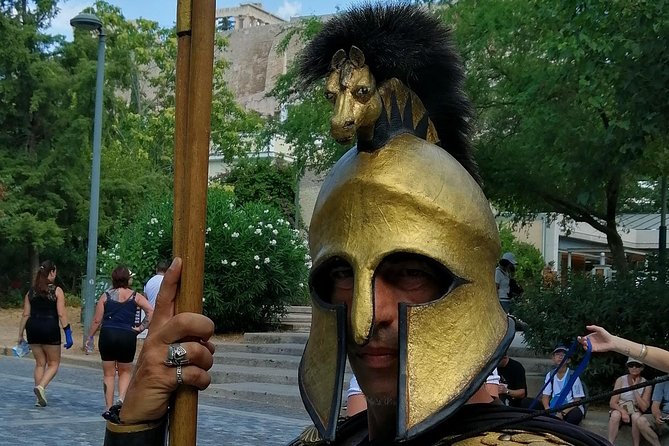
Reviewed · DELPHI TOURS FROM ATHENS
2 Days Herodotus Tour – Marathon, Thermopylae, Delphi, Thebes, Plataea, Salamis
Marathon, Thermopylae, and Plataea are not just names from an ancient history book. They are real places spread across central Greece, connected by long roads, mountain passes, springs, coastlines, and museums. This private two-day trip lets you follow that story from the first battlefield at Marathon to the Greek victory at Plataea, with Delphi added as the major cultural stop.
I like the private car and flexible pace, especially because these sites are scattered and public transport would be awkward. I also like the mix of battlefields, museums, mountain scenery, and small historical stops rather than a single long museum day. Driver Nikolaos has been praised for being informative and accommodating, which is exactly what helps on a route this full.
The main caution is time. Day one runs about 12 hours, and both days pack in a lot of ground. Your driver provides historical information and an audio documentary, but is not a licensed guide inside Delphi or the museums. You will need to arrange an archaeologist guide separately if you want detailed commentary while walking through the sites.
Key points before you reserve
- Marathon and Thermopylae in one long first day: You visit the burial mound, museum, battlefield, hot springs, and Leonidas area before crossing toward Mount Parnassus.
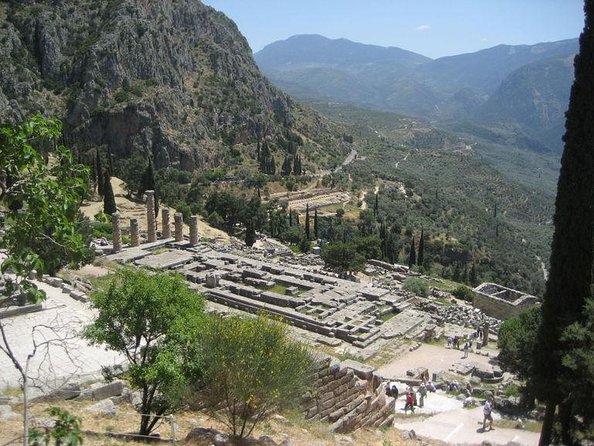
- Delphi gets the strongest archaeological focus: Allow about two and a half hours for the museum, ancient sanctuary, and nearby Tholos of Athena Pronaia.
- Private transport changes the experience: Fuel, tolls, parking, hotel pickup, and drop-off are included, with sedan, SUV, minivan, and minibus options.
- The price is not all-inclusive: The listed cost is $694.56 per person, while site admissions and overnight accommodation are extra.
- The route ends near Salamis, not at the naval battlefield itself: The final stop is the Perama and Salamis ferry line, reached after Plataea and Mount Cithaeron.
- This suits history-minded visitors with stamina: You get a rare route through the Greco-Persian Wars, but you should be comfortable with early starts, long drives, and many short stops.
Why this route matters
The Greco-Persian Wars are often taught as a string of famous names: Marathon, Thermopylae, Salamis, and Plataea. On a map, however, these places make more sense. Marathon lies northeast of Athens, Thermopylae guards the route through central Greece, Delphi sits high on Mount Parnassus, and Plataea lies in Boeotia west of Thebes.
That geography is the real strength of this trip. You are not simply checking off monuments. You are seeing how coastlines, mountain passes, springs, and narrow routes shaped military decisions.
The private format helps because the route is difficult to manage independently in two days. You are picked up at your hotel or apartment in Athens or Piraeus, usually at 8:00 a.m., and travel in an air-conditioned vehicle reserved for your group. Fuel, road tolls, parking, and hotel drop-off are included.
You can choose a sedan or SUV for up to three adults, or a family of four with two children up to age 11. Larger groups can use a minivan for up to seven people or a minibus for up to 14. The pricing changes with the vehicle and group size, so compare the final total rather than judging the per-person figure alone.
More Delphi trips from Athens:
- Athens: Mythology of Delphi, Museum and Arachova Guided Tour
★ 4.6 · 4,008 reviews - From Athens: Delphi Full Day V.R. Audio Guided Tour
★ 4.6 · 3,028 reviews - From Athens: Small-Group Delphi, Museum & Arachova Day Trip
★ 4.8 · 2,476 reviews
Marathon’s mound and the road to Schinias
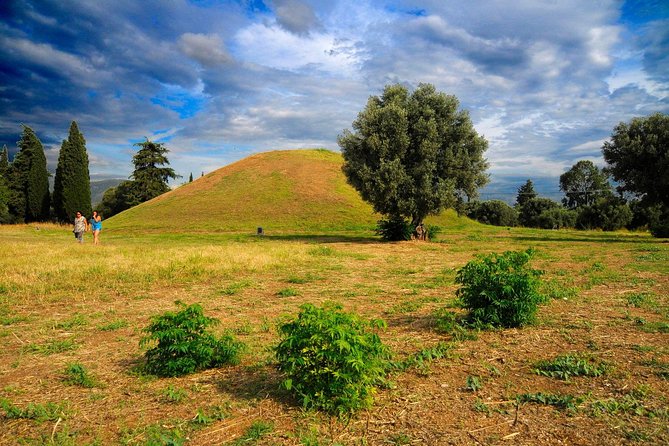
The first major stop is the Tomb of the Athenians, about a kilometer west of Marathon beach. This 10-meter-high burial mound marks the burial place of Athenian soldiers who died in the 490 BC battle.
The mound is simple, but that is part of its power. There is no grand temple here to distract you. You see an earthen monument in the setting where the battle took place, and the site gives the opening chapter of the war a physical sense of place.
Plan about an hour here. Admission is listed at €6, with a reduced price of €3, and the ticket also includes the Marathon Archaeological Museum. Since admission is not included in the tour price, keep cash or a payment method ready for site tickets.
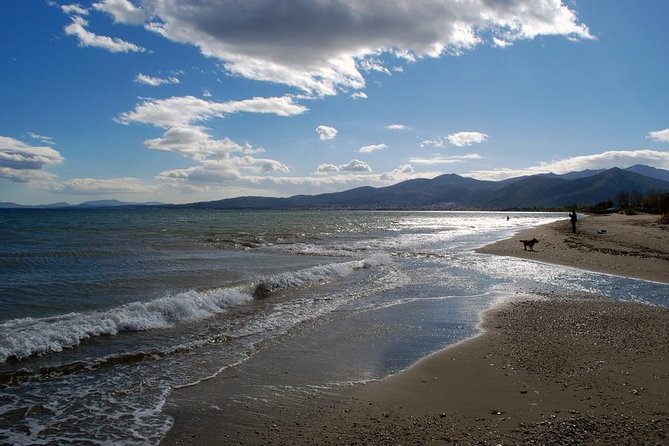
The short stop at Schinias adds the coastal setting. Today, the area is known for clear water and beach facilities, but the bay also helps you understand why Marathon was important. You get only about 15 minutes, so think of this as a look and photo stop rather than beach time.
The road through modern Marathon and along Leoforos Marathonos connects ancient history with the modern Olympic story. The Athens Marathon begins in the modern town and finishes at the Panathenaic Stadium area in Athens. You will not run the route, of course, but seeing the road gives you a useful link between the ancient battle and the modern race.
The Marathon Museum and Lake Marathon
The Archaeological Museum of Marathon is only about five kilometers from the bay. It is a compact but worthwhile stop, with finds from the local area ranging from Neolithic pottery to objects connected with the Tomb of the Athenians.
You get roughly 30 minutes here. That is enough for a focused look, but not enough for a slow museum study. I would pay closest attention to the material from the burial mound and the Cave of Pan, since those objects make the surrounding sites easier to understand.
The drive also includes Lake Marathon, a reservoir created by the Marathon Dam where the Charadros and Varnavas streams meet. It supplied Athens from 1931 until 1959, before water from Lake Yliki became available. The lake is not a major archaeological stop, but it gives you a change of pace and a scenic pause before the long drive west.
Thermopylae, Leonidas, and the Hot Gates
Thermopylae is the emotional center of the first day. The narrow passage became famous for the 480 BC battle between the Greek forces, including the Spartans, and the invading Persian army.
The modern geography has changed, so the battlefield is best understood with help from the museum and the driver’s explanation. The route along the east coast of the Greek mainland has long been a natural passage from north to south, which explains why Thermopylae saw repeated battles.
You get about an hour at the battlefield, followed by another hour at the Thermopylae Museum. The museum sits near the Leonidas monument and focuses on the battle. Admission is listed at €3 and is paid separately.
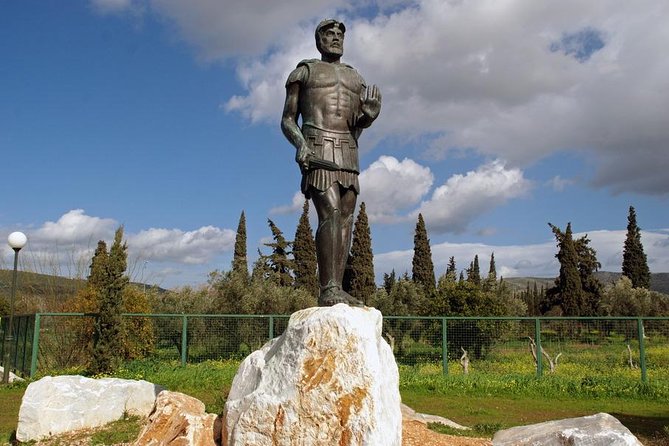
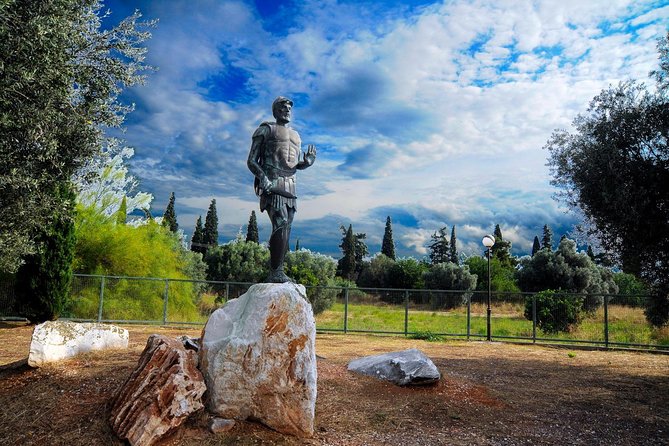
The Leonidas monument gives the place a clear focal point. The famous epitaph associated with the dead Spartans is traditionally rendered as: Go tell the Spartans, stranger passing by, that here obedient to their laws we lie. Reading those words at the site adds weight to what might otherwise feel like a familiar schoolbook story.
A 30-minute stop at Loutra Thermopilon brings you to the hot springs. The name Thermopylae means hot gates, and the springs explain both the ancient name and the area’s mythic associations with entrances to Hades. This is another brief stop, but it makes the terrain more tangible.
The first day is demanding. The route includes Marathon, several short stops, Thermopylae, and a drive through central Greece toward Mount Parnassus. You should expect about 12 hours on the road and at the sites. The benefit is that you cover a remarkable amount of ground; the cost is that you will not linger everywhere.
More Thermopylae trips from Athens:
- Delphi, Thermopylae, Corycian Cave 300 Spartans Tour
★ 5.0 · 492 reviews - Delphi & Thermopylae Full Day Private Tour from Athens
★ 5.0 · 259 reviews - Thermopylae, Meteora and Delphi Private Full Day Tour
★ 5.0 · 216 reviews - Thermopylae and Delphi Private Full-Day Tour from Athens
★ 5.0 · 114 reviews
Crossing Mount Parnassus
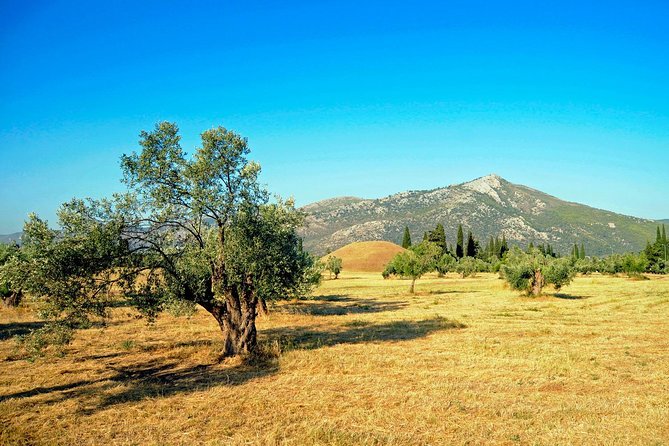
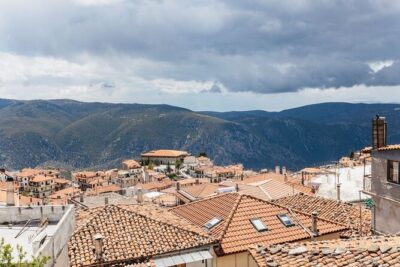
The drive toward Delphi passes through Mount Parnassus, one of mainland Greece’s highest mountain regions. The mountain rises above Delphi and the Gulf of Corinth, with views across olive groves and the countryside.
This portion takes about an hour and a half according to the schedule. It is not a formal mountain excursion, so do not expect a hike or a long scenic walk. Instead, it is a road journey through the mountain setting that gives Delphi its dramatic position.
Overnight accommodation is arranged in a traditional village on the slopes of Parnassus. Selected boutique, A-class, or three to four-star hotels with breakfast can be reserved for an additional charge. The accommodation cost is quoted separately, from €125 per double room, or €150 on weekends and holidays. The driver’s room is complimentary when the operator arranges the accommodation.
You need to book at least two weeks ahead because rooms are reserved for both you and the driver. If you book your own hotel, you must reserve an additional room for the driver. This detail matters when comparing costs, since a seemingly lower tour price may rise once lodging and admissions are added.
Delphi: museum, sanctuary, and the Tholos
Day two begins with Delphi, the cultural high point of the trip. The Archaeological Museum of Delphi holds sculpture, architectural pieces, statues, and smaller offerings from the sanctuary. Its collections trace Delphi from the eighth century BC through Late Antiquity.
Allow about an hour in the museum. The visit is much more useful if you remember that Delphi was not only a religious center. Greek city-states built monuments there, displayed offerings, and used the sanctuary as a shared meeting place. The objects help you see the political side of the oracle, not just the story of the Pythia.
The ancient sanctuary takes about an hour and a half. It sits on the southwestern slope of Parnassus, overlooking the Phocis valley and the coastal plain. Ancient Greeks treated Delphi as the center of the world, marked by the omphalos stone.
The site is extensive, and the slope can make walking tiring. Wear practical shoes and give yourself time to look beyond the most photographed ruins. Delphi’s location is a major part of the experience, so pause for the views instead of rushing from one monument to the next.
The combined summer admission for the site and museum is listed at €20, with a reduced winter price of €10. That ticket is separate from the tour price. The driver can explain the setting and provide an audio documentary during the journey, but does not accompany you as a licensed guide inside the archaeological area.
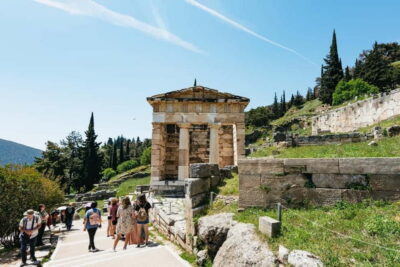
Nearby, the Tholos of Athena Pronaia gives you a shorter architectural stop. This circular building was created between 380 and 360 BC and originally had 20 Doric columns around its exterior. The remains are especially photogenic because of the building’s circular form and mountain setting.
The schedule allows about 30 minutes here. That is enough to appreciate the structure and take photographs, though not enough for a detailed study of the sanctuary’s full history.
Thebes and the road to Plataea
After Delphi, the route continues toward Thebes. The Archaeological Museum of Thebes covers a long period, from the Paleolithic age through the post-Byzantine era, with material from across Boeotia.
You get about an hour in the museum. Its collections include rare and unusual objects, so this is not merely a spare stop added to fill the day. It gives you a regional view of Boeotia and helps connect the ancient sites you have already seen.
The museum admission is listed at €6 in summer and €3 in winter. Again, this is not included in the tour price.
Plataea is the final major battlefield. Here, you travel back to 479 BC, when the Greek victory helped end the Persian invasion of mainland Greece. The stop includes the battlefield and Gargathia Spring, described as the place where the battle began.
Plataea is less polished than Delphi, and that is part of the appeal. You are visiting an open historical setting rather than a large monument complex. The battlefield requires imagination, so the driver’s explanations and the audio material matter more here than they do at a clearly marked temple.
The scheduled visit lasts about 30 minutes. That is enough for an overview and a few photographs, but not for a long field study. If Plataea is the main reason you are booking, ask in advance how much time can be adjusted there.
Mount Cithaeron, Eleutherai, and the Salamis ferry line
After Plataea, the route crosses Mount Cithaeron toward Elefsina and the coast. Mount Cithaeron is tied to the old road between Athens and Thebes and to the ancient fortress of Eleutherai, also known as Gyftokastro.
The fortress controlled a narrow passage between Athens and Thebes. The route also touches the ancient connection with Dionysus Eleuthereus, whose cult statue was reportedly moved from Eleutherai to Athens in the sixth century BC.
This is a drive-by historical area rather than a full fortress visit. You see how mountain routes controlled movement between regions, which fits the military theme of the trip even though the stop is not given a long walking period.
The final listed stop is the Perama and Salamis ferry line. Perama is a port city on the Saronic Gulf and takes its name from the Greek word for passage. The stop lasts about 30 minutes.
Be clear about what is included: the schedule takes you to the ferry-line area, but it does not promise a ferry crossing or a visit to the island’s naval battlefield. Salamis is part of the wider route and historical theme, yet this experience gives it less attention than Marathon, Thermopylae, Delphi, or Plataea.
What the $694.56 price really covers
At $694.56 per person, this is not a budget sightseeing outing. Its value comes from the transport and the amount of ground covered, not from bundled admission or a full guide service.
The private vehicle includes fuel, toll roads, parking, hotel pickup, and drop-off. You also have the driver for two days, rather than joining a large coach with a fixed pace. For a group sharing a vehicle, the cost can make more sense than it does for one or two people traveling alone.
You still need to budget for:
- Marathon and museum admission
- Thermopylae Museum admission
- Delphi site and museum admission
- Thebes Archaeological Museum admission
- Overnight accommodation and breakfast
- Tips, with €1 per person listed as the suggested minimum
The operator can arrange accommodation, but it costs extra. The price is from €125 per double room and rises to €150 on weekends and holidays. Group discounts are available when more than three rooms are reserved, with a listed 10 percent discount.
The best value comes if you care about the entire route and want private logistics. If you only want Delphi and Thermopylae, a shorter private trip may suit you better. If you want an expert archaeologist explaining every monument, add that service to your budget.
Who should book this two-day journey
I would recommend this trip to readers who already have a strong interest in ancient Greece, military history, or Herodotus. It is also a good choice if you want to see places that are difficult to link with buses and do not want to drive yourself.
Families can benefit from the private format, especially with the vehicle choices and free admission noted for up to two children under age 11 in the larger vehicle options. Still, the long first day may test younger children, and the schedule contains many historical stops rather than entertainment breaks.
The trip is less suitable if you prefer slow mornings, long meals, or unplanned time in one village. It is also not the best match if you expect the driver to lead a detailed walking tour at every site. The driver is an English-speaking transport professional with historical information, not a licensed tourist guide.
One clear strength is the personal service. The pickup and drop-off can be arranged from an Athens or Piraeus hotel or apartment, and Nikolaos has been specifically praised for being informative and accommodating. That kind of flexibility matters when a route includes so many roads, museums, and short stops.
Should you book it?
Book this tour if you want a serious two-day survey of the Greco-Persian War sites and value private transport more than a low price. You will see Marathon, Thermopylae, Delphi, Thebes, Plataea, Mount Parnassus, Mount Cithaeron, and the Salamis ferry area without managing the complicated driving yourself.
Before paying, confirm the vehicle, final group price, hotel cost, and estimated admission total. Ask how much flexibility you have at Plataea and Salamis, especially if those places matter most to you. With realistic expectations about the long hours and the driver’s guiding limits, this is a strong choice for a history-focused visit beyond Athens.
FAQ
What is the starting time for the tour?
Pickup begins at 8:00 a.m. The tour can pick you up from a hotel or apartment in Athens or Piraeus, or from another location by request.
Is this a private tour?
Yes. Only your group participates, and the vehicle can be a sedan, SUV, minivan, or minibus depending on group size.
Is accommodation included in the tour price?
No. Accommodation near Mount Parnassus is arranged at an additional cost, from €125 per double room, or €150 on weekends and holidays. Breakfast is included with the arranged accommodation.
Are entrance tickets included?
No. Admissions for Marathon, Thermopylae, Delphi, and Thebes are separate. Listed prices include €6 for the Marathon Tomb, €3 for the Thermopylae Museum, €20 for Delphi in summer, and €6 for the Thebes Museum in summer, with reduced seasonal prices noted for some sites.
Is the driver a licensed tour guide?
No. The English-speaking driver provides historical information and an audio documentary during the journey, but does not accompany you as a licensed guide inside Delphi or other archaeological sites and museums.
How far ahead should I book?
You should book at least two weeks ahead because accommodation must be reserved for you and the driver. Mount Parnassus and Delphi are especially popular.
What is the cancellation policy?
You receive a full refund if you cancel at least six full days before the start time. Cancellations made two to six full days before the start time receive a 50 percent refund, while cancellations less than two full days before the start time are not refunded.
More two-day trips from Athens
- From Athens: Delphi and Meteora 2-Day Guided Tour
★ 4.5 · 825 reviews - 2-Day Tour to Delphi & Meteora with Guide and Tickets From Athens
★ 4.0 · 692 reviews - From Athens: Delphi and Meteora 2-Day Tour with Hotel
★ 4.4 · 392 reviews - Athens: 2 Days in Meteora with 2 Guided Tours and Hotel Stay
★ 4.7 · 376 reviews
More Marathon trips from Athens
- Athens: Marathon Cape and Bay of Schinias Snorkeling Trip
★ 4.8 · 131 reviews - Private Off-Road Tour Marathon Lake and Mountain from Athens
★ 5.0 · 90 reviews - Marathon & Thermopylae Battlefields Private Day Tour from Athens
★ 5.0 · 64 reviews - Private Luxury Tour: Marathon – Battle & Run That Changed History
★ 5.0 · 30 reviews
Newly reviewed around Athens
- Athens: workshop for painting landscape with local artist★ 4.6 · 3 reviews
- Athens: Greek Wine & Olive Oil Tasting at Brettos Plaka★ 4.5 · 3 reviews
- Outdoor Yoga and Pilates with Akropolis view★ 4.0 · 5 reviews
- Acropolis of Athens: 60′ Tour in a Vintage Motorcycle★ 5.0 · 4 reviews
- Ultimate Tasting of the Volcanic Wines of Greece★ 5.0 · 3 reviews
- Athens at Twilight Night Tour with Drinks and Meze Dishes★ 4.8 · 4 reviews
- Breakfast in the markets with olive oil and honey tasting★ 4.8 · 8 reviews
- workshop for painting acropolis/landscape with local artist★ 5.0 · 3 reviews
Delphi Tours from Athens, compared.
Mythology of Delphi, Museum and Arachova Guided Tour
Read our review →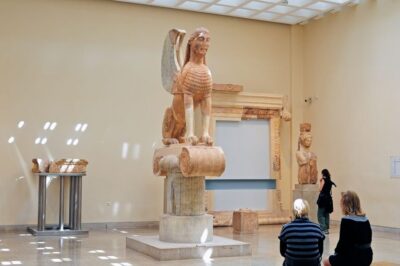
Small-Group Delphi, Museum & Arachova Day Trip
Read our review →
Delphi English Day Trip from Athens with Official Guide
Read our review →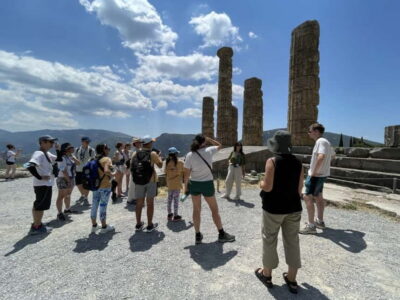
Delphi Guided Trip with Optional Lunch and Entry
Read our review →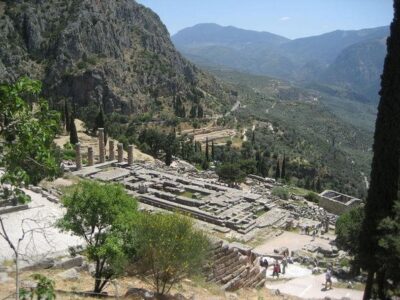
Historical Delphi One Day Tour with Arachova Stop & Expert Guide
Read our review →
Premium Delphi Day Trip with an Expert Guide, Museum & Lunch
Read our review →
Browse the lists this tour appears in