
Reviewed · ATHENS WALKING TOURS
Hills Of Athens Walking Tour
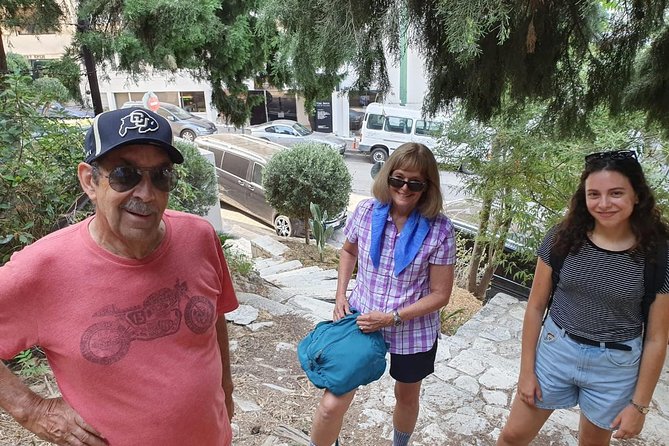
Athens reveals itself best from above, and this four-to-five-hour walking tour links several of the city’s finest hills and viewpoints. You climb Mount Lycabettus, cross central Athens, then finish among Areopagus, Filopappou, and Pnyx, with the Acropolis area close at hand.
I like two things here. First, a guide handles the route, so you can watch the city instead of checking a map. Second, the tour uses less crowded green spaces and hill paths, not just the usual pavement between famous monuments. The morning or afternoon departure also helps you avoid the strongest midday heat.
The main consideration is physical effort. This is an urban hike, not a flat sightseeing stroll. Several climbs and uneven paths are built into the day, and the archaeological sites are viewed from outside rather than entered.
Key points at a glance
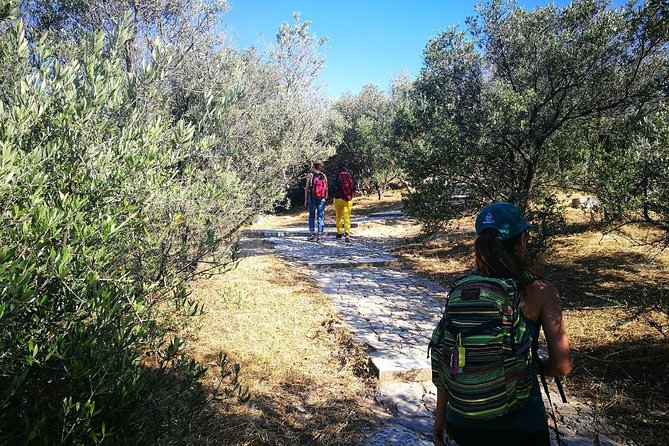
- Mount Lycabettus begins the day with wide Athens views, including a useful introduction to the city’s size and shape.
- The route links modern neighborhoods with ancient Athens, passing Kolonaki, the Presidential Mansion, the National Garden, and Hadrian’s Arch.
- Areopagus, Filopappou, and Pnyx provide the strongest walking section, with hills, open views, and important ancient meeting places.
- The tour is capped at 12 people, which should make it easier to hear the guide and keep a steady pace.
- Photos, videos, and a light snack are included, adding modest value to the $52.16 price.
- The finish is in front of the Acropolis Museum, a convenient point for continuing your sightseeing.
Why this Athens walk is different
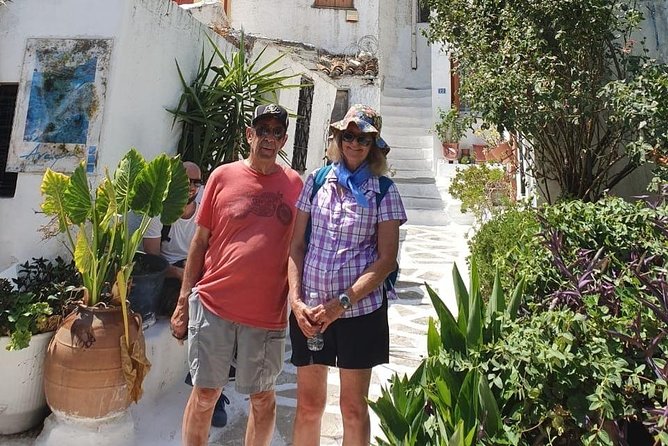
Many Athens tours keep to the Acropolis, Plaka, and the main ancient streets. This one adds the city’s hills. That changes the experience. You get a better sense of how Athens spreads between mountains, the sea, and the central archaeological zone.
The route also gives you a useful mix of settings. You pass through Kolonaki, one of the city’s polished central districts, then enter the National Garden, walk beside major ancient monuments, and climb through the rocky hills south of the Acropolis.
I would not choose this as your only introduction to ancient Athens if you want to enter the Acropolis or the Temple of Olympian Zeus. No archaeological entrance fees are included, and the tour does not go inside the listed monuments. I would choose it as an active companion to those visits.
The price is $52.16 per person. For four to five hours with a guide, a small group, a snack, and photos and videos, that is a reasonable price if you value route planning and local explanation. It is less appealing if you only want ticketed sights, since entrance fees are not part of the experience.
More walking tours in Athens:
- Athens: Acropolis and Parthenon Guided Walking Tour
★ 4.6 · 5,882 reviews - Greek Food Walking Tour in Athens
★ 5.0 · 4,740 reviews - Acropolis: Acropolis and Parthenon Guided Walking Tour
★ 4.7 · 3,442 reviews
Starting above the city at Mount Lycabettus
The walk begins at Evangelismos Station, at the base area for the climb toward Mount Lycabettus, also written as Lykavittos. This Cretaceous limestone hill is one of Athens’s best viewpoints.
The climb gives the tour an active start. You will not simply stop at a lookout after arriving by vehicle. You work your way upward, then pause for views over the city. That first high point helps you understand Athens before the route moves into streets, gardens, and ancient sites.
A ten-minute stop is listed at the hill, but the full walking time around the route makes the day much longer than the individual stop times suggest. Wear shoes suitable for hills and uneven ground. The supplied information does not give a precise elevation gain or trail surface, so you should be ready for a genuine city hike rather than a gentle promenade.
The morning departure is my preference for this opening climb. An afternoon option is available, and it may suit you if you prefer a later start, but sun exposure and heat remain practical concerns in Athens.
Kolonaki, the Presidential Mansion, and the National Garden
From Lycabettus, the route passes through Kolonaki. This is a good contrast to the hill. You move from open views and stone paths into a central neighborhood where Athenians meet for coffee and drinks.
Kolonaki is not presented as a major sightseeing stop, and that is part of its value. You see a working part of central Athens rather than spending the whole day inside formal monuments. The guide can also help connect the city you see around you with the more familiar ancient sites ahead.
The next short stop is outside the Presidential Mansion. You also see the Greek Parliament from the outside, with a chance of catching the changing of the guards if the timing works. The change is not guaranteed, so treat it as a bonus rather than a reason to book the tour.
The National Garden provides a welcome break from stone streets. You walk through this planted central park for about ten minutes. It is a simple stop, but it helps pace the route and gives you shade and greenery between the hills and the ancient monuments.
Because the route moves through several parts of central Athens, the guide-led format matters here. You do not need to work out the best connection between Kolonaki, the government district, the garden, and the Acropolis area. You can concentrate on the setting and keep your energy for the later climbs.
Ancient Athens from the outside
The tour then passes by the Temple of Olympian Zeus. You do not enter, and the admission fee is not included. Still, seeing the temple from outside gives you a chance to appreciate its scale and position near the Acropolis zone.
The same approach applies to Hadrian’s Arch. This landmark marks a striking meeting point between the Roman city and the older Greek city. You see it while walking by, rather than stopping for a ticketed visit.
Next comes the Odeon of Herod Atticus, usually called the Herod Atticus Odeon. The route passes the famous theater without entering. Its curved stone structure sits directly below the Acropolis, and even a brief outside look helps you place the theater within the wider ancient site.
These stops work best if you already plan to visit the Acropolis or the Acropolis Museum separately. You receive orientation and outside views, but not the time needed for a full archaeological visit. The tour ends in front of the Acropolis Museum, so you can continue there afterward if you have a separate admission plan.
Do not expect a full lecture at each monument. The listed stop times are short, about five minutes at some locations. The strength of this experience is the connected route, not long stationary talks at every ruin.
A different kind of day out from Athens:
- Athens: Acropolis & up to 5 Archaeological Sites Combo Pass
★ 4.4 · 12,619 reviews - Athens: Acropolis Ticket with Optional Audio or Live Guide
★ 4.2 · 11,055 reviews - Athens: Acropolis, Parthenon & Acropolis Museum Guided Tour
★ 4.8 · 9,316 reviews - Athens: Cape Sounion & Poseidon Temple Sunset Half-Day Trip
★ 4.8 · 8,241 reviews
Climbing Areopagus and Filopappou
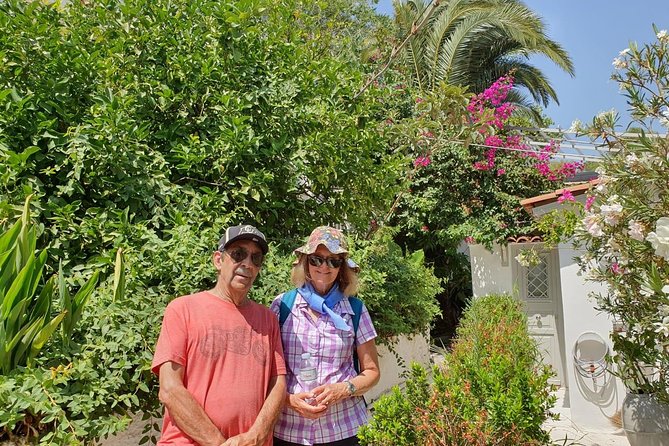
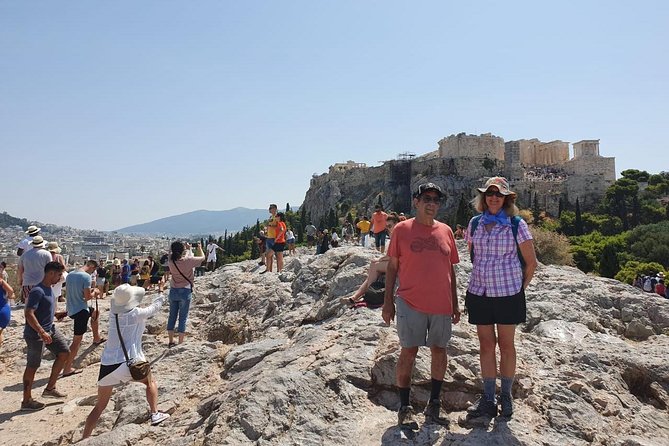
The walking becomes more demanding after the central sights. You climb Areopagus Hill, a rocky rise beside the Acropolis. The stop is listed at about ten minutes, but reaching it is part of the experience.
Areopagus is one of the best places to pause and look across the ancient center. The rock can be uneven, so take care with your footing. The supplied details do not promise special equipment or a specific accessibility arrangement, although most participants can take part.
From Areopagus, the route continues toward Filopappou Hill. This is another uphill section, and it gives you a quieter view of the Acropolis and the surrounding city. The tour description stresses lesser-known lookouts, and this part of the route is where that promise matters most.
Filopappou feels different from the crowded approaches around the Acropolis. You are still close to Athens’s most famous monument, yet the setting is more open and less formal. The hill also rewards you with changing views as you walk, rather than one single lookout and a quick photo stop.
I like this section for its balance of exercise and place. You are not hiking in remote countryside. You are walking through the center of Athens, yet the hills can make the city feel surprisingly spacious.
Pnyx and the meaning of the final stop
The last major climb is Pnyx, where ancient Athenians assembled to discuss and vote on important matters. That fact gives the final stop more weight than a standard viewpoint.
Pnyx connects the physical act of walking with the civic life of ancient Athens. You are standing in a place linked to public debate and decision-making, not simply looking at another old wall. The guide’s explanation can help turn the hill into a meaningful part of your visit.
The route finishes on Dionysiou Areopagitou Street, in front of the Acropolis Museum. This is a strong ending point. You can stop for lunch, continue toward the Acropolis, explore the pedestrian streets near the museum, or use public transport from the central area.
The finish also makes the tour easy to pair with a separate museum visit. Just remember that your energy may be lower after several hours of walking and hills. If you plan the Acropolis Museum immediately afterward, allow yourself time for a break.
Guides, group size, and the human side
Aegean Outdoors supplies an English-speaking guide, and the group is limited to 12 people. That is small enough for a more personal walk without the cost of a private tour.
Guide names connected with this experience include Helena, Archelaos, and Nondas. The company also works with other guides, so you should not assume one particular person will lead your departure. If you have a language request, contact the provider, since other languages may be arranged.
The strongest praise attached to the company centers on guides who are attentive, organized, easygoing, and genuinely interested in the work. That matters on a walking tour because the guide sets the pace, explains the places between stops, and helps the group move through the city without fuss.
Photos and videos are included. This is a useful extra if you want a record of the walk without stopping constantly to take your own pictures. A light snack is also included, though the details of the snack are not specified.
Timing, transport, and physical demands
You can choose a morning or afternoon departure. The choice lets you fit the walk around other Athens plans and avoid the middle of the day, when the heat can be strongest.
The meeting point is at Evangelismos Station, and the tour is near public transportation. Transfers to the start and finish are not included. Private transfers are available on request, but they cost extra.
The route lasts approximately four to five hours. That includes urban walking, several climbs, viewpoint stops, and short visits outside monuments. Children must be accompanied by an adult.
I would bring water, sun protection, and shoes with a secure grip. These are practical suggestions for any Athens hill walk, not special equipment promised by the operator. Since the route includes Areopagus, Filopappou, and Pnyx, you should also consider how comfortable you are with uneven ground and repeated uphill sections.
The tour is described as suitable for most participants, but no detailed accessibility information is provided. If you need a step-free route or have concerns about hills, contact Aegean Outdoors before booking.
Is $52.16 a fair price?
At $52.16, this is not the cheapest way to see Athens. You could walk around the central sights independently for less. The value comes from the linked route, the guide, the small group, the historical context, and the added photos, videos, and snack.
You also save planning time. Connecting Lycabettus, Kolonaki, the Presidential Mansion, the National Garden, the Roman monuments, and the western Acropolis hills takes thought if you do it alone. A guide removes that work and keeps the day moving.
The price is easier to justify if you want an active introduction to Athens and do not mind seeing the ancient sites from outside. It is harder to justify if your main goal is entry to archaeological sites. Those tickets and museum visits need to be arranged separately.
The tour is popular enough that it is booked about 75 days ahead on average. If your dates are fixed, booking early is sensible, especially because the group limit is 12 people.
Who should book this walk?
I would recommend it to you if you enjoy walking, want broad city views, and prefer a mix of modern Athens, gardens, hills, and ancient places. It is also a good fit for a first or second day in Athens, when you want to understand the city’s layout before visiting the major sites in detail.
Families can consider it, provided children are accompanied by adults and are comfortable with the pace and climbs. Active couples, friends, and solo visitors should find the small group format easy to manage.
I would skip it if you want a slow museum day, a flat route, or inside access to the Temple of Olympian Zeus, the Herod Atticus Odeon, or other archaeological sites. I would also think twice if heat or uneven paths are a serious concern.
Aegean Outdoors has a perfect 5 rating from 32 listed reviews, with 100 percent recommending the experience. That is a strong signal, though the comments also cover the company’s wider hiking and custom tour work. The most relevant pattern is clear: the company is praised for caring guides, good organization, and walks that mix history with exercise.
You can cancel for a full refund up to 24 hours before the local start time. Cancellations or changes made inside that window are not refunded or accepted.
FAQ
How long does the Hills of Athens Walking Tour last?
The tour lasts approximately four to five hours.
What language is the tour offered in?
The standard tour is offered in English. Other languages may be available if you contact Aegean Outdoors.
Where does the tour begin?
It begins at Evangelismos Station in Athens.
Where does the tour finish?
The tour finishes at Dionysiou Areopagitou 17, in front of the Acropolis Museum.
Does the tour enter the archaeological sites?
No. The route passes the Temple of Olympian Zeus, Hadrian’s Arch, and the Herod Atticus Odeon from outside. Entrance fees and archaeological site visits are not included.
How many people can join the tour?
The maximum group size is 12 participants.
Are food and photos included?
A light snack, photos, and videos from the tour are included.
Can I cancel for a full refund?
Yes. You can cancel at least 24 hours before the local start time for a full refund. Changes and cancellations made less than 24 hours before the start are not accepted or refunded.
Should you book it?
Book this tour if you want Athens to be more than a checklist of monuments. You will climb three important hills, pass through central neighborhoods and gardens, and see the Acropolis area from several angles.
The best reason to book is the route itself. It connects places that are easy to visit separately but more meaningful when walked as one active story. Just bring the right shoes, save your archaeological entrances for another visit, and allow enough time to enjoy the hills without rushing.
Newly reviewed around Athens
- Athens: Greek Wine & Olive Oil Tasting at Brettos Plaka★ 4.5 · 3 reviews
- Athens: workshop for painting landscape with local artist★ 4.6 · 3 reviews
- Outdoor Yoga and Pilates with Akropolis view★ 4.0 · 5 reviews
- Acropolis of Athens: 60′ Tour in a Vintage Motorcycle★ 5.0 · 4 reviews
- Ultimate Tasting of the Volcanic Wines of Greece★ 5.0 · 3 reviews
- workshop for painting acropolis/landscape with local artist★ 5.0 · 3 reviews
- Athens at Twilight Night Tour with Drinks and Meze Dishes★ 4.8 · 4 reviews
- Breakfast in the markets with olive oil and honey tasting★ 4.8 · 8 reviews
Athens Walking Tours, compared.


Acropolis monuments & Parthenon Walking Tour with Optional Acropolis Museum
Read our review →

Athens Authentic Greek Food Walking Tour (Small Group)
Read our review →
Early Morning Acropolis & Old Athens Guided Walking Tour
Read our review →
Browse the lists this tour appears in