
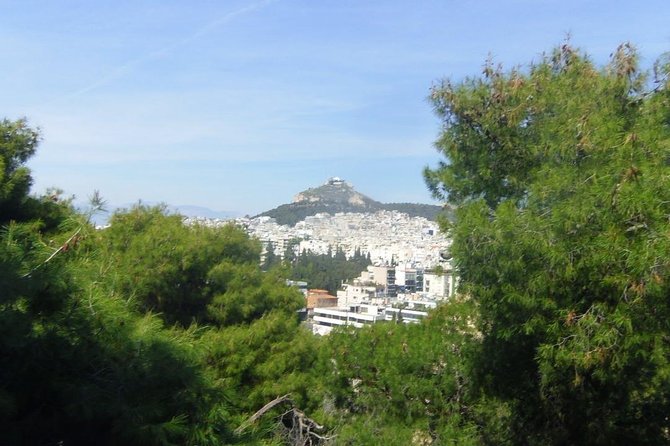
Reviewed · ATHENS WALKING TOURS
First Cemetery of Athens Walking Tour
Athens’ First Cemetery is not a gloomy stop. It is a quiet open-air museum, filled with carved angels, mourning figures, family tombs, and the graves of Greek artists, politicians, poets, actors, and prime ministers. The art historian guide gives the sculpture a human meaning instead of treating it as a string of names.
I like the walk through the Mets neighborhood, which adds local streets and everyday Athens to the cemetery visit. I also like the tour’s thoughtful route, beginning near the Temple of Olympian Zeus and ending by the National Garden, so you get history, art, and a useful city walk in one outing.
The main drawback is the subject itself: if cemeteries make you uncomfortable, three hours may feel long. You should also plan for walking in all weather and wear proper shoes, since the route includes streets, cemetery paths, and a hill.
Key points to know before booking
- The cemetery is an outdoor art collection: See elaborate 19th-century funerary sculpture and the final resting places of prominent Greeks.
- The route connects several parts of central Athens: Walk from the Temple of Olympian Zeus through Anapafseos Street and Mets, then toward the National Garden and Syntagma.
- An art historian leads the visit: The focus is on sculpture, customs, symbolism, and the people buried here.
- It is a private activity: Only your own group participates, which allows time for questions and a quieter pace.
- Guides may include Hercules or Ellania: Both are praised for clear explanations, local advice, and personal attention.
- The cost is $65.06 per person: The value is strongest if you want a specialist-led experience rather than a quick, self-guided cemetery visit.
Why Athens’ First Cemetery deserves your time
Most first-time visitors to Athens head for the Acropolis, the Ancient Agora, and the Temple of Olympian Zeus. Those sites deserve their fame, but the First Cemetery offers a different view of the city. Here, you meet modern Greece through its artists, political leaders, writers, performers, and families.
The cemetery opened in the 19th century, after Athens became the capital of the new Greek state. That timing matters. The city needed an official burial ground worthy of its new role, and the cemetery became both a place of mourning and a display of artistic ambition.
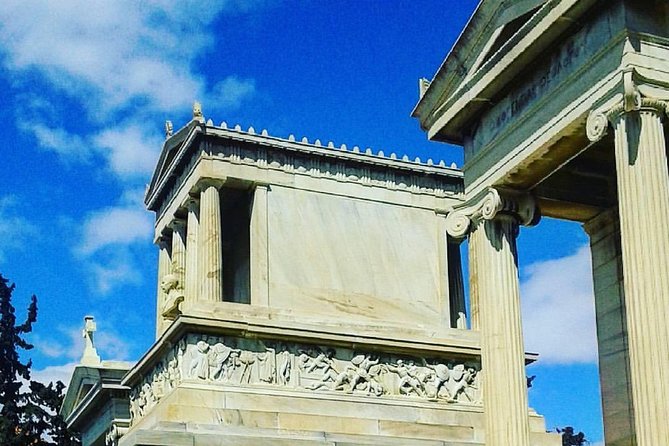
I find the sculpture especially appealing because it is easy to read with your eyes. You may see a grieving figure, a child, a wreath, an urn, or a figure resting beside a tomb. Your guide explains the different styles and the customs behind them, helping you understand what families wanted these monuments to say.
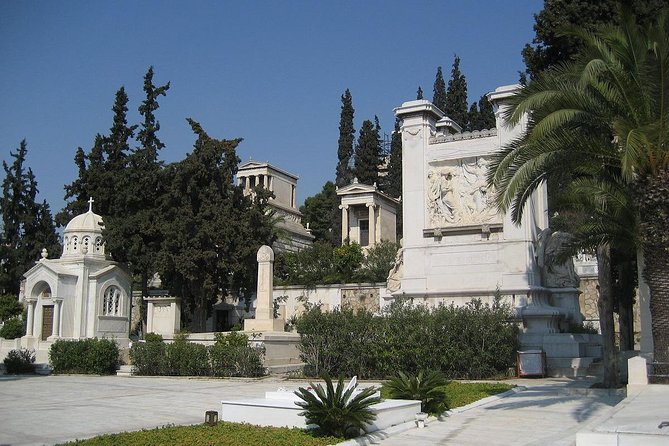
The setting also changes your sense of the city. Instead of traffic and marble ruins, you get trees, church buildings, shaded paths, and a slower pace. It remains a working cemetery, so respectful behavior is essential. This is not a place for loud commentary or casual photo hunting.
More walking tours in Athens:
- Athens: Acropolis and Parthenon Guided Walking Tour
★ 4.6 · 5,882 reviews - Greek Food Walking Tour in Athens
★ 5.0 · 4,740 reviews - Acropolis: Acropolis and Parthenon Guided Walking Tour
★ 4.7 · 3,442 reviews
Starting beside the Temple of Olympian Zeus
The meeting point is at 7 Stratigou Makrygianni Street, near the Temple of Olympian Zeus. The tour begins with about ten minutes around the ancient monument, using it as a starting point for the story of modern Athens.
Your guide discusses the decision to make Athens the capital of Greece and why a new capital needed a first official cemetery. This is a useful opening because it links ancient Athens with the city that emerged as the Greek state took shape in the 19th century.
The temple itself is not entered on this tour, and no admission ticket is included or needed for this brief stop. You are looking at it from the route while hearing the historical background.
This opening also gives you a clear sense of the tour’s approach. It is not simply a walk from one address to another. The guide uses the city around you to explain how ideas about public life, death, status, and memory changed over time.
Anapafseos Street and Greek customs of mourning
From the temple area, the route continues toward Anapafseos Street. The name means rest, an apt entrance to the First Cemetery.
This short section introduces Greek funerary customs and the role sculpture has played in expressing grief. The guide also places burial practices in a longer Greek context, reaching back to antiquity without turning the tour into a standard ancient-sites lecture.
That connection is one of the tour’s strongest features. Athens can make the ancient world feel separate from daily life, but the cemetery shows how older ideas about death and remembrance continued to influence later generations.
Expect around ten minutes here before reaching the main cemetery area. Since the tour takes place outdoors, comfortable clothing and shoes matter from the start. The experience operates in all weather, so light rain protection or sun protection may be sensible depending on the forecast.
Reading the tombs inside the First Cemetery
The largest part of the experience, about two hours, takes place inside the cemetery. The main gate introduces the cemetery’s scale and its 19th-century sculpture. From there, your guide brings you to well-known tombs and explains the styles, symbols, and people connected with them.
The cemetery is the official burial ground of Athens and includes the remains of many important Greek figures. The people buried here include artists, poets, actors, politicians, and former prime ministers. You are not simply checking names off a list. The point is to see how public figures and private families used stone to shape memory.
The monuments vary in character. Some may be formal and imposing, while others can be quieter and more personal. Your guide helps you notice details that are easy to miss alone, such as the pose of a carved figure, the use of floral forms, or the difference between a commemorative monument and a family grave.
An art historian is particularly useful here. A general city guide can tell you who is buried in a tomb, but an art specialist can discuss composition, period, symbolism, and the emotions a monument is meant to create. That distinction is important if you care about sculpture rather than only famous names.
The cemetery is large and peaceful, but it is not a polished museum. You are moving through a real burial place, with uneven outdoor conditions and an atmosphere that calls for quiet attention. Some people will find that setting moving. Others may prefer a shorter visit focused only on monuments.
The guide also addresses the cemetery’s reputation as a haunted place. That adds a lighter note to a serious subject without changing the respectful tone. If you enjoy local stories alongside documented history, this part should appeal to you.
A different kind of day out from Athens:
- Athens: Acropolis & up to 5 Archaeological Sites Combo Pass
★ 4.4 · 12,619 reviews - Athens: Acropolis Ticket with Optional Audio or Live Guide
★ 4.2 · 11,055 reviews - Athens: Acropolis, Parthenon & Acropolis Museum Guided Tour
★ 4.8 · 9,316 reviews - Athens: Cape Sounion & Poseidon Temple Sunset Half-Day Trip
★ 4.8 · 8,241 reviews
A quiet walk through Mets and up Arditos Hill
The route includes the nearby Mets district and Arditos Hill, giving the tour a stronger neighborhood feel than a cemetery-only visit. You hear how local people use these parts of Athens and see a side of central Athens that many sightseeing routes skip.
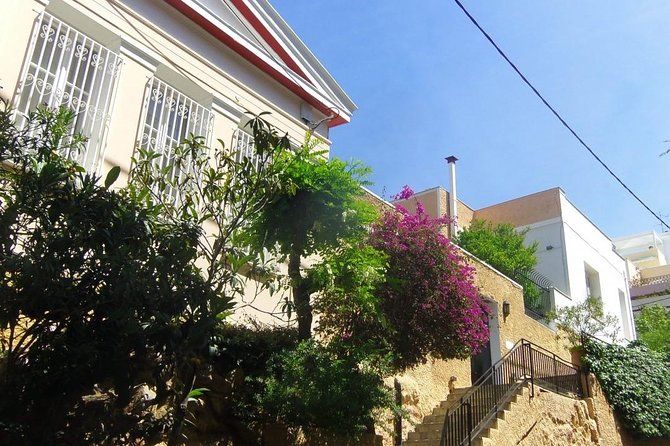
Mets is known as one of the prettiest districts in the city. The walk lets you trade cemetery paths for residential streets and observe how the area fits into everyday Athenian life. It is a welcome change of pace after the long sculpture-focused section.
The route also includes a coffee stop in the historic Mets neighborhood. Food and drinks are not included, so you should expect to pay for your own coffee. The stop is less about a formal refreshment package and more about giving you time to pause, ask questions, and take in the neighborhood.
Arditos Hill adds some uphill walking. The tour information does not give a detailed accessibility rating, but the route’s streets, cemetery paths, and hill mean you should be comfortable walking for several hours. Most people can participate, but anyone with mobility concerns should ask the operator before booking.
One advantage of a private tour is flexibility. Guides such as Hercules have been praised for answering questions and adding places of interest when appropriate. That does not mean every route will change, but a private format gives you a better chance to shape the conversation around art, ancient Greece, local customs, or modern Athens.
Finishing through the National Garden
After the cemetery and Mets, the walk continues through the National Garden toward Syntagma Square. This final section takes about twenty minutes.
The National Garden provides a calmer route into the center and helps connect the cemetery visit with the main sights of modern Athens. The tour ends at Zappeion Hall on Vasilissis Olgas Avenue, near the National Garden and Syntagma.
This ending is practical. You finish near one of the city’s key central areas rather than returning to the starting point. From there, you can continue sightseeing or make your way elsewhere in Athens, though the tour itself does not include transport.
The route has a pleasant arc: ancient ruins at the beginning, a modern national cemetery in the middle, a residential district and hill along the way, then a formal garden and central square at the end. You get a sense of how different parts of Athens sit beside one another.
Guide style and the value of a private group
The tour is described as a private activity, meaning only your group participates. It is also presented as a small-group experience, so you should expect a more personal setting than a large walking tour.
The guide is a professional art historian. That background suits the cemetery especially well, since the heart of the visit is sculpture and visual detail. Ellania has been praised for being warm and well informed, while Hercules has been praised for his explanations of ancient Greek life, culture, and customs.
Guide assignments can change, so you should not book on the assumption that one particular person will lead your visit. Still, the praise for both guides points to the sort of experience this tour aims to provide: patient answers, local context, and room for questions.
The private format is most useful if you want to discuss specific interests. You can ask about funerary art, Greek history, architecture, religious customs, or the people buried in the cemetery. A large group often limits that exchange. Here, your questions can become part of the tour.
Is $65.06 per person fair?
At $65.06 per person, this is not the cheapest way to see Athens. You are paying for roughly three hours, a specialist guide, a private group format, and a route that covers more than the cemetery itself.
The value depends on what you want. If you only want to walk through the cemetery and look at the tombs, a self-guided visit may cost less. You would, however, miss much of the meaning behind the sculpture and the connection between the cemetery, Athens’ capital history, and Greek burial customs.
The price makes more sense if you like art, local history, and longer walking tours. It also works well if you have already seen the headline ancient sites and want something less familiar. Group discounts are available, which may improve the cost for larger parties.
Bottled water and a professional art historian guide are included. Food and drinks are not included, including the coffee stop in Mets. Bring some extra money if you want a drink during the break.
Who will enjoy this tour most?
I would choose this experience for someone who has already allowed time for the Acropolis area and wants a different side of Athens. It is also a good fit for anyone interested in sculpture, memorials, Greek customs, or the way a city honors its public figures.
The tour suits:
- Art lovers who want expert help reading funerary sculpture
- History fans who enjoy links between ancient Greece and the modern Greek state
- Repeat visitors looking beyond the main archaeological sites
- Private groups who prefer a slower, question-friendly walk
- Couples or friends who like neighborhoods as much as monuments
It may be less suitable if you want a fast, highly structured sightseeing route. The cemetery takes up about two hours, and the subject is serious. The uphill walk and all-weather format also call for sensible clothing and shoes.
Practical details before you go
The experience lasts about three hours and is offered in English. Confirmation arrives when you book, and a mobile ticket is available.
Wear comfortable shoes and clothes. You will walk through streets, cemetery grounds, the Mets district, Arditos Hill, and the National Garden. Since the tour runs in all weather, dress for the conditions rather than assuming Athens will be sunny.
The starting point is Stratigou Makrygianni 7, Athens 117 42. The tour ends at Zappeion Hall, Leoforos Vasilissis Olgas, Athens 105 57. The end point is near Syntagma Square, while the beginning is close to the Temple of Olympian Zeus.
Most people can participate, but the route is not described as fully accessible. If you need a flatter or shorter walk, contact Urban Athens Collective before booking.
Free cancellation is available if you cancel at least 24 hours before the local start time. Cancellations or changes made within 24 hours are not accepted for a refund.
Should you book the First Cemetery of Athens tour?
Book it if you want a thoughtful walking experience built around art, memory, and modern Greek life. The cemetery is the main event, but the opening temple area, Mets neighborhood, Arditos Hill, National Garden, and Syntagma finish make it a well-shaped introduction to central Athens.
I would skip it if you dislike cemetery visits or want only ancient ruins. For everyone else, the combination of an art historian guide, private-group attention, and a peaceful setting offers a worthwhile change from Athens’ busiest sights.
FAQ
How long does the First Cemetery of Athens Walking Tour last?
The tour lasts approximately three hours.
What language is the tour offered in?
The tour is offered in English.
Is the tour private?
Yes. Only your group participates in the activity.
Where does the tour start?
The meeting point is Stratigou Makrygianni 7, Athens 117 42, Greece.
Where does the tour end?
The tour ends at Zappeion Hall on Leoforos Vasilissis Olgas, Athens 105 57, Greece.
Is an art historian included?
Yes. A professional art historian guide is included.
Are food and drinks included?
No. Bottled water is included, but food and drinks are not. The tour includes a coffee stop in Mets, but you pay for your own drink.
What should I wear?
Wear comfortable shoes and clothes. The tour operates in all weather, so dress appropriately for the conditions.
Can I cancel for a full refund?
Yes, if you cancel at least 24 hours before the experience start time. Cancellations or changes made less than 24 hours before the start are not accepted for a refund.
Newly reviewed around Athens
- Athens: workshop for painting landscape with local artist★ 4.6 · 3 reviews
- Athens: Greek Wine & Olive Oil Tasting at Brettos Plaka★ 4.5 · 3 reviews
- Outdoor Yoga and Pilates with Akropolis view★ 4.0 · 5 reviews
- Acropolis of Athens: 60′ Tour in a Vintage Motorcycle★ 5.0 · 4 reviews
- Ultimate Tasting of the Volcanic Wines of Greece★ 5.0 · 3 reviews
- workshop for painting acropolis/landscape with local artist★ 5.0 · 3 reviews
- Athens at Twilight Night Tour with Drinks and Meze Dishes★ 4.8 · 4 reviews
- Breakfast in the markets with olive oil and honey tasting★ 4.8 · 8 reviews
Athens Walking Tours, compared.


Acropolis monuments & Parthenon Walking Tour with Optional Acropolis Museum
Read our review →

Athens Authentic Greek Food Walking Tour (Small Group)
Read our review →
Early Morning Acropolis & Old Athens Guided Walking Tour
Read our review →
Browse the lists this tour appears in