
Reviewed · ATHENS ACROPOLIS TOURS
First Access Acropolis Tour, Beat the Crowds, Enjoy the Parthenon
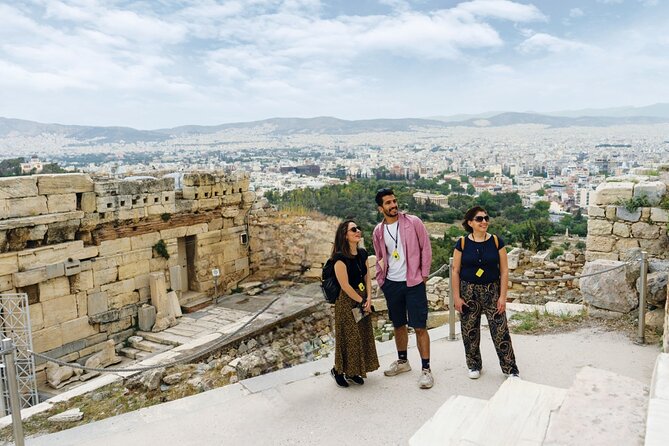
The best thing about this Acropolis tour is its timing. An early departure, often around 7:45 a.m., gets you uphill before the site becomes a human traffic jam. You may have a short window for clean Parthenon photos, cool air, and open views before the crowds catch up. I especially like the early access and the guide’s use of earsets, which make it easier to follow the story in a noisy archaeological site.
The tour also ends on the Acropolis’ south side, placing you near the Theatre of Dionysus and the pedestrian route around the hill. The catch is simple: early access does not mean private access. The site can fill within 15 to 40 minutes, and the meeting instructions have caused confusion for some people. Arrive early, wear sturdy shoes, and do not cut the timing close.
Key points at a glance
- Early entry changes the visit: Cooler temperatures and thinner crowds make the steep climb and photo stops much more pleasant.
- The Parthenon comes first for a reason: Guides may take you straight to the main monument before explaining the site in detail.
- The ticket choice matters: The advertised price is $41.12, but the Acropolis admission fee of €30 is extra unless you select the ticket-inclusive option.
- The route covers the major sights: You see the Propylaea, Temple of Athena Nike, Erechtheion, Parthenon, Odeon of Herodes Atticus, and Theatre of Dionysus.
- The ground is hard work: Expect uneven marble, slippery surfaces, steps, wind, and a moderate level of physical effort.
- The group is capped at 24: That is manageable, though not the same as a private tour.
Why an early Acropolis start is worth the alarm
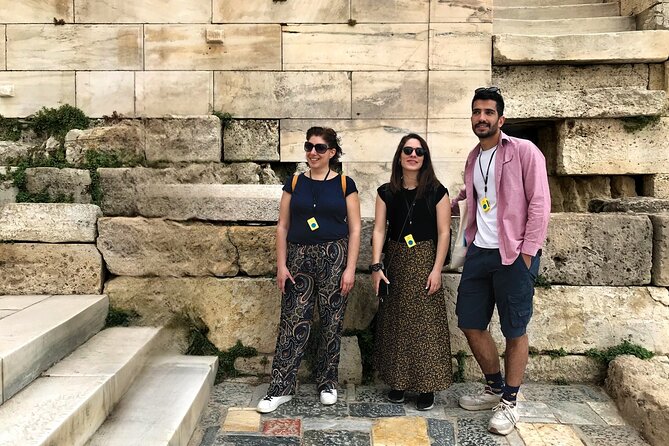
The Acropolis is Athens’ great headline sight, but its popularity creates a problem. By midmorning, the hill can feel packed, the stone radiates heat, and getting a clear photograph of the Parthenon becomes a small exercise in patience.
An early tour gives you the best chance of avoiding that crush. Several departures described by the operator begin around 7:45 a.m., and the group aims to enter among the first visitors. You can reach the upper hill while the light is soft, the air is cooler, and the broad views over Athens are easier to enjoy.
Do not expect the Acropolis to remain quiet for the full two hours. The difference can be dramatic when you arrive, then less dramatic by the time you leave. One practical pattern is to go directly toward the Parthenon for photos, then regroup while the guide explains the monuments. Within a short time, more groups begin arriving.
That order is smart. The Parthenon is the sight everyone wants, so seeing it first protects your most important moments. It also means you are not standing in the most crowded part of the hill while your guide gives a long introduction.
More ways to see the Acropolis:
- Athens: Acropolis & up to 5 Archaeological Sites Combo Pass
★ 4.4 · 12,619 reviews - Athens: Acropolis Ticket with Optional Audio or Live Guide
★ 4.2 · 11,055 reviews - Athens: Acropolis, Parthenon & Acropolis Museum Guided Tour
★ 4.8 · 9,316 reviews
Meeting the group and getting through the gates
The meeting point is listed at XPCF+G9 in Athens, with the tour ending on the south slope at Dionysiou Areopagitou. The location information can be confusing, especially if you are looking for a clearly marked kiosk or canteen. Give yourself extra time to find the group rather than arriving at the last second.
Strict entry times make punctuality important. The group cannot wait for late arrivals, and missed starts are not refunded. I would plan to reach the meeting area well before the stated time, with your voucher open and your phone charged.
At the Acropolis entrance, everyone passes through airport-style security. In the busiest season, this can add 30 minutes or more, even with skip-the-ticket-line service. That service helps with the ticket-purchase queue, but it does not remove security screening or the need to enter during the assigned time.
If you choose the option without an admission ticket, follow the voucher instructions to buy your own ticket. This is cheaper only if you are comfortable handling that step yourself. The ticket-inclusive option costs more, but it removes one source of confusion and can be the better choice for a time-sensitive morning.
Climbing through the Propylaea
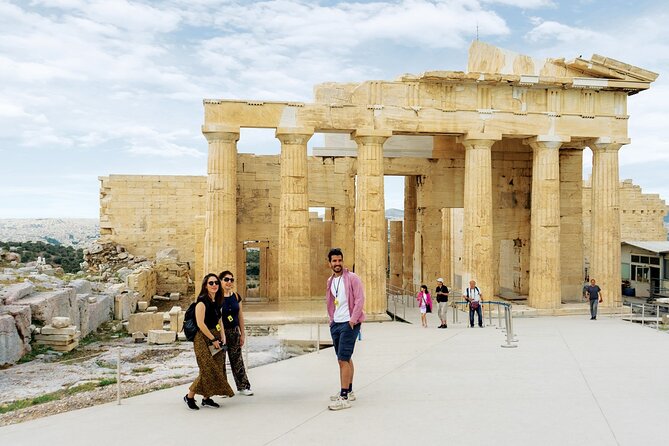
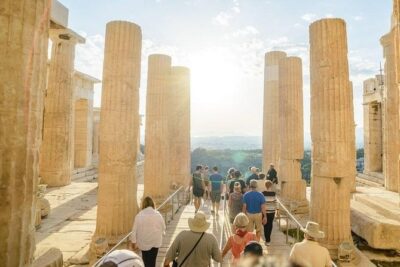
The Acropolis entrance is the Propylaea, a grand marble gateway that once announced the importance of the sacred hill. Today, it is your first major architectural stop and the point where the modern city begins to fall away behind you.
Your guide uses the gateway to explain how the entrance may have looked in ancient times. This is useful because the surviving stonework can seem fragmentary when you first see it. A good explanation helps you picture the color, sculpture, and ceremony that once shaped the approach.
The tour spends about 10 minutes here. That is enough for orientation and context, though not enough for a long architectural lecture. You will also be moving on an uneven surface, so keep your attention on the ground as well as the columns.
The marble can be slippery, particularly in wet weather. Rain does not automatically cancel the tour, and the experience runs in most conditions unless the operator calls it off. Shoes with firm soles are far more useful than fashionable sandals.
The Temple of Athena Nike and its small perch
To the right of the Propylaea sits the Temple of Athena Nike, a compact monument with an outsized role in the Acropolis story. The guide explains the myths tied to Athena and Nike, along with the temple’s place at the entrance.
You spend only about five minutes here, so this is an introduction rather than a full examination. The setting is part of its appeal. Perched beside the gateway, the temple helps you understand how the ancient Athenians used architecture to frame the approach to the hilltop.
This is also a good moment to listen closely through the earset. The Acropolis can be noisy even early in the day, with other guides speaking nearby and groups moving through the entrance. The headset system lets you stand a little apart while still hearing the guide clearly.
A different kind of day out from Athens:
- Athens: Cape Sounion & Poseidon Temple Sunset Half-Day Trip
★ 4.8 · 8,241 reviews - Athens: Acropolis and Parthenon Guided Walking Tour
★ 4.6 · 5,882 reviews - All Day Cruise -3 Islands to Agistri,Moni, Aegina with lunch and drinks included
★ 5.0 · 4,958 reviews - Athens, Piraeus, and Coastline: Blue Hop-On Hop-Off Bus
★ 3.9 · 4,849 reviews
The Erechtheion and Athens’ oldest myths
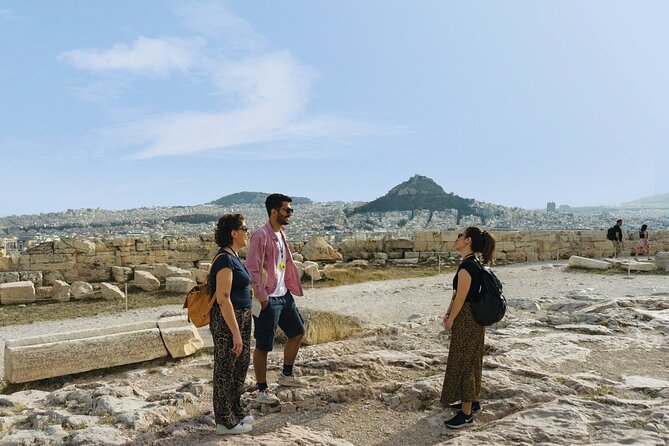
The Erechtheion is one of the most intriguing stops because it does not present the simple, balanced look people often expect from a Greek temple. It is associated with Erechtheus, the mythical king of Athens, and with stories involving Athena and the city’s origins.
The tour allows around 10 minutes here. Your guide connects the building to the myths that shaped Athenian identity, which gives the irregular structure more meaning than a quick photograph alone would provide.
The famous Caryatid figures are part of the visual memory of the Erechtheion, though the site’s preservation work and restrictions can affect exactly what you see. The tour is not designed as a long, leisurely sketching session. If you want a slower look at every detail, allow time elsewhere in your Athens schedule, particularly at the Acropolis Museum.
Guides such as Kali, Maria, Pan, Natasha, Niobe, and Olesya have been praised for clear storytelling and strong command of the site. The guide on your departure will vary, and style can vary too. Most of the feedback points to warm, engaging explanations, though one experience found the delivery too quick and the responses to questions rather curt. If personal interaction is your top priority, that is worth keeping in mind.
The Parthenon before the crowds gather
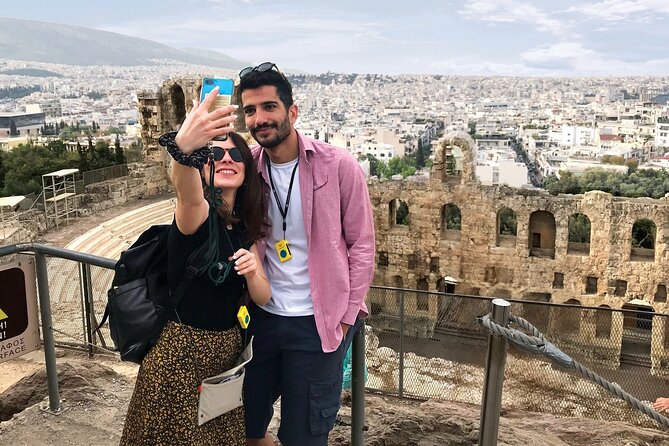
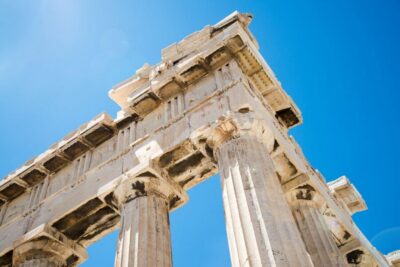
The Parthenon is the center of the morning. Built for Athena, it has dominated the Acropolis for more than 2,000 years and remains the site’s defining image.
Your guide explains its design, myths, cultural role, and long history. The tour allocates about 10 minutes to the formal explanation, but the surrounding time is valuable for looking, photographing, and taking in the setting. Some guides use images showing how the buildings may have appeared in their prime, a helpful way to bridge the gap between weathered ruins and the original monument.
The early hour is especially useful here. You may be able to photograph the Parthenon without a wall of people in front of it, then turn toward Athens and the surrounding mountains with fewer bodies blocking the view. The light can be especially attractive in the morning, and the cooler air makes it easier to pay attention.
There is a practical limitation. The tour’s route eventually takes you down toward the south side, and returning to the Parthenon after the group ends may take time through the growing crowds. If you want extra time at the monument, take your own photos and look closely before the guide moves the group onward.
Two ancient theaters on the south slope
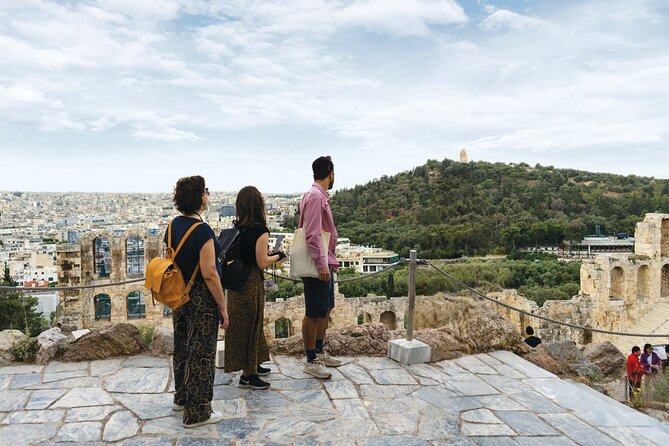
The route includes the Odeon of Herodes Atticus, a Roman theater built by Herodes Atticus in memory of his wife. The guide raises the question of whether the building was only a personal tribute or also a public statement of status and influence.
You spend about five minutes here. The theater is still used for performances, but this short visit focuses on its setting and story rather than a full tour of its interior.
The Theatre of Dionysus follows, also for around five minutes. This is the birthplace of theatrical performance as the ancient Athenians knew it, linked to the god Dionysus and to playwrights such as Aeschylus, Sophocles, and Euripides.
These stops add welcome depth to the visit. The Acropolis is not only a collection of temples and marble columns. The south slope connects the hill to drama, public life, religious festivals, and the civic culture that shaped Athens.
The ending point is useful for continuing your day on foot. You can remain in the historic center, head toward the Acropolis Museum, or follow the pedestrian route around the hill. Since the tour does not include hotel pickup, you will need to make your own way to the meeting point and arrange your onward plans.
What the two-hour format does well
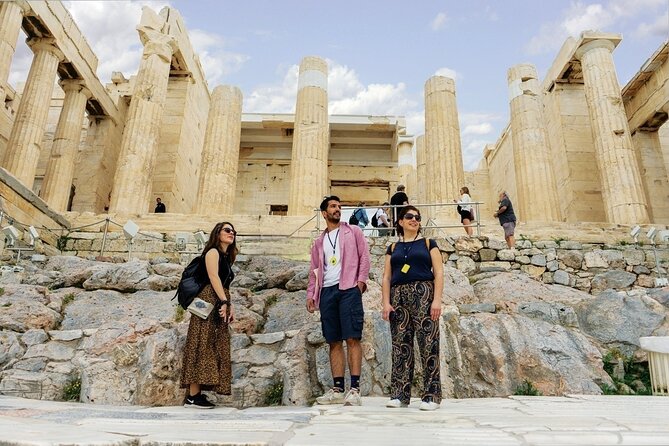
Two hours is a good length for the main Acropolis route. You get the key monuments without spending half a day in the sun, and families can often manage the pace more easily than a longer walking tour.
The guide keeps the visit moving, which matters when the site is filling quickly. The earsets are a real help, especially if you want to step aside for a photo or if your group is spread out around a monument.
The tradeoff is limited free time. This is a guided overview, not an open-ended archaeological study. You will hear the main stories and see the essential monuments, but you may want to return to the museum or another viewpoint for a slower look at ancient sculpture and the Acropolis collection.
The group can include up to 24 people. That is small enough for a guide to manage, but large enough that you should not expect constant personal attention. Ask questions when there is a natural pause, and stay close enough to hear the instructions.
Price, ticket choices, and practical value
The listed price is $41.12 per person. That amount does not include the €30 Acropolis admission fee unless you choose the ticket-inclusive version. Read the option carefully before paying, since a low headline price can become less convenient if you still need to arrange the entry ticket.
The tour provides a licensed local guide, earsets, skip-the-ticket-line service, an Athens guide magazine, and a city map. The real value is not the printed material. It is the early timing and the help of a guide who can turn scattered ruins into a readable story.
I consider the ticket-inclusive option worth serious consideration. The Acropolis has strict entry slots, and a small mistake with ticket timing can spoil the morning. The independent-ticket option may suit you if you are comfortable following instructions and want maximum control over the purchase.
Food, drinks, hotel pickup, and hotel drop-off are not included. Carry water. There are no refreshments built into the two-hour route, and the combination of sun, stone, and uphill walking can catch you off guard even in the morning.
Who will enjoy this tour most
This is a strong choice if you have one morning in Athens and want the essential Acropolis sights explained by a local guide. It also suits families, since the shorter route and cooler temperatures are easier on children than a midday visit.
Photographers will appreciate the chance to reach the Parthenon before the site becomes packed. The early light and open sightlines can make a major difference, though no tour can promise an empty hill.
History-minded visitors will get the most from the guide’s myths, architectural explanations, and links between the temples and ancient theater. The tour is less suited to anyone who wants complete independence, extended quiet time, or a slow study of individual stones and sculptures.
Think carefully about your mobility. You need a moderate level of physical fitness, and the terrain includes uneven ground, slippery marble, slopes, and steps. A recent knee injury or similar problem could make the route painful. The site is not a gentle stroll, even when the morning air is mild.
Weather, cancellations, and final planning tips
The tour operates in rain or shine, so check the forecast and dress for conditions. If poor weather forces cancellation, you are offered another date or a full refund. The same applies if the minimum number of participants is not reached.
You can cancel for a full refund up to 24 hours before the start time. Changes or cancellations inside that window are not accepted for a refund, and all cutoff times follow Athens local time.
Before leaving your accommodation, check four things:
- Your meeting point and start time
- Whether your booking includes the €30 admission ticket
- Comfortable shoes with good grip
- Water, sunscreen, and weather protection
The Athens Guide magazine and map are handy for planning the rest of your day, but do not rely on them to solve a late arrival. The strict start time is the detail that matters most.
Should you book the First Access Acropolis Tour?
Book it if you want the Acropolis explained clearly and you value cooler temperatures, easier photographs, and a head start on the crowds. The strongest part of the experience is the first stretch of the morning, when you can reach the Parthenon with more breathing room.
I would select the ticket-inclusive option unless you are comfortable arranging your own entry. I would also choose this over a later visit during the hot season, when the hill can be tiring and crowded.
Skip it if you need a slow, private visit or have difficulty with uneven ground. For most first-time visitors, though, the early start, compact two-hour route, earsets, and strong local guiding make this a sensible way to meet Athens’ most important ancient monument.
FAQ
How long does the Acropolis tour last?
The tour lasts approximately two hours.
What sights are included?
The route includes the Acropolis, Propylaea, Temple of Athena Nike, Erechtheion, Parthenon, Odeon of Herodes Atticus, and Theatre of Dionysus.
Is the Acropolis entrance ticket included?
The €30 Acropolis admission fee is not included unless you select the ticket-inclusive option when booking.
Does the tour skip the ticket line?
Skip-the-ticket-line service is included, but all visitors still pass through security. During peak season, security waits can exceed 30 minutes.
What happens if I arrive late?
The group cannot wait because Acropolis entry times are strict. No refund is provided for a missed start.
Is the tour suitable for people with limited mobility?
You should have a moderate level of physical fitness. The route includes uneven and potentially slippery ground, slopes, and walking on the Acropolis hill.
Does the tour run in bad weather?
Tours run rain or shine. If poor weather causes the operator to cancel, you are offered another date or a full refund.
What is included besides the guide?
The tour includes earsets, a professional licensed local guide, skip-the-ticket-line service, an Athens guide magazine, and a city map. Food, drinks, and hotel transportation are not included.
Newly reviewed around Athens
- Athens: workshop for painting landscape with local artist★ 4.6 · 3 reviews
- Athens: Greek Wine & Olive Oil Tasting at Brettos Plaka★ 4.5 · 3 reviews
- Outdoor Yoga and Pilates with Akropolis view★ 4.0 · 5 reviews
- Acropolis of Athens: 60′ Tour in a Vintage Motorcycle★ 5.0 · 4 reviews
- Ultimate Tasting of the Volcanic Wines of Greece★ 5.0 · 3 reviews
- workshop for painting acropolis/landscape with local artist★ 5.0 · 3 reviews
- Athens at Twilight Night Tour with Drinks and Meze Dishes★ 4.8 · 4 reviews
- Breakfast in the markets with olive oil and honey tasting★ 4.8 · 8 reviews
Athens Acropolis Tours, compared.
Acropolis & up to 5 Archaeological Sites Combo Pass
Read our review →
Acropolis, Parthenon & Acropolis Museum Guided Tour
Read our review →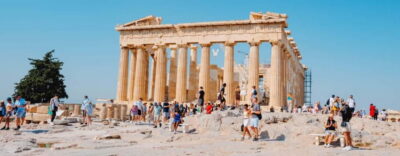
Acropolis, Parthenon & Acropolis Museum Guided Tour
Read our review →

Acropolis monuments & Parthenon Walking Tour with Optional Acropolis Museum
Read our review →Browse the lists this tour appears in