
Reviewed · METEORA TOURS FROM ATHENS
Explore Central Greece with an affordable 2 days tour to Meteora
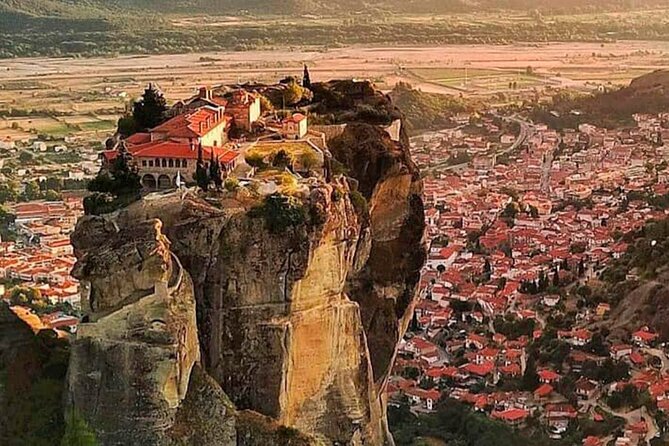
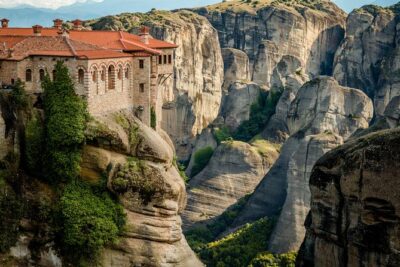
The great prize here is Meteora, where Orthodox monasteries cling to tall rock pillars above the Thessalian plain. Add Delphi, Thermopylae, Arachova, and a private car with door-to-door pickup, and you get a packed two-day look at central Greece. Panos, one driver used by the operator, has been praised for careful timing, humor, and friendly help.
I like the private format, especially for a long route where you may want a bathroom stop, a photo break, or a different pace. I also like the overnight in Kalabaka or nearby Kastraki, which lets you see Meteora in the softer evening light instead of rushing back to Athens the same day.
The tradeoff is distance. This is an ambitious two days with plenty of time in the car and steps at several monasteries. The listed price is $1,781.17 per group of up to three, before admission fees, meals, and any licensed guide, so the value is strongest for a small group that wants comfort and control.
Key points before you book
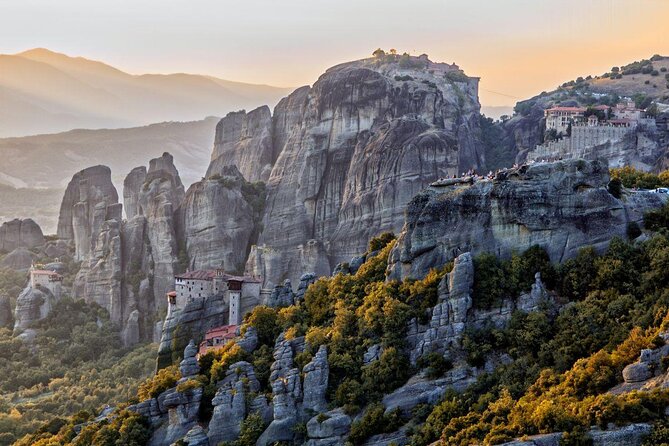
- Meteora gets the main event: Visit the Great Meteoron, St. Stephen, Varlaam, Holy Trinity, Rousanou, and possibly St. Nicholas Anapafsas.
- Thermopylae is a short but worthwhile stop: See the Leonidas Monument and connect the site to the famous 480 BC battle.
- Your driver is not a licensed site guide: You receive historical and cultural commentary on the road and up to site entrances. A licensed guide inside museums and archaeological sites costs extra.
- One night changes the pace: Breakfast and an overnight stay near Meteora make this more comfortable than a same-day Athens excursion.
- Admission is not included: Budget separately for Delphi, Meteora monasteries, and archaeological museums.
- Proper shoes matter: Delphi has slopes, and several monasteries require climbs, including 145 carved steps at Holy Trinity.
Why this private route works
Central Greece gives you a sharp change of scenery from Athens. The road runs through Attica and Sterea Ellada, past towns such as Thebes, Livadia, and Arachova, then climbs toward Delphi and the mountains before reaching Meteora and Thessaly.
You are not simply ticking off one famous monument. You are moving through several layers of Greek history: the classical world at Delphi, the Persian Wars at Thermopylae, Byzantine monastic life at Meteora, and the mountain villages that tie the route together.
The private car matters here. A group of up to three can stay together, avoid waiting for a large coach, and ask the driver to pause for food, restrooms, or photographs when conditions allow. The vehicle is air-conditioned and matched to the group size, with bottled water provided.
Still, private does not mean slow. The schedule covers a lot of ground in roughly 48 hours. You should expect a full first day and a busy second day, with driving between the major stops.
More Meteora trips from Athens:
- Athens: Meteora Monasteries Day Trip with Caves and Lunch
★ 4.7 · 2,964 reviews - Athens: Meteora Monasteries Day Tour with Lunch
★ 4.8 · 2,196 reviews - Athens: Meteora Tour with Local Guide and Greek Lunch
★ 4.8 · 1,561 reviews
Day one: Attica, Thermopylae, and the road to Delphi
Pickup is arranged at your Athens hotel entrance. At a cruise port, you walk outside the terminal, where the driver waits with a sign bearing your name. Airport transfers can be arranged on request.
The opening drive through Attica provides useful context. Athens is more than the Acropolis and its museums. The wider region carries traces of several thousand years of settlement, art, public life, and religious building. You will not stop at every monument, but the drive frames the journey as a move from the capital into older rural and mountain settings.
The route then heads north through Central Greece. The names of Thebes, Livadia, and Arachova appear along the way, and Arachova is an appealing mountain stop if time allows. The schedule is not fully precise about how long you spend in each place, so ask your driver early in the day what is practical.
Thermopylae and the Leonidas Monument
Thermopylae is a brief stop, listed at about 20 minutes, followed by roughly 10 minutes at the Leonidas Monument. The ancient shoreline has shifted because of deposits from the Spercheios River, so the famous narrow coastal passage is no longer exactly as it was in 480 BC.
That change is part of what makes the site useful. It reminds you that famous battles took place in real terrain, not on a fixed museum map. The hot sulfur springs that gave Thermopylae its name remain part of the place’s identity.
The memorial recalls King Leonidas and the Greek force that resisted the Persian army led by Xerxes. The familiar story centers on the 300 Spartans, but the final defense also included Thespians and Thebans. Your driver can explain the strategy and the betrayal that allowed the Persians to reach the Greek rear.
This is not a large archaeological complex, and it is not a stop for a long wander. Think of it as a strong history pause beside the road. The value comes from the setting and the explanation, not from the number of monuments.
Delphi: a major site with a small scheduling warning
The route continues through Central Greece toward Delphi. The supplied schedule places the archaeological visit after the drive, but it does not state how much time is reserved for the sanctuary and museum. Confirm that timing with the operator before departure, especially if Delphi is a top reason for booking.
Delphi was the ancient sanctuary of Apollo and the home of the oracle consulted by Greek cities and rulers. The site is spread along a slope, with views over the valley toward the Gulf of Corinth. You should expect uneven ground and uphill sections.
The Temple of Athena Pronoia is one of the memorable points in the wider Delphi area. It sits lower than some of the main remains, so reaching it involves a slope. Wear walking shoes rather than platform sandals or smooth-soled footwear.
The archaeological museum adds essential context. Statues, architectural fragments, and other finds help you make sense of the sanctuary, which can otherwise feel like a beautiful scatter of stones on a hillside. Entrance fees are not included, and the driver cannot accompany you inside as a licensed guide.
That distinction matters. Your English-speaking driver can explain the history and culture on the road and guide you up to the entrance. If you want detailed interpretation inside Delphi’s archaeological site and museum, arrange a licensed guide at extra cost. Availability is not guaranteed on the day, so request one when booking.
More two-day trips from Athens:
- From Athens: Delphi and Meteora 2-Day Guided Tour
★ 4.5 · 825 reviews - 2-Day Tour to Delphi & Meteora with Guide and Tickets From Athens
★ 4.0 · 692 reviews - From Athens: Delphi and Meteora 2-Day Tour with Hotel
★ 4.4 · 392 reviews - Athens: 2 Days in Meteora with 2 Guided Tours and Hotel Stay
★ 4.7 · 376 reviews
The overnight near Meteora
After Delphi, you continue toward Kalabaka, the town below Meteora, or nearby Kastraki. The overnight stay is in a 3-star or family-style boutique hotel with breakfast.
This is one of the smartest parts of the plan. Meteora is too far from Athens to appreciate comfortably as a rushed day trip, especially when Delphi and Thermopylae are included. Sleeping near the rocks gives you a chance to have dinner locally and see the setting without immediately returning to the capital.
The accommodation level is practical rather than luxurious. A hearty breakfast is included, but other food and drinks are not. One past arrangement included a traditional Greek dinner suggested by the driver, but dinner is not part of the package, so you pay separately.
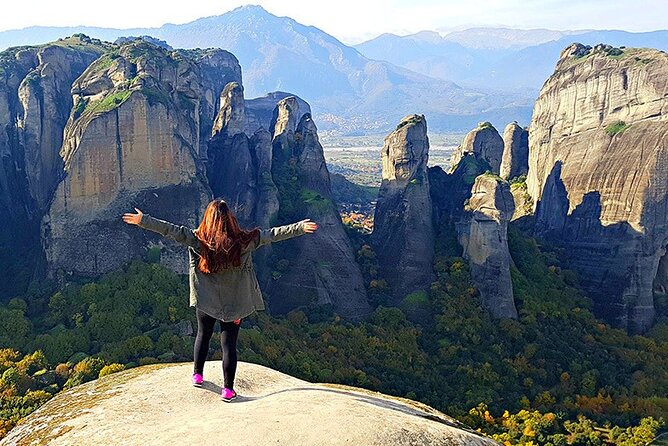
Kastraki is particularly well placed for the rock views. The village sits below Meteora and has guesthouses, tavernas, and a long connection with climbers and monastic visitors. If you enjoy taking photographs, ask about a sunset stop, provided the day’s driving and site hours allow it.
Day two: Meteora’s monasteries above the plain
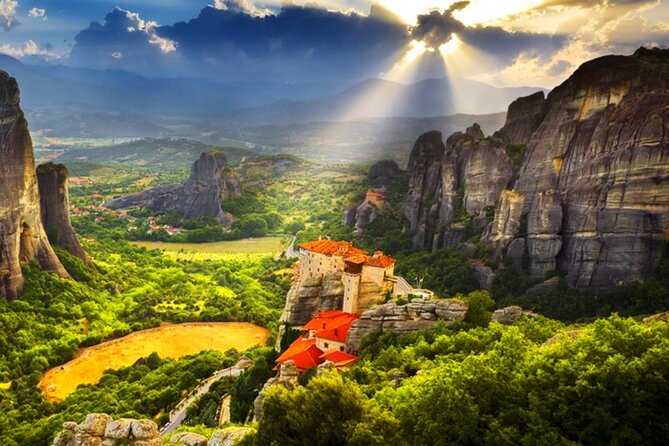
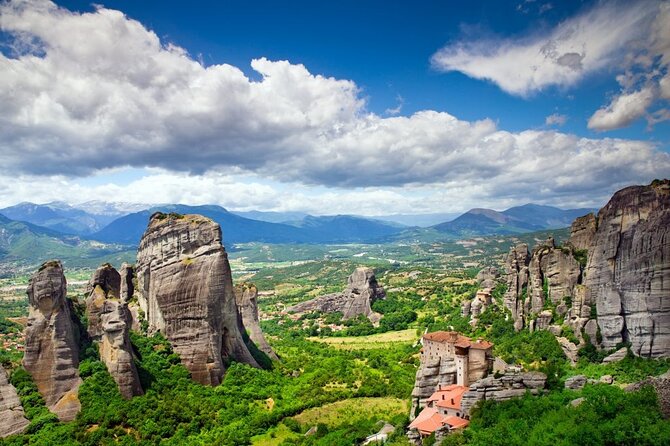
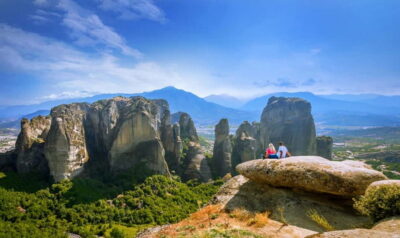
Meteora means suspended in the air, an apt name for the rock towers rising above Thessaly. The monasteries were built on natural pillars and rounded cliffs, some more than 600 meters high. The six surviving monasteries form one of Greece’s most striking religious and architectural groups.
The site joined the UNESCO World Heritage List in 1988. That label matters less than the feeling of arriving beneath the rocks. From the road, the monasteries can look almost impossible to reach. Once inside, you see how stairs, bridges, ledges, and careful building allowed monastic communities to live in these exposed places.
The plan allows stops at several monasteries. Visiting all six from the outside may be possible, but opening days, seasonal hours, traffic, and the time spent at each site can change the order. Your driver will manage the route, but do not assume every monastery interior will be open.
Great Meteoron Monastery
The Great Meteoron is the oldest and largest of the surviving monasteries. Founded by Saint Athanasios the Meteorite in the 14th century, it became the center of organized monastic life at Meteora.
Allow about 90 minutes according to the schedule, though the admission fee is extra. The complex gives you the clearest sense of Meteora as a working religious institution rather than only a scenic viewpoint.
You will need to climb, and the route can be tiring in summer. Modest clothing is required at Orthodox monasteries. Check current visiting rules before you go, since clothing policies and access arrangements can vary.
St. Stephen’s Monastery
St. Stephen is a shorter stop of about 40 minutes and is known for its easier approach compared with some of the other monasteries. It was inhabited by monks from the late 12th century, with later construction continuing through the 15th and 16th centuries.
The monastery’s buildings reflect centuries of repair and change. Its church dedicated to Saint Charalambos became an important part of the complex in the late 18th century.
Its position and access make it a good choice if someone in your group finds steep stairways difficult, but the tour still requires a reasonable level of fitness overall. The entrance fee is separate.
St. Nicholas Anapafsas
St. Nicholas Anapafsas is built into a compact rock with several levels stacked above one another. The tight site shaped the design, producing a tall, narrow complex rather than a broad courtyard.
The visit is listed at about 40 minutes. You may see the chapel, church, old dining room, ossuary, and other small spaces, depending on access. The monastery’s frescoes and layered construction make it especially interesting for visitors who like architecture and painting.
Because of its compact design, the experience can feel more confined than the open views from larger monasteries. That is not a flaw, but it is a different kind of visit. You are seeing how monastic life adapted to a very small rock plateau.
Varlaam Monastery
Varlaam takes its name from the hermit who first occupied the rock in the 14th century. The monastery later grew under Theophanes and Nektarios Apsaras, who organized the site in the 16th century.
The visit is listed at about 40 minutes. The monastery is known for its church dedicated to All Saints, its religious art, and its role in the spiritual and national life of the region.
Look for the contrast between the massive setting and the careful human work needed to build here. Towers, bridges, stairs, and walls all feel more impressive once you remember the tools available to the builders centuries ago.
Holy Trinity Monastery
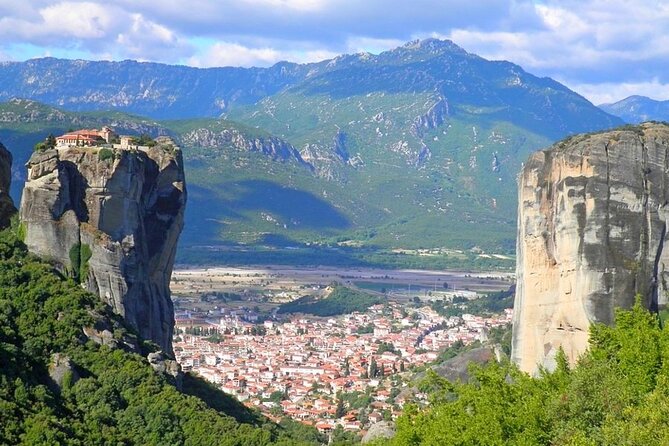
Holy Trinity is among the most dramatic sites at Meteora. To reach it, you walk down toward the foot of the cliff and then climb 145 carved steps.
The scheduled visit lasts about 40 minutes, but the physical effort can make it feel longer. From the upper balcony, you get a fine view of other monasteries and the surrounding rocks.
This is where footwear becomes essential. Wear shoes with a firm sole and good grip. Hats, sunscreen, and water are sensible in summer, but bottled water is also provided in the vehicle.
Rousanou, dedicated to Saint Barbara
Rousanou sits on a smaller rock and is reached by a bridge and stairway. The monastery took its present form in the 16th century, and its church is dedicated to the Transfiguration while also honoring Saint Barbara.
It later became a nunnery after restoration. The compact setting makes it a pleasing contrast to Great Meteoron, where the buildings feel more extensive and formal.
The listed visit is about 40 minutes. As with every monastery, entrance is extra and access can change. Your driver can take you to the entrance and help with the route, but detailed explanations inside require a licensed guide.
What the driver adds, and what the driver cannot do
The best part of this arrangement is the personal driver. A good driver can make a long road day feel manageable by helping with timing, finding sensible stops, and pointing out details you might miss from a coach window.
Panos has been singled out for excellent English, courtesy, humor, and care with family groups. He has also helped arrange restaurant stops, photo pauses, and a practical order for visiting Meteora. You cannot guarantee that Panos will be assigned, but you can ask the operator about driver availability.
Keep the limits clear. The driver is not a state-licensed tour guide and cannot provide an in-depth explanation inside archaeological sites or museums. If Delphi’s statues, temples, and sacred rituals are central to your interests, pay for the extra licensed guide.
That extra cost may be worthwhile for first-time visitors who want more than transport. If you mainly want a flexible ride, broad historical background, and help with the route, the driver service may be enough.
Is $1,781.17 a fair price for three?
At $1,781.17 per group of up to three, this is not a budget bus excursion. It is a private two-day service with a vehicle, an English-speaking driver, hotel pickup, bottled water, one night of accommodation, and breakfast.
For three people sharing the cost, the private format becomes easier to justify. You are paying for control over the route, direct transfers, and the chance to avoid waiting for a large group. The value is strongest if you dislike rigid coach schedules or want to use a short stay in Greece efficiently.
The price does not cover archaeological and monastery admission, meals, drinks, or a licensed guide. Those extras can affect your final cost, so budget for them before booking.
The word affordable needs context. Compared with a fully private multi-day service with a licensed guide and upgraded hotels, it may be reasonable. Compared with public transport or a basic group bus, it will cost much more. You are buying time and flexibility, not simply seats in a car.
Who should choose this experience?
This tour suits a small family, a couple, or three friends who want to see major mainland sights without arranging several separate transfers. It also suits cruise passengers with limited time, provided the pickup and return schedule matches the ship’s timetable.
You should be comfortable with long drives, moderate walking, stairs, and a quick pace. Delphi’s slopes and Meteora’s climbs are not ideal for anyone who needs a fully step-free route.
It is less suitable if you want slow museum visits, long meals, or a deep focus on just one site. Two days can show you the highlights, but it cannot give every location the time it deserves.
Cancellation is generous only when handled early: a full refund requires cancellation at least six full days before departure. Changes made two to six days before departure receive a 50 percent refund, while cancellations less than two days before the start time are not refunded.
Should you book it?
Book this trip if Meteora is high on your Greek wish list and you want Delphi and Thermopylae in the same private route. The overnight stay, door-to-door transport, and ability to adjust stops are the strongest reasons to choose it.
Before paying, confirm the exact Delphi timing, the hotel location, which Meteora monasteries are expected to be open, and whether a licensed guide is available. If you are happy with a full schedule and can manage stairs, this is an efficient and memorable way to reach central Greece from Athens.
FAQ
Is hotel pickup included in Athens?
Yes. Pickup is arranged at the main entrance of your hotel. Cruise-port pickup is also provided, with the driver waiting outside the terminal holding a sign with your name.
How many people can join the private tour?
The price is for a private group of up to three people. Only your group participates.
Is accommodation included?
Yes. The tour includes one night of bed-and-breakfast accommodation in a 3-star or family-style boutique hotel near the Meteora area.
Are entrance fees included?
No. Entrance fees for archaeological sites, museums, and the Meteora monasteries are not included.
Can the driver guide me inside Delphi and the monasteries?
The English-speaking driver can explain Greek history and culture during the journey and guide you to the entrances. Drivers are not licensed to accompany you inside archaeological sites or museums. A licensed guide can be arranged at extra cost, subject to availability.
What should I wear and bring?
Wear comfortable shoes suitable for slopes and stairs. Sunscreen and a hat are recommended in summer, and you should be prepared for a moderate amount of walking and a strong physical effort at some Meteora monasteries.
Newly reviewed around Athens
- Athens: workshop for painting landscape with local artist★ 4.6 · 3 reviews
- Athens: Greek Wine & Olive Oil Tasting at Brettos Plaka★ 4.5 · 3 reviews
- Outdoor Yoga and Pilates with Akropolis view★ 4.0 · 5 reviews
- Acropolis of Athens: 60′ Tour in a Vintage Motorcycle★ 5.0 · 4 reviews
- Ultimate Tasting of the Volcanic Wines of Greece★ 5.0 · 3 reviews
- workshop for painting acropolis/landscape with local artist★ 5.0 · 3 reviews
- Athens at Twilight Night Tour with Drinks and Meze Dishes★ 4.8 · 4 reviews
- Breakfast in the markets with olive oil and honey tasting★ 4.8 · 8 reviews
Meteora Tours from Athens, compared.
Meteora Monasteries Day Trip with Caves and Lunch
Read our review →
Meteora Tour with Local Guide and Greek Lunch
Read our review →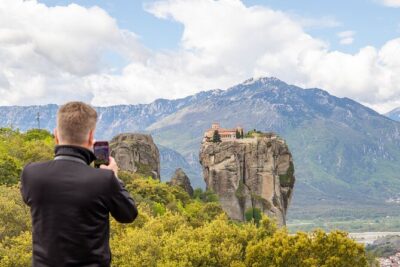
Meteora Monasteries, Caves & Coastal Stopovers with Lunch
Read our review →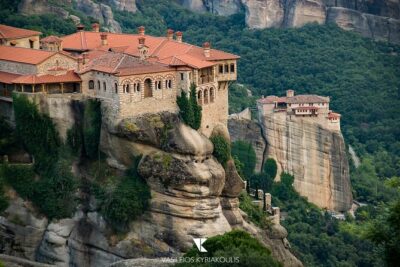
Meteora Monasteries & Caves DayTrip from Athens with Greek Lunch
Read our review →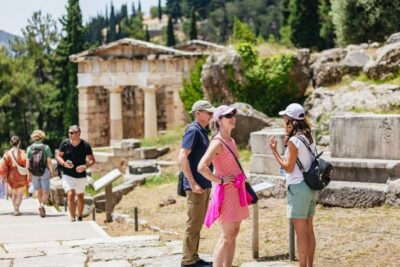
4-Day Classical Greece Tour: Epidaurus, Mycenae, Olympia, Delphi, Meteora
Read our review →
Meteora Monasteries, Hermit Caves Tour with Pickup
Read our review →Browse the lists this tour appears in