
Reviewed · ATHENS BIKE TOURS
Explore Athens Historical Centre by Bike
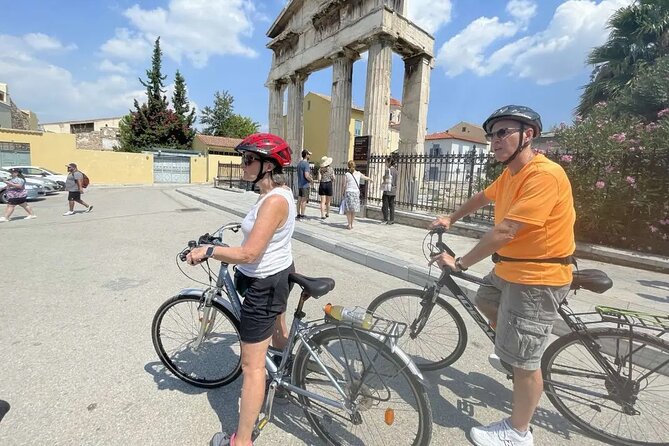
Athens comes into focus quickly from a bicycle. In about two and a half hours, you move from Kerameikos and the Psirri food market to Plaka, the Panathenaic Stadium, the Acropolis Museum, and ancient agoras. Stavros, the owner and guide, handles the city traffic and adds context at each stop.
I like the small group of no more than 10 and the route’s variety: quiet lanes, paved streets, shaded gardens, market alleys, and broad views from Filopappou Hill. I also like that you see Athens as a living city, not just a string of famous ruins. The main consideration is the heat and the need to be comfortable on a bike, with a few short hills and stretches of traffic to manage.
Key points to know before you book
- A full central Athens loop: The route links Kerameikos, Psirri, Plaka, Syntagma, the Panathenaic Stadium, the Acropolis area, and the ancient agoras.
- A personal guide named Stavros: He is praised for clear English, strong local knowledge, careful road guidance, and an easygoing style.
- A real city ride, not only a monument tour: You pass markets, back streets, gardens, paved lanes, and neighborhoods between the major sights.
- Small groups matter here: With a maximum of 10 people, the guide can adjust the pace and help riders through traffic.
- Good value at $41.03: Bikes, helmets, bottled water, guide services, entrance-area visits, and taxes are included, but entry tickets to paid museums or monuments are not specified as included.
- Weather matters: The tour can be canceled in poor weather, with a new date or full refund offered.
Why a bike is a smart way to see Athens
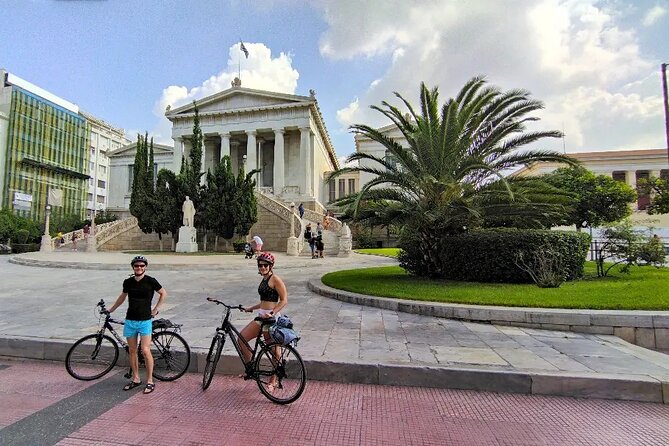
Athens can feel spread out when you walk from one ancient site to the next. The bike closes those gaps without turning the day into a long vehicle ride. You get the main landmarks, but you also see the ordinary city between them: food stalls, market streets, civic buildings, gardens, and residential lanes.
This is not a racing tour. The pace is described as relaxed, and the route is planned around quieter streets where possible. You will still ride near traffic and pedestrians, so basic bike confidence helps. The guide gives directions while riding and takes care at crossings, which is important in a city where road conditions can change quickly.
The supplied trekking bike has 28-inch wheels, and a helmet and bottled water are provided. Several start times are available, which helps if you want to use the ride as your first Athens activity or fit it around a museum visit.
More bike tours in Athens:
- Athens Scenic Bike Tour with an Electric or a Regular Bike
★ 5.0 · 2,702 reviews - Athens Electric Bike Tour
★ 5.0 · 836 reviews - Athens: Old Town Highlights Guided E-Bike Tour
★ 4.9 · 834 reviews
From Flat Tyres to Kerameikos
The meeting point is Flat Tyres Psycling Club at Thessalonikis 140 in Athens. From there, the route moves toward the center on the metropolitan bike lane before reaching Kerameikos, one of the city’s most important ancient areas.
Kerameikos served as an ancient cemetery and included sections of the old city walls. It is a useful first stop because it gives you a sense of Athens beyond the Acropolis. The remains are quieter and more spread out, and the setting helps explain how the ancient city was organized around roads, gates, burial grounds, and defensive walls.
You should expect a stop for explanation rather than a full archaeological visit with extended time inside every site. The tour covers a great deal of ground, so the value here is the guide’s framing and the chance to see the area as part of a larger city route.
Psirri, the food market, and Athens in daily motion
From Kerameikos, you head through Psirri. The route is described as a chance to get lost in the district, though you are following the guide rather than wandering without direction. Psirri is one of the best places on this ride to see Athens as a modern working city.
The route includes the Town Hall and Varvakios, Athens’ traditional central food market. This is the city’s largest market, with meat, fish, and produce stalls creating a very different scene from the polished spaces around the Acropolis. It is a particularly good contrast: ancient Athens is only a short ride away, but the market shows how the center still serves daily local life.
You do not need to plan a separate food-market visit if you take this tour, though the time available may be brief. Snacks and drinks beyond the included water are not provided, so bring a little money if you want something afterward.
Plaka, Syntagma, and the National Garden
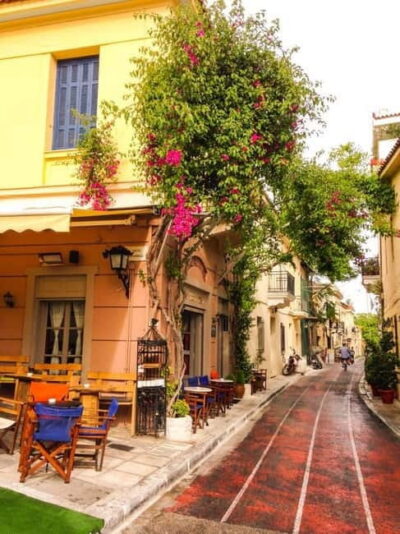
The route then heads through Plaka on paved streets. Plaka is one of the most atmospheric central districts, and the bike makes it possible to pass through without spending all your energy walking between scattered sights. You should take care on the pavement and watch for pedestrians, as this part of the route can be slower than the bike lane.
At Syntagma Square, you see the Greek Parliament. The square is a useful civic landmark and a good place to connect modern Greek government with the older sites you have already seen. The tour does not list a formal guard ceremony as part of the experience, so you should not book it expecting an extended viewing of that event.
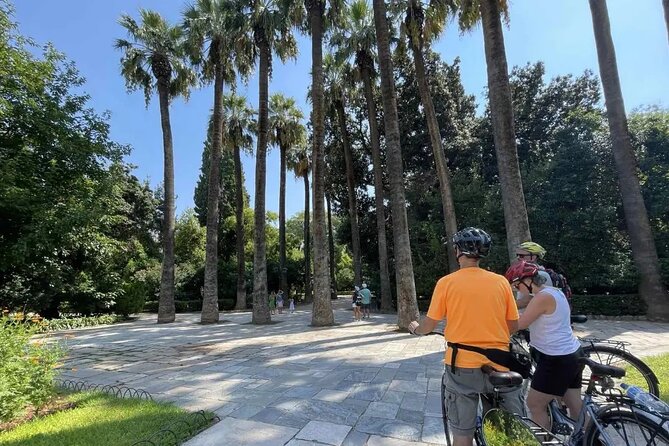
From Syntagma, the ride enters the National Gardens. This is one of the more pleasant transitions on the route. After city streets and market activity, the gardens provide shade and a calmer setting before the next group of major landmarks.
A different kind of day out from Athens:
- Athens: Acropolis & up to 5 Archaeological Sites Combo Pass
★ 4.4 · 12,619 reviews - Athens: Acropolis Ticket with Optional Audio or Live Guide
★ 4.2 · 11,055 reviews - Athens: Acropolis, Parthenon & Acropolis Museum Guided Tour
★ 4.8 · 9,316 reviews - Athens: Cape Sounion & Poseidon Temple Sunset Half-Day Trip
★ 4.8 · 8,241 reviews
Zappeion and the Panathenaic Stadium
Zappeion Hall is next. The building is associated with conferences and exhibitions, and its location near the National Gardens gives the ride a change of scale. You move from public squares to planted paths and then back toward the major ancient and modern sights.
The Panathenaic Stadium, also called the Kallimarmaro, is one of the memorable stops. Its pale marble seating and long stadium shape make it easy to understand even if you know little about its past. The site is especially effective from a bicycle because you can approach it, stop for the guide’s explanation, and continue without the delays of a large walking group.
There are some short hills on the route, but the ride is generally described as manageable. The bigger challenge is likely the combination of warm weather, repeated stops, and time in the open air. If you are visiting during a hot part of the day, choose a start time that suits you and use the supplied water.
Temple of Olympian Zeus and Hadrian’s Arch
After leaving the Kallimarmaro area, you ride through Zappeion toward the Temple of Olympian Zeus and Hadrian’s Arch. These sights work well together because they show the scale of Roman Athens and the way later rulers shaped the ancient city.
The Temple of Olympian Zeus is known for its huge remaining columns, which give you a strong sense of the intended size of the finished temple. Hadrian’s Arch is smaller but visually direct, with its surviving frame marking a connection between different parts of the city.
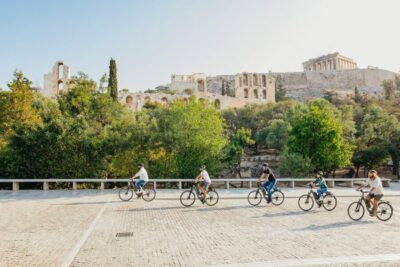
The itinerary also includes the Herod Atticus Odeon. This ancient theater sits on the southern side of the Acropolis and is one of the most recognizable structures in the area. You should understand that this is a sightseeing ride with stops and explanations, not a ticketed performance or a long indoor archaeological tour.
The Acropolis area and a break at Filopappou Hill
The bike continues toward the Acropolis Museum, located below the sacred rock of the Parthenon. The route brings you close to the central archaeological zone, but the experience is not described as an admission visit to the museum or the Parthenon itself. If you want extended time inside either place, plan a separate visit before or after the ride.
This is one of the tour’s real strengths. You get an orientation to the Acropolis setting without using the entire day inside one monument. The guide can help you understand how the museum, slopes, theaters, temples, and surrounding neighborhoods relate to one another.
A short break follows at Filopappou Hill, with a visit to Pnyka. The hill offers a wide view over Athens, and this is a welcome pause after several stops. It also gives you a chance to see the city from above rather than only from street level. The views are part of the reason to choose a bicycle tour instead of a point-to-point transfer.
The break is described as small, so do not count on a long café stop. Still, it gives the ride a useful rhythm: cycle, stop, listen, take in the view, then continue.
Ancient Agora, Roman Agora, and Monastiraki
The route then reaches the Ancient Agora of Athens and the Roman Agora. These are essential sites for understanding how Athens functioned in different periods. The Ancient Agora was a center of public, commercial, and civic life, while the Roman Agora reflects the city’s later development under Roman rule.
Seeing both on the same route helps you compare them without needing to navigate the center alone. The guide’s role matters here because the remaining columns and foundations can be hard to read without a clear explanation of what once occupied the space.
The ride continues through Monastiraki’s open market area. This is another change of mood after the archaeological sites. Shops, stalls, paved lanes, and pedestrian activity make the district lively, but they can also slow the group. You should expect to follow the guide carefully and possibly walk the bike for short stretches if foot traffic requires it. The supplied information does not promise a dedicated market-shopping period.
Finally, the route passes through the paved streets of Thiseio and returns to Petralona and the Flat Tyres meeting point. Ending where you started is practical, especially if you have left luggage or need to continue from the same neighborhood.
What the guide adds to the ride
Stavros receives especially strong praise for his English, historical explanations, friendly manner, and careful directions. He is also described as the owner and guide of Flat Tyres, with many years of cycling experience in Athens.
That combination is useful here. A guide who only knows monuments might miss the market streets and neighborhood connections. A guide who only knows cycling might get you safely around but give thin explanations at the ruins. This tour aims to do both, including background on Athens’ history, politics, social life, and cycling conditions.
The route can also be adjusted to the group’s speed and interests. That does not mean you should expect a custom private tour, but a group of up to 10 is small enough for the guide to notice when someone needs a slower pace or extra help.
Price, group size, and practical value
At $41.03 per person, the tour offers solid value for a 2-hour-30-minute introduction to central Athens. You are paying for the bike, helmet, bottled water, guide, and a route that links many major sights without arranging separate transport.
The strongest value is time. On foot, covering Kerameikos, Psirri, Plaka, Syntagma, the stadium, the Acropolis area, Filopappou Hill, Monastiraki, and the agoras would take substantial energy. By bike, you can see how the districts connect and save your walking legs for the sites you want to enter later.
The price does not include hotel pickup or drop-off, food, or extra drinks. It also does not clearly include admission to paid attractions, so budget separately if you plan to visit the Acropolis Museum, the Parthenon, or other ticketed sites. The tour itself is best viewed as an outdoor orientation and sightseeing experience.
Who should book this Athens bike tour?
I would choose this for a first or short visit to Athens, especially if you want a broad city overview before deciding where to spend more time. It also suits people who enjoy local markets, urban neighborhoods, and historical context as much as famous monuments.
You do not need to be a serious cyclist. The ride is described as easygoing, with mostly manageable streets and a few short hills. Still, you should be comfortable riding around pedestrians, traffic, and uneven city surfaces. If you dislike bikes, have trouble balancing, or are visiting in intense heat, a walking or vehicle-based tour may be a better fit.
The small group is a major advantage for nervous riders and for anyone who prefers questions and conversation over a large crowd. Several start times make it easier to place the ride early in your stay, which is the best use of it. You can then return to the Acropolis, the Agora, the market, or a neighborhood that caught your attention.
Should you book it?
Book this tour if you want to cover a lot of Athens in a short time and prefer seeing the spaces between the famous monuments. The route is unusually broad, the cost is reasonable, and Stavros brings both cycling skill and clear historical explanation.
Skip it if your priority is spending hours inside the Acropolis Museum or archaeological sites. This is an outdoor city circuit, not a substitute for detailed monument visits. For most first-time visitors who are comfortable on a bike, it is a smart way to get your bearings, see the city’s main historic areas, and learn where to return on foot.
FAQ
How long is the Athens bike tour?
The tour lasts approximately 2 hours and 30 minutes.
What is the price?
The listed price is $41.03 per person.
Where does the tour start?
It starts at Flat Tyres Psycling Club, Thessalonikis 140, Athina 118 53, Greece.
Where does the tour finish?
The activity ends back at the meeting point.
Is the tour offered in English?
Yes. English is the listed tour language.
How many people can join the group?
The tour has a maximum of 10 participants.
Are bikes and helmets included?
Yes. A 28-inch trekking bike and helmet are included.
Is bottled water included?
Yes. Bottled water is included. Snacks and additional drinks are not included.
Does the tour include hotel pickup and drop-off?
No. Hotel pickup and drop-off are not included.
What happens if the weather is poor?
The tour requires good weather. If it is canceled because of poor weather, you can receive a different date or a full refund. You can also cancel for a full refund if you do so at least 24 hours before the start time.
More ancient sites near Athens
- Historical Delphi One Day Tour with Arachova Stop & Expert Guide
★ 4.5 · 1,247 reviews - Historic Athens: Small Group Electric Bike Tour
★ 4.9 · 740 reviews - The History of Athens: Greek Mythology Private Tour
★ 5.0 · 138 reviews - Athens Highlights by E-Bike: Small-Group Historic Tour
★ 5.0 · 131 reviews
Newly reviewed around Athens
- Athens: workshop for painting landscape with local artist★ 4.6 · 3 reviews
- Athens: Greek Wine & Olive Oil Tasting at Brettos Plaka★ 4.5 · 3 reviews
- Outdoor Yoga and Pilates with Akropolis view★ 4.0 · 5 reviews
- Acropolis of Athens: 60′ Tour in a Vintage Motorcycle★ 5.0 · 4 reviews
- Ultimate Tasting of the Volcanic Wines of Greece★ 5.0 · 3 reviews
- workshop for painting acropolis/landscape with local artist★ 5.0 · 3 reviews
- Athens at Twilight Night Tour with Drinks and Meze Dishes★ 4.8 · 4 reviews
- Breakfast in the markets with olive oil and honey tasting★ 4.8 · 8 reviews
Athens Bike Tours, compared.
Athens Scenic Bike Tour with an Electric or a Regular Bike
Read our review →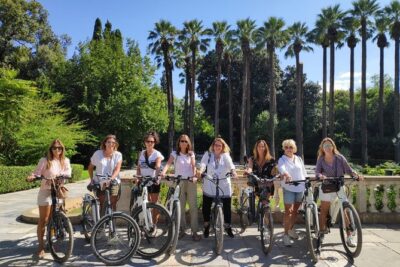

Historic Athens: Small Group Electric Bike Tour
Read our review →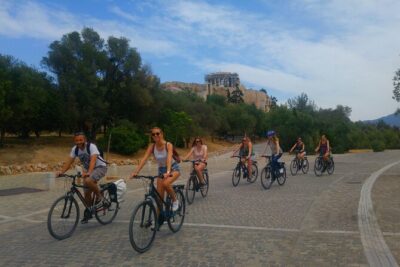
Acropolis & Parthenon Tour and Athens Highlights Bike tour
Read our review →
Athens Acropolis Official E-Scooter Guided Tour Fat E-Bike
Read our review →
Browse the lists this tour appears in