Reviewed · TOURS
Small Group Tour: Balkans & Central Europe from Athens to Vienna
The great appeal here is simple: in 21 days, you cross the Balkans and Central Europe by road, moving from ancient Greek temples to Ottoman bazaars, Adriatic towns, former Yugoslav capitals, and Danube cities. You do not have to organize a string of buses, border crossings, hotels, and entrance tickets yourself.
I like the small maximum of 10 people, which should make border days and city walks easier to manage. I also like the local touches: Albanian byrek and qofte in Tirana, wine in Rahovec and Sremski Karlovci, a farm visit near Lezhë, and time in working old towns rather than only famous capitals.
The main caution is pace. You cover a lot of ground, often with several stops in one day, and the $7,734.19 price is substantial for 3-star lodging with lunches, dinners, drinks, and snacks left out. This is a strong fit for convenience and breadth, not for a slow, stay-put holiday.
Key points at a glance
- Nine named countries on the route: Greece, Albania, North Macedonia, Kosovo, Montenegro, Bosnia and Herzegovina, Serbia, Hungary, Slovakia, and Austria are represented in the published plan, though the tour is marketed as visiting 10 countries.
- A maximum of 10 participants: The small group keeps the private vehicle more manageable and gives the tour leader room to adjust explanations and stops.
- Major UNESCO sites: Delphi, Meteora, Gjirokaster, Berat, Ohrid, Kotor, Mostar, Buda Castle, and other protected places anchor the route.
- Private road transport included: Petrol, road taxes, international car insurance, hotel pickup in Athens, and hotel drop-off in Vienna are covered.
- Food and wine are part of the story: Expect local tastings in Tirana, farm products near Lezhë, Albanian raki, Kosovo wine country, and Serbian wine traditions.
- A very full schedule: Most sightseeing blocks last one to three hours, so you should be ready for early starts, long road days, and frequent hotel changes.
What the Athens to Vienna route really delivers
This trip is less a single-city holiday than a moving education in southeastern Europe. You begin with Greek antiquity, spend the longest stretch among Albania and the former Yugoslav countries, then finish with Hungary, Slovakia, and Austria.
That range is the point. In one journey, you see Orthodox monasteries, Catholic churches, mosques, synagogues, Ottoman homes, Austro-Hungarian squares, communist-era museums, and modern cafés. You also see how close these cultures are geographically, while noticing how different their food, architecture, languages, and recent past can be.
The price includes 20 breakfasts, 3-star accommodation, private transportation, a professional tour leader, tourist taxes, fuel, road charges, and listed entrance fees. Shared double, twin, triple, or quadruple occupancy is built into the pricing. A single room costs an extra 45 euros per night.
At $7,734.19 per person, you are paying for logistics as much as sightseeing. That is a serious sum, but arranging this route alone would require coordinating many border crossings and hotel changes. The value is strongest if you place a high price on saved planning time and a dedicated vehicle. It is weaker if you prefer independent hotels, restaurant choice, or long free periods in each city.
Other Athens days people book alongside this one:
- Athens: Acropolis & up to 5 Archaeological Sites Combo Pass
★ 4.4 · 12,619 reviews - Athens: Acropolis Ticket with Optional Audio or Live Guide
★ 4.2 · 11,055 reviews - Athens: Acropolis, Parthenon & Acropolis Museum Guided Tour
★ 4.8 · 9,316 reviews
Delphi and Meteora make a powerful first day
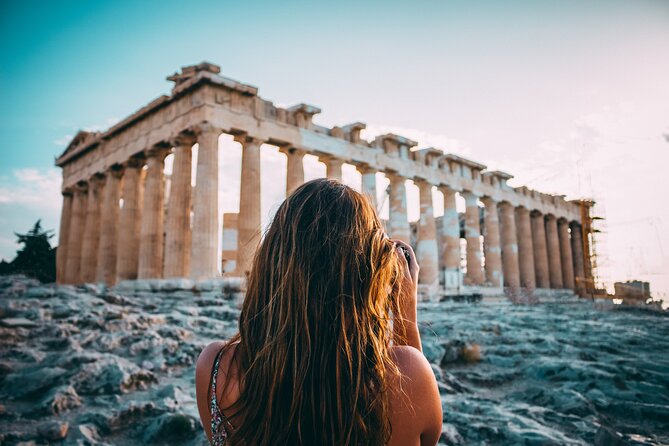
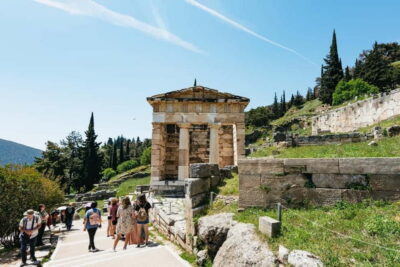
After pickup at your Athens hotel, the road leads to Delphi. The ancient sanctuary includes the Temple of Apollo, the Castalian Fountain, the Treasury of the Athenians, the theater, the stadium, and a museum with the Charioteer of Delphi and a statue of Antinous.
The scheduled visit is about an hour, so you will get an overview rather than an unhurried archaeological study. Still, Delphi is an excellent opening stop because it gives you a clear sense of ancient Greek religion and politics before the route turns north.
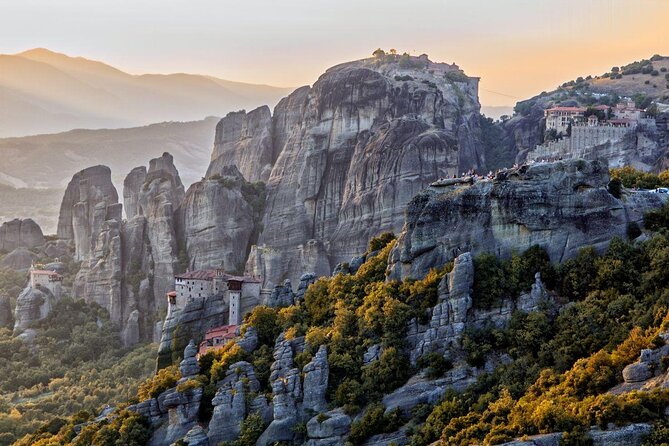
Meteora follows, with about two hours among monasteries built on dramatic rock formations in the 14th and 15th centuries. The sunset timing is one of the itinerary’s best ideas. You should expect a long first day, though, since Delphi and Meteora are both major sights with substantial driving between them.
Ioannina leads into Albania’s stone towns
Day two begins in Ioannina, where you walk through the old town and visit the Byzantine-era castle. The castle contains narrow streets and historic buildings, while the town itself gives you time for cafés and Greek food.
Then you cross into Albania and reach Gjirokaster, known for its gray stone houses and steep lanes. The following day is devoted to the town’s castle, medieval bazaar, and Skenduli House, one of the best-preserved traditional homes in the area.
Skenduli House is especially useful because it turns architecture into daily life. Instead of simply looking at façades, you see how a large household was arranged and preserved. The bazaar adds a practical side, with handmade crafts and local products.
Gjirokaster requires walking on slopes and uneven stone streets. Pack shoes with a firm grip. The scheduled sightseeing blocks are short, so free time may be limited, but the route gives you more than a quick roadside photograph.
Berat, Drilon, and Ohrid bring variety
Berat follows, with its hillside homes often described as the town of 1,001 windows. Inside the castle, people still live among churches, mosques, and old stone lanes. The Onufri Iconographic Museum adds depth, displaying religious art linked to the famous painter known for a distinctive reddish color.
You also cross the Gorica Bridge and visit the Gorica neighborhood. Berat is one of the places where the tour’s mix of architecture and living communities works especially well. It is not only a preserved monument. It remains a town with residents, shops, and daily routines.
Near Lake Ohrid, Drilon National Park offers a quiet break among springs, willow trees, and a small lake. Tushemisht adds a village stop before you cross into North Macedonia and visit the Monastery of Saint Naum.
Ohrid receives three hours the next day. The city and lake have UNESCO status, and the walk includes viewpoints near Saint John’s Church, Saint Nicholas Church, and the Halveti Hayati Tekke. The city’s Orthodox tradition and long settlement history give this stop real substance, but three hours still means you will see highlights rather than every church and shoreline path.
A different kind of day out from Athens:
- Athens: Cape Sounion & Poseidon Temple Sunset Half-Day Trip
★ 4.8 · 8,241 reviews - Athens: Acropolis and Parthenon Guided Walking Tour
★ 4.6 · 5,882 reviews - All Day Cruise -3 Islands to Agistri,Moni, Aegina with lunch and drinks included
★ 5.0 · 4,958 reviews - Athens, Piraeus, and Coastline: Blue Hop-On Hop-Off Bus
★ 3.9 · 4,849 reviews
Tirana adds food and modern Albanian history
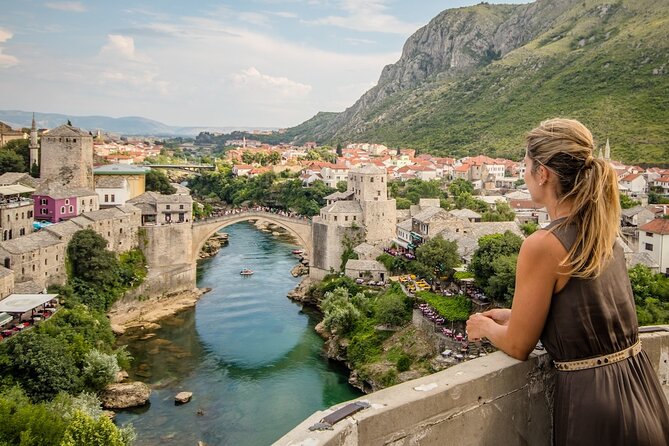
Tirana is one of the route’s more hands-on days. You meet a local companion and start with byrek, the flaky Albanian pastry filled with options such as cheese, meat, or spinach.
At Çam Bazaar and Pazari i Ri, you see the everyday side of the capital. The stops include inexpensive goods, secondhand items, produce, and places to try qofte, grilled meatballs served with bread. Raki is also included in the food experience, so pace yourself if you are not used to strong spirits.
Bunk’Art 2 occupies a former nuclear bunker built for communist leader Enver Hoxha and senior officials. Its exhibits focus on the communist army and ordinary life under the regime. This is an important counterweight to the ancient sites. Albania is not presented only as castles and mountain towns. You also confront its 20th-century political past.
The following day takes you to Kruja, associated with Albanian resistance to Ottoman expansion. Its old bazaar is one of the best places on the route for carpets, jewelry, and handmade souvenirs. The castle visit includes local paths once used to leave the hilltop without being seen.
Kosovo gives the route its strongest cultural contrast
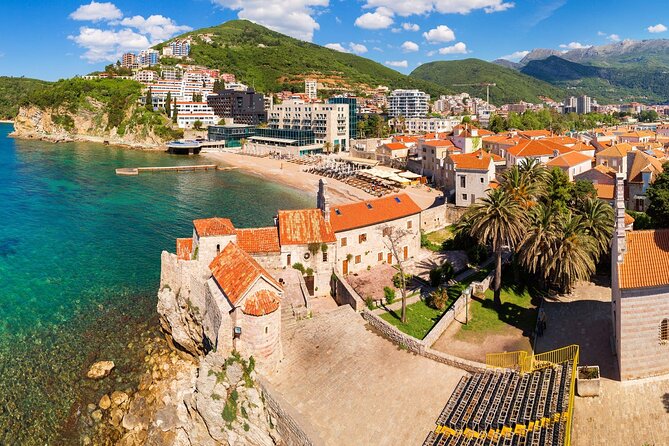
Prizren is among the most appealing stops in Kosovo. Its old town follows a river, with stone bridges, Ottoman buildings, religious sites, and craft shops. You visit the Sinan Pasha Mosque and climb to Kalaja Fortress for a view over the town.
The schedule leaves a free afternoon, which matters here. After many tightly timed stops, Prizren offers a chance to wander, eat, and browse without being hurried from one monument to the next.
The next day brings Gjakova’s rebuilt bazaar, the Serbian Orthodox Monastery of Decan, and Rahovec wine country. Decan is known for its white exterior, 14th-century frescoes, and resident Orthodox monks. Rahovec gives the trip another food and drink angle, with grape growing in the valley dating back to ancient times.
This part of the route also requires sensitivity to the region’s complicated past. The tour presents different religious and cultural traditions within a relatively small area, which is one of its most valuable features.
Northern Albania and the Adriatic coast
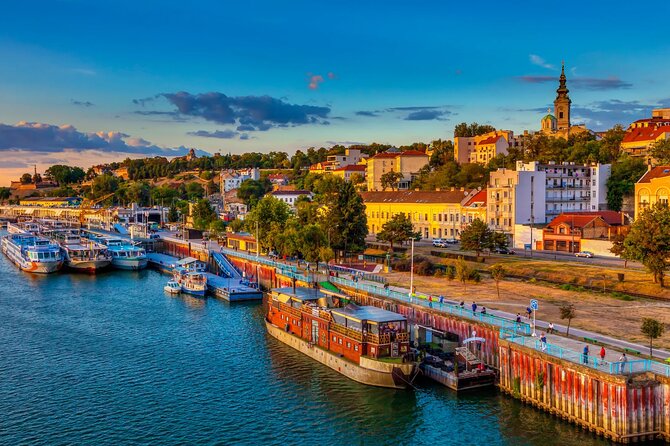
Near Lezhë, Mrizi i Zanave is an agro-tourism farm focused on local products and preservation methods. You can walk around the farm, learn how the family business adapted former communist buildings, and buy fresh products or have lunch.
This is one of the itinerary’s most distinctive experiences because it connects food with local employment and rural business. Lunch is not included, so budget for it.
Shkoder follows, with Rozafa Castle and views toward the lake and rivers leading to the Adriatic. Shkoder also has Venetian architectural influence and a tradition of making carnival masks. You receive about two hours here, enough for the castle and a city introduction.
Montenegro begins with a viewpoint over Sveti Stefan. The island is now an exclusive residential resort and cannot be visited, but the view is worthwhile. Budva then offers a clear split between modern development and a medieval old town with churches and stone lanes.
Kotor is a short but important stop. Its UNESCO-listed old town is a maze of cobblestone streets, with Saint Luke’s Church included. One hour is enough to get oriented, but not enough to explore every lane or fully appreciate the bay region.
Mostar and Sarajevo carry the heaviest history
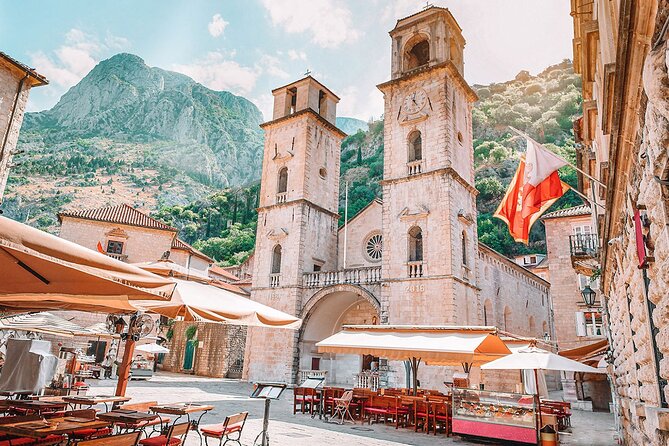
Mostar’s Old Bridge is the centerpiece. The 16th-century bridge and surrounding old city combine Islamic architecture, bazaars, mosques, stone lanes, and shops. The repeated reminder not to forget gives the town a serious emotional layer.
Blagaj Tekija, outside Mostar, adds a quieter stop beside blue water at the foot of a cliff. The contrast works well after the busy bridge area.
Sarajevo deserves careful attention. The walk covers the Ottoman and Austro-Hungarian quarters, markets, mosques, churches, and synagogues. You also see bullet holes and cannon marks connected to the Yugoslav War.
At Latin Bridge, the tour explains the event that helped trigger World War I. You then have time for local food in the old town. The sightseeing block is short, and the schedule notes uneven ground, so bring practical shoes and do not expect a long museum day.
Serbia links river towns, wine, and imperial architecture
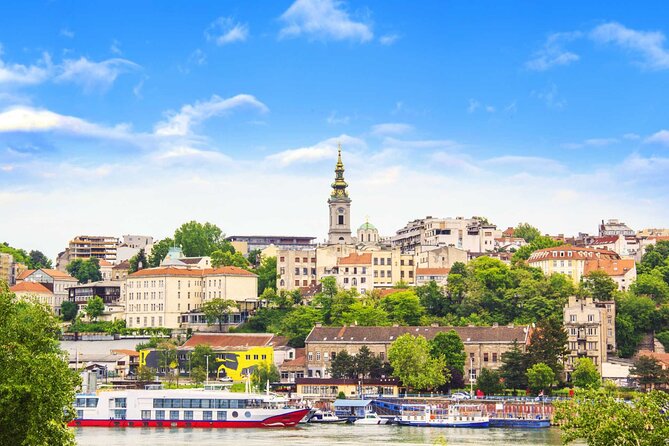
A stop in Zvornik breaks up the drive toward Belgrade. In Belgrade, you visit the fortress and Kalemegdan Park at the meeting point of the Sava and Danube rivers. The walk continues along Knez Mihailova to Republic Square.
Belgrade receives two hours, which gives you a good first look but not a full city visit. The fortress views are the main reward.
Sremski Karlovci shifts the mood to wine and Baroque architecture. The town was a center of Serbian culture in the 18th century, and you have free time for regional wine tasting. Novi Sad follows with Petrovaradin Fortress, old pedestrian streets, and a mixture of Austro-Hungarian and Ottoman influence.
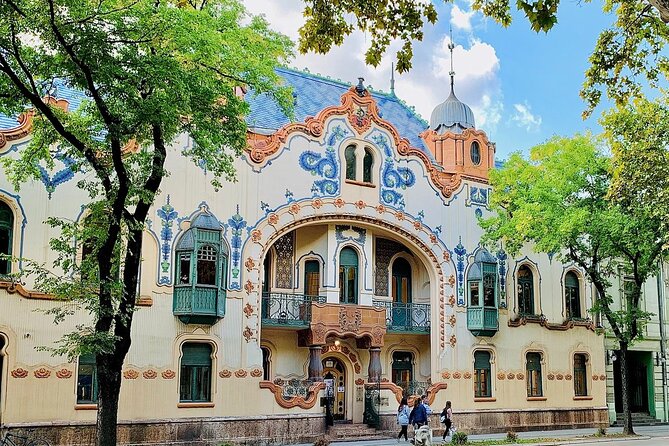
Subotica is the last Serbian stop. Its City Hall, public square, fountains, and ornate architecture reflect its former importance under the Austro-Hungarian Empire. Three hours here provide more breathing room than many earlier stops, with time for food and local wine.
Budapest to Vienna is a polished final chapter
Budapest begins with the Danube, Saint Stephen’s Basilica, the Opera, Parliament, Heroes’ Square, and Fisherman’s Bastion. Buda Castle is the included paid attraction, and an evening is left open for you to see the city after dark.
The route then moves to Győr, a smaller Hungarian city known for Baroque streets, churches, its 59-meter Town Hall tower, cathedral, synagogue, and pedestrian shopping street. This is a pleasant change from capital-city sightseeing, with time for Hungarian food and the local blueberry beer mentioned in the plan.
Bratislava offers a final medieval center, Michael’s Gate, and Bratislava Castle above the Danube. You also get free café time in the old town before the tour leader drops you at your Vienna hotel on day 21.
Vienna itself is a finish point, not a full sightseeing day. If Vienna is important to you, add extra nights after the tour. The same advice applies to Athens, since the first day begins with hotel pickup after you have already explored the city independently.
Who should book this trip
Book it if you want a single organized route through places that are awkward to connect independently. It suits people who value a private vehicle, a small group, local food stops, and a tour leader who handles border crossings and hotel transfers.
It also suits first-time visitors to the Balkans who want historical context without arranging every detail. The five positive comments supplied for the experience praise the staff, personal attention, comfortable accommodation, and the way the guide added restaurant suggestions and personal stories. Those are meaningful strengths for a route this long.
Think twice if you dislike long drives, frequent packing, or fixed sightseeing windows. Lunches, dinners, drinks, and snacks are extra, and the 3-star hotels are practical rather than luxurious. The non-refundable booking terms also make travel insurance worth considering.
FAQ
How long is the tour?
The tour lasts approximately 21 days, beginning with pickup in Athens and ending with hotel drop-off in Vienna.
What is the group size?
The group can include a maximum of 10 travelers. A private tour option is also available when booking.
What accommodation is included?
The price includes 3-star hotel accommodation with breakfast. Pricing is based on double, twin, triple, or quadruple room occupancy.
Is single-room accommodation available?
Yes. Single occupancy is available for an additional 45 euros per night per person.
What meals are included?
Twenty breakfasts are included. Lunches, dinners, drinks, and snacks are not included.
Is transportation included?
Yes. Private transportation, petrol, road taxes, international car insurance, hotel pickup in Athens, and hotel drop-off in Vienna are included.
Are entrance fees included?
Entry tickets for the listed sites to be visited are included. Personal spending and anything not specifically listed remain your responsibility.
Should you book this Athens to Vienna tour?
Book it if you want breadth, structure, and a small group, and if you are comfortable trading slow travel for a packed route. The combination of Delphi, Meteora, Albania’s stone towns, Ohrid, Prizren, Sarajevo, Belgrade, Budapest, Bratislava, and Vienna is hard to arrange neatly on your own.
Skip it if you want long stays, luxury hotels, or full control over meals and daily timing. At this price, the tour makes the most sense for you when convenience, private road transport, and local guidance matter more than keeping the budget low.
Newly reviewed around Athens
- Athens: workshop for painting landscape with local artist★ 4.6 · 3 reviews
- Athens: Greek Wine & Olive Oil Tasting at Brettos Plaka★ 4.5 · 3 reviews
- Outdoor Yoga and Pilates with Akropolis view★ 4.0 · 5 reviews
- Acropolis of Athens: 60′ Tour in a Vintage Motorcycle★ 5.0 · 4 reviews
- Ultimate Tasting of the Volcanic Wines of Greece★ 5.0 · 3 reviews
- workshop for painting acropolis/landscape with local artist★ 5.0 · 3 reviews
- Athens at Twilight Night Tour with Drinks and Meze Dishes★ 4.8 · 4 reviews
- Breakfast in the markets with olive oil and honey tasting★ 4.8 · 8 reviews
Tours, compared.
Acropolis, Parthenon & Acropolis Museum Guided Tour
Read our review →
Mythology of Delphi, Museum and Arachova Guided Tour
Read our review →
Acropolis, Parthenon & Acropolis Museum Guided Tour
Read our review →