
Reviewed · ATHENS ACROPOLIS TOURS
Athens: Acropolis Guided Walking Tour without Entry Ticket
The best part of this Acropolis walking tour is the way it links the stones to the stories behind them. You move from the Theater of Dionysus to the Parthenon, then hear why Athena mattered so much to Athens and how myths shaped this rocky hilltop.
I like the small-group format, since you have a better chance to ask questions than on a large coach tour. I also like the focused two-hour route, which covers the major monuments without turning your morning into an archaeological endurance test. The main drawback is clear: your Acropolis entry ticket is not included, so you must arrange it separately and match it to the tour time.
Key points to know before you book
- Spanish-language guiding: The live tour is conducted in Spanish, with a licensed guide explaining the history, legends, and architecture.
- A two-hour route: The walk includes the Acropolis highlights, then gives you the option to stay longer and look around at your own pace.
- The ticket is separate: You must buy your Acropolis ticket before the tour, and the correct entry time depends on the season and tour departure.
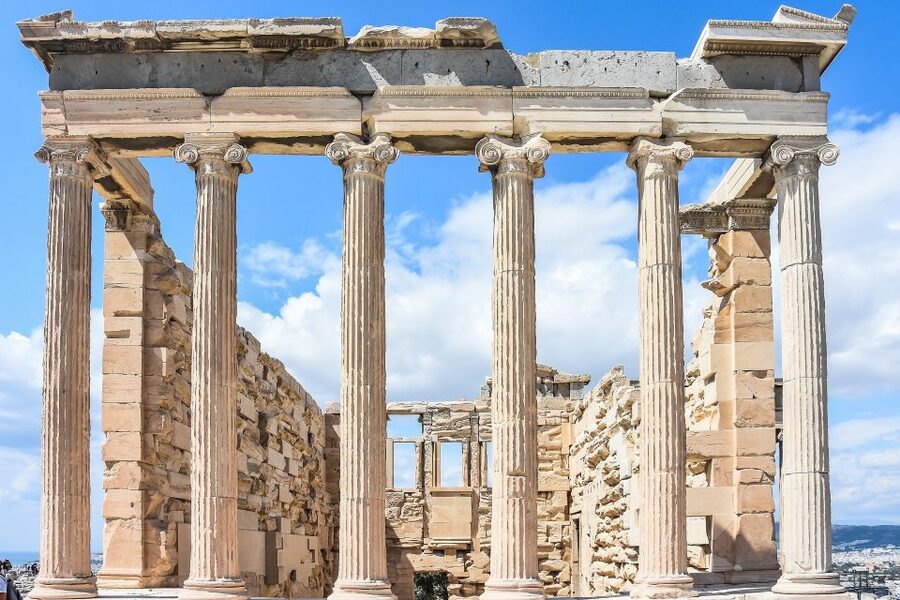
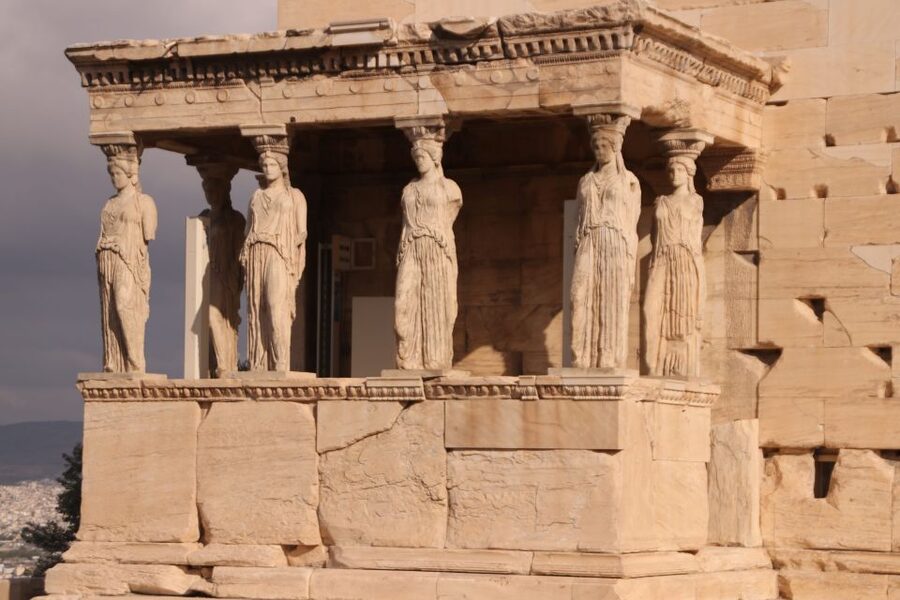
- Major monuments included: Expect the Parthenon, Propylaea, Erechtheion, Caryatids, Temple of Athena Nike, Theater of Dionysus, and Odeon of Herodes Atticus.
- Central meeting point: Meet at street level by the Acropolis Metro station, 10 to 15 minutes before departure.
- Best for curious history fans: This suits you if mythology and historical explanation matter as much as taking photographs.
What this Acropolis walk is really like
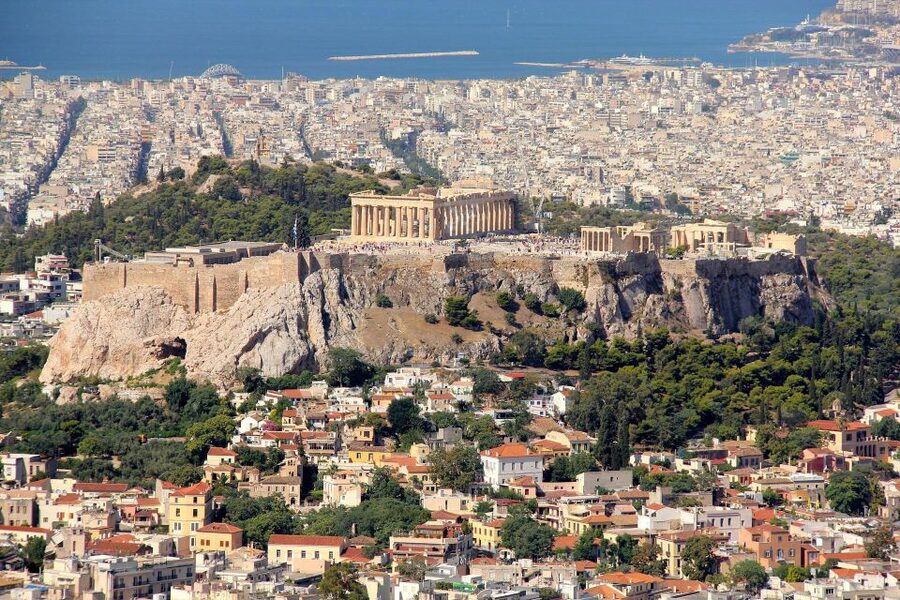
This is a guided visit to the Acropolis, the ancient citadel rising above Athens. You are not simply walking up to take a picture of the Parthenon. The guide places the buildings within the religious life, political story, and mythology of ancient Athens.
The tour lasts two hours. That is enough time to see the major points and get a useful explanation of what you are looking at, but it is not a slow archaeological seminar at every ruin. I see that as a good trade for many visitors. You receive structure and context, then can spend extra time at the site after the guided portion.
The tour is offered in Spanish. That matters more than it may first appear. At a place crowded with names, gods, dates, and damaged marble, a guide speaking your strongest language can make the difference between following the story and simply nodding at old stones. One guide named Juan received special praise for making the explanations clear and entertaining, even in heat and with crowds around.
More ways to see the Acropolis:
- Athens: Acropolis & up to 5 Archaeological Sites Combo Pass
★ 4.4 · 12,619 reviews - Athens: Acropolis Ticket with Optional Audio or Live Guide
★ 4.2 · 11,055 reviews - Athens: Acropolis, Parthenon & Acropolis Museum Guided Tour
★ 4.8 · 9,316 reviews
Meeting at the Acropolis Metro station
You meet your guide at the street-level entrance of the Acropolis Metro station. Arrive 10 to 15 minutes early, not at the exact starting time. The meeting point is central and practical, but you still need a little breathing room to find your guide and confirm that you have the right entry ticket.
The tour does not include hotel pickup or transportation. That keeps the price down, but it also puts the arrival planning in your hands. Use the Acropolis Metro station as your target and allow enough time to reach it before the group sets off.
The ticket office is at the South Entrance area, less than two minutes from the meeting point. If you plan to buy your ticket in person, arrive at the ticket office about 30 minutes before the tour. That extra time is important because you may need to wait in line before walking to the meeting point.
Buying the ticket is the key detail
The advertised price is $32.75 per person, but that amount covers the guided tour, not admission to the Acropolis. Your total cost will be higher once you add the entry ticket.
You can buy the ticket online, and doing so is the simpler choice. The tour has specific departure times that must match the Acropolis entry window. In the low season, from November 1 through March 31, the 9:15 tour requires a ticket for the 9:00 to 10:00 time slot. The 2:30 tour requires a 2:00 to 3:00 slot.
In the high season, from April 1 through October 31, the 8:15 tour requires an 8:00 to 9:00 ticket. The 5:00 tour requires a 5:00 to 6:00 ticket. Check the current availability before booking, since entry times and tour schedules are the part most likely to cause trouble.
If online tickets are sold out, the tour information says assistance may be available. I would not rely on that as your first plan. Secure the admission ticket as early as you can, especially for a high-season visit.
Theater of Dionysus: where the tour begins to tell a story
The Theater of Dionysus is one of the first major sights connected to the Acropolis route. It could hold about 17,000 spectators and hosted festivals honoring Dionysus, the Greek god associated with theater and celebration.
This is a useful early stop because it gives you a sense of how public life worked in ancient Athens. The Acropolis was not an isolated temple complex. It connected to religious ceremonies, performances, civic identity, and stories that shaped how people understood their city.
Your guide explains the mythology tied to the site rather than leaving you to guess what the worn stones once meant. That is one of the strongest reasons to choose a guided visit here. The remains are impressive, but the scale and purpose are easier to grasp when someone points out the seating, performance area, and place in Athenian life.
More walking tours in Athens:
- Athens: Acropolis and Parthenon Guided Walking Tour
★ 4.6 · 5,882 reviews - Greek Food Walking Tour in Athens
★ 5.0 · 4,740 reviews - Acropolis: Acropolis and Parthenon Guided Walking Tour
★ 4.7 · 3,442 reviews - Acropolis monuments & Parthenon Walking Tour with Optional Acropolis Museum
★ 5.0 · 2,678 reviews
The Odeon of Herodes Atticus and the climb ahead
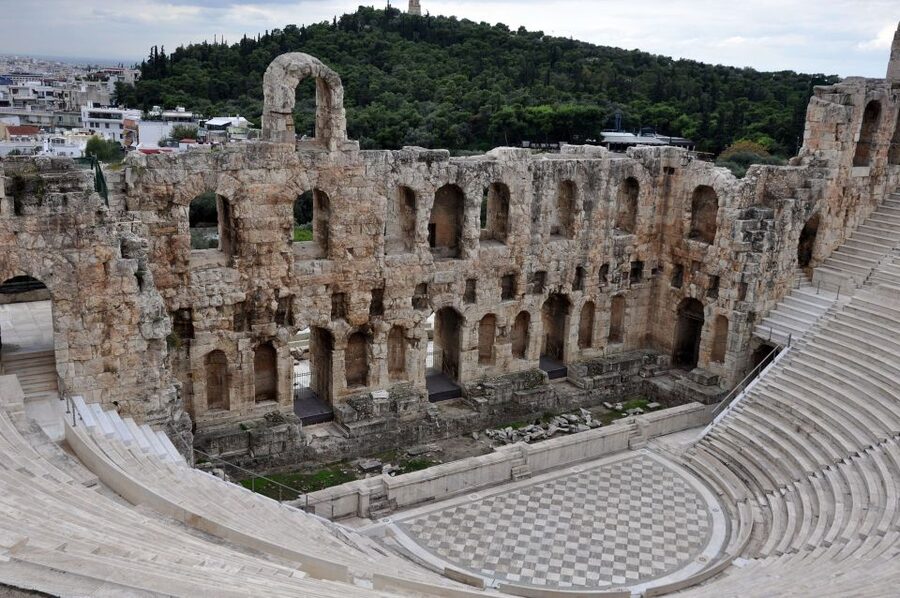
The Odeon of Herodes Atticus is a large stone theater built into the Acropolis slope. Its dramatic setting makes it one of the most memorable sights before entering the rocky citadel itself.
The structure helps you see how the Acropolis is arranged. The route is not a flat series of rooms. You walk through an ancient setting where theaters, gateways, temples, and steep rock all work together. Wear sensible shoes and expect a walking tour rather than a stop-and-start bus excursion.
Heat can affect this portion of the visit. A guide praised in the feedback kept the tour engaging even under hot conditions, but no guide can remove the sun or the stone under your feet. A morning departure is worth considering if you prefer cooler conditions, though your choice must match the ticket slot available.
Propylaea: the gateway into the citadel
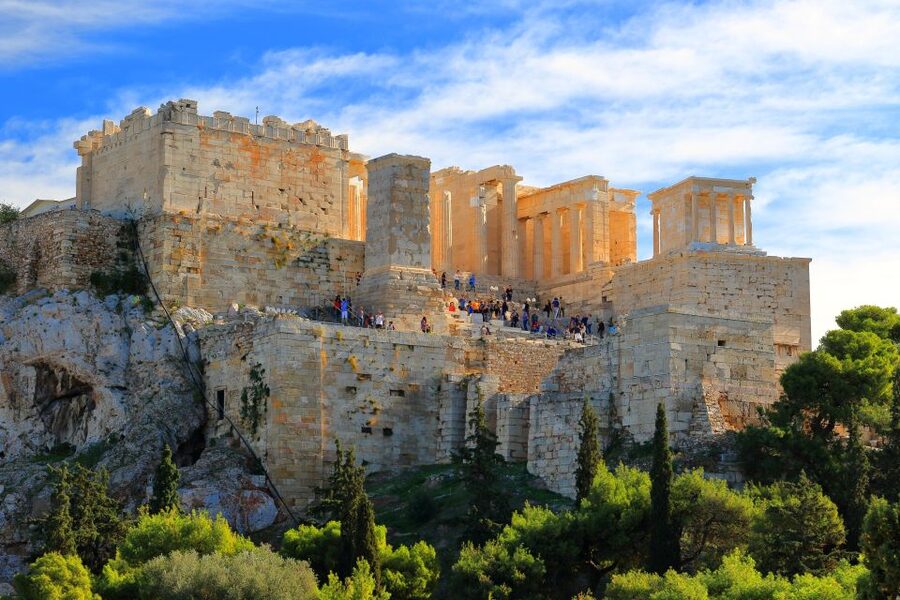
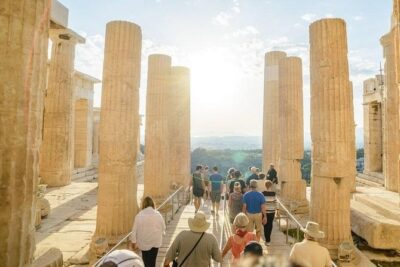
The Propylaea is the monumental gateway into the Acropolis. Passing through it gives the visit a strong sense of arrival. You are not just approaching another ancient building. You are entering the sacred hilltop dedicated to Athena, the goddess protector of Athens.
This is also a place where a guide adds real value. The scale and design can be hard to read while you are moving with a group and watching your footing. Listen for the explanation of how the gateway framed access to the sanctuary and prepared worshippers for the temples beyond.
The route through the Propylaea can be busy, particularly during the high season. A small group helps, but it does not guarantee an empty view. Keep your expectations sensible: you are visiting Athens’ most famous archaeological site, not a forgotten ruin with the place to yourself.
The Parthenon and the meaning of Athena
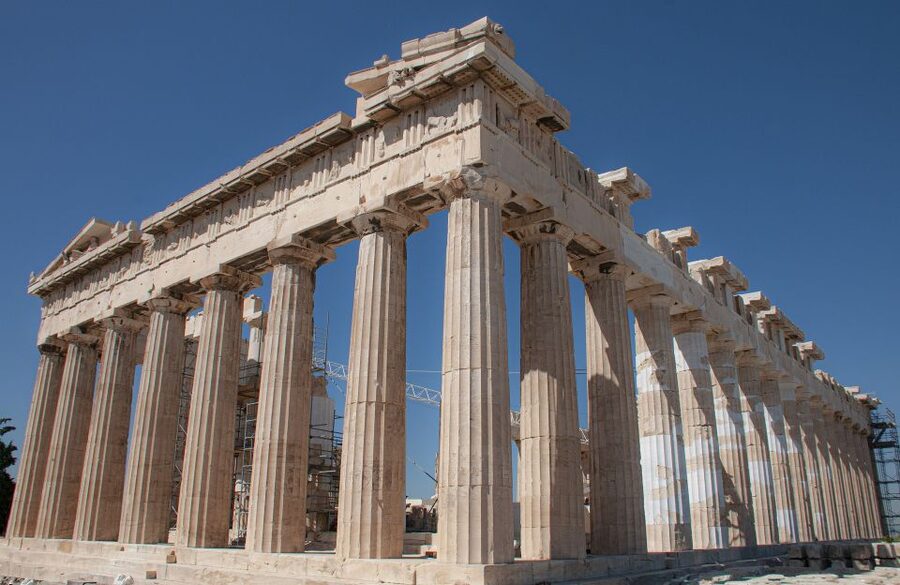
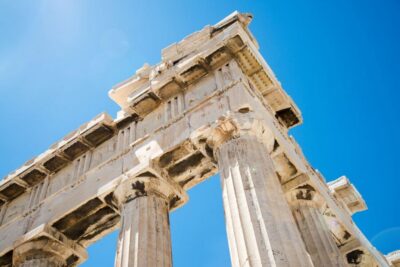
The Parthenon is the star of the Acropolis, but the tour does more than point toward its columns. You hear about the temple’s connection to Athena and the role of the goddess in the identity of Athens.
The building is famous for its scale and surviving form, yet its meaning comes from the wider site. The guide connects the Parthenon to the religious festivals, myths, and civic pride that made the Acropolis central to ancient Athens. That context turns a familiar photograph into a place with a story.
You should expect time to look, listen, and take photographs, but not necessarily a long quiet pause in front of every side of the temple. The two-hour schedule has several important stops to cover. If the Parthenon is your main interest, use the free time after the guided walk to study it at your own pace.
Erechtheion and the Caryatids
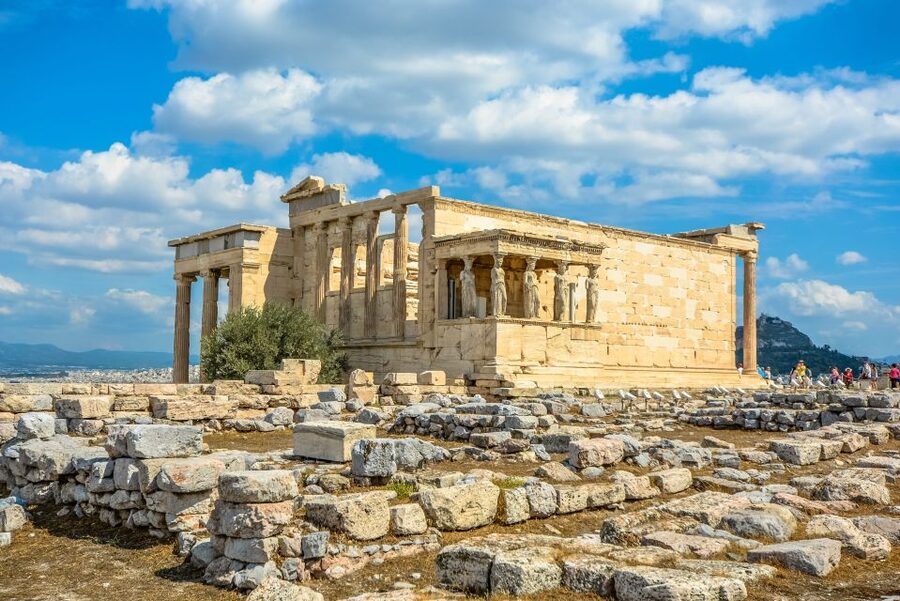
The Erechtheion is named after Erechtheus, a figure connected with the mythology of Athens. Its unusual design and several sacred associations make it a useful contrast to the more regular appearance of the Parthenon.
The Caryatids are the detail many people remember most. These carved female figures serve as architectural supports and give the building a character that is easy to recognize in photographs. Your guide explains the carvings and the stories attached to the building, helping you see more than an attractive row of stone figures.
Because the Caryatids draw attention from every direction, this can be a crowded stop. Stay close enough to hear the Spanish commentary, then take your own photographs when the group moves on. The small-group setting makes questions easier, which is useful if you want to ask about the figures, their purpose, or the mythology connected with the Erechtheion.
Temple of Athena Nike
The Temple of Athena Nike is described as the smallest temple on the Acropolis. Its compact size makes it easy to miss beside the larger monuments, so including it in the route is worthwhile.
This is a good example of why a guide helps. On your own, you might focus on the Parthenon and walk past the smaller temple without understanding its place in the sanctuary. The guide brings attention to it and explains its connection with Athena.
The stop also adds variety to the walk. You see that the Acropolis was not built around one grand structure alone. Several temples and sacred spaces formed a larger religious center, each carrying its own role and story.
Mythology, questions, and the Spanish guide
Mythology is a central part of this experience. You hear about the Greek gods and the legends associated with the ruins, including the stories tied to Athena, Dionysus, and Erechtheus.
I like this approach because mythology gives the site a human voice. Dates and architectural terms can blur together, while a story helps you remember why the buildings mattered to the people who built and used them. The most praised aspect of the guiding is the detailed explanation of Athenian history and the way legends are woven into the route.
The guide language is Spanish. If you need English or another language, this is not the right departure. If Spanish is comfortable for you, the format should make it easier to ask questions and follow the connections between the temples, theaters, and ancient festivals.
Is $32.75 a fair price?
At $32.75, the guided portion is reasonably priced for a two-hour walk through one of Athens’ most important sites. You are paying for a licensed guide, a planned route, and explanations that help you make sense of the ruins.
The value depends on what you want. If you already know the Acropolis well and prefer to wander silently, you may be happier buying admission and exploring alone. If this is your first visit, the guide can save you from missing smaller buildings and can explain the mythology that is difficult to pick up from signs alone.
Remember to calculate the separate admission cost. The tour price is not the full visit price, and arranging the ticket takes some care. Still, the ability to ask questions, hear detailed commentary, and stay longer after the guided walk gives the tour more value than a simple escorted entry.
Practical limits and who should book
Strollers, non-folding wheelchairs, and electric wheelchairs are not allowed. That restriction is important to know before you reserve, since the Acropolis route includes uneven archaeological ground and access limitations.
This tour suits you best if you want:
- A Spanish-language explanation of the Acropolis
- A compact visit lasting two hours
- Context about mythology as well as architecture
- A small group with a chance to ask questions
- Help identifying less obvious sights such as the Temple of Athena Nike
It is less suitable if you need hotel transportation, require wheelchair access, or want the entry ticket handled for you. It is also not ideal if you want a completely unstructured visit from the moment you arrive.
The tour includes free time to remain at the site and continue looking around after the guided portion. That is a useful balance. You get an organized introduction, then some freedom to return to the Parthenon, Caryatids, or another favorite spot.
Should you book this Acropolis tour?
Book it if you want the Acropolis explained in Spanish, especially if ancient mythology is part of what draws you to Athens. The most useful parts are the clear historical storytelling, the attention to theaters and smaller temples, and the chance to ask questions in a small group.
Skip it if you prefer to explore entirely alone or if buying a separate ticket and matching the time slot sounds like too much work. For everyone else, the $32.75 guiding fee is a sensible way to give structure to a complicated site, as long as you arrange the admission ticket first and arrive early at the Acropolis Metro meeting point.
FAQ
Is the Acropolis entry ticket included?
No. The tour price includes the guided Acropolis visit and a licensed guide, but you must buy the Acropolis entry ticket separately.
Where does the tour meet?
Meet your guide at street level by the entrance of the Acropolis Metro station.
How early should I arrive?
Arrive 10 to 15 minutes before the tour begins. If you plan to buy your ticket at the South Entrance ticket office, arrive there about 30 minutes before the tour so you have time for the line and the short walk to the meeting point.
What language is the tour in?
The live tour guide speaks Spanish.
How long does the tour last?
The guided tour lasts two hours. Afterward, you can stay longer and explore the site at your own pace.
Which Acropolis sights are included?
The route includes the Parthenon, Propylaea, Erechtheion, Caryatids, Temple of Athena Nike, Theater of Dionysus, and Odeon of Herodes Atticus.
Are strollers and wheelchairs allowed?
Baby strollers, non-folding wheelchairs, and electric wheelchairs are not allowed.
Can I cancel the booking?
You can cancel up to 24 hours in advance for a full refund. The reserve-now, pay-later option allows you to book without paying immediately.
Newly reviewed around Athens
- Feel Ancient thermal Spa Visit Delphi, Leonidas ℨoo Spaʀtan★ 5.0 · 4 reviews
- Food Tour★ 5.0 · 3 reviews
- Explore the Hidden Food Gems of Athens★ 5.0 · 57 reviews
- Food Experience in Athens including Unlimited Lunch★ 5.0 · 3 reviews
- Eat Your Way Through Athens: A Local Food Walk★ 4.9 · 97 reviews
- From Athens: Delphi Private Tour with Lunch Time★ 4.0 · 3 reviews
- Delphi: Spanish guided one day tour★ 4.6 · 55 reviews
- Early Entry Acropolis & Museum. Beat the Crowds & the heat★ 5.0 · 3 reviews
Athens Acropolis Tours, compared.
Acropolis & up to 5 Archaeological Sites Combo Pass
Read our review →
Acropolis, Parthenon & Acropolis Museum Guided Tour
Read our review →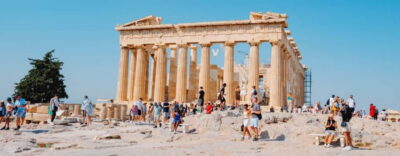
Acropolis, Parthenon & Acropolis Museum Guided Tour
Read our review →

Acropolis monuments & Parthenon Walking Tour with Optional Acropolis Museum
Read our review →Browse the lists this tour appears in