
Reviewed · ATHENS BIKE TOURS
Ancient Athens E-Bike Tour
Athens packs its greatest sights into a hilly, busy center, and this standing electric trike tour gives you a quick way to cover the ground. You glide past the Acropolis, Pnyx, Ancient Agora, Monastiraki, and Plaka in about two hours, with no pedaling required. I especially like the access to high viewpoints and the small maximum group of 12. The main catch is that archaeological admission fees are not part of the $72.09 price, and the short stops are for orientation rather than full site visits.
I also like the human touch. Guides such as Dimitris and Kevin adjust the route around what you have already seen, and the electric trikes are simple enough for children and first-time riders. Summer heat is a real factor in Athens, so this can save your legs and help you see more, though anyone hoping to spend serious time inside the Acropolis or Ancient Agora will need a separate visit.
Key points before you book
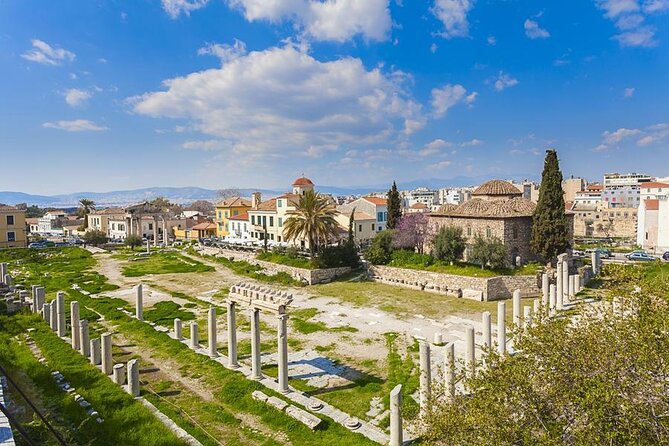
- You cover nine major Athens sights in about two hours, including the Acropolis, Pnyx, Ancient Agora, Roman Agora, and Plaka.
- The Trikke requires no pedaling, making hills and hot afternoons easier.
- The group is limited to 12 people, which leaves room for questions and route changes.
- Dimitris and Kevin are named guides associated with the experience, and the route can be adapted around sights you have already visited.
- The tour begins and ends on Leoforos Andrea Siggrou, near public transportation.
- The $72.09 fee does not cover archaeological tickets, so budget extra if you want to enter paid sites.
Why an electric trike makes sense in Athens
Athens is a city best understood on foot, but its ancient center is not flat. The Acropolis rises above the surrounding streets, the Pnyx and Hill of the Nymphs require uphill movement, and summer sun can make a short walk feel much longer.
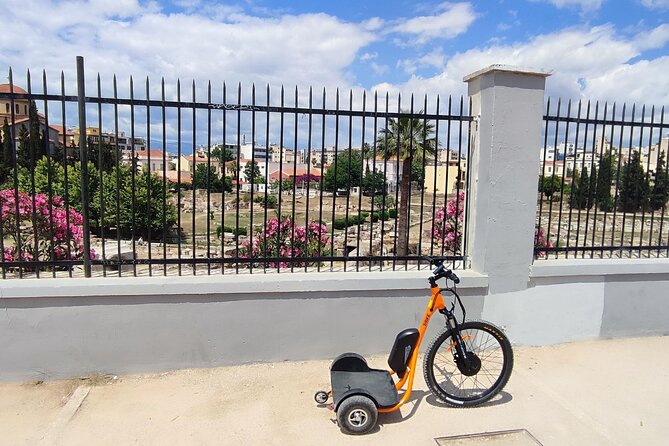
This tour uses a standing Trikke, a motorized three-wheeled vehicle. You do not pedal. You wear a helmet, receive customer insurance, and move with a guide rather than trying to navigate Athens traffic alone.
The design is different from a bicycle. You stand on the platform and operate the electric vehicle, which the experience describes as easy to use. Previous participants with children aged 9, 12, 13, and 15 found the bikes enjoyable, and the guides provide an introduction before setting off. Still, you should be comfortable balancing on a moving vehicle and following instructions.
The greatest benefit is not speed alone. It is the amount of Athens you can connect in a short time. You can look at the Acropolis from close range, reach the Pnyx viewpoint, pass the Agora, then finish among the cafes and lanes of Plaka without spending the entire morning on foot.
More bike tours in Athens:
- Athens Scenic Bike Tour with an Electric or a Regular Bike
★ 5.0 · 2,702 reviews - Athens Electric Bike Tour
★ 5.0 · 836 reviews - Athens: Old Town Highlights Guided E-Bike Tour
★ 4.9 · 834 reviews
The Acropolis, Dionysus Theatre, and Herodes Atticus

The first part of the route focuses on the southern side of the Acropolis. You see the Theatre of Dionysus, described as the first theatre in the world and the place where theatre began.
This is an important distinction: you may see the theatre from the tour route, but the tour does not function as a full archaeological-site visit. The Acropolis Hill ticket includes the Theatre of Dionysus, and the supplied admission price is €20.
The Theatre of Dionysus matters because Greek drama was born here. A short guide explanation can give you the basic setting and help you recognize the theatre later if you return with a ticket. The stop is especially useful if you are visiting Athens for the first time and need a quick introduction before deciding where to spend more time.
Next comes the Odeon of Herodes Atticus, the stone theatre tucked against the Acropolis rock. Built in the second century AD as a memorial gift after the death of Herodes Atticus’s wife, it is still used for performances.
You get a close look at the theatre and hear why it remains part of modern Athens. The Acropolis Hill ticket includes it, with the supplied price listed as €20. As with the Theatre of Dionysus, do not expect this two-hour ride to replace an Acropolis visit. It gives you context and a strong exterior view.
The Acropolis itself is the visual center of the outing. From the route, you watch the hill from close by and see the Parthenon at the top. This is one of the best reasons to choose the tour early in your Athens stay. You get your bearings quickly, learn which monuments deserve more time, and can return later with a clearer plan.
The listed stop lasts about 10 minutes. That is enough for photos and an explanation, not enough for a relaxed examination of the temples. If entering the Acropolis is a priority, buy or arrange that admission separately and allow several hours on another part of your schedule.
Pnyx and the birthplace of democracy
The ride continues to Pnyx, one of the most meaningful stops on the route. This hill is tied to the early development of democracy, and the tour explains the place where citizens met and took part in public life.
The Pnyx is also a park-like archaeological area, so it offers a welcome change from the narrow streets around the Acropolis. The stop lasts about 15 minutes and admission is free.
I consider this one of the tour’s most useful stops because it links the physical setting to the political idea. You are not only looking at old stones. You are seeing the hillside associated with public meetings and civic debate.
The nearby National Observatory of Athens sits on the Hill of the Nymphs. It was the first observatory in Athens, and the surrounding archaeological area adds another layer to the ride. The scheduled stop is about 15 minutes, with admission included.
Do not expect an observatory tour or a long astronomy presentation. The value here is the viewpoint, the open setting, and the chance to see a different side of the city beyond the postcard view of the Parthenon.
Ancient Agora and Kerameikos
The Ancient Agora is the largest stop, at about 20 minutes. In ancient Athens, it served as the central marketplace and a key place for public life.
The tour gives you a compact introduction to the area. Admission information needs careful attention: the supplied details list the Ancient Agora ticket at €4 and also mark admission as included in the stop description. Since the general tour information says archaeological tickets are not included, you should confirm the current arrangements when booking rather than assume the €4 entry is covered.
Either way, 20 minutes is a short visit. You can see the setting and decide if you want to return for a full look. The Agora deserves more time if you enjoy archaeology, civic history, or the chance to walk among substantial ancient remains without the steep climb of the Acropolis.
Kerameikos follows, with about 10 minutes in an archaeological area near the Agora. The name is linked to pottery production in this part of ancient Athens.
This stop helps widen your picture of the city. Athens was not only temples and philosophers. It had workshops, roads, burial grounds, markets, and working neighborhoods. The brief visit will not satisfy a specialist, but it is a useful piece of the city’s older story.
A different kind of day out from Athens:
- Athens: Acropolis & up to 5 Archaeological Sites Combo Pass
★ 4.4 · 12,619 reviews - Athens: Acropolis Ticket with Optional Audio or Live Guide
★ 4.2 · 11,055 reviews - Athens: Acropolis, Parthenon & Acropolis Museum Guided Tour
★ 4.8 · 9,316 reviews - Athens: Cape Sounion & Poseidon Temple Sunset Half-Day Trip
★ 4.8 · 8,241 reviews
Monastiraki, the Roman Agora, and Plaka
Monastiraki is listed as the second most crowded square in Athens and is often treated as the city’s central meeting point. Bars, restaurants, and many everyday city choices surround it.
The stop lasts about 10 minutes. That gives you a quick look at the energy of central Athens, but not much time to browse shops or sit down for a meal. I would use this stop as a marker for a later return. It is a handy place to revisit when you want food, shopping, or a starting point for exploring on foot.
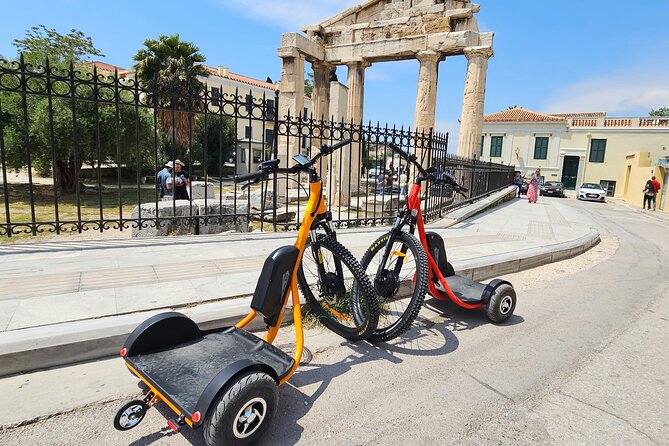
The Roman Agora was built in the second century AD as a Roman version of the earlier Greek Agora. Its best-known feature is the Tower of the Winds.
The supplied details list the Roman Agora ticket at €4 but mark admission as free in the stop information. That conflict is worth checking before you go. The broader tour terms say archaeological tickets are not included, so plan on paying separately unless the operator confirms otherwise.
The final major neighborhood is Plaka, the traditional quarter below the Acropolis. Its lanes and low buildings give it a Greek island feel, even though you are in the middle of Athens.
The 10-minute stop is enough to get oriented and take photographs. It is not long enough to explore every lane, so save time afterward if you want a slow wander. Plaka is better on foot, when you can pause for a cafe, browse a shop, or turn down a side street without worrying about the group moving on.
What the two-hour schedule really gives you

The route includes many stops, but the timing tells you what kind of experience this is. You are getting a fast, guided survey, not a series of full museum or archaeological visits.
Most stops last 10 to 15 minutes. That works well for a first morning in Athens, a short visit, or a family that needs movement rather than long lectures. It also suits you if you want to identify the places worth returning to independently.
The pace may feel brisk if you prefer slow photography or detailed archaeology. The Acropolis alone can absorb half a day, and the Ancient Agora deserves more than a quick look if ancient Athens is your main interest.
The guide adds much of the value. Dimitris is described as warm, adaptable, and good at explaining the importance of Pnyx and the surrounding neighborhoods. Kevin is also named as a guide, and the experience includes route changes based on what you have already seen.
That flexibility matters. If you have already visited the Acropolis, the guide may spend more time on viewpoints, neighborhoods, or ancient civic sites. You should tell the guide what you have done before the ride begins.
Price, group size, and practical value
At $72.09 per person, this is not the cheapest way to move around Athens. You are paying for the electric vehicle, helmet, insurance, guide, and a compact route through the historic center.
The value improves when you consider the terrain and the time saved. You can reach the Pnyx and the Hill of the Nymphs with less effort, avoid wearing yourself out in the heat, and see several districts in one outing. For a first day, that orientation can prevent wasted time.
The cost is harder to justify if you already know Athens well or plan to spend most of your day inside archaeological sites. You will still need to budget for admission fees. The supplied information gives €20 for the Acropolis Hill, €4 for the Ancient Agora, and €4 for the Roman Agora, though the stop descriptions are not fully consistent about which tickets are included.
The group maximum is 12 people. That is small enough for questions and personal attention without promising a private tour. The tour operates Monday through Saturday from 10 a.m. to 4 p.m., and the ride begins at Leoforos Andrea Siggrou 22, Athens 117 42. It returns to the same meeting point.
The activity requires good weather. You can cancel for a full refund up to 24 hours before the start time. If poor weather forces cancellation, the operator offers another date or a full refund.
Who should choose this ride
I would choose this tour for a first visit to Athens, especially if I had only a few days. It gives you a useful mental map before you decide where to spend longer stretches of time.
It also suits families. The easy-to-use electric vehicles add a sense of fun, and the listed family experience includes children from 9 through 15. The helmet and insurance are welcome basics, though you should still listen carefully to the operating instructions.
It is a good match for anyone worried about Athens heat, hills, or limited walking stamina. The Spanish-language comment about reaching hills that you might not visit on foot captures the main practical benefit, even though this tour is offered in English.
I would be more cautious if you dislike standing vehicles, feel uneasy in city traffic, or want a slow archaeological study. The experience keeps moving, and the stops are designed to show you the city rather than give you long periods at each monument.
Should you book the Ancient Athens E-Bike Tour?
Book it if you want a lively introduction to central Athens, prefer riding to walking, and like having a guide connect the Acropolis with the Agora, Pnyx, Kerameikos, Monastiraki, Roman Agora, and Plaka. The electric Trikke makes the hills and heat easier, while Dimitris or Kevin can help shape the route around your interests.
Skip it if your main goal is deep time inside the Acropolis or Agora. In that case, spend the $72.09 on a longer site visit or walking tour, then explore the surrounding neighborhoods at your own pace.
For most first-time visitors, I see this as an orientation ride. Use it to understand Athens quickly, note the places you want to revisit, and save your legs for the rest of the trip.
FAQ
How long does the Ancient Athens E-Bike Tour last?
The tour lasts approximately two hours.
Where does the tour begin and end?
It begins at Leoforos Andrea Siggrou 22, Athens 117 42, Greece, and ends back at the same meeting point.
What days and times is the tour available?
It operates Monday through Saturday from 10:00 a.m. to 4:00 p.m., during the listed operating period from January 5, 2023, through December 22, 2026.
Are archaeological admission tickets included?
The general tour information says archaeological tickets are not included. The supplied stop details list €20 for the Acropolis Hill, €4 for the Ancient Agora, and €4 for the Roman Agora, but some individual stop entries are inconsistent about admission. Confirm the current ticket arrangements before booking.
How many people can join the tour?
The maximum group size is 12 participants.
What happens if the weather is poor?
The experience requires good weather. If the operator cancels because of poor weather, you will be offered another date or a full refund. You can also cancel up to 24 hours before the start time for a full refund.
Newly reviewed around Athens
- Athens: workshop for painting landscape with local artist★ 4.6 · 3 reviews
- Athens: Greek Wine & Olive Oil Tasting at Brettos Plaka★ 4.5 · 3 reviews
- Outdoor Yoga and Pilates with Akropolis view★ 4.0 · 5 reviews
- Acropolis of Athens: 60′ Tour in a Vintage Motorcycle★ 5.0 · 4 reviews
- Ultimate Tasting of the Volcanic Wines of Greece★ 5.0 · 3 reviews
- workshop for painting acropolis/landscape with local artist★ 5.0 · 3 reviews
- Athens at Twilight Night Tour with Drinks and Meze Dishes★ 4.8 · 4 reviews
- Breakfast in the markets with olive oil and honey tasting★ 4.8 · 8 reviews
Athens Bike Tours, compared.
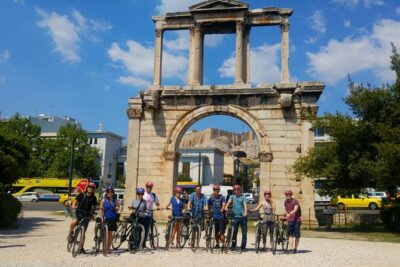
Athens Scenic Bike Tour with an Electric or a Regular Bike
Read our review →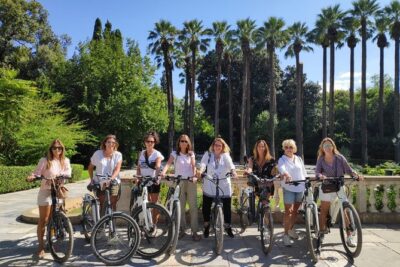



Historic Athens: Small Group Electric Bike Tour
Read our review →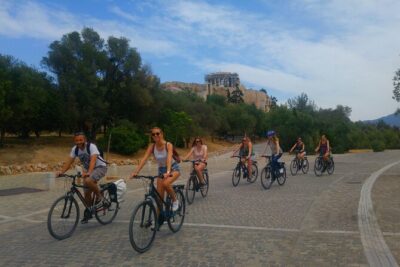
Acropolis & Parthenon Tour and Athens Highlights Bike tour
Read our review →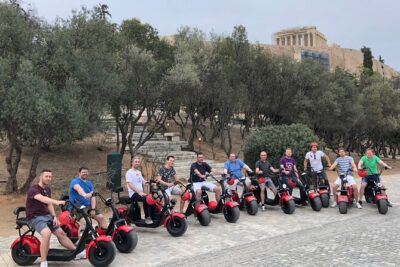
Athens Acropolis Official E-Scooter Guided Tour Fat E-Bike
Read our review →
Browse the lists this tour appears in