
Reviewed · ATHENS COOKING CLASSES
Cooking Class with Aspasia in the Heart of Athens
The most appealing part of this Athens experience is the setting: you cook in Aspasia’s bright, comfortable home rather than in a restaurant kitchen built for tourists. You help prepare a seven-dish Greek meal, then sit down with your host to eat, talk, and drink two glasses of white wine.
I like the personal attention of a private class and the broad menu, which takes you from Cretan dakos to a Mani-style egg dish and Northern Greek ravani. The main thing to consider is the level of hands-on cooking. One person found that much of the food was prepared in front of them, so this may suit a social meal with cooking instruction better than a rigorous professional-style class.
Key points to know before booking
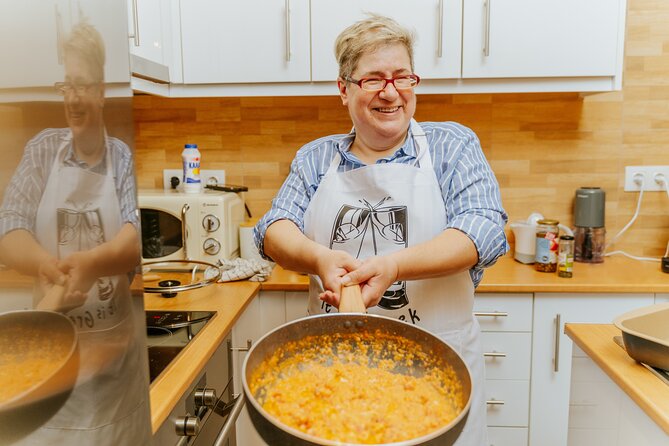
- Seven dishes from different parts of Greece: The menu includes regional favorites rather than one single local specialty.
- A private home setting: Only your group takes part, with Aspasia hosting in her Athens apartment.
- Three hours with a meal at the end: The cooking leads directly to a sit-down feast, with two glasses of white wine per person.
- A friendly, personal format: Aspasia is described as patient and encouraging, especially for people who do not cook often.
- Read the menu carefully: The recipes are familiar Greek comfort foods, not unusual restaurant dishes or advanced culinary projects.
- Easy planning: The activity starts and ends at Tsocha 3, is offered in English, and allows free cancellation up to 24 hours before departure.
A Greek cooking class inside an Athens home
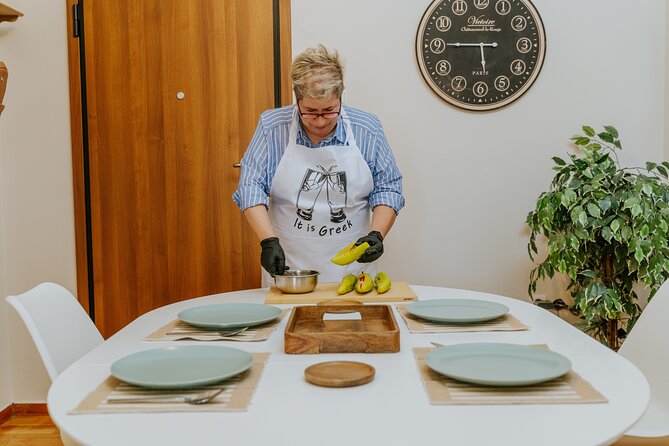
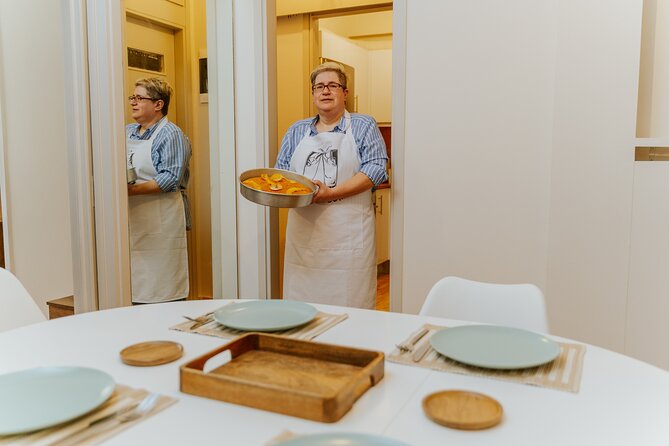
This is not a quick market visit followed by a demonstration. You go to Tsocha 3 in Athens and enter Aspasia’s light-filled home for about three hours of food preparation, conversation, and eating.
That home setting shapes the whole afternoon or evening. You are not seated at separate cooking stations in a large class. Instead, the tone is closer to being welcomed into a local kitchen, with Aspasia explaining recipes and inviting you to take part.
For me, that is the strongest reason to book. Food in Greece is tied to family routines, regional habits, and generous table culture. Preparing food in someone’s home gives those ideas more room than a standard restaurant meal.
The private format also matters. Only your group participates, so you can ask questions without competing with a room full of people. If you are nervous about cooking, that can make a real difference. One particularly warm account describes Aspasia as patient with a beginner and happy to explain each step.
Still, you should set your expectations correctly. This is a social cooking experience, not a formal culinary course. The host’s description says you will contribute to preparing the dishes, while one dissatisfied participant felt that much of the food was prepared in front of them. That contrast is important. If your priority is to chop, season, stir, and cook every dish yourself, ask for clarification before booking.
More cooking classes in Athens:
- Athens: Classic Cooking Class with Market Visit and Wine
★ 5.0 · 1,101 reviews - Athens: Food Market Visit and Cooking Class with Wine
★ 4.9 · 1,087 reviews - Greek Cooking Class in Athens Including Rooftop Dinner with Acropolis View
★ 5.0 · 826 reviews
Seven dishes, seven pieces of Greek food culture
The menu is large for a three-hour session. You are not learning one main course and going home. You help create a full meal with three starters, two main dishes, and dessert.
The recipes are also drawn from several parts of Greece. That gives the meal a useful regional spread, though the food itself is familiar rather than experimental. You will find ingredients and combinations that appear often in Greek homes: tomatoes, feta, herbs, olive oil, eggs, eggplant, minced meat, barley rusks, and semolina.
Here is what each part brings to the table.
Paximadi with olives and graviera
Paximadi is a firm Greek bread or rusk, served here with olives and graviera cheese. Graviera is a hard cheese that can taste gently sweet or slightly peppery, depending on the style.
This is a simple beginning, but it introduces two ingredients that help explain Greek snacking and hospitality. The bread gives the cheese and olives a sturdy base, while the graviera offers something different from the softer feta found in many Greek dishes.
Do not expect a complicated cooking lesson from this starter. Its value is in tasting the ingredients together and learning how a few good staples can make a satisfying first bite.
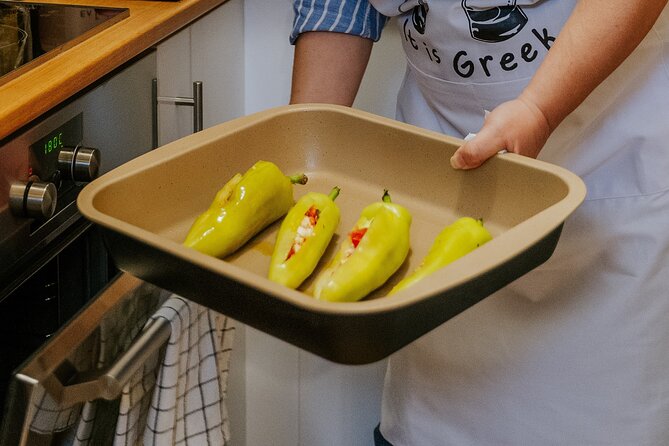
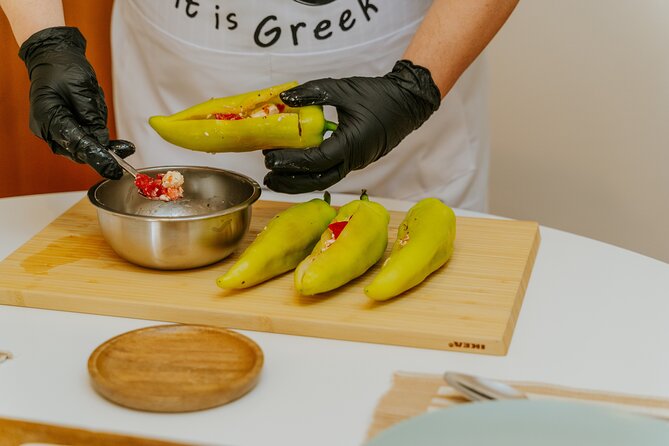
Stuffed long sweet peppers
The peppers are filled with feta, tomatoes, and herbs including spearmint. This is one of the more useful dishes to watch if you want ideas for a vegetarian meal at home.
The recipe shows how Greek cooking builds flavor from vegetables, salty cheese, fresh herbs, and tomato rather than from a long ingredient list. You may also learn more about how Aspasia handles the filling and baking, but the exact amount of hands-on work is the point to confirm in advance.
More hands-on workshops in Athens:
- Greek Small-Group Athens Cooking Class & Dinner
★ 5.0 · 574 reviews - Athens: Greek Cooking Class & Dinner on a Rooftop
★ 5.0 · 383 reviews - Athens: Greek Cuisine Cooking Class and 3-Course Dinner
★ 4.8 · 270 reviews - Traditional Greek cooking class and lunch or dinner with an Acropolis view
★ 5.0 · 250 reviews
Greek eggs kayanas
Kayanas comes from Mani and combines scrambled eggs, fresh tomatoes, and cured pork called siglino. It is a good reminder that Greek food is not limited to the familiar plate of salad, grilled meat, and fries.
The dish sounds rustic and direct. Tomato gives the eggs moisture and acidity, while siglino brings a cured, savory note. If you like learning the names and origins of regional foods, this is one of the menu’s more interesting stops.
It is also a dish that can be easy to underestimate. Scrambled eggs seem simple, but timing and heat affect the final texture. Pay attention to how the ingredients are combined, especially if you want to recreate it later.
Cretan dakos salad
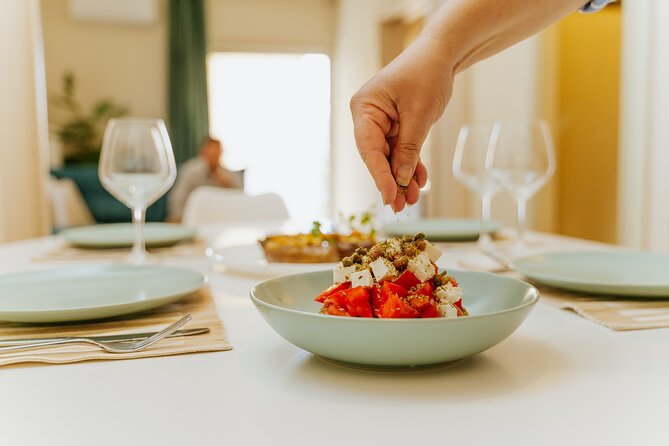
Dakos is one of the clearest regional dishes on the menu. The Cretan salad uses crisp barley rusks, tomato, olive oil, and feta.
The rusk is not just a replacement for bread. It gives the salad crunch and a hearty base, while tomato and olive oil soften it. This is the kind of food that makes sense in a home setting because it is humble, filling, and built from everyday ingredients.
I like that the dish gives you something practical to take home. Once you understand the balance between the dry rusk, juicy tomato, cheese, and oil, you can adapt the idea easily. It is also a good choice for a cooking session because you can see how a few ingredients change as they sit together.
Greek meatballs with yogurt sauce
The meatballs use ground beef, flour, and Greek spices, then come with a yogurt sauce. They are described as a classic grandmother-style dish, and that tells you more about the purpose of the menu than any fancy label could.
This is comfort food, not a technical showcase. You will likely recognize the basic shape of the recipe, especially if you already cook meatballs at home. The Greek character comes from the seasoning, texture, and yogurt accompaniment.
That brings up the central question about the class. If you want to learn a family version of a familiar dish, this can be worthwhile. If you are looking for a recipe you could not easily identify, the menu may feel too ordinary. One person who already cooks found the dishes too familiar and wished for more instruction about sauces and spices.
Eggplant imam
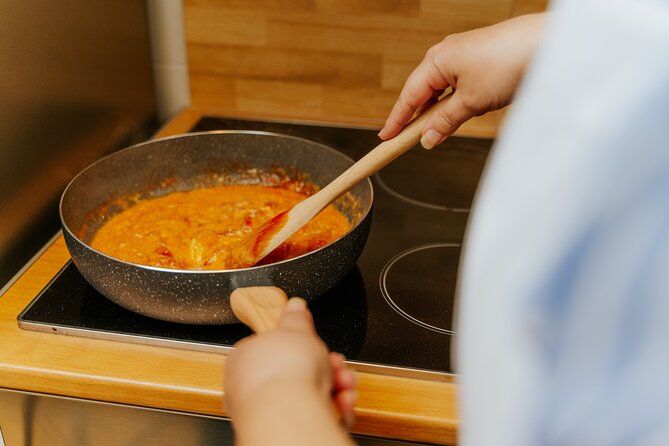
Eggplants imam are stuffed with onions, tomatoes, garlic, herbs, and spices. This is one of the more substantial vegetable dishes in the meal, and it shows how Greek cooking can make a main course from produce and pantry ingredients.
The preparation should be useful for anyone who wants to cook more vegetarian food. Eggplant can be difficult to handle well, and the filling has to bring enough flavor to the vegetable. Watch how the onions, garlic, tomatoes, and herbs are balanced.
The name is often linked to an old Ottoman-era food story, but the important point here is the dish itself. It is soft, savory, and built for serving at the center of a family table.
Ravani for dessert
Ravani is a semolina cake soaked in aromatic syrup. It comes from Northern Greece and gives the meal a sweet finish without relying on chocolate or cream.
The syrup is the key detail. It changes the texture of the cake and provides much of its flavor, so this is another recipe where the process matters as much as the ingredient list.
One account describes rice pudding rather than ravani, which suggests that the exact dessert may vary. The stated menu lists ravani, so you should treat it as the planned dessert while understanding that home cooking can sometimes shift with the host’s preparation.
How hands-on is the cooking?
This is the most important point to settle before you pay $130.04 per person.
The experience is presented as participatory. You are encouraged to help prepare the food, learn recipes, and ask questions in a relaxed setting. A positive account describes a beginner receiving patient explanations while making stuffed peppers, stuffed eggplant, scrambled eggs, meatballs with yogurt sauce, and dessert.
But another account had a very different impression. That person expected to do more of the work and felt they mainly watched food being prepared before being served. The host responded that nearly all the dishes had been prepared in front of the group and that participation had been encouraged.
Both accounts can be true. A private home class may be more flexible than a fixed school lesson. Your level of participation can depend on how assertively you step in, what your group wants to do, and how much preparation is needed before you arrive.
If you want an active class, say so at the start. Ask which tasks you will perform yourself. You can also ask whether the vegetables, meat mixture, dessert, and other ingredients will already be prepared. That short conversation may prevent a mismatch.
I would choose this activity for a curious beginner, a couple wanting a social evening, or someone who values meeting a local host as much as mastering technique. I would be more cautious if you already cook often or want detailed instruction in advanced Greek sauces, spice blends, or knife work.
The meal and wine are part of the value
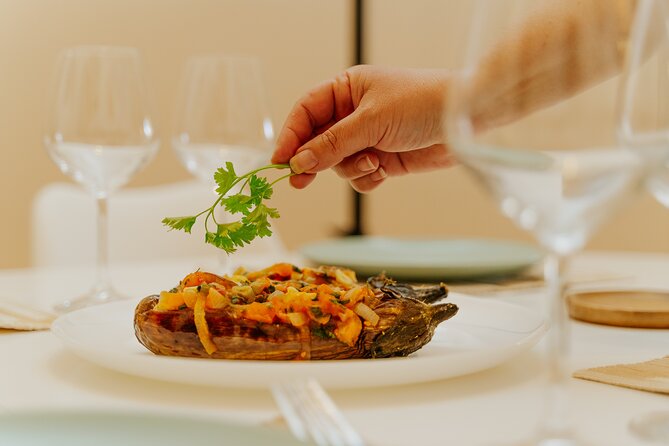
After the cooking, you eat the dishes you helped prepare. Two glasses of white wine per person are included, which helps turn the class into a complete evening rather than a lesson followed by another meal to find.
The meal is a major part of what you are paying for. You are buying food, ingredients, hosting, instruction, a private setting, and time with Aspasia. Comparing the price directly with a restaurant bill misses some of that value, but the comparison is still useful if you mainly want dinner.
At $130.04 per person, this is not a budget meal. If you want the least expensive way to eat Greek food, a taverna will cost less. If you want a private social occasion, the price becomes easier to understand, especially for a small group that would otherwise book a private food activity.
The value depends on participation. A hands-on class with personal guidance can justify the price for you. A demonstration followed by a meal may not. The menu also affects the calculation. These are classic home-style dishes, not rare ingredients or elaborate restaurant plates, so the appeal rests on the host and the shared activity rather than culinary novelty.
Three hours at Tsocha 3
The activity lasts about three hours, and it starts and ends at Tsocha 3, Athina 115 21. That fixed meeting point keeps the plan simple, though you should allow time to reach it because the session does not include transportation.
The location is near public transportation, which is useful in Athens. The experience is offered in English, and you receive confirmation when booking. It is also a mobile-ticket activity, so you do not need to arrange a paper voucher.
Because the event takes place in a private home, arrive ready for a personal setting rather than a public restaurant. The description emphasizes a bright, harmoniously decorated apartment, conversation, and laughter. You should be comfortable with a host-led evening where eating and talking take up a large part of the time.
Service animals are allowed. The activity requires a minimum number of participants, so a cancellation for that reason can result in another date or a full refund.
Free cancellation is available until 24 hours before the start time. After that point, the amount paid is not refunded, and changes made within 24 hours are not accepted. Keep the local Athens time in mind when making changes.
Who will enjoy this most?
I would point this experience toward people who want contact with a local host, not simply a cooking school certificate.
It is a good match for:
- First-time cooks who appreciate patient, personal guidance
- Couples or small private groups seeking a relaxed Athens evening
- Food lovers who enjoy familiar Greek dishes and regional names
- People who like eating the meal they helped make
- Visitors who prefer a home setting to a restaurant or large class
I would think twice if you want advanced instruction, unusual ingredients, or complete control over every recipe. The menu contains several dishes many home cooks will recognize, including bread with cheese, stuffed vegetables, eggs, and meatballs.
The activity also suits people who enjoy conversation. If you want a quiet, tightly timed lesson with little social interaction, the home format may feel too loose. The host’s warmth is a central part of the event, not an extra detail.
Should you book Aspasia’s cooking experience?
Book it if you want a friendly Greek food evening in a private Athens home, with a broad menu and plenty of time to talk. The strongest reasons are the personal format, the seven regional dishes, the included wine, and the chance to eat together after cooking.
Before booking, be clear about your expectations. Ask how much of the preparation you will do and tell Aspasia if hands-on instruction is your main goal. Also read the menu closely. It is a generous spread of classic Greek comfort food, but it is not designed around rare dishes or advanced technique.
My call: this is a good choice for a social, home-based food experience and a weaker choice for a serious cooking lesson. At $130.04, you should book for the host, setting, meal, and personal exchange, not simply for the recipes.
FAQ
Where does the cooking experience start and end?
It starts at Tsocha 3, Athina 115 21, Greece, and ends back at the same meeting point.
How long does the cooking class last?
The activity lasts approximately three hours.
How many dishes are included?
The menu includes seven dishes: paximadi with olives and graviera, stuffed long sweet peppers, Greek eggs kayanas, Cretan dakos salad, Greek meatballs with yogurt sauce, eggplant imam, and ravani for dessert.
Is wine included?
Yes. Two glasses of white wine are served per person.
Is this a private activity?
Yes. Only your group participates in the activity.
What is the cancellation policy?
You can cancel for a full refund up to 24 hours before the experience starts. Cancellations and changes made less than 24 hours before the start time are not accepted for a refund.
Newly reviewed around Athens
- Athens: workshop for painting landscape with local artist★ 4.6 · 3 reviews
- Athens: Greek Wine & Olive Oil Tasting at Brettos Plaka★ 4.5 · 3 reviews
- Outdoor Yoga and Pilates with Akropolis view★ 4.0 · 5 reviews
- Acropolis of Athens: 60′ Tour in a Vintage Motorcycle★ 5.0 · 4 reviews
- Ultimate Tasting of the Volcanic Wines of Greece★ 5.0 · 3 reviews
- workshop for painting acropolis/landscape with local artist★ 5.0 · 3 reviews
- Athens at Twilight Night Tour with Drinks and Meze Dishes★ 4.8 · 4 reviews
- Breakfast in the markets with olive oil and honey tasting★ 4.8 · 8 reviews
Athens Cooking Classes, compared.

Classic Cooking Class with Market Visit and Wine
Read our review →
Food Market Visit and Cooking Class with Wine
Read our review →
Greek Cooking Class in Athens Including Rooftop Dinner with Acropolis View
Read our review →
Greek Small-Group Athens Cooking Class & Dinner
Read our review →
Greek Cuisine Cooking Class and 3-Course Dinner
Read our review →
Traditional Greek cooking class and lunch or dinner with an Acropolis view
Read our review →
Athens Greek Cooking Class Pita Gyros from Scratch with a Local
Read our review →Browse the lists this tour appears in