
Reviewed · ATHENS ACROPOLIS TOURS
Acropolis Of Athens & The Acropolis Museum Private Guided Tour
The best part of this Athens tour is the way it joins two places that belong together: the Acropolis itself and the museum below it. You first walk among the Parthenon, Propylaea, Erechtheion, and ancient theaters, then see original sculptures and temple treasures in a calm, modern setting. I especially like the private format and the chance to spend a full two hours at each site. The guide can slow down for questions, explain Greek myths, and adjust the pace for your group.
I also like the practical meeting point at the foot of the Acropolis and the fact that the tour is designed as a leisurely half-day outing. Guides including Maria, Irene, and Anda have been praised for clear storytelling, patience, and strong knowledge of Greek culture. The main drawback is cost: $240.82 per person does not include the €20 Acropolis ticket or €15 museum ticket, and you should confirm any timed entry arranged for you before the morning begins.
Key points at a glance
- Two major Athens sights in one private visit: Spend roughly two hours at the Acropolis and two hours in the Acropolis Museum.
- A licensed guide shapes the day: Expect help with mythology, architecture, ancient customs, and the meaning behind the ruins.
- The museum completes the picture: Original works, natural light, and visible excavations make the second half more than a simple indoor stop.
- A 9:00 am start helps: Meet at Dionysos Zonar’s on Rovertou Galli 43, close to the Acropolis entrance area.
- Tickets cost extra: Budget €35 per person for the Acropolis and museum admissions, in addition to the tour price.
- Private means flexible: Your group alone joins the activity, and the guide can allow more time for questions or slower walking.
Why pairing the Acropolis with its museum works so well
Athens can feel like a pile of impressive stones until someone explains how the pieces fit. This tour gives you that missing thread. On the Acropolis, you see the buildings in their original setting, high above the modern city. At the museum, you see surviving sculpture and architectural details in a way that lets you study them at close range.
That order makes sense. First, you get the broad setting: the sacred hill, the old approach, the temples, and the views over Athens. Then the museum helps you read what you saw. A carved figure or fragment that seemed distant on the hill can become much clearer under controlled light and close inspection.
The private setup matters here. A large group often moves when the guide moves, even if you still have a question about Athena, the Erechtheion, or the function of a theater. With only your party, you can ask for a second explanation or pause briefly without holding up a crowd.
The tour lasts about four hours, split fairly evenly between the two sights. That is enough time for a serious introduction without turning the day into an all-day archaeology seminar. You still need energy for uneven ground, stairs, and the strong Athens sun, but the schedule is not built around racing from one monument to the next.
More ways to see the Acropolis:
- Athens: Acropolis & up to 5 Archaeological Sites Combo Pass
★ 4.4 · 12,619 reviews - Athens: Acropolis Ticket with Optional Audio or Live Guide
★ 4.2 · 11,055 reviews - Athens: Acropolis, Parthenon & Acropolis Museum Guided Tour
★ 4.8 · 9,316 reviews
Starting at the Acropolis, where Athens opens below you
The meeting point is Dionysos Zonar’s, Rovertou Galli 43, at 9:00 am. You meet the guide at the foot of the Acropolis, rather than trying to find a hotel pickup vehicle or a distant transport hub. The area is near public transportation, which makes the start fairly practical.
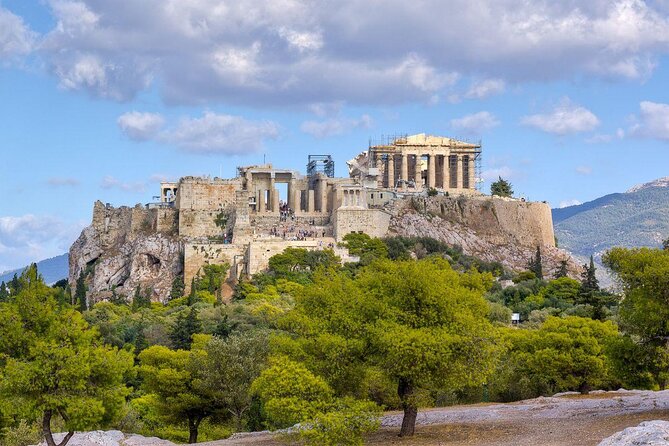
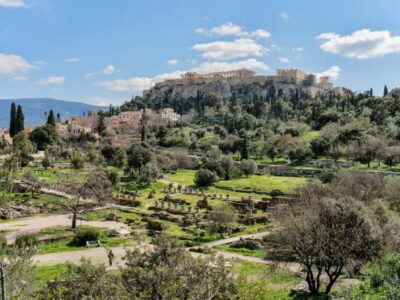
The Acropolis rises on a rocky hill above Athens, and the approach quickly gives you a sense of why this place mattered. The site was sacred long before the buildings you see today, with activity dating as early as 510 BC. Your guide uses the remains to connect physical spaces with ancient religion, political power, mythology, and daily life.
The hill is not a museum corridor. You walk outside over stone and uneven surfaces, with slopes and steps along the way. One older party needed extra care after hip and knee surgery, and guide Anda adjusted her pace with patience. That example is useful: the tour can accommodate a slower group, but the site itself still demands careful footing.
Rain can also change the experience. In one case, poor weather led to the closure of the site for incoming visitors while the group was already near the Parthenon. Safety came first, and the guide continued the visit at the museum. The operator requires good weather and offers a different date or full refund if bad weather cancels the activity.
Propylaea and the first view of the sacred hill
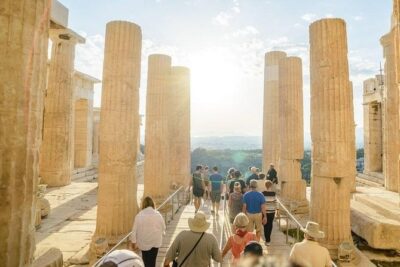
The Propylaea forms the monumental gateway to the Acropolis. It was meant to impress before you even reached the temples, and it still does that job with its broad stone approach and grand columns.
This is a good place for your guide to explain how visitors entered the sacred area and how architecture shaped the experience. You are not just walking through an old gate. You are following an approach designed to prepare people for the important buildings ahead.
The Propylaea can also be a busy point, especially at popular times. A private guide is useful here because you can get the explanation while staying aware of the flow of people around you. The guide’s job is not only to speak, but also to help you position yourself and keep the visit moving without making it feel rushed.
The Parthenon and the meaning behind the columns
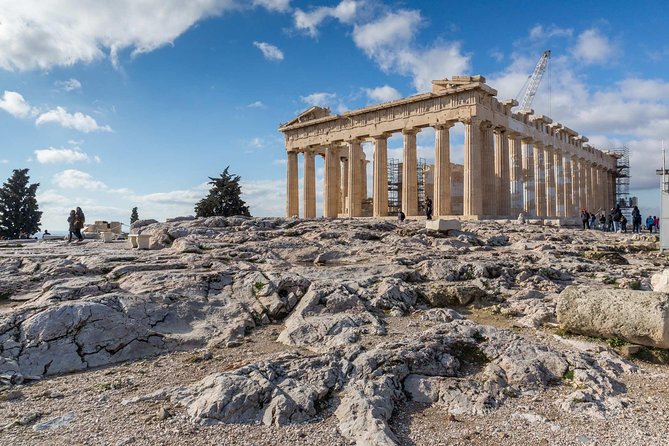
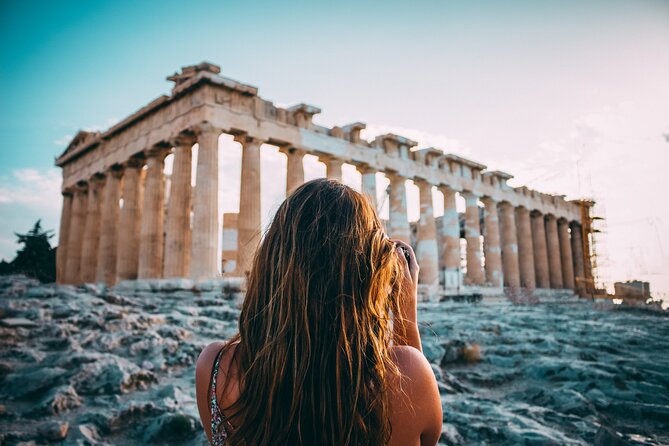
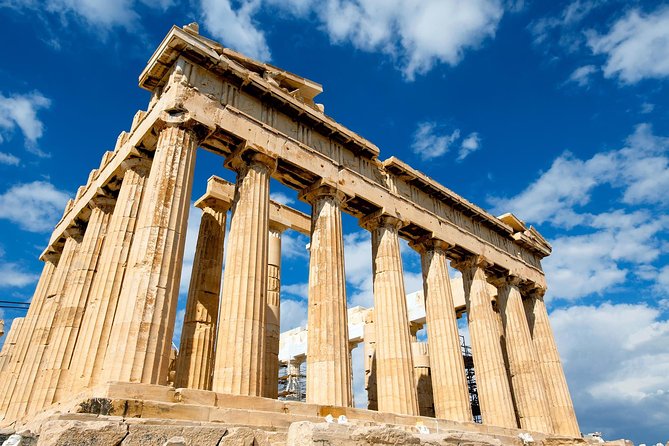
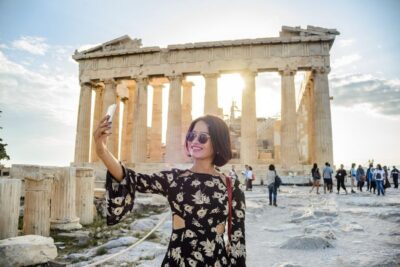
The Parthenon is the visual center of the Acropolis, but a good visit should move beyond the familiar postcard view. Your guide discusses its role as a temple to Athena, its place in ancient Athens, and the myths and ideas tied to the city’s patron goddess.
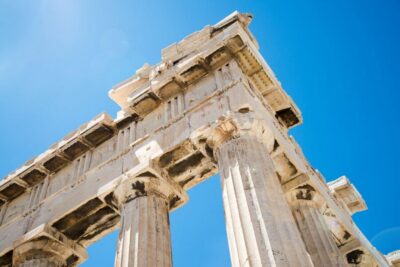
The building is impressive even in ruin. Columns, steps, and surviving sculptural details show the skill of its builders, while the missing sections remind you how much the monument has endured. The guide can give you a framework for reading what remains instead of leaving you with only a photograph.
This is also where the high position pays off. You look out over Athens from the sacred rock, with the ancient site placed above the modern city. I like this contrast because it turns the Acropolis from an isolated monument into part of the city’s continuing story.
Do not expect to wander freely at your own pace for the entire visit. The Acropolis is a working archaeological site with defined routes and crowd pressure. The private format gives you more room to ask questions, but it cannot remove the site’s physical limits or the number of people arriving that morning.
More museums and ancient sites in Athens:
- Athens: Acropolis, Parthenon & Acropolis Museum Guided Tour
★ 4.8 · 3,579 reviews - Acropolis monuments & Parthenon Walking Tour with Optional Acropolis Museum
★ 5.0 · 2,678 reviews - Athens: Acropolis Museum Ticket with optional Audio Guide
★ 4.4 · 2,652 reviews - Parthenon & Acropolis Museum with Audio or Live Tour Option
★ 4.1 · 2,446 reviews
Erechtheion, Athena Nike, and the smaller details
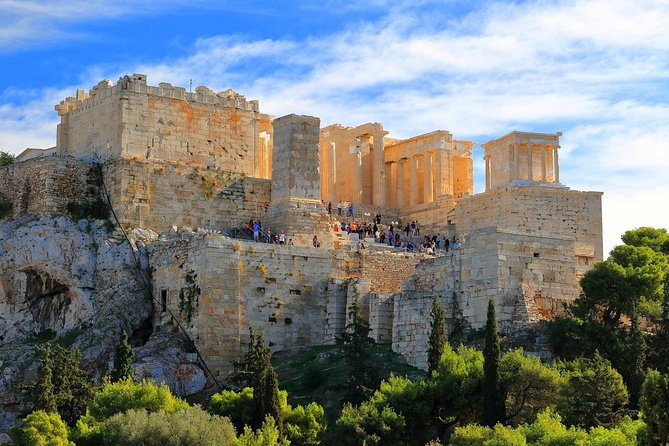
The Erechtheion is one of the most distinctive buildings on the hill, with its unusual layout and famous female figures supporting one of its porches. Your guide can help explain why this temple does not look as orderly as the Parthenon and how its design reflects several sacred traditions.
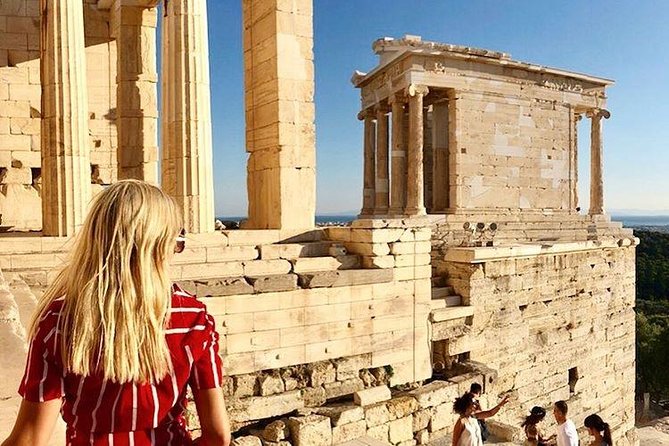
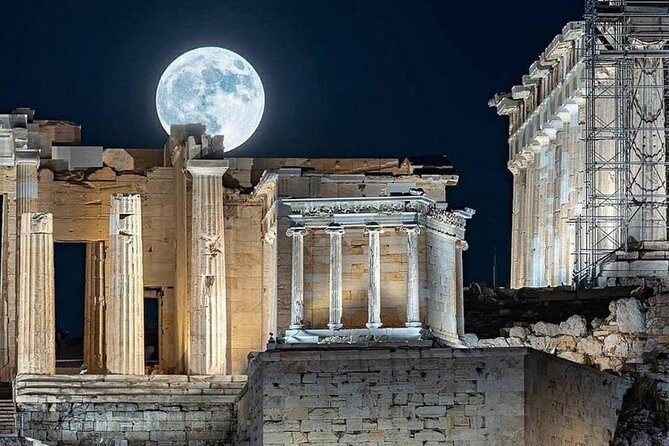
Athena Nike receives its own attention as well. The smaller temple is easy to overlook beside the Parthenon, yet it matters because it shows how important victory and protection were to the ancient city. A private explanation helps you notice these less dominant monuments rather than spending the whole Acropolis visit focused on one building.
I find this part of the route especially useful for visitors who already know the Parthenon from photographs. The smaller structures add texture to the visit. They show that the Acropolis was not one grand temple, but a sacred complex with different buildings and purposes.
Dionysus Theater and the Herod Atticus Odeon
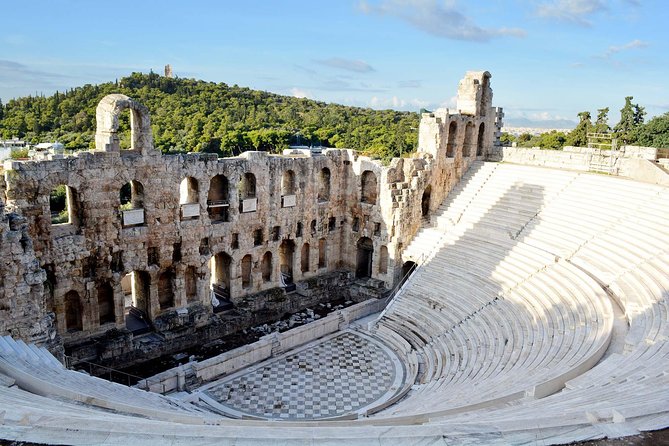
The ancient Theater of Dionysus connects the Acropolis to the birth of Greek theater. Your guide explains the setting and its connection to performances honoring Dionysus, the god associated with wine, theater, and celebration.
The Herod Atticus Odeon offers a different lesson. This Roman-era performance space sits on the southern slope of the Acropolis and shows how the site continued to matter long after classical Athens. It is a reminder that the hill’s story did not stop with the construction of the Parthenon.
These two stops help widen the tour beyond temples. You learn about performance, public life, entertainment, and the way later societies used the same sacred area. If your interest is limited to architecture, they may feel secondary. If you want a fuller picture of ancient Athens, they are important pieces.
Two hours at the Acropolis Museum
After the outdoor visit, the tour moves to the Acropolis Museum for about two hours. The museum was designed by Swiss architect Bernard Tschumi and Greek architect Michalis Photiadis. Its modern design provides a sharp contrast to the weathered ruins above.
Natural light is a major feature. The original surviving masterpieces from the Acropolis temples are displayed in bright galleries, where you can look closely at sculpture and architectural fragments. This setting gives you a better chance to notice faces, folds in clothing, tool marks, and damaged sections than you have outdoors.
The museum also reveals excavations beneath glass floors and walkways. That is a valuable feature because the building does not hide the older layers beneath it. You can look down and see evidence of earlier settlement while standing in a modern exhibition space.
Your guide ties the museum back to the hill. This link is one of the tour’s strongest points. Instead of treating the museum as a separate attraction, the guide explains how its objects relate to the Propylaea, Parthenon, Erechtheion, and other places you have just seen.
The indoor portion is also a welcome change after two hours outside. If the weather turns poor, the museum offers shelter and a place to continue the subject without losing the main thread of the tour. Still, two hours is a substantial museum visit. If you usually prefer a quick look at displays, the pace may feel slow. If you like art and archaeology, you will appreciate having time to study the collection.
The guides make the private format worthwhile
The guide is the main reason to choose this experience instead of simply buying admission and walking through on your own. Maria has been praised for guiding groups through crowded areas, explaining gods and ruins through stories, and keeping both the Acropolis and museum engaging. She also stayed longer when questions continued.
Irene brings enthusiasm and a strong grasp of Greek history and culture. Anda has shown particular care with older visitors and difficult weather, while also offering suggestions for local restaurants and other things to do in Athens.
Those names may not be the guide assigned to your booking, so you should not assume a particular person is guaranteed. The useful point is the style of service the operator aims to provide: a licensed field expert who explains rather than simply points out buildings.
A private guide also gives you a chance to shape the conversation. Families may want more mythology. Art-minded visitors may ask about sculpture. Older adults or anyone moving cautiously can request a measured pace. The four-hour plan has structure, but it need not feel rigid.
What the $240.82 price really includes
The listed price is $240.82 per person. That buys a private licensed guide and a roughly four-hour tour for your group, but it does not include admission to either site.
The extra admissions are €20 per person for the Acropolis and €15 for the museum. In simple terms, you should budget the tour price plus €35 per person for tickets, using the stated prices. Group discounts are available, though the exact discount is not specified.
That makes this a premium outing, especially for one or two people. The value improves as your group grows because the guide cost is attached to a private activity rather than a large shared group. It also improves if you care about interpretation and want to ask questions freely.
The price is harder to justify if you only want a quick look at the monuments or already know the Acropolis well. You can save money by handling admission and visiting independently. The private tour earns its keep through context, pacing, and the connection between the outdoor site and museum.
One important ticket detail deserves attention. Admission is not included, and a timed ticket arranged on your behalf may have an entry time earlier than the tour’s stated 9:00 am start. Confirm the exact entrance time before the day begins. This small check can prevent an avoidable morning scramble.
Who should book this Athens tour
I would choose this tour for a first visit to Athens, especially if you want the Acropolis to mean more than a famous photograph. It suits couples, families, and small groups who prefer direct access to a guide rather than a fixed large-group script.
It is also a strong choice for older adults or groups with mixed walking speeds. The guide can be patient and adjust the rhythm, though everyone should remember that the Acropolis remains an outdoor archaeological site with uneven ground.
Museum lovers will get good value from the second half. The original works, natural light, and visible excavations provide a proper follow-up to the hill. People who dislike museums may prefer a shorter independent visit, since two hours indoors is built into the plan.
The tour is offered in English and starts at 9:00 am. It ends back at the meeting point. Confirmation arrives at booking, and free cancellation is available up to 24 hours before the start time. Changes or cancellations inside that window are not accepted for a refund.
Should you book it?
Book this experience if you want a private, story-led introduction to the Acropolis and you value having the museum explained in relation to the monuments above. The guide’s patience, myth-based storytelling, and willingness to answer questions are the strongest reasons to pay the premium.
Skip it if your main goal is the lowest possible cost, if you only want a short stop at the Parthenon, or if you prefer exploring museums without a guide. If you do book, confirm the ticket arrangements and exact entry times, arrive ready for uneven walking, and allow the full four hours. For a first serious look at ancient Athens, this is a well-planned pairing with useful human guidance.
FAQ
How long does the private tour last?
The tour lasts approximately four hours, with about two hours at the Acropolis and two hours at the Acropolis Museum.
What time does the tour begin?
The stated start time is 9:00 am.
Where do I meet the guide?
You meet at Dionysos Zonar’s, Rovertou Galli 43, Athens 117 42, Greece, near the foot of the Acropolis.
Where does the tour end?
The activity ends back at the meeting point.
Are admission tickets included?
No. The Acropolis ticket costs €20 per person, and the Acropolis Museum ticket costs €15 per person.
Is this a private activity?
Yes. Only your group participates in the activity.
What language is offered?
The tour is offered in English.
Can I cancel for a full refund?
Yes. You can cancel at least 24 hours before the start time for a full refund. If poor weather causes the operator to cancel, you are offered another date or a full refund.
Newly reviewed around Athens
- Athens: workshop for painting landscape with local artist★ 4.6 · 3 reviews
- Athens: Greek Wine & Olive Oil Tasting at Brettos Plaka★ 4.5 · 3 reviews
- Acropolis of Athens: 60′ Tour in a Vintage Motorcycle★ 5.0 · 4 reviews
- Ultimate Tasting of the Volcanic Wines of Greece★ 5.0 · 3 reviews
- Outdoor Yoga and Pilates with Akropolis view★ 4.0 · 5 reviews
- workshop for painting acropolis/landscape with local artist★ 5.0 · 3 reviews
- Athens at Twilight Night Tour with Drinks and Meze Dishes★ 4.8 · 4 reviews
- Breakfast in the markets with olive oil and honey tasting★ 4.8 · 8 reviews
Athens Acropolis Tours, compared.
Acropolis & up to 5 Archaeological Sites Combo Pass
Read our review →
Acropolis, Parthenon & Acropolis Museum Guided Tour
Read our review →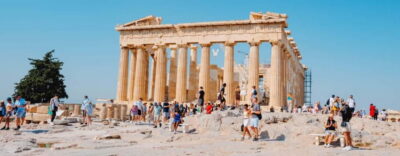
Acropolis, Parthenon & Acropolis Museum Guided Tour
Read our review →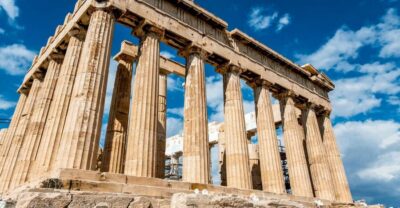
Acropolis monuments & Parthenon Walking Tour with Optional Acropolis Museum
Read our review →Browse the lists this tour appears in