
Reviewed · ATHENS ACROPOLIS TOURS
Athens:Acropolis – Historical Center Walking Tour in Spanish
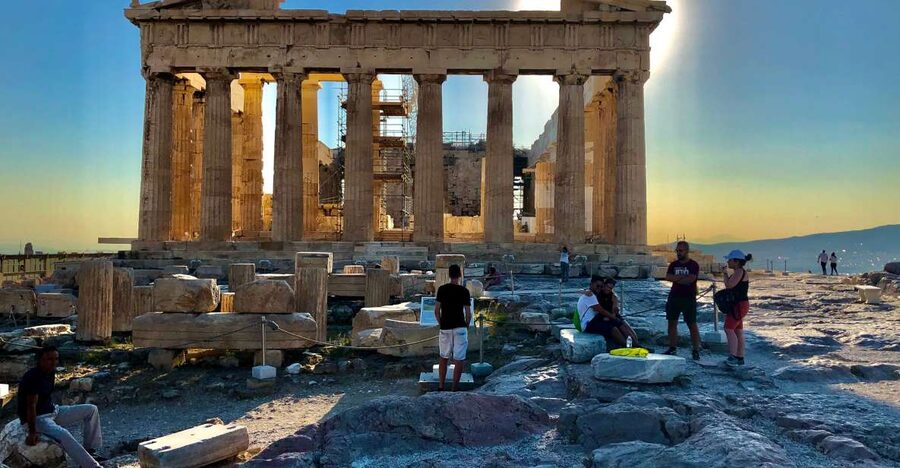
The Acropolis is best understood from the top down, with the Parthenon, Caryatids, and city views making sense only after someone explains the stories behind them. This tour begins at the quieter south entrance, visits the Acropolis early, then continues through Plaka and central Athens.
I like the Spanish-speaking licensed guide, especially when guides such as Efi or Andrea bring the monuments to life with clear stories and practical Athens tips. I also like the small-group feel reported on this tour, which leaves room for photos, short rests, and questions.
The main catch is important: your Acropolis entrance ticket is not included. You must have a ticket for the 08:00 to 09:00 time slot, and the four-hour route includes hills, uneven ground, and extended walking.
Key points to know before booking
- Early south-side entry: Begin near the Acropolis Museum and enter through the lower southern gate, including the Theater of Dionysus.
- Spanish guidance throughout: Licensed guides such as Efi and Andrea explain the monuments, myths, history, and present-day Athens.
- The Parthenon gets proper attention: You stop in front of the temple to discuss its design, purpose, and lasting influence.
- A wider Athens route: The walk continues through Plaka, past the Ancient Agora, to the Tower of the Winds and Athens Cathedral.
- Acropolis ticket required: You need your own timed admission for 08:00 to 09:00, though ticket help may be arranged at official cost.
- A full four hours on foot: Comfortable shoes are essential, and the route is not suitable for people with mobility impairments.
Starting at the Acropolis south entrance
This tour begins at the lower gate of the Acropolis, a short distance from the Acropolis Museum. Look for the guide holding a sign with the office logo. There is no hotel pickup, so you need to make your own way to the meeting point.
The early start matters. The Acropolis is one of Athens’ most visited sights, and the tour aims to enter through the southern slope rather than the main access point. That route brings you first to the Theater of Dionysus, while also helping you avoid at least some of the crowd pressure around the primary entrance.
You should arrive with your timed ticket ready. The required window is 08:00 to 09:00, and the tour price of $57 per person does not include admission. This is the single detail most likely to cause trouble if overlooked. After booking, the company may contact you about arranging a ticket at the official cost, but you should not assume admission is covered.
Once the group meets, you receive headphones for the guided portions. These are useful when the guide is explaining something while the group is spread across a broad terrace or busy path.
More ways to see the Acropolis:
- Athens: Acropolis & up to 5 Archaeological Sites Combo Pass
★ 4.4 · 12,619 reviews - Athens: Acropolis Ticket with Optional Audio or Live Guide
★ 4.2 · 11,055 reviews - Athens: Acropolis, Parthenon & Acropolis Museum Guided Tour
★ 4.8 · 9,316 reviews
The Theater of Dionysus and the southern slope
The Theater of Dionysus is one of the first meaningful stops. It sits on the southern slope of the Acropolis and connects the hill to the beginnings of Greek drama. The route gives you a chance to see this ancient performance space before climbing toward the monuments above.
This is a smart opening stop because it widens your view of the Acropolis. The hill was not built around one isolated temple. It was a religious and civic center, with theaters, sanctuaries, gateways, and monuments arranged across the slopes and summit.
Your guide uses the story of Athena and Poseidon to explain why Athens took Athena as its patron. The myth is more than a quick tale for children. It helps you understand how the city connected its identity to wisdom, power, protection, and the sea.
The climb from the lower gate requires effort. The path is uneven in places, and the Acropolis has little shade. Take the comfortable-shoes warning seriously. This is not a gentle stroll through a flat museum.
Propylaea, Athena Nike, and the climb to the summit
The Propylaea is the monumental gateway to the Acropolis. It was designed to control movement into the sacred area, creating a formal passage from the ordinary city below to the religious center above.
Your guide explains how the entrance worked as a funnel and how its scale prepared visitors for the monuments beyond. Even before you reach the Parthenon, the Propylaea gives you a sense of ceremony and power.
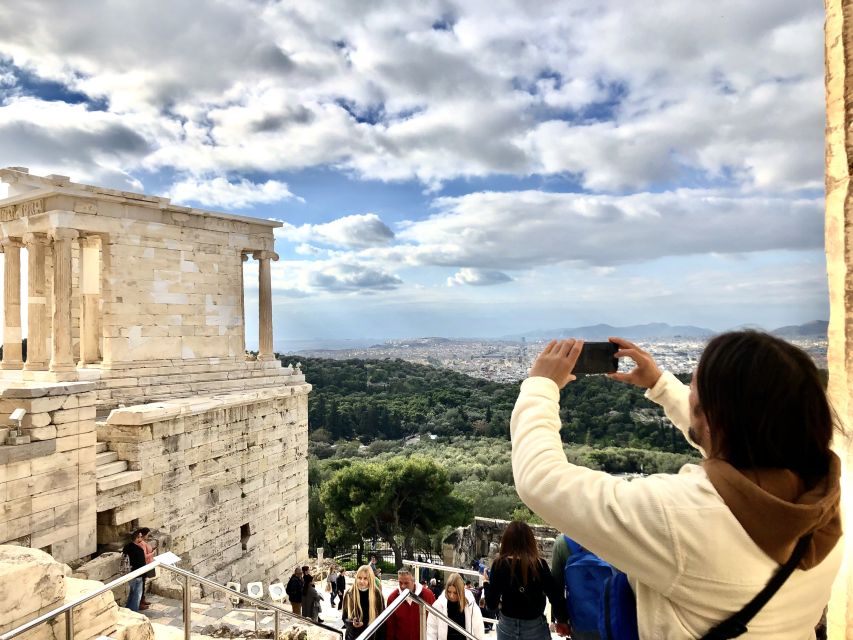
Nearby, the Temple of Athena Nike adds a smaller, more delicate note. Its Ionic design differs from the heavier presence of the Parthenon, and it is easy to miss if you hurry toward the main temple. The guide makes sure it gets attention.
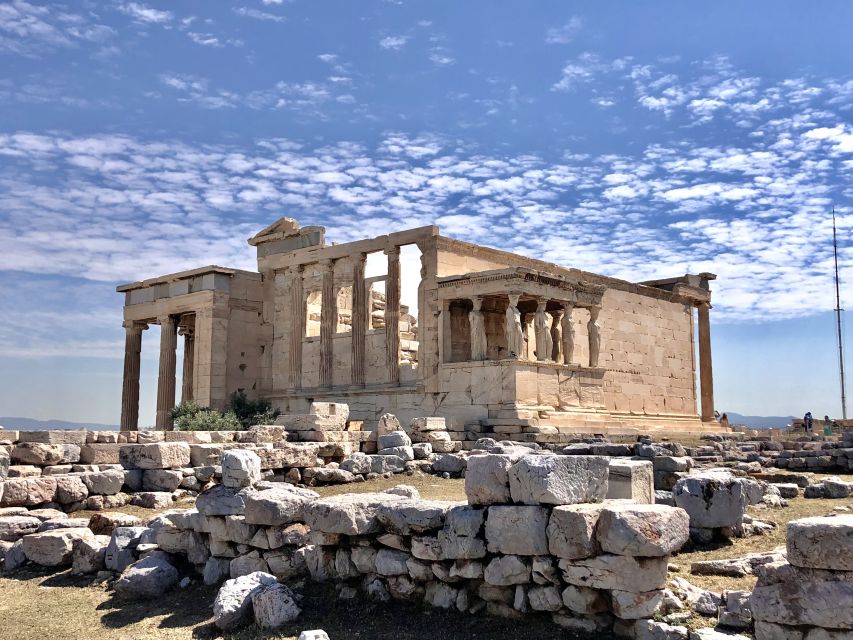
The route also includes the Caryatids, the famous sculpted female figures associated with the Erechtheion. Their pose and clothing show a different side of Greek architecture. Instead of plain columns, the building uses human forms to carry the structure, creating one of the Acropolis’ most memorable details.
You will see the Caryatids on the Acropolis, but it is worth knowing that the best-preserved originals are displayed in the Acropolis Museum. This tour does not include a museum visit, so you will need a separate ticket and visit if you want to see that collection indoors.
The Parthenon, the tour’s main lesson
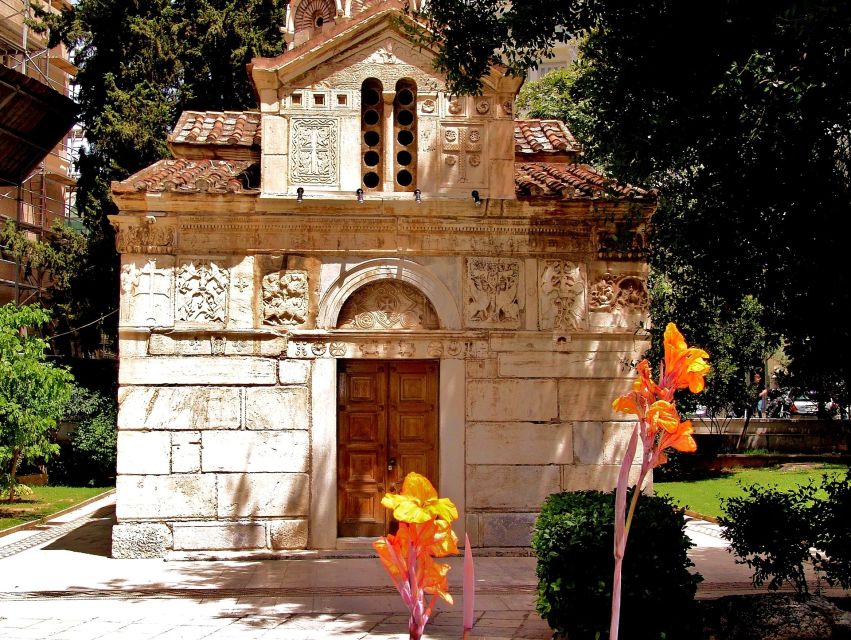
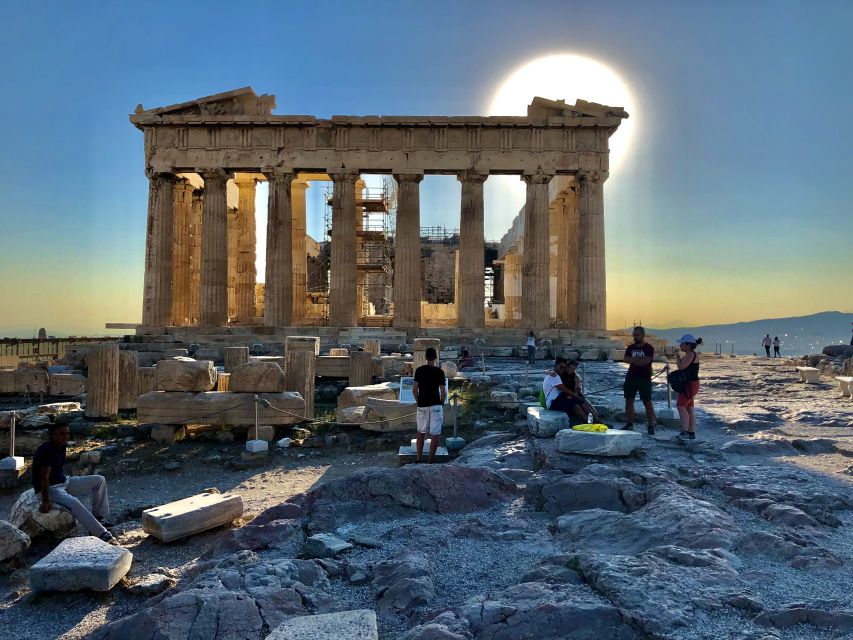
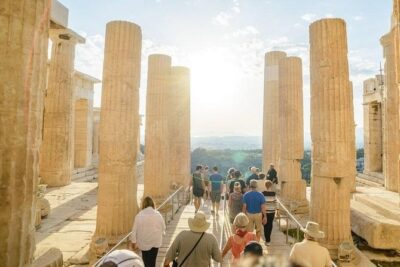
The Parthenon is the clear centerpiece. Built about 2,500 years ago for Athena, it has become one of the world’s best-known buildings, but a quick photo does not explain why it remains so influential.
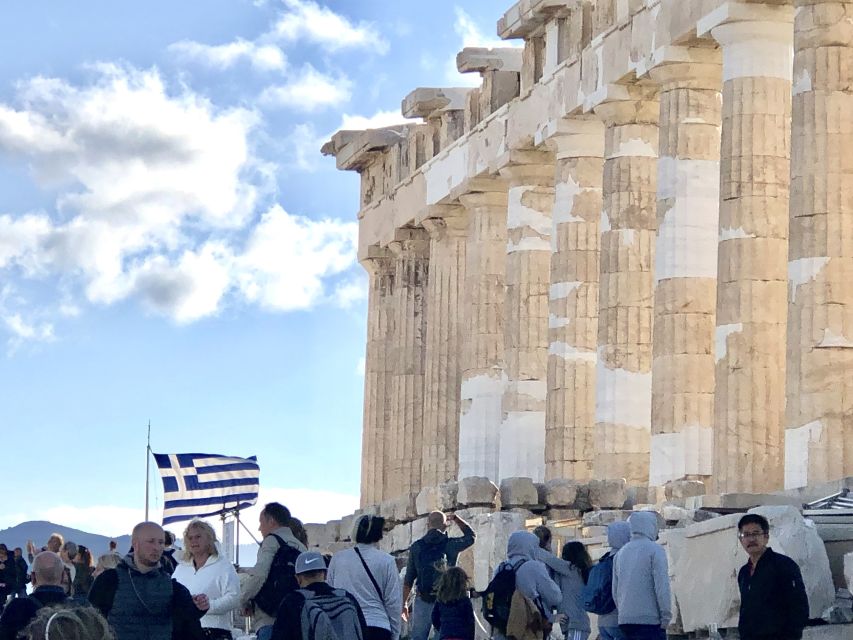
The guide stops the group in front of the temple and discusses the reasons behind its design. You learn about its proportions, architectural harmony, and role as a major sacred building of classical Athens.
This is where the Spanish guidance becomes especially useful. The Parthenon can feel familiar before you arrive because its image appears everywhere. A good explanation helps you look past the scaffolding, missing sculpture, and crowded viewing areas to see the design choices that made the building so admired.
Do not expect an untouched monument. The Parthenon has suffered damage, been altered over time, and lost much of its original decoration. The appeal is not a perfect ruin. It is the chance to see the surviving structure in its original setting, with Athens spreading below it.
The tour allows time for photographs and short breaks. That matters because the Acropolis is not best enjoyed at a frantic pace. One comment about guide Efi praised her for letting the group rest, take photos, and enjoy the site rather than filling every second with explanation.
More walking tours in Athens:
- Athens: Acropolis and Parthenon Guided Walking Tour
★ 4.6 · 5,882 reviews - Greek Food Walking Tour in Athens
★ 5.0 · 4,740 reviews - Acropolis: Acropolis and Parthenon Guided Walking Tour
★ 4.7 · 3,442 reviews - Acropolis monuments & Parthenon Walking Tour with Optional Acropolis Museum
★ 5.0 · 2,678 reviews
Views from the Acropolis

From the summit, the tour points out several major landmarks across Athens. You see the Arch of Hadrian, the Temple of Olympian Zeus, the Odeon of Herodes Atticus, the National Observatory, Lycabettus Hill, Philopappos Hill, and the Areopagus.
The value here is orientation. Athens can seem like a jumble of white buildings when you first arrive. From the Acropolis, the city’s hills and ancient sites begin to form a map.
The Odeon of Herodes Atticus is especially interesting because it remains part of modern cultural life. The building hosts events connected with the Athens festival today, linking the ancient site to the city’s current arts scene.
The Areopagus, a rocky outcrop near the Acropolis, also helps you understand the setting. From above, you can see how closely the major ancient locations sit together. That makes the next part of the walking route feel logical rather than like a list of unrelated stops.
The views are one of the tour’s rewards, but they come with exposure to sun and wind. Bring water, and plan for a hot walk if you visit during warmer months. Food and drinks are not included.
Down to Plaka and the old center
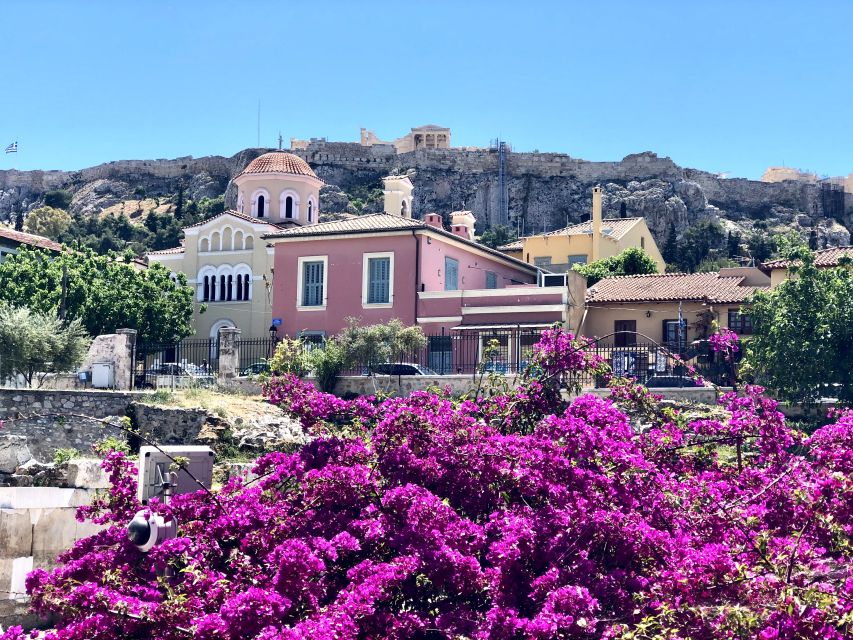
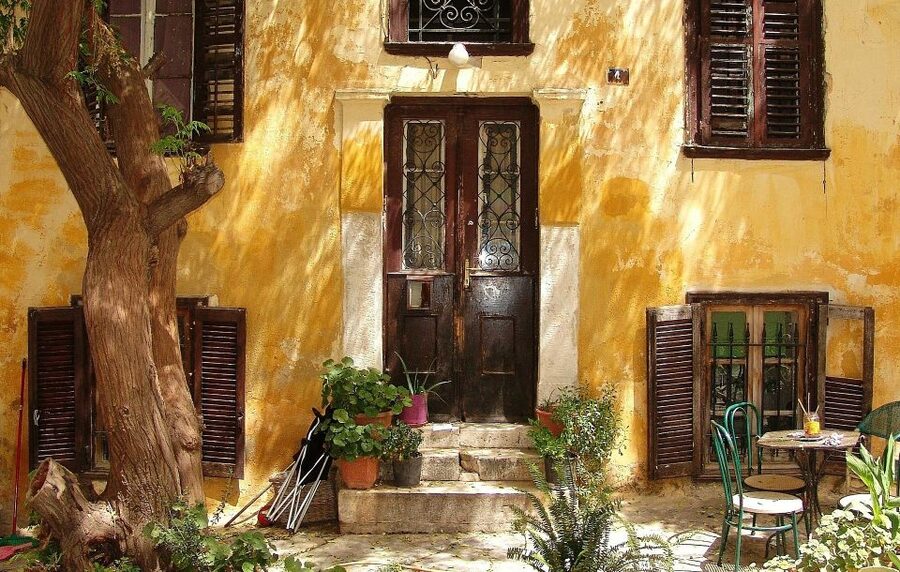
After the Acropolis, the tour continues into the historic center and Plaka. This change of setting is welcome. You move from monumental stone and open terraces into narrow streets, shops, homes, churches, and cafés.
Plaka is often described as Athens’ most picturesque neighborhood, and it is certainly one of the easiest places to enjoy on foot. Its appeal comes from the contrast with the Acropolis above. You get a closer look at everyday city life, not just the grand remains of antiquity.
The route is guided rather than free time, so you should not expect a long shopping or restaurant stop. The purpose is to understand how the old neighborhood fits around the ancient center. You can return later if you want more time for a meal or browsing.
The walk also gives you practical bearings for the rest of your stay. You learn where the old center sits in relation to the Acropolis and encounter streets you may want to revisit independently.
Outside the Ancient Agora
The tour passes outside the Ancient Agora, the civic heart of ancient Athens. Socrates, Plato, and Aristotle are linked with this part of the city, making it an important stop for anyone interested in philosophy and public life.
You do not enter the Agora on this route. That limitation should be clear before you book. You see it from outside and learn about its role, but a separate admission is needed for a full visit.
The exterior stop still adds useful context. The Acropolis was the religious and symbolic high point, while the Agora was tied to public business, debate, trade, and civic activity. Seeing both areas in one morning helps you picture how ancient Athens functioned.
The site includes what is described as the best-preserved temple in Athens. Even from outside, the view reinforces the difference between the city’s many ancient buildings and the more damaged Acropolis monuments.
The Tower of the Winds and Athens Cathedral
The walk ends near two very different landmarks. The Tower of the Winds is described as the world’s oldest meteorological observatory. Its octagonal form and carved figures reflect the ancient interest in measuring and representing weather.
This final ancient stop is a good reminder that Athens was not only a city of temples. Ancient builders also worked on practical questions about time, wind, direction, and daily life.
The route then reaches the Mitropolis of Athens, the city’s Orthodox cathedral. It is associated with the marriage of Queen Sofía and Juan Carlos, and it gives the guide a chance to explain the Orthodox faith that remains central to much of Greek society.
That religious context makes a useful closing point. The morning begins with ancient Greek gods and temples, then ends with a living church and a modern Greek identity shaped by centuries of change. You get a wider view of Athens than a visit limited to the Parthenon alone.
What the Spanish guides add
The strongest part of this experience is the guiding. Efi receives repeated praise for her passion, patience, clear explanations, and long experience. One booking described her as having 27 years of experience, while other comments highlighted her ability to mix history with humor and practical advice.
Andrea is also named as a guide who explains the Acropolis in detail and offers tips for the rest of your time in Greece. That can be useful if Athens is your first stop and you want more than a site lecture.
The guide’s style may vary. One assessment found the explanations too long and suggested that the history and monument details could be shorter and more focused. If you prefer quick facts and a fast pace, four hours of guided commentary may feel heavy at times.
For most people, though, the value of a guide is not simply the number of facts. It is knowing what to look at, why a building matters, and how the separate monuments connect. The headphones help you keep track of the explanation without needing to stand shoulder to shoulder with the guide.
Price, ticket costs, and practical value
At $57 per person, the tour sits in a reasonable range for a four-hour guided visit, but the value depends on how you handle the entrance ticket. Since admission is extra, your total cost will be higher than the advertised tour price.
You are paying for a licensed Spanish-speaking guide, headphones, and a route that combines the Acropolis with several central Athens locations. You are not paying for transport, food, hotel pickup, the Ancient Agora interior, or a museum tour.
I think the price makes the most sense if you want help with the Acropolis and are comfortable continuing on foot afterward. A private guide would normally cost more, while an unguided visit leaves you to supply the context yourself.
The tour also offers free cancellation up to 24 hours before the start and reserve-now, pay-later booking. Those terms help if your Athens schedule is still moving, though you still need to secure the correct Acropolis time slot.
Who should book this four-hour walk?
This is a strong match for you if:
- You want a Spanish-language tour.
- This is your first visit to Athens.
- You want the Acropolis combined with Plaka and central landmarks.
- You value stories, myths, architectural details, and local tips.
- You prefer a guided route instead of planning each stop yourself.
- You can manage hills, steps, uneven surfaces, and four hours of walking.
It is a weaker match if you need step-free access, use a baby carriage or electric wheelchair, or want a slow museum-focused visit. The route does not include the Acropolis Museum, and it does not enter the Ancient Agora.
The group experience may also vary. Several comments describe a small, personal group, but the provided details do not guarantee a fixed group size. If a quiet, intimate walk matters to you, confirm that point before paying.
Should you book it?
Book this tour if you want the Acropolis explained in Spanish and like the idea of connecting the hill with Plaka, the Ancient Agora exterior, the Tower of the Winds, and Athens Cathedral. The early southern entrance, strong guides such as Efi and Andrea, and time for photos give it a thoughtful shape.
Skip it if you want only a quick Acropolis visit, need an accessible route, or already have a detailed plan for the old center. Most importantly, sort out the separate Acropolis admission before the morning begins.
For a first Athens visit, this is a useful four-hour introduction. It gives you the famous stones, the city views, the myths, and enough street-level Athens to help you find your way afterward.
FAQ
Is the Acropolis entrance ticket included?
No. The tour price does not include the Acropolis admission ticket.
What time slot is needed for the Acropolis?
You need an Acropolis ticket for the 08:00 to 09:00 time slot.
Can the company help arrange the Acropolis ticket?
After booking, the company may contact you if you do not have a ticket and arrange one at the official cost.
Where does the tour meet?
The meeting point is at the lower gate of the Acropolis, a few meters from the Acropolis Museum. The guide holds a sign with the office logo.
Is hotel pickup included?
No. Hotel pickup and drop-off are not included.
What language is the tour conducted in?
The live tour guide speaks Spanish.
How long does the tour last?
The walking tour lasts four hours.
Does the tour enter the Ancient Agora?
No. The route passes outside the Ancient Agora.
Does the tour include the Acropolis Museum?
No. The Acropolis Museum is not included.
Is the tour suitable for people with mobility impairments?
No. The experience is not suitable for people with mobility impairments. Baby carriages and electric wheelchairs are also not allowed.
What should I bring?
Bring comfortable shoes. Food and drinks are not included, so you should plan those separately.
More ancient sites near Athens
- Historical Delphi One Day Tour with Arachova Stop & Expert Guide
★ 4.5 · 1,247 reviews - Historic Athens: Small Group Electric Bike Tour
★ 4.9 · 740 reviews - Athens: Small-Group E-Bike Tour of Historic Highlights
★ 4.9 · 119 reviews - Athens: Bike Tour of Athens Historical Centre
★ 5.0 · 61 reviews
Newly reviewed around Athens
- Feel Ancient thermal Spa Visit Delphi, Leonidas ℨoo Spaʀtan★ 5.0 · 4 reviews
- Food Tour★ 5.0 · 3 reviews
- Explore the Hidden Food Gems of Athens★ 5.0 · 57 reviews
- Food Experience in Athens including Unlimited Lunch★ 5.0 · 3 reviews
- Eat Your Way Through Athens: A Local Food Walk★ 4.9 · 97 reviews
- From Athens: Delphi Private Tour with Lunch Time★ 4.0 · 3 reviews
- Delphi: Spanish guided one day tour★ 4.6 · 55 reviews
- Early Entry Acropolis & Museum. Beat the Crowds & the heat★ 5.0 · 3 reviews
Athens Acropolis Tours, compared.
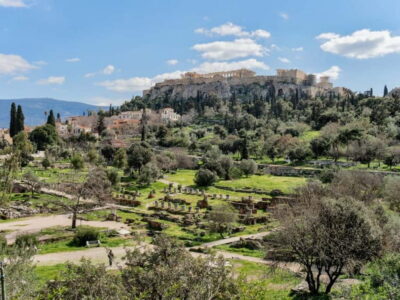
Acropolis & up to 5 Archaeological Sites Combo Pass
Read our review →
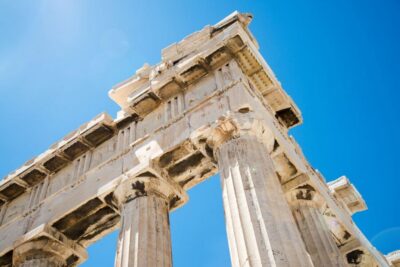
Acropolis, Parthenon & Acropolis Museum Guided Tour
Read our review →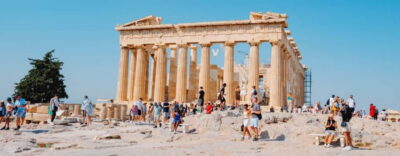
Acropolis, Parthenon & Acropolis Museum Guided Tour
Read our review →
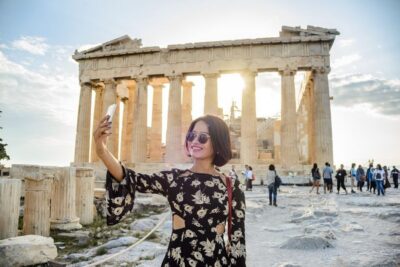
Acropolis monuments & Parthenon Walking Tour with Optional Acropolis Museum
Read our review →Browse the lists this tour appears in