
Reviewed · ATHENS ACROPOLIS TOURS
Athens: Acropolis & up to 5 Archaeological Sites Combo Pass
The smart part of this Athens pass is its combination of a timed Acropolis entry with flexible access to five major ancient sites. You lock in the city’s busiest sight, then spread the rest across up to three days instead of racing through everything in one morning. I especially like the Ancient Agora and the Temple of Olympian Zeus, two places that help turn the Acropolis from an isolated monument into part of a living ancient city.
I also like the QR-code setup and the choice of self-guided audio tours in several languages. Guides such as Joanna and Maria have been praised for adding useful stories and cultural context when the live guided option is selected. The main catch is that the pass takes planning: the Acropolis time cannot be changed, some additional sites need app bookings, and seasonal closing hours can be much earlier than expected.
Key points to know before booking
- The Acropolis is the fixed appointment: Your ticket works only on the selected date and time slot, while the other sites offer more flexibility.
- Five extra sites create real value: The full option covers the Ancient Agora, Roman Agora, Temple of Olympian Zeus, Aristotle’s School, and Panathenaic Stadium.
- The Ancient Agora is the best companion stop: It connects the Acropolis to daily life, politics, philosophy, and the early development of democracy.
- Your phone is part of the ticket: You need a charged smartphone, the app, headphones, and downloaded access details.
- Go early in warm weather: The Acropolis has little shade, and the upper hill can be windy, hot, and crowded.
- The Acropolis Museum is not included: Add it separately if you want to see the sculptures and displays housed indoors.
Why the Acropolis time slot matters
The Acropolis is the heart of this experience, and it is the one part you cannot treat casually. At booking, you select a date and an entry period. The ticket is delivered by email, and you must use it on that chosen date and time.
This is helpful because the Acropolis is Athens’ most sought-after sight. A reserved time gives you a clearer plan than arriving without a ticket and hoping space remains. It does not mean the hill will be empty, though. Even timed entry can bring crowds, especially from midmorning onward.
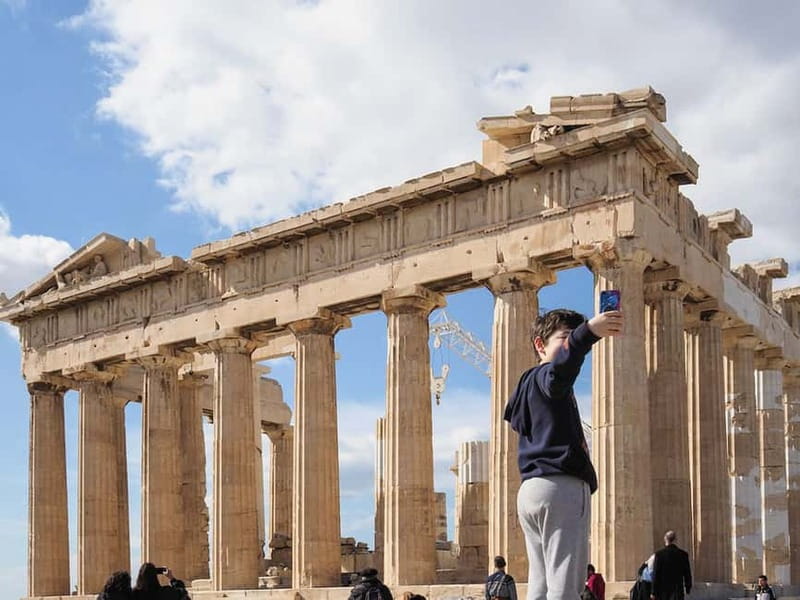
I would choose the earliest practical slot. An 8 a.m. visit can give you cleaner views and better chances for photographs before the main rush. Early morning also helps with heat. There is little shade around the Parthenon, and the stone can become punishing under the summer sun. Bring water, sunscreen, sunglasses, and a hat. A light jumper is useful in the morning because the hill can be windy.
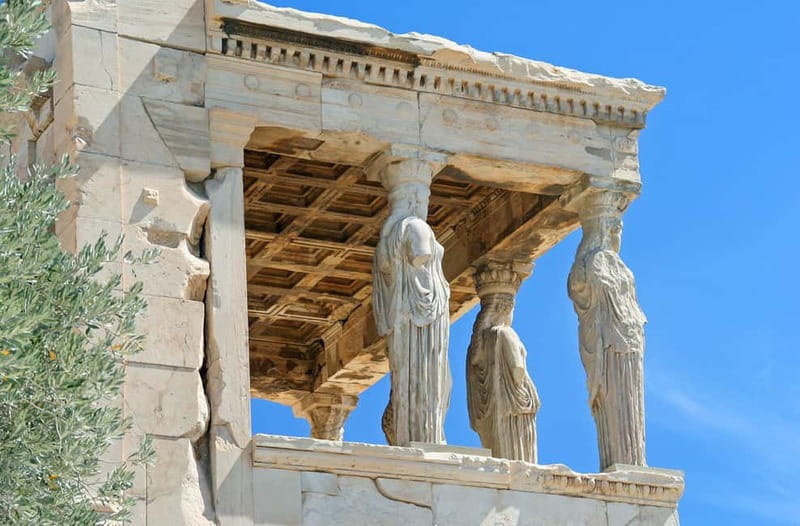
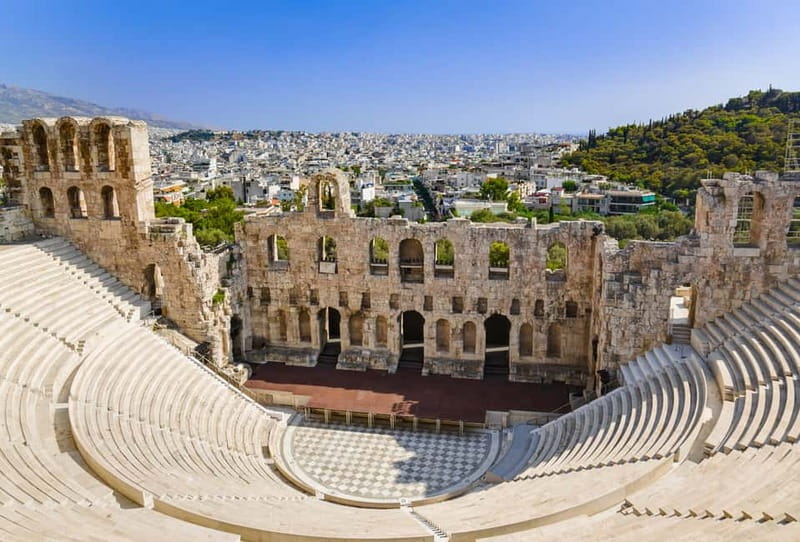
You enter the Acropolis complex, then make your way toward the Parthenon and the other monuments on the hill. The setting is the great reward: Athens spreads below you, and the city’s modern streets make the ancient hill easier to understand as the center of a much larger settlement.
The optional audio tour gives you background on the Acropolis and Parthenon in English, French, German, Spanish, or Italian. You need your own phone and headphones because a physical audio device and earphones are not supplied. If you prefer a person guiding you, an English live guided option is available with selected bookings. The value of that option is clear: guides such as Joanna and Maria have been praised for explaining the site in a lively, easy-to-follow way while allowing time for photographs.
More ways to see the Acropolis:
- Athens: Acropolis Ticket with Optional Audio or Live Guide
★ 4.2 · 11,055 reviews - Athens: Acropolis, Parthenon & Acropolis Museum Guided Tour
★ 4.8 · 9,316 reviews - Athens: Acropolis and Parthenon Guided Walking Tour
★ 4.6 · 5,882 reviews
The Ancient Agora connects the monuments to ordinary life
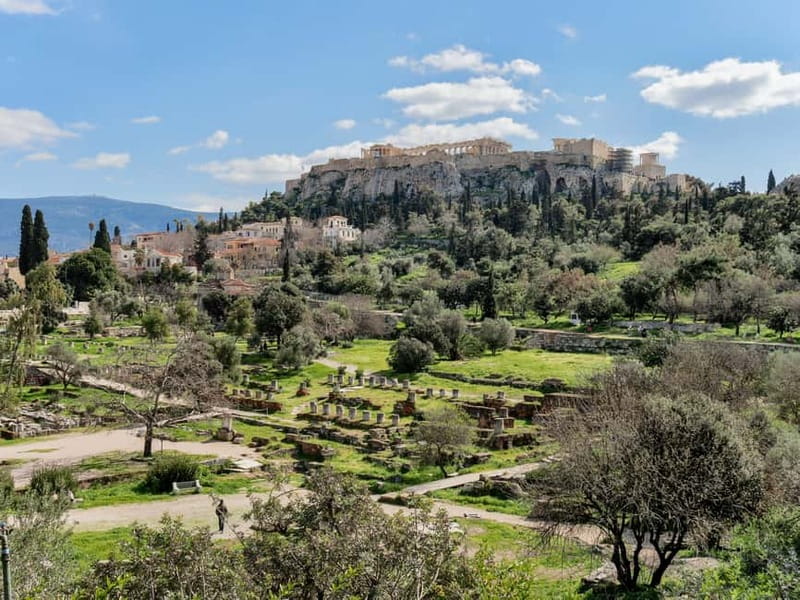
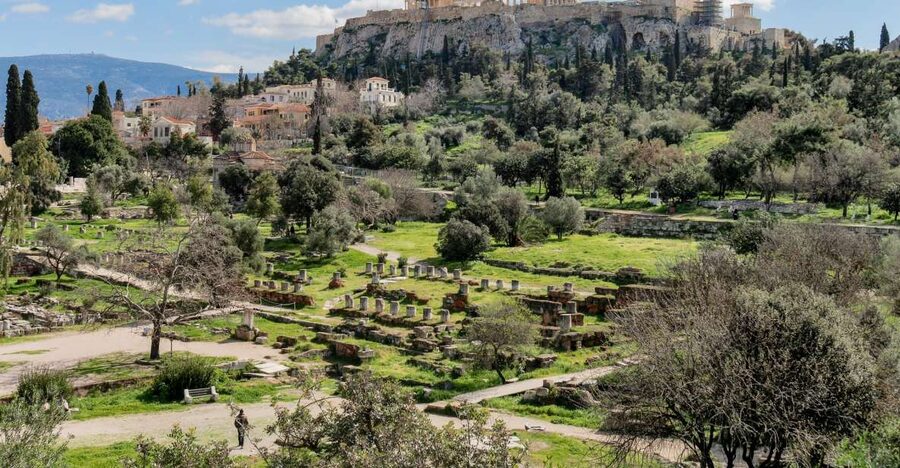
If you choose only one additional site, I would give serious thought to the Ancient Agora. The Acropolis shows you the religious and ceremonial power of ancient Athens. The Agora shows you where public life happened below the hill.
This was the political, commercial, and social center of classical Athens. It is associated with Socrates’ philosophical debates and with the early development of democratic ideas. You are not simply looking at broken columns. You are walking through the setting where people met, argued, traded, worshipped, and made decisions.
The included Ancient Agora and Museum option adds useful context. The museum helps explain objects found at the site, while the outdoor remains give you room to see how the pieces fit together. I would schedule this after the Acropolis, when the city’s geography is fresh in your mind.
The Ancient Agora is also one of the sites where an audio tour can help. Without context, ancient foundations can blur together. With a clear route and explanation, the site becomes easier to read.
Allow enough time here. The pass is valid for one visit to each selected site, so it is better to give the Agora a proper visit than to hurry through simply to collect another QR scan.
The Roman Agora and nearby ancient stops
The Roman Agora sits just north of the Acropolis and reflects a later period of Athenian public life. It was built as a market and civic space during Roman rule, when the city continued to matter but its political role had changed.
This stop is smaller than the Acropolis or Ancient Agora, so it fits neatly into a walking day around Plaka and the old center. The location makes it easy to combine with other sights, though finding the correct entrance can be confusing. Clear signs are not always obvious until you are close to the gates, so keep the map open and check the app before setting out.
The pass also includes a self-guided audio tour of Athens Old Town and Plaka with every option. That is a useful extra because the ancient sites are woven into modern neighborhoods. You can move from archaeological remains to narrow streets, shops, cafés, and local squares without needing transport between every stop.
The Roman Agora is a good choice for visitors who want a short archaeological visit between larger ones. It is less demanding than the Acropolis, but it should not be treated as a substitute for the Ancient Agora. The two sites represent different periods and different uses of the city.
Temple of Olympian Zeus and Aristotle’s School
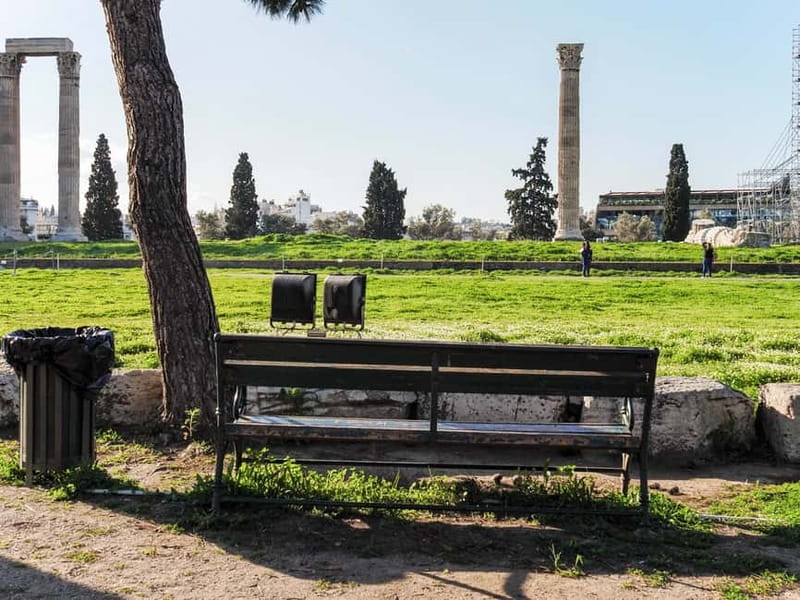
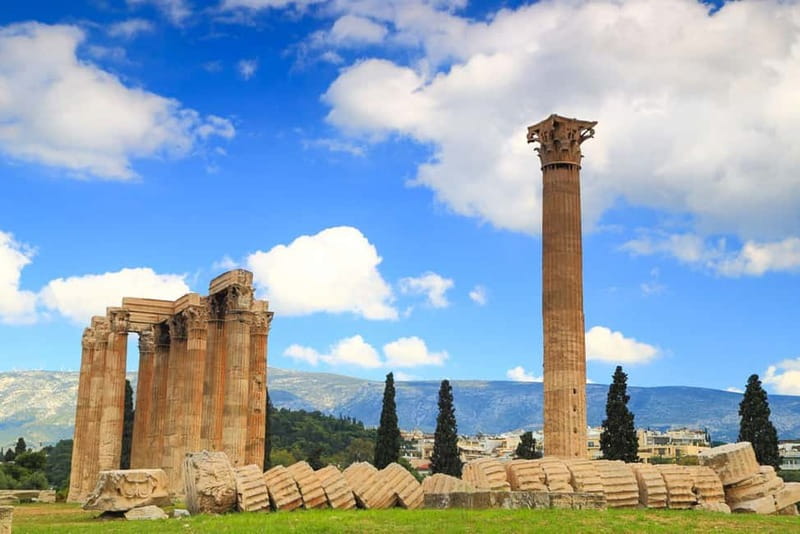
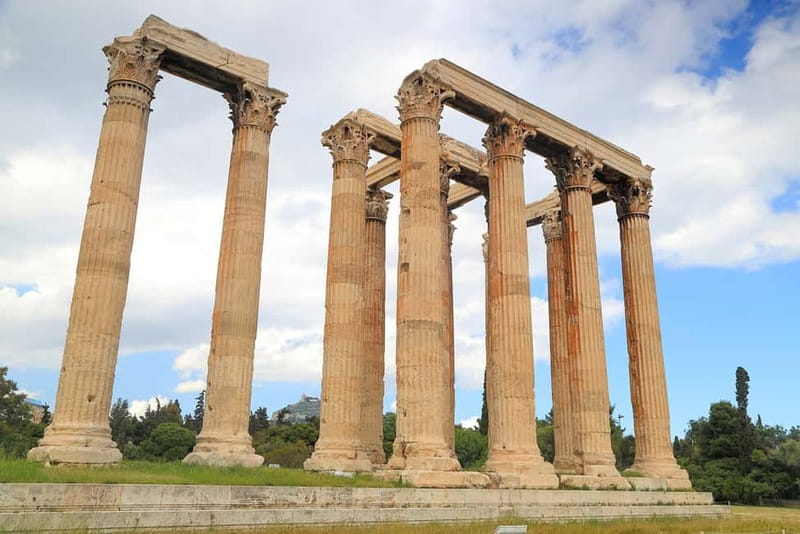
The Temple of Olympian Zeus, also called the Olympieion, gives you a sense of scale. Even in ruin, the surviving columns show how ambitious the project was. The site works well as a brief stop on a day spent walking between the Acropolis, Plaka, and central Athens.
The temple is open and exposed, so the same sun advice applies here. You may spend less time than at the Ancient Agora, but it adds an important piece to the city’s religious story. Its position also helps you see how widely ancient Athens spread beyond the Acropolis hill.
Aristotle’s School, or the Lyceum, offers a different kind of experience. Instead of focusing on monumental architecture, it points to Athens as a place of teaching and philosophical study. Aristotle taught at the Lyceum, and the site gives you another way to think about the city’s intellectual life.
This stop may appeal most to visitors who enjoy ideas as much as columns. It is not the grandest archaeological site in the package, but it adds variety. I would not choose it as your only extra site if this is your first time in Athens. As part of the full pass, though, it rounds out the picture nicely.
A different kind of day out from Athens:
- Athens: Cape Sounion & Poseidon Temple Sunset Half-Day Trip
★ 4.8 · 8,241 reviews - All Day Cruise -3 Islands to Agistri,Moni, Aegina with lunch and drinks included
★ 5.0 · 4,958 reviews - Athens, Piraeus, and Coastline: Blue Hop-On Hop-Off Bus
★ 3.9 · 4,849 reviews - Greek Food Walking Tour in Athens
★ 5.0 · 4,740 reviews
Panathenaic Stadium is the most visually complete stop
The Panathenaic Stadium is the easiest site in the package to understand at a glance. It is built entirely of marble and was the setting for the first modern Olympic Games in 1896.
Unlike many ancient sites, the stadium still has a strong, complete shape. You can see the seating bowl and imagine the scale of the arena without needing much reconstruction. It is a natural choice for families, sports fans, and anyone who wants a change of pace after several fields of foundations.
The stadium also gives the pass a bridge between classical Athens and modern Greece. It is not simply an ancient ruin. Its 1896 Olympic connection shows how the city used its classical past to shape a modern national identity.
Allow time for photographs and for taking in the structure from different points. It is not the longest visit, but it is one of the most immediately rewarding stops in the package.
How the app and three-day window work
The Acropolis ticket arrives automatically after booking, but the additional sites are managed through the app. This is the part to understand before you arrive. Download the app, charge your phone, and make sure you have your ticket information ready.
For the combo options, you can visit the additional archaeological sites within three days of your first visit to any included location. That first visit does not have to be your Acropolis visit. This gives you useful freedom if your schedule changes during a short stay.
The extra sites require separate tickets in the app, and you select dates and times for them there. Some entry times may be more flexible than the Acropolis slot, but do not assume every site is open all day. Seasonal schedules can be a problem. In November, some locations close at 3 p.m., and similar early closing hours may affect other low-season dates.
Build your plan around opening hours before setting off. A sensible layout could be:
- Morning one: Acropolis and Acropolis audio tour.
- Later that day: Ancient Agora and its museum.
- Day two: Roman Agora, Plaka audio walk, and Temple of Olympian Zeus.
- Day three: Aristotle’s School and Panathenaic Stadium.
You can compress this into one long day, but I would not recommend that unless you enjoy fast sightseeing. Athens is easier to appreciate when you leave room to stop for food, photographs, and a rest in the shade.
Audio tours, live guiding, and what you need to bring

The self-guided audio tours are a practical middle ground. You move at your own pace, pause when you want, and avoid joining a group for every stop. The Acropolis and Parthenon audio content is offered in five languages, while the Plaka and Ancient Agora audio tours are in English.
A live English guided option is available with selected bookings. This is worth considering if ancient architecture feels difficult to interpret on your own. A good guide can explain why a site mattered, point out details you might miss, and connect the ruins to Athenian culture. Joanna and Maria are two guides specifically praised for clear explanations, patience, and allowing time for photos.
The tradeoff is simple. Self-guiding gives you freedom and often costs less. A live guide gives you conversation, structure, and the chance to ask questions. You can also use the audio tours as a backup if you choose a self-guided visit.
Bring:
- A charged smartphone
- Headphones
- The downloaded app
- Comfortable clothing and shoes
- Water, sunscreen, sunglasses, and a hat in warm weather
Food and drinks are not allowed inside the sites, and large bags or luggage are not permitted. Hotel transfers are not included, so you make your own way to the meeting point, which can vary by booking option.
Is $48.78 good value?
At $48.78 per person, the full pass makes the most sense if you plan to see several sites. The package can save up to 40 percent compared with buying selected admissions separately, but the value depends on your pace and interests.
If you want only the Acropolis, choose the single-entry option rather than paying for sites you will not visit. If you have one free afternoon and want one extra stop, the Acropolis plus one site may be the better match.
The full option is strongest for a visitor staying at least two or three days in Athens. You get the major hilltop monument, the Ancient Agora, Roman Agora, Temple of Olympian Zeus, Aristotle’s School, and Panathenaic Stadium. The three-day access period encourages you to see more without forcing everything into one exhausting circuit.
Remember that the official Greek Ministry combo ticket was discontinued on March 31, 2025. This is a private pass managed through the app, not the old government-issued combination ticket. Also remember that the Acropolis Museum is not included. If you want to see museum displays and sculptures, budget for a separate ticket.
The offer is for a regular adult ticket. EU citizens under 25 and non-EU citizens under 18 may enter free by showing identification at the ticket booth, but free entry is not guaranteed for your preferred timed Acropolis slot. People with disabilities receive free admission from the ticket office only.
Should you book the Athens Acropolis combo pass?
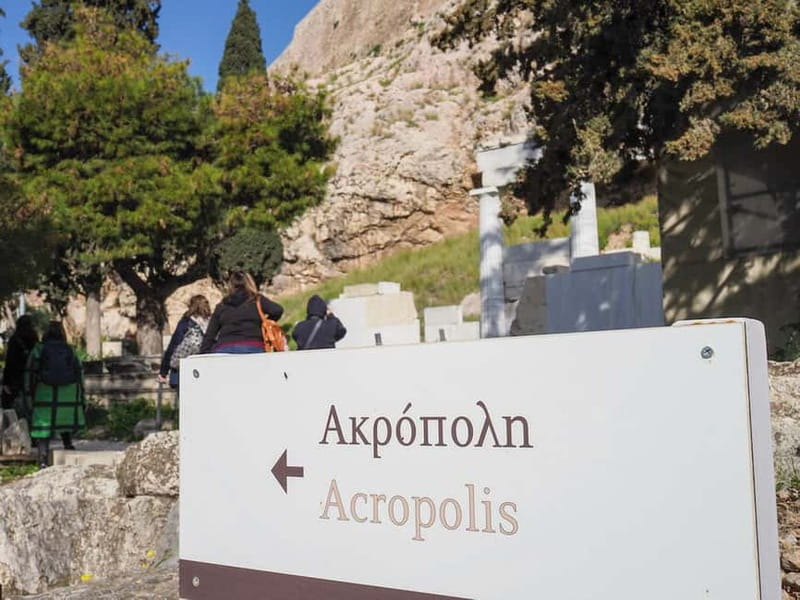
I would book it if you want a planned Acropolis visit plus several major archaeological sites, especially during a busy period when securing your main entry matters. The Ancient Agora, Roman Agora, Temple of Olympian Zeus, Aristotle’s School, and Panathenaic Stadium give you a much fuller picture of Athens than the Acropolis alone.
Choose the full pass if you will use at least three or four of the additional sites. Choose the one-site option if your time is short. Skip the combo if you only want the Acropolis, dislike app-based tickets, or need a fully accessible experience, since the activity is not suitable for wheelchair users.
Most important, book an early Acropolis slot, check every site’s seasonal hours, and download everything before you leave your accommodation. With those details handled, this is a practical way to see Athens’ ancient center without buying separate tickets at every gate.
FAQ
Does the pass include a timed Acropolis entry?
Yes. The Acropolis admission is valid only on the selected date and time slot. That ticket is delivered to your email after booking.
How long can I use the additional archaeological site tickets?
For the combo options, you may visit the additional sites within three days of your first visit to any included location. The extra visits are managed through the app.
Which archaeological sites can be included?
The additional sites are the Ancient Agora and Museum, Roman Agora, Temple of Olympian Zeus, Aristotle’s School, and Panathenaic Stadium. The exact number depends on the option you book.
Is the Acropolis Museum included?
No. The Acropolis Museum is not part of this pass and requires a separate ticket.
Are audio tours included?
Self-guided audio tours for Athens Old Town and Plaka are included with all options. Acropolis and Parthenon audio tours are available in English, French, German, Spanish, and Italian. The Ancient Agora audio tour is included if that site is selected.
Can I change my Acropolis date or time?
No. Travel dates and entry time slots cannot be changed. Check your schedule carefully before confirming the booking.
Newly reviewed around Athens
- Feel Ancient thermal Spa Visit Delphi, Leonidas ℨoo Spaʀtan★ 5.0 · 4 reviews
- Food Tour★ 5.0 · 3 reviews
- Explore the Hidden Food Gems of Athens★ 5.0 · 57 reviews
- Food Experience in Athens including Unlimited Lunch★ 5.0 · 3 reviews
- Eat Your Way Through Athens: A Local Food Walk★ 4.9 · 97 reviews
- From Athens: Delphi Private Tour with Lunch Time★ 4.0 · 3 reviews
- Delphi: Spanish guided one day tour★ 4.6 · 55 reviews
- Early Entry Acropolis & Museum. Beat the Crowds & the heat★ 5.0 · 3 reviews
Athens Acropolis Tours, compared.

Acropolis, Parthenon & Acropolis Museum Guided Tour
Read our review →
Acropolis, Parthenon & Acropolis Museum Guided Tour
Read our review →

Acropolis monuments & Parthenon Walking Tour with Optional Acropolis Museum
Read our review →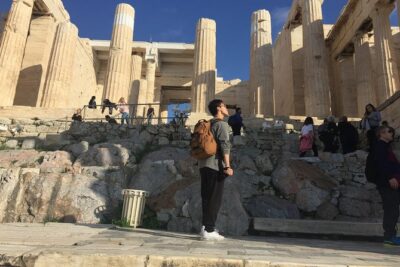
Athens All Included: Acropolis and Museum Guided Tour with Ticket
Read our review →Browse the lists this tour appears in