
Reviewed · PRIVATE
10 Day Private – The Ultimate Ancient Greece Tours Experience
Ancient Greece is spread across a lot of ground, and this 10-day private tour tackles the big route without asking you to drive. You move from Thermopylae and Meteora to Delphi, Olympia, the Mani, Nafplio, Corinth, Athens, and Cape Sounion, with a private driver handling the long stretches.
I like the freedom to explore each site at your own pace, and I like the mix of famous ruins and places with a stronger local feel, especially Monemvasia, Limeni, and the villages around Meteora. The main catch is that the advertised price covers transport and basic comforts, not hotels, meals, admission fees, or a licensed guide inside the sites.
Key points to know before booking
- A private route across much of Greece: You cover central Greece, the Peloponnese, Athens, and the southern coast without joining a large group.
- Meteora and Delphi receive proper attention: The plan gives time for several monasteries, the Delphi ruins, and the archaeological museum.
- The Mani and Monemvasia add atmosphere: Medieval streets, sea views, cave visits, and waterside meals balance the ancient sites.
- Your driver is not automatically your site guide: English-speaking drivers provide context and help with planning, but licensed guides cost extra.
- The $3,758.43 price is only part of the trip budget: Nine hotel nights, food, entrance tickets, and airport transfers may add a sizeable amount.
- Some days are packed: You should be comfortable with long drives, uneven ruins, steps, and a schedule that may need fine-tuning.
Why this route works for ancient Greece
The clever part of this trip is its reach. You are not limited to Athens and a single Peloponnese loop. In ten days, the route takes you north to Meteora, west toward Olympia, south to Monemvasia and the Mani, east to Nafplio and Corinth, then back through Athens to Cape Sounion.
That makes a private car useful. Public transport can connect many of these places, but not in this neat sequence, and certainly not with stops at Thermopylae, Nemea, Acrocorinth, and small coastal villages along the way.
You also get a welcome change of pace. One day centers on a major sanctuary or citadel. The next may bring a seafood dinner in Limeni, a walk through a medieval town, or a sunset over the Corinthian Gulf. I value that balance because ten straight days of temples can become a lot of columns.
The trip is not a conventional guided tour. Your driver takes care of transfers, points out places of interest, and can arrange skip-the-line tickets on request. At each archaeological site, you generally explore independently unless you pay for a licensed guide. That gives you privacy, but it also means you should read a little beforehand or arrange extra guiding for the most important ruins.
A few more Athens tours worth putting side by side
- Best of Athens Half Day Private Tour
★ 5.0 · 3,714 reviews - Athens Full Day Private Tour
★ 5.0 · 2,903 reviews - Athens Airport Private Arrival Transfer with Meet & Greet
★ 4.5 · 1,495 reviews
Day 1: Thermopylae and the first Meteora monasteries
The opening stop at Thermopylae is brief but worthwhile. This narrow coastal passage is tied to the 480 BC battle between the Greek forces led by Leonidas of Sparta and the Persian army of Xerxes.
You can see the monument to Leonidas, erected in 1955, and visit the museum devoted to the battle. The setting also includes the hot sulfur springs that gave the area its ancient association with the Gates of Fire. Allow about an hour. This is more a historical pause than a full morning excursion.
Then the road continues to Kalambaka or Kastraki below Meteora. The rock pillars and monasteries are among Greece’s most striking sights. On the first afternoon, the plan allows visits to one or two monasteries, time in the villages, and a sunset view.
The schedule includes a meal at a traditional taverna and time for local shops. That small-town interval matters. Meteora is not only a collection of monasteries perched on stone towers. Kastraki and Kalambaka give you a place to slow down, eat, and buy handmade items before the next day’s sightseeing.
Day 2: Meteora monasteries and Delphi
Meteora deserves careful timing. The itinerary allows visits to the remaining monasteries, listed as four on the second day. Admission is not included, and monastery access can involve stairs and dress requirements, so ask your driver for current practical details.
After lunch and coffee, you drive to Delphi and check into your chosen hotel. There is also an evening option to dine in Arachova, a mountain town near Delphi. The combination is appealing, though this is a substantial road day after a morning of monasteries.
At Delphi, you visit the sanctuary of Apollo, the ancient theater, the stadium, the Athenian Treasury, the gymnasium, and the Sanctuary of Athena Pronaia. The site was not simply an oracle. It also hosted the Pythian Games and major cultural events, which helps explain why the sanctuary mattered across the Greek world.
The archaeological museum completes the visit. Look for the Sphinx of Naxos, the frieze from the Treasury of the Siphnians, and other finds from the sanctuary. I would strongly consider adding a licensed guide here. Delphi can feel like a collection of stones if you do not understand how its buildings fit together.
Day 3: Olympia and the ancient Olympic setting
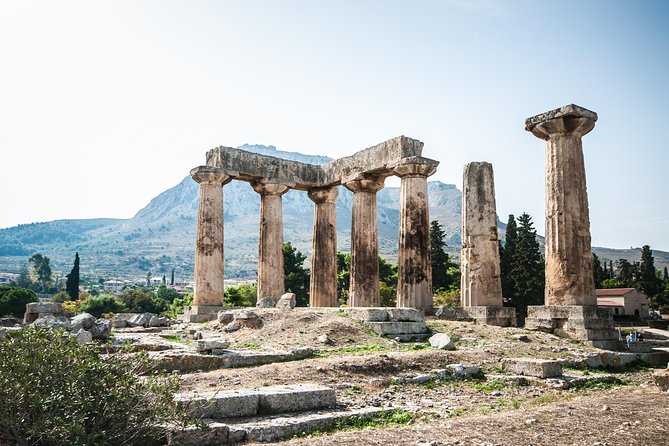
The Olympia portion focuses on the archaeological site and the remains of the sanctuary. The Temple of Zeus is the centerpiece, while the Temple of Hera and the Philippeion show different phases of Greek architecture and political history.
The Temple of Hera has a special modern connection. The Olympic flame is lit at its ruins in a ceremony that links the modern games to the ancient site. The Philippeion, a circular building dedicated by Philip II of Macedon, is another unusual feature within the Altis.
This part of the schedule needs clarification before you pay. The day description begins with breakfast at Olympia, but the previous day places you in Delphi, and the route between Delphi and Olympia is not fully explained. Ask the operator exactly where you sleep on Day 2 and how the transfer to Olympia is arranged.
Olympia is easier to appreciate with context. You are seeing a sanctuary, training spaces, temples, and athletic facilities rather than a single monument. The admission fee is extra, as is food, and the amount of time available may depend on the transfer arrangements.
A different kind of day out from Athens:
- Athens: Acropolis & up to 5 Archaeological Sites Combo Pass
★ 4.4 · 12,619 reviews - Athens: Acropolis Ticket with Optional Audio or Live Guide
★ 4.2 · 11,055 reviews - Athens: Acropolis, Parthenon & Acropolis Museum Guided Tour
★ 4.8 · 9,316 reviews - Athens: Cape Sounion & Poseidon Temple Sunset Half-Day Trip
★ 4.8 · 8,241 reviews
Day 4: Monemvasia and the road to Limeni
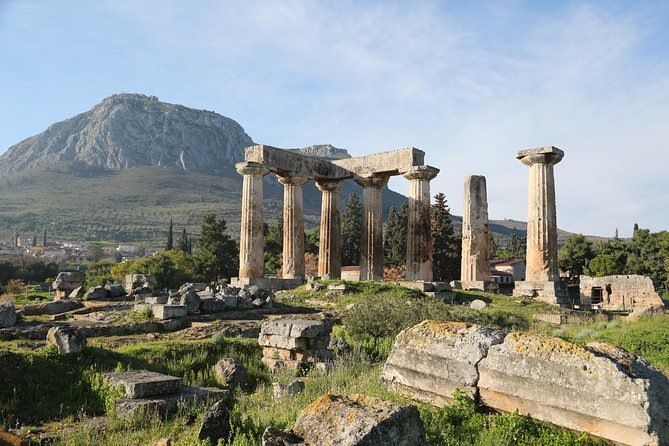
Monemvasia changes the mood completely. Known as The Rock, the fortified settlement sits on a dramatic outcrop linked to the mainland. Inside, you walk through medieval lanes and past churches, including Christos Elkomenos and Agia Sofia.
The plan allows time for cafés, local food, and views across the Myrtoan Sea. Lunch at Matoula’s is described as village-style cooking with a broad view, followed by a drive to Limeni in the Mani.
This is one of the strongest days for travelers who want more than archaeology. Monemvasia gives you stone lanes and medieval architecture, while Limeni brings a small harbor and dinner beside the water. You stay in a boutique hotel in Limeni, but the accommodation is not included in the tour price and must be selected separately.
Day 5: Diros Caves, Aeropoli, and the Mani
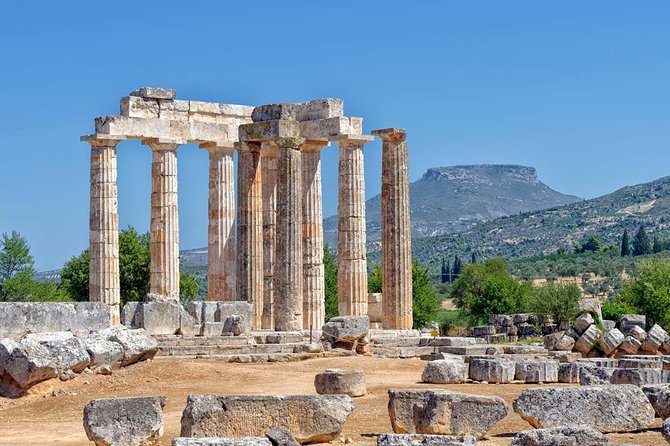
The Mani day is less rushed on paper. You visit the Diros Caves, explore Aeropoli, and have free time around Limeni for swimming or relaxing by the sea.
The free time is important because the rest of the tour is busy. You can use it to enjoy the harbor instead of treating every hour as another scheduled stop. An evening meal at a fish taverna gives the day a local finish.
The operator’s past custom routes have also included the far south of the Mani and other parts of Greece, so ask if you want to extend this section. The published plan is a framework rather than a fully guided program, and a private tour gives you more room to adjust the balance between ruins, villages, and coast.
Day 6: Nafplio and Palamidi Castle
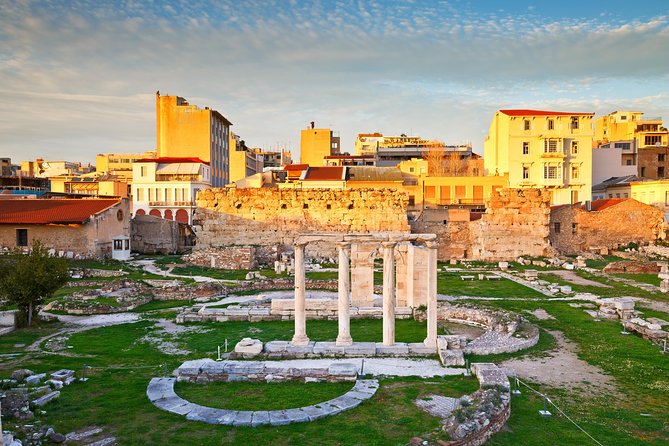
Nafplio is one of the most pleasant bases in the Peloponnese. After brunch and the drive from Limeni, you check into your selected hotel and explore the old town and harbor.
Palamidi Castle sits on a hill 216 meters above the town. The climb is famously associated with 999 steps, although the exact count is less important than the practical point: this is a steep visit. If your knees are not happy with long climbs, ask about reaching the fortress by road.
From the top, the views over the Argolic Gulf are the reward. Back in town, Constitution Square, the harbor fortress of Bourtzi, and Freedom Square fill out the visit. The schedule allows about four hours, enough for an overview but not a slow exploration of every corner.
Nafplio is also a useful place to spend an evening. The town gives you a break from the car and the ruins, with cafés, shops, and a compact center that is easy to explore on foot.
Day 7: Epidaurus, Mycenae, and Nemea
Epidaurus is famous for its theater, and the acoustics are the star attraction. A sound made on the stage can carry to the upper seats, making the theater easier to understand as a working performance space rather than a photogenic ruin.
The wider sanctuary was dedicated to Asclepius, a healing figure in ancient Greek religion. The archaeological museum helps explain the medical and religious role of the site. Plan on roughly six hours for the Epidaurus and Mycenae portion combined, followed by a shorter visit to Nemea.
Mycenae brings you into the world associated with Agamemnon and Homer. The Lion Gate, Grave Circles A and B, Cyclopean walls, and palace remains show the scale and power of this Bronze Age center.
Nemea is a smart addition because it combines ruins with wine country. You see the Temple of Zeus, ancient baths, and the apodyterium, where athletes prepared for competition. The surrounding vineyards give the stop a softer feel than Mycenae or Acrocorinth. Entrance fees are extra at the sites, and the day can feel long if you try to linger everywhere.
Day 8: Acrocorinth, Ancient Corinth, and the canal
Acrocorinth is one of the most dramatic fortresses in the Peloponnese. It rises above ancient Corinth, with layers of Greek, Roman, Byzantine, Frankish, and Ottoman use visible in its walls and remains.
Inside, you can see the gates, Peirene Spring, the traces of the Temple of Aphrodite, and the Frankish tower. The rock is steep and the site is spread out, so wear shoes suited to uneven ground.
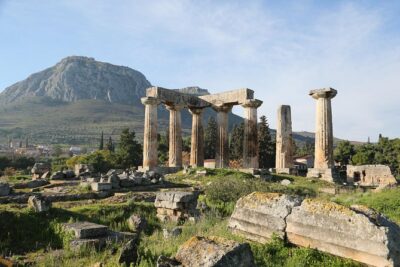
At Ancient Corinth, the Temple of Apollo, agora, theater, museum, and Bema connect the Greek and Roman city with the story of Saint Paul, who addressed the Corinthians here in 52 AD. The museum is useful for placing the scattered remains in context.
The Corinth Canal is a shorter stop, but the engineering is impressive. You then trace the route toward Kechries Port and have lunch by the Saronic Gulf before returning to Athens. The plan includes an optional dinner overlooking the Acropolis, a fitting end to the road portion.
Day 9: Athens and Cape Sounion in one very full day
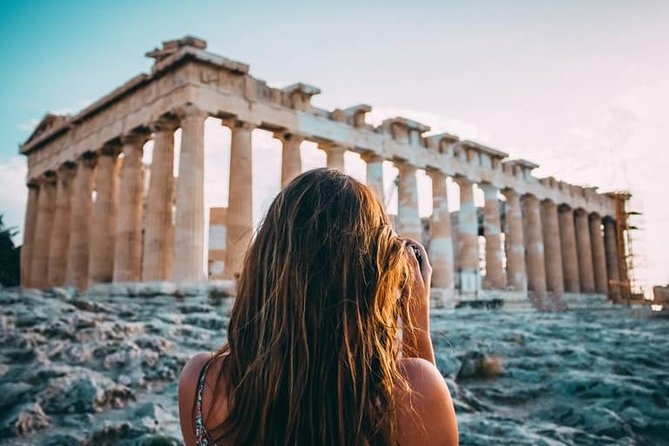
The Athens day tries to cover a great deal. Stops include the Temple of Olympian Zeus, Panathenaic Stadium, Mount Lycabettus, a choice between the National Archaeological Museum and the Acropolis Museum, the Parliament and changing of the guards, Monastiraki, Plaka, the Ancient Agora, the Acropolis, and Cape Sounion.
That is an ambitious list. The Acropolis and Ancient Agora alone can fill much of a day if you want time to look closely. The schedule gives only about 45 minutes for each of those two sites, so confirm the timing before booking. If the Acropolis is your priority, you may want to reduce the number of other stops.
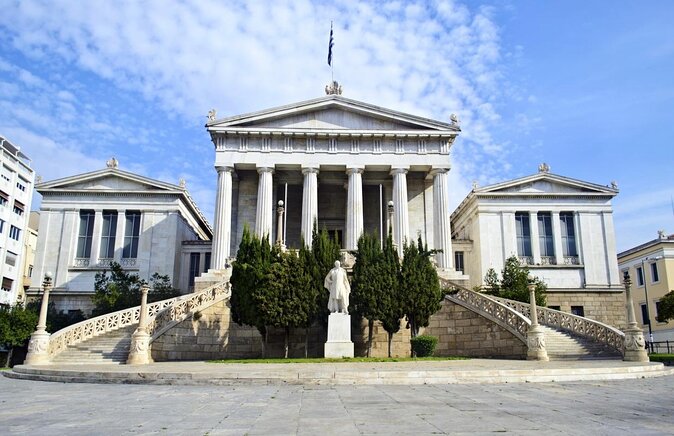
The Panathenaic Stadium, made entirely of marble, is an easy and worthwhile stop. Mount Lycabettus gives you a broad view of Athens. Monastiraki and Plaka offer lunch and shopping, while the neoclassical National Library, University, and Academy can be seen from the vehicle.
Cape Sounion is a strong final outing. The Temple of Poseidon, built in the fifth century BC, sits above the sea and makes an especially good late-day stop. Dinner around Megalo Kavouri on the Athens Riviera adds a coastal finish, but dinner and admission are extra.
What the $3,758.43 price really covers
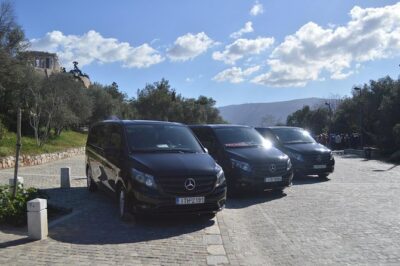
The listed price is per person, and the tour is private, so the value depends heavily on the number of people in your group. You receive a private luxury vehicle, hotel and port pickup and drop-off, WiFi, bottled water, refreshing wipes, handmade Greek biscuits, and an English-speaking or multilingual driver.
You do not receive the nine hotel nights, food, entrance fees, airport transfers, or a licensed guide inside the museums and archaeological sites. The driver can arrange skip-the-line tickets on request, but those tickets still need to be paid for.
I see the price as reasonable for a private, long-distance route if you value flexibility and do not want to manage Greek roads yourself. It is less attractive if you expect an all-inclusive guided vacation. Before booking, request a full estimate for hotels, site tickets, meals, airport transportation, and optional licensed guides.
Who will enjoy this trip most
This experience suits a couple, family, or small group that wants privacy and a broad first look at Greece. It is especially useful if you want to combine famous ancient sites with Monemvasia, the Mani, Nemea, coastal villages, and Cape Sounion.
It is less suitable if you prefer slow travel. Several days involve multiple stops and long transfers. You should also be comfortable walking on uneven ruins and climbing at places such as Palamidi, Meteora, Acrocorinth, and the Acropolis.
The experience has been associated with drivers named Taz and Anastasios. If you have a preference, ask who will drive your group and whether that person can provide the historical background you want. For Delphi, Olympia, Mycenae, and the Acropolis, I would add licensed guides if you want a deeper interpretation.
Should you book this private Greece tour?
Book it if your main goal is to see a large share of ancient Greece without renting a car or joining a coach group. The route combines major sites with places that many shorter tours skip, and the private format lets you adjust stops and meal plans.
Do not book it without clarifying the hotel locations, the Olympia transfer, the exact Athens timing, and the complete extra-cost budget. The advertised price buys the transport framework, not the whole holiday. For an energetic group that values control and variety, this can be a strong choice. For a slower, museum-focused trip, cut the itinerary down and spend more nights in fewer places.
FAQ
Is this a private tour?
Yes. Only your group participates, and transportation is provided in a private vehicle.
How long does the tour last?
The experience lasts approximately ten days and includes nine nights of accommodation, which must be arranged separately.
Are hotels included?
No. The nine nights of accommodation are not included, though hotel reservations can be arranged on request.
Is airport pickup included?
No. Airport pickup and drop-off are available at an additional cost. Hotel and port pickup and drop-off are included.
Are entrance fees included?
No. Entrance fees to archaeological sites, museums, and monuments are extra.
Is a licensed tour guide included?
No. The driver provides historical knowledge and transportation, but a licensed guide for museums and archaeological sites costs extra on request.
Can the driver arrange skip-the-line tickets?
Yes. Skip-the-line tickets can be arranged on request, with the ticket cost paid separately.
What is included in the vehicle service?
The tour includes private transportation, WiFi onboard, bottled water, refreshing wipes, and fresh handmade Greek biscuits.
Can most people participate?
Yes. The tour information says most travelers can participate, and service animals are allowed. Some stops include stairs, uneven ruins, and steep climbs.
What is the cancellation policy?
You can receive a full refund if you cancel at least six full days before the start time. Cancellations two to six full days beforehand receive a 50 percent refund, while cancellations less than two full days before departure are not refunded.
Newly reviewed around Athens
- Athens: workshop for painting landscape with local artist★ 4.6 · 3 reviews
- Athens: Greek Wine & Olive Oil Tasting at Brettos Plaka★ 4.5 · 3 reviews
- Outdoor Yoga and Pilates with Akropolis view★ 4.0 · 5 reviews
- Acropolis of Athens: 60′ Tour in a Vintage Motorcycle★ 5.0 · 4 reviews
- Ultimate Tasting of the Volcanic Wines of Greece★ 5.0 · 3 reviews
- workshop for painting acropolis/landscape with local artist★ 5.0 · 3 reviews
- Athens at Twilight Night Tour with Drinks and Meze Dishes★ 4.8 · 4 reviews
- Breakfast in the markets with olive oil and honey tasting★ 4.8 · 8 reviews
Private, compared.
Athens Airport Private Arrival Transfer with Meet & Greet
Read our review →
Athens Airport to Athens Hotels Private Arrival Transfer
Read our review →
Private Biblical Tour Ancient Corinth & Isthmus Canal from Athens
Read our review →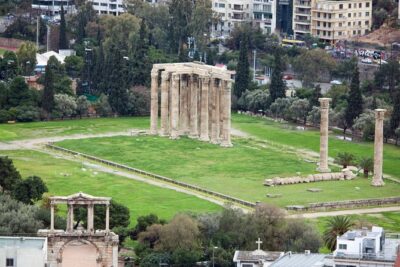
4 Hours – Athens & Acropolis Highlights Private Tour
Read our review →