
Reviewed · HISTORICAL TOURS
Running Through The History Of Athens with personal trainer
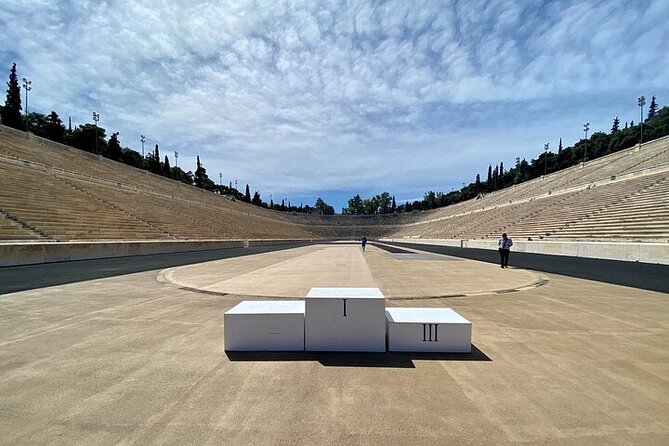
The best part of this Athens running tour comes at the end: you run into the Panathenaic Stadium, the marble venue of the first modern Olympic Games in 1896. This is not just a jog past old stones. Your trainer takes you inside for training, and you get a proper finish in one of Greece’s most memorable places.
I like the route for two reasons. First, it links Syntagma Square, Monastiraki, the Ancient Agora, the Acropolis area, and the Temple of Olympian Zeus in one active hour. Second, the pace adjusts to the group, so you do not need to be a serious runner. The main drawback is time: one hour gives you a fast look at many sights, not a full visit to any of them.
Key points at a glance
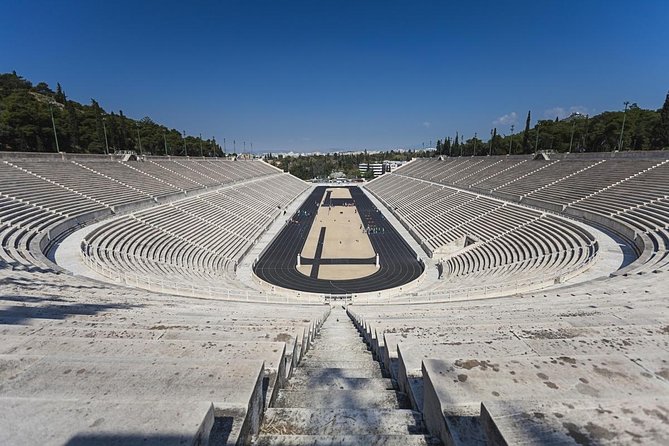
- Finish inside the Panathenaic Stadium: Run several laps and enjoy training at the marble stadium used for the 1896 Olympic Games.
- See central Athens at running pace: The route passes Syntagma Square, Ermou Street, Monastiraki, Thisseio, the Ancient Agora, and the Acropolis area.
- Train with an English-speaking professional: The pace is adjusted to the group, with guides such as Jon and Giannas leading recent outings.
- Combine exercise with major landmarks: The National Garden, Zappeion, Hadrian’s Arch, and the Temple of Olympian Zeus all appear along the route.
- Good for mixed running ability: Casual joggers and experienced runners can join, though you should be comfortable moving for an hour.
- Simple central meeting point: Meet at the Public store near Syntagma Metro Station, with bottled water and stadium entry included.
Why the Panathenaic Stadium finish matters
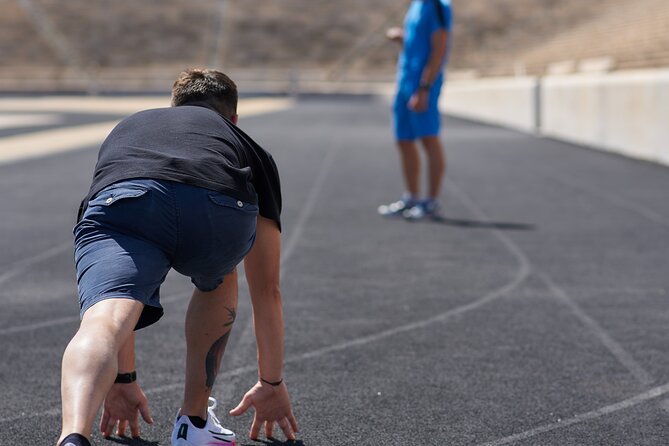
Many city running tours end at a square, a café, or the starting point. This one saves its strongest moment for the final stretch. You enter the Panathenaic Stadium and get time for training on its track, creating a finish that feels more purposeful than a standard photo stop.
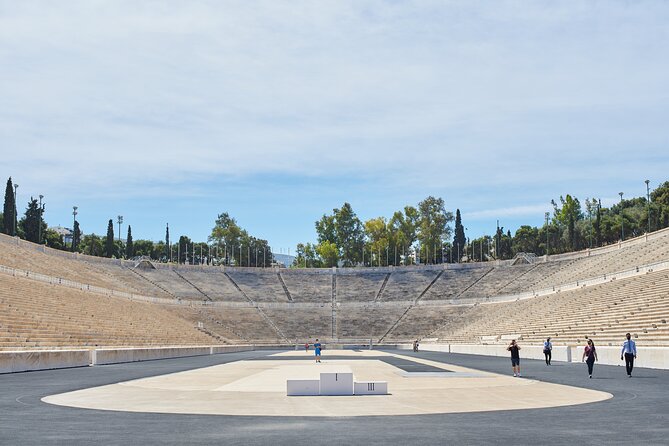
The stadium is known as the site of the first modern Olympic Games in 1896. Its long marble seating and pale stone track give the place a ceremonial feel, even during a short workout. You are not simply looking at it from outside. The experience includes entry, a photo stop, and time to run inside.
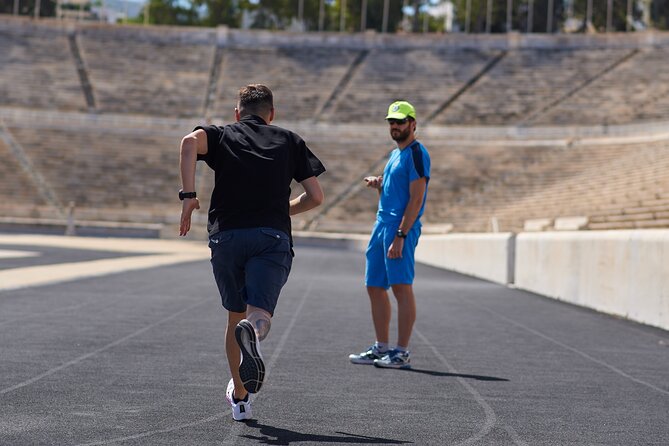
One recent outing included four laps, with the guide recording video. That detail matters if you want a keepsake beyond a few phone photos. It also suggests that the stadium portion can be active rather than symbolic, though the exact amount of training may depend on the pace and needs of your group.
You should not expect an intense athletic session. The advertised focus is a guided city run, not a race or a private performance workout. Still, finishing under the stadium’s tall stone seating gives the hour a clear goal and makes the route easy to remember.
More ancient sites near Athens:
- Historical Delphi One Day Tour with Arachova Stop & Expert Guide
★ 4.5 · 1,247 reviews - Historic Athens: Small Group Electric Bike Tour
★ 4.9 · 740 reviews - The History of Athens: Greek Mythology Private Tour
★ 5.0 · 138 reviews
Starting at Syntagma Square with a flexible pace
The meeting point is the Public store at Karagiorgi Servias 1, near Syntagma Metro Station. This is a practical place to meet because Syntagma sits at the center of the city’s main sightseeing area and is easy to reach by metro.
The run begins in Syntagma Square, one of Athens’s busiest central gathering places. From here, your trainer sets a pace that suits the group. This is important because the tour welcomes both regular runners and casual joggers. You should still arrive ready to run, but you do not need to match an athlete’s speed.
The guides work in English. Jon led one recent outing, while Giannas guided another and was able to explain the sites while also keeping the run moving. Giannas was also described as a 2:45 marathon runner, which may appeal to anyone who wants a guide with serious running experience.
The group format brings one small uncertainty: the pace is adjusted to the people attending that day. That is good news for comfort, but it means the workout may feel gentle to a fast runner or demanding to someone who rarely jogs. If your main goal is sightseeing with light exercise, this format makes sense. If you want a hard training run, ask about the expected pace before booking.
Ermou Street and Monastiraki on foot
From Syntagma, the route passes along Ermou Street toward Monastiraki. Ermou is one of central Athens’s best-known shopping streets, while Monastiraki opens into a lively mix of shops, plazas, historic buildings, and views toward the Acropolis.
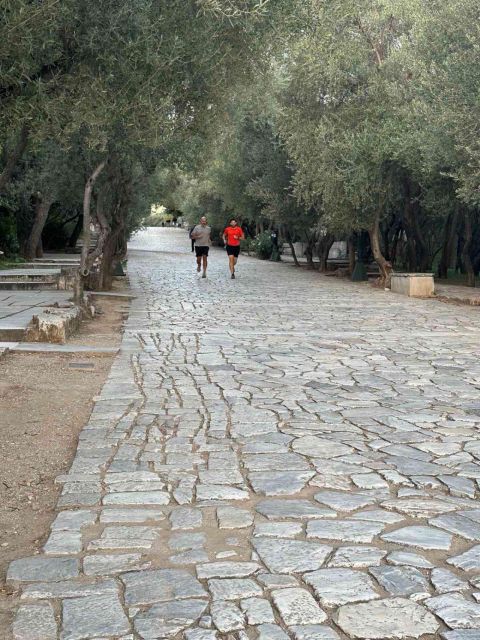
Running gives you a quick sense of how central Athens fits together. You move from the formal heart of the city into streets with a more local, everyday feel. At the same time, this section is not a closed running track. You are sharing public streets and open areas with pedestrians, so your pace may need to change.
That is one reason a trainer helps. You can concentrate on moving and looking around instead of trying to work out the route yourself. The tour is not built around long stops, so you should be ready to enjoy the sights in passing rather than expect a detailed explanation at every corner.
Monastiraki also offers one of the route’s useful visual rewards: views of the Acropolis and nearby historic buildings. You may find yourself slowing briefly for a better look, especially if this is your first morning in Athens.
Thisseio, the Ancient Agora, and Acropolis views
The run continues through Thisseio and past the Ancient Agora. Thisseio is a pleasant part of the central route, with open paths and strong views toward the Acropolis. The Ancient Agora adds a major historical setting without requiring a separate museum visit.
You will pass the Ancient Agora rather than enter for a full tour. That distinction is worth keeping clear. If you want to study the archaeological site, its buildings, and its museum, reserve a separate visit. On this run, the value comes from seeing it as part of Athens’s wider historic center while staying active.
The route also passes near the Odeon of Herodes Atticus, the Acropolis, and the Acropolis Museum. These are some of the city’s most important sights, but the experience does not include admission to them. Your view will depend on the running route, the group’s pace, and how much time you have to look.
I like this part because it connects several famous places without turning the hour into a slow walking tour. You get a quick visual survey of the historic center, then keep moving. The tradeoff is that anyone wanting detailed history should pair this activity with a dedicated Acropolis or Ancient Agora visit.
A different kind of day out from Athens:
- Athens: Acropolis & up to 5 Archaeological Sites Combo Pass
★ 4.4 · 12,619 reviews - Athens: Acropolis Ticket with Optional Audio or Live Guide
★ 4.2 · 11,055 reviews - Athens: Acropolis, Parthenon & Acropolis Museum Guided Tour
★ 4.8 · 9,316 reviews - Athens: Cape Sounion & Poseidon Temple Sunset Half-Day Trip
★ 4.8 · 8,241 reviews
The National Garden and Zappeion change the rhythm
After the denser streets of central Athens, the route heads through the National Garden and the Zappeion area. This gives the run a welcome change of setting. Instead of moving through commercial streets and open plazas, you get a more relaxed stretch with room for a smoother jog.
The National Garden is especially useful on a short city run because it breaks up the urban pavement. The route description presents this section as a refreshing stretch, and that is how you should think of it: a chance to settle your breathing while still staying close to the center.
Zappeion adds another landmark to the route and helps connect the garden with the Panathenaic Stadium. This section may be the most comfortable part for casual runners, though the tour remains only an hour, so there is no promise of a long pause or leisurely garden stroll.
Bring comfortable clothes and proper running shoes. The supplied information specifically calls for comfortable clothing, and the route includes city streets, open plazas, garden paths, and stadium running. Bottled water is included, but you may want to arrive hydrated, particularly in warm weather.
Hadrian’s Arch and the Temple of Olympian Zeus
The route passes Hadrian’s Arch and the Temple of Olympian Zeus before the final approach to the stadium. These two sights give the run a strong ancient-Athens setting and help explain how the modern city grew around its older monuments.
Hadrian’s Arch is a compact landmark, so you will see it quickly rather than spend time examining it from every side. The Temple of Olympian Zeus is a much larger ancient site, with surviving columns that are easy to appreciate even during a brief pass. The experience does not include entry to the temple complex, so treat this section as an outdoor view.
I find this pairing useful for first-time visitors who want a broad introduction to Athens. In one hour, you move past classical ruins, Roman-era remains, royal-era gardens, modern streets, and the Olympic stadium. No single sight receives a full treatment, but the route shows how closely these layers sit together.
If you are choosing between this and a normal sightseeing walk, the choice depends on your priorities. This tour gives you more ground and a memorable physical finish. A walking tour would give you more time for stories, photos, and close inspection.
Training inside Greece’s most famous stadium
The Panathenaic Stadium is the clear payoff. The route ends here with a photo stop and included entry, and the group can train inside the stadium. The experience description presents the finish as a place to feel like a marathon runner, and the setting does much of that work for you.
The stadium’s connection to the 1896 Olympic Games gives the final laps a sense of occasion. Even a short run feels different when you are moving along the track beneath the marble seating. If you enjoy sports history, this will likely be the part you remember best.
The recent session led by Giannas included four laps and a video recording. That is a useful benchmark, but it should not be treated as a guaranteed program for every group. The pace and training are adjusted to the people attending, so your stadium time may be different.
You should also know that the stadium is not the place for a private, uninterrupted workout. The activity is designed as a shared experience with sightseeing, coaching, and photography. The best approach is to enjoy the setting rather than measure the session against a normal training plan.
What $82 buys you in practical terms
The price is $82 per person for one hour. That is not cheap for a short run, especially if you are comparing it with a self-guided jog through central Athens. You can see several of the same exterior sights without paying for a guide.
The value comes from the combination of a professional trainer, guided routing, bottled water, and entry to the Panathenaic Stadium. Stadium admission is the key extra. You are paying for access and structure, not just for someone to point you toward the next street.
For a dedicated runner, the price may make sense because the activity combines sightseeing with a short coached outing and a memorable stadium finish. For a casual visitor who simply wants exercise, the cost is harder to justify unless entering the stadium is a major goal.
I would also consider the value of saved time. In one hour, you cover a route that could take much longer on foot, while learning the general shape of central Athens. That makes it useful early in a stay, when you want to see where Syntagma, Monastiraki, the Acropolis area, the National Garden, and the stadium sit in relation to one another.
The activity offers free cancellation up to 24 hours ahead and a reserve-now, pay-later option. Those terms are useful if your Athens schedule is still changing. Private transportation is not included, but the central meeting point near Syntagma Metro Station makes independent arrival straightforward.
Who should book this Athens run

I would recommend it most strongly to active visitors who want sightseeing without giving up their morning exercise. It suits runners who enjoy city routes, couples or friends with mixed running ability, and anyone who likes the idea of finishing inside a major sports venue.
It also works well for a first visit if you want a quick orientation to central Athens. You will see a wide range of landmarks, then return to Syntagma rather than needing to arrange transport from a distant finish.
The experience is less suitable if you want detailed archaeology, long photo stops, or a hard marathon-style workout. The route passes the Acropolis, Ancient Agora, Temple of Olympian Zeus, and other sights, but it does not replace admission to those sites.
You should be comfortable running or jogging for the one-hour duration. The pace is flexible, but the activity is still built around movement. Wear comfortable running clothes, arrive ready to start, and do not count on the tour as a substitute for a full sightseeing day.
Should you book it?
Book this tour if the image of running laps inside the Panathenaic Stadium appeals to you. That stadium finish, along with the guide’s help and the route through central Athens, gives the experience more purpose than a standard city jog.
Skip it if your priority is the lowest possible cost or detailed time at each monument. At $82, the experience earns its price through stadium entry, a professional trainer, and a well-planned route, not through length. For an active visitor who values a memorable finish, that is a fair trade. For everyone else, a self-guided walk and separate stadium visit may offer better value.
FAQ
Where does the running tour begin?
The meeting point is at the Public store at Karagiorgi Servias 1, near Syntagma Metro Station in central Athens.
Where does the run finish?
The route finishes at the Panathenaic Stadium, followed by a return to Syntagma.
How long does the activity last?
The running experience lasts one hour.
Is entry to the Panathenaic Stadium included?
Yes. Entry to the Panathenaic Stadium is included in the price.
Is a personal trainer included?
Yes. A professional trainer leads the run and adjusts the pace to suit the group.
What language is the activity offered in?
The instructor and activity are offered in English.
What sights does the route pass?
The route passes Syntagma Square, Ermou Street, Monastiraki Square, Thisseio, the Ancient Agora, the Odeon of Herodes Atticus, the Acropolis area, the Acropolis Museum, Hadrian’s Arch, the Temple of Olympian Zeus, Zappeion, and the National Garden.
What should I bring?
Bring comfortable clothes suitable for running. Bottled water is included.
Newly reviewed around Athens
- Athens: workshop for painting landscape with local artist★ 4.6 · 3 reviews
- Athens: Greek Wine & Olive Oil Tasting at Brettos Plaka★ 4.5 · 3 reviews
- Outdoor Yoga and Pilates with Akropolis view★ 4.0 · 5 reviews
- Acropolis of Athens: 60′ Tour in a Vintage Motorcycle★ 5.0 · 4 reviews
- Ultimate Tasting of the Volcanic Wines of Greece★ 5.0 · 3 reviews
- workshop for painting acropolis/landscape with local artist★ 5.0 · 3 reviews
- Athens at Twilight Night Tour with Drinks and Meze Dishes★ 4.8 · 4 reviews
- Breakfast in the markets with olive oil and honey tasting★ 4.8 · 8 reviews
Historical Tours, compared.
Historical Delphi One Day Tour with Arachova Stop & Expert Guide
Read our review →
Historic Athens: Small Group Electric Bike Tour
Read our review →
The History of Athens: Greek Mythology Private Tour
Read our review →
Athens Highlights by E-Bike: Small-Group Historic Tour
Read our review →

Half Day Historical Athens City Private Taxi Service Tour
Read our review →
Half day tour to Acropolis and the must-see historical sites and downtown
Read our review →Browse the lists this tour appears in