
Reviewed · ATHENS STREET ART TOURS
Athens: Guided Street Art Walking Tour
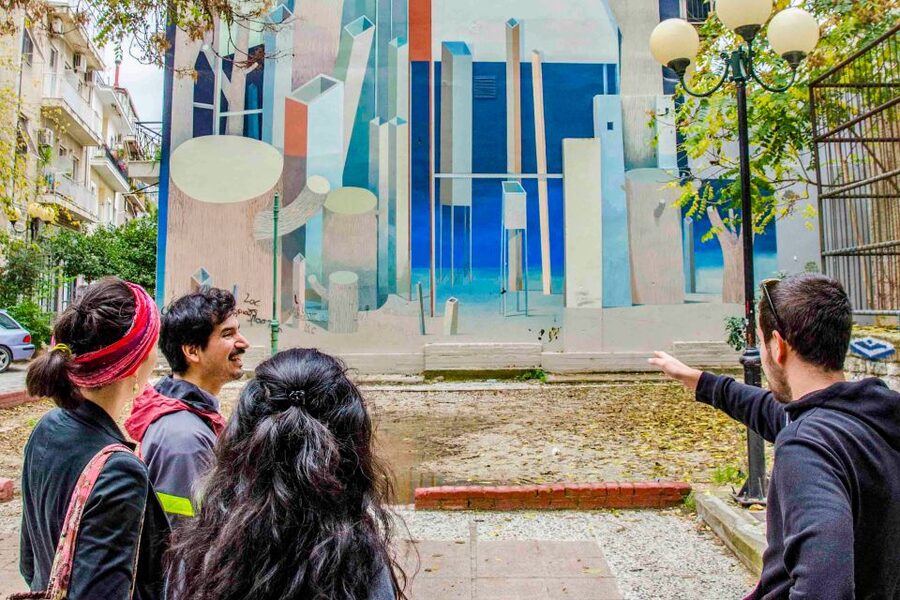
Athens reveals its modern character in paint as much as in marble. This three-hour street art walk takes you through Psyri, Gazi, and Monastiraki with a practicing local artist who can explain the styles, artists, and social messages behind the walls. Guides have included Nikos, also known as Rude, Pavlina, and Elisabeth.
I like two things right away: you see neighborhoods you might skip while visiting the Acropolis, and you learn how to read the art instead of simply photographing it. The tour also connects murals to Greece’s economic and social struggles, which gives the walk real substance. The main drawback is practical: it involves several hours on foot and is not suitable for wheelchair users or people with mobility impairments.
Key points to know before you book

- A local artist leads the walk: Nikos, known as Rude, has guided many departures, and other artist guides may lead the tour.
- Three central areas are covered: The route includes Psyri, Gazi, and Monastiraki, with the walk beginning near Thiseio.
- The art has a story: You’ll look at artists such as WD, iNO, and Moralez, while discussing politics, society, and artistic style.
- It offers a useful contrast to ancient Athens: This is a good choice after visiting temples, museums, and archaeological sites.
- The pace suits curious families: Parents report that teenagers and children as young as 12 enjoyed the experience.
- Plan for walking: Wear comfortable shoes, and remember that transportation is not included.
Athens beyond the Acropolis

Athens is often presented through ancient stone, museum cases, and hilltop views. This tour changes the subject without abandoning the city’s past. Its focus is the Athens of side streets, old buildings, political messages, creative work, and everyday neighborhood life.
You’ll spend three hours walking with a guide who can discuss both the art and the places around it. That matters because graffiti here is not treated as decoration alone. A painted wall may reflect anger, protest, humor, identity, or a response to the country’s economic troubles.
The guide’s role is central. Nikos, also known as Rude, has been praised for his relaxed manner, clear explanations, and experience as an artist. He has also guided people interested in art school, architecture, photography, and modern Greek culture. Other departures may be led by Pavlina, Elisabeth, or another local artist, so the exact personality and route can vary.
I like this format because you are not just led from one colorful wall to another. You are given a way to look. The guide can point out differences in technique, explain how artists develop their signatures, and discuss why a particular image or phrase appears in a certain setting.
More street art tours in Athens:
- Athens Street Art Walk
★ 5.0 · 309 reviews - Awesome Street Art Tour in Athens with a Local Expert Small-Group
★ 5.0 · 150 reviews - Athens Urban Street Art Tour
★ 5.0 · 98 reviews
Starting near Thiseio and meeting the city on foot
The listed meeting point is in front of the Association of Greek Archaeologists. It is easy to reach by taking the green line to Thissio. You can also use the blue line to Monastiraki and walk along Adrianou Street to the meeting point.
That location sets up the tour nicely. You begin close to some of Athens’ best-known sights, but the focus quickly shifts away from the standard postcard route. The walk then moves through central neighborhoods where art appears on walls, shutters, facades, and other urban surfaces.
The meeting area may have more than one nearby spelling in maps and booking details, including Thiseio and Thēseio. Use the full meeting instructions when planning your arrival, rather than relying only on a neighborhood name.
Wear shoes you can walk in for three hours. You may stop often to examine a work, but this is still a walking tour rather than a seated talk. Transportation between neighborhoods is not included, so plan to stay with the group on foot.
Psyri: street art beside old Athens

Psyri is one of the most rewarding parts of the route because it places modern wall art next to older urban fabric. You may see painted surfaces close to tavernas, workshops, apartments, cafes, and narrow streets. The contrast is part of the appeal. The city does not separate its past and present into tidy museum rooms.
Here, your guide can explain how Athens became such a fertile place for graffiti and street art. You’ll also hear about the difference between a quick tag, a large mural, a political image, and a more planned piece of public art.
That distinction is useful. If you walk around Athens alone, you can easily see hundreds of marks and assume they all mean the same thing. The guide helps you slow down and look for choices in lettering, scale, color, placement, and subject.
Psyri also gives the tour a local feel. Several people who took the walk appreciated being shown places they would not have found without an artist guide. You are not promised a fixed collection of permanent works, since outdoor art changes, disappears, or is painted over. That changing quality is part of street art, but it also means your exact selection may differ from another departure.
Gazi: art shaped by change and crisis

The walk continues to Gazi, another central area where old industrial character and newer nightlife meet. The tour uses the neighborhood to discuss how Athens has changed and how artists respond to those changes.
The economic and social crisis of recent decades is an important theme. Your guide may explain how artists use walls to express frustration, solidarity, criticism, or uncertainty. This is where the experience becomes more than a hunt for striking photographs. You begin to see the city’s public walls as a running conversation about life in Greece.
The art can also be political without being difficult to enjoy. You do not need formal training to take part. The guides encourage questions and discussion, and the meaning of a work may be explored rather than presented as one final answer.
Gazi is especially useful for people who want to understand contemporary Athens. After several days of ancient monuments, the neighborhood shows you a city still working through present-day questions. That contrast is one of the strongest reasons to book this walk early in your stay.
More walking tours in Athens:
- Athens: Acropolis and Parthenon Guided Walking Tour
★ 4.6 · 5,882 reviews - Greek Food Walking Tour in Athens
★ 5.0 · 4,740 reviews - Acropolis: Acropolis and Parthenon Guided Walking Tour
★ 4.7 · 3,442 reviews - Acropolis monuments & Parthenon Walking Tour with Optional Acropolis Museum
★ 5.0 · 2,678 reviews
Monastiraki: a busy crossroads with another layer

Monastiraki is familiar to many visitors because of its central position, market streets, restaurants, and views toward the Acropolis. The tour uses the area differently. Instead of treating it simply as a shopping stop, the guide draws your attention to its painted walls and the way art exists beside heavy pedestrian traffic.
This part of the route can help you connect the quieter side streets with the city center you already know. You may see how a work changes meaning depending on where it appears. A piece in an alley, a large mural on a prominent wall, and a small mark near a busy square each speak to a different audience.
The itinerary ends in Psyri, according to the activity details. That is convenient for continuing with lunch, a coffee, or an evening meal nearby. Guides have also recommended local places at the end of the walk, and one departure included a coffee stop during the tour. These recommendations are not guaranteed, but the guide’s local perspective can be useful if you want to stay in the neighborhood.
Meeting WD, iNO, Moralez, and other artists

The tour highlights artists including WD, iNO, and Moralez. The point is not simply to memorize names. You’ll learn to notice an artist’s recurring style, subject matter, and approach to the wall.
iNO receives particular attention from people who enjoy large-scale, technically impressive work. The guide can place such pieces within Athens’ wider art scene and explain why certain artists matter locally.
The artist-led format is the real advantage here. A standard city guide may identify a mural and offer a short description. A street artist can talk about process, visual choices, the practical side of working in public, and the difference between styles.
You should still keep your expectations realistic. This is not a studio visit, an art class, or a hands-on spray-painting session. You will not be making your own mural. The value lies in interpretation, context, and access to parts of the city that are easy to overlook.
What the guide adds to the experience

The best departures appear to balance information with conversation. The guide explains the art, but also invites you to ask questions and share what you see. That makes the walk work for people with very different levels of interest.
Art students and serious enthusiasts can ask about style and technique. Someone who rarely visits galleries can simply discuss what an image suggests. Families with teenagers have found the subject easier to connect with than a long lecture about ancient buildings.
Nikos has been singled out for being warm, funny, patient, and easy to talk to. That personal quality matters on a three-hour walk. A rigid presentation could make the subject feel academic, while an overly casual tour might skip useful context. The strongest descriptions of this experience point to a middle ground: informed but friendly, with room for conversation.
The guide also adds context about buildings, neighborhoods, Greek life, and recent history. You may finish knowing as much about Athens’ streets as you do about its murals.
Who will get the most from this walk
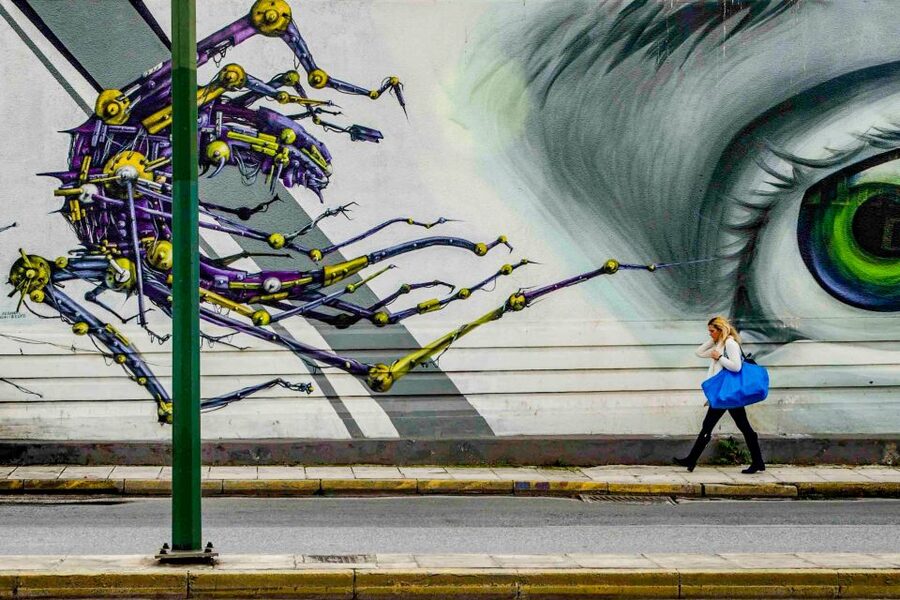
I would choose this tour if you want to see a side of Athens beyond the major archaeological sites. It suits art lovers, photographers, architecture fans, students, and anyone curious about modern Greek society.
It is also a good family option. Teenagers and older children often respond well to the scale and directness of street art, especially when the guide explains the ideas behind it. The walk has worked for families with children aged 11, 12, 15, and 18, according to the experience details.
You do not need to know anything about graffiti in advance. The guide introduces basic ideas and gives you useful ways to compare works. If you already follow street art, you may appreciate the focus on local artists and the chance to discuss Athens with someone involved in its art scene.
I would be more cautious if you dislike walking, prefer a tightly fixed schedule, or want only famous attractions. Street art is an outdoor subject, so the exact pieces and stops can change. The route may also take you into more urban areas that feel less polished than the main tourist center.
The tour is not suitable for wheelchair users or people with mobility impairments. Comfortable shoes are specifically recommended, and there is no included transport.
Is $57 a fair price?

At $57 per person, the walk costs more than simply wandering around Athens with a map. The question is what you are paying for. You are paying for three hours of local interpretation, neighborhood orientation, and access to works you might pass without understanding.
I think the price is reasonable if you care about the subject and want a personal guide. It is less compelling if you only want to take pictures of murals. Athens has plenty of street art visible from public streets, but finding significant works, identifying artists, and understanding their messages takes time and local knowledge.
The value improves for a small or private group. A private option is available, though the price and conditions may differ. In a small group, you can ask more questions and shape the conversation around your interests.
Free cancellation up to 24 hours before the start and a reserve-now, pay-later option add flexibility. Check the available start times when booking, since the tour lasts three hours and the exact departure time matters in hot weather or on a busy sightseeing day.
Best time to fit it into your Athens plans
I would schedule this walk near the beginning of an Athens stay. It gives you a better sense of Psyri, Gazi, and Monastiraki, and the food and cafe suggestions can help with later plans.
It also works well after a morning at the Acropolis or National Archaeological Museum. Ancient Athens and contemporary street art are not competing subjects. Together, they show how the city carries its past while arguing about its present.
Allow a little breathing room after the tour. The official duration is three hours, and you may want to continue in Psyri at the end. If you enjoy talking with the guide, a quick final recommendation can turn into a longer lunch or coffee stop.
Should you book the Athens street art walk?
Book it if you want more than a checklist of monuments. The strongest part of this experience is the combination of local artists, social commentary, and ordinary neighborhoods. You’ll see works by names such as iNO and WD, but you’ll also learn why walls matter in a city shaped by economic pressure, politics, and creative energy.
I especially recommend it for a second day in Athens, for families with art-curious teenagers, and for anyone who has already seen the Acropolis and wants a different subject. Skip it if walking is difficult or if you prefer only formal museums and historic sites.
For most visitors who want contemporary Athens, $57 buys a useful three hours with a guide who can help you read the city in a new way.
FAQ
How long does the Athens street art tour last?
The walking tour lasts three hours.
Where does the tour meet?
The meeting point is in front of the Association of Greek Archaeologists. You can reach it by taking the green line to Thissio, or by taking the blue line to Monastiraki Metro Station and walking along Adrianou Street.
Which neighborhoods does the tour visit?
The tour visits Psyri, Gazi, and Monastiraki. The listed starting area is Thiseio, and the walk finishes in Psyri.
Which languages are available?
The tour is available in English and French.
Is transportation included?
No. This is a walking tour, and transportation is not included.
Is the tour suitable for wheelchair users?
No. The activity is not suitable for wheelchair users or people with mobility impairments. Comfortable shoes are recommended.
Newly reviewed around Athens
- Feel Ancient thermal Spa Visit Delphi, Leonidas ℨoo Spaʀtan★ 5.0 · 4 reviews
- Food Tour★ 5.0 · 3 reviews
- Explore the Hidden Food Gems of Athens★ 5.0 · 57 reviews
- Food Experience in Athens including Unlimited Lunch★ 5.0 · 3 reviews
- Eat Your Way Through Athens: A Local Food Walk★ 4.9 · 97 reviews
- From Athens: Delphi Private Tour with Lunch Time★ 4.0 · 3 reviews
- Delphi: Spanish guided one day tour★ 4.6 · 55 reviews
- Early Entry Acropolis & Museum. Beat the Crowds & the heat★ 5.0 · 3 reviews
Athens Street Art Tours, compared.


Awesome Street Art Tour in Athens with a Local Expert Small-Group
Read our review →



Browse the lists this tour appears in